• Link to X
  • Link to Facebook
  • Link to Instagram
  • Link to TikTok
  • Link to Youtube
  • About
    • About Us
      • President
      • Board of Directors
      • Board of Advisors
      • Financials
      • Our Methodology
      • Success Tracker
      • Contact
  • Act Now
    • 30 Ways to Help
      • Email Congress
      • Call Congress
      • Volunteer
      • Courses & Certificates
      • Be a Donor
    • Internships
      • In-Office Internships
      • Remote Internships
    • Legislation
      • Politics 101
  • The Blog
  • The Podcast
  • Magazine
  • Donate
  • Click to open the search input field Click to open the search input field Search
  • Menu Menu

Tag Archive for: Technology

Posts

Activism, Global Poverty, Technology

Google Plans to Bring Internet to Remote Areas

Google has partnered with the French space agency, the Centre National d’Etudes Spatiales, to provide rural and remote areas of the world with Internet access. The partnership aims to reach higher ground with the Project Loon initiative.

Project Loon is a Google research and development project with the mission of providing Internet access to rural and remote areas. The project uses high altitude balloons to create an aerial wireless network that project Wi-Fi signals.

The balloons are solar powered and each is coordinated to make movements in a complex formation to provide continuous service. Google’s new approach on these balloons involves using technology with powerful satellites. Powerful satellites will provide more responsive Internet for the balloons to harness and spread.

They rise more than 60,000 feet above the Earth’s surface, placing them far beyond the reach of airplanes and atmospheric storm systems.

Satellite Internet is already becoming faster and more inexpensive at a steady rate. About 1.5 billion people get home Internet through a satellite connection, though only 0.2 percent of people in developed countries are connected through satellite.

Google wants to launch 100,000 balloons into the stratosphere to offer free Internet access in remote and rural locations around the world, and retrieve them when they lose air and fall to the ground.

To date, there are 75 Google balloons airborne, hovering somewhere near the far reaches of the Southern Hemisphere. These balloons automatically regulate their altitudes according to the algorithms to catch wind drafts and keep them on path.

A majority of the world still lacks Internet access, even after the 1.8 billion people that joined the Internet in 2014. An astounding 4.4 billion people still have never been online.

Internet access can benefit those in developing countries, especially those in India, where the population has more mobile phones than sanitary toilets. In India, over 1 billion people are still offline.

Moreover, China’s massive population of 1.3 people may be iPhone-obsessed, but more than half of its population still remains disconnected.

The Internet can be a useful tool for farmers, as access to the Internet allows farmers to be updated on constant climate changes, and projected problems in the seasons that may affect crop growth. Moreover, Internet access can also be a useful education tool used in schools for learning, and it can improve literacy rates.

Google’s balloons may sound expensive, but research actually indicates that these balloons are cheaper than setting up and maintaining cell towers, and the balloons are also more effective to bring access to remote areas.

Although Google’s project has faced criticism and doubts along the process among Project Loon, Google notes that the next big step is testing how the balloons handle thousands of pounds of pressure.

Google’s engineers have spent weeks trying to isolate any problems they had in the past with the balloons that are already hovering over vast remote areas. Google has the potential to deliver its promise of Internet access across the world and to regions that have been without it with precise research and design.

– Sandy Phan

Sources: Google, NPR
Photo: Digital Trends

January 15, 2015
https://borgenproject.org/wp-content/uploads/borgen-project-logo.svg 0 0 Borgen Project https://borgenproject.org/wp-content/uploads/borgen-project-logo.svg Borgen Project2015-01-15 04:00:592024-06-05 01:58:21Google Plans to Bring Internet to Remote Areas
Disease, Technology

Senegal Fights Ebola With Text Messages

ebola
In late August, Senegal’s first case of Ebola was confirmed in a man who had previous direct contact with a patient in Guinea and then traveled to Dakar, the capital city of Senegal. In collaboration with the World Health Organization, the Government of Senegal took immediate measures to stop the virus dead in its tracks.

Nearly 5,000 people have died from the Ebola virus and over 10,000 people have been infected. To prevent the spread of Ebola within Senegal, the Ministry of Health sent out over 4 million SMS messages to the general population warning of the new Ebola case and ways to individually prevent the contraction of the virus. The messages, based off a social campaign previously used for diabetes, were sent to citizens in Dakar and Saint-Louis, another heavily populated region in the country. The SMS campaign entailed multiple partnerships with local mobile phone companies and urged people to contact health authorities with news of anyone showing signs of fever and bleeding by calling the number provided. The messages received were then broadcast in large public events, such as sports games and rallies.

Dr. Mbayange Ndiaye Niang, a project leader at the Ministry of Health, says the “SMS campaign was part of a much larger national project in Senegal focused on awareness, prevention and care for people with Ebola.” Other awareness methods included flyers, radio announcements and messages posted on government websites. Washing hands regularly and avoiding contact with infected persons and animals was heavily reinforced.

The SMS campaign was extremely successful and, to date, there has only been one Ebola case in Senegal. The efficient and quick reaction by the Ministry of Health was possible due to the existing platform designed to help people manage their diabetes, called mDiabetes. The campaign began during the holy month of Ramadan, where fasting elevated risks associated with having diabetes. By registering with the program, persons with diabetes could receive free tips and advice via text messages on how to control problems associated with fasting. Thus, when Ebola reached Senegal, the government already had mechanisms in place to send text messages on a large scale.

The SMS campaign in Senegal proves that the technology platform can present an opportunity to target awareness on any disease, ranging from HIV/AIDS to the flu. In a world where phones and mobile devices have taken over all forms of paper, governments should invest in more technology-based initiatives.

– Leeda Jewayni

Sources: World Health Organization, UN Multimedia

Photo: Text Magic

November 14, 2014
https://borgenproject.org/wp-content/uploads/borgen-project-logo.svg 0 0 Borgen Project https://borgenproject.org/wp-content/uploads/borgen-project-logo.svg Borgen Project2014-11-14 12:00:482024-05-27 09:23:00Senegal Fights Ebola With Text Messages
Global Poverty

How to Start a Nonprofit Foundation

History has shown that nonprofit organizations often arise out of the passion of young adults. Clint Borgen, for instance, began The Borgen Project as a sophomore in college. So what does it exactly take to start your own nonprofit organization?

1. A Cause

Having a passion for a global issue sparks the fuse to do something. The cause can spark from war, from pictures, from personal experience and in so many other ways. It all starts with an action or occurrence that leaves an impact on others, an impact strong enough to want to make a difference.

2. Gathering the Right Materials/Volunteers

Find volunteers who are as passionate about the cause as you are. Volunteers are what make the organization grow. They are the ones who push the idea far enough to make a difference. A committed volunteer will do wonders for the cause and those volunteers will help your nonprofit organization grow. With volunteers comes technology. You need the right apps, software, materials to keep everyone connected. Communication between all members is extremely crucial! Being aware of what others are doing and how everyone is contributing to the cause is an important attribute to the organization. Keeping everyone up-to-date with how things are done within the group and what everyone’s role is keeps every volunteer in the loop.

3. THIS IS WHAT WE DO!

As Katy Perry said, this is what we do! Let the world know what exactly you do. Be proud that you’re with an organization that supports a change in society. Spread the word and spread the cause. The more you teach, the more will learn, and therefore the more of a difference will be made. Be innovative with what you have to offer. Creativity is a key factor in making a difference. There are many nonprofit organizations that stand up for a lot of great causes and are successful because they have original ways to show what they stand for. Also make sure to network. It’s all about who you know and how you can connect with them and make a difference.

The road will only get tougher when starting an organization that has so much meaning to you and others. However, it only takes one person to make that step into changing the world; soon enough, others will want to join in the march to a difference. If the cause is strong and your passion is stronger, you too can make a change for the better.

– Monica Franco

Sources: Huffington Post 1, Huffington Post 2, Fidelity Charitable Gift Fund
Photo: Arizona State University

September 26, 2014
https://borgenproject.org/wp-content/uploads/borgen-project-logo.svg 0 0 Borgen Project https://borgenproject.org/wp-content/uploads/borgen-project-logo.svg Borgen Project2014-09-26 12:00:522024-05-27 09:22:44How to Start a Nonprofit Foundation
Global Poverty, Technology

UNDP and Microsoft Partner in Ethiopia

The United Nations Development Programme in partnership with Microsoft East Africa Limited, has a launched an initiative to support the continued development of entrepreneurship activities in Ethiopia.

The initiative, which is a part of Microsoft’s 4Afrika Initiative, will bring mentoring and support to around 200,000 young entrepreneurs. These entrepreneurs will also have access to Microsoft’s BizSpark program, which provides free software to start-up entrepreneurs, helping them to launch their products and gain global recognition.

To date, there are 625 start-ups supported through this program. In addition, specific assistance geared toward micro and small business entrepreneurs will be included through a ‘Build Your Own Business’ training program.

Ethiopia has a population of 96 million, the second largest of all African countries. With over 40 percent of those 96 million between the ages of 0-14 and 20 percent between 15-24, creating an entrepreneur program geared toward younger people interested in business can have a powerful long-term effect.

As UNDP is Ethiopia’s first private sector partnership, there are high expectations on all ends. However, UNDP and Microsoft have successfully worked together and built programs in the past which now promote sustainable development, work to eradicate poverty, advance women’s rights agendas and encourage good governance.

This newest program is focused on empowering citizens and preparing them to join both their local and the global workforce. Based on the belief that technology can and will have a big role to play in Africa, the Microsoft 4Afrika Initiative provides one step forward in empowering local people through practical skills.

Microsoft has been active in Africa since 1992 and currently has 22 offices in 14 countries. It has also been named one of the top employers in Africa in both 2012 and 2013 by Certified Top Employers.

Empowerment through skill training is a good way to provide Africans a way to enter the global marketplace, contribute their ideas and raise their level of income and that of those living around them. Eradicating poverty is a battle that can be fought on many different fronts and the new partnership in Ethiopia is one step toward making eradication in that country a reality.

 – Andrea Blinkhorn

Sources: Biztech Africa, BERNAMA, Microsoft 1, Microsoft 2, Microsoft 3, The Borgen Project, CIA
Photo: Africatime

August 27, 2014
https://borgenproject.org/wp-content/uploads/borgen-project-logo.svg 0 0 Borgen Project https://borgenproject.org/wp-content/uploads/borgen-project-logo.svg Borgen Project2014-08-27 03:00:172024-05-27 09:21:34UNDP and Microsoft Partner in Ethiopia
Activism, Education, Global Poverty

Women in Science: Developing Countries

The role women play in the world’s technology and science movements has become increasingly prominent. Years ago, this field was primarily only led by men. Although education for women in general has improved in recent years, it still remains a problem around the globe.

A UNICEF study that researched the barriers to primary education revealed that 75 percent of children who are out of primary schools have mothers who did not receive any education, due in large part to poverty. In Asia, the Middle East and Africa, that number has risen to 80 percent of children who are out of primary school. This project reveals the importance of getting girls into education and supporting them in doing so.

In developing countries, women play an essential role in making change to communities. Mahatma Ghandi once said, “When a man is educated, an individual is educated; when a woman is educated, a family and a country are educated.” Historically, women have played a minor role in science-related fields, but many countries are making efforts to change that precedent.

Supporting women in science through funding, programs and scholarships is essential to building the next generation of women leaders and increasing science literacy in developing countries. Here are three nations creating increased opportunities for women in science, agriculture and technology:

1. South Sumatra (Indonesia):

Indonesia’s national program, Warintek Multipurpose Community Telecenters, focuses on promoting sustainable development through science and technology for women farmers located in South Sumatra. The program provides a variety of informational kiosks, available in both distance and in-person forms, for women to utilize regarding any farming needs of their local areas. In large part, the education aims to provide information on successful marketing and sustainable farming.

2. Burkina Faso:

Through the UNESCO Chair, Women, Science, and Development in Africa, the country is working to provide informal programs on health, water supplies, management and agriculture. University professors and students work in conjunction with women in communities, discussing topics and building relationships. The country has also connected with universities in other countries.

3. China:

The Women and Gender Development through the College of Rural Development at China Agricultural University is working to promote discussions on gender roles in agriculture and farming.

– Julia Thomas

Sources: Inter Academic Council, UNESCO, China Agricultural University, TWAS
Photo: Unesco

August 1, 2014
https://borgenproject.org/wp-content/uploads/borgen-project-logo.svg 0 0 Borgen Project https://borgenproject.org/wp-content/uploads/borgen-project-logo.svg Borgen Project2014-08-01 09:27:092024-06-04 03:01:23Women in Science: Developing Countries
Global Poverty

The Philippines’ Electric Transport Revolution

New modes of electric transport are being implemented in Manila, the capital of the Philippines. These new vehicles will cut down the length of citizens’ commutes, save the city from losing money and — most importantly — drastically reduce the air pollution that currently encompasses the city.

On workdays in a city like Manila, the population rises from 12 million to 15 million people. The majority of these people drive their own vehicles into the city, creating immense amounts of traffic. And what should be a 30-minute commute can take up to three hours.

Currently, the most popular mode of public transportation in this major city is the Jeepney, a large diesel-powered vehicle that contributes significantly to air and noise pollution. A new innovation, called the eJeepney, will instead run on electricity, reducing annual carbon dioxide and nitrogen oxide emissions.

The eJeepney can travel up to 100 kilometers a day, going up to 60 kilometers per hour, and will only require a four-hour electric charge. The Japanese International Corporation Agency (JICA) has calculated that with the current diesel Jeepneys, greenhouse gas emissions would increase to 5.72 million tons a year by 2030, compared with 4.7 million tons in 2012. eJeepneys will prevent this problem from getting worse.

Sigfrido Tinga, president of Global Electric Transportation, says, “Eighty-five percent of this Metro Manila pollution is vehicular… Just taking out the major part that’s causing that pollution, which is the jeep, is going to be amazing.”

The eJeepney is just the beginning of a revolution in the Philippines. Other modes of transportation are being evaluated to discover ways to reduce pollution in all areas, including reopening the use of a ferry system.

Executive Director of Institute for Climate and Sustainable Cities Renato Constantino said, “We don’t see it, we inhale it. We definitely feel the effects of it in terms of local air pollution, pollution on the streets, and we also contribute in a big way to global climate change. Carbon dioxide is one of the leading causes of warming temperatures worldwide.”

By introducing these new vehicles, the electric transport revolution in the Philippines could change the way countries around the world provide public transportation.

– Hannah Cleveland

Sources: Channel News Asia, The Guardian
Photo: The Guardian

July 23, 2014
https://borgenproject.org/wp-content/uploads/borgen-project-logo.svg 0 0 Borgen Project https://borgenproject.org/wp-content/uploads/borgen-project-logo.svg Borgen Project2014-07-23 12:38:062024-05-27 09:18:51The Philippines’ Electric Transport Revolution
Development, Global Poverty, Technology, United Nations

SDGs: Future of Development

2015 will mark the target year for the United Nations Millennium Development Goals (MDGs,) a set of eight development objectives set by world leaders as a commitment to reduce extreme poverty worldwide. The current goals seek to:

  • Eradicate extreme poverty and hunger
  • Achieve universal primary education
  • Promote gender equality and empower women
  • Reduce child mortality
  • Improve maternal health
  • Combat HIV/AIDS, malaria, and other diseases
  • Ensure environmental sustainability
  • Develop a global partnership for development

The U.N. recently released the 2014 MDG Annual Report, in which it applauds progress toward the Millennium Development Goals, encourages continued effort for the initiative’s remaining year and lays the groundwork for a post-2015 development agenda. The new set of goals, referred to as the Sustainable Development Goals, ambitiously aims to “end poverty everywhere” by 2030. A zero draft was released on June 2, in which the Open Working Group laid out 17 post-2015 goals. Concerns have been raised over the length of the draft and the abstract nature of the objectives, which are listed as follows:

  • End poverty everywhere
  • End hunger, improve nutrition and promote sustainable agriculture
  • Attain healthy lives for all
  • Provide quality education and life-long learning opportunities for all
  • Attain gender equality, empower women and girls everywhere
  • Ensure availability and sustainable use of water and sanitation for all
  • Ensure sustainable energy for all
  • Promote sustained, inclusive and sustainable economic growth, full and productive employment and decent work for all
  • Promote sustainable infrastructure and industrialization and foster innovation
  • Reduce inequality within and between countries
  • Make cities and human settlements inclusive, safe and sustainable
  • Promote sustainable consumption and production patterns
  • Tackle climate change and its impacts
  • Conserve and promote sustainable use of oceans, seas and marine resources
  • Protect and promote sustainable use of terrestrial ecosystems, halt desertification, land degradation and biodiversity loss
  • Achieve peaceful and inclusive societies, access to justice for all and effective and capable institutions
  • Strengthen the means of implementation and the global partnership for sustainable development

One notable characteristic of the proposed list of SDGs is its emphasis on science and technology. The draft touches on issues of climate change, water sanitation, energy supply, biodiversity preservation and ocean conservation. Where the document falls short, according to voices in the scientific community, is in its implementation section, which fails to explicitly define the strengthening of science and technology in developing countries as a key focus. Yet, besides the arguments between scientific and political pundits, the trajectory of the SDG project is clear. As published in the SDG zero draft, “we recognize that poverty eradication, changing unsustainable and promoting sustainable patterns of consumption and production and protecting and managing the natural resource base of economic and social development are the overarching objectives of and essential requirements for sustainable development.” – Kayla Strickland Sources: United Nations 1, United Nations 2, SciDev.net 1, SciDev.net 2 Photo: Reegle

July 17, 2014
https://borgenproject.org/wp-content/uploads/borgen-project-logo.svg 0 0 Borgen Project https://borgenproject.org/wp-content/uploads/borgen-project-logo.svg Borgen Project2014-07-17 16:00:282024-05-27 09:18:32SDGs: Future of Development
Health, Technology, Women, Women & Children

Remote Control Contraceptive

remote control contraceptive
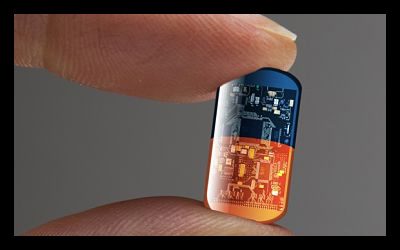
In less than four years, women could be receiving a remote control contraceptive. The implanted microchip provides a reliable dose of hormones every day for 16 years, which could make family planning and contraception much easier for women in the developing world.

The Bill & Melinda Gates Foundation-backed project is based off of research done in the 1990s by Professor Robert Langer of MIT. Langer leased his technology to MicroCHIPS, a company currently developing implants to release osteoporosis treatments into the body over regular intervals.

The microchip, roughly the size of a Scrabble tile at 20mm x 20mm x 7mm, has wells filled with the hormone levonorgestrel. When activated, a small electric charge triggers every day, melting the covering of the wells and releasing 30 micrograms of levonorgestrel into the body. The wells are covered with a mixture of titanium and platinum, which causes no harm to the body when melted.

The chip can be implanted in the abdomen, upper arm or buttocks. The process to inject the contraceptive is fairly simple, taking less than 30 minutes and using a local anesthetic.

Since many women may want to take a break from the birth control before the end of 16 years, the remote control allows them to switch their treatment on and off themselves. This puts power in the hands of women. There are security issues, such as the possibility for hacking, which could be a major problem if women do not realize their dosing has been tampered with. MicroCHIPS has promised that the control must be used right next to the skin, so no one can interfere with a women’s contraception without her knowledge.

Another issue is that injectable contraceptives do not protect against STDs, and some have even been shown to increase the chance of contracting HIV. Also, becoming fertile again after using hormones can take a while. These issues have not been addressed by the company.

This is not the first injectable contraceptive, but it lasts the longest. The most durable contraceptive on the market right now lasts only five years. This microchip could simplify women’s lives all across the developing world. Injectable contraceptives are already popular in these countries, so making the switch would be easy to do.

Burkina Faso will soon implement the contraceptive Sayana Press, as will Niger, Senegal and Uganda. Sayana Press only lasts three months, and while the countries will provide delivery services for women who cannot come to hospitals or clinics every few months, it is still difficult to reach every woman in need of an injection. Some women may also forget to get a new injection.

South Africa currently has a system for a three-year contraceptive. The device is similar, except it cannot be remotely controlled and it must be replaced sooner. It is a Silicone, matchstick-sized implant made by Merck and marketed as Implanon. The Stanger Hospital in South Africa actually ran out of the implants and is struggling to provide enough for the women who want the contraception.

There is a large desire for this kind of contraceptive in the developing world, and a controllable device could be the key to making family planning easier for women.

There are also further applications for implantable drug dispensers beyond female contraception. The technology could be applied to other treatments, like MicroCHIPS’ work with osteoporosis treatment. If trials prove successful, it is possible that many other drugs could be put in the wells and released periodically.

The contraceptive will be submitted for testing in 2015, and by 2018 the microchips could be on the market. The claim is that they will be “competitively priced,” making the technology a real possibility for women around the world to have a worry-free method of birth control.

– Monica Roth

Sources: Elite Daily, Extreme Tech, The Guardian, CNet, Africa Science News, Daily Maverick, MicroCHIPS
Photo: The Telegraph

July 16, 2014
https://borgenproject.org/wp-content/uploads/borgen-project-logo.svg 0 0 Borgen Project https://borgenproject.org/wp-content/uploads/borgen-project-logo.svg Borgen Project2014-07-16 12:00:232024-12-13 17:50:59Remote Control Contraceptive
Global Poverty, Technology

How Mobile Banking is Changing Africa

More often than not, adopting a pre-existing idea is easier than creating a brand new one. The mobile phone is an example of this. In recent years, there has been an explosion in the adoption of mobile phones among people living throughout Africa. The impact of mobile phones includes paving a more secure form of mobile banking, and ultimately creating a shift in African culture.

Over the past decade, the use of mobile phones has increased in both developed and developing countries. According to the World Bank, mobile subscriptions have been increasing around the world every year – and African countries have made the biggest gains. In 2009, the US had 89 cellphones per 100 people, and 96 in 2013. Nigeria had 48 per 100 people in 2009, with 73 in 2013. South Africa had 91 cellphones per 100 people in 2009, and 147 in 2013. The greatest strides were made by African states.

According to The Economist, three phones exist for every four people, which describes the accessibility of these products. While mobile devices were initially created to function as telephones, Africans do not use them solely for communication. Just like people with iPhone’s in developed nation, Africans have access to a whole range of activities via their phones, including secure banking and e-payments.

According to Paul Edwards, the CEO of Emerging Markets Payments (EMP), only 15 to 20 percent of Africans have bank accounts. This number contrasts sharply with developed countries, where almost everyone has or is expected to manage a bank account as an adult.

Mobile banking has created a shift. Africa has a different banking culture than that of developed nations.

Furthermore, making e-payments and using mobile banking allows for less corruption. As all money transfers are electrically handled, transactions are instant and, therefore, significantly reduce the number of delays in payments.

Many Africans have used cash to fuel their informal sector jobs, but using less cash and more e-payments allows governments to track tax-able profits. Ultimately this creates a more regulated, tax-paying economy that will generate revenues for the state and further establish self-sufficiency.

The growing popularity of mobile phones displays a tangible shift in Africa’s culture. A public relations company named Portland conducted a survey of Twitter in Africa. They used devices that allowed for geo-location; by examining the hashtags in Tweets, they were able to look into the interests of Africans. Subjects ranged from Nelson Mandela’s death to football to public dissatisfaction with the government.

As Africans continue to use mobile phones for various purposes, the rest of the world will watch to see what this will mean for the development of Africa.

– Christina Cho

Sources: Foreign Policy, The Economist 1, The Economist 2, World Bank, Foreign Policy 2
Photo: CNN

July 9, 2014
https://borgenproject.org/wp-content/uploads/borgen-project-logo.svg 0 0 Borgen Project https://borgenproject.org/wp-content/uploads/borgen-project-logo.svg Borgen Project2014-07-09 20:10:182024-05-27 09:18:14How Mobile Banking is Changing Africa
Advocacy, Food & Hunger

Good News for World Hunger

World hunger is a terrible thing, but in 2014 there seems to be more good news than bad.

The good news is that world hunger and chronic malnourishment have been decreasing in Latin American and Asian countries. It has, however, increased in some of the poorest African nations, but the increase in malnourished peoples was the lowest it has been in several years.

What advocacy groups and volunteers are doing is working; world hunger is completely solvable with just a little effort and a push in the right direction.

Advocacy for world hunger and global poverty began making good headway in reducing chronic malnutrition in the 1980s and the 1990s, but progress began to slow down between 2000 and 2010. Some of the more complicated and impoverished areas have seen growth in malnutrition since 2010, but overall things have either stayed the same or have slowly improved in the past four years.

More good news in world hunger is that the number of hungry people in the world has slowly trickled down from one billion to 870 million from 2009-2012, but has since gone back up to more than one billion.

There have been many advances on the war with hunger, however. There is a smaller percentage of the population in some areas (namely Latin America, Europe, the United States and Asia) of people who go without food.

As populations climb, the number of hungry people climbs with it, but through volunteer work and advocacy a larger percentage of the population has made it out of poverty.

Society has seen more technological advances to deal with world hunger and global poverty, but in recent years man power and monetary aid has declined, leaving the advancements instead of the people to take care of the problems.

According to UNICEF, world hunger will see more good news because in recent years global poverty and chronic malnutrition has become more manageable. It is now easier to donate than it ever has been through cell phone applications like the Spare Change Application or rounding up on purchases to help someone in need.

World hunger is seeing fewer donations, but it is also seeing a decline in the percentage of people living in poverty and with malnutrition. It has also become more manageable and less of an undertaking and many people can now donate and help without even a second thought.

Advocacy and aid is becoming easier in the digital age and because of that, world hunger is considered to be in decline in some countries.

– Cara Morgan

Sources: Grist, Lake Tahoe News, WFP, Yahoo
Photo: Working Abroad

June 20, 2014
https://borgenproject.org/wp-content/uploads/borgen-project-logo.svg 0 0 Borgen Project https://borgenproject.org/wp-content/uploads/borgen-project-logo.svg Borgen Project2014-06-20 08:00:512024-05-26 23:52:54Good News for World Hunger
Page 25 of 29«‹2324252627›»

Get Smarter

  • Global Poverty 101
  • Global Poverty… The Good News
  • Global Poverty & U.S. Jobs
  • Global Poverty and National Security
  • Innovative Solutions to Poverty
  • Global Poverty & Aid FAQ’s
Search Search

Take Action

  • Call Congress
  • Email Congress
  • Donate
  • 30 Ways to Help
  • Volunteer Ops
  • Internships
  • Courses & Certificates
  • The Podcast
Borgen Project

“The Borgen Project is an incredible nonprofit organization that is addressing poverty and hunger and working towards ending them.”

-The Huffington Post

Inside The Borgen Project

  • Contact
  • About
  • Financials
  • President
  • Board of Directors
  • Board of Advisors

International Links

  • UK Email Parliament
  • UK Donate
  • Canada Email Parliament

Get Smarter

  • Global Poverty 101
  • Global Poverty… The Good News
  • Global Poverty & U.S. Jobs
  • Global Poverty and National Security
  • Innovative Solutions to Poverty
  • Global Poverty & Aid FAQ’s

Ways to Help

  • Call Congress
  • Email Congress
  • Donate
  • 30 Ways to Help
  • Volunteer Ops
  • Internships
  • Courses & Certificates
  • The Podcast
Scroll to top Scroll to top Scroll to top