Outernet Delivers Information Equality
An estimated 60 percent of the world’s population has no Internet access. Of the people with regular Internet access, several million can only access censored information. Syed Karim, founder of Outernet, plans to change all that.
In 2012, Karim founded Outernet to bring the Internet to the remotest parts of the globe. To him, information is a human right as basic as food or water, and the Internet is the best information delivery system in history. Outernet is a datacasting company that could change the way isolated communities receive Internet. Using hardware of its own design, the company can bounce prepackaged streams of data off small satellites and onto Wi-Fi-enabled devices anywhere in the world.
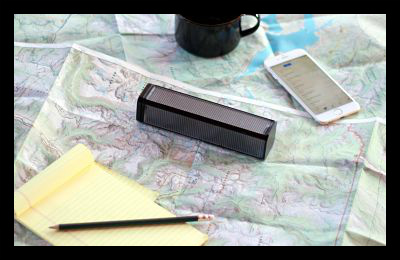
Outernet’s hardware innovations come in three forms. The first is the durable 24-inch satellite dish that receives the data stream. Designed like a folding colander, the dish can expand and contract by unfolding a series of overlapping panels. It can fold down small enough to fit into a bucket, making it easy to transport. Instead of the small motor most satellite dishes use to rotate, the Outernet dish articulates on a threaded screw that makes it extra durable, especially under windy conditions. Outernet has also perfected a device called a Lantern that serves as both a data stream receiver and a portable Wi-Fi hot spot. Lanterns are about the size of water bottles and can receive almost any information on the Internet.
Perhaps the most impressive of Outernet’s accomplishments is its fleet of CubeSats, shoebox-sized satellites that bounce uni-directional data down to Earth’s surface. This past March, the U.K. Space Agency agreed to fund the fleet of CubeSats. By 2016, Outernet plans to have three of the tiny, inexpensive satellites in orbit, each delivered by piggybacking on launches for larger projects. “It costs about $100,000 per kilogram,” Karim said. “The cost of the launch is much more expensive than the satellite itself.”
The service Outernet provides is not the same as conventional Internet access. It works more like a conventional radio. The signal is one-way and generalized. As Syed Karim put it, “When you talk about the internet, you talk about two main functions: communication and information access… It’s the communication part that makes it so expensive.” Because the service is only information, not communication, it is also much harder to jam. The signal sent from Outernet’s CubeSats is almost impossible to censor.
If Outernet succeeds in its mission, basic information will become available to everyone, everywhere. Censorship will be, if not a thing of the past, then at least much more difficult to pull off. Farmers in rural India could request price predictions for the upcoming year before deciding what to plant. Schools in rural Africa could download the most up-to-date lessons and facts to learn from, and not rely on old, potentially inaccurate textbooks. Information could become as widely distributed as food or electricity, and the world could take one more step toward equality.
– Marina Middleton
Sources: World.Mic, Outernet, Gizmodo, Wired
Photo: Indie GoGo
