• Link to X
  • Link to Facebook
  • Link to Instagram
  • Link to TikTok
  • Link to Youtube
  • About
    • About Us
      • President
      • Board of Directors
      • Board of Advisors
      • Financials
      • Our Methodology
      • Success Tracker
      • Contact
  • Act Now
    • 30 Ways to Help
      • Email Congress
      • Call Congress
      • Volunteer
      • Courses & Certificates
      • Be a Donor
    • Internships
      • In-Office Internships
      • Remote Internships
    • Legislation
      • Politics 101
  • The Blog
  • The Podcast
  • Magazine
  • Donate
  • Click to open the search input field Click to open the search input field Search
  • Menu Menu

Tag Archive for: Technology

Posts

Education, Global Poverty, Technology

Etisalat Raise ICT Literacy Through Donations

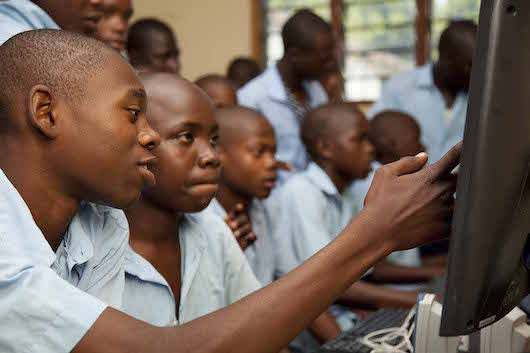
EtisalatEtisalat contributed 30 desktop computers in an attempt to improve Information Communication Technology (ICT) education at the Nuhu Bamali Primary School in Kano State. Etisalat hopes the computer donations will raise ICT literacy at the primary school.

The computers were presented to the school during a commissioning of facilities ceremony where Etisalat also unveiled school renovations, according to It News Africa.

The Vice President of Government and Regulatory Affairs for Etisalat, Ibrahim Dikko, said the donation was in line with their commitment to improving education in Nigeria through partnerships with the government.

ICT education has become a basic component of learning and will provide a greater benefit if students in primary and secondary schools are exposed to it early on. The company is dedicated to creating an improved and conducive learning environment for Nigerian children, according to Dikko.

Headmistress of Nuhu Bamali Primary School, Hajia Asmau Mohammed Lawan, hopes the computers will go a long way in giving pupils the cutting edge education to prepare them for their individual career paths according to It News Africa.

In October 2015, Etisalat donated desktop computers to the ICT center of Girls’ Government College in Nigeria, which is also located in Kano State.

According to Etisalat’s Head of Government and Community Relations, Mohammed Suley-Yusuf, “Etisalat is proud to be able to contribute positively to achieving the government’s objective of improving Kano State, especially in the area of education.”

Etisalat Group is a telecommunications provider who offers services to 18 countries throughout the Middle East, Asia and Africa. It is one of the world’s leading telecom groups and ranks among the most profitable telecom groups in the world. They work with the British Council to provide a Pan-Nigerian teacher training program and they continue to focus on improving education through their Adopt-a-School program.

The company is currently working on an initiative to create an Etisalat Telecommunications Engineering Postgraduate Program within the education sector.

– Jordan Connell

Sources: Etisalat, It News Africa, Prompt News Online
Photo: Manic

February 1, 2016
https://borgenproject.org/wp-content/uploads/borgen-project-logo.svg 0 0 Borgen Project https://borgenproject.org/wp-content/uploads/borgen-project-logo.svg Borgen Project2016-02-01 01:30:342024-05-27 09:28:46Etisalat Raise ICT Literacy Through Donations
Aid, Food & Hunger, Food Aid, Global Poverty

ShareTheMeal App Uses Technology to Fight Global Hunger

ShareTheMealThere are 795 million undernourished people in the world today. That’s one in nine people who are not getting enough food to lead a healthy life.

Those numbers make hunger and malnutrition the number one risk to health worldwide. That makes malnutrition a greater threat than AIDS, malaria and tuberculosis combined.

Enter the United Nations World Food Programme (WFP), the largest humanitarian agency fighting hunger today. Each year, the WFP reaches 80 million people with food assistance in around 80 countries.

As an initiative that relies completely on voluntary donations, two managers at WFP, Sebastian Stricker and Bernhard Kowatsh, have created a way to make donating even easier by using technology to fight global hunger.

In fact, thanks to them, donating is right at your fingertips.

That’s because they’ve created an app. It’s called ShareTheMeal.

Currently being hailed as the first of its kind, this free app allows iOS and Android users to fund food rations for as little as $0.50. While a small sum to most in the Western world, in other, poorer parts of the planet, the value can be life-saving. The sum is enough to provide the vital nutrition an individual needs a day.

“The simple act of sharing a meal is how people all over the world come together,” said Ertharin Cousin, the WFP’s executive director, “This digital version of sharing a meal is a tangible way that generation zero hunger can act to end hunger.”

Pilot tests for the app were performed in June 2015 across Germany, Austria and Switzerland. Using the technology to fight global hunger, more than 120,000 users provided more than 1.7 million meals for schoolchildren in the southern African country of Lesotho.

The money coming from Thursday’s global launch of ShareTheMeal will initially be used to support 200,000 Syrian refugee children living in the Zaatari camp in Jordan who participate in the WFP’s school meals program.

“By Christmas, we hope to have gathered enough shared meals, to feed these children for one year,” ShareTheMeal’s head of growth Massimiliano Costa says.

Improvements to hunger and living conditions in refugee camps as well as among Syrian communities is widely viewed as crucial to encouraging Syrians not to embark on risky travel to Europe.

If the app does well, the project will expand to other countries and regions. The WFP is already looking at the numbers. With two billion smartphone users worldwide, that statistic outnumbers the hungry children in the world 20 to 1.

The United Nations’ has set the ambitious goal of ending world hunger by 2023. Perhaps ShareTheMeal is the answer.

– Kara Buckley

Sources: ShareTheMeal, Forbes, Reuters, The Guardian                                                                                                                                                                                                                      Photo: Pixabay

November 17, 2015
https://borgenproject.org/wp-content/uploads/borgen-project-logo.svg 0 0 Borgen Project https://borgenproject.org/wp-content/uploads/borgen-project-logo.svg Borgen Project2015-11-17 01:30:112024-12-13 18:05:24ShareTheMeal App Uses Technology to Fight Global Hunger
Development, Global Health, Global Poverty, Health

Sustainable Blood Flow in West Africa

sustainable_blood_flow
Sisu Global Health has developed a device that recycles blood without using electricity for hospitals in developing countries.

According to the World Health Organization (WHO), “75 countries report collecting fewer than 10 donations per 1,000 population.” The vast majority of these countries are located in Africa.

Not only is blood itself in short supply (and expensive), clean and effective ways to obtain and transmit it are also lacking.

Of the donations low-income countries receive, only 16% are monitored through external quality assessment schemes, says the WHO. This leads to the continued spread of diseases, such as HIV.

In addition, unnecessary and unsafe transfusions run rampant in low-income clinics, creating even more problems.

Fortunately, a hospital in West Africa came up with a blood-collecting technique that would become the inspiration for a revolution in blood technology.

When Carolyn Yarina and Gillian Henker visited the hospital, they saw doctors use a cup to collect and reuse blood from internal bleeding, reports The Baltimore Sun.

Using this idea as a foundation, they created Sisu Global Health, a medical device company for emerging markets.

Their breakthrough technology, called the Hemafuse, is a manual autotransfusion device used to retransfuse a patient’s own blood during an internal hemorrhage, according to their website.

The Hemafuse does not need electricity to run, which makes it the perfect solution for clinics in developing countries.

With such a revolutionary, environmentally-friendly product, Sisu has already attracted attention from big-time investors.

According to The Baltimore Sun, the company has obtained a $100,000 investment from AOL Co-Founder Steve Case, after entering his “Rise of the Rest” startup competition.

Yarina and Henker have stumbled onto an immensely valuable idea here, one that will help ensure blood safety and sustainable blood flow in countries that have a desperate need for plasma.

– Ashley Tressel

Sources: Baltimore Sun, WHO, SISU Global Health, Rise of Rest

October 25, 2015
https://borgenproject.org/wp-content/uploads/borgen-project-logo.svg 0 0 Borgen Project https://borgenproject.org/wp-content/uploads/borgen-project-logo.svg Borgen Project2015-10-25 01:30:492024-05-27 09:28:12Sustainable Blood Flow in West Africa
Education, Global Poverty, Technology, USAID

Smartphones Affect Education Gaps in Rural Pakistan

smartphones_affect_education
Throughout rural Pakistan, many teachers don’t have access to quality educational training for a variety of reasons, including cost, distance and family commitments.

Online distance learning could easily fill-in these educational gaps, but limited Internet coverage has proven to be a stumbling block for educators and students alike.

Developments in Literacy (DIL), a nonprofit founded by Pakistani-Americans in order to bring quality education to disadvantaged children in underdeveloped regions, has created a revolutionary solution to end this problem.

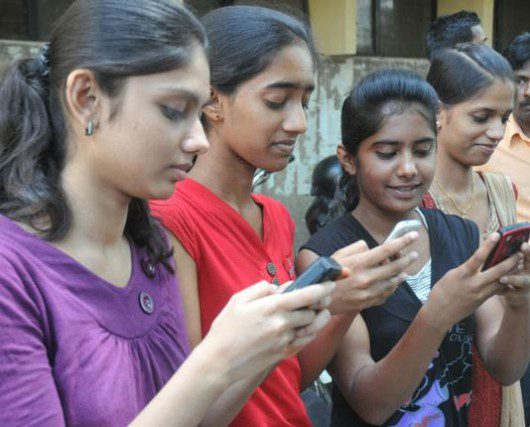
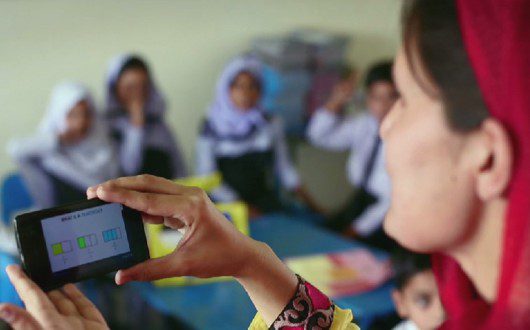
Funded by USAID, DIL created a mobile distance learning program known as mLearning. The parameters of the program were straightforward. Teachers were each given a smartphone with video lessons loaded onto them, giving teachers unlimited access to the material.

Once a month, teachers would meet at one of the 23 WiFi hubs DIL established throughout the nations to download more training videos. The 8- to 10-minute videos cover a variety of techniques to engage and inspire students to love learning, especially math and English.

Although the program’s focus is on bettering the understanding of school subjects and the teaching ability of rural educators, the end-game is to inspire children to stay in school. The goal is to have smartphones affect education gaps in rural Pakistan.

MOBILELEARN_2048847g

The average number of years that Pakistani children stay in school is only eight years, with most dropping out before age 16. This low level of academic participation has capped the Pakistani literacy rate at 57 percent, with only 45 percent literacy for women.

Because of this, mLearning is aimed at improving the education and opportunities of poor children and at-risk rural girls through better teacher training and learning resources.

During the course of the initial mLearning program, 200 teachers were given smartphones and completed the program from January 2013 to November 2014. Currently, more than 5,000 children benefit from being taught by teachers who have participated in mLearning.

Since the end of mLearning, the educational aid videos have been shared with 40 schools not affiliated with DIL, and countless teachers have shared the videos personally from their smartphones.

That’s the real brilliance behind mLearning using smartphones as its method of delivery. Since DIL owns the majority of the content, teachers are able to share the videos freely.

mLearning’s results thus far have been impressive. Across the board, teachers reported a 30 percent increase in their English skills and a 40 percent increase in their comprehension of mathematics. As the mLearning videos continue to be spread around, DIL is looking to expand the program.

– Claire Colby

Sources: USAID, World Factbook
Photo: USAID
Photo: The Hindu.Com

October 22, 2015
https://borgenproject.org/wp-content/uploads/borgen-project-logo.svg 0 0 Borgen Project https://borgenproject.org/wp-content/uploads/borgen-project-logo.svg Borgen Project2015-10-22 09:15:342024-05-27 09:28:14Smartphones Affect Education Gaps in Rural Pakistan
Education, Global Poverty, Technology

Kio Kits: A Modern Education Solution

Kio_Kits
On a continent where electricity, let alone an internet connection or data coverage, is never a given, bringing technology to the classroom has proven to be a challenge in rural and poor urban regions of Africa.

A BRCK Initiative

But, the African software developers, engineers and technologists of the Kenyan company BRCK have recently rolled out an educational pilot program of tablets, specifically designed to combat connectivity problems.

The program, BRCK Education, comes from the creators of the original BRCK. A router and modem system boasting a built-in global SIM card, internal storage, surge protection, more than 8 hours of battery life, adaptable charging for solar panels, car battery and computer or wall outlet, BRCK grants access to the Cloud from anywhere.

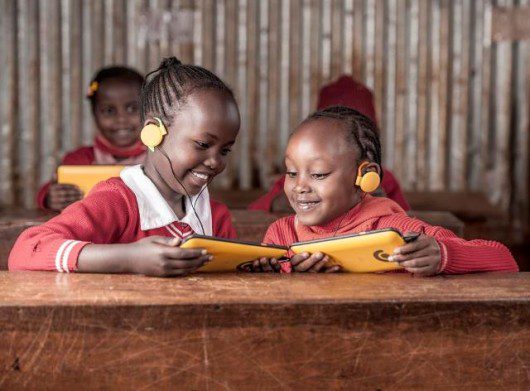
BRCK Education’s pilot Kio Kit, which holds 40 tough Kio tablets, a set of headphones for each student, an original BRCK and wireless charging docks for the Kio, is designed to be a “holistic education technology solution that turns every classroom into a digital classroom,” according to BRCK.

Inside the Kio

The Kio Kits, which look like rugged, plastic suitcases, are not solely made for transporting and recharging the water and drop resistant Kio. The case houses an offline “micro-Cloud” server.

When the case is turned on, the micro-Cloud is activated, giving children and teachers access to the preloaded interactive content saved on the server, without the expense of having to connect to the internet.

Kio, meaning “window” in Swahili, kits are designed to give African school children the same quality education that their technologically more connected peers already enjoy.

The preloaded content is updated remotely, currently by four Kenyan education content companies and the international curriculum giant Pearson. This ensures that all children using the Kio are receiving the most up-to-date information.

But Pearson isn’t the only big-name backing the Kio Kits. Intel, Mozilla, and the African companies JP, e-limu and eKitabu are all getting in on helping the Kio Kits become a success.

Hope For Expansion

The pilot program is currently being run in schools in Kenya, Tanzania and Uganda. The African Wildlife Fund has also purchased Kio Kits to distribute to schools in Ethiopia, Congo and others.

If the pilot program goes well, BRCK is already designed to be used throughout the globe, making it a viable option for other developing nations.

The BRCK Education team hopes to positively change the lives of children who have little or no access to technology through the Kio Kits, in Africa and beyond.

The BRCK team is confident that their system will succeed in changing education for the better. As they claim on their website, “If it works in Africa it will work anywhere.”

– Claire Colby

Sources: BRCK 1, BRCK 2, Forbes, htxt.Africa
Photo: Potentash

October 12, 2015
https://borgenproject.org/wp-content/uploads/borgen-project-logo.svg 0 0 Borgen Project https://borgenproject.org/wp-content/uploads/borgen-project-logo.svg Borgen Project2015-10-12 01:30:382024-06-05 03:46:44Kio Kits: A Modern Education Solution
Development, Global Poverty, Nonprofit Organizations and NGOs, Technology

The Role of XPRIZE in Ending Poverty

Ending_Poverty
Lack of access to sanitation and agriculture; the inability to maintain infrastructure or attend school—these are just some of the issues addressed by non-profit organizations aiming to combat global poverty. XPRIZE, one such non-profit, comes at the problem from a different angle by focusing on what the organization believes to be a need for ending poverty and spurring development: competition.

According to the organization’s website, “an XPRIZE is a highly leveraged, incentivized prize competition that pushes the limits of what’s possible to change the world for the better.” This group believes that innovation can solve the world’s problems, and competition created by the website and sponsors will foster this innovation.

There are eleven highlighted prize competitions listed on the website: Adult Literacy, Global Learning, Qualcomm Tricorder, Google Lunar, Wendy Schmidt Ocean Health, Nokia Sensing XCHALLENGE, Ansari, Northrop Grumman Lunar Lander XCHALLENGE, Progressive Insurance Automotive, Archon Genomics and Wendy Schmidt Oil Cleanup XCHALLENGE.

Some of these have already had winners selected, some are just beginning and some have finalist teams chosen. These competitions each fall within one of the “grand challenge” categories, which are Energy and Environment, Exploration, Global Development and Learning and Life Sciences.

A number of competitions involve using technology to improve access to education or healthcare. The Ansari XPRIZE was the first competition in 1996 and was awarded in 2004 to Mojave Aerospace Ventures for the creation of an aircraft capable of private space flight.

This competition relies on public participation, as well. People around the world can go online to see the current competitions and the guidelines for each and can vote for which competitions they would like to see in the future. Furthermore, anyone can join or create a team, with the idea being to have experts and amateurs in fields working creatively to produce solutions to global issues.

Through this unique approach, according to its website, XPRIZE is “spurring innovation and accelerating the rate of positive change.” By creating competition, problems caused by poverty are being and continue to be solved and brought to public attention.

– Rachelle Kredentser

Sources: Forbes, Philanthropy, XPRIZE 1, XPRIZE 2, XPRIZE 3
Sources: Global Learning XPRIZE

October 2, 2015
https://borgenproject.org/wp-content/uploads/borgen-project-logo.svg 0 0 Borgen Project https://borgenproject.org/wp-content/uploads/borgen-project-logo.svg Borgen Project2015-10-02 08:18:262024-12-13 18:04:45The Role of XPRIZE in Ending Poverty
Advocacy, Development, Global Poverty, Technology

Top 50 Technologies Fighting Poverty


There is no question that the technology revolution of the past 40 years has had an immense effect on human health and development, but many have wondered if there is a single, specific innovation that has proven to be the most impactful.

The answer ends up being that there are many necessary technologies and innovations crucial to human development: 50 to be exact.

The Institute for Globally Transformative Technologies at the Lawrence Berkeley National Research Laboratory (LIGTT) has recently published a report called, “50 Breakthroughs: Critical scientific and technological advances needed for sustainable global development.”

The Berkeley Lab, as it’s commonly known, was founded in 1931 at UC Berkeley, and is now owned and operated by the U.S. Department of Energy. A subdivision of the lab, the LIGTT’s mission is to “identify, develop, and deploy, the next generation of breakthrough technologies for sustainable global development.”

The report ob 50 technologies fighting poverty comes after two years of intense analysis and research. The project was funded in part by USAID’s Global Development Lab.

USAID’s Dave Ferguson, who serves as the Director of the Center for Development Innovation, said “We believe science, technology, and innovation can deliver transformational results, and the 50 Breakthroughs study is an extremely valuable contribution in this endeavor.”

The study is divided into nine different categories and aims to give aid organizations and agencies a map of where to invest their time, funds and resources so as to have the greatest impact.

The categories are global health, food security and agricultural development, human rights, digital inclusion, water, access to electricity, gender equality and resilience against climate change and environmental degradation.

The report finds that water is the most important and needed breakthrough. Director of the study, Shashi Buluswar, said, “Water will be the defining problem of the next 50 years. It’s probably the single most important thing that needs to be solved.”

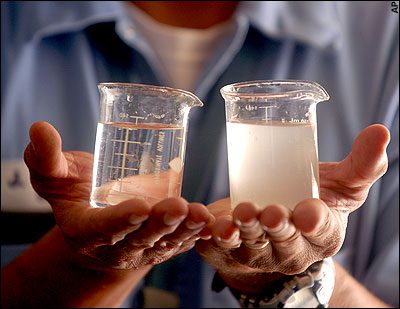
Other breakthroughs include greater access to vaccines, improved and highly efficient fertilizer and increased water filtration capacity.

Buluswar states that the Berkeley Lab is capable of working to implement many of the breakthroughs but encourages organizations both domestically and around the globe to contribute to their further development. You can read the report here.

– Joe Kitaj

Sources: Berkeley Lab 1, Berkeley Lab 2, LIGTT
Photo: desalinate4kids

September 30, 2015
https://borgenproject.org/wp-content/uploads/borgen-project-logo.svg 0 0 Borgen Project https://borgenproject.org/wp-content/uploads/borgen-project-logo.svg Borgen Project2015-09-30 10:16:212020-06-29 11:44:41Top 50 Technologies Fighting Poverty
Developing Countries, Global Poverty, Technology

Field Ready Uses 3D Printing to Create Disaster Relief Supplies

Field Ready Uses 3D Printing to Create Disaster Relief Supplies
The United Nations Office for Disaster Risk Reduction (UNISDR) calculates that 2.9 billion people have been affected by disasters between 2000 and 2012. According to UNISDR, 1.2 million were killed and $1.7 trillion in damages sustained. Natural disasters and other humanitarian emergencies are a profoundly influential part of the global human experience.

Unfortunately, recovery from disaster can be just as costly, both to governments supplying aid and victims of the disasters themselves. In the aftermath of floods, earthquakes, conflict and other emergencies, access to basic items needed for survival is severely limited and expensive. NGO Field Ready understands this struggle.

“In a humanitarian disaster, simple items can mean the difference between life and death,” the organization’s website explains.

However, the site goes on to state, “A bucket, for instance, essential for health and hygiene, may only cost a few dollars in a capital city but supply chains and support costs mean that in reality this simple item is expensive and can take weeks or even months to arrive in the hands of disaster victims.”

The good news? 3D printing technology may just be the solution. Field Ready specializes in using the technology to meet the needs of disaster victims and provide humanitarian relief.

Following the 2010 earthquake that devastated Haiti, Field Ready worked with other relief organizations to print products like mosquito-net closures and tools for aid workers, TB patients, newborn babies and maternal care. The organization’s efforts established safer patient areas and workspaces, as well as reducing the risk of mosquito-borne disease.

During their first stint in Haiti, Field Ready’s members were especially struck by the shortage of maternal health equipment. Although nurses and doctors could sometimes improvise makeshift tools such as clamps for newborn children’s umbilical cords, Field Ready sought a better solution.

They were able to print clamps on 3D printing presses, reducing the risk of neonatal umbilical sepsis. Field Ready also trained Haitian staff to use 3D presses to ensure that they would have a permanent alternative to importing costly equipment from more developed areas at additional expense. Instead, health workers are now able to print parts and tools when needed.

Field Ready also printed a prototype for a prosthetic hand, assembled from only five parts, and proved the capacity for 3D presses to produce items needed to maintain and improve the printers themselves.

In total, Field Ready’s efforts in Haiti assisted a dozen aid workers and 60 medical patients. The organization has since set its sights on improving conditions in Nepal.

“In the coming weeks, an assessment will be carried out to determine how Field Ready can best contribute to medium and long-term recovery and reconstruction efforts,” the organization promised.

These efforts, they believe, will likely focus on repair and capacity building, with an eye to help the Nepalese spearhead their own recovery and development.

“Even in crisis situations, people need more than just ‘stuff’ […] they need the skills and knowledge that will empower them to look after themselves and those around them,” the organization asserts.

Field Ready seeks to give disaster victims that tool for empowerment through technology. Through training disaster survivors in developing areas, the organization is able to leave a lasting impact. Trainees learn skills they can use to generate income and continue to develop solutions to supply issues facing marginalized regions.

Field Ready has an eye to expand, with the goal of a worldwide network of 3D printing technicians and kit designers. Linked by the Internet, this network would have the potential to share designs and solutions instantaneously on a global scale.

– Emma-Claire LaSaine

Sources: Sci Dev Net, Field Ready, UNISDR, Relief Web
Photo: 3D

September 12, 2015
https://borgenproject.org/wp-content/uploads/borgen-project-logo.svg 0 0 Borgen Project https://borgenproject.org/wp-content/uploads/borgen-project-logo.svg Borgen Project2015-09-12 08:07:282020-06-30 09:10:40Field Ready Uses 3D Printing to Create Disaster Relief Supplies
Activism, Developing Countries, Global Poverty, Technology

Students Work on Prosthetics to Help World’s Poor


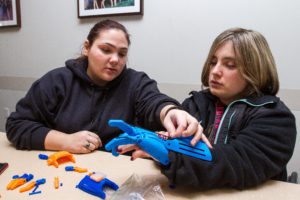
Providing prosthetics in developing countries can be challenging because of the lack of technology and support. Two students at Texas A&M University may have the potential to make prosthetics quicker, cheaper and more accessible.

On campus, Brandon Sweeney and Blake Teipel have discovered how to make prosthetic body parts using a 3D printer.

“With a typical 3D printed part, it’ll just peel apart between the layer, so it’s a pretty fragile piece, but for this technology, with the coating, as you print the layers you heat up the whole part and cause fusing to happen all across the entire component,” says Teipel.

Their new invention is increasing in demand. Teipel says, “Globally, every 30 seconds, there is a new amputee.” Most prosthetic options, however, are extremely expensive, sometimes $50,000 or more.

With their new discovery, they believe prosthetics should not be this expensive. “At the very basic level, the materials cost and the time it would take to make it? $20,” says Sweeney.

As products become more affordable, it is that much more possible to make them accessible for those in developing countries.

“Next generation materials are making it possible for us to address problems that have so far been too expensive to technologically advanced, especially for the world’s poor,” says Teipel.

Several large companies are interested in their technology and the pair hopes to team up with one who is socially conscious and believes in doing good.

– Kelsey Parrotte

Sources: KBTX, TSRHC, JMU
Photo: Flickr

September 5, 2015
https://borgenproject.org/wp-content/uploads/borgen-project-logo.svg 0 0 Borgen Project https://borgenproject.org/wp-content/uploads/borgen-project-logo.svg Borgen Project2015-09-05 01:30:012024-12-13 18:05:00Students Work on Prosthetics to Help World’s Poor
Development, Global Health, Global Poverty, Technology

DEBUT Challenge Produces Innovative Medical Technology

DEBUT challenge

Every year the National Institute of Biomedical Imaging and Bioengineering (NIBIB) hosts a challenge for teams of undergraduate students to create cost-effective solutions to clinical needs that have yet to be met.

The winning design of the 2015 DEBUT challenge was the Viral Diagnostic Technology designed by a group of students from Lehigh University. This device was designed to help meet the World Health Organization’s recommendation that everyone diagnosed with HIV take a yearly viral load test to monitor the effectiveness of treatment. The viral load test is important in diagnosing and monitoring HIV.

The design addresses the issue of the lack of HIV treatment monitoring devices in impoverished areas where the majority of HIV-infected patients live, specifically in sub-Saharan Africa. The technology used allows for a simpler, faster and more affordable option of the viral load test with results coming out within the hour.

This design comes at a critical time as 35 million people in the world are living with HIV. Seventy-one percent of those are living in sub-Saharan Africa.

One of the runner-ups of the challenge was the FreePulse. The FreePulse was designed by a group of undergraduate students from the University of Texas at Austin. The patient monitor was decided upon when the team realized the unbalanced ratio of patient monitors to patient beds.

Thus, FreePulse was created. It is a low-cost patient monitor designed with the developing world in mind. It is durable, simple, and more affordable than conventional patient monitors. The average patient monitor costs between $1,000-$10,000. FreePulse has an estimated manufacturing price of $72, making it much more affordable for small hospitals in impoverished countries.

The NIBIB’s DEBUT Challenge is just one example of how biomedical technology has advanced society’s ability to improve global health and make it affordable. Global health is one step closer to reality through the advanced technology of biomedical engineering.

– Iona Brannon

Sources: U.S. Department of Health & Human Services, NIH 1, NIH 2

Photo: Wikipedia

September 2, 2015
https://borgenproject.org/wp-content/uploads/borgen-project-logo.svg 0 0 Borgen Project https://borgenproject.org/wp-content/uploads/borgen-project-logo.svg Borgen Project2015-09-02 13:54:452020-07-01 12:04:54DEBUT Challenge Produces Innovative Medical Technology
Page 22 of 29«‹2021222324›»

Get Smarter

  • Global Poverty 101
  • Global Poverty… The Good News
  • Global Poverty & U.S. Jobs
  • Global Poverty and National Security
  • Innovative Solutions to Poverty
  • Global Poverty & Aid FAQ’s
Search Search

Take Action

  • Call Congress
  • Email Congress
  • Donate
  • 30 Ways to Help
  • Volunteer Ops
  • Internships
  • Courses & Certificates
  • The Podcast
Borgen Project

“The Borgen Project is an incredible nonprofit organization that is addressing poverty and hunger and working towards ending them.”

-The Huffington Post

Inside The Borgen Project

  • Contact
  • About
  • Financials
  • President
  • Board of Directors
  • Board of Advisors

International Links

  • UK Email Parliament
  • UK Donate
  • Canada Email Parliament

Get Smarter

  • Global Poverty 101
  • Global Poverty… The Good News
  • Global Poverty & U.S. Jobs
  • Global Poverty and National Security
  • Innovative Solutions to Poverty
  • Global Poverty & Aid FAQ’s

Ways to Help

  • Call Congress
  • Email Congress
  • Donate
  • 30 Ways to Help
  • Volunteer Ops
  • Internships
  • Courses & Certificates
  • The Podcast
Scroll to top Scroll to top Scroll to top