• Link to X
  • Link to Facebook
  • Link to Instagram
  • Link to TikTok
  • Link to Youtube
  • About
    • About Us
      • President
      • Board of Directors
      • Board of Advisors
      • Financials
      • Our Methodology
      • Success Tracker
      • Contact
  • Act Now
    • 30 Ways to Help
      • Email Congress
      • Call Congress
      • Volunteer
      • Courses & Certificates
      • Be a Donor
    • Internships
      • In-Office Internships
      • Remote Internships
    • Legislation
      • Politics 101
  • The Blog
  • The Podcast
  • Magazine
  • Donate
  • Click to open the search input field Click to open the search input field Search
  • Menu Menu

Tag Archive for: Technology

Posts

Malaria

Could Cell Phones End Malaria?

Could Cell Phones End Malaria?
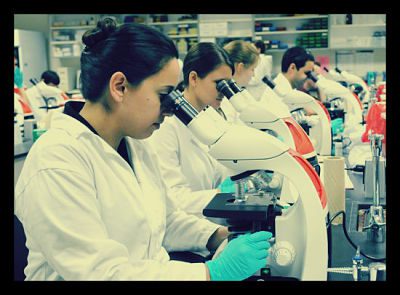
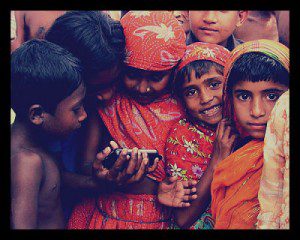
Harvard epidemiologist Caroline Buckee has figured out a way to use a cell phone tower in Kericho, Kenya to help in the fight against malaria. She was able to interpret data showing that individuals who are making phone calls or sending text messages in Kericho were more likely to travel to a different region in Kenya, which is a known hotspot for Malaria.

This data has fed into a new set of predictive models. These models have shown the most effective places to attack the malaria parasite, showing researchers sources and hotspots. This data mining will help to organize a currently unorganized system of record keeping. The models may also help design new measures that are likely to include campaigns to send text messages to people warning them to use bed netting, as well as to help officials choose where to focus their control efforts.

Eliminating malaria is just one of the potential benefits of this technology. It can also build tools that health-care and government workers can use to detect and monitor epidemics, disasters, and optimize transportation systems. Data mining could prove particularly useful in poorer countries where there is currently little to no actual model in place.

This type of phone tracking could also be useful for other trends and figures such as employment trends, poverty, transportation and economic activity within a given region. Countries without a functioning census could benefit quite a bit from this type of technology. Cell phones have the capability to provide researchers with all of the infrastructures that are already built in the developed world.

Careful precautions are being taken to ensure an individual’s privacy is not infringed upon. However, this has not stopped many corporations from expressing concerns about releasing their customer’s data to the wrong hands.

Data-mining is handing a road map to a population’s movements and trends pinpointing them in given locations. Researchers, like Buckee are taking every step possible to show people the importance of data-mining. Buckee has explained that with phone data, the possibility to target drug-resistant strains of the malaria parasite becomes a possibility. This could help eliminate the proliferation of the disease.

“This is the future of epidemiology,” Buckee says. “If we are to eradicate malaria, this is how we will do it.”

– Caitlin Zusy
Source: Technology Review
Photo:NPR
April 27, 2013
https://borgenproject.org/wp-content/uploads/borgen-project-logo.svg 0 0 Borgen Project https://borgenproject.org/wp-content/uploads/borgen-project-logo.svg Borgen Project2013-04-27 10:00:392024-05-24 23:48:46Could Cell Phones End Malaria?
Developing Countries, Technology

Five Affordable Technologies Changing the World

Five Affordable Technologies Changing the World
More than just funky and fun, these innovations could be the key to progress and, ultimately, change in developing countries. The biggest hurdle developing countries face with widespread technology is affordability. While many basic life-saving and life-changing products are distributed throughout the developing world, technology is ready to make a breakthrough that gives everyone a chance to get connected, power their devices or have access to clean water. These five affordable technologies will change the developing world.

Affordable Tablets

On October 5, India launched the world’s cheapest tablet, Aakash, priced at just $35 for students with government subsidies or $60 in stores, which the government hopes will reduce the digital divide between the rich and poor. The Indian government is also distributing the first 100,000 units of the Android-powered tablet to college students for free. The tablet was also tested in 118 degrees Fahrenheit to test its durability in northern India’s summers and to give middle class Indians the value for their money. “The rich have access to the digital world, the poor and ordinary have been excluded. Aakash will end that digital divide,” said Kapil Sibal, India’s Minister of Communications and Information Technology.

Affordable Laptops

One Laptop Per Child’s XO and Intel’s Classmate PC share a common mission: Bringing children access to education through computer ownership. Both programs distribute rugged, affordable laptops to schoolchildren across the developing world. Each laptop costs between $400 and $500 to distribute and is powered by Intel. The software, an Intel innovation, enables students to communicate with their students through web-based learning.

Inexpensive Mobile Phones

Vodafone 150 sells the World’s Cheapest Cell Phone for just under $15. While it is not decked out with extensive features or applications, it does have the bare essentials; voice calling, text messaging and mobile payments. The phone will have an enormous impact on those who have never before been connected to the “grid”.

Alternative Energy

SunSaluter, winner of the Startups for Good challenge, aims to bring solar panels to villages in the developing world that have never had access to electricity. While solar energy is a hot topic across the world, its cost has halted widespread implementation.  Eden Full, a mechanical engineering undergraduate at Princeton University, developed solar panels that optimize energy collection as they rotate to face the sun for as much time as possible each day. The system costs just $10 and uses 40% fewer panels than typical solar energy thanks to its rotations.

Improved Sanitation

Last year, India’s Tata Chemicals released the Tata Swach (the Hindi word for clean). Priced around $21, Swach is an affordable water filter that uses rice husk ash and fine nano-silver particles to stop bacteria growth. Using the filter prevents against waterborne bacteria and viruses, requires no electricity and meets the U.S. Environmental Protection Agency’s sanitation standards.

When Swach was released, Tata said only 6% of urban households and 1% of rural households in India were using water purification devices. Hopefully, this nanotechnology will reach billions of people that don’t have access to clean water and improve sanitation in developing countries around the globe.

– Kira Maixner

Source: Mashable
Photo: Action Instute

April 15, 2013
https://borgenproject.org/wp-content/uploads/borgen-project-logo.svg 0 0 Borgen Project https://borgenproject.org/wp-content/uploads/borgen-project-logo.svg Borgen Project2013-04-15 11:05:052024-05-24 23:48:00Five Affordable Technologies Changing the World
Education

South America: Will STEM Jobs Solve Poverty?

South American STEM Jobs_opt
Guano, gold, silver, rubber, wool and other natural resources currently make up the largest exports of South America. However, due to the instability of natural resources, many economists believe that reversing the deficit in the STEMs (Science, Technology, Engineering, and Math) and focusing on research and development may solve the region’s poverty.

Currently, the average South American country spends 0.7% of gross domestic product on technological research and development. Economist Sebastian Rovira argues that economies based around natural resources without a focus on technological development are not sustainable. This will eventually lead to larger problems for South American economies.

Fortunately, Brazil has been leading the region in tech development with a large increase in patents and academic papers. Brazil intends to continue this development by providing  75,000 students with science and technology scholarships to study at top universities by 2014.

While many governments realize the benefits of South American STEM jobs, Rovira believes the private sector needs to do more to generate tech jobs and facilitate technological growth.

– Pete Grapentien

Source: MinnPost
Photo: Orlando Business Journal

March 21, 2013
https://borgenproject.org/wp-content/uploads/borgen-project-logo.svg 0 0 Borgen Project https://borgenproject.org/wp-content/uploads/borgen-project-logo.svg Borgen Project2013-03-21 09:30:112020-04-27 05:52:53South America: Will STEM Jobs Solve Poverty?
Developing Countries, Development, Education, Technology, USAID

USAID and Cisco Promote Development in Burma

Cisco_USAID_Burma
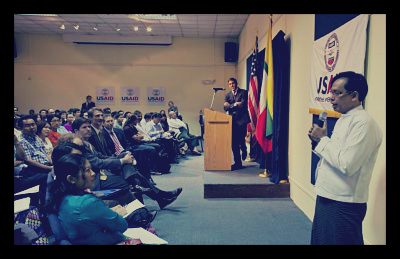
The U.S. Agency for International Development (USAID) has partnered with U.S. technology and communications giant, Cisco, to provide Burma with two new technical education centers. The two Cisco Networking Academies will provide valuable skills in information and communications technology to the developing nation, and provide citizens with job-ready abilities to bolster the country’s growing information and communications tech (ICT) industry.

The USAID Administrator, Dr. Rajiv Shah, has said that technology infrastructure can create stable and continued economic growth and development, and that “ICT can expand economic opportunities, transform public service delivery, and provide more opportunities for citizen engagement.”

Cisco has been a continual partner of USAID, having established networking education centers in over 165 countries, which have provided relevant skills for entry-level careers in ICT while also developing other valuable general career abilities including “problem-solving, collaboration, and critical thinking.”

In Burma, Cisco has agreed to donate the equipment needed to start the two Networking Academies and the training for 15 faculty members. Sandy Walsh, Director of Cisco’s Social Innovation Group, said that Cisco is dedicated to providing education to help continue technological development in “emerging economies,” and that the academies will aid Burmese citizens in gaining career skills needed in the 21st century.

Three additional American tech leaders, including Intel, Microsoft, and Hewlett-Packard, participated in a technology delegation to Burma, also led by USAID, in hopes of continued collaboration that will increase internet access and promote digital literacy and government openness. The partnership between USAID and Cisco hopes to create alliances with American tech companies, the local government, and the private sector to increase “social and economic development” using technological resources.

 – Christina Kindlon

Source: USAID
Photo: VOA

March 17, 2013
https://borgenproject.org/wp-content/uploads/borgen-project-logo.svg 0 0 Borgen Project https://borgenproject.org/wp-content/uploads/borgen-project-logo.svg Borgen Project2013-03-17 09:01:592020-05-01 20:05:56USAID and Cisco Promote Development in Burma
Food & Hunger, Food Security, Global Poverty, Health, Technology

Arab Spatial Tracks Food Security

Arab Spatial Tracks Food SecurityA new web-based tool called Arab Spatial has recently launched and will provide aid workers and researchers access to valuable data relating to food security and malnutrition information throughout the Middle East. Previously, aid workers and activists noticed a lack of data on resources including food and water – data that is typically used in important policy and resource distribution decisions. Even if a country did have relevant information on these issues, the data was not efficiently being shared between countries and regions.

Now, researchers and aid workers can turn to Arab Spatial, an online tool developed by the International Food Policy Research Institute (IFPRI) that should house all food security information for the Arab world in one easily-accessible location.

Food security is an enormous issue in the region, where many countries must import many of their basic food staples, and where war and fighting have exacerbated hunger and perpetuated poverty. Abeer Etafa, the representative of the World Food Program, said that “millions of families” throughout the region were having difficulties obtaining food, and with the events surrounding the Arab Spring and other civil unrest and upheaval, have had to face rising instability and lost wages as well.

Although the struggle of millions to obtain the food necessary to survive is known, it has been very difficult for researchers and aid organizations to quantify; IFPRI says that not many countries in the Middle East have poverty figures widely available, and even when they do, it is unclear how accurate said figures are.

To combat this issue, Arab Spatial will aggregate data on food based on national, regional, and local areas, and the data can be used to create maps showing “more than 150 food security and development-related indicators related to poverty, malnutrition, disease, production and prices, public finances, exports and imports.”

IFPRI also asserted that economic development and proper nutrition and food security are vital to each other, and one cannot be successful without the other. It is clear that eradicating the challenges to make food accessible will create sustained economic growth and development throughout the Middle East.

IFPRI hopes that Arab Spatial will be used by government officials, researchers, humanitarian aid workers, and journalists, and most importantly, decision-makers in addressing food security.

– Christina Kindlon

Source: IRIN

March 15, 2013
https://borgenproject.org/wp-content/uploads/borgen-project-logo.svg 0 0 Borgen Project https://borgenproject.org/wp-content/uploads/borgen-project-logo.svg Borgen Project2013-03-15 19:31:382024-05-24 23:44:55Arab Spatial Tracks Food Security
Technology

How Myanmar Will Avoid Being Earth’s Most Isolated Country

How Myanmar Will Avoid Being Earth's Most Isolated CountryHaving less cell phone usage than North Korea has made Myanmar one of the most isolated countries on the planet. Upon the United States’ decision to lift sanctions on the country, USAID was happy to sponsor a delegation of executives from Cisco, Google, Microsoft and other organizations to explore the possibility of establishing tech training centers in the newly open Myanmar market.

A little over two decades ago, the U.S. imposed sanctions on Myanmar when the military junta killed thousands of civilian protestors in one brutal onslaught. Currently, a new civilian government has been established and many of these sanctions have been lifted.

Companies like Google and Microsoft are offering Myanmar more than just tech services by establishing training centers in the country. The effect of these centers will be a reinforcement of Myanmar’s technological infrastructure.  The widespread availability of internet and cellular service allows a greater opportunity for online learning and social organizing via websites such as Twitter which can be used through either SMS messages or the internet.

Another avenue that becomes easier to access is international development and trade. By contributing to tech growth, Google, Cisco and Microsoft are also helping Myanmar contribute to the global economy. This in turn allows Myanmar to grow its own economy and strengthen foreign relations.

-Pete Grapentien
Source Yahoo News

March 12, 2013
https://borgenproject.org/wp-content/uploads/borgen-project-logo.svg 0 0 Borgen Project https://borgenproject.org/wp-content/uploads/borgen-project-logo.svg Borgen Project2013-03-12 11:04:192024-05-24 23:43:49How Myanmar Will Avoid Being Earth’s Most Isolated Country
Page 29 of 29«‹272829

Get Smarter

  • Global Poverty 101
  • Global Poverty… The Good News
  • Global Poverty & U.S. Jobs
  • Global Poverty and National Security
  • Innovative Solutions to Poverty
  • Global Poverty & Aid FAQ’s
Search Search

Take Action

  • Call Congress
  • Email Congress
  • Donate
  • 30 Ways to Help
  • Volunteer Ops
  • Internships
  • Courses & Certificates
  • The Podcast
Borgen Project

“The Borgen Project is an incredible nonprofit organization that is addressing poverty and hunger and working towards ending them.”

-The Huffington Post

Inside The Borgen Project

  • Contact
  • About
  • Financials
  • President
  • Board of Directors
  • Board of Advisors

International Links

  • UK Email Parliament
  • UK Donate
  • Canada Email Parliament

Get Smarter

  • Global Poverty 101
  • Global Poverty… The Good News
  • Global Poverty & U.S. Jobs
  • Global Poverty and National Security
  • Innovative Solutions to Poverty
  • Global Poverty & Aid FAQ’s

Ways to Help

  • Call Congress
  • Email Congress
  • Donate
  • 30 Ways to Help
  • Volunteer Ops
  • Internships
  • Courses & Certificates
  • The Podcast
Scroll to top Scroll to top Scroll to top