• Link to X
  • Link to Facebook
  • Link to Instagram
  • Link to TikTok
  • Link to Youtube
  • About
    • About Us
      • President
      • Board of Directors
      • Board of Advisors
      • Financials
      • Our Methodology
      • Success Tracker
      • Contact
  • Act Now
    • 30 Ways to Help
      • Email Congress
      • Call Congress
      • Volunteer
      • Courses & Certificates
      • Be a Donor
    • Internships
      • In-Office Internships
      • Remote Internships
    • Legislation
      • Politics 101
  • The Blog
  • The Podcast
  • Magazine
  • Donate
  • Click to open the search input field Click to open the search input field Search
  • Menu Menu

Tag Archive for: Technology

Posts

Global Poverty, Technology

Google Street View Depicts Mongolia

Google Street View Depicts Mongolia - The Borgen Project
Since its launch in 2007, Google Street View, an extension of Google Maps, has provided users with realistic views of locations they might like to visit. People can actually navigate entire countries without leaving their homes thanks to these technologies and the number of popular tourist destinations has greatly increased.

Google Street View actually used their Google Trekkers—15 fixed-focus lenses with 360-degree panoramic shots every three meters—to capture incredibly important aspects of Mongolian culture. Nadaam, also known as the Three Games of Men, was going on in the capital city of Ulaanbaatar on July 11-13 this year as the Google Trekkers made their way through. They were joined by CNN who covered the story.

Nadaam is a type of Mongolian Olympics composed of archery, wrestling and horse racing. The horse racing event is particularly interesting because jockeys are generally ages five to thirteen and are raised to ride horses even before they can walk. According to residents, the competition itself focuses more so on the skill of the horses and their compatibility with their riders rather than the rider’s command over the horses.

“So far, Google has captured breathtaking landscapes across five cities and six provinces including Ulaan Baatar, Darkhan, Khenti, Dornogovi, and Selenge,” and they’ve been mapping the area since Oct. 2014. Though falling copper prices and low investor confidence has placed Mongolia in financial difficulties, Google hopes to raise tourism profiles.

“At Khursgul Lake, the second-largest freshwater lake in Asia, the team trekked across its frozen surface on a horse-drawn sled, providing breathtaking views of Mongolia’s landscape.”

Including its projects in Mongolia, Google Street View has also managed to capture remote islands, the Pyramids of Giza and the Amazon Jungle.

– Anna Brailow

Sources: CNN, Sky
Photo: Discovery News

August 29, 2015
https://borgenproject.org/wp-content/uploads/borgen-project-logo.svg 0 0 Borgen Project https://borgenproject.org/wp-content/uploads/borgen-project-logo.svg Borgen Project2015-08-29 01:30:242024-06-05 03:46:42Google Street View Depicts Mongolia
Technology

Five Countries on the Rise

countries
As our world becomes increasingly globalized, formerly developing nations are gaining access to new technology and experiences that have allowed them to jump leaps and bounds in the matter of a few years. This rapid evolution of a country’s standing has led to massive changes in the global community as a whole, but several countries stand out above the rest as strong contenders in the globalized market. Five countries on the rise can be found below:

1. Turkey

Over the past year, Turkey experienced a growth rate of over 11 percent, one that surpasses even that of China. This nation has been able to foster its manufacturing and democratic systems gently even as the nations around it fell to the pressure of the global community’s demands. Turkey’s focus on exports has increased job availability overall and has drastically reduced poverty in the nation. Turkey has realized that the key to success is to focus on the happiness of its people, and with increased employment opportunity and decreased poverty, Turkey has set itself up to become a major world power.

2. Mexico

According to a recent Brookings Metropolitan Policy release, Mexico City is one of the most economically vibrant cities in the world. The 12th largest economy in the world has become a hub for business, and through promotion of entrepreneurial spirit, it has experienced income and employment growth. All of this growth is steady because much of Mexico’s export profits come from the United States, which provides a steady dollar currency. Once a hub for crime and poverty, Mexico is quickly becoming a contender for one of the world’s strongest and happiest nations.

3. Democratic Republic of the Congo

For several decades, people have associated the Congo with horrible war, poverty, disease and death, but with the promise of a more stable government, things are beginning to look up for the Congolese people. Much of the war that takes place in the Congo is over its bountiful mineral fields, which provide vital minerals that are used in almost every electronic device today. Major companies buy their products from war-torn regions without realizing what their needs are doing to the people within, but with the recent increase in more conscientious shopping, companies are beginning to watch what they use. The promise of a stable government means a decrease in war, an increase in legislation, an increase in local miners getting mineral profits and an overall decrease in poverty throughout the DRC.

4. India

While India has been on the rise for quite a few years now, it continues to grow and develop, and with the second highest population in the world, it has set itself up to become one of the world’s new superpowers. India’s main asset is its tech abilities and manufacturing. Several companies have plants in India that create their products for export, and with the massive amount of manpower that India can provide, they find no issues arising. India’s poverty rates continue to decline and their education rates continue to increase and will continue to do so with the use of the U.N. Standard Development Goals, essentially creating a brighter future today.

5. Nigeria

Nigeria has long been thought of as the most developed country in Africa and has been cited in several speeches and talks by citizens and politicians as such. With the strong technology boom coming in from the West as well as the investment in Africa by foreign NGOs, Nigeria has set itself up to become the strongest nation in Africa. With a more stable government and a more united public it will become a force to be reckoned with in the global community.

While several nations, such as China and the United States, have long enjoyed the relaxation and innovation that comes with life on the top, it appears as though they need to slide over and make some room because these five countries are ready to join them.

– Sumita Tellakat

Sources: The Atlantic, CS Monitor
Photo: CS Monitor

August 22, 2015
https://borgenproject.org/wp-content/uploads/borgen-project-logo.svg 0 0 Borgen Project https://borgenproject.org/wp-content/uploads/borgen-project-logo.svg Borgen Project2015-08-22 01:30:122020-07-02 10:24:13Five Countries on the Rise
Development, Global Poverty, Health, Technology

CNNMoney’s Upstart 30 Project

upstart
CNNMoney launched its Upstart 30 Project in late June. It profiles 30 young innovative startups and their respective founding entrepreneurs and investors.

The list is broken down into five categories: the idealists, the funders, the simplifiers, the playmakers and the futurists. All of which comprise individuals from a variety of fields.

To take part, startups must be established in the United States, be no younger than five-years-old, and harness technology in hopes of making the world a better place. After a series of tests, the Upstart 30 Project was formed. The list is diverse in geography, gender, race, and industries.

Whether it is a solution to the current archaic U.S. school system, an agricultural phenomenon in a box, or an ingenious medical tool, Upstart 30 spotlights visionaries that are making serious headway, all before the age of 40.

While many of the startups tackle commonplace inefficiencies, several address national and global issues, and have the potential of reducing global poverty in unlikely ways.

BioBots brings personalized medicine tools. According to its profile on CNNMoney, the startup’s first product was a 3D printer for building cells, tissues and organs. BioBots’ printer is uniquely small and inexpensive. It can fit on a desktop and is priced at around $5,000. For now, the bio printer is for research. CEO Danny Cabrera, 22, said that his two co-founders and him are hoping to broaden their client base to include pharmaceutical companies who could use their products for testing cancer drugs. BioBots has a bright future in the United States, but could do wonders internationally.

Freight Farms is a farm in a box. Founders, Brad McNamara and Jonathan Freidman, created the boxes out of old shipping containers. The insulated, camera-equipped devices use LED lights and advanced monitors to regulate weather conditions, nutrient intake and carbon dioxide levels, all without soil. The startup launched in 2011, and already made $5 million. At $76,000 apiece, restaurants, schools, and hotels have mainly bought the boxes. While this is very expensive, the payoffs are incredible: each container produces 4,000 to 6,000 plants a week according to Shawn Cooney, a small business owner testing the Freight Farm. This is nearly 80 times more than Cooney would have gotten from a conventional farm space. The high cost keeps Freight Farms away from the developing world but, if ever brought down, Freight Farms could increase food security around the world.

uBiome scans a person’s body and micro biome. uBiome kits locate where diseases take root, and how they escalate. According to CNNMoney, uBiome completely changes the ways we examine anxiety, diabetes and heart disease. The $79 kits test bacteria, analyze results, and compare data to other profiles. This quick and cutting-edge device could easily help millions of people in developing nations.

Plangrid is a paper-saving blueprint alternative for construction engineers. By using a tablet to alter and share blueprints, Tracy
Young, Ryan Sutton-Gee, Ralph Gootee and Kenny Stone are making sure buildings are drawn from reliable sources. So far, Plangrid has been a success since it began only three years ago. The app helped build over 90,000 projects worldwide. Plangrid, however, has a long way to go until it can reach rural populations most in need of new buildings.

– Lin Sabones

Sources: PlanGrid, CNN
Photo: CNNMoney

August 21, 2015
https://borgenproject.org/wp-content/uploads/borgen-project-logo.svg 0 0 Borgen Project https://borgenproject.org/wp-content/uploads/borgen-project-logo.svg Borgen Project2015-08-21 10:23:502024-12-13 17:54:01CNNMoney’s Upstart 30 Project
Global Poverty, Technology

Phone App Brings Change to African Farmers

Farmerline
Africa has a large amount of untapped potential in the agricultural market. If resources were utilized correctly, it could feed itself as well as parts of other continents.

Today, Africa still relies on food imports from abroad to feed its rising population. The UN has warned that if African farming continues at its current rate, by 2050 the continent will only be fulfilling 13 percent of its food needs.

Farmers continuously fail to take advantage of the land’s natural advantages due to their lack of access to information on finance and marketing.

In Ghana, there is only one agricultural extension officer for 2,000 farmers. These officers provide farmers with training and information but are unable to communicate with each of them enough to help farmers improve due to a lack of time and resources.

Alloysius Attah, a 26-year-old Ghanaian entrepreneur, has invented an innovative solution to farmers’ lack of access to information that will increase yields and profits of local farmers.

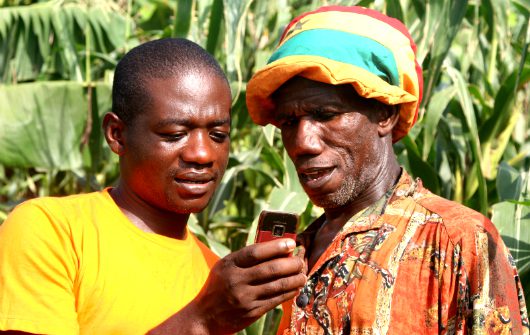
In 2013, he founded the company Farmerline, a phone app that provides smallholder farmers with information in the form of voicemails and text messages.

“Farmers receive important updates on market prices, weather forecasts, financing, input dealers, and farming tips. It also links them to agribusinesses and organizations who have previously struggled to access them” explains How We Made it In Africa.

Farmerline has been successful— in only two years, it is helping 200,000 farmers across Ghana, Malawi, Sierra Leone, Cameroon and Nigeria. The company plans to expand across Eastern Africa at the end of 2015.

When Attah initially started his application, he discovered that many of the farmers are illiterate. They could not read text message notifications. “So we moved to voice messages. Now our application sends information to farmers in any language – such as Swahili or any of the local languages in Ghana,” said Attah to African business publication How we Made it in Africa.

The application is engineered specifically for individual farmers. Weather forecasts are reported based on the GPS coordinates of where a farmer’s farm is located. Agronomic this are based around the season of the year as well as the type of crop the farmer is growing.

Attah’s passion for agricultural improvement in Africa began when he was five. He lived with his aunt who was a small-scale, rural farmer in Ghana. He witnessed the problems she and so many others like her faced daily.

In college, Attah stumbled upon an agricultural class. “I actually thought the course was going to be about oil, gas and all that. But I soon realized it was about wildlife, forestry and agriculture. It is like fate somehow placed me in the path of agriculture” he told How We Made It in Africa.

“Coming from a normal rural Ghanaian background of limited resources, to becoming someone who can overcome challenges and use those limited resources to solve problems in society, makes my family and community proud,” said Attah.

The Organization has also received various international awards. Attah won the World Bank and InfoDev mAgri Challenge and World Summit Youth Award and was a 2014 Global Echoing Green Fellow.

– Margaret Anderson

Sources: Farmer Line, How We Made It In Africa
Photo: Techmoran

August 8, 2015
https://borgenproject.org/wp-content/uploads/borgen-project-logo.svg 0 0 Borgen Project https://borgenproject.org/wp-content/uploads/borgen-project-logo.svg Borgen Project2015-08-08 01:30:272024-05-27 09:26:18Phone App Brings Change to African Farmers
Aid, Humanitarian Aid, Technology

Wireless and Emergency Communications Tech in Disaster Relief

Wireless and Emergency Communications Tech in Disaster Relief
When disaster strikes, as it did in April 2015 in Nepal, there is an immediate need for life-saving aid; the distribution of food, water and shelter becomes paramount to relief efforts. However, in the 21st century, technology is becoming an increasingly necessary facet of day-to-day functionality. As the world’s rural regions develop and technology becomes cheaper and more efficient, the more people rely on that technology to function. Today, even in the world’s most remote and impoverished regions, things like Internet access and mobile phone service are just as important to survival and well-being.

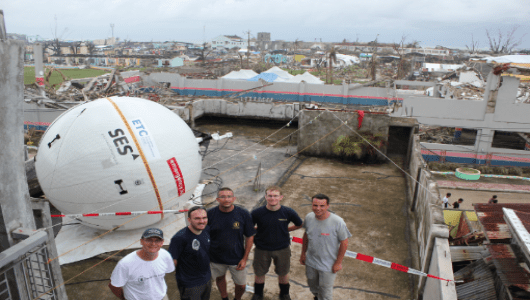
In addition to providing life-sustaining resources, aid workers are now being called upon to provide things like Wi-Fi access and cellular support. The leading provider of emergency communications is the United Nation’s Information and Communication Technologies Task Force (ICT). Within 48 hours of a disaster, ICT deploys its Emergency Telecommunications Cluster, or ETC.

The ETC is a series of connected balloons that act like cell phone towers and routers that can be set up to provide wireless Internet and cellular service in disaster zones. These services enable survivors to contact family or other outside assistance, find routes out of the disaster zone, or transfer vital funds. Those providing assistance benefit from these services as well, for they can receive vital information from the survivors themselves on the exact situation on the ground.

Today’s digital world makes it nearly impossible to do any work without staying connected. By repairing or installing communication networks, aid workers help themselves as much as they help survivors. With Wi-Fi and cell service, workers can more effectively communicate and coordinate their efforts, and thus deliver crucial assistance quicker.

Wi-Fi is not the only advanced technology being utilized in disaster relief. Drones have recently been implemented to aid humanitarian missions. Drones can access remote areas quickly and survey locations with cameras, which would otherwise be dangerously inaccessible. In fact, the ongoing relief efforts in Nepal have seen the largest deployment of drones in the history of disaster relief. The devices are currently being used to survey the damage, search for signs of survivors, and help relief organizers further coordinate their efforts. Drones, when used in a humanitarian capacity, have the potential to produce a significant impact. Perhaps in the not-so-distant future, autonomous drones will be able to drop food, medicine and water far more quickly than actual aid workers.

– Joe Kitaj

Sources: ICT, ATISW, Direct Relief
Photo: ICT

August 2, 2015
https://borgenproject.org/wp-content/uploads/borgen-project-logo.svg 0 0 Borgen Project https://borgenproject.org/wp-content/uploads/borgen-project-logo.svg Borgen Project2015-08-02 07:41:492020-07-06 07:01:44Wireless and Emergency Communications Tech in Disaster Relief
Food & Hunger, Global Poverty, Hunger, Technology

New Smartphone App Allows You to Share Your Leftovers

leftovers
Of the challenges of the 21st century, one of the largest in terms of magnitude and prevalence is food insecurity. The term food insecurity is used loosely to define inconsistent access to food, due to limitations of resources.

The issue is unfortunately highly prevalent in not only the developing world but in the United States as well. According to the United States Department of Agriculture, 1 in 6 Americans faces food insecurity. This translates to roughly 50 million Americans in total.

These staggering numbers are indicative of what most of us are already quite familiar with: the issue of global hunger. However, the interpretation of its causes, and consequently the approach to its solutions, has been controversial. Many scientists, particularly biotechnologists, regard higher food production as the solution; and in many instances, it is effective.

As a result of agronomical developments, the world today is producing more food per inhabitant than ever before. However, the strides made in scientific innovation have not paralleled the alleviation of global hunger.

In fact, the implications of these discrepancies lie in the inequality of food distribution. For many people, food remains unavailable despite the copious amounts of food that go to waste each day. According to the Environmental Protection Agency, almost 35 million tons of food were wasted in the United States in 2013. Estimates by the National Resource Defense Council have estimated that 40% of all food produced in America is wasted.

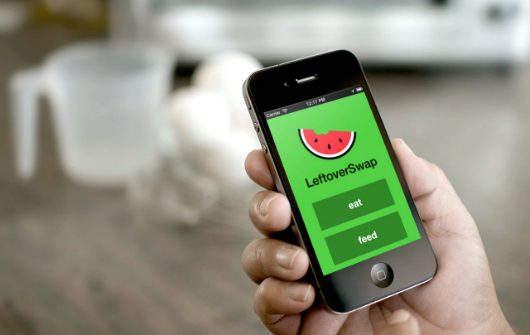
To tackle the issue of wasted food, a Seattle-based startup has come up with a creative solution based on smartphone technology: Leftover Swap. Leftover Swap is a smartphone app that allows users to share their leftover food with others before it goes to waste. The users can snap a photo of their leftovers, and upload it on the app with a location tag. Anyone looking for food can then find all the shared food in their location. To make the app safer for users, it allows for instant messaging within the app where users can agree on a location to pick up food. The app also does not allow any user to charge for their leftover food.

The benefits and the range of applications for the app remain dubious: people who own smartphones are not necessarily the ones in dire need of free food provision. However, as smartphones become cheaper, it may be possible to reach marginalized populations. Moreover, it can be a way for food recovery networks to salvage more food that would have otherwise gone to a landfill.

Many people are also concerned about the degree of safety of food. The Health Department does not evaluate this food, as it is not technically being sold. In spite of the app’s continual reminders to only share food one would eat itself, the hygienic status of the food cannot be positively reaffirmed. The co-founder of the app, Dan Newman, contends that there is a certain degree of faith that needs to be put into this effort, as would be the case if one was being given food as a guest.

The app is to date the only app of its kind and faces some hurdles before it can reach the objectives of sustainability and food equality that it intends. However, it is a step in the right direction, and as interest in the app increases, it is more than likely that we will see improvements both from this app and potential competitors.

– Atifah Safi

Sources: Washington Post, NPR, , NRDC, Feeding America, USDA, Leftover Swap
Photo: Newsana

August 2, 2015
https://borgenproject.org/wp-content/uploads/borgen-project-logo.svg 0 0 Borgen Project https://borgenproject.org/wp-content/uploads/borgen-project-logo.svg Borgen Project2015-08-02 07:14:022024-12-13 17:52:09New Smartphone App Allows You to Share Your Leftovers
Global Poverty, Technology

Making Dinner Using the Solar Reflector

Solar_Reflector
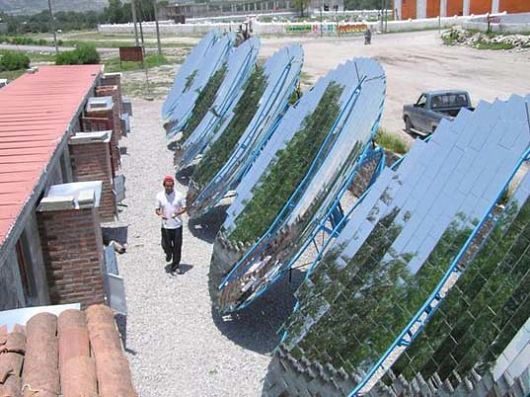
In 2013, Gregor Schaper, a German entrepreneur, installed a series of circular solar panels in a town just outside of Mexico City. This is the home of Schaper’s Solar Reflector.

The Solar Reflector is comprised of solar panels that follow the course of the sun throughout the day to maximize absorption while focusing its light on one point throughout the year. This is similar to when a kid tries to use a magnifying glass to start a fire. The heat is collected as the Solar Reflector follows the sun and is then projected onto one specific spot in a kitchen.

This specific spot can reach up to 1000° Celsius, making it useful for baking, cooking and frying. The temperature is kept consistent with an integrated stone core in the kitchen. The Solar Reflector itself is made up of steel sections with highly reflective aluminum, cut into a 170-square-foot disks.

Trinysol, the company Schaper founded, manufactures the panels and cost about $4,000 to built. Despite the cost, once the Solar Reflector is built, it is free to operate and produces no greenhouse gas emissions. On average, each reflector saves 16 gallons of gas each month.

For small to medium sized businesses, this technology could be game changing. For small restaurants, bakeries and tortillerias, it could save money when the price of fossil fuels is high, creatubg jobs all the while. In addition, since the Solar Reflector projects the light right into their kitchen, it saves people from from going outside and braving the heat during the exceptionally hot summer days.

“Tortillería La Fe” in El Sauz near Mexico City was one of the first small businesses to use Schaper’s Solar Reflector. According to Schaper, the shop used to spend over $1,000 a month on gas in order to cook tortillas but now gets it for free with the Solar Reflector. The initial cost of the Solar Reflector is significant but the outcome is worthwhile.

– Hannah Resnick

Sources: Empowering People, Future Challenges, Inhabit, Venture Beat
Photo: Inhabitat

August 1, 2015
https://borgenproject.org/wp-content/uploads/borgen-project-logo.svg 0 0 Borgen Project https://borgenproject.org/wp-content/uploads/borgen-project-logo.svg Borgen Project2015-08-01 01:30:332024-12-13 17:52:10Making Dinner Using the Solar Reflector
Global Poverty

The SunSaluter: A One-Stop Shop For Power and Water

SunSaluter
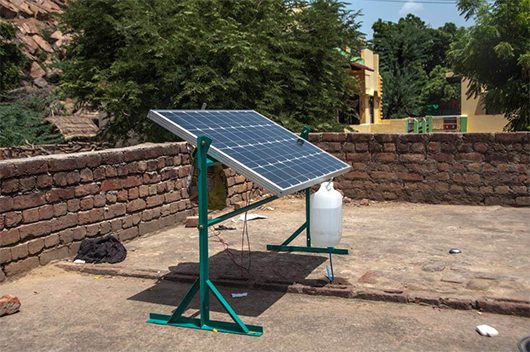
Eden Full was 19-years-old when she dropped out of Princeton University to turn her high school science project into a global technology innovation. She created the SunSaluter, a solar panel rotator designed to collect energy and produce four liters of clean drinking water at the same time.

The SunSaluter is a low-cost solar panel placed on a single axis that rotates towards the sun. The solar panel is mounted on a rotating frame, with a weight suspended from one end, and a specially designed water clock suspended on the other. As the sun rises, the water clock is heated, which forces the water to empty through a purifier and into a container. This process produces four liters of clean drinking water each day.

The rotation is a passive movement that increases the efficiency of the solar panels by 30 percent. The SunSaluter is built using low-tech tools and materials, making it a perfect fit for the developing world.

Not only does the SunSaluter produce more energy that most solar panels because of it’s rotation, it also saves time and energy for those who use it, who otherwise would spend time collecting wood or spending money on gas and electricity. It provides families with electricity and clean water, providing them with resources they did not previously have access.

In 2012, Full installed the first SunSaluters in Uganda, Kenya and Tanzania. In an interview with Triple Pundit, she explains the value of the simplicity of the SunSaltuer. “A lot of the people, mostly women, who gather the water and who would be maintaining these devices, have never gone to school. So it’s very important to actually go out into the field to figure out what kind of technology is needed to match that lifestyle.”

However, the SunSaluter is still a work in progress. Full is working on a business strategy to fund the production, as well as to maximize the efficiency of the product itself. Full is bright and determined, and is pushing for success of the SunSaluter.

– Hannah Resnick

Sources: Business Insider, Clean Technica, SunSaluter, Triple Pundit
Photo: Flickr

July 30, 2015
https://borgenproject.org/wp-content/uploads/borgen-project-logo.svg 0 0 Borgen Project https://borgenproject.org/wp-content/uploads/borgen-project-logo.svg Borgen Project2015-07-30 15:38:592024-05-27 09:26:23The SunSaluter: A One-Stop Shop For Power and Water
Global Poverty, Technology

Effects of Emerging Technologies on Geopolitics

Effects of Emerging Technologies on Geopolitics
Although the final episode aired in September of 2013, Futurama remains a popular TV series today as it appeals to a range of generations, from youths to adults. This series is an exaggerated representation of a prediction of 31st century life: exploration and the discovery of life in countless other galaxies, acknowledgement of robots as true life forms and an even greater reliance on up-and-coming technologies.

Although it is a satire, the show does address interesting points about this human-techno relationship that applies even in the 21st century. This is evident, for example, in today’s use of drones.

It is speculated that, in the future, artificial intelligence systems will take over most jobs currently held by humans. Amazon’s new drone delivery system promises faster, more efficient deliveries, thus lessening the need for other methods of package delivery. The drone could drop off a package on someone’s doorstep in approximately 30 minutes or less. While this system, overall, would be more convenient for the general public, it would take out a good number of jobs.

However, there is a bright side to this situation. More jobs relating to drones, such as drone operations and drone assembly, will open to the public, and newer technologies that make these drones easier to operate will open up jobs for those with fewer qualifications.

Another important aspect to address is the ease at which people communicate through technological mediums. According to Kristel van der Elst, head of Strategic Foresight of the World Economic Forum, “Technology will not only allow us to be constantly in contact in an increasingly close-to-reality manner, it will also soon enhance communication beyond what traditional face-to-face interaction could ever allow.” Van der Elst also said that “technology has the potential to redefine the relationships between civil society, government and business.” Communication technology improves the ease of communication in geopolitics around the world.

More often, in the media, there have been discussions about how technology helps and hinders communication. Also addressed is the fact that the more we communicate via this medium, the less private human interaction becomes. Criminals are now turning to new technologies to communicate, and governments have limited abilities to regulate threats of attack.

So, are we to regulate and respect human privacy? Or not to regulate and allow for more criminals to make the utmost use of technology? Authors have suggested that instead of trying to fight the evolution of technology, the government should find new methods of integrating technology into their everyday lives and into geopolitics, which would greatly improve internal operations in local governments as well as appeal to the public.

– Anna Brailow

Sources: Scientific American, GCN, Comedy Central, YouTube
Photo: CNN

July 17, 2015
https://borgenproject.org/wp-content/uploads/borgen-project-logo.svg 0 0 Borgen Project https://borgenproject.org/wp-content/uploads/borgen-project-logo.svg Borgen Project2015-07-17 10:47:492024-12-13 17:54:02Effects of Emerging Technologies on Geopolitics
Technology

PowerGen’s Revolutionary Microgrid Empowers Kenya

On January 27, 2015, PowerGen, among three other innovative companies, won a global competition in which 30 total participants enter four categories: education, health, energy, and cities.

PowerGen Renewable Energy developed a microgrid that powers homes and businesses at a low cost. This environmentally sound and accessible energy source is making life easier for many residents of Kenya.

The competition was overseen by 1776, a U.S. tech incubator. Winning in equal status with PowerGen were Health E-Net, which connects patients to medical facilities, tasKwetu, a project management tracker and eKitabu, an online East African bookstore. Though, with a majority of Kenyans relying on diesel generators, kerosene lamps and charcoal as power sources, PowerGen is an important and extremely useful life-changing alternative.

Originally called WindGen Power, PowerGen is a micro-utility company working in East Africa. Their renewable energy products are dominantly solar-powered though wind is still utilized as a resource.

Solar-power products are cheap and simple to maintain. Powered by fuel cells and solar panels, micro representations of electricity grids are local. They have 1.4kW of solar panels, 9kWh of batteries and 3kW converters. These are known as a “PowerBoxes” to locals.

There are 600 million people without electricity in sub-Saharan Africa. PowerGen supplies micro-grids to people in Kenya, Uganda, Tanzania, Zambia, and Somalia. This system is utilized by lower income customers who run small businesses such as hair salons, restaurants, and guest houses. Rural villages and towns benefit the most from their micro-grids.

Take Lillian Muthoni, for example, and her transition to the micro-grid featured by TED Talks. She manages a “PowerBox” in Nkoilale, Kenya, which is 250 kilometers West of Nairobi. She replaced solar lights and a diesel generator with the “PowerBox.” She once paid $130 a month, but the “PowerBox” now only costs her $22 a month. She owns a restaurant and likes to entertain her customers with music and television. Since the switch to the cost-effective micro-grid, she has even managed to buy a refrigerator.

PowerGen’s objective is to connect customers with the outside world. Since Africans are becoming more familiar with mobile phones and online access, PowerGen has begun to train new users how to handle mobile devices powered by the micro-grid.

This further connects them to information and the outside world. Most Africans typically use their phones to access credit accounts and to prepay for their energy use online. People can keep track of payments more easily too.

In 2014, PowerGen partnered with KIVA in a seven-year-loan plan. They first tried to improve conditions in Oloolaimutia Village by installing a micro-grid. Lighting, television, refrigeration and a medical clinic were supported by its energy output. The company raised $9,780 within two days.

According to a January 2015 TED Talk, PowerGen makes $10,000 in revenue each month. To give some perspective, 10 micro-grids were powering Kenya in 2014.

Competition has sparked among other micro-grid marketers. Recently, a power connectivity project was initiated in Kenya, funded by the African Development Bank (AfDB) and the Kenyan government in order to benefit 314,200 households. An accumulation of $150 million funds this project.

The goal of the Last Mile Connectivity Project hopes to add 1.5 million Kenyans to the national grid and connect 70% of rural houses by 2017. The initiative, which begins in September 2015, would require each customer to pay $165.

SteamaCo joined grid-building innovators like PowerGen, supporting 30 grids—26 of which are in Kenya and 4 in Tanazania, Renin and Nepal—with even cheaper offers, but a similar operating system. Predicting that internet use will double in 5 years, they take pride in their over-the-phone online monitoring systems.

Though PowerGen is neck-in-neck with other competing systems, their goal remains the same. The increase in competition breaches the gap between unconnected customers and connected ones. With 1.2 billion still without energy, PowerGen and companies like it are connecting less fortunate families who can then experience a richer and easier life.

– Katie Groe

Sources: 1776, Disrupt Africa, PowerGen Renewable Energy, TED, GVEP International, African Review, The Guardian
Photo: Ted


July 15, 2015
https://borgenproject.org/wp-content/uploads/borgen-project-logo.svg 0 0 Borgen Project https://borgenproject.org/wp-content/uploads/borgen-project-logo.svg Borgen Project2015-07-15 11:20:492024-06-05 02:12:08PowerGen’s Revolutionary Microgrid Empowers Kenya
Page 23 of 29«‹2122232425›»

Get Smarter

  • Global Poverty 101
  • Global Poverty… The Good News
  • Global Poverty & U.S. Jobs
  • Global Poverty and National Security
  • Innovative Solutions to Poverty
  • Global Poverty & Aid FAQ’s
Search Search

Take Action

  • Call Congress
  • Email Congress
  • Donate
  • 30 Ways to Help
  • Volunteer Ops
  • Internships
  • Courses & Certificates
  • The Podcast
Borgen Project

“The Borgen Project is an incredible nonprofit organization that is addressing poverty and hunger and working towards ending them.”

-The Huffington Post

Inside The Borgen Project

  • Contact
  • About
  • Financials
  • President
  • Board of Directors
  • Board of Advisors

International Links

  • UK Email Parliament
  • UK Donate
  • Canada Email Parliament

Get Smarter

  • Global Poverty 101
  • Global Poverty… The Good News
  • Global Poverty & U.S. Jobs
  • Global Poverty and National Security
  • Innovative Solutions to Poverty
  • Global Poverty & Aid FAQ’s

Ways to Help

  • Call Congress
  • Email Congress
  • Donate
  • 30 Ways to Help
  • Volunteer Ops
  • Internships
  • Courses & Certificates
  • The Podcast
Scroll to top Scroll to top Scroll to top