• Link to X
  • Link to Facebook
  • Link to Instagram
  • Link to TikTok
  • Link to Youtube
  • About
    • About Us
      • President
      • Board of Directors
      • Board of Advisors
      • Financials
      • Our Methodology
      • Success Tracker
      • Contact
  • Act Now
    • 30 Ways to Help
      • Email Congress
      • Call Congress
      • Volunteer
      • Courses & Certificates
      • Be a Donor
    • Internships
      • In-Office Internships
      • Remote Internships
    • Legislation
      • Politics 101
  • The Blog
  • The Podcast
  • Magazine
  • Donate
  • Click to open the search input field Click to open the search input field Search
  • Menu Menu

Tag Archive for: Technology

Posts

Activism, Advocacy, Global Health, Global Poverty, Nonprofit Organizations and NGOs

How Do We End Global Poverty?

Putting an end to global poverty seems like a huge undertaking, but the world is making itself a better place every single day.

There is no one set way to end global poverty, and it definitely will not be happening overnight. However, so many people and organizations have already taken strides in order to make things better.

When many consider global poverty they think of commercials in which a man comes out and says, “With just a dollar a day you could save this young child’s life.” But global poverty is so much more than that.

There is a lot more work involved, for one, and there are a lot more people that need help. Those children in that commercial are just one facet of what global poverty really is.

So, how do we end global poverty? The answer is different for everyone. Perhaps, the question to ask is: “What am I good at?” and then find a way to turn talents into something that can be good for everyone around the world.

There are hundreds if not thousands of ways people, charities and politicians around the world are trying to help impoverished nations.

There are people who make billboards that can use humidity and rainwater to create freshwater for the surrounding people, or buildings that use special concrete to suck up air pollution, or even the smallest thing such as the “donate now” button from PayPal.

There are business tycoons that use impact investing to help companies that want to give lanterns to children in Africa so they can do their homework and learn by accelerating investments in the solar lighting industry.

In addition to impact investing, there are also businesses like Domino’s Pizza, Kentucky Fried Chicken and Wal-Mart that have expanded in the African Markets bringing jobs, food and have even created advocacy and buzz to help provide donations to the impoverished peoples near their companies.

There are numerous nonprofits and charities dedicated to advocacy, food collection, shoe donation, vaccine donation and more. Nothing But Nets is one that’s as simple as giving a family in Africa an insecticide-treated mosquito net to help prevent the spread of malaria. Even the smallest things can impact global poverty in a big way.

There are even charities like Girl Up, dedicated to simply telling young girls and boys they can get through it and become better. Global poverty can be impacted by something as simple as positive encouragement.

The question “How do we end global poverty?” may seem intimidating at first, but once you decide what you can do and see what everyone else is already doing, it seems a lot easier.

The goal of ending global poverty is attainable, all it takes is asking yourself two simple questions: “What am I good at?” and “How can it help end global poverty?”

– Cara Morgan

Sources: The Borgen Project, Girl Up, Nothing But Nets, Shot@Life, Wal-Mart
Photo: World Relief
June 7, 2014
https://borgenproject.org/wp-content/uploads/borgen-project-logo.svg 0 0 Borgen Project https://borgenproject.org/wp-content/uploads/borgen-project-logo.svg Borgen Project2014-06-07 16:00:052024-05-26 23:38:33How Do We End Global Poverty?
Technology

Internet.org

Currently two-thirds of the world’s population, a staggering 5 billion, live without access to basic internet. A lifestyle difficult to imagine here in the U.S. and other countries that have integrated internet into virtually every aspect of our daily lives. Internet.org, a group of powerful allies, is dedicated to utilizing their combined resources to change this.

Internet.org is an innovative partnership spearheaded by Mark Zuckerberg, the founder of Facebook,who is  committed to reducing the cost of bringing internet access to the world. The plan is to provide universal access to internet by lowering the cost of serving data by tenfold and reducing the amount of data required to run basic apps by the same amount. These major cost reductions are the keys to reducing the cost of internet access 100-fold. This is the amount of cost reduction that would make it possible to for a worldwide internet providing infrastructure to exist and this group is determined that it can be achieved through technological innovation.

According to Internet.org, providing universal internet access is a fundamental step in the struggle for global resource equality. Access power is so valuable today because the internet is “the backbone of the knowledge-based economy.” This statement recognizes the global shift currently taking place since the advent of the internet that is moving society from a mainly resource-based economy to knowledge-based economy. By providing another 5 billion people across the world to the knowledge economy an unprecedented change could take place., driving the economy up, and impacting poverty worldwide.

“The internet’s impact on global growth is rising rapidly. The internet accounted for 21% of GDP growth over the last five years among developed countries… the internet is also a catalyst for job creation,” according to McKinsey & Co. While this kind of economic growth may not be immediate, the plan has potential to stimulate economies worldwide.

In order to achieve this feat, Internet.org is delving into some large-scale innovative projects to combat even larger technological and socal challenges. Some of these include high-altitude, long-endurance planes, satellite systems and even lasers.

The founding members of this group are impressive, including tech giants Ericsson, Mediatek, Opera, Samsung, Nokia and Qualcomm. Looking at this short list of big names, it is not surprising that some have immediately questioned whether there are purely capitalist motives for these companies that are being disguised behind a humanitarian agenda.

However, in Deloitte’s study on the “Value of Connectivity” they found that “expanding internet access in developing countries to levels seen today in developed economies, we could increase productivity by as much as 25 percent, generating $2.2 trillion in GDP and more than 140 million new jobs, lifting 160 million people out of poverty,” while also having the ability to “deliver critical information on nutrition, hygiene and disease prevention. Once connected, people gain access to basic tools like health information, financial services and education that can help them live fuller, better lives and join the worldwide economy.” With the promise of this kind of massive economic benefit in the developing world, many believe that the motives behind this cooperative effort are somewhat irrelevant.

The concern over hidden agendas may provide the project with the high level of visibility both from those who are critical and those who are supportive. Ultimately, time will be what tells us if this project is able to have the kind of success that will drive the change that it expects.

– Leonna Spilman

Sources: Internet.org, McKinsey & Company

Photo: La Nacion

April 21, 2014
https://borgenproject.org/wp-content/uploads/borgen-project-logo.svg 0 0 Borgen Project https://borgenproject.org/wp-content/uploads/borgen-project-logo.svg Borgen Project2014-04-21 04:00:062024-12-13 17:50:14Internet.org
Development, Education, Technology

Uruguay Pioneers One Laptop Per Child Project

One Laptop Per Child
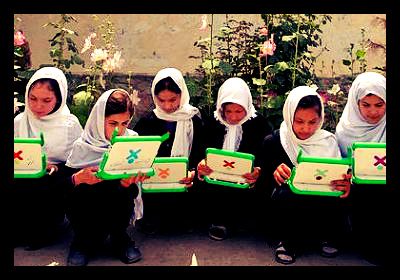
Uruguay was the first country in the world to provide a laptop to every primary school student. Plan Ceibal, Uruguay’s national One Laptop Per Child project, provided an XO laptop to each of the 395,000 children in first through sixth grades. The acronym Ceibal stands for Basic Informatic Educative Connectivity for Online Learning (Conectividad Educativa de Informática Básica para el Aprendizaje en Línea).

One Laptop Per Child, a non-profit based in Massachusetts, strives to provide each child in developing nations with a low-cost, low-power laptop. Through this technology, children become more engaged in their education and more connected to one another. The laptops are designed to be highly power efficient, with the ability to use solar power, generators, wind power or water power.

“This is not simply the handing out of laptops or an education program. It is a program which seeks to reduce the gap between the digital world and the world of knowledge,” Miguel Brechner explained, director of the Technological Laboratory of Uruguay and in charge of Plan Ceibal.

In Uruguay, the Plan Ceibal program has a cost of $260 per child, including maintenance costs, equipment repairs, teacher training and internet connection. The total figure represents less than 5 % of the country’s education budget.

The XO laptops, with Linux operating software, can connect directly to one another, meaning that a single point of access can be shared among a community of XO users.

Education in Uruguay is among the best of the Latin American countries. Uruguay has one of the highest adult literacy rates of all of Latin America. Elementary education is mandatory and free; secondary and technical education are also free. As the first country to implement a One Laptop Per Child program, Uruguay is setting the model for other countries, such as Rwanda, Nicaragua, Paraguay and Peru, which have all adapted a One Laptop Per Child program.

– Haley Sklut

Sources: One Laptop Per Child, Sources: BBC
Photo: Kit Guru

February 21, 2014
https://borgenproject.org/wp-content/uploads/borgen-project-logo.svg 0 0 Borgen Project https://borgenproject.org/wp-content/uploads/borgen-project-logo.svg Borgen Project2014-02-21 17:00:322024-05-26 23:13:23Uruguay Pioneers One Laptop Per Child Project
Global Poverty, Technology

Tech Hub for Rwanda Startups

Tech Hub for Rwanda Startups
To make positive change in the world, we don’t just need tons of money, popularity or political influence, we need the right tools.

By getting the right people together in one place, specifically one that fosters intellectual development and creativity, we can make great things happen.

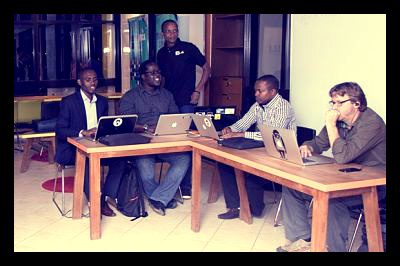
This is the belief of kLab, a tech hub in Rwanda where young people can bring their startup ideas and receive free Wi-Fi, workspace and mentorship from professors, business owners, and community leaders.

kLab – which stands for “knowledge lab” – has been operating for over a year and was officially launched in October 2013. The center is funded by the Rwanda private Sector Federation, the Rwanda Development Board and the Japan International Cooperation Agency.

“The knowledge lab is an innovation center where fresh and young graduates come to work on their projects, especially in the tech industry,” said Jovani Ntabgoba, kLab’s general manager, at the launch.

kLab currently offers the services of 21 different mentors to its over 80 tenants. The startups at the center range from online shopping websites to improved medical technology. The mentors offer these young people the ability to truly flesh out their ideas and turn them into much more.

“The culture is collaboration, but it’s not just collaboration; it’s positioning oneself at an age where you receive the best mentorship that you cannot find anywhere else in Rwanda,” Ntabgoba said. “At kLab we have all of the knowledge that is required for a tenant to develop their business.”

The power of this collaboration has led to the beginning of many bright futures for startups that focus on the vision of the country of Rwanda: to turn the nation into a knowledge-based economy. However, young Rwandans are challenged daily by a lack of skills due to the fact that the educational curriculum is not yet “innovation-oriented.”

One of the more recent kLab successes is GIRA ICT – a startup that combats a large roadblock to widespread internet usage in Africa: hardware prices. By partnering with big name manufacturers like Apple, Samsung, HP and Lenovo, GIRA ICT allows consumers to pay for their devices in monthly installments in order to increase hardware ownership across the country.

“We started as a group of five entrepreneurs, so we came into kLab and they gave us a free space to work in. We could enjoy internet… they provided us with mentors,” said project supervisor Alphonse Ruhigira.

GIRA ICT has also been collaborating with the government to supplement the One Laptop per Child program. Founded by Nadia Uwamahoro, this effort provides teachers with laptops that they can pay off over a span of four years. So far, this has helped about 100 teachers to attain laptops and the number is steadily increasing.

“It’s a brilliant innovation and she is doing brilliant business,” says Jean Philbert Nsengimana, Rwandan Minister for Youth and ICT of Uwamahoro. “She’s taken computers to places where they were seeing and touching them for the first time by lowering the affordability challenge.”

Through efforts such as GIRA ICT, kLab is pushing Rwanda towards its goal of becoming a middle-income country by the year 2020.

“I want you to understand the uniqueness of this kLab compared to many other iHubs in the region. The uniqueness of this one is that you are in this building and you are not alone in this building,” said Michael Bezy, associate director of Carnegie Mellon University in Rwanda, who works with kLab in order to provide mentorship to its tenants.

“You look at that and you say ‘I have entrepreneurs here, I have a world-class university, I have IT businesses and I have IT infrastructure.’ That looks to me like a mini Silicon Valley,” said Bezy.

– Samantha Davis

Sources: Wired, kLab, Wired
Photo: Wired

January 29, 2014
https://borgenproject.org/wp-content/uploads/borgen-project-logo.svg 0 0 Borgen Project https://borgenproject.org/wp-content/uploads/borgen-project-logo.svg Borgen Project2014-01-29 20:03:482020-07-02 12:31:42Tech Hub for Rwanda Startups
Disease, Health, Technology

Not Impossible Foundation

Not_Impossible_Fund
The impetus for the trail-blazing Not Impossible Foundation took place when Mick Ebeling befriended the gifted street artist Tony “Tempt One” Quan, who was suffering from the onset of Lou Gehrig’s disease. Lou Gehrig’s would eventually paralyze his entire body, stripping Tempt of his ability to communicate through artistic expression or any other means of expression other than the careful movement of his eyes.

Moved by the tragedy of Tempt’s situation, Ebeling recruited a team of talented individuals from Graffiti Research Lab, Free Art and Technology Lab and other hackers to create a device that would enable Tempt to create artwork again. In April 2009, after seven years of laborious research, experimentation and refinement, Ebeling and his team presented Tempt with their creation, the EyeWriter. The EyeWriter is an astonishingly innovative device that allows paralyzed individuals to communicate using only his or her eyes.

Recounting his perseverance in creating the EyeWriter, Ebeling said, “When I feel a spark, I commit wholly to the idea, without necessarily having a sense of how, or if, I will be able to complete it…when presented with a challenge, I find it incredibly hard to back down.”

Not surprisingly, after the launch of the EyeWriter, Ebeling and his team were soon the recipients of multiple honors in the technological world. For instance, Time Magazine honored the device by declaring the EyeWriter as one of the 50 best inventions of 2010. The recognition that Ebeling and his team received after Time’s illustrious title enabled the launch of Ebeling’s next endeavor, the Not Impossible Foundation.

The Not Impossible Foundation provides a self-description so to-the-point and succinct that it is composed of a mere six words. The Foundation Having establishes itself as a technology-oriented lab by breezily describing itself as “technology for the sake of humanity.”

Adhering to the standard of innovation and promise of the 2009’s EyeWriter, Ebeling and his team is tackling the previously impossible by working to create smart canes for the blind along with 3D-printed prosthetic limbs for amputees. The Not Impossible Foundation strives to construct new yet affordable technology to revolutionize healthcare.

– Phoebe Pradhan

Sources: Atlantic Meets Pacific, Not Impossible Labs, Mick Ebeling, BBC
Photo:
Facebook: Not Impossible Fund

January 27, 2014
https://borgenproject.org/wp-content/uploads/borgen-project-logo.svg 0 0 Borgen Project https://borgenproject.org/wp-content/uploads/borgen-project-logo.svg Borgen Project2014-01-27 17:34:002024-06-04 03:01:14Not Impossible Foundation
Global Poverty, Technology

Predicting the Worlds Disasters

2012_movie_apocalypse
Imagine having the ability to know that something drastic was going to happen before it ever took place. Some might call it being psychic; others call it science.

Over time, technology has steadily risen and become more advanced. Recently, a team of neuroscientists “published a paper claiming it has developed a mathematical calculation that could potentially predict the tipping point of any massive event.”

These events would vary from market crashes, all the way to someone having a brain seizure.

This would be accomplished through a working system of nodes. During this, one neuron inside the brain would “ignite a stream of connected activity – a web-like chain reacting that unfolds in seemingly unpredictable ways.”

Scientists, however, have discovered that events can in fact be predicted with the proper information. A group of professors at the University of Sussex, along with colleagues working in psychology and physics, are conducting experiments that replicate monitored brain activity.

This team has also formulated an equation that disclosed the effects of information being flown between multiple nodes. Lionel Barnett, one of the leading authors on the paper, discovered that all of the elements “casually influence each other.”

Barnett’s discovery will enable scientists to differentiate between when a node is dependent upon its own behavior, and when it is dependent upon all other nodes.

“The dynamics of complex systems – like the brain and the economy – depend upon how their elements casually influence each other; in other words, how information flows between them,” said Barnett.

Since the system is this complex, how is it possible to be able to predict something so sporadic?

The team of researchers proposes that it is manageable to measure when a system reaches its “tipping point,” as it alters from a healthy system to one that shows immense change.

The theory was tested using a model that physicists use to predict “phase transitions” in standard systems. This, accompanied by supercomputers at the Charles Sturt University in Australia allowed the team to find the “global transfer entropy flow.”

This basically means that scientists have discovered that certain flows reach peaks repeatedly, right before a tipping point. If the possibility of this major scientific discovery is plausible, the world as is known will be altered entirely.

According to Anil Seth, the co-director of the Sackler Centre, “This would change the course of the dynamics and prevent seizures.” This was before Seth further suggested that the application could be used for financial, climate and immune systems.

Seth explained, in depth, that he believes this possibility is really feasible, in spite of the systems being so vastly diverse. On the other hand, although there is faith in the project itself, there are many factors that come into play.

For example, human error and factors such as interference from mathematically-drawn conclusions as a result of errors, could affect the results. Through further research, the team hopes to make exciting revelations in this field.

– Samaria Garrett

Sources: The New Yorker, Wired
Photo: Severa Rules

January 25, 2014
https://borgenproject.org/wp-content/uploads/borgen-project-logo.svg 0 0 Borgen Project https://borgenproject.org/wp-content/uploads/borgen-project-logo.svg Borgen Project2014-01-25 21:18:092024-12-13 17:49:54Predicting the Worlds Disasters
Activism, Advocacy, Charity, Food & Hunger, Food Aid, Global Health, Global Poverty, Health, Hunger, Philanthropy, Technology

Saving Calories & Lives

In recent years, technology and applications have had an increasingly philanthropic purpose. The latest of these technologies is the Share Your Calories application. The app was designed by Catherine Jones, a well-known author of nutrition cookbooks, Elaine Trujillo, a leader in nutrition, and Stop Hunger Now, an international agency aimed to end hunger across the globe.

The app can be used to help people lose weight while simultaneously providing food to people harmed by natural disasters. By adding a philanthropic purpose, the designers of the application aimed to give users another goal as well as more motivation to eat healthier. Studies also show that spending on others makes us happier than spending on ourselves, so the application, in and of itself, allows users to feel lasting happiness.

The application allows users to monitor their daily activities and food intake through a calorie bank determined by bio-data. If they do not consume all the calories in their calorie bank, the user has the option to convert the extra calories into monies. Once they have accumulated $12, the user has the option to donate to Stop Hunger Now.

Each Stop Hunger now high-protein dehydrated meal is equivalent to 250 calories and 25 cents.

The financial contributions from the Share Your Calories App go toward Stop Hunger Now meal packaging events. Each of these meals contains rice, dehydrated soy and vegetables as well as a vitamin-mineral pack. These meals are easy to store and have a shelf-life of 2 years.

These meals are currently distributed through host-organizations, but the funds from this application will also allow smaller groups and businesses to participate.

This application hopes to bring in $95,000 to build an android app, provide basic nutrition information, translate the app into different languages, etc. The Stop Hunger Now effort is supported by the Medical Science Foundation, TruBios Communications, iSO-FORM, The Ohio State University Food Innovation Center and the Experiment.

– Lienna Feleke-Eshete

Sources: IndieGoGo, FoodTank
Photo: Irish Red Cross

January 25, 2014
https://borgenproject.org/wp-content/uploads/borgen-project-logo.svg 0 0 Borgen Project https://borgenproject.org/wp-content/uploads/borgen-project-logo.svg Borgen Project2014-01-25 21:17:472024-05-26 23:04:12Saving Calories & Lives
Activism, Developing Countries, Development, Extreme Poverty, Food & Hunger, Food Security, Global Poverty, Poverty Reduction, Technology

Spreading Agricultural Technology to India’s Poor Farmers

India_Technology
It is an accepted fact that poverty is the root cause of malnutrition. Over 42% of the Indian population lives on less than $1.25 a day. However, if farmers could increase their output and earn more from what they already have through the use of innovative technology, food insecurity could decrease and that same dollar and a quarter could go much further.

Technology can help farmers to augment their knowledge of which crops to produce for the best return, find the most effective farming practices and make plans based upon weather forecasts.

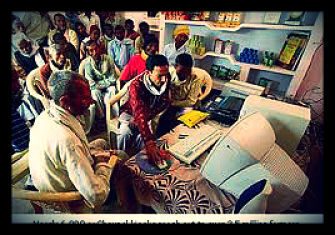
The e-Choupal initiative is one way that technology is being used to give farmers the information they need to be more successful. The aforementioned benefits of technology are all accounted for on the e-Choupal platform, even enabling buyers to come to the farmers instead of having to haul the produce to market, where oftentimes traders manipulate the market in order to exploit the farmers out of their proper earnings.

The initiative also provides access to storage services and agricultural equipment in addition to other important assets for rural farmers. The e-Choupal network has expanded to 6,500 centers synchronizing the efforts of 40,000 villages to produce greater quantities of better produce and profit.

In this same vein of increased technology and higher profits, organic farming is a possible venue poor farmers could explore. Organic produce consistently garner high prices, the demand for which is only rising. The only constraints are the ones that the e-Choupal network is already helping to eradicate, at least in India, including lack of technical expertise and insufficient market knowledge.

Another example of innovative agricultural technology is the use of drip-irrigation, which cuts water use by 40%, and saves the equivalent of 10 million households water expenditures per year. Much in the same way, the e-Choupal initiative has created a network where over 25,000 small farmers have organized a supply chain that has augmented their average annual incomes by a very significant $1,000.

India is a country of fertile lands and capable farmers. Technology is the catalyst that promises to drive the more than 400 million people living on less than $1.25 a day out of poverty.

– Jordan Schunk
Sources: The Huffington Post, New Indian Express, Rural Poverty Portal
Photo: The Fourth Revolution

January 22, 2014
https://borgenproject.org/wp-content/uploads/borgen-project-logo.svg 0 0 Borgen Project https://borgenproject.org/wp-content/uploads/borgen-project-logo.svg Borgen Project2014-01-22 16:07:182015-02-09 14:12:08Spreading Agricultural Technology to India’s Poor Farmers
Activism, Advocacy, Developing Countries, Education, Foreign Aid, Foreign Policy, Global Poverty, Philanthropy

5 Initiatives Fighting Illiteracy

swiss
Technology has, over the years, come to run our lives.  We rely upon it for anything ranging from healthcare innovation to entertainment.  Even now, you are reading this article that was composed on a computer for you to read on the Internet.  No paper newsletter for you.

It is precisely because technology is so all-encompassing for us that the following statistic is so shocking: 1 billion adults worldwide are illiterate.  Equaling 26% of the world’s total adult population, there are 1 billion people who cannot partake in the reading of this article, which you may be taking for granted.

Technology may have made reading and writing even more accessible in our sphere but in lesser-developed areas, such advancements are not seen.  According to UNESCO, the entire continent of Africa has a literacy rate of less than 60%.  Compare that to the 99% literacy rate in the United States.

However, there is hope.

Numerous organizations are dedicated to eradicating illiteracy. Here are five of the top literacy initiatives worldwide.

1. ProLiteracy

The mission statement of ProLiteracy is a perfect articulation of why literacy should be on the forefront of global advocacy: “…when individuals the world over learn to read, write, do basic math and use computers, the more likely they are to lift themselves out of poverty.”  The organization makes literacy for women in developing nations as a top action addressed by their donations and programs.

2. UNESCO Institute for Lifelong Learning

UNESCO hosts a “LitBase” website, which chronicles programs worldwide that have been successful in combating illiteracy.  In doing so, UNESCO hopes to have a go-to source for advocates interested in starting or joining the cause.

3. World Literacy Foundation

The World Literacy Foundation was founded in 2003 to promote awareness of illiteracy by bringing together various government organizations and NGOs.  Some of the programs championed by the Foundation include the Write On English writing competition in Azerbaijan, founding the Centre of Hope computer center in Uganda and the USAID-supported Fantastic Phonics computer program.

4. Global Literacy Project

A key program of the Global Literacy Project is the shipment of books and basic educational supplies throughout Africa, Asia and the Caribbean.  The Walk-for-Literacy fundraiser housed at Rutgers University is run through the Global Literacy Project as well.

5. Literacy.org

Founded at the University of Pennsylvania through a partnership with UNESCO, literacy.org (formerly the Literacy Research Center) has been training teachers and advocates of literacy since 1983.  Literacy.org also hosted a summer intensive workshop in Philadelphia for mid-career professionals interested in promoting literacy in developing countries.

– Taylor Diamond

Sources: ProLiteracy, UNESCO LitBase, World Literacy Project, Global Literacy Project, Literacy.org
Photo: Vintage 3D

January 15, 2014
https://borgenproject.org/wp-content/uploads/borgen-project-logo.svg 0 0 Borgen Project https://borgenproject.org/wp-content/uploads/borgen-project-logo.svg Borgen Project2014-01-15 17:10:482024-05-26 23:03:025 Initiatives Fighting Illiteracy
Global Poverty

Cost Comparison: Bitcoins

bitcoin
Officials across the nation are expressing concern over the latest technology on the internet: virtual currency.

Bitcoins are the one of the most common recognized digital currencies available on the web today. Disguised behind encrypted computer programs, the coins are becoming harder to find since their introduction in 2008. Once a user discovers a coin, they are able to store it in an online account.

The currency and any individual using it are untraceable and are garnering attention from authorities worldwide. Users of the currency remain anonymous through the use of identification numbers. Once a user knows the identification of another user, funds may be transferred to the receiver’s digital “wallet.” There are currently no restrictions on the types of products that may be purchased.

Investigations over the past few weeks have revealed the use of the currency to obtain illegal items including guns and drugs. But representatives of the Bitcoin Foundation argue that the currency is also being used for good.

The foundation currently operates as a self-governing institution that has been declared impenetrable by its creators. They maintain that the organization was founded in order to provide individuals with the ability to utilize their finances away from political oversight and other forms of outside influence.

Despite recent focus on illegal transactions using the currency, Bitcoins are also used for everyday purchases such as plane tickets and groceries. Currently, each coin is worth an estimated $1000 and is accepted at over 200 online retailers. Despite their worth, the number of coins available is severally limited.

Only 21 million coins were created and nearly 11 million have been found so far. If the remaining 10 million coins are found and retain a worth of at least $1000, then at least $10 billion of free money continues to await discovery. The potential impact on world poverty is startling.

The remaining Bitcoins could provide nearly 90 percent of UNICEF’s yearly budget ($11.7 billion.) It could cover the costs of both the World Food Programme ($4 billion) and the United Nation’s Development Programme ($5 billion.)

At its current rate, a third of the $30 billion annual windfall to end world hunger could also be paid.

– Jasmine D. Smith

Sources: ABC News, Huffington Post, Bitcoin Foundation

January 10, 2014
https://borgenproject.org/wp-content/uploads/borgen-project-logo.svg 0 0 Borgen Project https://borgenproject.org/wp-content/uploads/borgen-project-logo.svg Borgen Project2014-01-10 04:00:442024-06-04 01:07:58Cost Comparison: Bitcoins
Page 26 of 29«‹2425262728›»

Get Smarter

  • Global Poverty 101
  • Global Poverty… The Good News
  • Global Poverty & U.S. Jobs
  • Global Poverty and National Security
  • Innovative Solutions to Poverty
  • Global Poverty & Aid FAQ’s
Search Search

Take Action

  • Call Congress
  • Email Congress
  • Donate
  • 30 Ways to Help
  • Volunteer Ops
  • Internships
  • Courses & Certificates
  • The Podcast
Borgen Project

“The Borgen Project is an incredible nonprofit organization that is addressing poverty and hunger and working towards ending them.”

-The Huffington Post

Inside The Borgen Project

  • Contact
  • About
  • Financials
  • President
  • Board of Directors
  • Board of Advisors

International Links

  • UK Email Parliament
  • UK Donate
  • Canada Email Parliament

Get Smarter

  • Global Poverty 101
  • Global Poverty… The Good News
  • Global Poverty & U.S. Jobs
  • Global Poverty and National Security
  • Innovative Solutions to Poverty
  • Global Poverty & Aid FAQ’s

Ways to Help

  • Call Congress
  • Email Congress
  • Donate
  • 30 Ways to Help
  • Volunteer Ops
  • Internships
  • Courses & Certificates
  • The Podcast
Scroll to top Scroll to top Scroll to top