Posts

bangladesh_refugeesThousands of Bangladeshi refugees are escaping impoverished conditions and ethnic Rohingya are fleeing religious persecution. Human traffickers masquerading as smugglers promised them safe passage to Malaysia, but then held them for ransom on the border between Thailand and Malaysia until their families paid up huge sums of money.

Thailand has recently cracked down on human trafficking rings, especially after finding mass graves in the jungles on the border with Malaysia. Because of this, the Thai, Malaysian and Indonesian governments refused to allow smuggling ships to land on their shores, causing thousands of refugees to find themselves adrift at sea on boats with little resources or food.

However, the people of Aceh, a city in Indonesia, could not ignore the suffering of these refugees. They allowed the boats to land on their shores, defying their government and welcoming the burden of 2,000 starving, impoverished people. Many Acehnese have suffered decades of political turmoil as well as the 2004 tsunami that caused immeasurable damage. Many refugees settled at a port called Kuala Langsa, which is currently housing 425 Bangladeshi and 231 Rohingya migrants. “I feel that they are part of our family, part of Acehnese society, because they have suffered as much as us. It’s better if they stay permanently here,” says a Aceh native and restaurant owner who has provided meals to the refugees. Many agree, saying Aceh is the safest place for them to settle.

The citizens of Aceh even held a concert to help raise funds for the recent migrants. The event was organized by Rafly, a local singer and political figure. It was also a Pemulia Jamee, or traditional Indonesian ceremony to honor guests. Rafly has remarked that he hopes the migrants stay in Aceh.

Before successful landing in Aceh, migrants say they were turned away by the Thai government three times and the Malaysian government twice. The second refusal by the Malaysian government came with a threat that it would bomb their ship if they did not turn away.

Back in Bangladesh, prospects for change are bleak. Prime Minister Sheikh Hasina calls the Rohingya “mentally sick” and “tainting the image of the country” by escaping their government-controlled impoverishment, which limits their access to medical care and education. Rohyinga people are Muslim and reside in Rakhine state in western Myanmar. 140,000 remain in tent camps since their hometowns were destroyed by state-sanctioned fundamentalist Buddhists who view the Rohingya as Bangladeshi settlers.

Shortly after Aceh welcomed its refugees, Malaysia and Indonesia issued a statement saying the two countries would provide food and shelter to the 7,000 people who remained floating on the Straits of Malacca, provided these people seek permanent homes after a year.

– Jenny Wheeler

Sources: IRIN, Aljazeera
Photo: NY Daily News

Indonesia's Fight Against Stunted GrowthThe Millennium Challenge Corporation is an independent, innovative foreign aid agency that is actively fighting global poverty. One of its projects, the Indonesia Compact, seeks to better the lives of those living below the poverty line in Indonesia, in particular the lives of the children.
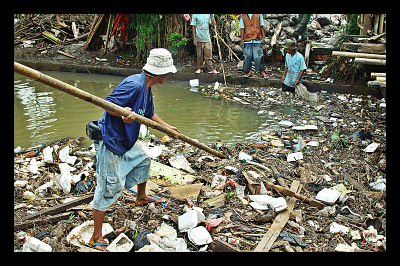
Over the past decade, Indonesia’s economy has grown steadily and over 50 percent of the population is now living above the poverty line. However, the wealth gap has further widened. With most of the population living in rural areas and relying on agriculture as a main source of income, it is hard for Indonesians below the poverty line to have access to nutritious food and clean water. This has caused problems such as stunted growth in children.

According to the Millennium Challenge Corporation, “a lack in critical vitamins and minerals during early childhood puts children at higher risk for chronic disease [and] delayed cognitive development” which causes a reduction in academic success and future earnings. Because of the lack of vitamins and minerals, about one-third of all Indonesian children under the age of 5 experience stunted growth—that’s seven million infants and children.

The Indonesia Compact is a five-year, $600 million agreement. The goal is to increase household income in the project areas by increasing productivity, reducing energy costs and increasing provisions of goods and services.

Part of the Compact is the $135 million Community-Based Health and Nutrition to Reduce Stunting Project. This effort is two-sided: raise awareness about feeding practices and supply access to proper nutrition and health care services.

Through this project, the people of Indonesia are being educated on how the lack of essential nutrients, such as vitamin A, iron and zinc, can impact health and affect growth. The government of Indonesia is helping by training local governments on health and sanitation services as well as nutrition, in order to have a highly aware population.

The theory is that a healthier young generation will bring economic growth to the country. The next generation will be healthy and knowledgeable, which leads to a stronger working-class and eventually an improved economy. The Indonesia Compact still has a long way to go before any change can be seen, but Indonesia is headed in the right direction.

– Hannah Resnick

Sources: Millenium Challenge Corporation, Rural Poverty Portal
Photo: Flickr

Jakarta
There are over 28 million people in Indonesia considered to be poor according to national standards. The Multidimensional Poverty Index, or MPI, focuses on standards of living and measures 10 indicators of multiple deprivations in a household. The 10 indicators include issues of education and health. To be considered multi-dimensionally poor, a person needs to be deprived in at least three out of the 10 indicators.

In Jakarta, 20.8 percent of the population has multiple deprivation and 12.2 percent is vulnerable to multiple deprivations. The intensity of deprivation means the degree to which the average percentage of the people is in multidimensional poverty. As of 2014, this was 45.9 percent.

The population of Jakarta is 10 million at night and increases to 11.2 million in the day as individuals travel into the city for work. As of 2014, the poverty rate and Gini coefficient ratio, a measurement tool for the gap in income, have increased immensely due to increasing rates of inflation and the weaker rupiah. The result is a higher poverty index.

The poverty index ratio increased to 8.9 percent from eight percent in the previous year. The country average for Indonesia is 8.3 percent. The coefficient ratio has gone from a measurement of .364 in 2013 to .436. The ratio illuminates the income distribution among the city’s population as well as the inequality of the economy.

There has been an increase in the poor population from 3.7 percent in 2013 to 4.9 percent. Based on the population of Jakarta, the number of poor has increased from 371,000 to 412,790. Due to poverty, issues of malnutrition, no proper sanitation, lack of electricity and limited educational opportunities are often issues occurring in tandem.

It is important that proper indicators are used to determine the amount of the population that is poor in order to correctly assess their needs. In the words of Amartya Sen, author of the book, “Development as Freedom,” poverty should be seen “as a deprivation of basic capabilities, rather than merely as low income.”

Currently, the national poverty line is based on monetary measures. These measures, utilized by the Millennium Development Goals to indicate the national poverty line, have assisted in growth and processes that have recently been taken by the Indonesian government. In addition, budgeting and planning resources have been observed.

– Erika Wright

Sources: Jakarta Post 1, Jakarta Post 2, U.N. Habitat
Photo: Wikimedia Commons

indonesia's infrastructurePresident of Indonesia Joko Widodo, who was elected last year, is making Indonesia‘s infrastructure a priority. He is putting the equivalent of $22 billion U.S. toward improving the country’s infrastructure. This number is 53 percent larger than last year. President Widodo is also dedicating an additional $3 billion to state firms and companies that are involved with infrastructure improvement.
Improving Indonesia’s infrastructure could have long-term benefits that could help people affected by poverty. According to the Copenhagen Consensus Center, anywhere between 10 to 50 percent of crops are wasted while traveling from the farm to consumers. If there was a way to make this number smaller by a mere 10 percent, prices could be reduced; if prices are reduced, 60 million fewer people would go hungry.

President Widodo plans to invest in infrastructure by scrapping subsidies on fuel and providing subsidies for farmers to use on fertilizer and seeds. He also wants to improve irrigation systems for farmers, improve roads and land and provide more forms of communication. In the long run, this can improve overall food distribution.

This tactic has been proven effective in the past.

“Indonesia experienced rapid agricultural growth in the 1970s and 1980s together with reductions in malnutrition and poverty,” Mark W. Rosegrant, director of the Environment and Production Technology Division at the International Food Policy Research Institute, said.

Rosegrant was also involved in the Copenhagen Consensus Center study. “This growth and improvements in food security were significantly driven by increasing investments in rural infrastructure and in agricultural research and development,” he said.

Rosegrant and others behind the Copenhagen Consensus study are suggesting that there are even better ways for President Widodo to reach his goal. The study concluded that it would also be beneficial for President Widodo to invest in agricultural research along with infrastructure. Even if only $6 billion is devoted toward researching how to increase crop yields, the result could be 79 million fewer hungry people around the globe.

President Widodo is hopeful that improving power plants and rural roads will help the people of Indonesia and around-the-world significantly. This is excellent news, and perhaps President Widodo will look into the benefits of agricultural research and save even more lives.

Melissa Binns

Sources: The Australian Business Review, The Wall Street Journal
Photo: MTCP2

A.T. Kearney, a United States-based consulting firm, ranked Jakarta, Indonesia’s bustling capital, whose metropolitan area contains roughly 30 million people, as the next Southeast Asian leading city. The Javanese city boasts first among a list of 34 cities in low-income and middle-income countries that will most likely become a global leader in fields ranging from business activity to workforce health and security. The methodology used involves 26 metrics in five categories: business activity, human capital, information exchange, cultural experience and political engagement.

Certainly, Jakarta’s status as the capital of the Association of Southeast Asian Nations (ASEAN) contributes greatly to the city’s rising position. Furthermore, the emergence of the ASEAN Economic Community, a quasi-European Union style economic community minus a common currency due to take off in 2015, is also another factor that helps to make Jakarta an up-and-coming Southeast Asian city.

Jakarta, over the past few years, has invested immensely in improving its once inadequate infrastructure. However, it is the city’s improvements in other fields such as stability and security that has put it on the map. Areas involving Jakarta’s population such as income equality, stability, healthcare cost, minimum wage and security are those that have fared the best.

Jakarta’s improvements also extend to the fields of information exchange and high gross domestic product growth rate. In terms of the city’s once feeble infrastructure, today’s Jakarta has been developing its mass rapid transit system. Its groundbreaking ceremony was held in late 2013. This project will begin operating in 2017-2018 and it will help to facilitate the daily commute of the residents of the city and its surrounding areas.

Furthermore, Bangkok, Thailand, its future appearing promising in 2008, has been experiencing instability for the past few years, thus eliminating Jakarta’s regional competitor. John Kurtz, A.T. Kearney’s Asia-Pacific head, stated that the city’s growing political and economic importance is attracting both domestic and international talents and investments.

The city’s rise in importance and prosperity is certainly a stunning achievement. The city’s transformation into the region’s powerhouse is undoubtedly a testament to development as a tangible and a feasible process, not just an illusive rhetoric.

– Peewara Sapsuwan

Sources: The Jakarta Globe, Wall Street Journal
Photo: Luxury Real Estate Blog

west_papua_human_rights
The region of West Papua does not make the news often; in fact, it rarely merits a news blurb in most Western headlines. However, West Papua is arguably one of the most under-reported cases of exploitation an indigenous groups in the 21st century.

Since 1969, the people of West Papua have been in conflict with the government of Indonesia in one way or another. The University of Sydney’s Center for Peace and Conflict Studies put out a report stating that for the better part of 40 years, the people of West Papua have been under the boot heel of the Indonesian Security forces.

The report goes on to state that due to wide scale incursions by Indonesia’s armed forces, West Papua has seen over 100,000 of its citizens die and much of its national resources depleted.

A report by The Guardian also notes the devastating effect that Indonesian resource extraction is having on the people of West Papua. It notes the case of the Mooi people, who are one of the 250 indigenous tribes that are having their way of life destroyed due to the deforestation of their lands by timber and palm oil companies.

The oceans off the coasts of West Papua are also being devastated due to nickel mining in the area, which is flooding the bountiful coral reefs with polluted sediment.

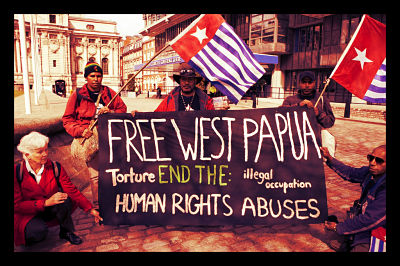
It is not only the eco-system of West Papua that is being destroyed. Even though it has been close to 45 years, the Indonesian military is still cracking down severely on people who are part of the Free Western Papua Movement.

Last year, the Free Western Papua Movement’s Facebook published the photo of a dead Papuan named Edward Apaseray, who was reportedly tortured and killed by the Indonesian Special Police Forces for being a “separatist.” The Diplomat, a current affairs magazine for the Asian-Pacific region, published a report in which a recent study noted that in West Papua, an incident of torture occurred every six weeks for the past half-century.

The human rights organization Tapol that monitors human rights abuses in West Papua published the story of Yawan Wayeni. He was a tribal leader and formal political prisoner who was tortured and killed by Indonesian security forces in brutal fashion.

The media have long overlooked the plight of the people of West Papua. It has only recently begun to receive real traction in Western media. The International Parliamentarians for West Papua (IPWP) is a group of politicians around the world who support the right self-determination for the people of West Papua.

One of its members, Benny Wenda, an exile from West Papua, recently had an article published in which he decried the recent statement of Australian Prime Minister Tony Abbot, who stated that things in West Papua are “better and not worse.”

West Papua is one of the forgotten atrocities of the 21st century; the responsibility making sure that it does not continue to be rests with us and our elected officials. The Arab Spring occurred with the help of Facebook and a determined populace. The plight of West Papua needs the same type of support from those who have the ability to stand up to the Indonesian government.

– Arthur Fuller

Sources: Amnesty International, The Guardian, Tapol,  The Diplomat, The University Of Sydney, Tapol,  CNN, The Guardian, Tempo, Australia News Network
Photo: London Mining Network

traffic_fatalities_third_world
Traffic accidents account for 1.24 million deaths globally every year while estimates put that number at 3.6 million by the year 2030. In developing countries, this projection would put traffic deaths ahead of HIV/AIDS, tuberculosis, malaria and many other common causes of death, according to a Global Burden of Disease study.

Those dying in road accidents are typically young, male and living in poverty.

Roughly 50% of global traffic fatalities occur in developing countries, and according to Jose Luis Irigoyen, a World Bank traffic safety expert, the costs of such a high number of road deaths are a “poverty-inducing problem.”

He estimates that low and middle income countries lose 1 to 3% of their GDP on road fatalities, which Irigoyen says could counterbalance the billions given in aid money to these developing nations.

The UN General Assembly in 2010 adopted a resolution that established a “Decade of Action for Road Safety,” its goal to stabilize the number of road fatalities and then reduce them as much as possible. The resolution estimates that 5 million lives could be saved during this time.

A Washington Post article on the topic of road fatalities highlighted four countries with particularly infamous driving records. In Indonesia, an average of 120 people die in road accidents every day. “When a jumbo jet crashes, it’s big news,” World Bank transport specialist Mustapha Benmaamar states. “But here, these people die in silence.”

Indonesian figures represent roughly two plane crashes per week.

Moreover, a surge in motorcycle use has largely contributed to a massive increase in the number of road deaths—from about 8,000 per year in 2002 to over 16,500 in 2007, and doubling once more in 2010. Motorcycles accounted for 60% of those fatalities.

Benmaamar asserts, “You reach a tipping point when these deaths are perceived not as something accidental, but as a result of a problem that has to be tackled. Only then will you see the fatalities start to drop. Indonesia has not reached that point.”

Experiencing even more road deaths per day than Indonesia is Nigeria, which has the worst driving figures in Africa. There are about 34 road-related deaths for every 100,000 people in the country, according to a 2013 World Health Organization report.

Nigeria’s Federal Road Safety Commission points to high speeds as the culprit behind so many traffic fatalities, though poorly maintained roads, loosely obeyed traffic laws and lax driver’s license requirements contribute to making the country one of the most dangerous places in the world in which to drive a vehicle.

On another note, traffic accidents cause three times more deaths in Colombia than its internal armed conflict. However, the country’s situation has improved over the years. Since the mid-1990s, road fatalities and accidents have decreased significantly, falling from 7,847 deaths in 1995 to 5,502 in 2010. Progress appears to be stalled, however, as fatalities in 2012 increased by 3% from the previous year.

With a goal of achieving better outcomes by 2016, Colombian leaders have begun to focus on addressing and rectifying the nation’s top cause of traffic-related fatalities—motorcycles and their passengers, accounting for 70% of road deaths in Colombia.

Helmet laws, strict license and road regulations, better motorcycle safety and a mental shift away from seeing road accidents as merely “accidents” could eventually curb the number of global traffic deaths.

Kaylie Cordingley

Sources: Washington Post, Colombia Reports
Photo: The Promota

Indonesia Slum Trash Trade Healthcare
Gamal Albinsaid, an Indonesian doctor, is thinking outside the box with his new method for bringing healthcare to impoverished people. His new idea: trade trash for health services. While this concept may seem strange to many people, the strategy will essentially be resolving two of Indonesia’s major concerns: making healthcare available to people who cannot afford it and disposing of the huge amount of trash that accumulates in the cities and slums.

Through the Garbage Premium Insurance Clinic Program, Indonesians are able to pay for health insurance by  bringing the equivalent of $0.85 in garbage to a healthcare facility every month, instead of paying with cash. These health clinics then give the trash to a “garbage bank” and receive the cash amount. Dr. Albinsaid is proud to have developed a solution for both the healthcare and the garbage problems.

Dr. Albinsaid, who is only 23 years old, was moved by the fact that only 33 percent of Indonesians have health insurance. He is eager to commence the Garbage Premium Insurance Clinic Program to increase this number. The self sustainability of this program will ensure its longevity as a staple in Indonesian healthcare. Although the initial clinics required investor donations, the clinics were self sufficient after six months and able to generate enough profits to open new facilities.

The new system will be implemented in different areas all over the country, mostly in poverty ridden regions, but Indonesia is also improving healthcare in other ways. An improved universal healthcare initiative will potentially cover all its citizens by 2019. Questions over the realistic expectations of the universal healthcare system are being raised by economists as well as by ordinary citizens. Universal healthcare is set to be introduced January 2014, but if for some reason some Indonesians are not included, they have the option to trade garbage for health insurance.

– Mary Penn

Sources: Devex, Market Place
Photo: Flickr

West_Papua

In 1962, the United Nations granted control of West Papua to the Indonesian government. Since then, more than 100,000 West Papuans have been killed or abducted by Indonesian forces with many others having been raped and tortured. The Indonesian military has also been responsible for destroying entire villages and village gardens. Though such atrocities have continued for more than 50 years, the United Nations has yet to intervene on behalf of the West Papuans.

On August 17, a group of activists, politicians and refugees set sail from Australia on what is being called the “West Papua Freedom Flotilla.” Speaking about the purpose of their voyage, activist Izzy Brown said, “West Papuans live in fear every day, in fear of the Indonesian military.” According to Brown, the participants’ aim is to raise awareness “about an issue that has for too long been ignored in the Australian and international media.”

After the fall of General Suharto in 1998, many democratic reforms were passed in Indonesia. But this did nothing to alleviate the brutal oppression of the people of West Papua. Murder and assassinations of political leaders have continued under the regime of current president, Susilo Bambang Yudhoyono. A government ban on journalists and human rights organizations make it difficult for the international community to monitor the situation in West Papua.

Under Indonesian rule, many West Papuans have been jailed or murdered for resisting the government, displaying separatist flags or speaking out in support of a free West Papua. For example, activist Philip Karma was arrested in 2004 while participating in a peaceful protest of the Indonesian government and raising a Morning Star Flag, which is a Papuan symbol. For his actions, Mr. Karma is currently serving a 15-year prison sentence.

At the end of this month, the Freedom Flotilla will land in Papua New Guinea and attempt to enter West Papua. The Indonesian government has said that it intends to intercept the flotilla and turn away the participants. Hopefully, this event will help bring awareness to a conflict that has not received much media attention in the West. But if the past is any indication, even the Freedom Flotilla may escape the attention of the international media.

In 1994, Bishop Desmond Tutu issued a statement calling on the United Nations to intervene on behalf of the West Papuans. In that statement, he said, “The people of West Papua have been denied their basic human rights, including their right to self-determination. Their cry for justice and freedom has fallen largely on deaf ears.” Almost ten years later, there are still too few listening to the cries of the West Papuans.

– Daniel Bonasso

Sources: Democracy Now!, The Guardian
Photo: West Papua Media

Defining an Emerging Market
The term “emerging markets” was coined in 1981 at the International Finance Corporation when promoting the first mutual funding investments in developing countries. While the term is sometimes considered unhelpful, it is important to identify and define these markets. Emerging markets are a hot topic as they are predicted to surpass the US, German, and UK economies in the future.

There are three factors that distinguish an emerging market from a developed market. Firstly, rapid economic growth defines emerging markets. Great examples of emerging markets are Brazil, Russia, India, China, and South Africa (BRICS). In recent decades, these developing countries have boosted their large economies based on global capital, technology, and talent. The GDP growth rates of these countries have outpaced those of more developed economies, lifting millions out of poverty and creating new middle classes and large new markets for consumer products and services. The large labor pools of these countries give their economies a huge advantage over more developed economies.

The second factor that defines the emergence of a developing economy is how much competition it offers in comparison to developed markets. Along with the rapid pace of development, these countries pose serious competition to current dominant economies in developed countries such as the United States, the United Kingdom, Germany, France, and Italy.

Lastly, emerging markets are often defined in terms of their financial situation and infrastructure. While their rapid growth and competitiveness are positive growth indicators, the amount of red-tape and inconsistencies involved in dealing with these markets marks them as emerging. Unfortunately, some argue that the corruption in these markets will halt them all together despite other growth factors.

While the economies of Brazil, Russia, India, and China are well on their way to surpassing “emergence”, the predicted emerging economies of the future are Colombia, Indonesia, Vietnam, Egypt, Turkey, and South Africa (CIVETs). According to John Bowler, director of Country Risk Service at the Economist Intelligence Unit, the sizeable populations of some of these countries and the wealth of natural resources in others, just might make them the economic boomers of the next decade.

– Kira Maixner

Source CNN , Forbes
Photo ACF