Posts

Indonesian Education System
In Indonesia, education is a privilege to which not all children have access. Based on a have-and-have-not system, the Indonesian education system is severely underfunded for those without financial security.

Children from financially stable families have a variety of schools to choose from, including both public and private. However, children from poorer families have few to no affordable options for education. Their available options only include public primary schools.

Because quality education is offered to such a small sector of the population, the knowledge gap is widening between the wealthy and the poor. Unfortunately, a large number of these uneducated Indonesians are students with disabilities.

Disabled students have an especially difficult time accessing education because the Indonesian government provides them two options for education: enrollment at special-needs schools, or schools with inclusive programs that are willing to accept students with disabilities. Both of these options are unlikely to provide a quality education to disabled students.

Special-needs schools do not teach curriculums that cater to students with various disabilities, so students with physical disabilities are taught the same curriculum as students with learning disabilities, even though they are capable of learning at the same pace as their able-bodied peers.

Similarly, not all schools are accepting of students with disabilities. Most of them lack the physical facilities necessary for these students, and many teachers have little to no experience working with disabled children.

Thus, it is important that decision-makers within the education system increase awareness in order to accept students with disabilities currently being denied an education by the majority of institutions throughout Indonesia.

Indonesians with disabilities who do not receive proper education experience unique problems throughout the entirety of their lives. According to a recent study at the University of Indonesia, nearly 70% of disabled children do not receive an education and the ones who do only have a 66.8% chance of finishing primary school.

This is reflected later in life as only 64.9% of people with disabilities have a chance of getting a job. The gap between people who can afford to receive a quality education and people with disabilities continues throughout these people’s lives as the educated obtain successful, well-paying jobs and people with disabilities do not.

Help for these people begins with raising awareness and normalizing students with disabilities in a typical Indonesian classroom setting. Inclusive education is making its way through the Indonesian education system as more and more schools are accepting and tolerant of these students.
By improving the availability of education to students, it becomes possible to obtain jobs later in life, regardless of disability status.

However, inclusive education is accessible to only a small portion of the disabled community, so it is important that lawmakers and teachers alike learn about various disabilities and provide effective education for each individual.

Because disabled students rarely interact with peers without disabilities in the classroom, the two groups become separated and remain so throughout their lives, including in the workplace. Many jobs are unavailable to people with disabilities because employers lack knowledge of disabilities and are unwilling to hire disabled individuals.

By allowing students with and without disabilities equal opportunities in the Indonesian education system, the workplace becomes much more abundant in job opportunities for Indonesians with disabilities. This is because people become more aware of disabilities and more accepting of them in the workforce.

Education conditions for Indonesians with disabilities continue to improve, but the opportunities remain slim. With significant effort, it is likely that disabled individuals will one day have access to the Indonesian education system leading to greater opportunities in the workplace.

Kassidy Tarala
Photo: Flickr

Common Diseases in Indonesia
Indonesia is considered a hotspot for various diseases, due to factors such as tropical climate, biodiversity and frequent interaction between humans and animals. The CIA World Factbook states that some of the most common diseases in Indonesia, with a “very high” degree of risk, are as follows:

Dengue fever
Dengue is a vector-borne disease transmitted through the bite of infected female mosquitoes, which can spread more quickly in an environment that lacks reliable sanitation or produces garbage regularly. A recent study reported in PLOS Neglected Tropical Diseases found that more than half of all children in Indonesia’s urban areas were infected with dengue by the age of five, and over 80% of them have been infected with the dengue virus at least once by age 10. Typically, the outbreak of the disease surges every three to four years, with the most recent surge having occurred at the beginning of 2016.

The Indonesian Ministry of Health reported that 71,668 cases of dengue fever were recorded in 2014, with 641 of these cases ending in death. Although the number of cases on the national level seems to be on the decline, the number has been increasing in several areas, including North Sumatra, Riau, West Kalimantan, North Kalimantan, North Sulawesi, Bali and Jakarta.

Malaria
Another one of the most common diseases in Indonesia is malaria. While Jakarta, Surabaya, Bali and other large cities are relatively free from the risk of malaria, other areas in the country are still vulnerable to the disease. According to the data from the Ministry of Health, malaria is still rampant in the provinces of Papua, East Nusa Tenggara, Maluku, North Maluku and West Papua. An Indonesian health official from the Maluku province, whose local health department has been carrying out efforts to eradicate the disease, stated that eliminating the disease would require maintaining a healthy environment, killing mosquito larva through fogging, regular blood tests and the use of mosquito nets.

Bacterial diarrhea
Diarrhea was once a leading cause of death for children under the age of five in Indonesia, accounting for almost 25% of child mortality. Although efforts to combat mortality from the disease have decreased the death rates to approximately 2.5 per 1,000, the incidence of bacteria has remained constant at 25 to 30 million per year in children under the age of five. The fact that the number of outbreaks has not changed much implies the need for more innovative solutions to deal with the disease.

These three are among the most common diseases in Indonesia. Recently, the Indonesian government has been carrying out various policies to achieve the goal of attaining universal water and sanitation access by 2019, which, if successful, could help the country make significant progress in fighting these diseases.

 – Minh Joo Yi

Photo: Flickr

Malaria Epidemic in Indonesia Women Fight
Global organizations have made significant strides in fighting the malaria epidemic in Indonesia by focusing on the health and welfare of pregnant women and children.

In an article published by IRIN, William Hawley, a malaria expert with the U.N. Children’s Fund (UNICEF), highlighted the importance of malaria treatment and prevention against the disease.

“Pregnant women and children are especially vulnerable to malaria, and modern malaria diagnosis and prevention can be delivered via existing maternal health and immunization services in a symbiotic way,” Hawley said.

World health organizations such as UNICEF have been working closely with Indonesian government agencies and world health programs to provide free and affordable care to women and children in the region.

“The malaria program, the antenatal care program, and the expanded program on immunization all benefit, but most important — women and kids benefit,” Hawley said.

According to the article by IRIN, nurses and midwives have been helping pregnant women and infants fight malaria by providing diagnosis, treatment and information regarding the disease. In response, more women have been provided antenatal care and more children have been immunized against malaria.

The Harsh Effects of the Malaria Epidemic in Indonesia

Malaria is a disease spread by mosquitoes causing symptoms including fever, exhaustion, vomiting, and headaches. Severe cases generally include yellowing of the skin, seizures, coma, or, in the most extreme instances, death.

The disease can be more dangerous to pregnant women and infants causing stillbirths, low birth weight, abortion and infant mortality. Malaria can also cause severe respiratory problems in both adults and children.

According to a report published by the World Health Organization (WHO), out of a population of close to 260 million, 190 million people were reportedly malaria free in 2015. This comes after a significant number of cases were reported between 2009 and 2012.

With the help of finances provided by the Global Fund, WHO, and UNICEF, residents of Indonesia have access to preventative measures against the disease in the form of mosquito nets, insect repellents, and insecticides. Residents are also taught the importance of mosquito control measures such as draining water to prevent reproduction.

According to a report by the CDC, with funding from UNICEF, USAID, the Gates Foundation and the Ministry of Health (MOH), many preventative programs have been integrated into immunization and prenatal care programs in five provinces in eastern Indonesia.

These organizations hope to expand to all areas where the disease continuously occurs to help fight the malaria epidemic in Indonesia.

Drew Hazzard

Photo: Flickr

Refugees in Indonesia
Located in East Asia between the Pacific and Indian Oceans, Indonesia is home to more than 260 million people. Thousands are refugees and asylum seekers, and the number is rising. This growth is often overlooked when regarding issues of global poverty. Discussed below are the leading facts about refugees in Indonesia.


Top 10 Facts on Refugees in Indonesia


  1. There are approximately 13,800 asylum-seekers and refugees in Indonesia.
  2. More than half of the total asylum-seekers and refugees in Indonesia originate in Afghanistan. Regarding refugees, Myanmar follows, but when considering asylum-seekers, Somalia is in second place. In addition to these countries, Iran, Pakistan and Iraq are common countries of origin for persons of concern in Indonesia.
  3. In 2015, there was a 21 percent increase in refugees and asylum seekers.
  4. Indonesia has requested roughly $7.8 million to help ensure a better environment for current and new persons of concern.
  5. According to experts, many refugee children in Indonesia are denied education due to language barriers and administrative requirements.
  6. In partnership with several organizations, the U.N. Refugee Agency (UNHCR) helps provide basic healthcare services to persons of concern in Indonesia. However, language and financial barriers prevent a lot of refugees in Indonesia from receiving proper medical treatments.
  7. Some refugees become stranded in Indonesia on their way to destinations such as Australia.
  8. Indonesia is becoming more liberal about refugees. According to the UNHCR, “Indonesia will continue to receive new asylum-seekers as part of mixed migration movements.” The hope is to integrate them properly into Indonesia.
  9. In January 2017, Indonesia announced that it would open its arms to persons of concern. President Joko Widodo decreed that the government will begin to protect refugees in Indonesia. This is a huge step for refugees and asylum-seekers, previously overlooked in the nation’s laws.
  10. Even with the president’s decree, there are major gaps between the treatment of refugees and non-refugees under Indonesian law. According to experts, this decree does not ensure human rights such as education or healthcare, but it does make it illegal to deny refugees work and education.

Change is in the air for persons of concern in Southeast Asia. With the Indonesian president’s decree, there is a lot of hope for refugees in Indonesia.

Morgan Leahy

Photo: Flickr

Clean Coal Technology in Indonesia
Indonesia is one of many countries around the world wanting to do their part in reversing climate change and protecting the planet for years to come. Working with the World Coal Association (WCA), Indonesia hopes to implement clean coal technology in plants across the country. Clean coal technology in Indonesia works in a number of ways to burn coal more efficiently and with less adverse effects on the environment.

One method of making the coal burning process cleaner is known as coal washing. In this method, Indonesian facilities would remove unwanted mineral deposits by crushing the coal down and mixing it with a liquid that clears away the undesirables minerals.

Another tactic for cleaning coal involves the use of wet scrubbers to target sulfur dioxide, which causes acid rain, and remove it before burning. In order to avoid burning coal altogether, gasification could be implemented to separate carbon molecules. This process creates what is known as syngas, which is an amalgam of carbon monoxide and hydrogen used in gas turbines to convert heat energy into electricity.

While use of this technology may be more expensive than the less efficient alternative, Indonesia wants to make good on the Paris Agreement, enacted earlier in 2016. Indonesia committed to reducing greenhouse gas emissions by 29% alone by 2030 or up to 41% with help from foreign aid.

As the fourth-largest coal producer in the world, it is essential that Indonesia take the necessary steps to ensure the country becomes a positive example for coal burning nations around the world. Clean coal technology in Indonesia has more to offer its citizens than merely reducing the output of greenhouse gases. Switching to these technologies will require skilled Indonesian workers, therefore creating jobs and stimulating economic growth.

The American Coalition for Clean Coal Electricity conducted a study that supported a growth of 150,000 jobs by building 124 new clean coal power plants. Strategies like these could be implemented to achieve similarly positive results in Indonesia’s coal industry.

Initiatives like these bring the world together in order to achieve a common goal. Indonesia is working to support this global mission for job growth, cleaner energy, and a better planet for future generations.

Aaron Walsh

Photo: Flickr

Poverty in Indonesia
Indonesia is the world’s third most populous democracy, and its people are spread out among thousands of islands in the Indian ocean. The country’s unique geography and turbulent history have made poverty reduction a challenge. However, Indonesia has made strides in addressing poverty thanks to strong economic growth and concentrated poverty alleviation legislation.

6 Facts About Poverty in Indonesia

  1. Poverty in Indonesia is both urban and rural, which makes reduction efforts by the government and international groups a uniquely challenging problem. Furthermore, due to Indonesia’s geography, natural disasters are a much more costly threat than in other nations, and they disproportionally affect poor people.
  2. Poverty reduction in Indonesia has been very effective in the 21st century. Approximately 11 percent of the population lives in poverty, a more than 50 percent reduction since 1999. Between 2006 and 2013, 10 million people climbed out of poverty in Indonesia.
  3. Despite the clear downward trend in poverty numbers, according to Indonesia Investments, “the Indonesian government applies rather easy terms and conditions regarding the definition of the poverty line, resulting in a more positive picture than reality.” As a result, Indonesia has a high population of people who are “near poor,” or in danger of falling into extreme poverty in an economic downturn.
  4. In recent years, however, the economy of Indonesia has been performing very well. Indonesia has the largest economy in Southeast Asia and the 16th largest in the world. The Indonesian economy has seen steady annual growth rates of between four and six percent annually since 2004. Furthermore, the unemployment rate is very low, recorded at just 5.5 percent in 2015.
  5. There has been a recent uptick in public spending by the government to improve public services in the country. The Indonesian government now invests about $30 million every year in its five major poverty reduction programs. The government has also been increasing its loan allocations in order to help small businesses.
  6. The country has a positive growth outlook for coming years. The Indonesian government has shown its commitment to fiscal reforms to increase foreign investment, and economic growth is expected to increase in coming years.

Despite the challenges that Indonesia faces, the last 15 years of economic growth and poverty reduction are encouraging for the future.

John English

Photo: Pixabay

Poor water quality in Indonesia

Climate change, poor urban infrastructure and pollution resulting from rapid urban development and environmental destruction have led to poor water quality in Indonesia.

Although Indonesia enjoys 21 percent of the total freshwater available in the Asia-Pacific region, nearly one out of two Indonesians lack access to safe water, and more than 70 percent of the population rely on potentially contaminated sources.

Poor water quality in Indonesia is directly related to a life of poverty, as poor individuals are unable to afford clean drinking solutions.

To combat poverty and improve the lives of individuals, USAID has partnered with local governments and civil society organizations to weaken the agents of poor water quality in Indonesia by strengthening biodiversity and climate change resilience.

Climate Change

Climate change threatens to disrupt seasonal variations and thus water quality in Indonesia. The dry season may become more arid which would drive water demand, and the rainy season may condense higher precipitation levels into shorter periods, increasing the possibility of heavy flooding while decreasing the ability to capture and store water.

Increased flood conditions and rainfall facilitate the spread of disease in areas where the population lacks access to clean water and sanitation.

USAID works with the Indonesian government to help the most vulnerable areas of Indonesia become more resilient to climate change effects. The agency builds local government and civil society organizational capacity to understand the effects of climate change and to implement climate change solutions in agriculture, water and natural resources management.

More than 13,000 people have been trained in climate change adaptation strategies and disaster risk reduction. As a result, USAID has worked with more than 360 communities to develop action plans addressing the impacts of climate change, which in effect improves the poor water quality in Indonesia.

Environmental Destruction

Environmental destruction associated with unmanaged development and deforestation has left many parts of Indonesia extremely vulnerable to landslides, tsunamis and floods.

An environmental disaster furthers the cycle of poverty in Indonesia as individuals are left with even fewer resources than before. The country has lost around 72 percent of its forest cover over the last 50 years.

Large barren hillside areas and the underlying soils, both subject to heavy precipitation, greatly increase the likelihood and severity of floods. When flooding does occur, urban infrastructure is quickly overwhelmed which leads to sewage spillover and further contamination.

To combat environmental destruction and improve water quality in Indonesia, USAID works to conserve and strengthen biodiversity in Indonesia. The agency does so by building capacity in national and local government bodies and associated civil society actors, and by entering partnerships, to promote and strengthen sustainable land-use practices and management in four provinces.

Projects developed by USAID focus on conserving large swaths of lowland and peat forest with high concentrations of biodiversity.

Pollution

Indonesia has become a pollution hotspot due to its economic development and rapid urbanization. Waste from commercial and industrial processes is increasingly making its way into both groundwater and surface supplies affecting water quality in Indonesia. Moreover, Indonesia’s urban slums particularly lack wastewater treatment to combat the growing pollution.

The basic sanitation infrastructure necessary to prevent human excrement from contaminating water supplies is virtually nonexistent. Households simply dispose their domestic waste directly to a river body.

Since many Indonesians are poor and have no access to piped water, they use river water for drinking, bathing and washing. Around 53 percent of the population obtains water from sources contaminated by raw sewage, which greatly increases human susceptibility to water-related diseases.

To improve the poor water quality in Indonesia by combating the effects of pollution, USAID has facilitated access to clean water for more than 2 million people and basic sanitation to more than 200,000 people.

These actions have built one more step for individuals in Indonesia to walk out of poverty, as their low income does not inhibit them from enjoying clean drinking water.

Alexis Pierce

Photo: Pixabay

Indonesia_Family

In 2013, 28 million Indonesians lived below the poverty line. Impoverished families throughout the nation were often too poor to afford healthcare and education for their children, leading to illness and injury that trapped them in generational poverty.

In an effort to break this generational cycle, the World Bank, in combination with the Ministry of Social Affairs, has created the Family Hope Program.

Financial and Developmental Aid

The Indonesian Family Hope Program works through a series of cash transfers. The money is given to parents who agree to participate in health and nutrition training, take their children to clinics when they’re ill and keep their children in school.

The program also provides startup money and skills training to parents. These micro-investments give families the means to become entrepreneurs and run their own family businesses, ensuring economic growth and generational development.

Health

Mothers participating in the program are encouraged to give their children the best possible start to life — beginning in the womb. The World Health Organization (WHO) recommends that women have four antenatal check-ups throughout the course of their pregnancy, thus lowering the risk of complications, infections and other life-threatening incidents through screenings. Yet, few women receive all four visits.

The Family Hope Program has increased the number of antenatal checkups by more than 7 percent. This establishes a precedent of continued family health. As mothers are healthier during and after pregnancy, children are healthier and receive better healthcare as a result. The 7 percent increase in antenatal care resulted in a mirrored raise in child immunizations by 7 percent.

The nutritional aspect of the program has also positively impacted childhood development, decreasing the number of children suffering from stunting by 5 percent. As a result of children being healthier, they are able to focus better and attend school.

Education

Along with the cash grants, more than 11,000 facilitators trained in education and nutrition hold seminars teaching mothers how to manage finances, improve the health of their families and aid their children in their studies.

The program has resulted in increased enrollment and school participation.

Many children from poor families stop attending school after completing their primary education, though not due to a lack of desire to attend. The program has removed financial barriers keeping children from continuing their education for the more than 3 million families that the program has reached.

Children now are 8 percent more likely to go on to secondary education and 10 percent more likely to enroll in junior secondary school. According to the United Nations, more education equals higher earning potential and better health, which are essential to end the generational poverty cycle.

Claire Colby

Sources: NCBI, United Nations, World Bank, World Health Organization
Photo: PBase

open dump site
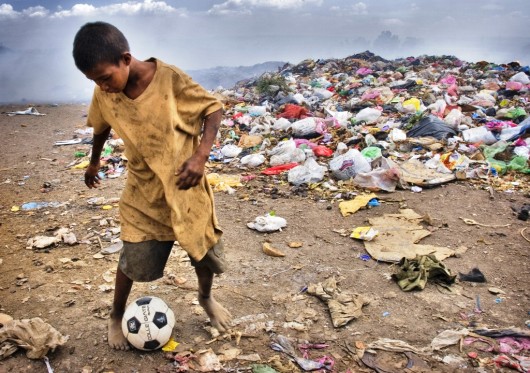
Due to a lack of investment in recycling infrastructure and an insufficiently trained workforce, most of the 42 million metric tons of e-waste generated in 2014 were discarded into open dumpsites.

This is according to the new report by the International Solid Waste Association (ISWA), “Waste health: The tragic case of dumpsites.”

The report, in which 373 toxic waste sites in India, Indonesia and the Philippines were analyzed, declared open dumpsites as a global health emergency affecting millions of people in developing countries who already lack sufficient sanitation infrastructure.

Results indicated that problems regarding open dump sites are still widespread in developing countries today, 40 years after such issues were originally developed.

On top of the existing concerns, the developing world is seeing an unparalleled rise in the unregulated dumping of discarded electronics and medical waste.

Overall, 40 percent of the world’s waste goes to open dumpsites, and the 50 largest sites affect 64 million people globally. The uncontrolled burning of the waste, which causes gases and toxins to be released into the air, is a substantial threat to human life.

Open dump sites also cause financial burdens, as their overall cost is in the tens of billions of dollars.

According to the report, almost nine million people are at risk of being exposed to lead, asbestos and other hazardous materials from the open dumpsites analyzed. Additionally, it was revealed that those open sites have a bigger impact on life expectancy than malaria.

Malaria causes a combined loss of 725,000 healthy years in India, Indonesia and the Philippines, whereas exposure to hazardous materials from open dumpsites is estimated to cause a loss of 829,000 healthy years.

As a result of the report, several officials called for a global alliance to address the problem of open dumpsites.

“The recommendations of this report are clear: the international community has an urgent task ahead in closing waste dumps globally, for the sake of populations affected by them because they live in or near them, but also because all the world’s people are breathing in the toxins released by burning on open dumps,” David Newman, the president of the ISWA, said in the foreword of the report.

– Matt Wotus

Sources: International Solid Waste Association, Resource Magazine,
Photo: care4kidsworldwide

ceria

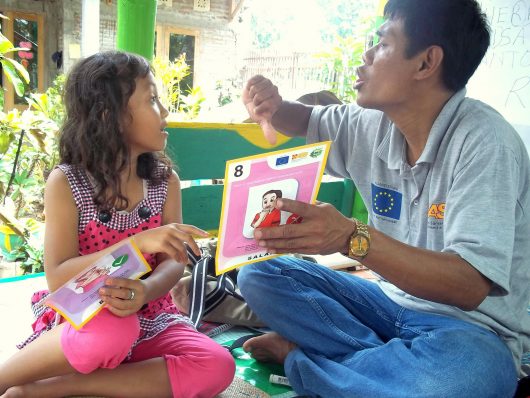
In the Indonesian district of Malaka, children are finally being provided with an opportunity to create a better future for themselves. Save the Children has partnered up with the H&M Conscious Foundation to improve educational conditions for children within this impoverished region of the world.

Malaka used to be part of the Belu district in East Nusa Tenggara province. It was so severely underdeveloped that the government decided to establish Malaka as its own district in 2012, hoping to finally spur development. Unfortunately, the district’s citizens are still fighting to break out of the poverty cycle.

Malaka contains 15 elementary schools filled with children seeking a quality education. Most children cannot afford to wear shoes to school. When they finally arrive on foot to their classrooms, they typically face deteriorating walls, lack of access to water and collapsing roofs.

Poor personal hygiene and health combined with the schools’ poor physical conditions often results in prolonged student sickness. To make matters worse, children are oftentimes juggling a language barrier as well.

Hailing from places like East Timor and belonging to ethnic groups that rely on different languages, many of the students do not speak Indonesian. The people of Malaka use five local languages representing the region’s indigenous tribes. Regardless of lack of comprehension, however, the material is taught primarily in Indonesian.

Primary school teachers often employ physical punishment as they deem necessary, causing many students to live in fear. In lower grades especially, it is not uncommon for students to fail their studies or have to repeat a grade due to some combination of the aforementioned factors.

In August 2014, Save the Children pledged to embark on a three-year project focused on improving education for around 2,850 children in the area. Since then, the charity has been working side by side with the H&M’s Conscious Foundation to build 15 new preschools and renovate the 15 existing Malakan schools.

Like Save the Children, the H&M Conscious Foundation seeks to improve children’s education. In addition, the independent organization works to empower women and provide access to clean water in developing countries.

The Conscious Foundation teamed up with STC to launch the Children in Early Grades Reach Incredible Achievements (CERIA) Project three years ago. CERIA also doubles as the Indonesian word for “cheerful.”

The CERIA project is targeting early education in order to achieve long-term effects. It aims to increase enrollment and attendance at quality preschools, improve teaching methods and school readiness for young students and reduce first-grade repetition rates.

The program is targeted at a total of 30 poor rural communities scattered throughout Malaka. Within each early childhood education center, there will be two classrooms able to accommodate 20 to 30 students. Some students are already benefiting from the progress made on renovations last year.

CERIA also offers free teacher training programs to improve the quality of education. Since the majority of teachers in Malaka are volunteers lacking a background in education, this has been an especially effective tool for improvement.

By its conclusion in 2017, the CERIA project is expected to benefit Malaka’s 2,400 elementary school teachers, 450 preschoolers and 180 primary and preschool teachers. There is no telling what accomplishments these properly educated children and teachers will be able to achieve in the long run.

Sarah Bernard

Sources: Jakarta Globe, H&M
Photo: Compassion International