• Link to X
  • Link to Facebook
  • Link to Instagram
  • Link to TikTok
  • Link to Youtube
  • About
    • About Us
      • President
      • Board of Directors
      • Board of Advisors
      • Financials
      • Our Methodology
      • Success Tracker
      • Contact
  • Act Now
    • 30 Ways to Help
      • Email Congress
      • Call Congress
      • Volunteer
      • Courses & Certificates
      • Be a Donor
    • Internships
      • In-Office Internships
      • Remote Internships
    • Legislation
      • Politics 101
  • The Blog
  • The Podcast
  • Magazine
  • Donate
  • Click to open the search input field Click to open the search input field Search
  • Menu Menu

Tag Archive for: Economic Growth

Information and news about economic growth

Posts

Global Poverty

Five Key Factors Improving Sustainable Agriculture in Thailand

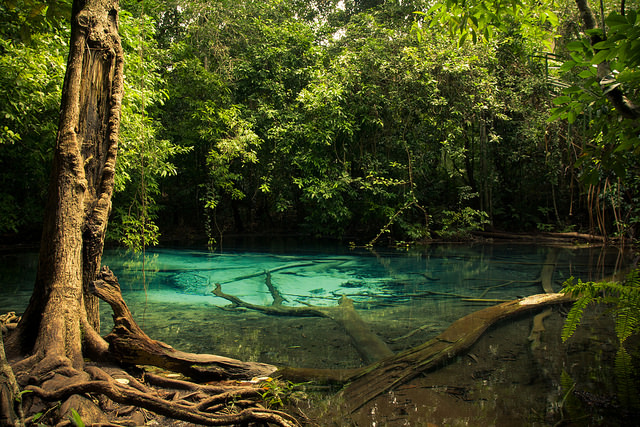
Five Key Factors to Sustainable Agriculture in ThailandIn the 1960s, the government of Thailand focused on export-oriented cash crop monoculture gain. This agriculture scope ramped up productivity with the use of machines, chemical fertilizers, herbicides and insecticides. This form of farming lasted for two decades until the soil condition was depleted through runoff and erosion. Furthermore, farmers’ debt accrued because of declining productivity and purchased chemicals. To combat this, the implementation of sustainable agriculture in Thailand was needed.

Thailand’s high dependency on agriculture led to a change in previous farming techniques. These new practices enhanced sustainable agriculture in Thailand. Five main farming systems were promoted to better the livelihoods of small-scale farmers and improve environmental conditions.

These sustainable approaches include integrated farming, organic farming, natural farming, agroforestry and New Theory farming. Each one helps promote sustainable agriculture in Thailand, an essential goal for a nation reliant on agriculture.

Integrated Farming System

This system is used when two or more different agriculture activities are in the same field. This lowers costs for farmers and utilizes limited spaces to their maximum potential.

Organic Farming

Organic farming limits the quantities of herbicides, pesticides and fertilizers used in farming. By using less harmful chemicals, the soil and land are protected. This branch of sustainable agriculture is researched by the government, various universities and NGOs. In Thailand, NGO research is conducted mainly by the Alternative Agriculture Network (AAN) and later by its sister organization, the Sustainable Agriculture Foundation Thailand (SAFT).

Natural Farming

Natural farming is considered the ideal sustainable farming model for many areas in Thailand. It includes farming with no tillage, no application of chemicals and complete preservation of the ecosystem with little damage from farming.

Agroforestry

This approach enables cash crops and cattle to coexist with trees and forestry land. As such, it amplifies the ability to utilize the land for sustainable agriculture while also promoting reforestation.

New Theory Farming

Proposed in 1993 by His Majesty the King Bhumiphol Adulyadej, New Theory Farming is ideal for farmers with limited field allotments and a shortage of water resources. The concept highlights self-sufficiency by dividing the available land into four parts and utilizing each for various needs. These include fish ponds/raising, fields for crops and vegetables, a rice paddy for self-consumption and space for living and livestock raising.

These proposals, set out to improve farming techniques and promote sustainable agriculture in Thailand, are critical in developing a healthy environment and economy for future generations.

– Bronti DeRoche

Photo: Flickr

January 16, 2018
https://borgenproject.org/wp-content/uploads/borgen-project-logo.svg 0 0 Borgen Project https://borgenproject.org/wp-content/uploads/borgen-project-logo.svg Borgen Project2018-01-16 01:30:422019-11-11 22:29:50Five Key Factors Improving Sustainable Agriculture in Thailand
Global Poverty

Sustainable Agriculture in Eritrea

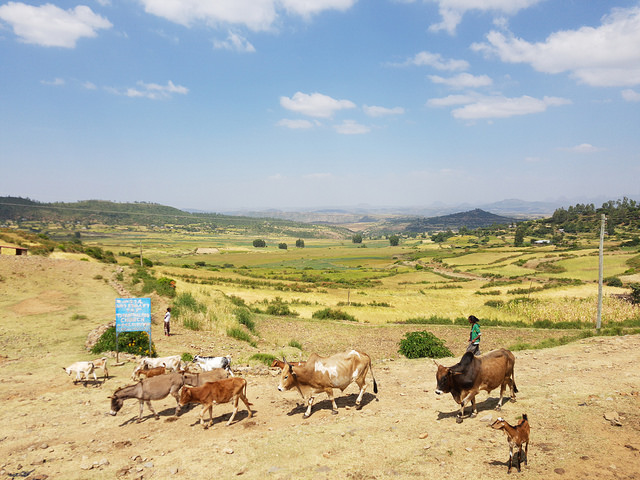
 EritreaEritrea sits just above the Horn of Africa and to the west of the Red Sea. Similar to many developing nations, much of the population relies on subsistence agriculture to feed themselves. In Eritrea, as much as 80 percent of the population is engaged in subsistence agriculture. Turning away from subsistence farming to sustainable agriculture in Eritrea will be difficult.

Drought, caused by inconsistent rainfall, hinders the crop yield of the subsistence farming. The labor required to increase crop yields and the growth of farms is unavailable due to mandatory conscription.

Furthermore, uncertain relations between Eritrea’s government and other states has led to a lack of mutual trust which would enable sustainable growth. This lack of trust makes it difficult to measure the impact of the lack of sustainable agriculture in Eritrea has on the population. It also makes it difficult for international actors to provide assistance.

According to the government of Eritrea, 70 percent of its land is classified as hot and arid. This land receives less than 350 millimeters of water each year. Despite this harsh environment, 20 percent of Eritrea’s GDP is its agriculture sector.

Plans to Implement Sustainable Agriculture in Eritrea

In 2016, the Ministry of Agriculture published a booklet, titled, “Impact of Climate Change on Agriculture and Food Systems: the Eritrean Context”. This booklet outlines its plan to improve the sustainability of agriculture in Eritrea. Important efforts include:

  • the development of water reservoirs and its accompanying infrastructure
  • mitigating pests and plant diseases
  • planting in accordance with predictable weather patterns
  • increasing biodiversity of planting sites
  • promoting crop rotation to help sustain soil quality
  • promoting sustainable energy to decrease traditional wood fire stove use

Organizations Involved in Promoting Sustainable Agriculture in Eritrea

Eritrea aimed to increase collaboration with the United Nations Development Programme (UNDP) to promote sustainability and food security. As such, there has been success with projects that aim to increase sustainable agriculture in Eritrea, specifically in the small village of Keih-Kor. With the help of the UNDP, the village was able to regain the use of 45 hectares of farmland.

Techniques such as terracing and the construction of dams helped the villagers regain what erosion had taken away. The additional benefit of these techniques is that future erosion in these areas will be mitigated.

The Syngenta Foundation

Another organization working to increase the sustainability of agriculture in Eritrea is the Syngenta Foundation. Its mission is to help poor farmers in developing countries increase the value of their farms and goods. It helps farmers understand their market and helps increase the sustainability of their farming practices. According to the program website for Eritrea, its eight goals closely align with those of both the Eritrean government and the UNDP.

So far the Syngenta foundation has helped to complete the first-ever database report on soil erosion, water runoff and soil conservation at Afdeyu Station. This is the only station of its type that consistently measures these factors in Eritrea.

Other achievements include the successful testing of a micro-drip irrigation system in partnership with the College of Agriculture at the University of Asmara. The test showed food security rises with the use of the micro-drip system. Breeding tests of the new pearl millet, one of Eritrea’s major crops, have been successful both under controlled conditions and in the field.

With continued efforts, Eritrea can remedy its poor harvests due to drought. The country is still in need of a combination of funds to complete these projects and both advanced and simple technologies to improve crop yields. Implementing sustainable agriculture in Eritrea is not impossible, especially with the contributions of international organizations.

– Nick DeMarco

Photo: Flickr

January 16, 2018
https://borgenproject.org/wp-content/uploads/borgen-project-logo.svg 0 0 Borgen Project https://borgenproject.org/wp-content/uploads/borgen-project-logo.svg Borgen Project2018-01-16 01:30:362024-05-29 22:30:12Sustainable Agriculture in Eritrea
Global Poverty

Five Important Ongoing Development Projects in Moldova

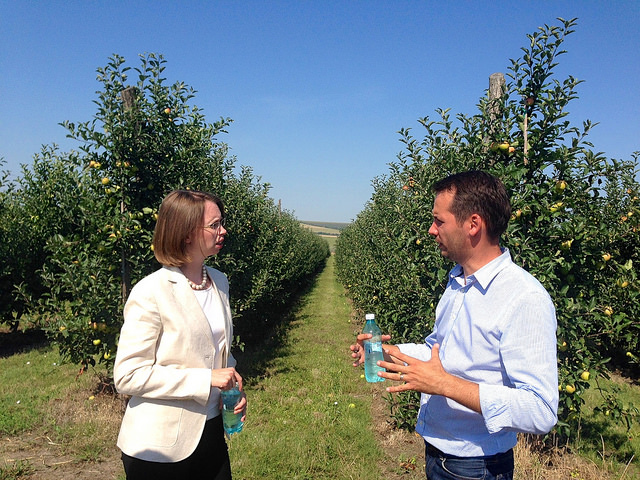
development projects in moldovaOnce considered one of the richest states in the former Soviet Union, Moldova is currently one of the poorest countries in Europe. The Moldovan economy heavily relies on agriculture. Development projects in Moldova mostly focus on fostering democratic governance and economic growth in the country, and poverty reduction is a primary goal for these projects.

Here are five ongoing development projects in Moldova.

  1. Moldova Competitiveness Project (MCP)
    Implemented by Chemonics International, Inc., MCP (2015-2020) aims to improve efficiency and competitiveness in Moldovan industries in order to support Moldova’s efforts to foster a strong, export-oriented economy. Some of the project’s goals include improving the quality of Moldovan products and services, increasing productivity and technical skills in the labor force and expanding market linkages. These goals are expected to increase incomes, reduce poverty and emigration and enable Moldova to compete within the E.U. and other high-value markets.
  2. Development Credit Authority (DCA)
    DCA (2011-2028) helps, “Moldovan financial institutions to increase financing for local small and medium-size enterprises (SMEs) through a loan guarantee mechanism.” The main goal is to increase economic opportunities and improve the Moldovan private sector’s competitiveness. Additionally, it aims to improve Moldovan energy efficiency.
    Current DCA programs in the country include two guarantee facilities. One of them supports the Moldovan Information Technology (IT) sector in order to increase loans to IT firms for capital and long-term investments and support loans to IT professionals for mortgages, thereby improving quality of life and providing continued support to investments in the country.
    USAID Moldova and Swedish International Development Cooperation Agency (SIDA) launched the second guarantee in 2014 to “support lending to the energy sector,” in order to improve Moldovan SMEs’ efficiency, thereby strengthening their “commercial viability and growth in an environmentally sustainable manner.”
  3. Moldova Sustainable Green Cities
    With a budget of $2.7 million, this project is set to run from 2017 to 2022 and catalyze investments in low carbon green urban development with an integrated urban planning approach. The project seeks to achieve its goal by encouraging innovation and participatory planning and partnerships with various public and private sector entities. The goal is to improve the quality of life and advance opportunities for sustainable economic growth in Moldova. Primarily, the project aims to establish a sustainable Green City Lab that would continue to operate after its closure.
  4. ICT Excellence Center (ICTEC) Project
    Under this 36-month project, USAID will launch and develop an ICT Excellence Center in Moldova in collaboration with the government and the private sector. Through this development project in Moldova, USAID aims to bring “significant new resources, ideas, software, technologies and development activities, such as training, practical assignments and mentoring programs” to the country. The project will support the setup and equipment needs, the creation of a relevant business plan, training of qualified staff and the expansion of educational and entrepreneurial development activities.
  5. Export-led Development of Organic Agriculture in Moldova
    Implemented by People in Need, this project builds on previous support for organic agriculture in Moldova. It specifically focuses on developing the local organic market and sustainable extension services, preparing Moldovan farmers to export products for the sustainable “advancement of the entire sector.”

Most of these development projects in Moldova aim to improve its presence within the E.U. and other competitive markets in order to enable the people of this nation to lift themselves to a higher quality of life. With similar continued investment in the Moldovan community, industry and infrastructure, there is hope that Moldova will be able to reach this goal.

– Mehruba Chowdhury

Photo: Flickr

January 15, 2018
https://borgenproject.org/wp-content/uploads/borgen-project-logo.svg 0 0 Borgen Project https://borgenproject.org/wp-content/uploads/borgen-project-logo.svg Borgen Project2018-01-15 07:30:552019-11-11 22:30:56Five Important Ongoing Development Projects in Moldova
Global Poverty

Credit Access in China Receives Strong Government Support

The banking system in China went through great reforms in the mid-1990s and 2000s. The Bank of China, Industrial and Commercial Bank of China, China Construction Bank and Agricultural Bank of China are the big four, and rank among the largest banks in the world.
Consumer credit has experienced rapid growth since the market economy began in-depth reforms in 1998. It is common for individual home buyers to seek extended mortgage loans, which are currently among the best assets in commercial banks of China. The use of credit cards is also increasingly popular. However, for national banking systems and policy regulators, there are quite a few challenging issues for improving credit access in China.

In 2015, the World Bank reported that about 79 percent of adults in China had at least one bank account. Central bank credit information systems have information on more than 21 million entrepreneurs and nearly a billion customers. Bank loans are becoming more popular among rural families. Due to the considerably high rate of account penetration in China, financial infrastructure urges fast development.

Furthermore, China is expected to continue reducing financial leverage. The Central Bank has a series of loans and bonds for poverty alleviation, which also provide financial support to the rural disadvantaged groups. For banks of China, reforming rural credit cooperatives and developing new types of financial organizations should be strongly supported, as they are a significant force for inclusive finance.

While China has made substantial progress in inclusive finance, some issues still require further concern. Central Bank governor Xiao-Chuan Zhou has expressed his worries on three systematic financial risks: the credit risk in micro-finance, the high-leveraging ratio and liquidity in the economy and the cross-market and cross-regional shadow banking associated with financial crimes.

Last but not least, some financial exclusion issues caused by de-risking cannot be ignored. For instance, a few large cross-nation banks closed some outlets in Africa due to insufficient support on operations in those regions, which could cause some negative impacts. Advancement of digital technology on credit access in China may help to mitigate the derisking pressures.

While improving credit access in China received strong governmental support, the national banking systems and financial regulations are still far from perfect. Besides the nationwide scheme on “social credit” by 2020, a variety of other measures to promote investment and reduce risks on financial products must also be regulated.

– Xin Gao

Photo: Flickr

January 15, 2018
https://borgenproject.org/wp-content/uploads/borgen-project-logo.svg 0 0 Borgen Project https://borgenproject.org/wp-content/uploads/borgen-project-logo.svg Borgen Project2018-01-15 07:30:412024-12-13 17:58:33Credit Access in China Receives Strong Government Support
Global Poverty

Sustainable Agriculture in Mexico: Exporting Practices Worldwide

Mexico

As home to the largest city in the Americas before the arrival of modern European settlers, Central Mexico has supported large-scale agriculture for over a thousand years. Later, in the twentieth century, Mexico was central to the Green Revolution that brought increased production and yields to feed a rapidly growing world population. Continuing this tradition today, advances in sustainable agriculture in Mexico are combining knowledge from both historical practices and modern innovations to assist farmers worldwide with the challenges of the 21st century.

Mexico was at the forefront of efforts in the middle of the last century to create higher yielding strains of both wheat and maize that fueled the Green Revolution. The International Center for the Improvement of Corn and Wheat (CIMMYT) was the leading institution in this work, focusing on the imminent problems of feeding an exploding world population. While CIMMYT’s work on crop yields was hugely successful, additional challenges have arisen in the years since.

Still in operation, the Center now focuses on initiatives to tackle the problems of a warming earth. These new efforts expand the work of CIMMYT into the development of grain varieties that can withstand the challenges of climate disruption and a still-growing population. As happened before, CIMMYT’s work is once again being exported beyond Mexico to solve the same problems in other countries.

Long before the Green Revolution and the advent of climate change, however, the predecessors of modern Mexican farmers developed technologies that allowed them to make effective use of difficult growing conditions and to farm in even marginal environments. Agricultural development experts are revisiting a number of these ancient practices and learning techniques that could power increased agricultural production in the future.

Intercropping, a technique that involves planting multiple crops close together, is a common feature of sustainable agriculture in Mexico, as practiced by indigenous groups. The cafetal, a system of growing plants under the shade of higher canopy trees along with ground cover crops, is already familiar to many westerners through the marketing of “shade-grown coffee.” The cafetal technique does far more than produce high-quality coffee in a sustainable fashion; it is a sophisticated method that renews soils and allows for a much higher diversity of crop yields when compared to ordinary plantation systems.

A similar system, the milpa, is much older and dates to some of the earliest civilizations in the Western hemisphere. Milpa farming is an intercropped system of corn, beans and squash that allows each plant to contribute to the success of the surrounding crops. Intercropped systems such as the milpa and the cafetal can yield up to 50 percent more produce than single crop plantings over the same area.

Along with research into indigenous systems and the large-scale institutional work of CIMMYT, smaller startup programs are also taking advantage of Mexico’s long growing season and diverse range of climates. One such program is The Biochar Company. Mexico is one of the pilot locations for this program that emphasizes biomass-based charcoal production.  Not only is the product itself sustainable, but it enriches soils and increases regeneration rates when used as a soil additive.

All of these systems, whether 21st century innovations or time-honored indigenous techniques, are increasing the ability of agricultural methods to solve modern challenges. With its long history of success and the vast institutional knowledge of its farmers, sustainable agriculture in Mexico will remain a leader in food science and agricultural development well into the future.

– Paul Robertson

Photo: Flickr

January 15, 2018
https://borgenproject.org/wp-content/uploads/borgen-project-logo.svg 0 0 Borgen Project https://borgenproject.org/wp-content/uploads/borgen-project-logo.svg Borgen Project2018-01-15 01:30:142019-12-26 17:13:44Sustainable Agriculture in Mexico: Exporting Practices Worldwide
Global Poverty

Seeds of Sustainable Agriculture in Guatemala

sustainable agriculture in guatemalaGuatemala is a country in Central America that has suffered greatly from political strife. With a 40-plus year civil war that ended in 1996, which included genocidal massacres of their indigenous people—the Mayans—Guatemala has struggled with instability. While it maintains the highest GDP in Central America, having witnessed tremendous economic growth in tourism, it still has high-income inequality with over half of all citizens living in poverty.

In terms of agriculture, its main exports are fruits, vegetables and flowers. It also grows and exports a vast amount of biofuel substances, such as corn and sugar. Coupled with poverty and a strong penchant for agriculture in the economy, sustainable agriculture in Guatemala has grown as a viable method to fight poverty and continue growth.

Semilla Nueva Creating Sustainable Agriculture in Guatemala

Chronic malnutrition is a defining issue in Guatemala, especially for the rural poor. Of the entire population, it affects 50 percent. One organization that works towards sustainable agriculture in Guatemala is Semilla Nueva. Its name literally means “New Seed”. 

Semilla Nueva focuses on working within the current system and making a staple food more nutritious. Its solution focuses on a more sustainable and healthier corn that has more nutrients than previous seeds. By using high-quality seeds, it has been able to prevent 845 cases of malnutrition since 2016.

A student named Darren received a grant from the Interexchange Foundation to volunteer in sustainable agriculture in Guatemala. In a detailed account, he describes working with Semilla Nueva. Its 52 farmers use small, inexpensive techniques such as green manures and no-till farming. These techniques greatly increase a farmer’s yield and reduce carbon emissions.

Addressing Chronic Malnutrition

Another group devoted to sustainable agriculture in Guatemala is USAID. The program is active in over 2500 communities focused in the Western Highlands of the country. In this region, chronic malnutrition for children under five is at 67 percent. This USAID program also works to increase employment through more labor-intensive crops and improve productivity in food staples such as corn and beans. In 2013 alone, it reduced malnutrition by seven percent and generated $20.3 million in sales for agriculture products.

While Guatemala faces the issues of malnutrition, certain programs continue to force this difficulty into the past. Moving past the simple donations of goods, these groups teach Guatemalans how to maneuver their own lives and take off the financial burden of those struggling.

– Nick McGuire

Photo: Flickr

January 14, 2018
https://borgenproject.org/wp-content/uploads/borgen-project-logo.svg 0 0 Borgen Project https://borgenproject.org/wp-content/uploads/borgen-project-logo.svg Borgen Project2018-01-14 18:45:412024-05-29 22:30:19Seeds of Sustainable Agriculture in Guatemala
Global Poverty

Sustainable Agriculture in Belize Resorts to Ancient Practices

sustainable agriculture in BelizeAbout 50 percent of the land and water that comprises Belize is protected on some level. However, this protected land houses some of the Mayan and Garinigu villages. These villages are known for ancient agriculture practices that have long resulted in effective and productive farming. These practices are mimicked elsewhere to develop sustainable agriculture in Belize.

With practices used for over two thousand years, known as Milpa, the villages perform a control burn to restore soil and replenish carbon. Short term annuals are planted to fill the open space as plantains, avocados, fruits, fiber plants, leguminous trees and cocoa are planted and set to grow. After five to eight years, when the canopy closes, annuals are replaced with vanilla, coffee, ginger, allspice and other understory plants. This cycle of burning and planting continues every 15 to 30 years.

This ancient practice is different than the current “slash and burn” method that only plants the highest paying crops, such as corn and rice, and negates the need for crops as “nitrogen fixers” and wildlife habitats. This form also plants in steep terrain without swales or terrace, increasing the likeliness of soil erosion. This slash and burn method undermines the soil and potential future agriculture growth.

Governments and organizations are working to educate and remove this irresponsible practice and replace it with other forms of sustainable agriculture in Belize. Projects Abroad works in Belize on tropical agroforestry and sustainable farming, allowing for individuals to work on the processing of cacao and developing agroforestry systems that mimic the rainforest that originally grew in Belize.

Sustainable Harvest International-Belize (SHIB) delivers a five-year extensive training program that teaches impoverished families how to farm with sustainable practices while also providing for their families. This program works on family nutrition, sustainable and holistic farming, promoting soil conservation through the reduction of external additives and crop diversification. These methods tie into strategies that the Horizon 2030 development plan uses to promote sustainable agriculture in Belize.

The U.N. reported that the Horizon 2030 development strategy is progressing agriculture practices by teaching sustainable farming in schools, increasing finances for farmers with low-interest loans, developing agricultural insurance for crop losses, supporting communal farming operations and increasing investments in technology regarding irrigation, seeds and green pesticides. These are a few of the goals implemented to reach more sustainable farming practices in Belize.

Through these efforts, Belize could experience a shift from farming that is detrimental to the environment to sustainable agriculture that will bolster the economy and livelihoods of the people of Belize.

– Bronti DeRoche

Photo: Flickr

January 14, 2018
https://borgenproject.org/wp-content/uploads/borgen-project-logo.svg 0 0 Borgen Project https://borgenproject.org/wp-content/uploads/borgen-project-logo.svg Borgen Project2018-01-14 07:30:522024-05-29 22:30:11Sustainable Agriculture in Belize Resorts to Ancient Practices
Global Poverty

Development Projects in Dominica Helping Nation Rebuild and Grow

Five Development Projects in Dominica

The Commonwealth of Dominica, not to be confused with the Dominican Republic, is a beautiful country located in the Caribbean. While the nation is still developing, it is making a lot of progress in improving its economic state. These five development projects in Dominica are helping to reduce poverty in the country.

  1. River Defense Wall Project
    Like many Caribbean countries, Dominica is greatly affected by hurricanes. The country aims to lessen the effects of hurricanes with this project. In addition, the River Defense Wall Project has social and economic benefits. Local citizens were hired to help build the wall and it is critical in its ability to preserve human life.
  2. New Housing Project
    Investing in housing is important to developing an economy because it reduces homelessness, which could in turn reduce poverty. This project will create homes, retail outlets and jobs for people in one fell swoop. The homes will reduce homelessness and the outlets will increase foot traffic and spending in the area, which will boost the economy and reduce poverty. Of the current development projects in Dominica, this one could be the most far-reaching.
  3. Disaster Vulnerability Reduction Project
    In the late summer of 2017, Dominica was struck by Hurricane Maria. The country needs to rebuild, and this project seeks to aid in that task. The Disaster Vulnerability Project will reduce vulnerability to natural hazards and climate change impacts in Dominica by investing in resilient infrastructure and improving hazard data collection and monitoring systems, according to the World Bank. This project has already helped the country rebuild roads that were damaged by the hurricane.
  4. Small Business Development Project
    It is well known that one way to reduce poverty in a country is to create jobs and develop entrepreneurial skills. This project aims to support small businesses in the country in order to accomplish that goal. The funding from this project goes toward staff training and obtaining equipment that the potential business will need.
  5. The Second Chance School Project
    Another important way to reduce poverty is to invest in education. A person can increase their earnings by 10 percent with every year they are in school. This project’s goal is to improve individuals’ skills in order to better prepare them for the future. It focuses on teaching basic skills, such as woodwork or hospitality, in addition to math and English. Sometimes a trade skill is involved. Because of its collaboration with the From Offending to Achieving program, this project is also being used to educate individuals rather than incarcerate them.

Tourism is a major source of income in Dominica, but that is not necessarily the best way to sustain an economy. With these development projects, Dominica can grow its economy and reduce poverty in many different ways.

– Dezanii Lewis

Photo: Flickr

January 14, 2018
https://borgenproject.org/wp-content/uploads/borgen-project-logo.svg 0 0 Borgen Project https://borgenproject.org/wp-content/uploads/borgen-project-logo.svg Borgen Project2018-01-14 01:30:152024-05-29 22:30:09Development Projects in Dominica Helping Nation Rebuild and Grow
Global Poverty

State of Infrastructure in the Democratic Republic of the Congo

The modern history of the Democratic Republic of the Congo is marred by tragedy and injustice. Brutal colonization by the Kingdom of Belgium followed by the assassination of the democratically-elected leader after the nation’s independence from Belgium in 1960 led to a western-backed dictator, Joseph Mobutu, establishing rule. Joseph Mobutu then led the Democratic Republic of the Congo, and renamed the country and its famous river Zaire.

In 1996, rebels finally captured the capital while Mobutu was away for medical treatment; the dictator would die soon after this historic event. Today, as the people of the Democratic Republic of the Congo try to move on from their past and make a new future for themselves, violence and turmoil continue to wreak havoc on the state in the form of corruption and rogue rebels.

Aid from abroad is used to stabilize the country, and some of this money goes towards improving the infrastructure in the Democratic Republic of the Congo which is in dire need of repair.

The Congo River

The Congo river is the lifeblood of the Democratic Republic of the Congo. Its source lies deep within the continent and its end spills into the Atlantic. The Congo river and its tributaries act as the main highway for the country, as no single railway runs the length of the country, and the few paved roads are in disrepair. Moving goods along the river allows them to be brought to the ports at the end of the river and near the coast, where the goods can then be shipped internationally.

Unfortunately, the entire river is not entirely navigable. Short sections of railway and roads are needed to move goods around obstacles such as waterfalls and rapids. According to the CIA, it is due to these obstacles that the river has never been accurately measured.

More innovative minds see the river as more than just a way to move goods and people; they see it as a way to power the country. The DRC lacks the infrastructure to power many of the homes, even within the cities. The African Development Bank group wants to invest $15 million into the feasibility of the Igna 3 project, which is estimated to produce 400,000 megawatts of power upon completion.

International Involvement

The World Bank also works to improve the infrastructure in the Democratic Republic of the Congo. Their $147 million project called DRC Electricity Access & Service Expansion (EASE) means to accomplish its namesake by first improving the existing network, especially in critical areas, and then helping the private sector obtain or improve their access to the electrical grid. The project began in May 2017 and is set to be completed by October 2022.

Initially colonized for ivory, slaves and rubber, other nations and international organizations have again taken notice of the rich natural resources within the DRC. For instance, China is one of the most active countries in the improvement of infrastructure in the Democratic Republic of the Congo.

In 2007, the governments of the DRC and China came to an agreement: in return for investment in Congolese infrastructure, China would receive beneficial terms when dealing with the rich natural resources of the DRC (especially copper as the mineral is one of the most valuable).

To access this copper and other resources, the Chinese government agreed to invest $8 billion into infrastructure in the Democratic Republic of the Congo. Much of the work was to be done by Sincomines, a Chinese company, but setbacks due to the instability of the country and lack of infrastructure have made the Chinese more hesitant to continue their work in the DRC.

Infrastructure in the Democratic Republic of the Congo requires the cooperation of many parties in order to see substantial improvement. Hopefully, as different governments, including the DRC’s own, slowly improve the infrastructure, economic political and social stability can be found in the coming years.

– Nick DeMarco

Photo: Flickr

January 14, 2018
https://borgenproject.org/wp-content/uploads/borgen-project-logo.svg 0 0 Borgen Project https://borgenproject.org/wp-content/uploads/borgen-project-logo.svg Borgen Project2018-01-14 01:30:042024-05-28 00:02:55State of Infrastructure in the Democratic Republic of the Congo
Development, Global Poverty

5 Important Facts on Development Projects in Guinea

development projects in guineaWith an abundant range of humanitarian and economic issues, foreign aid and development projects in Guinea impact topics ranging from creating sustainable energy sources to fighting and preventing the spread of the Ebola virus. Here are five projects that have contributed to the improvement of Guinea.

  1. The installation of the Kaleta hydropower plant in May of 2015
    Located on the western African shore and home to over 12.6 million people, Guinea contains a large amount of potential energy through 12 main rivers. With only 26 percent of Guinea’s population living with electricity, the potential for hydroelectric energy to improve the country’s situation is huge. Many development projects in Guinea work toward creating accessible electricity, thereby strengthening the country’s ability to react to emergencies such as Ebola.
    According to USAID, in 2015, when Electricité de Guinée (EDG) began its management of the national grid with funding from the World Bank, one huge accomplishment was the installation of the Kaleta hydropower plant. The hydropower plant approximately doubled the output of electricity in Guinea and is beginning to meet the nation’s demand.
  2. China’s response to the Ebola outbreak
    The more access to electricity and communication that Guinea has, the more prepared and reactionary it can be to outbreaks like Ebola. According to the World Health Organization (WHO), about 11,310 Ebola-related deaths were confirmed in western African countries like Guinea, Liberia and Sierra Leone. With an insufficient number of medical supplies and personnel, patients were reported dying while waiting in line for treatment.
    One of several development projects in Guinea was driven by the Chinese government. The Chinese government gave over $4.5 million to West African countries, including Guinea, to fight the recent Ebola outbreak in 2014. China sent medical supplies as well as personnel to assist Guinea in treating patients. All efforts were directly coordinated with WHO as well as with the United Nations.
  3. StopPalu project
    Another disease that wreaks havoc on Guinea’s population is malaria. As a preventable and curable disease, malaria impacts large amounts of Guineans every year following the rainy season, according to USAID. While the disease is treatable, it can be very costly for poor families.
    Garambé, a town in Guinea, was plagued with malaria so frequently that people began accepting it as the norm. USAID’s program, the StopPalu project, aimed to strengthen malaria resistance by 50 percent by 2017, and began distributing 3.3 million insecticide-treated bed nets, proven to have drastically reduced the spreading of malaria, in 2013. According to Assietou Diallo, the head nurse at the Garambé health center, the usual 50 malaria patients per month has been reduced to under 10 patients thanks to preventative measures.
    StopPalu also has trained about 1,300 volunteer medical personnel to help identify and treat malaria. This measure helps patients in remote villages who cannot travel to medical centers.
  4. Girl-friendly school EAF (Aide et Action)
    Another issue that plagues Guinea is the severe lack of education for women and children. About 40 percent of children are out of school, and only about 30 percent of young girls are literate.
    One of the reasons that attendance in schools is so low in Guinea is because many children are tasked with taking care of domestic issues and tending to crops. Without a proper education, issues such as poor family planning and the spread of HIV/AIDS rise to the surface of Guinean societies.
    Girl-friendly school EAF, which lasted from 2014 to 2017, combated these issues by working to improve educational systems in Guinea. This project aimed to improve education in rural areas by training instructors on better methods of teaching as well as on how to remove obstacles that prevent girls from receiving their education. The Turing Foundation contributed €150,000 to this educational development project.
  5. UNITLIFE
    Roughly one out of three children in Guinea are affected by malnutrition and suffer from growth stunts, according to UNICEF. However, several African countries have agreed to a program designed to use micro levies to fund the fight against malnutrition, UNITLIFE, agreeing to use their natural resources to provide nutritious food to hungry children. Adopted in 2015, the levies were predicted to produce $100 million to $200 million in one year.

These development projects in Guinea will pave the way for sustainable prosperity by giving citizens the opportunity to be healthy and well-educated.

– Austin Stoltzfus

Photo: Flickr

January 13, 2018
https://borgenproject.org/wp-content/uploads/borgen-project-logo.svg 0 0 Borgen Project https://borgenproject.org/wp-content/uploads/borgen-project-logo.svg Borgen Project2018-01-13 17:57:522024-05-29 22:30:185 Important Facts on Development Projects in Guinea
Page 25 of 44«‹2324252627›»

Get Smarter

  • Global Poverty 101
  • Global Poverty… The Good News
  • Global Poverty & U.S. Jobs
  • Global Poverty and National Security
  • Innovative Solutions to Poverty
  • Global Poverty & Aid FAQ’s
Search Search

Take Action

  • Call Congress
  • Email Congress
  • Donate
  • 30 Ways to Help
  • Volunteer Ops
  • Internships
  • Courses & Certificates
  • The Podcast
Borgen Project

“The Borgen Project is an incredible nonprofit organization that is addressing poverty and hunger and working towards ending them.”

-The Huffington Post

Inside The Borgen Project

  • Contact
  • About
  • Financials
  • President
  • Board of Directors
  • Board of Advisors

International Links

  • UK Email Parliament
  • UK Donate
  • Canada Email Parliament

Get Smarter

  • Global Poverty 101
  • Global Poverty… The Good News
  • Global Poverty & U.S. Jobs
  • Global Poverty and National Security
  • Innovative Solutions to Poverty
  • Global Poverty & Aid FAQ’s

Ways to Help

  • Call Congress
  • Email Congress
  • Donate
  • 30 Ways to Help
  • Volunteer Ops
  • Internships
  • Courses & Certificates
  • The Podcast
Scroll to top Scroll to top Scroll to top