• Link to X
  • Link to Facebook
  • Link to Instagram
  • Link to TikTok
  • Link to Youtube
  • About
    • About Us
      • President
      • Board of Directors
      • Board of Advisors
      • Financials
      • Our Methodology
      • Success Tracker
      • Contact
  • Act Now
    • 30 Ways to Help
      • Email Congress
      • Call Congress
      • Volunteer
      • Courses & Certificates
      • Be a Donor
    • Internships
      • In-Office Internships
      • Remote Internships
    • Legislation
      • Politics 101
  • The Blog
  • The Podcast
  • Magazine
  • Donate
  • Click to open the search input field Click to open the search input field Search
  • Menu Menu

Tag Archive for: Economic Growth

Information and news about economic growth

Posts

Global Poverty

Infrastructure in Algeria Under Significant Improvement

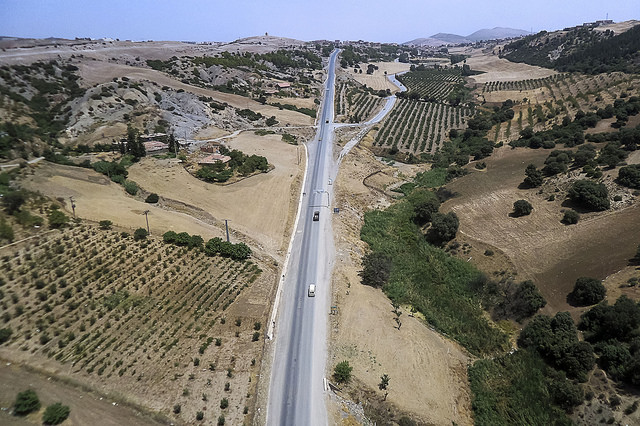
Recovering from a gruesome civil war that left the nation paralyzed between 1991 and 2001, Algeria has slowly been restoring the backbone of its infrastructure. Algeria’s infrastructure system is highly important, as it serves as a gateway between North Africa and Europe.

The Algerian government has launched an extensive public investment program in an effort to make transport a top priority. According to CountryWatch, in 2010, Algeria began “a five-year $286 billion development program to update its infrastructure and provide jobs.”

Another area of improvement that will directly impact infrastructure in Algeria is tourism. In 2012, the government began investing in the tourism sector and set a target of attracting 3.5 million tourists by 2015. The tourism sector has been the main focus of delivering employment in Algeria to better improve living conditions. The Minister of Tourism and Handicrafts, Hacène Mermouri, announced in December 2017 that 1,812 new hotel infrastructure projects have been approved by the Ministry.

These changes also impact nearby airports within the region. New terminals are being built to better accommodate international tourists in Oran and Algiers. Additional renovations include the establishment of Algeria’s first underground metro system, as well as extending roads and rail services.

The Ministry of Transport has reaped the successes from infrastructure in Algeria, earning €35.7 billion between 2010 and 2014. Such investments are expected to improve Algeria’s logistics performance, as well as reduce congestion and transport costs in a hub that serves as the primary source of transportation.

A surge in the number of vehicles that are to circulate Algeria’s roads is also concerning, leading the government to focus on expanding the country’s road network. According to the Ministry of Public Works, from the start of 2000 to 2014, the government invested in €46.9 billion in road infrastructure.

Some caveats that may impede Algeria’s growth in the near future are the fall of oil demand from nations such as the U.S., allocating between 20 to 25 percent of all Algerian exports. In addition, there has been a decrease in gas and oil production, of which Algeria ranks fourth and tenth as the largest exporter worldwide, respectively.

Per a PricewaterhouseCoopers (PWC) report, this decrease is putting increasing pressure on Algeria’s government to liberalize its economic and investment policies. Despite such internal worries, Algeria has significantly improved its logistics infrastructure, which had them ranked 140th in 2007, to which they have climbed to 96th out of 160 countries.

The central component of Algeria’s projected growth resonates with the success of the $262 billion five-year investment plan. This project is aimed at “boosting domestic production and moving the country’s economy away from oil and gas reliance,” per CountryWatch.

In a nation where poverty remains widespread, a high unemployment rate, particularly among the youth, is obstructing the country from any consistent growth. Moreover, PWC reports that the labor market is inefficient, ranking “last globally in the 2013 Global Competitiveness Index.”

Reforming institutions and monetary policies are vital to an environment crippled by political unrest and faced with strenuous complications. Infrastructure in Algeria, especially under the five-year plan, is set to ensure “significant continued development of transportation networks in the coming years,” as Oxford Business Group reports. Apart from the advertised objectives, the future of Algerian development is also contingent upon its domestic production. Algeria has a plan, but its path forward in a rapidly adjusting global system remains to be seen.

– Alexandre Dumouza

Photo: Flickr

January 9, 2018
https://borgenproject.org/wp-content/uploads/borgen-project-logo.svg 0 0 Borgen Project https://borgenproject.org/wp-content/uploads/borgen-project-logo.svg Borgen Project2018-01-09 07:30:192019-11-12 21:56:35Infrastructure in Algeria Under Significant Improvement
Global Poverty

5 of the Most Impactful Development Projects in Liberia


According to the CIA World Factbook, Liberia is a country with an unemployment rate of six percent and a 47 percent literacy rate. This status highlights the need for Liberia to develop its country so that it can make strides to reduce poverty. Here are five development projects in Liberia that will allow the country to make the changes necessary to reduce poverty.

1. The Third Poverty Reduction Support Development Policy Operation (PRSDPO-III)

Liberia is one of many nations that was severely affected by the Ebola crisis. This event, coupled with the United Nations Mission withdrawal from the country, has left Liberia’s economy in an upturned state. This development project will help the government’s reform efforts for stabilizing the economy by establishing a macroeconomic framework.

2. Liberia Infrastructure Rehabilitation Project

The country of Liberia, like many underdeveloped countries, needs to develop their infrastructure in order to fully develop as a nation. This development project in Liberia aims to provide emergency support to restore the Port of Monrovia and the Roberts International Airport. It also seeks to rehabilitate other port and aviation areas, according to the World Bank.

3. Liberia Land Administration Project

This project will strengthen the capacity of Liberia Land Authority and establish a land administration policy. It will establish processes and infrastructure required to implement laws on identification, ownership, use and valuation of land. These implementations will lead to an increase of regulations and awareness on land rights.

4. Cheesemanburg Landfill and Urban Sanitation Project

The purpose of this project is to increase access to solid waste management. Seventy-two percent of the country does not have access to sanitation facilities. Poor sanitation can lead to poor water quality. In fact, 24 percent of Liberia does not have access to a drinking water source. This project is vital in maintaining sanitation in the country.

5. Liberia Health Systems Strengthening Project

The state of the country’s health is lacking due to the recent Ebola crisis. The purpose of this project is to improve the quality of available healthcare services, such as maternal, neonatal and child health.

These development projects in Liberia will change the nature of the country and allow the government to make improvements in other areas of life, such as education. By focusing on other aspects of the country, Liberia will be able to step towards reducing poverty.

– Dezanii Lewis

Photo: Flickr

January 9, 2018
https://borgenproject.org/wp-content/uploads/borgen-project-logo.svg 0 0 Borgen Project https://borgenproject.org/wp-content/uploads/borgen-project-logo.svg Borgen Project2018-01-09 01:30:352024-05-29 22:30:055 of the Most Impactful Development Projects in Liberia
Development, Global Poverty

5 Development Projects in Myanmar

development projects in myanmarLocated in Southeast Asia, Myanmar is a country filled with political and ethnic strife and its income gap is the largest in the world. Myanmar is in desperate need of foreign aid to alleviate current problems such as illegal drug production, human rights issues and poverty. Development projects in Myanmar are crucial.

These five major development projects in Myanmar focus on areas where sustainable change can be brought about.

Community-Oriented Reproductive Health Project

In Myanmar, there is particularly low access to health services. This is especially evident in rural communities where there is a lack of knowledge, experience and healthcare providers. Similarly, there’s a scarcity of resources, facilities and basic services.

To combat this, the Japanese International Cooperation Agency (JICA) implemented the Community-Oriented Reproductive Health Project in 2004. Its main focus is on training healthcare providers in Maternal and Child Health (MCH) and upgrading health centers. The project trained one MCH promoter for every 30 households in targeted communities which ensures future, self-reliant health.

Dawei Development Project

Proposed in November 2010, the Dawei Development Project is a planned economic zone. The Dawei Development project in Myanmar would create hundreds of thousands of jobs, contributing to five percent of Myanmar’s GDP by 2045. Initially focusing on textiles, a few years down the line it hopes to attract industries such as automotive and plastics.

National Community Driven Development Project

Approved in November 2012, this development project in Myanmar aims to improve rural communities’ access to infrastructure and basic services, such as an improved government response to crisis or emergencies. It notes that most of Myanmar’s issues with poverty indicate a strong concentration in rural areas.

With plans to benefit almost 3,000 villages home to over two million poor people, this project uses a people-centered approach through which villages receive block grants to fund projects they decide and implement themselves.

Southeast Disaster Risk Management Project

The Southeast Disaster Risk Management Project will help Myanmar in one of its most crippling areas: natural disasters. Each year, disasters cost the country approximately $184 million and hurt the poor much more than other classes.

This development project in Myanmar will contribute $116 million to efforts geared towards the reduction of flooding and improve the government’s response to disasters and emergencies across the country.

Development Programs in Myanmar: Microfinance

The Asian Development Bank (ADB) executes a funding project that has, since 2010, contributed $622 million in new loans. Currently, it operates in India, Bangladesh and Indonesia. However, in 2017 it raised another $100 million to finance loans which will allow projects to expand into Myanmar.

With the implementation of these development projects in Myanmar, there is hope to bring more equality into the country. With a strong emphasis on increasing economic prosperity, these projects will similarly decrease the percentage of impoverished citizens in Myanmar. Myanmar will begin to grow into a prosperous and equal country.

– Nick McGuire

Photo: Flickr

January 9, 2018
https://borgenproject.org/wp-content/uploads/borgen-project-logo.svg 0 0 Borgen Project https://borgenproject.org/wp-content/uploads/borgen-project-logo.svg Borgen Project2018-01-09 01:30:242019-11-12 21:57:375 Development Projects in Myanmar
Global Poverty

Opium and Sustainable Agriculture in Afghanistan

sustainable agriculture in afghanistanSustainable agriculture in Afghanistan is hindered by the nation’s reliance on opium. Thirty years ago, prior to decades of conflict, Afghanistan was renowned for its raisins, pomegranates, almonds, apricots and pistachios. Now, it’s the world’s leading exporter of opium. Radical cartels reap the profits of the opium trade, exposing farmers to violence. The opium industry involves risky loans, protection rackets and financial insecurity.

The lack of basic necessities impedes the reestablishment of legal and well-regulated agriculture in Afghanistan. This deficit includes physical security and infrastructure such as roads, electricity and packaging centers. Since the future of Afghanistan can’t be separated from its agriculture industry, agricultural reform is a targeted focus of international aid organizations. The majority of Afghans rely on agriculture as their only source of income, and agriculture is the country’s primary engine of economic growth.

One approach to the development of sustainable agriculture in Afghanistan is through the revival of previously successful cash crops. High value, high volume orchard crops can be up to five times more profitable than opium. The problem lies with startup time; establishing a grape vineyard takes 3-5 years, which is a hard sell compared to annually harvested poppies. Saffron is equally valuable, netting $2000-$3000 per kilogram, compared to $90 for poppies. Unfortunately, issues such as processing and gaining entrance to the international market hinder the industry.

Many experts believe that progress on the road to sustainable agriculture in Afghanistan relies on helping farmers to improve growing the crops to which they’re already accustomed, rather than convincing them to try something new. In August 2012, The World Food Program (WFP) and Act in Change Invest in Potential (ACTED) united under the Purchase for Progress (P4P) initiative to help farmers and cooperatives increase food production and marketing efforts. A project evaluation in July 2015 showed impressive improvements.

P4P irrigation schemes increased wheat production and reduced the impact of droughts. By saving women and children from having to endure long walks for water, irrigation systems contributed to home vegetable farming and increased school attendance. They also stimulated crop diversification, with farmers branching into corn, sesame and soya.

At the same time, the provision of tractors, threshers, seed, fertilizer and agricultural training boosted production capacity. New storage facilities decreased post-harvest losses and prevented farmers from being forced to sell in the low period immediately following harvest time. Improved access to markets led to higher sales in wheat. Overall, in targeted areas, wheat sales increased by 40 percent and losses decreased by 53 percent.

The United States Agency for International Development (USAID) has provided assistance focused on both old and new markets. It has supported Afghan farmers through loans, canals and vouchers for seed, fertilizer, tools and tech. USAID helped 52,000 farmers grow more and higher quality wheat, but also facilitated the international export of fruit, nuts and cashmere valued at more than $66 million. USAID helped 1.1 million households by planting fruit saplings and grape cuttings, by establishing fruit orchards and vineyards and by constructing raisin drying facilities and cold storage rooms.

Slowly, sustainable agriculture in Afghanistan is gaining ground on the opium poppy industry. With international support, Afghanistan is reestablishing its place in the global agricultural market.

– Anna Parker

Photo: Flickr

January 5, 2018
https://borgenproject.org/wp-content/uploads/borgen-project-logo.svg 0 0 Borgen Project https://borgenproject.org/wp-content/uploads/borgen-project-logo.svg Borgen Project2018-01-05 07:30:162024-05-29 22:30:02Opium and Sustainable Agriculture in Afghanistan
Global Poverty

5 Development Projects in Mali

development projects in mali
Located in West Africa, Mali is one of the 25 poorest countries in the world. It needs the extensive support of foreign aid. Some of the challenges Mali faces include deforestation, soil erosion, desertification and a lack of potable water. As a result, development projects in Mali are crucial.

Major development projects in Mali focus on areas in which Mali has great potential.

Top Development Projects in Mali

  1. The 2SCALE project, funded by DGIS-Netherlands, is working to improve agribusiness opportunities in Mali. One of the main objectives of 2SCALE is to increase productivity and farmer incomes. It helps farmers to link with “buyers, technical support providers, bank and other partners” by developing agribusiness clusters, thereby helping farmers to gain access to profitable markets.
  2. The Scaling Up Fertilizer Deep Placement and Microdosing Technologies project is funded by USAID. This project focuses on increasing cereal productivity in Mali, with the main goal to increase food security and smallholder farmer incomes. One of the methods this project promotes is using microdosing (MD) technology on the land, which entails applying a small amount of fertilizer directly to plant roots. This is done to increase fertilizer efficiency and the project has already proven to be successful with a notable yield increase in rice, sorghum and millet. As of 2015, the estimated value of additional crop production was more than $5 million.
  3. The Aga Khan Foundation (AKF) is working with schools and early childhood development centers to improve the education sector by promoting “low or no cost teaching and learning materials.” The AKF is working to improve the instruction of specific subjects, has helped develop infrastructure and provided school furniture and other learning materials to 21 schools. Additionally, with financial help from UNICEF and the World Bank, the AKF has supported the development of 11 Early Childhood Development (ECD) centers. In partnership with Plan International, World Vision and Save the Children, the AFK also launched a new program in 2014 that will “support 10,000 children in 12 communes around Mopti and Djenne by building 12 schools and 10 early childhood development centers.”
  4. Finding employment is extremely difficult in the rural areas in Mali and youth unemployment is a major concern. The International Fund for Agricultural Development has an ongoing project called Rural Youth Vocational Training, Employment and Entrepreneurship Support Project that targets rural youth in Mali who lack technical skills and are denied access to financing. The project aims to improve young people’s professional skills and support them in establishing their own businesses. The project aims to help 100,000 rural youth by the end of its eight-year implementation period.
  5. Deforestation is a serious problem in Mali, and Tree Aid has been working there since 1993 to help villagers in arid areas to utilize the potential of trees in order to fight poverty and protect nature. With the help of local conservation organizations, such as the Malian Association for the Conservation of Wildlife and Environment (AMCFE), Tree Aid is aiming to facilitate a 400-kilometer-long corridor between Mopti and Segou. Around 1,000 farmers in 15 villages are involved in this project. By learning how to manage their land better, these farmers contribute toward increasing tree density per hectare.

While these development projects in Mali are being carried out, the armed conflict that took place at the end of 2012 in the north of Mali is still making development more difficult. This is because the military and political situation remain unstable. But with these ongoing efforts from stakeholders all around the world, Mali will begin to see the seeds of future prosperity and sutainable development.

– Mehruba Chowdhury

Photo: Flickr

January 4, 2018
https://borgenproject.org/wp-content/uploads/borgen-project-logo.svg 0 0 Borgen Project https://borgenproject.org/wp-content/uploads/borgen-project-logo.svg Borgen Project2018-01-04 07:30:552024-05-29 22:30:025 Development Projects in Mali
Global Poverty

4 Facts About Healthcare Infrastructure in Guinea

infrastructure in GuineaGuinea lies on the coast of Western Africa with a population of about 12.4 million people. The country’s population has steadily grown in the past few decades due to declining mortality rates and sustainable fertility rates. However, healthcare infrastructure in Guinea still faces many issues.
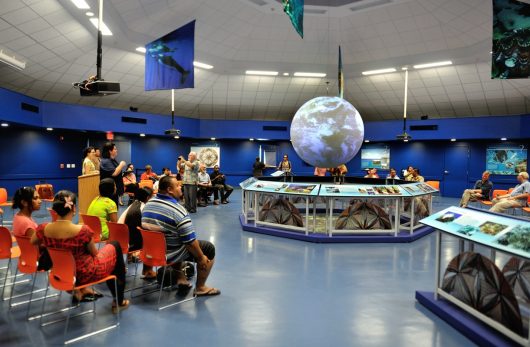
Officials have attempted to address these problems over the years, but they became glaringly apparent when the Ebola outbreak began here in 2013. Since then, the government has been working with international organizations to improve the overall healthcare infrastructure. Here are four facts about the healthcare infrastructure in Guinea.

  1. Independence meant a lack of early infrastructure

    The French ruled over Guinea — or French Guinea as it was known then — until the country gained independence in 1958. As with many colonized states, the transition to independence was hindered by a lack of infrastructure and resources, in addition to Guinean officials’ refusal of French aid due to a fear of neocolonialism. Things temporarily improved in the 1980s when Lansana Conté came to power, but the situation continued to deteriorate as reforms came too slowly and conflicts increased within and around the country.

  1. An attempt at improvement was made in the early 2000s

    Although Conté was largely unpopular and many called for government reform, there were attempts in the 1990s and early 2000s to improve healthcare within the country. Some progress had been made in mortality rates for children under the age of five, but fertility and maternal mortality rates remained high. The government increased healthcare expenditures in the mid-1990s, yet 48 percent of these expenditures only benefitted the wealthiest 20 percent of the population while only 4 percent went to the poorest 20 percent. In the early 2000s, these improvements came to an end despite the fact that 10-15 percent of citizens were still permanently unable to afford healthcare.

  1. Ebola virus exemplified the weaknesses of the healthcare system

    The latest and harshest Ebola outbreak began in Guinea in December of 2013. The healthcare infrastructure in Guinea was largely unprepared for a mass disease outbreak which is shown in how rapidly the disease was able to spread. Of the three most affected countries — the other two being Sierra Leone and Liberia — Guinea ranked lowest in healthcare expenditures. It faced serious staffing shortages, even with aid from the World Health Organization and Doctors Without Borders, as well as a lack of care delivery to rural areas where the epidemic began. As of April 2016, after the worst of the outbreak had passed, 2,544 people had died in Guinea.

  1. Improvements were made to directly address problems associated with the Ebola virus

    The Guinean government’s response to the Ebola outbreak was poor, but it is working toward preventing this kind of epidemic from occurring again. The focus of improvement is now on governing and strengthening the healthcare infrastructure in Guinea. This is being carried out through the Health Commission established in the National Assembly by USAID. USAID sponsored workshops for the commission that has resulted in a 2.4 percent funding increase for healthcare. It also plans to work with urban and rural community leaders to create a more efficient response to healthcare needs throughout the country.

Guinea has long lagged behind in healthcare, but the government is trying to rectify this. Its lessons were learned the hard way through uncontrollable crises and death for which the country was simply not prepared. However, what matters most is that legislators and leaders are now putting in the work to implement efficient and sustainable healthcare for all citizens.

– Megan Burtis

Photo: Flickr

January 4, 2018
https://borgenproject.org/wp-content/uploads/borgen-project-logo.svg 0 0 Borgen Project https://borgenproject.org/wp-content/uploads/borgen-project-logo.svg Borgen Project2018-01-04 01:30:042024-05-29 22:30:014 Facts About Healthcare Infrastructure in Guinea
Global Poverty

United States Territory: Infrastructure in American Samoa

infrastructure in American SamoaAmerican Samoa is a territory of the United States, located in the South Pacific. It is largely a traditional Polynesian economy, where 90 percent of the land is communally owned. The economy of America Samoa is strongly linked to its top trading partner, the United States. American Samoa received a $9.5 million grant from the Office of Insular Affairs under its Capital Improvement Project Program in July 2016. This funding was to bolster projects regarding infrastructure in American Samoa, furthering projects in education, health and transportation.

This grant was split into several avenues to improve the territory. About $1.7 million went to the maintenance or complete overhaul of tugboats belonging to the Department of Port Administration, which serve the main trade location, Pago Pago Harbor. Smaller allotments of the grant went to Pago Pago Port to fix drainage problems and other adverse runoff effects on the coast.

This harbor is crucial for commerce because American Samoa’s tuna industry is a large part of the economy. This harbor allows for exports to the United States, tuna being the backbone of the private sector and canned tuna being the nation’s largest export.

Another large portion of the grant went to the development of education and health. School buses were funded for a better, safer way for students to travel. The construction of a new high school equipped with ten classrooms, a band room and tech shop and maintenance for the Aua Elementary school were included in this expenditure.

The LBJ Tropical Medical Center Labor, Delivery and Operating Room project received $1.7 million. This funding will help to begin development of this medical center that is forecast to cost $14 million in total.

With trade and education underway, current concerns deal with freshwater resources and supplying clean, safe water to the people. Substantial funds from the water division of the government went to improving water catchments and pipelines.

The Economic Development Implementation Plan for American Samoa (EDIPAS) Fiscal Years 2014-2017 is a comprehensive plan to develop infrastructure in American Samoa. This program is critical for the planning of future projects and betterment of infrastructure in American Samoa.

To promote American Samoa as an investment and strengthen group partnership, the EDIPAS is split into seven areas: transportation and infrastructure, new business and industry, federal government constraints and business climate, agriculture, tourism, fisheries and workforce development.  Goals set out in this plan and other fiscal plans regarding aid will better equip the government to increase economic development in American Samoa.

– Bronti DeRoche

Photo: Flickr

January 3, 2018
https://borgenproject.org/wp-content/uploads/borgen-project-logo.svg 0 0 Borgen Project https://borgenproject.org/wp-content/uploads/borgen-project-logo.svg Borgen Project2018-01-03 07:30:462024-05-29 22:30:01United States Territory: Infrastructure in American Samoa
Global Poverty

Progress in Developing Infrastructure in Albania

infrastructure in Albania

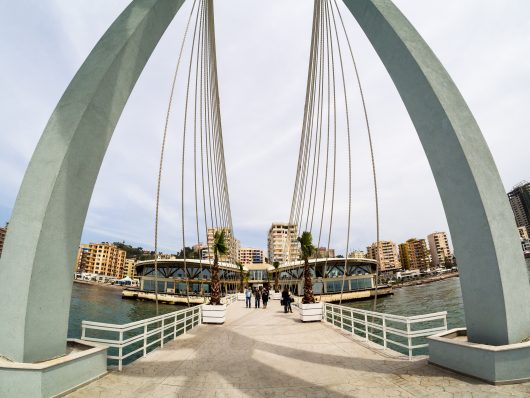
In 2008, Albania managed to develop its economy, rising from its position as the poorest European nation to middle-income economic status. This growth was possible because of international aid to develop infrastructure in Albania, and as a result, poverty decreased by half. Infrastructure projects have increased the prosperity of Albanian society.

Roads in Albania are one of the country’s largest projects, concentrated on the highway Corridor Durrës – Kukës – Morinë, known as the “The Nation’s Road.” This road connects key sections of the nation, linking the capital and the port of Durres to the state of Kosovo. Another project underway is Corridor VIII, which will connect the Albania port of Durres with Bulgaria, joining Tirana, Thana Neck, Skopje, Deve Bair, Sofia, Plovdiv and Burgas. This will fuel trade, being the main east-west transportation route between the Mediterranean and Balkan countries.

Another key part of infrastructure in Albania is electricity and the development potential within this sector. Albania’s potential capacity to generate power from hydro (water) resources, wind, solar and biomass is immense. In 2011, 98.57 percent of the total energy produced was from hydroelectric plants. Investments in energy production help the development of Albania and reduce poverty by allowing more individuals access to affordable, reliable energy.

Providing clean and sanitary water to people is another crucial service in running a functional state. The water supply is at the forefront of providing for citizens and a measurement of an effective government. Albania increased its investments in order to enhance the water supply sector. The government passed a budget increase to boost tourism projects and supply water to areas facing difficulties. In 2010, $10 billion went to water supply improvements, with $6 billion coming from the state budget and the remainder from foreign aid.

Entities such as the municipality of Tirana and the European Bank for Reconstruction and Development (EBRD) are working together to upgrade the municipal infrastructure in Albania. Their plan is to make the capital more environmentally conscious and promote sustainable growth and development. The municipality of Tirana and the EBRD are working through a memorandum of understanding for the development of urban transport, roads, water and wastewater services, solid waste management, street lights and improving energy efficiency.

Albania shows the great benefits of international aid: poverty reduction, roads being built, developing cities and providing for the people of the state. However, improvement growth models need to represent sustainability, investment-strong and export-led ideals.

Focusing on macroeconomic and government fiscal sustainability fuels reform and development for Albania. This, in turn, will benefit all sectors within infrastructure in Albania. Foreign aid in the form of investments will allow Albania to continue to decrease its poverty rate and boost the economy enough to further state development.

– Bronti DeRoche

Photo: Flickr

January 2, 2018
https://borgenproject.org/wp-content/uploads/borgen-project-logo.svg 0 0 Borgen Project https://borgenproject.org/wp-content/uploads/borgen-project-logo.svg Borgen Project2018-01-02 07:30:352024-05-29 22:30:00Progress in Developing Infrastructure in Albania
Development

5 Development Projects in The Gambia

development projects in the gambiaThe Gambia is a relatively small country in Western Africa, surrounded by Senegal. It has maintained political stability since independence in 1965. Despite this, the country still faces a multitude of issues which development projects in The Gambia seek to address.

In 2017, former President Jammeh’s 21-year reign came to an end. The citizens elected President Adama Barrow to office with hopes of ushering in a new era for The Gambia. Below are five development projects in the Gambia that are currently being implemented.

Food and Agriculture Sector Development Project (FASDEP)

With arable land and poor soil quality, food production has been a constant struggle for The Gambia. The Food and Agriculture Sector Development Project focuses on community-based pond fish-farming. It has worked towards assuaging food shortages since 2015.

FASDEP has provided the necessary tools and constructed 45 ponds to date. Each pond is expected to bring a profit of $217. The 200 ponds supported by FASDEP have and will continue to provide income and food security.

The Maternal and Child Nutrition Health Results Project

The Maternal and Child Nutrition Health Results Project, funded by the World Bank and other donors, has the goal of improving overall nutrition and health of women and children living in The Gambia. Many aspects are included in this project such as improving the health system, improving health service delivery, and promoting reproductive and maternal health through proper nutrition.

The project has also identified 12 practices carried out by both families and communities which they believe will enhance child survival rates. Included in these are basic hygiene and sanitation practices. The project continues to promote healthcare and implement these practices in specific regions of the country.

National Agricultural Land and Water Management Development Project (NEMA)

This project specifically works to aid women and young adults in The Gambia and reduce poverty rates. By implementing sustainable land and water management practices, productivity will increase among this group.

The main goals of NEMA include addressing the proper use of farmland and the development of domestic markets. These goals will be met by enhancing the usage of watershed areas, which are key to many ecosystems and usable for crop production, and by making agriculture profit-oriented, which gives an income to these women and young adults.

The Participatory Integrated-Watershed Management Project

This project more deeply focuses on the development of watershed management in The Gambia. The project works specifically in rural areas to not only increase income but also to protect natural resources, of which watersheds are a critical component.

The targets of this project are broader and include anyone who manages or relies on crops for an income. Citizens take the reins in this project and plan and implement the recommended practices independently.

A variety of issues are addressed through the Watershed Management project such as women’s rights, malaria prevention, environmental sustainability and more. In the future, this idea may expand to broader development projects in the Gambia and other potential countries.

The Emergency Development Policy Operation Project

The Emergency Development Policy Operation Project has been implemented in the last six months of 2017. In direct response to an economic crisis in The Gambia following a poor agricultural and tourist season, the project works to not only strengthen the country’s financial position but also provide key services to citizens that otherwise may have gone unfunded.

Specifically, the project hopes to mitigate the consequences to the country’s health centers. The $56 million project will continue to provide financial support and will also implement sustainable measures to ensure the financial security of the country going forward.

These five development projects in The Gambia have been vital to the survival of the country and will continue to be as citizens learn to become economically self-sufficient and sustainable. The Gambia has seen many struggles since gaining independence, but with the aid of these projects, the people may truly become independent.

– Megan Burtis

Photo: Flickr


January 1, 2018
https://borgenproject.org/wp-content/uploads/borgen-project-logo.svg 0 0 Borgen Project https://borgenproject.org/wp-content/uploads/borgen-project-logo.svg Borgen Project2018-01-01 01:30:532020-03-26 12:27:155 Development Projects in The Gambia
Development, Global Poverty

5 Development Projects in Malaysia

development projects in malaysiaOne of the most vibrant economies in Southeast Asia, Malaysia consists of two regions separated by 640 miles of water. Though it is relatively peaceful, occasionally there is racial tension. To address issues of income inequality, several development projects in Malaysia are active.

Less than one percent of Malaysians live in extreme poverty. However, more than 40 percent of the population is impoverished. Compared to other Southeast Asian countries, income inequality is relatively high in Malaysia. Despite these issues, there are many projects that hope to fight this inequality issue. 

Below are short descriptions of five development projects in Malaysia.

Scatec Solar Project

Scatec Solar, a company in Malaysia, recently won a grant to construct a 40 MW plant. Located in northwest Malaysia, it expects to deliver 65 GWh of solar power and earn about $6 million a year. Construction is due to begin in 2018 and finish in 2019.

This is not Malaysia’s first solar plant grant win, which makes its renewable energy commitment evident. Furthermore, this continuous string of solar power growth shows a definitive market in Malaysia.

Program for Bornean Biodiversity and Ecosystems Conservation II

The Program for Bornean Biodiversity and Ecosystems Conservation was created by JICA in 2001. The project focused on the biodiversity and conservation of ecosystems in the Sabah region of Malaysia. It implemented the Sabah Biodiversity Centre (SaBC) and managed the river basins of the Kinabatangan and the Segama rivers. Further, it created state park activities in the Sabah region.

Development Projects in Malaysia: Green Cities

The Green Cities project is also known as the Sustainable Urban Management Support for Follow-up Activities in Melaka, Malaysia. It builds on previous Green Cities development projects in Malaysia implemented by the Asian Development Bank.

The original Green Cities projects focused on improving climate resilience in Malaysia. The plan addressed economic growth and sustainability in an urban environment.

Kota Kinabalu Composting Project

In 2008, the World Bank approved the Kota Kinabalu Composting Project. It created this project to avoid further methane and greenhouse gas pollution from a landfill in Telipok, Malaysia. By diverting waste to a sorting and compost plant, workers recover the recyclable parts of the waste and convert the biodegradable portion into a large-scale compost.

To fully reach its goal, the World Bank constructed a 500 tonne/day sorting plant. Although it has yet to reach completion, the goal is still possible in the coming few years.

Global Knowledge and Research Hub

In March 2016, the World Bank Group officially launched its Global Knowledge and Research Hub in Malaysia. Focused on Malaysia’s aims to become a high-income economy through sustainable and inclusive growth by 2020, it will support their economic plans, and share lessons with developing countries.

The first of its kind, this Hub will address skill shortages, help implement Malaysia’s SME plan, unlock the potential for Malaysia’s digital economy and many other plans.

By pursuing these development projects in Malaysia the nation will continue to grow. As a result, it will bring a larger percentage out of poverty and reach its national economic goals.

– Nick McGuire

Photo: Flickr

December 31, 2017
https://borgenproject.org/wp-content/uploads/borgen-project-logo.svg 0 0 Borgen Project https://borgenproject.org/wp-content/uploads/borgen-project-logo.svg Borgen Project2017-12-31 01:30:202019-11-12 22:17:535 Development Projects in Malaysia
Page 27 of 44«‹2526272829›»

Get Smarter

  • Global Poverty 101
  • Global Poverty… The Good News
  • Global Poverty & U.S. Jobs
  • Global Poverty and National Security
  • Innovative Solutions to Poverty
  • Global Poverty & Aid FAQ’s
Search Search

Take Action

  • Call Congress
  • Email Congress
  • Donate
  • 30 Ways to Help
  • Volunteer Ops
  • Internships
  • Courses & Certificates
  • The Podcast
Borgen Project

“The Borgen Project is an incredible nonprofit organization that is addressing poverty and hunger and working towards ending them.”

-The Huffington Post

Inside The Borgen Project

  • Contact
  • About
  • Financials
  • President
  • Board of Directors
  • Board of Advisors

International Links

  • UK Email Parliament
  • UK Donate
  • Canada Email Parliament

Get Smarter

  • Global Poverty 101
  • Global Poverty… The Good News
  • Global Poverty & U.S. Jobs
  • Global Poverty and National Security
  • Innovative Solutions to Poverty
  • Global Poverty & Aid FAQ’s

Ways to Help

  • Call Congress
  • Email Congress
  • Donate
  • 30 Ways to Help
  • Volunteer Ops
  • Internships
  • Courses & Certificates
  • The Podcast
Scroll to top Scroll to top Scroll to top