• Link to X
  • Link to Facebook
  • Link to Instagram
  • Link to TikTok
  • Link to Youtube
  • About
    • About Us
      • President
      • Board of Directors
      • Board of Advisors
      • Financials
      • Our Methodology
      • Success Tracker
      • Contact
  • Act Now
    • 30 Ways to Help
      • Email Congress
      • Call Congress
      • Volunteer
      • Courses & Certificates
      • Be a Donor
    • Internships
      • In-Office Internships
      • Remote Internships
    • Legislation
      • Politics 101
  • The Blog
  • The Podcast
  • Magazine
  • Donate
  • Click to open the search input field Click to open the search input field Search
  • Menu Menu

Tag Archive for: Economic Growth

Information and news about economic growth

Posts

Global Poverty

Five Important Development Projects in Montenegro

5 Development Projects in Montenegro

With only about 600,000 people living within its borders, Montenegro is one of the smallest countries on the Balkan Peninsula of Eastern Europe. Its small status, however, has not diminished its government’s desire for growth and development.

In fact, Montenegro’s somewhat vulnerable economy is set on a path to become part of the European Union by 2020. With the deadline fast approaching, Montenegro, along with the World Bank, have committed a whopping $144 million for 2018 (compared to only $3 million in 2017) toward development projects in Montenegro designed to kick start domestic development.

One of the following five development projects in Montenegro could very well be the key to nation’s economic and political future.

Montenegro First Fiscal and Financial Sector Resilience Policy-Based Guarantee

This is a tremendously important economic stimulation project that aims to reestablish trust between investors and Montenegro’s flux-prone economy. The public financial sectors are at the epicenter of this reform, as a staggering $93 million has been allocated to rebuild investor confidence and stabilize public debt levels for Montenegro’s most infringed people.

Specific measures of the reform include a reduction in wage for government officials, increased supervision of nonbanking financial sectors and pharmaceutical market reform, making medication more accessible and affordable. This is the first of a two-stage fiscal program that Emanuel Salinas, the World Bank Country Manager for Montenegro, believes will help the country “overcome today’s challenges and achieve strong sustained and inclusive growth.”

Industrial Waste Management and Cleanup Project

Montenegro, which literally means “black mountain,” is home to stunning cliffs that run for miles along the Adriatic Sea. Sitting on a grassy knoll overlooking this country’s sloping wild rivers and beautiful clear lakes, one would never imagine that there are disposal sites so contaminated that $68.9 million have been set aside in a direct effort to have them remediated and safe for habitation.

This cleanup project aims to reduce public health risks, such as air pollution and soil erosion, as well as vitalize the country’s tourism sector. The contaminated sites are to be leveled and blanketed by more than 30 centimeters of uncontaminated soil and future waste disposal will be in strict accordance with Montenegrin and E.U. legislation.

Revenue Administration Reform Project

Corruption is a pervasive problem for all facets of bureaucracy in the Montenegrin government. High levels of organized crime activities, such as loan sharking, drug smuggling and human trafficking, have found their way into the offices and juries of Montenegro.

This tax reform project, newly commissioned by the World Bank, is looking to bring functionality back to the countries ravaged revenue administration. Approved on July 31, 2017, this program, if successful, will be vitally important to Montenegro’s mission of joining the E.U.

Montenegro Energy Efficiency Additional Financing

These sustainable energy development projects in Montenegro look to pick up where their original 2008 counterpart leaves off. The additional $6.8 million in funding will help continue the very same efficiency programs that were able to provide nine educational facilities and six health care facilities in Montenegro with energy savings that ranged between 30 and 65 percent. For a country that imports an entire third of its energy, the savings have been two-fold. Montenegro is also one of the only Balkan countries that is actively advancing toward a green future.

Montenegro Institutional Development and Agriculture Strengthening Project

Somewhat famous for its grapes, Montenegro boasts an export of $15 million of wine a year. These development projects in Montenegro intend to manage public funds and focus them more on the agricultural sector, where near 70 percent of Montenegro’s rural population resides. This program has helped thousands of farmers acquire new farming machines and storage units. Ultimately, the project intends to implement a more modern agricultural system in the coming years.

Development projects in Montenegro that focus specifically on domestic improvement radically improve the quality of living for the people working and living on the land. Although there is still much more work to be done, the path is clear for Montenegro to become a fully developed nation. The strides being made by Montenegro today should inspire other Balkan countries to do the same.

– Nicolas Lennan

Photo: Flickr

January 18, 2018
https://borgenproject.org/wp-content/uploads/borgen-project-logo.svg 0 0 Borgen Project https://borgenproject.org/wp-content/uploads/borgen-project-logo.svg Borgen Project2018-01-18 01:30:192024-05-24 23:52:07Five Important Development Projects in Montenegro
Global Poverty

Toward the Development of Sustainable Agriculture in Lebanon

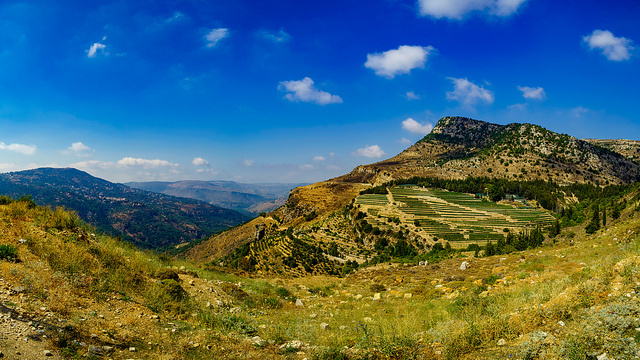
Toward Sustainable Agriculture in LebanonThe famous concept of permaculture, developed first in 1978 by Bill Mollison and David Holmgren, has recently been integrated into the Lebanese agricultural system, particularly in the rural areas of the country. Permaculture is a design science aiming to combine knowledge and culture with habitats and human agricultural systems. It utilizes the principles of ecology and anthropology to ensure the ethical reproduction of the diversity, resilience and uniqueness of natural ecosystems.
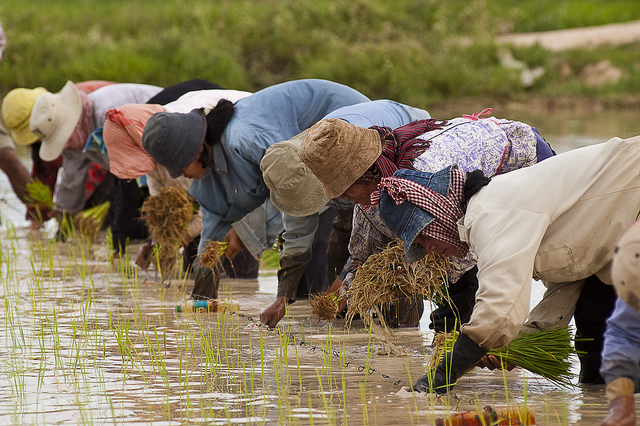
Through the application of these ethical principles in their daily lives, people gradually transform into productive producers rather than simply being passive and dependent consumers. Therefore, permaculture not only unifies local communities through the development of teamwork skills and resilience, but also paves the way to a more sustainable agricultural system and environmentally friendly future.

The rural areas of Lebanon implemented permaculture in 2014, after countryside residents received training and workshops organized by the SOILS: Permaculture Association Lebanon. With a goal of initiating the creation of sustainable agriculture in Lebanon, Rita Khawand, a former Lebanese actress, co-founded the SOILS organization after winning a social entrepreneurship competition led by environmental and sanitation based non-governmental organizations in her hometown. According to Khawand, Lebanon needs such a creative process, as it helps humans in “respecting nature and man.”

Alongside Khawand’s vision, Fadi Kanso, a Lebanese agricultural scientist, joined the SOILS community following the completion of his education in Germany to invest in permaculture with the aim of implementing sustainable agriculture in Lebanon. Kanso highlighted that the main problem in Lebanon is the farmers’ dependence on monoculture, a tendency that seemed to be catastrophic during severe climate shifts where some people witnessed huge financial losses as they relied only on a single crop species.

Kanso also stressed the negative impact of the overwhelming amount of pesticides administered by the farmers in the country, as it led to a reduction in crop fertility by a yearly rate of 15 percent. Moreover, these toxic chemicals also manifest adverse effects through their contribution to the development of health problems, such as minimizing the levels of iron and magnesium in the body which are absorbed from the consumption of certain types of fruits and vegetables.

One of the main advantages of the SOILS organization’s permaculture project in Lebanon is its role in achieving food security for refugees through manuals designed to help vulnerable populations create their own microgardens, and thus have access to the necessary food products. Permaculture can eventually aid the government with the burden of limited resources, which has become a significant concern following the Syrian war crisis and the immigration of millions of Syrian citizens to Lebanon.

Rita Khawand and the SOILS community are striving to transform Lebanon from an underdeveloped non-environmentally friendly community to a developed country with a sustainable agricultural system by uniting entire regions to fight for a better and improved future. From the Bekaa region in the north to the village of Saidoun in the south, the dissemination of permaculture is becoming a national success as local residents indulge themselves in Permaculture Design Certificate (PDC) courses and learn how to overcome all financial and environmental challenges.

Despite the numerous fallbacks witnessed during the past few years, the positive impact of permaculture has created a sense of optimism among Lebanese citizens in their ability to succeed in the improvement of their country and their contribution in the development of sustainable agriculture in Lebanon.

– Lea Sacca

Photo: Flickr

January 18, 2018
https://borgenproject.org/wp-content/uploads/borgen-project-logo.svg 0 0 Borgen Project https://borgenproject.org/wp-content/uploads/borgen-project-logo.svg Borgen Project2018-01-18 01:30:182024-06-05 02:36:42Toward the Development of Sustainable Agriculture in Lebanon
Global Poverty

Efficiency Over Expansion: Sustainable Agriculture in Cambodia

sustainable agriculture in CambodiaFrom 2004-2012, Cambodia experienced a spurt of economic growth due in large part to an increase in rice production. During that time period, the country’s agricultural gross product increased by 8.7 percent.

But since 2012, the growth in agriculture has slowed. In 2013-14, agricultural gross product fell below 2 percent. Much of the past growth came from the expansion of cultivated lands, but this expansion may have reached its limits. In order for Cambodia to continue to grow its economy and support those who rely on agriculture, sustainable agriculture in Cambodia will become increasingly important to the country’s future.

The United States Agency for International Development (USAID) is assisting Cambodia’s agriculture sector through the Feed the Future program. The program has trained over 193,000 farmers in new technologies. This has led to an increase in income among those in the farming industry as well as a 30 percent decrease in the number of underweight children in Cambodia.

USAID is continuing its work in Cambodia and has laid out its goals and expected results for the future. These expectations include continuing to help farmers increase sales and working with the private sector to grow and leverage investments in horticulture.

In September 2016, Kansas State University partnered with the USAID Feed the Future program to launch the Center of Excellence on Sustainable Agricultural Intensification and Nutrition (CE SAIN). The center seeks to increase sustainable agriculture in Cambodia with a combination of private sector innovation, public sector improvement and training in sustainable agriculture techniques. These goals are accomplished in part by innovation labs and technology parks that highlight new technologies and strategies.

Another project funded by the partnership between USAID and CE SAIN is being run by Penn State University and focuses on the northern part of Cambodia. This program will work directly with 250 women in the agricultural industry. It will teach the women new farming techniques as well as how to successfully deal with climate change.

Rick Bates, a horticulture professor at Penn State, said that the program’s goal is “growing more food, on existing land, using fewer resources and in an ecologically friendly manner”. This sums up why sustainable agriculture in Cambodia is such a vital part of the country’s future. When the expansion of cultivated lands is no longer an option, new and innovative technologies can help farmers grow crops more efficiently on the land that is available.

– Aaron Childree

Photo: Flickr

January 17, 2018
https://borgenproject.org/wp-content/uploads/borgen-project-logo.svg 0 0 Borgen Project https://borgenproject.org/wp-content/uploads/borgen-project-logo.svg Borgen Project2018-01-17 07:30:572024-05-29 22:30:13Efficiency Over Expansion: Sustainable Agriculture in Cambodia
Global Poverty

Improving Economy and Environment: Sustainable Agriculture in Kenya

Sustainable Agriculture in KenyaAgriculture plays a large role in Kenya’s economy. The agricultural industry employs more than 40 percent of Kenya’s total population and more than 70 percent of the country’s rural inhabitants.

Any country can benefit from sustainable agriculture, but it is even more important that those with a heavy reliance on agriculture make sustainability a priority in their decision-making. Sustainable agriculture in Kenya can improve crop yields, stimulate the economy and help mitigate climate change.

Kenya is implementing a range of programs to increase sustainable agriculture. These are important steps to help the country build a prosperous future for all who live there.

Increasing Sustainable Agriculture in Kenya

One project working to increase sustainable agriculture in Kenya is the World Bank’s Sustainable Agriculture Land Management Project. This project saw tremendous gains in the area of environmental conservation by training farmers in sustainable farming techniques.

By 2015, 25,000 tons of carbon was captured with the use of methods implemented by the World Bank project. As a result, farmers in the area received carbon credits. Maize yields tripled over the course of three years and more than 30,000 farmers in Kenya have been trained.

Ace Africa has also been working to improve sustainable agriculture in Kenya by implementing what the organization calls Community Livelihood Programs. These programs deal with the problem of decreased soil fertility by teaching local farmers how to make organic compost. This compost not only improves soil fertility but also helps crops better fight against disease and increases carbon sequestration.

Incorporating Intercropping

The International Maize and Wheat Improvement Center (known by its Spanish acronym CIMMYT) is another organization devoting itself to increasing sustainable agriculture in Kenya. One of the main techniques taught by CIMMYT is intercropping.

Intercropping improves crop yields by planting multiple different crops among each other in the same field. The organization also focuses on improving seed quality.

Sustainable agriculture in Kenya is making a positive impact on Kenya’s economy and also decreasing the country’s carbon footprint. This serves as a great example for the international community that economic and environmental interests do not always have to be at odds.

When sustainable development is a priority, increasing economic success and decreasing negative impacts on the planet are possible to achieve simultaneously.

– Aaron Childree

Photo: Flickr

January 17, 2018
https://borgenproject.org/wp-content/uploads/borgen-project-logo.svg 0 0 Borgen Project https://borgenproject.org/wp-content/uploads/borgen-project-logo.svg Borgen Project2018-01-17 07:30:352024-05-29 22:30:12Improving Economy and Environment: Sustainable Agriculture in Kenya
Global Poverty

Organic and Sustainable Agriculture in Armenia Boosting Economy

sustainable agriculture in armeniaArmenia is a highly vulnerable nation facing many challenges. Due to its geographic isolation, limited countries to export its goods and issues with the business sector, Armenia relies heavily on Russian support. Its aging infrastructure leaves the country open to casualties and significant damage if natural disasters caused by the effects of global warming are to occur.

Despite these challenges, efforts are being made to create sustainable agriculture in Armenia. There are many areas in which sustainable agriculture can have an impact, such as economic growth, the preservation of natural capital, the mitigation of climate change, reversing environmental degradation and alleviating poverty.

With financial assistance from the European Union, EaP Green Partnership for Environment and Growth seeks to develop sustainable and organic agriculture in Eastern Europe, including Armenia. In close proximity to the EU markets, this project will allow low levels of fertilizers and pesticides to be used on crops while also aiding in the labor market by creating more farming jobs.

Why Organic?

Organic, sustainable agriculture in Armenia offers opportunities to revitalize the countryside and restore ecosystem functionality while also developing new local businesses and agro-tourism opportunities, according to UNEP’s comprehensive assessment of the region. Between 2003 and 2013, the EU’s organic market exploded, growing massively throughout the decade. “The subsequently high degree of dependency on organic imports from outside the EU provides excellent opportunities for potential producers and exporters in neighboring East European countries.”

Armenia has a wide range of traditional crop varieties that are ideally adapted to local climate conditions and are resistant to drought, diseases and pests. These crops require lower levels of fertilizers and pesticides, making them excellent candidates to create sustainable agriculture in Armenia. Armenian “ancient” crop varieties, like Armenian honey, herbs and dried fruit, are perfect for international trade thanks to their uniqueness in the market.

Although export bans in Eastern Europe are a threat to organic value chains, Armenia has signed the Russia-led Customs Union with the aid of the EaP Green Partnership for Environment and Growth. This will allow more access to the EU markets, which will lead to significant export opportunities.

By creating more opportunities for organic, sustainable agriculture in Armenia, the nation will be impacted greatly. Although this project will not solve all its problems, it is a step in the right direction, a step towards national security.

– Kailey Brennan

Photo: Flickr

January 17, 2018
https://borgenproject.org/wp-content/uploads/borgen-project-logo.svg 0 0 Borgen Project https://borgenproject.org/wp-content/uploads/borgen-project-logo.svg Borgen Project2018-01-17 07:30:072024-06-11 23:17:14Organic and Sustainable Agriculture in Armenia Boosting Economy
Global Poverty

Credit Access in Rwanda Leads All African Nations

credit access in RwandaRwanda has seen great improvement in political and economic areas since the 1994 genocide and civil war. Credit access in Rwanda has made a considerable leap in the landlocked country.

A lack of credit access is a challenge in developing countries, as access to credit is an important tool to help people to manage their lives and plan ahead. Developing financial literacy is essential for people to make proper financial decisions. Limited access to credit also impedes growth and innovation. When Rwandans see their potential with credit access, they can not only improve their living conditions but also boost the untapped economy and market towards economic sustainability.

Credit access in Rwanda is expanding, and entrepreneurs have found it useful in growing their startups. The biggest improvement in access to credit is protecting minority investors with reforms that have grown Rwanda’s economy. Investing in people with ideas and innovation opens doors in the global market, moving Rwanda up the economic ladder and away from poverty and instability.

According to African Markets, Rwanda leads all African nations in ease of credit access. Rwanda has been proposing and establishing reforms in order to promote and simplify access to credit during the past seven years. Credit access in Rwanda is making waves with investors and potential businesses, and the progress will benefit Rwandans and improve their living conditions.

Partly due to improved credit access in Rwanda, the country has become a progressive example for African nations. Post-genocide Rwanda has witnessed substantial progress, prospering in innovation and stability. Starting a business is relatively easy in Rwanda and faces little to no barriers.

The gender gap is decreasing in Rwanda, another benefit of the improvements being made in the country. Credit access in Rwanda is readily available to women, though they still face some obstacles. To address this issue, the Women Guarantee Fund (WGF) ensures women have access to credit in Rwanda. WGF intends to financially support women who plan to establish income-generating businesses. WGF has also assisted Rwandan women in entrepreneurship training. Combined with credit access, women and all Rwandans will see prosperity in their lives and in the country.

Access to credit has played a crucial role in Rwanda’s economic prosperity and sustainability. With innovation and financial potential, Rwanda will continue to rise to the top and support its citizens’ developmental endeavors.

– Jennifer Serrato

Photo: Flickr

January 17, 2018
https://borgenproject.org/wp-content/uploads/borgen-project-logo.svg 0 0 Borgen Project https://borgenproject.org/wp-content/uploads/borgen-project-logo.svg Borgen Project2018-01-17 01:30:542019-12-26 17:11:35Credit Access in Rwanda Leads All African Nations
Global Poverty

Local Farmers Incorporate Sustainable Agriculture in Panama

Local Farmers Learn Sustainable Agriculture in Panama

Many of Panama’s agriculture issues stem from water pollution and poor farming techniques. Water pollution occurs due to runoff and the deforestation of the tropical rainforest. Further, current farming techniques threaten the soil siltation and degradation of the land. In light of these issues, several organizations have taken action to train farmers to practice sustainable agriculture in Panama.

ECOFARMS

ECOFARMS, a grassroots foundation, is taking the initiative to protect and restore the rainforest around the Mamoni River Valley. The main goal of ECOFARMS is to restore the area that past farming techniques have devastated. It also promotes restoring the landscape to closely resemble that of the original. By working with the local community ECOFARMS promotes reliable and sustainable agricultural skills. It also strives to incorporate organic material in farming practices, rather than harmful chemical additives.

Planting Empowerment Promotes Sustainable Agriculture in Panama

Planting Empowerment, established in 2006, also aims to rebuild the tropical forests. This organization volunteers to turn plots of deforested land back into tropical ecosystems to maintain sustainable agriculture in Panama. Ultimately, this initiative increases air quality and allows the local communities to profit from the land for future generations, thereby becoming more self-sufficient.

Women Farmers Alliance

USAID sponsored a training program for thirty participants from local Panama communities to learn and adopt sustainable farming practices. This program showed skills and techniques not known to the community, such as crop rotation and how to utilize organic fertilizer and pest controls.

The program focused on training women to promote farming as a gender-equal working opportunity. Women then went back to communities and joined alliances to further teach sustainable farming techniques.

Sustainable Harvest International

Sustainable Harvest International partnered with local farmers to develop a plan to gain access to water in times of drought and dry seasons. The plan was to develop a protected watershed preserve from farmers’ land that supplies sustainable water source throughout the year. Families worked together on this water initiative in order to empower the community and gain knowledge on ways to benefit the ecosystem.

These initiatives, among other efforts from international organizations, have become a collaborative goal that has allowed the communities in Panama to grow and farm sustainably.

– Bronti DeRoche

Photo: Flickr

January 16, 2018
https://borgenproject.org/wp-content/uploads/borgen-project-logo.svg 0 0 Borgen Project https://borgenproject.org/wp-content/uploads/borgen-project-logo.svg Borgen Project2018-01-16 07:30:592024-05-28 00:02:54Local Farmers Incorporate Sustainable Agriculture in Panama
Global Poverty

Sustainable Agriculture in Iraq Needs Further Development


Relying heavily on irrigation from the ancient Tigris and Euphrates rivers, creating sustainable agriculture in Iraq entails overcoming numerous environmental, economic and political dilemmas.

Home to 37 million people, Iraq has experienced worsening agricultural results in the past 20 years, with a GDP contribution of only six percent from the agriculture industry since 1993.  Some of the most influential problems that prevent the development of sustainable agriculture in Iraq include the lack of technologies and educated farming practices, lack of economic power, lack of access to clean water and even civil unrest among cities full of refugees.

According to Nations Encyclopedia, about one-third of Iraqis in the labor force are in the agriculture industry, despite having such a low GDP contribution. A few of the main crops in Iraq include wheat, barley and dates, some of which are staple, or exported crops.

In 1989, the Iraqi government privatized the agriculture industry in an unsuccessful attempt to boost the industry. Still faced with problems today, the privatized farms struggle to produce enough crops to support the urban populations. In response to this food shortage, Iraq began importing food through the United Nation’s Food-for-Oil program, starting in 1995 and lasting until 2003, through which Iraq traded oil reserves for imported foods.

This program led to an increase in competition for local farmers, increasing the difficulty for Iraqi farmers to sell their crops. However, there are aid programs that strive to provide sufficient nutrition to overcrowded, urban areas. The World Food Program (WFP) provides rations to more than 230,000 Iraqis struggling to obtain food. Rations include basic ingredients such as wheat, flour, rice, beans and more.

Additionally, according to Food and Agriculture Organization of the United Nations (FAO), the European Union donated more than €80 million in agricultural advancement. USAID has invested about $6.6 billion toward improving a wide variety of issues in Iraq, some of which include the improvement of marshlands by reflooding original marshlands, the financing of small, local farms and the improvement of irrigation techniques. The World Bank has also provided more than $990 million since 2003 in grants and soft, low-interest loans for farmers to improve their water supply, irrigation and drainage resolutions.

One of the biggest problems that these programs address is Iraq’s water irrigation systems and cleanliness. Iraqi farmers normally irrigate their crops by flooding their fields; however, this is a short-term solution which causes even more problems in the future, including erosion. The constant flooding of fields leads to water-fueled erosion, which disrupts irrigation canals and tunnels that have gone without maintenance due to a lack of funding and resources from the Iraqi government.

Another dilemma in creating sustainable agriculture in Iraq is the salinity of water used to irrigate crops. According to FAO, about 70 percent of arable land in Iraq is threatened by salinity. Salinity reduces the soil’s health and fertility, directly impacting farmers’ abilities to produce a high yield of crops.

Another short-term solution that Iraqi farmers have found is overgrazing. Overgrazing allows farmers to produce more livestock to meet the high demands of urban populations. However, overgrazing without improving the quality of pastures has led to nutrient-deprived soils, drastically affecting sustainable agriculture in Iraq and advancing soil erosion.

Lastly, the recent political unrest and violence in Iraq has created a massive population of war refugees, as well as directly impacted the ability to grow crops. More than 700,000 people are living in refugee camps, and as of 2017, more than 800,000 Iraqis still require a food assistance program to survive. Such a high number of refugees is what initiated the nation’s increase of imports, therefore causing increased competition with Iraq’s farmers. Violence and conflict can also result in physical damage to arable land as well as to irrigation systems, causing more strain on farmers.

Creating sustainable agriculture in Iraq is a continuous struggle with issues that cannot be fixed through a simple method. The ongoing violence ensures economic hardship for farmers, and with few technologies accessible, alternative, long-term solutions are farmers’ only option to create a sustainable agriculture industry.

– Austin Stoltzfus

Photo: Flickr


Learn about Poverty in Iraq


January 16, 2018
https://borgenproject.org/wp-content/uploads/borgen-project-logo.svg 0 0 Borgen Project https://borgenproject.org/wp-content/uploads/borgen-project-logo.svg Borgen Project2018-01-16 07:30:312020-04-23 20:47:57Sustainable Agriculture in Iraq Needs Further Development
Global Poverty

The Development of Sustainable Agriculture in Algeria

Algeria

Sustainable agriculture attempts to meet society’s current food and textile needs without affecting the ability of future generations to meet their own needs. Agriculture is a major component in Algeria’s rural development and represents 14 percent of the labor force.

Algeria has approximately 8.4 million hectares (ha) of arable land, which is 3.5 percent of the country’s entire surface area. However, only 12 percent of Algeria’s arable land is irrigated because most of the sustainable agriculture in Algeria is rain-fed, and consequently suffers from frequent droughts. Just over half of the country’s total arable land is dedicated to field crops such as cereals and pulses, with six percent of land to arboriculture and three percent to industrial crops.

Algeria’s agricultural productivity has improved in recent years due to the Agriculture Development Plan implemented in 2000 by the Ministry of Agriculture. The plan focuses on boosting agriculture development and production.

In 2008, the agriculture development strategy was re-oriented to portray new policy priorities: enhanced agricultural production, revitalization of natural resources, appropriate consumption of water resources and food safety initiatives. Algeria’s government intends to orient agriculture toward models in the grain sector and establish modern complexes to facilitate the use of public agricultural land. This would increase Algeria’s arable land to nine million ha by 2020.

Despite the Agricultural Development Plan, Algeria remains one of the world’s largest importers of wheat, amounting to $2.39 billion. Algeria’s exports to the United States total less than $1 million.

Several factors impede Algeria’s development:

  • Land ownership and marketing channel constraints
  • Investment deficiency
  • Insufficient input access
  • Lack of water availability
  • Low levels of agriculture training and education
  • Slow grant agreement process

The Food and Agriculture Organization (FAO) of the United Nations and Algeria have formed a cooperation with three main objectives. These goals include working for sustainable improvements in economic, social and technical performance for agriculture production and food security, bettering natural resource management and building capacity and institutional development to secure effective policies for food security and resource management

To ensure sustainable agriculture in Algeria, priority should be given to improving the regulatory framework of resources and incentive system, further cooperation and policy development, implementing an effective finance system and encouraging a transparent and secure land market. Sustainable agriculture in Algeria is possible if development approaches are adaptable, long-term and rational.

– Carolyn Gibson

Photo: Flickr

January 16, 2018
https://borgenproject.org/wp-content/uploads/borgen-project-logo.svg 0 0 Borgen Project https://borgenproject.org/wp-content/uploads/borgen-project-logo.svg Borgen Project2018-01-16 07:30:012019-12-16 15:08:59The Development of Sustainable Agriculture in Algeria
Global Poverty

Economic Reforms in Macedonia Make Doing Business Easier

Economic Reforms in Macedonia Make Doing Business Easier

Unemployment remains high at about 23 percent in Macedonia, but the country maintains its macroeconomic stability. Since its 1991 independence, Macedonia has made progress in liberalizing its economy and improving its business environment. Economic reforms in Macedonia have focused on registering property, protecting minority investors and gaining credit access.

During the global financial crisis, Macedonia maintained its macroeconomic stability by practicing conservative monetary policy. Conservative monetary policy ensures that the domestic currency is pegged to the euro and that inflation remains at a low level.

Macedonia’s economic performance has been halted by internal political crises in the last two years. Gross Domestic Product (GDP), domestic private investments and public investments declined in 2016. The same year, public debt peaked at 50.5 percent of GDP before settling at 47.8 percent at the end of the year. Macedonia distributed a $495 million Eurobond to fulfill 2016 and part of 2017 budget requirements.

Doing Business, of the World Bank, evaluates economic reforms in Macedonia and their influence on the ease of doing business. According to the organization’s measures, Macedonia’s 2017 business reforms are as follows:

  • Getting Credit
    Credit access in Macedonia was strengthened by amending its laws to provide modern features for the collateral registry, to allow parties to grant nonpossessory security rights and to implement a functional secured transactions system.
  • Resolving Debt
    Macedonia made it easier to get out of debt by increasing creditors’ participation in insolvency proceedings and changing voting procedures for reorganization plans.
  • Protecting Minority Investors
    Macedonia reinforced minority investor protections by extending requirements for immediate disclosure of party transactions to the public, increasing access to corporate information during trial and expanding shareholder rights.
  • Enforcing Contracts
    Enforcing contracts has become more difficult with recent amendments to the Law on Civil Procedure that require mediation before a claim is filed. Required mediation lengthens the beginning phase of judicial proceedings.

Most of the past year’s economic reforms in Macedonia focused on registering property, getting credit and protecting minority investors. According to the World Bank, Macedonia ranks eleventh out of the region’s top ranked economies and has carried out 41 reforms, the second highest number among the top 20, over the past 15 years.

Macedonia is the only upper-middle-income economy that ranks within the top 20 economies in the overall ease of doing business. Thus, reforms in Macedonia have made it easier to do business, leading to better quality of life for citizens.

– Carolyn Gibson

Photo: Flickr

January 16, 2018
https://borgenproject.org/wp-content/uploads/borgen-project-logo.svg 0 0 Borgen Project https://borgenproject.org/wp-content/uploads/borgen-project-logo.svg Borgen Project2018-01-16 01:30:562024-05-28 00:00:22Economic Reforms in Macedonia Make Doing Business Easier
Page 24 of 44«‹2223242526›»

Get Smarter

  • Global Poverty 101
  • Global Poverty… The Good News
  • Global Poverty & U.S. Jobs
  • Global Poverty and National Security
  • Innovative Solutions to Poverty
  • Global Poverty & Aid FAQ’s
Search Search

Take Action

  • Call Congress
  • Email Congress
  • Donate
  • 30 Ways to Help
  • Volunteer Ops
  • Internships
  • Courses & Certificates
  • The Podcast
Borgen Project

“The Borgen Project is an incredible nonprofit organization that is addressing poverty and hunger and working towards ending them.”

-The Huffington Post

Inside The Borgen Project

  • Contact
  • About
  • Financials
  • President
  • Board of Directors
  • Board of Advisors

International Links

  • UK Email Parliament
  • UK Donate
  • Canada Email Parliament

Get Smarter

  • Global Poverty 101
  • Global Poverty… The Good News
  • Global Poverty & U.S. Jobs
  • Global Poverty and National Security
  • Innovative Solutions to Poverty
  • Global Poverty & Aid FAQ’s

Ways to Help

  • Call Congress
  • Email Congress
  • Donate
  • 30 Ways to Help
  • Volunteer Ops
  • Internships
  • Courses & Certificates
  • The Podcast
Scroll to top Scroll to top Scroll to top