• Link to X
  • Link to Facebook
  • Link to Instagram
  • Link to TikTok
  • Link to Youtube
  • About
    • About Us
      • President
      • Board of Directors
      • Board of Advisors
      • Financials
      • Our Methodology
      • Success Tracker
      • Contact
  • Act Now
    • 30 Ways to Help
      • Email Congress
      • Call Congress
      • Volunteer
      • Courses & Certificates
      • Be a Donor
    • Internships
      • In-Office Internships
      • Remote Internships
    • Legislation
      • Politics 101
  • The Blog
  • The Podcast
  • Magazine
  • Donate
  • Click to open the search input field Click to open the search input field Search
  • Menu Menu

Tag Archive for: Child Labor

Posts

Children, Education

Recognizing the Right to a Childhood in Malawi

Right to a Childhood
In the last two decades, international organizations and nonprofits have turned their attention toward the right to a childhood. Children are vulnerable not only due to their age but also due to their lack of resources, low education and inability to effectively communicate. This combination has left children susceptible to child labor, child marriage and sex trafficking, forcing them to grow up quickly without a childhood. More must be done to harmonize regional, international and local laws to clearly define the age of a child in order to prevent confusion and children slipping through the system in order to allow every child the right to a childhood.

Prioritizing children’s right to a childhood in Malawi has a significant meaning for many young women combatting forced marriage. Child marriage, with parents’ consent, is common in Malawi for children between 15 and 18 years old. In 2015, Malawi amended its marriage law to increase the minimum age to 18. The constitution allows marriage at 15 years with parental consent.

Malawi’s Protection and Justice Act defines an adult at 16 years of age. The Convention on the Rights of the Child and the African Charter on the Rights and Welfare of the Child defines an adult at 18 years. Harmonizing these laws would reduce confusion and decrease forced marriage by increasing the age of eligibility to marry. If this harmonizing of laws and redefining of age proves successful, this could be an example used for other countries combatting childhood labor, child soldiers and early childhood marriage, increasing availability of the right to a childhood.

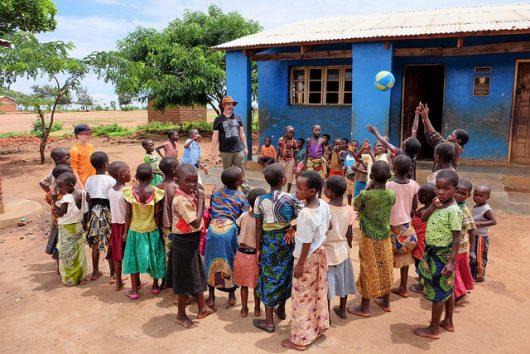
The protection of a child’s innocence, as well as their right to a childhood, should start much earlier than marriage. Right to Play was founded in 2000 by four Olympic gold medalists and an entrepreneur. The nonprofit focuses on protecting a child’s critical years. “While food, water and shelter are essential, so is a childhood, complete with education and opportunities to actively engage with other children,” its website states. The organization teaches children life skills, which will help them overcome inevitable conflict and disease as they grow up.

Games engage children to participate in the programs, while the “Reflect-Connect-Apply” approach forces the children to examine their life experiences. Then they relate those experiences to their education. They finally apply this technique to their daily lives. “Reflect-Connect-Apply” focuses on creating positive, sustainable change in three areas: education, health and living in peace.

In some parts of the world today, children are not able to experience the benefits of a right to a childhood. Organizations and NGOs working on the ground level of local villages are teaching communities the value of play combined with an international movement to harmonize laws and clearly define an age for a child could help. Protecting the right to childhood is good for the immediate community and generations to come.

– Danielle Preskitt

Photo: Flickr
August 8, 2017
https://borgenproject.org/wp-content/uploads/borgen-project-logo.svg 0 0 Kim Thelwell https://borgenproject.org/wp-content/uploads/borgen-project-logo.svg Kim Thelwell2017-08-08 07:30:142024-05-28 00:15:12Recognizing the Right to a Childhood in Malawi
Children, Global Poverty

Child Labor in Pakistan

Child Labor in Pakistan
Child labor in Pakistan? For many years, Pakistan’s reputation has been notorious as one of the worst child labor offenders. In recent years, child labor prevention efforts have been heightened. Beginning in 2017, a province in Pakistan passed a new law banning child labor. Could this province be a guide for the rest of the nation? Here are the three things you need to know about child labor in Pakistan and how lawmakers are putting an end to this problem.

More than 12.5 million children are involved in child labor in Pakistan. According to Reuters, “Pakistan’s Labour Force Survey, 2014-15 showed that of those children aged between 10 and 14 years active in child labor, 61 percent were boys and 88 percent came from rural areas.”

In Pakistan, 38.8 percent of the population is living in poverty, with one in four individuals living in acute poverty. For many citizens in Pakistan, it is hard to find a job or to secure one paying enough to provide for a family. Students from impoverished backgrounds who are unable to enter school are most likely to become affected by child labor in Pakistan.

Many child workers are often abused where they work, suffering beatings or torture. Many children are sent to live with middle class and elite class families to perform as domestic servants. Jobs like these become particularly dangerous for children, as they are at the risk of physical and sexual abuse without real supervision.

There are a few programs funded by the government to tackle child labor in Pakistan. For instance, the Children Support Program gives parents money so that they can send their children to school instead of encouraging them to join the work force. This program is available to parents of children ages five to 16. So far, the government has distributed $3 million to families.

In 2016, Pakistan was criticized for not conducting any surveys focusing on the child labor of the past 20 years. This allowed for about 25 million children, who are not attending school, slip under the radar.

On Jan. 26, 2017, the province of Sindh made child labor illegal under The Sindh Prohibition of Employment of Children Bill, banning children under the age of 14 from working. The law also prohibits adolescents from working between the hours of 7 p.m. to 8 a.m. and for those adolescents who are working, they cannot work more than three hours a day.

Sindh is known as the most impoverished province in Pakistan. As reported by tribune.com, “In Sindh, 43.1 percent [of the] population is extremely poor due to lack of education, health facilities and poor living standards.” The new law states that offenders of the child labor law will be imprisoned for six months and fined 50,000 rupees. Meanwhile, offenders who are found with child workers in dangerous workplaces (such as stone crushing and carpet weaving) will be sentenced to three years of imprisonment with an increased fine of 100,000 rupees.

Since the province of Sindh is beginning to tackle the issue of child labor in Pakistan, in the future, the rest of the Pakistani work force could follow its example and eliminate all labor misconducts.

– Maria Rodriguez

Photo: Flickr

May 15, 2017
https://borgenproject.org/wp-content/uploads/borgen-project-logo.svg 0 0 Borgen Project https://borgenproject.org/wp-content/uploads/borgen-project-logo.svg Borgen Project2017-05-15 01:30:502024-12-13 17:57:54Child Labor in Pakistan
Child Labor, Disease, Global Poverty

Poverty in Republic of Suriname

Poverty in SurinameThe Republic of Suriname, bordered by Guyana and French Guiana, is home to approximately 566,000 people, 47 percent of whom live in poverty. Here are four issues contributing to poverty in Suriname:

  1. Child Labor
    Many children in Suriname are forced to work in order to help their families make ends meet. While the legal working age in Suriname is 14, eight percent of children between the ages of five and 14 are forced into work. The majority work on the streets, which is a safety risk, or in agriculture, handling toxic and dangerous materials. Since these children are working illegally, their wages are unregulated and they are often grossly underpaid.
  2. Health Issues
    The people of Suriname are especially susceptible to major infectious diseases. There are high instances of food or waterborne diseases, such as typhoid fever, and vector-borne diseases, such as malaria. AIDs has also become one of the main causes of death in children under five. Families in poverty struggle to get treatment for these diseases and are thus often impacted the most. Malnutrition is also a concern for many people living in Suriname. Undernourishment affects 8.4 percent of the population.
  3. Disparities Between Rural and Urban Populations
    There are clear differences between the living conditions in urban and rural areas. Only 61.4 percent of rural populations have access to sanitation facilities, while 88.4 percent of the urban population does. The quality of education, which affects future income, also depends on location. Rural areas have poorly trained teachers compared to urban areas, which puts rural children at a disadvantage. The rural Maroon population, for example, has lower educational attainment, higher malnutrition, and less access to resources like electricity, sanitation and healthcare than urban populations. Rural populations’ disadvantages are partly due to the fact that geographic isolation restricts their opportunities to participate in policymaking.
  4. Discrimination
    High rates of discrimination in Suriname have hurt the wellbeing of minority ethnic groups. Compared to majority groups, people in the ethnic minority have limited access to quality education, good healthcare and other public services. Children from minority ethnic groups are also more likely to be forced into labor or sexually exploited as they try to earn money.

While the country is facing difficult issues, there are a number of programs and government efforts in place working to reduce these inequalities and address the health and labor issues that contribute to poverty in Suriname.

– Alexi Worley

Photo: Flickr

March 27, 2017
https://borgenproject.org/wp-content/uploads/borgen-project-logo.svg 0 0 Borgen Project https://borgenproject.org/wp-content/uploads/borgen-project-logo.svg Borgen Project2017-03-27 01:30:372020-04-23 23:29:36Poverty in Republic of Suriname
Education, Global Poverty

Poverty in Guyana: Educate, Fund and Build Medical Network

Poverty in Guyana
The third-smallest South American country came into independence in 1966 after more than 340 years of colonial control by the Dutch, British and French. Slavery and indentured servitude brought immigrants from several continents, giving Guyana one of the most ethnically diverse populations globally. Many ethnic origins are international, and many people choose to leave and live in other countries. Guyana has one of the worst net migration rates in the world as more than 55% migrate to find work.

Economy

Sixty percent of the country’s gross domestic product is represented by six exports: sugar, gold, bauxite, shrimp, timber, and rice. Guyana was once a powerful producer of sugar, yet its production sunk to an all-time low in 2014. More recent crop production numbers have shown an improvement. A 2015 submission to the Guyana Sugar Corporation Commission of Inquiry reported reaching 94 percent of productivity goals in the first half of that year.

With somewhat recent estimates stating that 35% of the population lives in poverty, Guyana is one of the world’s poorest nations. (2012 Gross National Income (GNI) per capita: $3,410-USD, 2011: $2,900-USD)

Education

Less than 3.5% of Guyana’s GDP goes toward education expenditures. Less than 90% of people age 15 and over have attended school, and the average school-life expectancy is 10 years.

In its population, 27% of which are children under the age of 15,  just 281,000 people use the internet. More than a quarter of the population are without cellular telephones. Of those 199,607 0-14-year-olds, 16% are child laborers.

Health

There were 100 HIV/AIDS-related deaths in 2015. With a population of less than 800,000, that number is staggering. In that year there were nearly 8,000 people living with HIV and AIDS in Guyana.

The cause for low numbers of doctors and hospital beds is very low health expenditures. The country has a low life expectancy, 165th in the world at 68.4%. This is likely due to the populations’ increased exposure to major infectious diseases like hepatitis A and malaria.

Water supplies are endangered by sewage, chemicals, and well water pollution by saltwater from the sea.

Solutions

According to the CIA world factbook, the government remains maligned in sizable debt servitude despite the Inter-American Development Bank canceling more than $450 million of their debt a decade ago. While that brought the debt-to-GDP ratio down from 183% in 2006 to 67 percent in 2015, the country sorely needs investments in infrastructure and an influx of skilled workers.

Coordinating with international health organizations to develop research facilities would develop a premier health care network.

Currently, the nation’s largest university focuses mainly on agricultural sciences. While the Pan-American Health Organization maintains an office in the country, working to expand upon that network would prove beneficial.

Developing a health care network on the northern-most coast of South America would aid in fighting infectious disease in Guyana. This creates a need to improve its poor infrastructure and bring skilled medical professionals back into the country.

The focus on improving health conditions in Guyana is the first step toward a stronger economy. Improving health conditions is done by investing more resources, educating physicians and keeping those doctors from emigrating by buying more hospital beds. The possibility of creating an infrastructure around medical research facilities could benefit the region, keep and draw skilled health professionals in and to Guyana.

– Shaun Savarese

Photo: Flickr

March 10, 2017
https://borgenproject.org/wp-content/uploads/borgen-project-logo.svg 0 0 Borgen Project https://borgenproject.org/wp-content/uploads/borgen-project-logo.svg Borgen Project2017-03-10 01:30:042024-05-27 23:59:24Poverty in Guyana: Educate, Fund and Build Medical Network
Education, Global Poverty

Factors Driving Lack of Access to Education

 Access to Education
Education remains an unreachable right for millions of children around the globe. Currently, upward of 72 million children in the primary education age (five to 12 years) are not in school and 759 million adults are illiterate. There are a plethora of reasons why such a large number of children in lower income countries do not receive the adequate education at the primary school level. Below are just some of the factors driving a lack of access to education:

  • There aren’t enough schools. Many of the poorest countries in the world do not have access to the adequate financial resources necessary to create schools. Providing schooling materials along with recruiting and training teachers cost money, and aid from fellow countries generally is not sufficient enough to establish an education system for all children.
  • There is a low value of education. Many times in remote areas of the world, children who belong to the indigenous population are more trained at finding food and livelihood for themselves rather than focusing on education. Due to this, they are never taught the value and importance of education.
  • The geographical location is not ideal for schooling. This includes things like severe weather conditions, rough terrain and lack of transportation. For example, children in the Philippines have to walk miles before they can reach the nearest primary school. Some areas in India meanwhile are just too stiff to climb and for transportation to pass.
  • Many families cannot afford school and are oftentimes forced into child labor. Over 300 million children between the ages of five and 17 years are engaged in employment worldwide. Most of these children work to financially support their families making child labor a significant contributor to high numbers of them being out of school. Parents, as well as governments, are more concerned about other important things like finding food, shelter and water for the families.
  • Minority groups are often excluded or forgotten. Specific groups find themselves marginalized while their children are deprived of education opportunities. This tends to happen either because of passive underinvestment by the government in particular geographies where the ethnic minorities are concentrated or because of active discrimination.
  • Conflict within a country overruns the opportunities for education. Children in war-ridden countries don’t have a chance to go to school and be educated. Child refugees caught in war and conflict spend the majority of their young lives in refugee camps. Instead of spending time in a classroom learning, they are caught in the middle of chaos which they do not deserve.

Access to schools is the first step toward increasing the right to an education for all children on a global level. Taking steps to resolve the hindering factors driving the lack of access to education will be crucial in overcoming education’s inaccessibility to so many young minds.

– Keaton McCalla

Photo: Flickr

November 16, 2016
https://borgenproject.org/wp-content/uploads/borgen-project-logo.svg 0 0 Borgen Project https://borgenproject.org/wp-content/uploads/borgen-project-logo.svg Borgen Project2016-11-16 01:30:442024-12-13 17:56:06Factors Driving Lack of Access to Education
Children, Education, Global Poverty

Obstacles Against Secondary Education in El Salvador

Education_El Salvador
While education has slowly grown more accessible for El Salvador children since the end of the country’s civil war in 1992, poverty continues to keep children away from classrooms — particularly when reaching secondary school.

In 2013, elementary schools had a 91% enrollment. However, only 50-60% attended secondary school (grades seven through nine). Poverty levels also fluctuated between 30-40% over the past decade, rising to 55% in rural areas.

Poverty conditions often affect academic performance and can cause children to leave school early, as disadvantages faced by families often influence the choice.

Work

El Salvador has child labor laws; it is illegal for children under 14 to have jobs and hours are restricted for anyone under 18. However, about 1.8 million children between the ages of five to 17 work to contribute to their families. Many of these children have to leave school to do so, thus continuing the cycle of poverty.

School Supply Costs

Although secondary education in El Salvador is free, students are required to have uniforms and basic supplies. This cost is often too much for families. Rural students are often unable to attend because they do not have means of transportation to get to even the nearest school.

Resources

School quality varies from region to region It is difficult to encourage students to actively participate in education when schools often are poorly constructed, lack the proper resources and are overcrowded.

Crime

After Honduras, El Salvador has the second-highest homicide rate in the world, fueled by active gangs, drugs and poverty. Children risk becoming either participants or victims of the violence. In this case, both employment and education appear to be part of the solution. Young people who join gangs are often those who do not have the resources to attend school but are unable to find a job in the stagnant economy.

Unregistered Children

Approximately 10% of the population were not registered at birth. This prevents children from becoming citizens or attending public schools in El Salvador. Unregistered children are born to families in rural areas or living on the street. Barring this particularly vulnerable group from education only continues the issues of violence and poverty.

Child Marriage

Legally, girls as young as 14 and boys as young as 15 can marry with parental permission. Twenty-five percent of Salvadorans are married by age 18. Members of a Global group called Girls, not Brides, state that child marriage often ends a girl’s formal education pursuits.

Change on the Way?

Problems with secondary education in El Salvador have been recognized and many are mobilizing to tackle these issues.

El Salvador passed a plan to end child labor by 2020 through the reduction of poverty, protection of children’s rights and improvements to education.

To reduce crime, the government passed a law called National Youth Policy, with the intent to create outlets for young people through education, employment or other constructive participation. Some American organizations like USAID and Tailored for Education have invested in Salvadoran schools to improve resources and infrastructure.

None of these economic or social issues are easy to resolve, but Salvadoran officials believe that with a literacy rate of 97%, high primary school attendance and a low gender gap, there will be a good foundation to make progress.

– Jeanette I. Burke

Photo: Flickr

September 21, 2016
https://borgenproject.org/wp-content/uploads/borgen-project-logo.svg 0 0 Borgen Project https://borgenproject.org/wp-content/uploads/borgen-project-logo.svg Borgen Project2016-09-21 01:45:312024-05-27 09:35:03Obstacles Against Secondary Education in El Salvador
Children, Global Poverty

9 Facts About Child Poverty

Child_Poverty
Every day, the effects of poverty take the lives of thousands, with children suffering the most. Chronic poverty makes children more susceptible to disease, hunger, and developmental problems. Here are the most concerning facts about child poverty:

  1. According to the World Bank, more than 400 million children are living in extreme poverty (less than $1.25 a day).
  2. Roughly 16,000 children die each day—mostly due to preventable or treatable conditions.
  3. UNICEF estimates that over 2 million children ages 10-19 have HIV.
  4. Roughly half of all deaths of children under the age of five are caused by malnutrition.
  5. The International Labor Organization reports that 168 million children are child laborers; many of them in dangerous lines of work, such as factory jobs.

The question then arises, what can be done about child poverty? The good news is that, despite the previous data, progress is being made every day combating this issue. Here are four facts on the fight against child poverty:

  1. According to UNICEF, the mortality rate for children under age 5 has decreased by 53 percent since 1990.
  2. The World Health Organization says the most important element in reducing the mortality rate for children is increasing access to healthcare worldwide, particularly in preventative measures such as vaccines.
  3. Global programs, such as the Meningitis Vaccine Project (MVP), are working to achieve WHO’s goal of increasing access to preventative care. Started in 2010, more than 235 million Africans have been vaccinated against meningitis through MVP.
  4. Ending child poverty can start with an individual. You can donate to an organization working to combat child poverty, and you can do things like contact congress to voice support for increasing foreign aid to causes like this.

The global community has made strides in combatting child poverty, but there is still work to be done to ensure sustainable futures for the world’s youth.

– Emily Milakovic

Photo: U.N. Multimedia

July 19, 2016
https://borgenproject.org/wp-content/uploads/borgen-project-logo.svg 0 0 Borgen Project https://borgenproject.org/wp-content/uploads/borgen-project-logo.svg Borgen Project2016-07-19 01:30:452024-12-13 18:06:059 Facts About Child Poverty
Children

UN, ILO Push for Enforcement of Child Labor Laws

Child Labor Laws
On World Day, June 12, the U.N. announced a renewed focus on child labor laws and supply chains. With so many children working, the U.N. says that all supply chains potentially use child labor.

Child labor encompasses “work that deprives children of their childhood, their potential and their dignity, and that is harmful to their physical and mental development.”

The International Labor Organization (ILO) and the U.N. have declared that nations must pass legislation in order to make lasting change. National governments need to adopt and enforce legislation that defines child labor and protects children against it.

Don’t child labor laws already exist?

Yes: ILO Convention No.182 helps to define the worst forms of child labor and makes a long term goal of the effective elimination of the issue. Also, Convention No. 138 sets the legal age at which a child may begin working.

For most member states of the U.N., the basic minimum age of labor is 15, with the possible exception of 14-year-olds in developing nations. The ILO stresses that no person under the age of 18 should be doing hazardous labor.

Considering that Convention No. 138 was written in 1973 and No. 182 in 1999, the goal of ending child labor is by no means a new one.

While conditions have improved since the inception of these conventions, 215 million children still take part in child labor today. Their employers often force them to work in the drug or sex trafficking industries. Some of these children are even forced to tote a gun and kill others.

Because child laborers number in the hundreds of millions, eradication may seem impossible. Fortunately, however, the numbers are dropping.

As more nations adopt the ILO’s conventions on child labor, the problem continues to diminish. In 2000, only 93 countries had ratified Convention No. 138 and  established a minimum age for child labor.

That same year, some 16 percent of children aged 5-17 were exposed to child labor worldwide. The most recent statistics from 2014 show that the number has dropped to 13.9 percent.

As the number of countries that have ratified Convention No. 138 jumps to 169, these small improvements will continue to grow in power and significance.

The real improvement comes with the ratification of Convention No. 182. Since 1999, hazardous child labor has dropped from an estimated 171 million children in 2000 to 85 million today. In addition, 180 countries have ratified this convention.

Ratification of these child labor laws and conventions has been effective in diminishing the problem, but it has not been enough to eradicate child labor.

In order to enforce child labor laws, governments must raise awareness of the problem. In addition, they must enact laws that enforce minimum working age and acceptable working conditions for children.

With World Day’s focus on child labor and its ensuing push for enforcement of ILO Conventions 182 and 138, world leaders will work to decrease the number of child laborers over the coming years.

-Aaron Parr

Photo: Pixabay

June 15, 2016
https://borgenproject.org/wp-content/uploads/borgen-project-logo.svg 0 0 Borgen Project https://borgenproject.org/wp-content/uploads/borgen-project-logo.svg Borgen Project2016-06-15 01:30:042020-06-18 13:58:57UN, ILO Push for Enforcement of Child Labor Laws
Child Soldiers, Children, Global Poverty

Info About Child Soldiers: What You Need to Know

Info About Child Soldiers
According to DoSomething.org, “in the last 15 years, the use of child soldiers has spread to almost every region of the world and every armed conflict. Though it is hardly possible to define an exact number, thousands of children soldiers are illegally serving in armed conflict around the world.”

Eight Facts About Child Soldiers

    1. Currently, there are between 250,000 and 300,000 children soldiers globally.
    2. The recruitment for children starts at the age of 10 and they are used as instruments within wars to execute individuals unreasonably.
    3. A child soldier is any minor, regardless of gender, under the age of 18 who is recruited by a state or non-state armed group and who is used as a fighter, messenger, spy or even for sexual purposes.
    4. “Children are recruited because they are more manageable, more obedient and more easily manipulated than adults. Children are also less conscious of danger, and it is harder for them to see the difference between absence and death,” according to Humanium.
    5. Young people are more likely to get recruited if they come from marginalized communities, are displaced from their houses, live in a combat zone and do not have access to education.
    6. Humanium emphasized that “children who are orphaned, unaccompanied or living in a difficult family environment, see it as a solution to their problems, and taking part in an armed group seems safer than confronting these problems. Revenge, community identity and ideology can also influence children.”
    7. Additionally, armed forces take minors because they are less expensive to recruit and train compared to adults.
    8. “Child soldiers are usually presented as victims of adults, and forced recruitment is more readily emphasized than voluntary engagement,” said Humanium.


There are some extreme cases where children volunteer to become soldiers because it is a better option to the reality they face every day. They see this as an outlet from their current situation.

– Isabella Rolz

Sources: Child Soldiers, Do Something, Humanium
Photo: Flickr

April 12, 2016
https://borgenproject.org/wp-content/uploads/borgen-project-logo.svg 0 0 Borgen Project https://borgenproject.org/wp-content/uploads/borgen-project-logo.svg Borgen Project2016-04-12 01:30:582024-12-13 17:54:15Info About Child Soldiers: What You Need to Know
Children, Global Poverty, Human Trafficking

The Loss of Freedom: Different Types of Human Trafficking

Human Trafficking
There are several types of human trafficking, and they all have a common denominator: an abuse of the intrinsic vulnerability of the victims.

According to the United Nations Office on Drugs and Crime, human trafficking is defined as “the recruitment, transportation, transfer, harbouring or receipt of persons, by means of the treat or use of force or other forms of coercion.”

Trafficking of individuals is a serious crime and a heinous violation of human rights.

“Every year, thousands of men, women and children fall into the hands of traffickers, in their own countries and abroad. Almost every country in the world is affected by trafficking, whether as a country of origin, transit or destination for victims,” said the UN.

The following are various categories linked to human trafficking.

Sex Trafficking

The United Nations Office on Drugs and Crime suggested that 53 percent of the victims are forced into sexual exploitation. “Sex trafficking is the recruitment, transportation, or harboring of persons through threat, use of force, or other coercion for the purpose of sexual exploitation. This includes movement across borders, as well as within the victim’s own country,” affirmed Human Trafficking Search.

The International Labour Organization estimated that there is a worldwide profit of $100 billion for forced commercial sexual exploitation.

Additionally, “the perceived inferior status of women in many parts of the world has contributed to the expansion of the trafficking industry,” confirmed Human Trafficking Search.

Involuntary Domestic Servitude

Involuntary servitude happens when a domestic worker becomes enslaved in an exploitative position they are incapable of escaping.

“Domestic servitude is the seemingly normal practice of live-in help that is used as a cover for the exploitation and control of someone, usually from another country. It is a form of forced labor, but it also warrants its own category of slavery because of the unique contexts and challenges it presents,” said End Slavery Now.

Forced Labor

According to Human Trafficking Search, “Forced labor is work or service that is extorted from someone under the menace of any penalty and work or service that the person has not offered voluntarily.”

The International Labour Organization estimated that approximately 20.9 million people are enslaved to forced labor, and 4.5 are subjected to sexual forced exploitation.

Debt Bondage

“Debt bondage is a type of forced labor, involving a debt that cannot be paid off in a reasonable time,” said Human Trafficking Search. It is a period of debt during which there is no freedom, consequently, it is also known as debt slavery.

Child Soldiers

Child soldiers are described as persons under the age of 18, who have been recruited by armed forces in any capacity. Currently, there are thousands of soldiers worldwide.

“The definition includes both boys and girls who are used as fighters, cooks, porters, messengers, spies, or for sexual purposes,” added Human Trafficking Search.

Child Sex Trafficking

There are approximately 1.8 million children subjected to prostitution or pornography globally.

The Human Trafficking Search defined it as “a sexual exploitation by an adult with respect to a child, usually accompanied by a payment to the child or one or more third parties.”

Child Labor

A child is considered to be involved in child labor activities if this minor is between the ages of 0 and 18, is involved in a type of work inappropriate for their age and in a dangerous work environment.

However, there are several forms of child labor. The most common ones are related to the informal sector of the economy and are linked to agricultural labor, mining, construction and begging in the streets.

Said by the Polaris Project, “human trafficking is a form of modern slavery – a multi-billion dollar criminal industry that denies freedom to 20.9 million people around the world. And no matter where you live, chances are it’s happening nearby. From the girl forced into prostitution at a truck stop, to the man discovered in a restaurant kitchen, stripped of his passport and held against his will. All trafficking victims share one essential experience: the loss of freedom.”

– Isabella Rolz

Sources: Human Trafficking Search, UNODC, End Slavery Now, Polaris Project, United Nations, International Labour Organization

April 9, 2016
https://borgenproject.org/wp-content/uploads/borgen-project-logo.svg 0 0 Borgen Project https://borgenproject.org/wp-content/uploads/borgen-project-logo.svg Borgen Project2016-04-09 01:30:362024-12-13 18:05:55The Loss of Freedom: Different Types of Human Trafficking
Page 4 of 7«‹23456›»

Get Smarter

  • Global Poverty 101
  • Global Poverty… The Good News
  • Global Poverty & U.S. Jobs
  • Global Poverty and National Security
  • Innovative Solutions to Poverty
  • Global Poverty & Aid FAQ’s
Search Search

Take Action

  • Call Congress
  • Email Congress
  • Donate
  • 30 Ways to Help
  • Volunteer Ops
  • Internships
  • Courses & Certificates
  • The Podcast
Borgen Project

“The Borgen Project is an incredible nonprofit organization that is addressing poverty and hunger and working towards ending them.”

-The Huffington Post

Inside The Borgen Project

  • Contact
  • About
  • Financials
  • President
  • Board of Directors
  • Board of Advisors

International Links

  • UK Email Parliament
  • UK Donate
  • Canada Email Parliament

Get Smarter

  • Global Poverty 101
  • Global Poverty… The Good News
  • Global Poverty & U.S. Jobs
  • Global Poverty and National Security
  • Innovative Solutions to Poverty
  • Global Poverty & Aid FAQ’s

Ways to Help

  • Call Congress
  • Email Congress
  • Donate
  • 30 Ways to Help
  • Volunteer Ops
  • Internships
  • Courses & Certificates
  • The Podcast
Scroll to top Scroll to top Scroll to top