• Link to X
  • Link to Facebook
  • Link to Instagram
  • Link to TikTok
  • Link to Youtube
  • About
    • About Us
      • President
      • Board of Directors
      • Board of Advisors
      • Financials
      • Our Methodology
      • Success Tracker
      • Contact
  • Act Now
    • 30 Ways to Help
      • Email Congress
      • Call Congress
      • Volunteer
      • Courses & Certificates
      • Be a Donor
    • Internships
      • In-Office Internships
      • Remote Internships
    • Legislation
      • Politics 101
  • The Blog
  • The Podcast
  • Magazine
  • Donate
  • Click to open the search input field Click to open the search input field Search
  • Menu Menu

Tag Archive for: Child Labor

Posts

Global Poverty

Nike Strives to Overcome Sweatshop Abuse

Nike_Sweatshop_China_Workers_Human_Rights
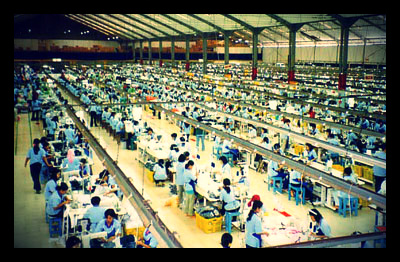
Although Nike has established itself as a leading athletic brand and even as an endearing icon of American athleticism, it was not too long ago that the company was publicly scorned for its shameful use of child labor. Since its heyday, Nike had secured its success in part by an efficient, albeit ethically-questionable, business model where its manufacturing was outsourced to underpaid, under appreciated and often underage factory workers. The money that Nike saved by utilizing this business model was often invested in topnotch advertising.

After becoming the face of aggressive mega-business abuses of power and wealth, and suffering markedly due to a dwindling public image, Nike has taken steps to alter its practices and image. In 1998, one of the first significant steps that the company took to change its business model took place with a speech given by then-CEO Phil Knight. Knight proclaimed that “the Nike product has become synonymous with slave wages, forced overtime and arbitrary abuse.” Knight further stated that, “I truly believe the American consumer doesn’t want to buy products made under abusive conditions.”

Ever since Knight’s 1998 speech, Nike has enacted an onslaught of redemptive measures, such as the company’s 1999 creation of the Fair Labor Association. This nonprofit group fuses business and human rights in order to maintain a fairer work-place consisting of a minimum age for labor, increased company monitoring and a 60-hour work week.

Furthermore, in 2005, Nike became the first in its specific sportswear industry to publish a comprehensive list of its contracting factories in addition to thorough reports on its factory environments, factory pay and persisting factory issues in order to maintain its still-nascent pledge to corporate social responsibility.

However, despite these amendments to its business policy, Nike is still dogged by allegations of mistreatment in its factories. In 2011, workers at Nike’s Indonesian Sukabumi plant claimed that supervisors would physically and verbally abuse them. Specifically, workers alleged that supervisors would throw shoes at them and equate them to dogs.

In response, Nike has disclosed that such abuses do indeed remain extant in a handful of its factories, thereby acknowledging that the company, despite its immense progress over the decades, still has a long road ahead of itself in order to completely abolish its history of sweatshop abuse. With increased transparency and a continued allegiance to the humane treatment of workers, Nike may eventually be able to recover its public and industrial image.

– Phoebe Pradhan

 Sources: Business Insider, Daily Mail
Photo: An Focal
February 15, 2014
https://borgenproject.org/wp-content/uploads/borgen-project-logo.svg 0 0 Borgen Project https://borgenproject.org/wp-content/uploads/borgen-project-logo.svg Borgen Project2014-02-15 09:04:292017-03-20 13:20:10Nike Strives to Overcome Sweatshop Abuse
Activism, Advocacy, Children, Developing Countries, Gender Equality, Global Poverty, Slums, Women & Children, Women and Female Empowerment

Katherine Boo’s Behind the Beautiful Forevers

christmas
Pulitzer Prize winner Katherine Boo spent years in Annawadi, a slum outside the bustling metropolis of Mumbai, India. With most people living without electricity or stable income in makeshift shelters, the slum stands in stark contrast to the bustling airport and luxury hotels a few miles away.  Over the course of her stay, Boo followed the lives of the people that call Annawadi home. She describes the stories she heard and the events she saw in her book, Behind the Beautiful Forevers.

Boo introduces us to many residents such as Asha, who uses the corrupt political climate to gain influence and prestige. Her daughter, Maniu, studies education and rejects many of the gender norms of her society.

Young children in the village compete for short-term jobs at the Mumbai hotels. These children are easily exploited and often work for next-to-nothing in stressful conditions before collecting garbage to sell as scraps and recyclables.

Corrupt police and vague laws govern the people of Annawadi. Mysterious deaths are not investigated, false accusations fly around without evidence and gangs run the streets. Religious tension is obvious as Muslim families are singled out in the predominately-Hindu village.

Though Boo paints a dark picture of poverty in India, there is still hope. International organizations are moving in to help the people in India, especially since the slums of the region are in dire need of schools, permanent housing and job opportunities. The children of the region believe that one day they will have permanent jobs in Mumbai, own a house and send their own children to school.  The young girls in the village also believe that the time has come to stand up for their rights and make a living for themselves.  Furthermore, children are becoming motivated to stay in school while families plan to move on to permanent housing projects.

– Stephanie Lamm

Sources: Behind the Beautiful Forevers, New York Times
Photo: Vintage 3D

January 15, 2014
https://borgenproject.org/wp-content/uploads/borgen-project-logo.svg 0 0 Borgen Project https://borgenproject.org/wp-content/uploads/borgen-project-logo.svg Borgen Project2014-01-15 17:19:032024-06-04 03:01:13Katherine Boo’s Behind the Beautiful Forevers
Advocacy, Children, Developing Countries, Global Health, Global Poverty, Health, Human Rights, Poverty Reduction, United Nations

Child Labor: An Overview

Child_Labor_an_Overview
“Millions of children are victims of violence and exploitation. They are physically and emotionally vulnerable and they can be scarred for life by mental or emotional abuse. That is why children should always have the first claim on our attention and resources. They must be at the heart of our thinking on challenges we are addressing on a daily basis. We know what to do, and we know how to do it. The means are at hand, it is up to us to seize the opportunity and build a world that is fit for children,” remarked Ban Ki-moon, Secretarty-General of the United Nations on November 20, 2009, on the Twentieth Anniversary of the Convention on the Rights of the Child.

Just as Ban Ki-moon mentioned, children are not physically or mentally ready to enter the labor force. With the lack of physical abilities, the safety of the workplace cannot be ensured, for both the children and other employees. In fact, children are more likely to be abused and mistreated in an environment centering around child labor.

“Few human rights abuses are so widely condemned, yet so widely practiced. Let us make (child labor) a priority. Because a child in danger is a child that cannot wait,” stated Kofi Annan, Former UN Secretary-General. Around the world, more than 211 million children between the age of 5 and 14 are being forced to work. Among these children, 120 million children are working full time.

To eradicate child labor, people should first understand what leads to such situations. For example, poverty is the first and foremost reason of child labor.  Since many parents do not have the capability to support their household, children end up working to help support the family’s daily lives. Another reason for child labor is a poor education system.

When education is expensive or not readily available, impoverished parents do not see the benefit of learning and think that working is a better alternative. In the United States, there are many laws that prohibit child labor, however, in some countries, child labor laws exist, but are not enforced. Companies can thus take advantage of the cheap labor and further exploit it.

On the other hand, many organizations have been striving to put a stop to child labor by various programs. For example, the United Nations has been running campaigns to raise the awareness of child labor across various nations and airing them in global events such as the World Cup. Moreover, in order to raise the level of education in poverty stricken areas, the Red Cross and governments of third world countries have been recruiting teachers to volunteer in remote areas.

– Phong Pham

Sources: Child Labor Public Education Project, UN: Agencies Urge Greater Action, International Labor Rights Forum, UN: Child Labor
Photo: Addicting Info


Facts about Child Labor

December 26, 2013
https://borgenproject.org/wp-content/uploads/borgen-project-logo.svg 0 0 Borgen Project https://borgenproject.org/wp-content/uploads/borgen-project-logo.svg Borgen Project2013-12-26 04:00:472024-05-25 00:32:50Child Labor: An Overview
Children, Human Rights, Slavery

Child Labor 101

21st Century Child Labor Global
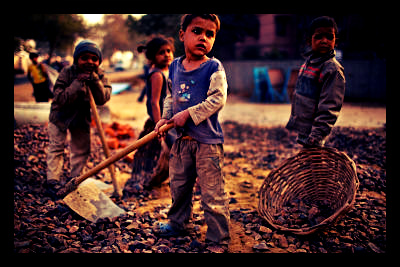
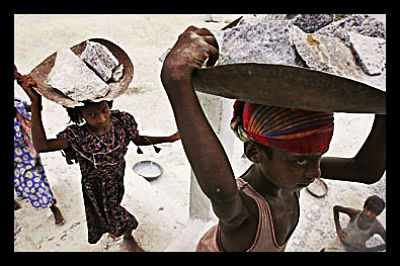
According to the International Labor Organization, approximately 211 million children are working around the world. These children range from ages five to 14, and most are working in order to provide support for their poor families. Nearly 128 products from 70 countries are made through child labor – many cases of which are forced child labor. While some children elect to start working at a young age to help support their families, many are forced into labor and treated as slaves in bondage.

In addition to poor treatment, the work environments children are forced to work in are often dangerous and harmful to their health. When children are sent to scour hazardous lakes filled with toxins in order to search for metals and jewels, the consequences are extremely damaging to their health. Much of the merchandise purchased by Americans is made in other countries, many of which are still developing and relying on labor from children. Children are often forced into labor by their government, or their government simply ignores the fact that companies and factories are forcing children to work for their own profit. Some of the products made by children include clothes, tobacco, metals, jewels, food items, pornography, holiday decorations, and electronic goods. This wide span of merchandise leaves little that child labor has not infiltrated.

In the worst cases of child labor, children are used much like slaves. In these cases, children are trafficked, often times forcing them to deal in illegal activities like drug trafficking, prostitution, and weapon conflict. Binding the children in debt is another method used by companies to ensure that the children will continue to work under their authority.

According to a report conducted by the Bureau of International Labor Affairs, India has the highest percentage of child workers. India is followed by China, which is then followed by smaller countries throughout sub-Saharan Africa. In 2008, as many as one in every four children in sub-Saharan Africa were forced into labor, and commonly sent to work in diamond mines and factories. In Ethiopia, an estimated 60 percent of children are forced into labor to help support their families, the child’s income usually amounting to a dollar a month.

In Afghanistan, an increasing number of underage girls are being sold in order to pay off debt, and more than 30 percent of children are working in major industries rather than attending school. Some of the worst forms of child labor occur in Somalia where 40 percent of children under the age of 15 are forced to engage in sex slavery and armed conflict.

Though the statistics concerning child labor may seem bleak, an increasing number of organizations and nations are rising up to help put an end to child labor. The International Labor Rights Forum (ILRF) is an advocacy organization that has been fighting for years to redesign working conditions across the world focusing on women in the workforce, sweatshops, and child labor. The U.S. Labor Department has also joined the stand against child labor: one of its recent reports says that Brazil is no longer relying on child labor for coal production, and that India and other countries have started anti-poverty programs to help end child labor.

– Chante Owens

Sources: Fox Business, International Labor Rights Forum, Business Insider
Photo: NYTimes

October 7, 2013
https://borgenproject.org/wp-content/uploads/borgen-project-logo.svg 0 0 Borgen Project https://borgenproject.org/wp-content/uploads/borgen-project-logo.svg Borgen Project2013-10-07 18:10:212018-02-26 10:35:30Child Labor 101
Advocacy, Children, Global Poverty

Advertisers Without Borders Promote Social Causes

Advertisers_Without_Borders
Advertisers Without Borders (AWB), founded in 2002 by Guillermo Caro, is an international network of advertising professionals who donate their time to promote global social causes. Through innovative public service campaigns, AWB brings awareness to issues like poverty, health, environmental care, and peace culture.

One of their recent campaigns, The Children Notwork, was designed to create awareness about global child labor. AWB created profiles on the professional network LinkedIn for textile, coffee, toy, and food companies. It then created dozens of fictitious profiles of children who supposedly worked for those companies. The “children” began to send direct messages to random LinkedIn professionals, executives, entrepreneurs, and leaders on the website. If these messages were read, AWB provided the recipient with a link to The Children Notwork website and detailed information about child labor.

This innovative campaign spurred conversation across the world, finally meeting AWB’s objective to create awareness about the 215 million children who are victims of exploitation and child labor.

Another of AWB’s campaigns, Whatever you do to the world you do to yourself, is composed of a series of four ads to promote greater care for the environment. The four images mirror each other in design, but depict four different issues, namely deforestation, littering, whale poaching, and pollution. Each ad contains a self-inflicted environmental wrong and the connection to the arm that commits it.

Each of AWB’s campaigns is designed to get the public engaged in the world’s issues through innovative, thought-provoking advertising techniques. Said best by anthropologist Margaret Mead, “Never doubt that a small group of thoughtful, committed citizens can change the world.” Advertisers Without Borders is doing just that.

– Tara Young

Sources: Advertisers Without Borders, The Children Notwork, The CreTimes

October 4, 2013
https://borgenproject.org/wp-content/uploads/borgen-project-logo.svg 0 0 Borgen Project https://borgenproject.org/wp-content/uploads/borgen-project-logo.svg Borgen Project2013-10-04 04:38:212024-06-05 01:53:38Advertisers Without Borders Promote Social Causes
Children, Education, Human Rights

Child Labor in Europe Still Exists?

Rope isolated on white background
Many people today think that child labor in Europe must not exist anymore. For such a developed area of the world, dependency on children for work seems both outdated and absurd. However in reality, child labor still maintains a hold in Europe.

According to UNESCO, 29% of children from age 7 to 14 in the country Georgia are working. Similarly, in Albania, 19% of children of that age group work. Additionally, an estimated 1 million children are laborers in Russia. Even in Italy, 5.2% of children under the age of 16 are working. There are still millions of other unreported cases of child labor across the continent.

Many of these working children in Europe work highly dangerous jobs in agriculture, construction, or small factories. In Bulgaria, child labor is fairly common in the tobacco industry, some children working up to 10 hours a day. Reports from Moldova also reveal that school directors and agricultural farm cooperatives often sign contracts that require students to work for the harvest. Reports of long hours and hard work also come from children in Portugal and even the U.K.

Work in these industries often involves use of hazardous machinery and equipment, extremely heavy loads and dangerous chemicals. Moreover, like all working children across the world, such hard labor puts each of Europe’s working children in positions of abuse and exploitation. Particularly at risk are accompanied children of migrants from developing countries.

There is speculation that austerity policies in Europe have devastated living standards so much that child labor has returned in greater force. Countries badly affected by this economic downturn and austerity include Greece, Italy, and Portugal, amongst many others. A recent article in the French Newspaper Le Monde highlights the rise of child labor in Europe. The article uses an example of how thousands of children in the Italian region of Naples have quit school to find jobs in order to feed families. It cites reports from a local government that suggested that 54,000 children left education in the year between 2005 and 2009. Of these children, 38% were less than 13 years old.

The case of these Italian children leaving school points out the desperate plight of children affected by high rates of unemployment and economic difficulty. With austerity has come decreased access to welfare benefits for the poor. Thus children in poverty are required to work harder and at a younger age to support families. Moreover, child labor is not simply an Italian question. Child labor is a problem is that all of Europe must face in the advent of economic crises. Moreover, it is a cyclical problem.

The more children work at a younger age, the more unlikely that it is that they return to education systems, perpetuating the cycle of poverty. Child labor is real and it thrives even in the most unlikely places of Europe. Most importantly, it is an issue worth addressing by both governments and individuals alike.

– Grace Zhao

Sources: World Socialist Web Site, Human Rights Comment


Facts about Child Labor


August 29, 2013
https://borgenproject.org/wp-content/uploads/borgen-project-logo.svg 0 0 Borgen Project https://borgenproject.org/wp-content/uploads/borgen-project-logo.svg Borgen Project2013-08-29 19:45:502020-07-09 21:05:06Child Labor in Europe Still Exists?
Children, Education

The Nowhere Children: Global Child Labor

The Nowhere Children: Global Child Labor
Below the boom of Asian economies are millions of child workers. These children are working in dangerous, unsanitary and often times degrading conditions. They are the “Nowhere” children. Neither enrolled in school nor officially employed, these children live in the in-between space as children in a very adult world. The International Labor Organization (ILO) estimates that there may be around 48 million of these Nowhere children.

South Asia has the largest population of children in any region. Consequently, it is also home to some of the largest numbers of children involved in underage labor and exploitation. The ILO has also estimated that there are 21.6 million children, out of a population of 300 million between the ages of 5 and 14, who are working in South Asia.

Children who do not attend any form of schooling are more likely to wind up in child labor for more than 12 hours a day, seven days a week, with very little pay. Children in these conditions are also in harm’s way as they can be easily exploited and become the victims of violence.

What causes child labor is complex and multifaceted causes. Poverty and income inequality along with the lack of education and social protection are among the key causes. Many children are also trafficked into bonded labor. Additionally, culture in South Asia often dictates that children are often perceived as adults much earlier in their lives. Thus, Children are expected to work as hard as adults when they are as young as ten years old.

For this year’s International Day Against Child Labor, the humanitarian agency World Vision has called upon governments, businesses and civil society to take action to end child labor in the Asia Pacific.

Abid Gulzar, World Vision’s Advocacy and Justice for Children Associate Director in Asia and Pacific have stated that “Child labor doesn’t just take away childhood from children, it also triggers a vicious cycle of poverty and exploitation.” Thus he calls for increased access for these “Nowhere” children to education, proper nutrition and health services.  World Vision is the Co-Chair of the South Asia Coordinating Group on Action against Violence towards children (SACG).  World Vision has worked and continues to coordinate with the United Nation agencies and international Non-profit organizations for children’s rights in South Asia.

– Grace Zhao
Source: Thomas Reuters Foundation, International Labor Organization
Photo: Sunset Blogging

July 2, 2013
https://borgenproject.org/wp-content/uploads/borgen-project-logo.svg 0 0 Borgen Project https://borgenproject.org/wp-content/uploads/borgen-project-logo.svg Borgen Project2013-07-02 04:00:312024-05-24 23:58:10The Nowhere Children: Global Child Labor
Development, Foreign Policy, Global Poverty, Human Rights, Human Trafficking, Politics and Political Attention, Refugees and Displaced Persons, USAID, War and Violence

Afghan Child Refugees Flee to Europe

afghanistan-refugees
As citizens of the United States, we hear a lot about the war in Afghanistan. We hear about what the U.S. is doing, our withdrawal timeline, attacks and progress. What we don’t hear about is how the war has affected Afghan citizens, and what life has been like for them.

Right now in Afghanistan, there is a mass exodus of teenage boys who are fleeing Afghanistan. These Afghan child refugees are headed on a 10,000-mile journey towards Europe, where, if they are lucky enough to live and arrive in Europe, they may be able to seek asylum. Teens are forced to trust in smugglers who transport them in secret compartments in vans and truck, or take them on dangerous water crossings with low survival rates.  Many of the boys who take on this journey die in the process, with estimates as low as 35% of boys making it to Europe.

Additionally, Afghan boys are at risk for sex trafficking on their journey. Many of the boys are sexually abused, or turned into sex slaves by their smugglers. They are powerless to the smugglers, who control their livelihood and safety. Many children may also be diverted into menial jobs as they try to save money to pay smugglers for future legs of their jouney. Boys disappear often, and anonymously. They are incredibly vulnerable and very susceptible to kidnappers.

The deaths and disappearances of these boys are, in part, a result of their vulnerability and poverty. The poorer and less educated the boys, the bigger risk they may suffer. Additionally, some of the children may be experiencing post-traumatic stress from the war-related events that they may have witnessed in Afghanistan. The children are also subject to the constant threat of deportation, as most of them do not have legal status or documentation.

The lack of legal status can have many implications on the children. They could be exposed to organized crime, physical abuse, and child labor, as well as the previously mentioned sex trafficking. In several of the countries through which the boys travel, such as Greece, unaccompanied children are not guaranteed asylum or refugee status. Those children who are caught, deported, and sent back to Afghanistan may be at an even greater risk if returned. The plight of young Afghans is undoubtedly a serious human rights violation and one that should be more widely covered by mainstream media.

– Caitlin Zusy 

Sources: 60 Minutes, 60 Minutes, UNHRC
Photo: The National

June 5, 2013
https://borgenproject.org/wp-content/uploads/borgen-project-logo.svg 0 0 Borgen Project https://borgenproject.org/wp-content/uploads/borgen-project-logo.svg Borgen Project2013-06-05 04:11:062024-05-24 23:54:08Afghan Child Refugees Flee to Europe
Page 7 of 7«‹567

Get Smarter

  • Global Poverty 101
  • Global Poverty… The Good News
  • Global Poverty & U.S. Jobs
  • Global Poverty and National Security
  • Innovative Solutions to Poverty
  • Global Poverty & Aid FAQ’s
Search Search

Take Action

  • Call Congress
  • Email Congress
  • Donate
  • 30 Ways to Help
  • Volunteer Ops
  • Internships
  • Courses & Certificates
  • The Podcast
Borgen Project

“The Borgen Project is an incredible nonprofit organization that is addressing poverty and hunger and working towards ending them.”

-The Huffington Post

Inside The Borgen Project

  • Contact
  • About
  • Financials
  • President
  • Board of Directors
  • Board of Advisors

International Links

  • UK Email Parliament
  • UK Donate
  • Canada Email Parliament

Get Smarter

  • Global Poverty 101
  • Global Poverty… The Good News
  • Global Poverty & U.S. Jobs
  • Global Poverty and National Security
  • Innovative Solutions to Poverty
  • Global Poverty & Aid FAQ’s

Ways to Help

  • Call Congress
  • Email Congress
  • Donate
  • 30 Ways to Help
  • Volunteer Ops
  • Internships
  • Courses & Certificates
  • The Podcast
Scroll to top Scroll to top Scroll to top