• Link to X
  • Link to Facebook
  • Link to Instagram
  • Link to TikTok
  • Link to Youtube
  • About
    • About Us
      • President
      • Board of Directors
      • Board of Advisors
      • Financials
      • Our Methodology
      • Success Tracker
      • Contact
  • Act Now
    • 30 Ways to Help
      • Email Congress
      • Call Congress
      • Volunteer
      • Courses & Certificates
      • Be a Donor
    • Internships
      • In-Office Internships
      • Remote Internships
    • Legislation
      • Politics 101
  • The Blog
  • The Podcast
  • Magazine
  • Donate
  • Click to open the search input field Click to open the search input field Search
  • Menu Menu

Archive for category: Water

Health, Water

Four Girls for Families: Youth Making a Difference

four_girls_for_families
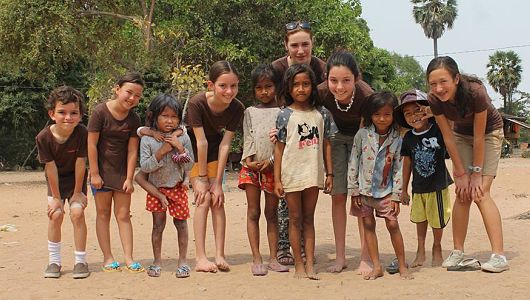
In 2010, a trip to Cambodia changed the lives of four young girls. As two girls witnessed the health problems caused in Cambodia due to unsanitary drinking water, they both decided to start a mission to help families protect their health. Four Girls for Families began when sisters Rae (11 years old) and Emmy (eight years old) Specht traveled to Cambodia with their family during the winter of 2010.

While in Cambodia, both sisters were introduced to the harsh living standards of the local people. The two sisters decided to make a difference when they discovered that 75 percent of deaths in Cambodia were the results of drinking unsanitary water. Once they arrived in the United States, the Specht sisters began to brainstorm with their friends Clara Walker (10 years old) and Maddie Joinnides (11 years old). Four Girls for Families was born.

With the aid and support of their parents, the four girls began to create homemade jewelry, crafts and T-shirts to raise awareness about unsanitary drinking water in developing countries. The money the girls raised during their sells was used to buy water filters that would be delivered to Cambodians in need.

The water filters used by Four Girls for Families are designed to kill 99.9 percent of bacteria and are given to individual families. In a country where 65 percent of the population does not have access to clean drinking water, water filters play a vital role in protecting the health of families.

Nearly five years later, Four Girls for Families has become a non-profit organization that still continues to provide water filters to rural places in Cambodia. From 2011 to 2014 Rae and Emmy Specht, Clara Walker and Maddie Joinnides have raised nearly $40,000 and supplied 2,000 water filters to families.

This past year, the organization has gained more support in its hometown of Bellport, New York, which has allowed Four Girls for Families to provide 300 water filters to families this past spring. Four Girls for Families relies on fundraisers and profits from their online shop. As the organization gains more acknowledgement and support, all four girls continue to think of ways to provide more water filters to Cambodia.

– Erendira Jimenez

Sources: Four Girls for Families, YouTube, Bellport
Photo: Four Girls for Families

August 22, 2015
https://borgenproject.org/wp-content/uploads/borgen-project-logo.svg 0 0 Borgen Project https://borgenproject.org/wp-content/uploads/borgen-project-logo.svg Borgen Project2015-08-22 01:30:422024-12-13 17:54:07Four Girls for Families: Youth Making a Difference
Global Poverty, Water

The Voss Foundation: Creating a Ripple Effect

voss_foundation
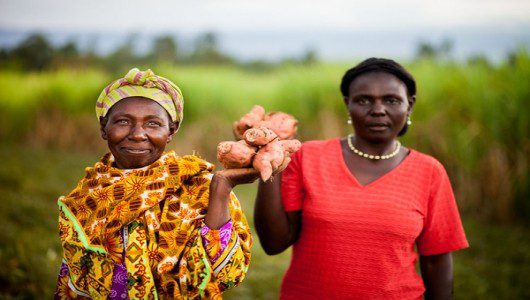
The Voss Foundation works in sub-Saharan Africa to provide sustainable access to clean water, sanitation and hygiene (WASH). Its community-driven approach maintains projects in seven countries: the Democratic Republic of the Congo, Ethiopia, Kenya, Liberia, Mali, Swaziland, and Uganda.

The Voss Foundation mimics the ripple effect from a drop of water in a bucket. When it builds a well, it aims to trigger positive change throughout every sector in a community. Clean water advances development in rural communities by propelling local employment, and in consequence, local economies. Every year, 7.2 billion dollars is saved because of proper water and sanitation. Stronger trends in child development are a result of clean water, hygiene, and sanitation systems because children consume safer diets. Nearly 2,000 children die each day from preventable diseases linked to poor WASH systems. Likewise, food security increases as a result of effective water management. Education sees increases in enrollment and attendance, totaling to 544 million school attendance days gained per year thanks to access to water and sanitation.

Proper sanitation systems reduce the likelihood of contracting water-borne illnesses. Having functioning toilets and practicing hand washing alone prevents diarrheal diseases by 40 percent. Increased attention to health centers protects maternal health, of which 99 percent occur in the developing world.

Generally speaking, quality of life rises as a result of greater access to WASH systems. Women, for example, are able to pursue personal goals like obtaining an education and employment, which conventionally links to embracing female empowerment and equality. The Voss Foundation reports that for every year of primary school, girls’ future wages increase by 10-20 percent. Earning separate incomes also prompts greater gender parity.

The Voss Foundation builds wells and water systems to ensure that these benefits spread worldwide. In Latawken, Kenya, a water system attracted more students to the area, forcing local authorities to expand the school. In Kalebuka, in the Dominican Republic of the Congo, a well provided water for cementing The Malaika School for Girls. In 2011, the school enrolled 106 girls, and by Fall 2015 it expanded to 230 girls. The well continues to provide clean water to the school for its kitchens, gardens, and bathrooms.

https://www.youtube.com/watch?v=ufYRGdHEBk8

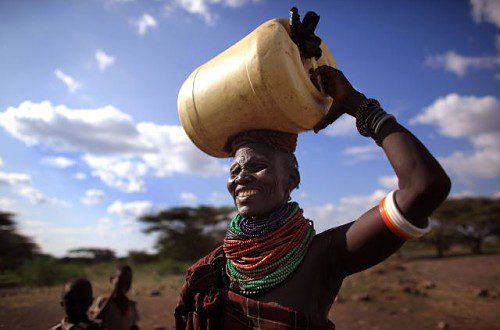
In the Democratic Republic of the Congo, girls are receiving education from the Malaika School for Girls. Thanks to the well built by the Voss Foundation, the school increased enrollment from its original 106 girls in 2011 to 230 girls in Fall 2015. In Pel, Mali, Voss built five wells. “One of them” according to the Voss Foundation, “is at a garden owned by a local women’s cooperative.”

Every Voss project empowers women. Voss projects recruit local council members to oversee the wells or water system, and every water management committee requires at least half of its staff to be female.

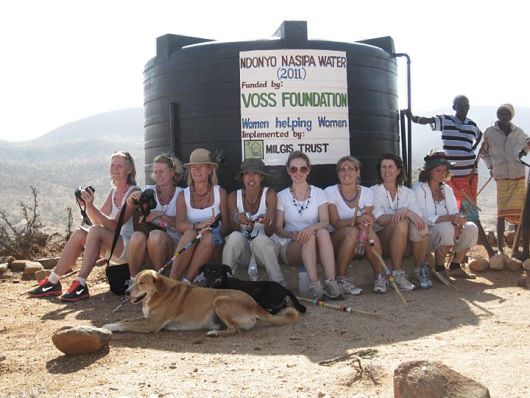
The Voss Foundation’s campaign, Women Helping Women, alone raised $650,000 in Europe and the United States. Voss reports that the profits funded 21 clean water access points and 291 sanitation facilities in Kenya, the Democratic Republic of the Congo, Liberia and Swaziland, as of February 2015.

VOSS launched another event called One Well at a Time. The contest lasted from March 22 to April 22, 2015. Participants had to promote the issue of water scarcity in sub-Saharan Africa and how gaining access will positively affect short and long-term well-being in local communities. They had the option of choosing from one of three entry methods: an original or rights-free stock photo with a 50-200-word explanation, an original video no longer than three minutes, or a Be Inspired fact with a 50-200 explanation. The winner was announced on Earth Day. Matthew Kistler won the all-expense paid trip to Swaziland and attended the Dedication Ceremony of VOSS Water of Norway and Voss Foundation’s New Water, Sanitation, and Hygiene Project.

The Norwegian water company prides itself on serving the 1/6 of the world’s population that has no access to clean drinking water. Approximately two million people die each year from preventable illnesses related to unclean water and poor sanitation. Over 700 million people cannot access clean water and 325 million alone reside in sub-Saharan Africa. Collecting water, on average, requires women and children to walk as far as ten miles per day to the closest, oftentimes unclean, water source. That totals to nearly 140 million hours in just one day, which is comparable to building the Empire State Building 20 times. The Voss Foundation works to eliminate these statistics. Through integrative solutions and sustainable practices, the Voss Foundation aims “to provide meaningful aid” too the 345 million people in sub-Saharan Africa without clean water.

– Lin Sabones

Sources: Voss Foundation 1, Voss Foundation 2, Voss Foundation 3, Voss Foundation 4, Voss Foundation 5, Wall Street Journal, Reuters, PR Newswire
Photo: Voss Foundation
August 21, 2015
https://borgenproject.org/wp-content/uploads/borgen-project-logo.svg 0 0 Borgen Project https://borgenproject.org/wp-content/uploads/borgen-project-logo.svg Borgen Project2015-08-21 01:30:582024-05-27 09:27:34The Voss Foundation: Creating a Ripple Effect
Global Poverty, Technology, Water

Clean Drinking Water in Kenya

Clean_Drinking_Water
Water and sanitation. Proper access to both is an issue that bedevils developing countries all over the world, and Kenya is no different. A new water-dispensing service is trying to change that.

Water has always been a huge issue in development work. Its importance is paramount to life itself – without water, humans cannot survive. While millions of people in the developing world do have access to water, oftentimes it is not safe for drinking. This causes diseases to spread and death to follow.

The Millennium Development Goals (MDGs) set out targets for clean drinking water. Goal 7, Target 7.C’s aim was to “halve, by 2015, the proportion of the population without sustainable access to safe drinking water and basic sanitation.” This goal was met five years ahead of schedule – between 1990 and 2012, 2.3 billion more people gained access to safe drinking water. However, some have claimed that Target 7.C set the bar too low in terms of achievement.

A major issue connected to clean drinking water is access to proper sanitation for all. While the clean drinking water MDG has been met, sanitation has not done as well. One billion people still openly defecate all around the world, for lack of a better option. This then affects drinking water – it is a vicious cycle.

Part of the problem with supplying clean drinking water to the world’s population is that it is growing, making the task even harder. The population of Nairobi in 1963 was 300,000. Now, it is home to 4.2 million, and this figure is expected to grow to 14 million by 2050. If the world cannot supply its current population with clean drinking water, then how will it possibly keep up with the globe’s rapidly expanding populace?

The answer might begin with four new water dispensers that have been installed in Nairobi’s slums, which might help to change Kenya’s water infrastructure. They operate like vending machines – put money in, and water is dispensed out. This has reduced both the cost of water for slum residents as well as the distance needed to travel to acquire it. The water is purer and cleaner than other options – before the machines were installed, many residents got their water from sellers that dragged jerry cans on carts through the streets. Without water pipes in the slums, this was the only option.

The water-dispensing machines present a cheaper and cleaner option than the street vendors. It is a win-win situation for all involved – the government, who has put the machines in place, makes money on the water, and the citizens pay cheaper prices. Before, people would venture to neighborhoods with water pipes and break them to siphon off water, essentially stealing water from the government.

Now, prices are six times cheaper than they were before. Pre-dispensing machine, water prices hovered around three shillings, the equivalent of around three pennies in the U.S. Now, prices have been reduced to half a shilling. This might not seem like much, but to some that are unemployed or only make US$2 a day, the reduction is huge.

The payment system is done through mobile payments or water smart cards that residents can load money on. The machines are also operated by local residents who earn up to 40 percent of the profits from the machines as an incentive to keep them running and prevent vandalism. If Nairobi can continue to set an example for what these machines can do, they might go much further than a few slums in Kenya’s capitol.

– Gregory Baker

Sources: The Guardian, All Africa, UN
Photo: Stratfor

August 16, 2015
https://borgenproject.org/wp-content/uploads/borgen-project-logo.svg 0 0 Borgen Project https://borgenproject.org/wp-content/uploads/borgen-project-logo.svg Borgen Project2015-08-16 01:30:432020-07-02 10:46:05Clean Drinking Water in Kenya
Global Poverty, Health, Malnourishment, Water

Anthropologist Comments on Malnutrition in Kenya

Interview With Anthropologist on Malnutrition in Kenya
In Kenya, over 1.5 million people are facing food shortages and high levels of malnutrition. Most of these people live in rural areas, particularly in northern Kenya. The fact that these people are so far away from the more industrialized areas of Nairobi and Mombasa means that they are both more difficult to reach and easier for a country to ignore. Some people live away from areas that are accessible by any sort of road and many people are only reachable by dirt roads, which are often treacherous.

When some people are reached the food is often things such as beans and corn, which do not offer all of the nutrients that people need.

To find out more, I talked to anthropologist Professor Jon Holtzman about his research regarding nutrition in Northern Kenya.

Q: What nutritional research have you done in Kenya?

A: I studied the Samburu in Nothern Kenya. They are pastoralists. They traditionally rely on their herds.

Q: What did you find in the gender differences in nutrition?

A: Both men and women were less well off as they aged, but men tended to be more adversely affected by aging. They tended to get more malnourished as they aged.

Q: Why do you think these differences occur?

A: There’re generally food shortages among the Samburu and although men have more political power, women control the distribution of food in the house. The food is sometimes scarce.

Q: How has the rising population changed the nutrition of the Samburu?

A: They no longer have enough cows to rely on the products of their herds, particularly milk. In 1950 there were probably about 50,000 Samburu and they had about 350,000 cows, so each person could get enough milk. Now there are about 200,000 Samburu and about 200,000 cows, so it isn’t possible to get enough milk. They just sell livestock to buy things like maize meal, which aren’t very nutritious and are low in key nutrients, such as protein.

Q: How is this affecting the health of the Samburu?

A: Generally they are very thin and their growth rate is reduced. They are very vulnerable to diseases associated with poor nutrition, such as tuberculosis and other infectious diseases.

Q: What sort of assistance would be best to help this population?

A: It isn’t an easy problem to solve. More support for health care and programs that bring new and sustainable economic activities to remote areas could be the best hope.

Groups like UNICEF and USAID are doing work to try to help people with low access to nutritious foods and potable water. But without the necessary funding, there is only so much that can be done.

– Clare Holtzman

Sources: UNICEF
Photo: Flickr

August 15, 2015
https://borgenproject.org/wp-content/uploads/borgen-project-logo.svg 0 0 Borgen Project https://borgenproject.org/wp-content/uploads/borgen-project-logo.svg Borgen Project2015-08-15 01:30:222024-05-27 09:26:38Anthropologist Comments on Malnutrition in Kenya
Global Poverty, Water

Indian Water Mafia: A Necessity’s Black Market

water_mafia

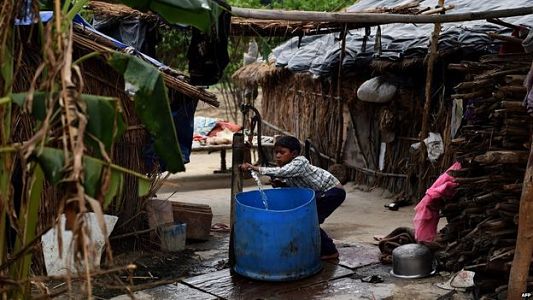
In the Indian capital, around 20% of a population of nearly 10 million have no access to safe, drinkable water—a resource that is supposed to be freely provided by the Indian authorities.

According to the BBC, there is a dangerous gap between supply and demand which has resulted in the official water supply falling short of Delhi’s water needs by 207 million gallons each day, helping to turn drinking water into a pseudo liquid gold. This is due to the fact that around 60% of water intended for Delhi residents is lost as a result of spillage, theft and failure to collect revenue. Official government-sponsored water tanks are also notorious for arriving erratically (at best) in Delhi’s poorest neighborhoods, such as in Sangam Vihar, where they show up “only… once every 10 days or so,” according to Rupa Jha, a local resident.

In response to the gap between water supply and demand, Delhi’s poorest residents have begun to turn to the Indian “Water Mafia,” an informal network of locals who steal water, and then sell it for a profit.

The Water Mafia business follows a model of simple economics. An association of truck drivers, as well as other mostly ordinary Delhi citizens, source water from illicit boreholes found below the earth’s surface, as well as by siphoning water from the city’s pipe network. Tanker bosses then buy water from the men who steal it, who then go on to sell the water directly to locals for a higher price than the $0 it “officially” costs (in Sangam Vihar, for instance, a gallon costs about one cent.) Employees, assuming they sell around a full tank (or 8,400 gallons), are then looking at a profit of $90 per day, or $2700 a month—a much higher wage than the $185 a worker earns in Delhi a month in minimum wage.

While the Water Mafia business is entirely illegal—sourced with water from illegal sources and sold without testing or treatment—it has nevertheless turned into a burgeoning trade that has come to fill in the gap for thousands of poor Delhi citizens who lack access to safe water. Many of Delhi’s poorest residents, in turn, have found that if they want water, they have no choice but to buy into the Water Mafia trade.

The business of stealing and selling water within Indian cities such as Delhi has enormously negative consequences for India’s future, according to authorities and experts who see the human and environmental toll that the practice is taking on the country. The Water Mafia business, for instance, exploits what are already the poorest citizens in a developing country by forcing them to scramble for funds to pay for a resource that is legally required to be free. The practice of extracting liquid for the ground also has negative environmental consequences for the country, especially as it depletes a scarce resource that has already been over-depleted in recent years as a result of India’s population boom. In 2014, for instance, a government report found that three-fourths of Delhi’s underground aquifers were being depleted, forcing boreholes to dig even deeper beneath the surface where water is more likely to be contaminated.

In order to crack down on the growing Water Mafia trade, authorities in recent years have offered a few solutions. In 2013, for instance, the Aam Aadmi Party (AAP) won local municipal elections on a platform of protecting the average person’s interests, as well as their desire to dismantle the Water Mafia business. However, these efforts have been largely ineffective.

According to Rajendra Singh, a conservationist and a winner of this year’s Stockholm Water Prize, however, greater political will and effort could help the country resolve its water issues. Singh, who helped build rainwater-harvesting structures in the arid northern state of Rajasthan, has claimed that major Indian cities have failed to try anything similar. Adopting similar tactics in Delhi—by purifying local rainwater rather than stealing from and depleting water from the city’s boreholes—is one alternative that could potentially help the city solve its water crisis, according to Shah.

In order to protect India’s most at-risk citizens and the country’s long-term interests, it is imperative that an alternative solution—in terms of strengthening the country’s infrastructure and cracking down on members of this illegal water network—need to be adopted. Otherwise, India’s poorest citizens, and those who are most in need of safe drinking water, will continue to have their livelihoods and access to one of humanity’s most basic rights—safe water—be at the mercy of the seemingly unstoppable Water Mafia.

– Ana Powell

Sources: BBC, Foreign Policy
Photo: BBC

August 9, 2015
https://borgenproject.org/wp-content/uploads/borgen-project-logo.svg 0 0 Borgen Project https://borgenproject.org/wp-content/uploads/borgen-project-logo.svg Borgen Project2015-08-09 12:01:392020-03-20 13:50:37Indian Water Mafia: A Necessity’s Black Market
Global Poverty, Water

Clean the World Collects Toiletries for Impoverished Communities

clean_the_world
On average, 1.8 million people per year die from diarrhea-related diseases. Diarrhea ranks third as the leading cause of death among infection-related diseases just after respiratory infections and HIV/AIDS. Fifteen countries make up 70% of this number: India, Nigeria, the Democratic Republic of the Congo (DRC), Afghanistan, Ethiopia, Pakistan, Bangladesh, China, Uganda and Kenya. Approximately 2.5 million children around the world become sick because of diarrhea-related infections, with many of these children being younger than 5-years-old.

Many of these victims reside in Sub-Saharan Africa, where diarrhea-related deaths rank higher than deaths due to malaria, HIV/AIDS and measles combined. Along with death, diarrheal diseases contribute to stunted growth, malnutrition, increased healthcare costs and the inability to work or attend school.

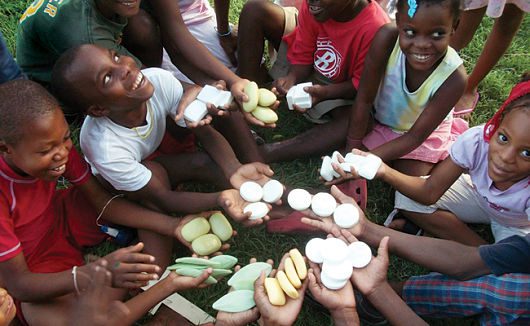
Clean the World was created to help decrease the number of deaths caused by diarrheal diseases by collecting toiletries and other supplies for communities whose residents fall victim to poor hygiene. Clean the World was founded by Shawn Seipler, who seeks to revolutionize hygiene all over the world. The organization collects unused hotel soaps, discarded plastic bottles and other toiletries for communities living in poverty globally.

The collection process operates in three steps: hotels and other hospitality units register their hotel, Clean the World sends them collection bins so the hotels can begin collecting unused soap and plastic bottles and lastly, the hotels ship their collections when the bins are halfway full.

Staff and volunteers sort through discarded toiletries received through donations to decide which are viable to send to communities. They also request donations from manufacturers who send the donation to their facilities in Orlando, Las Vegas or Hong Kong. At these facilities, the outer layers of bars of soap are scraped off and what is remaining is grounded down to small bits and power-washed. The bits are then mixed with glycerin and other substances to form a new bar of soap.

The donations are then distributed to regions all over the world including Africa, Eastern Europe, Asia, South America, the Middle East, and at-risk communities in North America.

In an article by The Huffington Post, “Buy One, Give One” companies are on the rise, including Clean the World. Like Clean the World, these organizations work with other organizations and corporations to provide donations to a cause. Clean the World has recently merged with the Global Soap Project to increase the number of communities to which they distribute donations.

– Julia Hettiger

Sources: Huffington Post, Recycle Nation,  Clean the World
Photo: Vegas Magazine

August 8, 2015
https://borgenproject.org/wp-content/uploads/borgen-project-logo.svg 0 0 Borgen Project https://borgenproject.org/wp-content/uploads/borgen-project-logo.svg Borgen Project2015-08-08 11:02:162024-12-13 18:04:40Clean the World Collects Toiletries for Impoverished Communities
Global Poverty, Water

Safe Water is Life in Bangladesh

safe_water
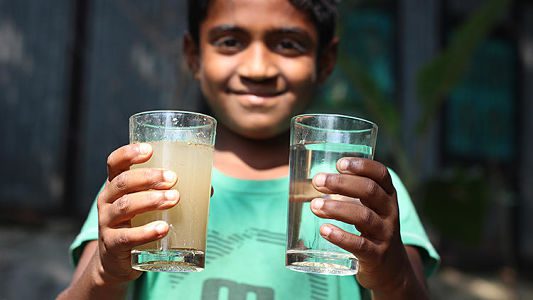
A World Health Organization case study of the quality of water in Bangladesh has revealed dangerously contaminated water. The daily use of this water puts many lives at risk.

The mayor of one region in Bangladesh, Nasir Uddin Ahammed, states that the community had believed that “water is life,” when the reality is actually that safe water is life.

In Bangladesh, diarrheal disease kills 62 in 1000 children under the age of five. The government has a current target to bring this number down to 46 by 2016.

However, when customs are deeply entrenched in traditional communities, it is difficult for change to occur quickly. In addition to diarrheal disease, other risks include dysentery and cholera.

Water sanitation programs have begun to work toward improving the safety of the water. Simple solutions, such as building platforms for tube wells and covers for water pumps and using clean containers for water collection, reduce the contamination risk of water.

Awareness campaigns can effectively help the citizens of Bangladesh address unhygienic practices. The WHO understands that it is unrealistic to expect programs to repair the 10 million tube wells in the country. However, targeted awareness campaigns can provide community members with the knowledge they need to make local changes.

Clean water is important for direct health reasons, and it is fundamental to the progress of communities. When children are sick from contaminated water, they cannot attend school. Furthermore, when community members are ill, the production and development in the region decreases.

With the mounting pressure on water systems due to migration from rural areas, clean and safe water is more important than ever. In communities, water can be purified with boiling. However, some families do not participate in this practice or may not be able to afford the fuel to boil water.

Current water sanitation programs are starting to see fewer diarrhea outbreaks with increased hygiene awareness. Moving latrines further away from tube wells has proven essential. In addition, with increased awareness, more community members are willing to pay for technologies and practices that will keep their drinking water clean.

– Iliana Lang

Sources: WHO 1, WHO 2, UNICEF
Photo: Fast Company

August 8, 2015
https://borgenproject.org/wp-content/uploads/borgen-project-logo.svg 0 0 Borgen Project https://borgenproject.org/wp-content/uploads/borgen-project-logo.svg Borgen Project2015-08-08 01:30:222024-12-13 18:04:42Safe Water is Life in Bangladesh
Development, Global Poverty, Health, Water

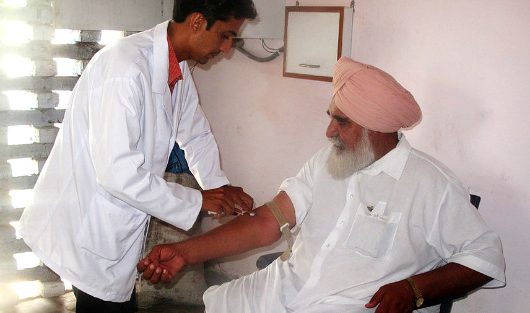
E-Health Point Provides Access in Rural India

E-Health_Point
E-Health Point is a series of medical units owned by Healthpoint Services India that provide medical care, clean water and medicines to families living in rural regions in India. They specialize in unique concepts and models to improve wellness, productivity and quality of life. E-Health Point also follows a Social Business Enterprise Model that demonstrates democratizing healthcare, social impact, sustainability, growth potential and innovation.

The organization was launched in 2009 with the goal of providing preventative and curative healthcare to people in impoverished communities. E-Health Point operates based on Electronic Medical Records which provide doctors and patients knowledge of proper healthcare and real-time disease surveillance capability. Clinics are initially formed as water services and become clinics over time. As of 2011, there were eight clinics and 16 water stations in India.

E-Health Point works with multiple unique technologies and methods like Broadband and Telemedicine and Point of Care/Mobile diagnostics and combines models used by private and public organizations to pioneer the rural health industry. They have collaborated with organizations such as Bhati AirTel, Athenahealth USA and Procter and Gamble to provide funds and resources to ensure physicians and patients give and receive proper medical attention.

E-Health Point treats water for contaminants by using advanced reverse osmosis, a process that uses a semipermeable membrane to remove large particles from drinking water and applied pressure to eliminate chemicals. Reverse osmosis can also remove molecules, ions and bacteria to make water potable.

To democratize the healthcare system in India, E-Health Point provides healthcare to citizens regardless of their gender, caste, social or economic status. They create a social impact by helping residents living in rural regions and semi-urban communities receive access to healthcare especially when the majority of them do not have the funds or resources to obtain it.

E-Health Point was founded by Amit Jain, Dr. Allan Hammond and their team of health and business professionals. With a global and local team, the organization has successfully teamed up with multiple business partners to keep healthcare systems intact in multiple regions in India including Malout, Bathinda and Goniana. The organization hopes to increase its medical coverage to rural regions of Africa and South America.

– Julia Hettiger

Sources: Health Market Innovations, Changemakers, Forbes
Photo: NPR

August 8, 2015
https://borgenproject.org/wp-content/uploads/borgen-project-logo.svg 0 0 Borgen Project https://borgenproject.org/wp-content/uploads/borgen-project-logo.svg Borgen Project2015-08-08 01:30:022024-12-13 18:04:39E-Health Point Provides Access in Rural India
Global Poverty, Sanitation, Water

Water in Rio May Pose Health Threat to Athletes

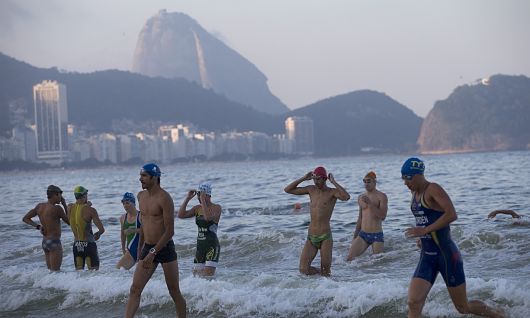
health_threat_to_athletesThe World Health Organization (WHO) is asking the International Olympic Committee to run new tests on the water in Rio de Janeiro. The request comes after an investigation by the Associated Press (AP), which determined the waterways still pose a health threat to athletes.
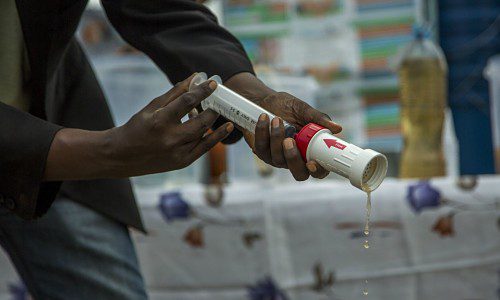
Previous evaluations of the water only checked for bacteria, not viruses, which is what WHO wants to change.

An AP investigation into Rio’s waterways found that pollution levels are still high in places where canoeists, sailors, swimmers and triathletes will compete in the 2016 Summer Olympics.

The AP reported that some athletes training in Rio have fallen ill with symptoms including fever, vomiting and diarrhea because of dangerous levels of viruses and bacteria in the waterways.

The results of the investigation are disappointing for Rio, as being chosen to host the Olympics was supposed to motivate the city to clean its waterways. A newly installed sewage system was thought to be able to handle 80 percent of raw sewage, but as of March, the treatment rate was only 49 percent.

Still, the results aren’t necessarily a surprise, as Rio mayor Eduardo Paes confirmed to Brazil’s SporTV in March that Guanabara Bay, the waterway that is supposed to host the sailing events, would not be clean by the time the games start.

The waterway has become a place where some of the untreated sewage from the city’s 12 million residents ends up.

Rodrigo de Freitas Lake in Central Rio, a second venue for rowing, canoeing, triathlon and open-water events, also poses a health threat to athletes, with tests showing high levels of viruses in the water.

In response to the results of the investigation, the world sailing governing body said it would conduct its own independent testing of Rio’s waterways.

– Matt Wotus

Sources: The Washington Post 1, The Washington Post 2, The Washington Post 3
Photo: The Guardian

August 5, 2015
https://borgenproject.org/wp-content/uploads/borgen-project-logo.svg 0 0 Borgen Project https://borgenproject.org/wp-content/uploads/borgen-project-logo.svg Borgen Project2015-08-05 01:32:422024-12-13 18:04:41Water in Rio May Pose Health Threat to Athletes
Global Poverty, Water

Cleaner Water for Sub-Saharan Africa?

New water purification system in Tanzania Tanzanian entrepreneur Askwar Hilonga has invented a solution to a crisis that plagues his hometown in Tanzania, as well as the greater sub-Saharan Africa region, the lack of pure drinking water. Hilonga has created a water filter, the Nanofilter, that uses nanotechnology for water purification.

Hilonga was born and raised in an impoverished rural region of Tanzania. In his youth, he and his family had no access to clean water. He decided to devote his life to ending this atrocity, aiming to provide millions of people with this basic human right.

Hilonga’s water filter is sand-based — it uses sand to trap bacteria. The nanotechnology eliminates smaller particles like fluoride, heavy metals and chemical contaminants. It purifies water by 99.9 percent.

In Tanzania alone, 70 percent of the population does not have access to clean water or any type of water purification system. 88 percent of infant mortality is caused by waterborne diseases.

Hilonga is motivated to bring change to the country because of these statistics, but also because of his own experience growing up without clean water.

“I was born in rural Tanzania and raised by a poor family in which most of the times we were suffering from waterborne diseases because we could not afford the luxury of expensive bottled water,” explained Hilonga to How we Made it in Africa.

Hilonga, who received his PhD in Nanotechnology from a university in South Korea, won the Africa Prize for Engineering Innovation this June, a $38,390 check to help get his company started. The money has enabled him to build his company. “It’s time to save more lives. And grow my business,” said Hilonga.

The Royal Academy of Engineering, which distributes the African Prize for Engineering Innovation, said that the Nanofilter is a transformative invention with the potential to save lives of innumerable Africans, as well as the lives of people across the world.

The Nanofilter is slowly becoming available across Tanzania. Ten entrepreneurs in the country operate water stations that utilize the Nanofilter at the center of their business model.

“We rent the filter to them and they sell drinking water at an affordable price – five times cheaper than the bottled water,” explained Hilonga. The entrepreneurs who run the stations then pay Hilonga’s company around fifty cents per day.

The Nanofilter is cost-effective, with a market price of only $130 per unit. Hilonga believes that the price will continue to drop because, due to his prize money, he can buy materials in bulk and save money.

Nine households have already purchased units. Hilonga has also sold nine filters to local schools, the price subsidized by a Canadian charity.

“We have orders now from various places in Tanzania, Uganda, and Ethiopia. At present the demand for our filter is higher than our ability to supply…Now we are able to increase our production capacity and we will also strengthen our team by employing more people for sales and marketing,” said Hilonga.

Before Hilonga won the Africa Prize for Engineering Innovation, he feared that the Nanofilter would never make it due to financial constraint. “I was always looking for external sources of support at least for seed capital,” he said.

The Prize, he explained, not only gave him financial confidence, but also business training. Additionally, due to the prize the Nanofilter was publicized and gained credibility.

Hilonga’s plans for the future are ambitious — he wants to provide the 70 percent of nine million in Tanzania who currently do not have access to water treatment with access to the Nanofilter. After that, he hopes to reach the rest of Sub-Saharan Africa.

– Aaron Andree

Sources: How We Made It In Africa, BBC
Photo: QuartzAfrica

August 1, 2015
https://borgenproject.org/wp-content/uploads/borgen-project-logo.svg 0 0 Borgen Project https://borgenproject.org/wp-content/uploads/borgen-project-logo.svg Borgen Project2015-08-01 01:42:582020-11-18 12:24:27Cleaner Water for Sub-Saharan Africa?
Page 46 of 57«‹4445464748›»

Get Smarter

  • Global Poverty 101
  • Global Poverty… The Good News
  • Global Poverty & U.S. Jobs
  • Global Poverty and National Security
  • Innovative Solutions to Poverty
  • Global Poverty & Aid FAQ’s
Search Search

Take Action

  • Call Congress
  • Email Congress
  • Donate
  • 30 Ways to Help
  • Volunteer Ops
  • Internships
  • Courses & Certificates
  • The Podcast
Borgen Project

“The Borgen Project is an incredible nonprofit organization that is addressing poverty and hunger and working towards ending them.”

-The Huffington Post

Inside The Borgen Project

  • Contact
  • About
  • Financials
  • President
  • Board of Directors
  • Board of Advisors

International Links

  • UK Email Parliament
  • UK Donate
  • Canada Email Parliament

Get Smarter

  • Global Poverty 101
  • Global Poverty… The Good News
  • Global Poverty & U.S. Jobs
  • Global Poverty and National Security
  • Innovative Solutions to Poverty
  • Global Poverty & Aid FAQ’s

Ways to Help

  • Call Congress
  • Email Congress
  • Donate
  • 30 Ways to Help
  • Volunteer Ops
  • Internships
  • Courses & Certificates
  • The Podcast
Scroll to top Scroll to top Scroll to top