• Link to X
  • Link to Facebook
  • Link to Instagram
  • Link to TikTok
  • Link to Youtube
  • About
    • About Us
      • President
      • Board of Directors
      • Board of Advisors
      • Financials
      • Our Methodology
      • Success Tracker
      • Contact
  • Act Now
    • 30 Ways to Help
      • Email Congress
      • Call Congress
      • Volunteer
      • Courses & Certificates
      • Be a Donor
    • Internships
      • In-Office Internships
      • Remote Internships
    • Legislation
      • Politics 101
  • The Blog
  • The Podcast
  • Magazine
  • Donate
  • Click to open the search input field Click to open the search input field Search
  • Menu Menu

Archive for category: Water

Education, Global Health, Global Poverty, Water

Eradicating the Guinea Worm Disease

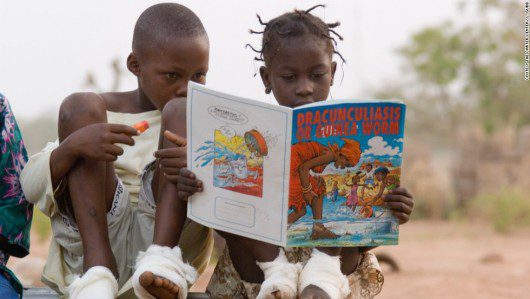
guinea-worm-carter-comic-book-horizontal-large-galleryBack in 1999, Nigerian farmer Abdullahi Rabiu faced an agonizing reality. An estimated 84 worms, narrow in form and each of them two to three feet in length, had painfully ruptured through his skin. And there was nothing he could do to stop it.

Rabiu, who eventually recovered from the ordeal, contracted a waterborne parasitic disease called Guinea Worms by drinking contaminated pond water.

It’s a cycle: an infected person seeks relief from the painful rupturing of the worms by entering the water. There, the worms release hundreds of thousands of larvae. The larvae are then eaten by tiny water flies barely visible to the human eye. Finally, people who drink from that pond run the risk of consuming the flies and becoming infected with the worm.

In 1986, an estimated 3.5 million cases of guinea worm were reported across 21 countries in Africa and Asia. Since then, the Carter Center, founded by former President Jimmy Carter, has led an international campaign to eradicate the disease.

And they are winning.

After visiting more than 26,300 villages, mostly in sub-Saharan Africa, and training people in health education, the eradication of the guinea worm is not only possible — it’s in sight. Between Jan. 1 and Aug. 31 of this year, only 15 cases were reported across four countries.

“The potential for disease eradication to permanently improve quality of life worldwide is tremendous,” said Dr. Donald Hopkins, vice president for Carter Center health programs. Once a disease that incapacitates people like Rabiu is eradicated, the health of individuals improve and economies benefit from increased productivity.

Eradication of the guinea worm would make it the first human disease to have been wiped out since smallpox in 1980. It stands to be the first disease to be eliminated without a vaccine or medicine.

In the case of guinea worms, the key was as simple as education. People in these communities have learned to filter water, making it safe for drinking. Those who have become infected know not to enter the water.

While it is impossible to predict exactly when guinea worms will be completely eradicated, there is hope to see it gone in the next two to three years at the latest.

Now facing terminal cancer, Jimmy Carter was recently asked what he would like to accomplish before dying. His response: “I would like the last guinea worm to die before I do.”

– Kara Buckley

Sources: The Carter Center 1, BBC 1, BBC 2, The Carter Center 2, The Carter Center 3
Photo: CNN
November 14, 2015
https://borgenproject.org/wp-content/uploads/borgen-project-logo.svg 0 0 Borgen Project https://borgenproject.org/wp-content/uploads/borgen-project-logo.svg Borgen Project2015-11-14 08:56:112020-06-24 19:35:09Eradicating the Guinea Worm Disease
Global Poverty, Nonprofit Organizations and NGOs, Sanitation, Water

FACE Africa Fights Poverty in Liberia through Education

FACE_africa

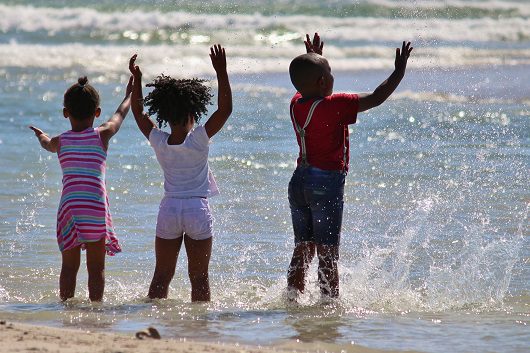
FACE Africa, a nonprofit created by Liberia native Saran Kaba Jones, works to end poverty by alleviating Liberia’s water crisis through educating future leaders.

The organization uses hands-on projects to implement water and sanitation facilities, as well as educate youth about proper health and hygiene rituals. Each year, 12,000 more people gain access to clean water, 25 communities are served and over 200,000 hours of productivity is saved.

Saran Kaba Jones left Liberia when she was eight years old to escape the civil war that killed thousands of people and left millions without a place to live. Jones returned to Liberia in 2008 with a plan to lift under-served communities out of poverty.

Originally, FACE stood for Fund a Child’s Education, but Jones and her colleagues soon realized that the lack of clean drinking water was the number one impediment to a child’s education.

Soon after, they switched gears and focused their efforts on increasing the amount of clean water and sanitation in Liberia and other countries in Sub-Saharan Africa.

FACE Africa uses local resources, materials and labor to come up with solutions for this global epidemic. Once these solutions have proven to be sustainable, FACE Africa transfers ownership of their solutions to locals in Liberia.

Some of their methods include building wells, creating systems to clean water and educating individuals on proper hygiene techniques.

FACE Africa differs from many nonprofits because they form lifelong partnerships with the communities they help. Their mission is to provide 100 percent water coverage to all of Sub-Saharan Africa.

This may require employees at FACE Africa to walk many miles to reach villages cut off from roads and to fetch sand and rocks to build sustainable wells, but the team still strives to incorporate better sanitation systems within remote villages.

Since 2009, FACE Africa has hosted the annual WASH (Water, Sanitation and Hygiene) Gala event. This year, the gala’s goal is to raise $300,000 in support of clean water in Africa.

The gala connects FACE Africa with people from around the world who pull together and combine their efforts to assist those facing challenges with water. FACE Africa continues to help Liberians gain access to clean water to this day.

Since its creation in 2010, FACE Africa has successfully launched multiple projects and has assisted many towns all across Liberia.

– Julia Hettiger

Sources: Face Africa, Black Enterprise, CNN
Photo: Pixabay

November 3, 2015
https://borgenproject.org/wp-content/uploads/borgen-project-logo.svg 0 0 Borgen Project https://borgenproject.org/wp-content/uploads/borgen-project-logo.svg Borgen Project2015-11-03 01:30:202024-12-13 18:05:19FACE Africa Fights Poverty in Liberia through Education
Development, Global Poverty, Poverty Reduction, Water

The World Bank Helps Increase Water Reliability in Lima

The World Bank Helped to Increase Water Reliability in LimaA sweaty man grabs a large plastic pipe on the back of a cab and starts to fill a series of plastic containers on the ground. Once he fills in one container, he holds out his hand to receive some coins from the owner and then goes away in his vehicle. This is a daily routine for tens of thousands of people who live around Lima.
Lima’s future water reliability is of great concern to the local government, the water utility company SEDAPAL and the people who live and work there. Recently, the World Bank helped the water utility company SEDAPAL plan for increased reliability in an uncertain future and saved the city more than $600 million.

The World Bank has completed SEDAPAL’s $2.7 billion master plan for water resources for 2040. The World Bank used state-of-the-art methods for Decision Making under Deep Uncertainty (DMU), investigating key questions such as could the proposed investments ensure reliability in the face of deep uncertainties? What if there are delays? What’s the best sequence so that investments ensure both “no regrets” and maximum future adaptability?

Through the study, the World Bank helped SEDAPAL revise its Master Plan of 14 large-scale investments by identifying projects that are adaptable as conditions evolve. After analyzing the 14 projects, the Bank found that 75 percent of the full $2.7 billion plan could meet water reliability targets, so the investment could be reduced to $2.0 billion. The study saved the city more than $600 million.

“We have to make decisions even when we don’t know the future,” said Laura Bonzanigo, World Bank economist specializing in DMU. “Through the DMU methodology, we can look at the range of possibilities and come up with minimum requirements to meet every possibility — robust decisions with no regrets.”

According to Bonzanigo, nowadays, utility companies are not only used for construction, such as pumping stations, dams, water treatment plans and tunnels through mountains but also are used to solve some valuable things, such as working with farmers and ranchers to make ecological investments in the upper watersheds.

In order to solve water utility problems, the utility company reaches out to nongovernmental organizations (NGOs) to protect watersheds and groundwater aquifers. It also works with consumers to use less water per household and explores ways to recycle water for parks. Engaging Peruvian NGOs is significant because they work closely with communities in the upper watershed management and environmental monitoring. Moreover, universities are important in helping SEDAPAL spread their methods through training.

SEDAPAL has requested further World Bank support. Decision-Making under Deep Uncertainty is an increasingly important tool for any sector’s long-term planning and investments. Based on the study in Lima, final workshop participants Argentina, Paraguay and Brazil have already approached the World Bank country offices to request support in the water sector.

In a new methodological book “Confronting Climate Uncertainty in Water Resource Planning and Project Design: The Decision Tree Framework,” the World Bank includes more information on the Lima water study to help program managers demonstrate the robustness of their projects.

Through state-of-the-art study, the World Bank helped SEDAPAL decide on its Master plan of increasing water utility in Lima and saved the city $600 million. It not only contributed to solving the problem of water utility in impoverished areas but also cut the unnecessary cost to the city.

– Shengyu Wang

Sources: World Bank, BBC
Photo: Wikimedia

October 15, 2015
https://borgenproject.org/wp-content/uploads/borgen-project-logo.svg 0 0 Borgen Project https://borgenproject.org/wp-content/uploads/borgen-project-logo.svg Borgen Project2015-10-15 15:56:302020-06-25 22:04:09The World Bank Helps Increase Water Reliability in Lima
Global Poverty, Water

Solar Cities: Hot Water for Rural Cairo

Solar_Cities
In Cairo, drinking tap water is considered to be a game with rules similar to Russian roulette — the possibility of dying is high. The concentration of bacteria in the water is astounding and the majority of the population living in Cairo’s slums does not have access to the hot water necessary to cook and bathe.

On average, it takes a mother seven hours to bathe her children. She must retrieve water from a well and carry it in a bucket back to her home before warming it up on the stove before she can give any of her children a bath.

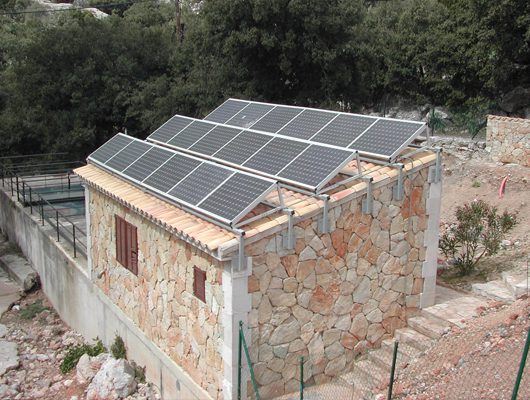
To increase the availability of hot water for people living in Coptic Christian and Muslim communities in Cairo, Solar Cities install environment-friendly solar panels on the rooftops of houses in the city’s poorer neighborhoods.

Solar Cities was started by two science Ph.D. recipients, Dr. TH Culhane and Dr. Sybille Culhane. The pair is currently working on their project, C.3.I.T.I.E.S., which stands for Connecting Community Catalysts Integrating Technologies for Industrial Ecology Solutions.

Dr. TH — Thomas Taha Rassam — Culhane’s project succeeds in generating 200 liters of hot water and 200 liters of cold water for each household every day. More than 30 solar water heaters line housetops in Cairo, providing many families with access to usable and drinkable water.

Situated primarily in the Coptic Christian community of Zabaleen and Darb Al-Ahmar, an Islamic neighborhood, Culhane works not only on providing residents with access to water but also on bringing the two communities closer together.

The idea for Solar Cities came to Culhane after he worked on projects in the Dayak of Boneo and Itza Maya jungle villages in Guatemala, and to gain a better understanding of the struggles of living under these conditions, Culhane and his wife moved into an apartment in Zabaleen.

There, they were able to gather practical knowledge on what issues needed to be resolved, namely finding an environmentally friendly way of gaining access to clean water.

The duo has since worked on increasing solar energy and clean water in Cairo and spreading innovative ideas throughout the Zabaleen and Darb Al-Ahmar communities.

As two science educators, they work to make their projects fun and interactive for all of their colleagues and the people they assist with the belief that creativity can lead to innovation, which in turn will make the world a more environmentally sustainable place.

– Julia Hettiger

Sources: Matador Network, Egypt Independent, National Geographic
Photo: Google Images

October 4, 2015
https://borgenproject.org/wp-content/uploads/borgen-project-logo.svg 0 0 Borgen Project https://borgenproject.org/wp-content/uploads/borgen-project-logo.svg Borgen Project2015-10-04 07:40:002020-06-28 16:17:05Solar Cities: Hot Water for Rural Cairo
Disease, Global Health, Global Poverty, Sanitation, Water

Trachoma in Ethiopia: What It Is and What Is Being Done

Trachoma_in_Ethiopia
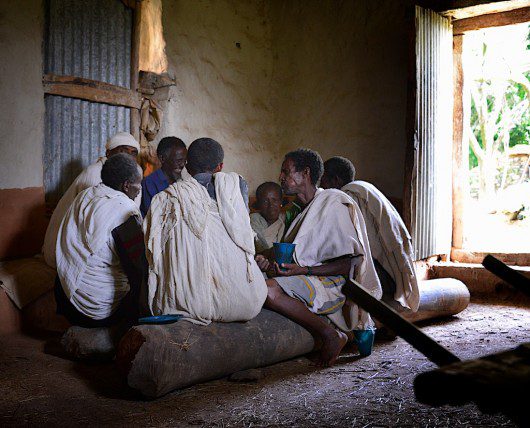
Trachoma is an endemic disease in Oromia, the largest and most populous state of Ethiopia. The disease has caused an impairment of vision in 2.2 million people in the world as the leading infectious cause of blindness.

The combination of poor sanitation and minimal access to clean water increases the risk of infection and nearly 229 million people in the world live in high-risk areas. Women are more susceptible to infectious trachoma than men because of their higher exposure to young children who are typically the bearers of the disease.

Eighty percent of Ethiopians live in rural areas with poor sanitation and little access to clean water. Seventy-six million people in Ethiopia are at risk of contracting blinding trachoma and another 800,000 people are at risk of irreversible blindness if they do not receive surgery.

Ethiopia only has 120 ophthalmologists and the majority of them work in Addis Ababa. The country is ill-equipped to destroy the disease on its own although the surgical procedures are simple and quick.

The Fred Hollows Foundation is a non-governmental organization focused on eliminating preventable blindness. The organization’s work in Ethiopia is focused mainly on the implementation of the SAFE strategy recommended by the World Health Organization in Oromia’s 225 endemic districts.

SAFE is an acronym for Surgery, Antibiotics, Face-washing, and Environmental improvements. Changing the way people manage personal hygiene has been one of the ways they are trying to reduce the risks of trachoma.

The Fred Hollows Foundation and its partners treated 5,637,226 people with antibiotics and performed more than 7,000 lid surgeries in 2014 alone. They also trained 36 surgeons and 10 clinic support staff as well as supplied $126,747 worth of equipment used to treat trachoma in Ethiopia.

According to the Fred Hollows Foundation website, “What is needed [to eliminate trachoma in Ethiopia] is a significant scale-up of the SAFE strategy, including resources, expertise and commitment from regional and local governments and development organizations in the water, sanitation and hygiene sectors.”

– Iona Brannon

Sources: Al Jazeera, The Fred Hollows Foundation, World Health Organization
Photo: Flickr

October 4, 2015
https://borgenproject.org/wp-content/uploads/borgen-project-logo.svg 0 0 Borgen Project https://borgenproject.org/wp-content/uploads/borgen-project-logo.svg Borgen Project2015-10-04 07:21:502024-05-27 09:27:41Trachoma in Ethiopia: What It Is and What Is Being Done
Activism, Global Poverty, Water

Sisters Fold Origami and Raise $650,000 to Build Wells

z1 splash
Every year about 842,000 people die from diarrhoea that causes dehydration and more than 840,000 people die from a water related disease each year. Worldwide, there are 750 million people who lack clean water access, which is more than twice the size of the U.S. population.

On average, it costs between $12,000-$15,000 to build enough wells to support an entire village of people. Five thousand dollars builds one well and provides enough water for 500 people. The costs include constructing the wells, preparing the community for the water project, and then monitoring and evaluating.

In 2011, Katherine Adams, age 5, and her sister Isabelle Adams, age 8, learned about the millions of people who go thirsty every day and about the girls who haul water all day instead of going to school. Therefore, both girls put their origami folding skills to use to raise money to build a well in Ethiopia.

With the help of their dad, they held an origami sale at a Starbucks in Dallas, Texas in order to help thousands of people without water. After eight weeks of selling origamis, the two girls raised more than $10,000, which is enough to benefit an entire village.

It has been almost four years since they started folding origamis, and the two sisters–now 9 and 11–founded an organization called Paper for Water that has hundreds of volunteers and helped raise more than $650,000. That is enough money to create clean sustainable water for about 63 to 65 villages or 32,000 people.

The origami ornaments are not easy or simple to make. The average ornament they make takes one hour and one volunteer took 22 hours to create a single ornament.

Globally, it would take about $20 billion to solve water and sanitation problems, which the girls believe is doable. Their origami ornaments are for sale online ranging from $10 to $100 per item and give you an option to donate without getting an origami gift.


– Donald Gering

Sources: Good News Network, Paper for Water, UNICEF, Water.org, The Water Project

September 23, 2015
https://borgenproject.org/wp-content/uploads/borgen-project-logo.svg 0 0 Borgen Project https://borgenproject.org/wp-content/uploads/borgen-project-logo.svg Borgen Project2015-09-23 02:09:322024-05-27 09:27:39Sisters Fold Origami and Raise $650,000 to Build Wells
Global Poverty, Sanitation, Water

Sanitary Improvements for Millions in Ethiopia

Ethiopians embrace sanitary improvements
Going to the bathroom: a subject that, as humans, we like to pretend doesn’t even happen most of the time. However, for rural Ethiopians living without the most basic sanitary structures, an initiative to improve latrine use was one which needed to happen.

In the village of Kurt Bahir, local carpenter Kefale Demelash used his skills to build a two-room latrine for public use within the village after becoming inspired to initiate sanitary improvements after a diarrhea outbreak plagued the area.

For this particular latrine, one side was designated for women and the other side for men. Smaller pits were also dug for children which would be safer than customary ones, encouraging the young to start the habit of using them early.

With just the establishment of this one latrine, others were motivated to create their own. Soon, with the help of Demelash, 126 latrines were created within Kurt Bahir, all meeting the international standards for improved sanitation. These new latrines would help reduce the risk of communicable diseases, which are commonly spread by unsafe sanitation practices.

Demelash was able to receive training as a village coordinator through the government’s Health Extension Program (HEP), which trains and deploys members into rural areas of the country to educate and promote sanitary practices.

Further progress in sanitation is also being made through the Water and Sanitation program (WSP), a five-year multi-donor partnership between the World Bank and the government.

The World Bank describes the program goals as “scaling up its capacity, improving sanitation and hygiene services and increasing access by the poor in 104 selected districts in Amhara, Oromia SNNP and Tigray regional states.”

Ethiopia has suffered through many different kinds of communicable diseases attributed to poor hygiene and sanitation. However, with the execution of the government’s Universal Access Plan (UAP), it is hoped that sanitation can be improved by 100 percent.

Currently, more than 7 million people have been educated on healthy sanitation practices by 1,782 trainers and implementers under the program. Prior to the program, open defecation was a recurring problem, but with the organization in full-swing, 52 percent of the kebeles (an administrative unit within Ethiopia) in the woreda (districts) are defecation free.

Taking a creative approach in the program’s expansion strategies, prizes were offered within villages. This was initiated by a local “savings mechanism” through the woreda, where the prize money was given to the best innovator, performer or implementer of an improved sanitation project.

With this strategy in mind, neighbors found inspiration in one another, which ultimately led to improvements across woredas.

The World Bank found “in Mecha and Medebayzana woredas, more than 55,000 households now have improved latrines, and communities have also started applying the sanitation lessons they learned in their daily lives, such as keeping their homes, compounds and communities clean, making themselves safer and healthier.”

– Nikki Schaffer

Sources: World Bank, We Are Water
Photo: Flickr

September 20, 2015
https://borgenproject.org/wp-content/uploads/borgen-project-logo.svg 0 0 Borgen Project https://borgenproject.org/wp-content/uploads/borgen-project-logo.svg Borgen Project2015-09-20 01:30:372020-06-25 10:33:20Sanitary Improvements for Millions in Ethiopia
Disease, Education, Global Poverty, Water

The Millennium Development Goals Results Show Success

The Millennium Development Goals Deadline Has Arrived
The Millennium Development Goals (MDGs) laid out eight specific targets to reduce extreme poverty and improve the living conditions of billions of people worldwide, from 2000-2015. The anticipated deadline has arrived and the results are positive, with a final report calling this “the most successful anti-poverty movement in history.”

Since 1990, the number of people living in extreme poverty has declined by more than half, falling from 1.9 billion to 836 million. In addition, according to the report the proportion of undernourished people in developing regions fell by almost half, from 23.3 percent in 1990-1992 to 12.9 percent in 2014-2016.

Below are more updated figures of the success of the MDGs:

  • Water: The target was met of halving the proportion of people who lack access to improved sources of water. Since 1990, 2.6 billion people have gained access to better water sources.
  • Mortality Rate: The under-five mortality rate has declined by more than half, from 12.7 million to less than 6 million and maternal mortality is down 45 percent worldwide.
  • Diseases: New HIV infections decreased by about 40 percent, from 2000 to 2013. In the same time period, tuberculosis prevention, treatment, and diagnosis solutions have saved the lives of 37 million. Since 2000, 6.2 million deaths of mostly children under 5 were prevented from malaria.
  • Education: The primary school enrollment rate in the developing regions has reached 91 percent with the number of children out of school dropping from 100 million to an estimated 57 million. There are also many more girls going to school compared to 15 years ago with an estimated two-thirds of developing countries closing the gender gap in education.

Despite significant gains, there are still issues to be addressed. The report indicates that gender equality, maternal health and extreme poverty and hunger remain problems in the effort to improve lives across the world.

Coming up this month, the global community will convene at the United Nations for a summit to establish a new development agenda and to adopt a set of Sustainable Development Goals (SDGs) that will provide a blueprint for policy and funding for the next 15 years.

– Paula Acevedo

Sources:  United Nations Development Programme, United Nations Foundation Blog,
Photo: Flickr

September 17, 2015
https://borgenproject.org/wp-content/uploads/borgen-project-logo.svg 0 0 Borgen Project https://borgenproject.org/wp-content/uploads/borgen-project-logo.svg Borgen Project2015-09-17 01:30:042024-12-13 18:04:36The Millennium Development Goals Results Show Success
Global Poverty, Water, Women and Female Empowerment

How The Water Project Empowers Girls

water_project
In many rural communities throughout sub-Saharan Africa, hundreds of people are unable to access safe, clean water, suffering from several different diseases and illnesses as a result. Relying predominantly on women and girls to walk miles away from home to collect water – dirty water that makes them and their families sick – the communities are gender biased and women are not considered as important as men.

Unclean water and gender inequality limits the potential of many people and communities, and contributes to the cycle of extreme poverty.

The Water Project, however, is determined to change this. A nonprofit organization that brings sustainable water projects to communities in sub-Saharan Africa, The Water Project provides those communities with access to clean water and the means to maintain proper sanitation.

Admirably, the organization seeks to instill hope in suffering communities by making clean water the norm. Clean water improves health, breaks down poverty and supports education.

Lack of access to clean water and proper sanitation, however, is the primary reason that girls drop out of school. They spend valuable learning time walking to streams or ponds to gather water, only to eventually drink it and get sick. The Water Project, however, empowers girls by bringing safe, clean water to their communities.

In addition to improved health conditions, clean water strengthens opportunities for quality education. Access to safe water ensures that girls remain in school, which opens the door to future careers and earned wages. Because women reinvest up to 90 percent of their income back into their households, compared to 40 percent by men, this is imperative.

The efforts of The Water Project have inevitably taught communities to see the value of women and potential of girls. It has unlocked a generation of leaders. Education provides endless opportunities, but clean water liberates, encourages and inspires.

– Sarah Sheppard
Photo: The Water Project

September 6, 2015
https://borgenproject.org/wp-content/uploads/borgen-project-logo.svg 0 0 Borgen Project https://borgenproject.org/wp-content/uploads/borgen-project-logo.svg Borgen Project2015-09-06 01:30:192020-06-30 18:52:46How The Water Project Empowers Girls
Children, Development, Education, Food & Hunger, Global Poverty, Health, Water

Why Clean Water Matters

Why Clean Water Matters
It’s all too easy to take for granted all of the conveniences available to us as citizens of a developed country. Having access to clean water is a privilege that goes far beyond just being able to use it for drinking or cooking. It can significantly improve the lives of people in poverty for a number of reasons.

For example, access to clean water usually means a person is more likely to have food to eat. After all, 70 percent of our global water use is for irrigation and agriculture. Often, a lack of clean water means a corresponding lack of food, because communities are unable to grow their own. About 84 percent of the people who don’t have access to clean water live on subsistence agriculture, which means that they are dependent on the growth of their own food for survival.

If people have access only to dirty, contaminated water, then they are in constant danger of waterborne diseases like diarrhea, cholera, fluorosis, HIV, malaria, typhoid and parasites such as intestinal worms. All of these run rampant through unsafe water supplies.

If people are getting sick, then someone in the family has to take care of them. That leaves two people out of school or work. Two people whose education or livelihood is put on hold because there isn’t an accessible clean water source.

Oftentimes, women undertake the time-consuming act of hauling water from its source to the villages where it is needed. In Sub-Saharan Africa, 40 billion hours a year are spent hauling water. This leads to to a sort of “time poverty,” where there is less time for endeavors like receiving an education or making money.

Without access to proper sanitation, many girls drop out of school when they reach puberty. Unsafe water acts as a barrier to education for young women in particular, perpetuating the global poverty and gender inequality cycle.

When mothers fear their children are going to die of diseases, they have more children in the hopes that some of them will survive, which often leads to poor maternal health and overpopulation problems. Poor maternal health can also lead to orphaned children who are left to fend for themselves and do not have time for education because they are focused on survival.

In fact, access to clean water is something that underlays almost all of the Millennium Development Goals – eradicating extreme poverty and hunger, achieving universal primary education, promoting gender equality and empowering women, reducing child mortality, improving maternal health, combating disease and ensuring environmental sustainability. In the new set of Sustainable Development Goals, ensuring access to water and sanitation for all is a goal in itself.

Gary Evans of Living Water International put it like this: “We’re in a world where there are 900 million people barely treading water, and the water’s too low for them to reach the ladder. They don’t need a boat. They don’t need a helicopter to rescue them. They just need a little boost so they can reach the ladder. Then they can climb out on their own. Clean water provides that boost.”

So, it’s clear why clean water is important. And the best part? There really is plenty to go around. Groups like The Water Project and Living Water International are working to build sand dams, wells and devices for water collection and sanitation. Every dollar invested in water and sanitation generates about eight dollars worth of health, time and productivity.

Unsafe water and lack of water causes a lot of problems, but what this really means is that there is one simple fix that will address a multitude of global poverty issues. Clean water means a better world in terms of equality, education, health, food security and more.

– Emily Dieckman

Sources: UN 1, UN 2, UN 3, UNICEF, Water, The Water Project
Photo: Easy Drug Card

August 23, 2015
https://borgenproject.org/wp-content/uploads/borgen-project-logo.svg 0 0 Borgen Project https://borgenproject.org/wp-content/uploads/borgen-project-logo.svg Borgen Project2015-08-23 08:30:542024-06-11 02:48:12Why Clean Water Matters
Page 45 of 57«‹4344454647›»

Get Smarter

  • Global Poverty 101
  • Global Poverty… The Good News
  • Global Poverty & U.S. Jobs
  • Global Poverty and National Security
  • Innovative Solutions to Poverty
  • Global Poverty & Aid FAQ’s
Search Search

Take Action

  • Call Congress
  • Email Congress
  • Donate
  • 30 Ways to Help
  • Volunteer Ops
  • Internships
  • Courses & Certificates
  • The Podcast
Borgen Project

“The Borgen Project is an incredible nonprofit organization that is addressing poverty and hunger and working towards ending them.”

-The Huffington Post

Inside The Borgen Project

  • Contact
  • About
  • Financials
  • President
  • Board of Directors
  • Board of Advisors

International Links

  • UK Email Parliament
  • UK Donate
  • Canada Email Parliament

Get Smarter

  • Global Poverty 101
  • Global Poverty… The Good News
  • Global Poverty & U.S. Jobs
  • Global Poverty and National Security
  • Innovative Solutions to Poverty
  • Global Poverty & Aid FAQ’s

Ways to Help

  • Call Congress
  • Email Congress
  • Donate
  • 30 Ways to Help
  • Volunteer Ops
  • Internships
  • Courses & Certificates
  • The Podcast
Scroll to top Scroll to top Scroll to top