• Link to X
  • Link to Facebook
  • Link to Instagram
  • Link to TikTok
  • Link to Youtube
  • About
    • About Us
      • President
      • Board of Directors
      • Board of Advisors
      • Financials
      • Our Methodology
      • Success Tracker
      • Contact
  • Act Now
    • 30 Ways to Help
      • Email Congress
      • Call Congress
      • Volunteer
      • Courses & Certificates
      • Be a Donor
    • Internships
      • In-Office Internships
      • Remote Internships
    • Legislation
      • Politics 101
  • The Blog
  • The Podcast
  • Magazine
  • Donate
  • Click to open the search input field Click to open the search input field Search
  • Menu Menu

Archive for category: Water

Global Poverty, Water

The Current Situation of Water Quality in Burkina Faso

The Current Situation of Water Quality In Burkina Faso
Named “land of honest men” Burkina Faso is a landlocked country located in West Africa. With an approximate population of 17.4 million, Burkina Faso has been a center for concern regarding human rights. Many critiques of Burkina Faso’s human rights violations revolve around failing to provide quality water to its inhabitants.

Water quality in Burkina Faso has suffered over the years in part due to its status as one of the poorest countries on the planet.

A statement from WaterAid reports that sanitation and water quality are insufficient in meeting the needs of the people. Approximately 14 million people in Burkina Faso do not have access to improved sanitation.

Roughly 3 million individuals do not have access to improved sources of water. Additionally, 2,800 children die annually from preventable diarrheal diseases as a result of poor sanitation and water.

Access to basic sanitation is a major concern for the people of Burkina Faso. Only an estimated 20 percent of Burkina Faso’s population has access to a toilet.

On top of insufficient sanitation and water resources, water is in limited supply due to environmental issues. Nationwide droughts within Burkina Faso make the availability of water very scarce. This forces many people in rural areas to migrate to urban locations despite poor quality water and sanitation.

Since gold is a major source of income for the country of Burkina Faso, pollution has also reduced Burkina Faso water quality. Mining operations cause large amounts of arsenic to seep into the surrounding environment. This, in turn, causes arsenic to contaminate the local water making water sources completely useless.

However, despite the dismal situation of Burkina Faso water quality, many humanitarian organizations, as well as the government of Burkina Faso, are making significant improvements to the countries overall water quality.

According to WaterAid, they have provided 19,000 people with safe water and 98,000 people with improved sanitation. UNICEF, the WHO and the NGO Global 2000, have helped improve the water quality in Burkina Faso. In 2005, these organizations were able to reduce guinea worm infection cases from 11,784 to only 30 in a course of 13 years. Guinea worm is a waterborne disease that results from contaminated water and poor sanitation.

Moreover, the government of Burkina Faso is making slow, but noticeable improvements to the overall water quality of its country. Since 2000, the government has made a significant amount of reforms in regard to tackling water-related issues.

One of these reforms involves setting up a water basin committee whose goal is to protect and improve water basins for equitable use. Of Burkina Faso’s five major water basins, two of the basins, the Mohoun and Comoé, have established water basin committees.

The formation of these committees came from the MCA-Burkina Faso which is an organization that has helped to form a Millenium Challenge Corporation (MCC) economic compact. The MCC compact is a plan for providing equitable and maintainable water usage nationwide and has been part of the government of Burkina Faso Integrated Water Resource Action Plan.

Through humanitarian aid and government intervention, water quality in Burkina Faso is slowly improving on a national scale.

– Shannon Warren

Photo: Flickr
October 21, 2016
https://borgenproject.org/wp-content/uploads/borgen-project-logo.svg 0 0 Borgen Project https://borgenproject.org/wp-content/uploads/borgen-project-logo.svg Borgen Project2016-10-21 01:30:472024-05-24 23:42:52The Current Situation of Water Quality in Burkina Faso
Water

Improving Water Quality in Egypt Through Regulation

Water Quality in Egypt
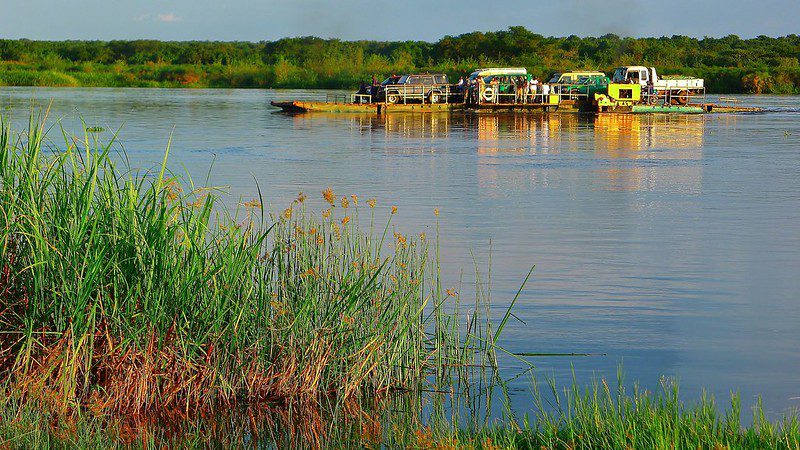
The Nile River, also known as the longest river in the world, passes through Egypt. Water quality in Egypt is of paramount importance. Many Egyptians rely on the Nile for drinking and bathing water because of the river’s size and location.

Unfortunately, many cases of water pollution in the Nile River have been reported, resulting in mass poisonings. The Egyptian Government blames the low water levels of the Nile, the presence of fish farms on the Rosetta Branch and the dumping of waste directly into agricultural banks.

Because of Egypt’s rapidly growing population, the abundance of clean water is more important than ever. Egypt is an arid country and therefore relies on rain from surrounding countries to aid in supplying them.

These factors alone are not enough. In response, Egypt’s Government has recently declared a state of extreme emergency in an attempt to find a solution for this crisis. Authorities have made this issue a priority in order to save and improve the lives of millions.

Regulations have been created to preserve and improve water quality. As a result, there have been conflicts between farmers and public officials relating to regulations on the amount of rice that can and should be grown. Farmers already have problems feeding their families and do not want to feel restricted with what they can grow.

Egypt also looks to develop awareness campaigns that will call for water-saving measures. The government hopes to team up with farmers in order to make Egypt a more water-conservative country.

USAID has been working with Egypt to address environmental issues leading to scarcity and pollution of water. USAID hopes to educate Egyptian residents on the dangers of water pollution as well as how to avoid it.

With the help of developing countries and cooperation between the government and farmers, the country hopes to improve the water quality in Egypt and avoid a deadly water crisis.

– Casey Marx
Photo: Flickr

October 19, 2016
https://borgenproject.org/wp-content/uploads/borgen-project-logo.svg 0 0 Borgen Project https://borgenproject.org/wp-content/uploads/borgen-project-logo.svg Borgen Project2016-10-19 08:26:562024-05-27 23:53:19Improving Water Quality in Egypt Through Regulation
Global Poverty, Water

Five Things You Need to Know About Water Quality in Malawi

Water Quality in MalawiClean water is something that is often taken for granted, but certainly not in Malawi. In the last two years, UNICEF helped nearly 50,000 people gain access to improved water supply and produced 500 water points, with the new goal to serve an additional 125,000 people with safe water in 2016. Though overall water quality in Malawi has improved significantly, there is still so much more that can be done.
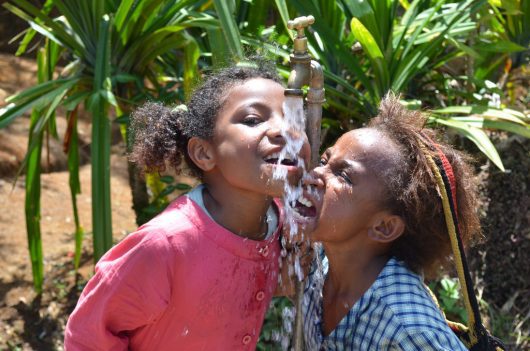
  1. Many water hand pumps are inoperative, leaving people with no choice but to go back to unsafe water sources. Poor sanitation practices and improper storage of drinking water often lead to waterborne illnesses like cholera. WaterAid is one organization making a difference and supporting the marginalized communities of Malawi by repairing broken wells and handpumps. Showing users how to maintain their own facilities ensures that safe water will be available close to homes year round.
  2. The lack of access to safe water in Malawi has taken a toll on cultivation and increased hunger. A steady water supply is essential to growing enough food to eat, but the extreme weather and pollution where the majority of people in Malawi live make farming difficult. In addition to wells and handpumps, WaterAid also builds simple composting latrines, which help keep water sources clean and provide fertilizer for crops.
  3. According to the USAID Fact Sheet, approximately 4 million people still lack access to safe water. Likewise, 10 million people lack access to adequate sanitation in Malawi. Clean water is essential for a healthy population. Clean Water for Malawi (CWFM) works to provide this basic necessity by drilling water wells in small villages. CWFM has built 402 wells in Malawi since 2010, with each well supplying enough clean water for up to 350 – 500 people.
  4. Lack of access to clean water causes disease and death in Malawi. Approximately 30,000 people die every year in Malawi from issues caused by dirty water, namely diarrhea, dysentery, parasitic infections and food and water-borne illnesses.
  5. Studies show that schools that do not have working toilets or water discourage children from attending and completing their education. In 2007, UNICEF fixed 39 school water points, bringing safe water to 23,000 school children. Public communication strategies regarding hygiene promotion also help to educate individuals in Malawi on the proper use and safe handling of water and sanitation facilities.

With poor water quality in Malawi having such a heavy impact on the lives of locals, organizations like UNICEF, WaterAid and USAID are applauded for their generous contributions.

Making the issue a priority and taking direct action has saved thousands of lives and is hopefully a mindset that will carry on to further improve conditions in Malawi.

– Mikaela Frigillana

Photo: Flickr

October 19, 2016
https://borgenproject.org/wp-content/uploads/borgen-project-logo.svg 0 0 Borgen Project https://borgenproject.org/wp-content/uploads/borgen-project-logo.svg Borgen Project2016-10-19 01:30:492024-06-05 04:10:54Five Things You Need to Know About Water Quality in Malawi
Global Poverty, Water

Overcoming the Water Crisis in Papua New Guinea

Water Crisis in Papua New Guinea
According to a 2016 report from WaterAid, an international organization that works to improve water quality, sanitation and hygiene to the most vulnerable populations, Papua New Guinea is the worst country in the world in terms of household water access. There are 4.5 million individuals, 60% of the population in Papua New Guinea who lack access to clean water. As a result of the water crisis in Papua New Guinea, 800 children die every year from diarrhea.

In the capital city, Port Moresby, about half of the population live in communities located on precipitous inclines prone to flooding. Many of these areas are outside the perimeter of utility services and far from water mains or sewage pipelines.

WaterAid suggests the vital water source connections will not be constructed for many years. The organization also notes that extreme weather along with rising sea levels contributes to an already precarious water crisis in Papua New Guinea.

Prohibitive costs, The Rakyat Post reports, are a major source of concern with respect to water quality. Poor residents in Port Moresby pay 54% of their daily wages to buy water (about 50 liters) from delivery services. By comparison, an individual living in the U.K. can expect to pay 0.1% of their daily earnings for the same amount of water from an official piped supply.

Henry Northover, head of policy for WaterAid told The Guardian that the global water difficulty was not always an issue of limited supply but in many instances a distributional problem. He added that with “clear and coherent” government policies and international intervention the crisis will be remedied.

Overcoming the crisis of water quality worldwide has been and continues to be challenging. Since 1990 advancements have been achieved, as 2.6 billion people now have access to clean water. With major improvements seen in Cambodia, followed by Mali, Laos and Ethiopia.

According to Northover ending the water crisis in Papua New Guinea and worldwide in general and thus availing all individuals worldwide access to clean water is an achievable goal, but he underscored the importance of a “clear, coherent strategy” by governments and an emphasis on water access to take global precedence.

– Heidi Grossman

Photo: Flickr

October 11, 2016
https://borgenproject.org/wp-content/uploads/borgen-project-logo.svg 0 0 Borgen Project https://borgenproject.org/wp-content/uploads/borgen-project-logo.svg Borgen Project2016-10-11 01:30:292024-05-27 23:53:45Overcoming the Water Crisis in Papua New Guinea
Disease, Global Poverty, Health, Sanitation, Water

‘Neverthirst’ Projects: Enhancing Water Quality in Cambodia

Numerous 'Neverthirst' Projects Enhancing Water Quality in Cambodia
In many regions around the world, millions of people lack access to improved water sources and billions are without proper sanitation materials. In order to combat these harsh realities and situations, many organizations are focused on bringing clean water to those who need it. One of these groups is Neverthirst, an international nonprofit dedicated to providing clean and living water solutions throughout North Africa and Southern Asia. To accomplish this, the organization creates numerous projects, and currently, its focus is on the improvement of water quality in Cambodia.

Located in Southeast Asia, the country and its inhabitants are faced with a distressing problem. The issue of water quality in Cambodia is truly a serious one, but with the assistance of Neverthirst, water quality for all Cambodians can be enhanced. But what projects are being implemented, and how do they improve water quality in Cambodia?

Cambodia Biosand Filter and Latrine Project

The Cambodia Biosand Filter and Latrine Project addresses the issue that although many people have access to water, the quality of the water makes it unsafe and often unsuitable for necessary actions such as consumption.

Drinking unsafe and dirty water can potentially lead to devastating health problems, including diarrheal diseases. Diarrhea alone kills more than 800,000 children under five annually, or about 2,200 children every day. This initiative strives to slow the transmission and development of further diarrheal diseases, thus reducing the number of deaths in children under five in Cambodia.

Cambodia Well Project

Some Cambodians have access to clean water, however, transporting water can be extremely difficult. Usable water is usually located a great distance from the community, making it nearly impossible to carry a significant amount of water per trip.

Through the Cambodia Well Project, Neverthirst hopes to improve accessibility and availability of clean water substantially by installing high-quality hand pumps that can last up to 10 years. In addition to the installation of hand pumps, the organization also gives the communities and villages further funds for any required repairing of the hand pump in the future and instructs users on how to maintain it over time.

The creation and use of these pumps will greatly increase the water quality in Cambodia that is received and utilized by the various communities.

Cambodia School Project

In the immense province of Mondulkiri, many schools and children don’t have access to safe drinking sources. For a portion of schools in the region, schools’ only source of water is a shallow well. Neverthirst, through both the Cambodia School Project and the School Rain Tank Project, is attempting to instill a two-step process that will greatly improve schools’ access to clean water.

First, the construction of a concrete rain tank will collect and provide water for an average of 250 students per school. After the completion of the rain tank, education on safe drinking water is next. Teaching children the importance of clean drinkable water is important to the prevention of future disease outbreaks.

Conclusion

Overall, Neverthirst has created a massive 5,537 projects, serving more than 390,000 people in a total of five countries. Currently, the organization has projects established in Sudan, South Sudan and India.

Each year, more than three million people die from water-related causes, including inadequate sanitation and poor hygiene. With the assistance of Neverthirst, countries, communities and villages like those in Colombia can be aided in its rebuilding efforts and enhance its water quality and safety.

Water quality in Cambodia is just one issue, and Neverthirst is dedicated to helping in all corners of the world.

– Jordan J. Phelan

Photo: Flickr

October 11, 2016
https://borgenproject.org/wp-content/uploads/borgen-project-logo.svg 0 0 Borgen Project https://borgenproject.org/wp-content/uploads/borgen-project-logo.svg Borgen Project2016-10-11 01:30:272024-05-27 23:53:46‘Neverthirst’ Projects: Enhancing Water Quality in Cambodia
Global Poverty, Water

Clean Drinking Water For All: Ethos Water

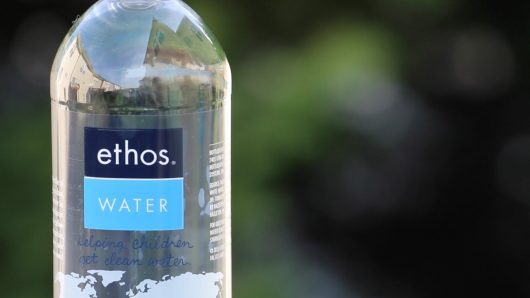
Ethos WaterWith more than 1 billion people around the world lacking access to safe drinking water,  Ethos Water founder Peter Thum is using proceeds from his bottled water sales to provide clean water to areas in need.
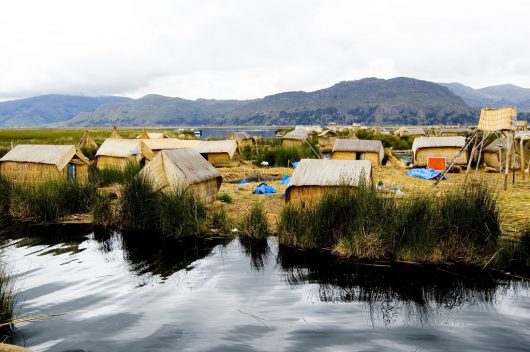
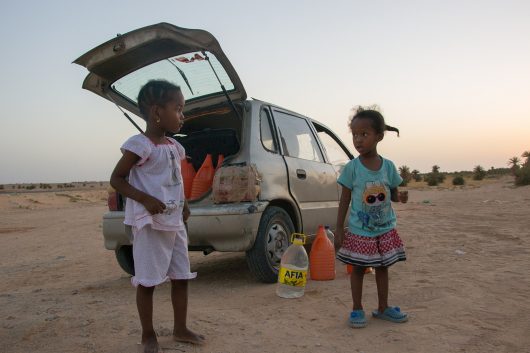
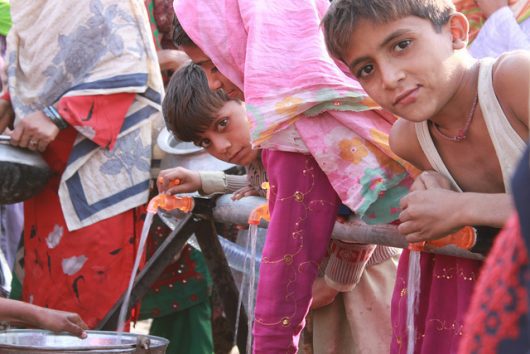
Ethos Water began in 2001 with the goal of helping children get clean water. Thum, the man behind the mission, founded the company after a business trip to South Africa where he saw the lack of clean water in many communities. Thum became consumed by the idea of creating a bottled water company that gave back to those in need of clean water; he then quit his job to pursue his plan.

Thum’s old classmate, Jonathan Greenblatt joined Thum in late 2002 to help create Ethos. Together they launched their bottled water company in August of 2003 and formed an organization called Ethos Water Fund to invest funds from their business into safe water programs.

With every bottle that gets sold, Ethos donates five cents (ten cents in Canada) to the Ethos Water Fund, in order to give clean drinking water to those who need it. Not only does Ethos donate money for clean drinking water, but it also raises awareness about the lack of clean drinking water in other countries.

In 2005 Ethos partnered with Starbucks in hopes to sell more water. Currently, a little over $12.3 million has been raised to give clean water to individuals who otherwise would not have it, according to Starbucks. That money will help over 500,000 people around the world.

In 2008 Ethos Water Fund and Starbucks Foundation decided to give two NGOs, CARE and Project Concern International, each $1 million over the period of three years from the Ethos Water Fund. These NGOs used that money to help support water, sanitation and hygiene education programs in water-stressed African communities, according to Starbucks. Collectively the expected benefits were estimated to help 54,000 people get access to clean water that previously did not have access.

CARE and Project Concern International were chosen to obtain these grants due to their emphasis on sustainability. Also, due to their agreement to not only provide access to clean water for villages but also to empower local residents to become part of the long-term solution.

CARE introduced sanitation and hygiene practices in Rwanda’s Musanze District while Project Concern International decided to focus their efforts on implementing low-cost, easy-to-maintain technologies in Tanzania’s Babati District.

These NGO’s were only able to do these fantastic acts of service through Ethos Water Fund. Howard Schultz, CEO, president and chairman of Starbucks, said “When our customers choose to buy Ethos water, they’re improving the lives of people who lack vital resources.”

In 2014 grants were made out to six NGOs in Tanzania ($750,000), Indonesia ($750,000), Colombia ($1.1 million), Guatemala ($480,000) and Nicaragua ($300,000). These grants have helped these countries gain clean water access and sanitation and hygiene education programs.

The effect Ethos water has had around the world is incredible, one single man’s idea which ended up helping thousands.

– Bella Chaffey

Photo: YouTube

October 6, 2016
https://borgenproject.org/wp-content/uploads/borgen-project-logo.svg 0 0 Borgen Project https://borgenproject.org/wp-content/uploads/borgen-project-logo.svg Borgen Project2016-10-06 01:30:432024-12-13 17:55:35Clean Drinking Water For All: Ethos Water
Development, Global Poverty, Water

Five Things to Know About Water Quality in Peru

Water Quality in Peru
Water quality in Peru is a major problem. According to water.org, four million Peruvians don’t have access to clean water. Tap water in Peru must be boiled for at least one minute or purified using other methods to be safe for drinking.

According to Scientific American, as water shortages cause crop failure, people in rural Peru move to the cities. Unemployment and poverty in these urban areas lead to problems involving mental health, alcoholism and domestic violence.

Modern technology is providing new sources of water in Peru, and efforts are being made to improve Peru’s water quality.

Water-Producing Billboard

The University of Engineering and Technology of Peru teamed up with an ad agency to construct a water-producing billboard in Lima. The billboard uses reverse osmosis to capture and filter water from the humid air, store it in 20-liter tanks and provide quality water for the people of Lima every day. In a three month period, the billboard dispensed 9,450 liters of water. This groundbreaking tool may be the first of many to come.

President Kuczynski’s Campaign

Newly elected president of Peru Pedro Pablo Kuczynski has announced a focus on improving health services and water quality in Peru. Kuczynski participated in the Hydroperu 2030 forum in August, in which innovative proposals aimed at establishing a clean water supply were presented.

Water for People-Peru

Water for People-Peru partners with local governments to collect data on water quality in Peru, hire officials committed to water sanitation and create effective improvement strategies. It also builds quality water facilities and has designed and implemented a water education curriculum in six schools.

Sanitation Sector Reform Law

Peru’s Sanitation Sector Reform Law now requires water utilities to conserve watersheds and consider climate change adaptations throughout their operations. This law may initially present some challenges, but in the long run, it may help create a more sustainable water supply.

Lima Water Fund

The Nature Conservancy has partnered with five other organizations to develop the Lima Water Fund. The fund’s focus is environmental conservation through the stabilization of existing slopes and lagoons and the reforestation of watersheds. This committee is working to provide water solutions now and protect the future through education and government partnership.

Government officials and aid organizations will continue to work together to improve water quality in Peru and design creative innovations, building stability for Peru’s future.

– Rebecca Causey

Photo: Flickr

October 6, 2016
https://borgenproject.org/wp-content/uploads/borgen-project-logo.svg 0 0 Borgen Project https://borgenproject.org/wp-content/uploads/borgen-project-logo.svg Borgen Project2016-10-06 01:30:122024-05-27 23:53:18Five Things to Know About Water Quality in Peru
Water

The Fight to Maximize Limited Water Supplies in Algeria

Water supplies
Algeria, a country on the northern edge of Africa, has an arid and semi-arid climate with less than 300 cubic meters of water available per capita each year. This amount is well below the U.N.’s water poverty threshold, making Algeria a severely water-scarce country. Water supplies are few and far between, and the continuous water overexploitation worsens the country’s water situation — naturally available water resources are degrading drastically and quickly.

Algiers hopes to employ high-cost technological solutions to support the growing population and maximize limited water supplies, but procuring funding will be a challenge.

A water quality monitoring system has already been established in Algeria to monitor its surface water. The system is comprised of 100 stations that cover major watercourses and dams. The country’s groundwater is also tested every three months.

Despite this, most of the water resources in Algeria remain polluted due to a lack of working wastewater treatment plants, as well as untreated industrial waste which is illegally discharged into natural water bodies. This misuse of water and water treatment creates even more sanitation and health issues for the Algerian people.

Anticipated climate changes, with rising temperatures and less rain, will also impact the scarcity of water in Algeria. These factors, along with a growing population which is using more water than ever before, has put an even greater strain on the country’s water resources.

Algiers, the capital city of Algeria, has developed a water management strategy that focuses on maximizing the country’s limited water supplies through redistribution, increased water storage capacity and enhanced desalination capacity.

This plan will require mobilization of resources, restoration of existing infrastructure, institutional reforms and a large amount of funding. Investments from both the government and private institutions, as well as additional planning, will be necessary to keep Algeria’s already limited water supplies from declining even more.

– Alice Gottesman

Photo: Flickr

October 3, 2016
https://borgenproject.org/wp-content/uploads/borgen-project-logo.svg 0 0 Borgen Project https://borgenproject.org/wp-content/uploads/borgen-project-logo.svg Borgen Project2016-10-03 01:30:192020-06-05 12:18:00The Fight to Maximize Limited Water Supplies in Algeria
Sanitation, Water

WaterAid: Improving Water Quality in Pakistan

WaterAid
Safe water is essential to the survival of people across the world. Clean water is crucial — not only for drinking but cooking, washing and bathing as well. For these reasons, it is particularly essential for developing countries to have access to clean water.

Pakistan is a developing country with a population of more than 188 million people. Water quality in Pakistan is ranked 80 out of 122 nations. Nearly 16 million people in Pakistan do not have access to clean water and 68 million do not have access to adequate sanitation services.

The Pakistan Council of Research in Water Resources published its final report in 2007 on national water quality in Pakistan. The study examined the condition of 357 water samples from 23 major cities and 22 bodies of water. Water samples in every major city evaluated were declared unsafe.

Drinking contaminated water can result in numerous diseases including diarrhea, bacterial dysentery, cholera and typhoid. According to the World Health Organization (WHO), between 25 and 30 percent of all hospital admissions in Pakistan are related to waterborne bacteria and parasitic conditions.

It is estimated that 250,000 Pakistani children under the age of five die every year due to waterborne diseases. Diarrhea is the second highest cause of death among children ages 1 month to 5 years.

Poor water quality in Pakistan is primarily due to population growth, urbanization and political instability. Due to these challenges, Pakistan has experienced critical water shortages, droughts and flooding which have been steadily decreasing agricultural production.

However, international non-profit organizations like WaterAid are working to transform the lives of Pakistanis by providing them with access to safe water, sanitation and hygiene. Water quality in Pakistan has improved greatly within the past 10 years of WaterAid’s involvement in the country.

A few of the WaterAid projects in Pakistan include:

  • Improving WASH services in schools
  • Rainwater harvesting
  • Water services for poor urban communities
  • Improving urban sanitation

Between 2015 and 2016 alone, WaterAid reached 230,000 people in Pakistan with safe water and over 520,000 people with improved sanitation. According to the World Bank, the population of rural Pakistanis with access to improved water sources has increased to 90 percent.

Water quality in Pakistan is improving due to the efforts of organizations like WaterAid. WaterAid’s focus on innovative approaches, water monitoring and sustainability has saved the lives of thousands of Pakistanis.

– Kristyn Rohrer

Photo: Flickr

September 13, 2016
https://borgenproject.org/wp-content/uploads/borgen-project-logo.svg 0 0 Borgen Project https://borgenproject.org/wp-content/uploads/borgen-project-logo.svg Borgen Project2016-09-13 01:30:302024-05-27 09:34:54WaterAid: Improving Water Quality in Pakistan
Global Poverty, Water

Five Strategies to Combat Water Shortages in Pakistan

Water shortages in Pakistan

Pakistan faces an impending water shortage, due to the combination of declining rainfall and groundwater with a growing population. The Pakistan Council of Research in Water Resources (PCRWR) ominously estimates that the supply of water in Pakistan could be critically low by 2025.

WaterAid reports that 16 million people do not have access to clean water. As a result, people are drinking from unsafe and unreliable sources. Urbanization means more concrete and less water seeping back into aquifers. Fortunately, many strategies are being mobilized to treat water shortages in Pakistan before conditions become critical.

Access to Sanitation

Many people in Pakistan do not have access to safe water. WaterAid was incredibly concerned by the high numbers of people without access to proper sanitation. Methods over the past decade emphasize political pressure, education and community projects that all focus on sanitation. WaterAid supplied 229,982 people with safe water in the last year.

Additionally, the Pakistan Water Forum built washrooms in schools to ensure that kids have access to clean drinking and washing services.

Rainwater Accumulation

Poor storage solutions fail to capture 70% of Pakistan’s rain. WaterAid and the Pakistan Water Partnership are helping communities build containers for rainwater collection.

Irrigation Systems

The Punjab Irrigated Agriculture Productivity Improvement Program Project (PIAPIPP) is building better irrigation systems to move water in Pakistan. New systems like drip, bubbler and sprinklers are far more efficient than canal irrigation. PIAPIPP provides support, supervision and education in the areas receiving these systems.

Education

The Pakistan Water Forum is distributing teaching materials created by Project Wet to 10 governmental schools. The project provides free lessons on the water cycle and the importance of conservation and sanitation. After floods, Pakistan Water Forum and the Salvation Army hold community meetings to ensure that residents are aware that floodwater is contaminated.

Water ATMs

The Punjab province is implementing water ATMs that provide water when a card is scanned. This invention, which was created by Punjab Saaf Pani Company (Clean Water Co.) and Poverty Alleviation Lab (IPAL), will provide quality water while tracking the quantity used.

Solar-powered machines will be attached to the filtration plants and provide a maximum of 30 liters a day per family. This new distribution technique is a refreshing change, as only 13% in rural and 42% in urban Punjab province have access to clean water.

The drought is problematic, but its potential dangers are being actively addressed. The broad range of strategies to conserve and distribute water demonstrates how the threat of water shortages in Pakistan can be lessened by preventative action.

– Jeanette I. Burke

Photo: Flickr

September 7, 2016
https://borgenproject.org/wp-content/uploads/borgen-project-logo.svg 0 0 Borgen Project https://borgenproject.org/wp-content/uploads/borgen-project-logo.svg Borgen Project2016-09-07 01:30:452020-06-16 12:39:53Five Strategies to Combat Water Shortages in Pakistan
Page 42 of 57«‹4041424344›»

Get Smarter

  • Global Poverty 101
  • Global Poverty… The Good News
  • Global Poverty & U.S. Jobs
  • Global Poverty and National Security
  • Innovative Solutions to Poverty
  • Global Poverty & Aid FAQ’s
Search Search

Take Action

  • Call Congress
  • Email Congress
  • Donate
  • 30 Ways to Help
  • Volunteer Ops
  • Internships
  • Courses & Certificates
  • The Podcast
Borgen Project

“The Borgen Project is an incredible nonprofit organization that is addressing poverty and hunger and working towards ending them.”

-The Huffington Post

Inside The Borgen Project

  • Contact
  • About
  • Financials
  • President
  • Board of Directors
  • Board of Advisors

International Links

  • UK Email Parliament
  • UK Donate
  • Canada Email Parliament

Get Smarter

  • Global Poverty 101
  • Global Poverty… The Good News
  • Global Poverty & U.S. Jobs
  • Global Poverty and National Security
  • Innovative Solutions to Poverty
  • Global Poverty & Aid FAQ’s

Ways to Help

  • Call Congress
  • Email Congress
  • Donate
  • 30 Ways to Help
  • Volunteer Ops
  • Internships
  • Courses & Certificates
  • The Podcast
Scroll to top Scroll to top Scroll to top