• Link to X
  • Link to Facebook
  • Link to Instagram
  • Link to TikTok
  • Link to Youtube
  • About
    • About Us
      • President
      • Board of Directors
      • Board of Advisors
      • Financials
      • Our Methodology
      • Success Tracker
      • Contact
  • Act Now
    • 30 Ways to Help
      • Email Congress
      • Call Congress
      • Volunteer
      • Courses & Certificates
      • Be a Donor
    • Internships
      • In-Office Internships
      • Remote Internships
    • Legislation
      • Politics 101
  • The Blog
  • The Podcast
  • Magazine
  • Donate
  • Click to open the search input field Click to open the search input field Search
  • Menu Menu

Archive for category: Water

Global Poverty, Health, Water

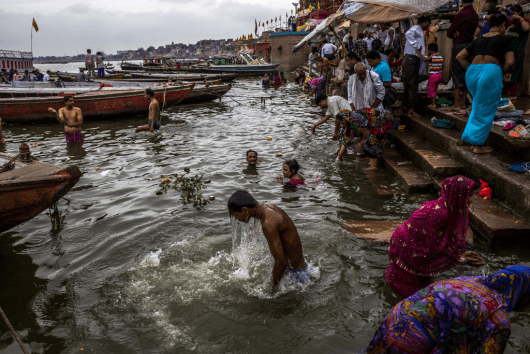
Improving Water Quality in Haiti Benefits Thousands

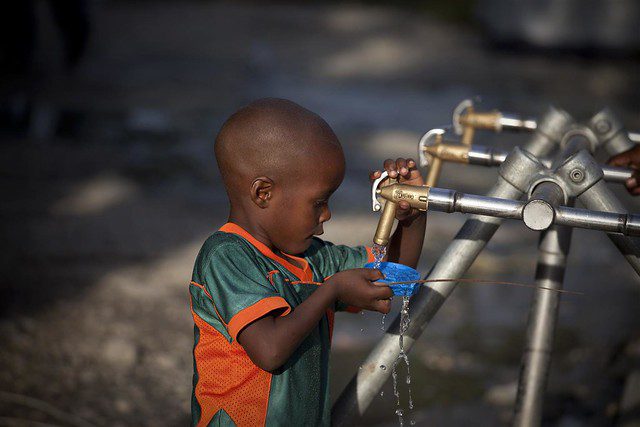
Water Quality in HaitiThe water quality in Haiti is in desperate need of improvement. The World Bank hopes to increase access to clean water because “[it] not only saves lives, but [it] also [helps] reduce poverty and improve the livelihood opportunities of these communities,”  reports Mary Barton-Dock of the World Bank Special Envoy.

The lack of proper sanitation and unsafe water quality in Haiti fosters the spread of disease. For example, a cholera epidemic ensued after the 2010 earthquake in Haiti, and 8,700 lives have been lost since. Although diagnosed cases of cholera have decreased, heavy rains in the early months of 2015 brought a surge of new cases.

Stand pipes or water points with hand pumps are the main systems used for water transportation in Haiti. Due to lack of funding, many of these water systems are no longer in service. Thankfully, the World Bank found a way to improve the situation by funding a program located in the southern region of Haiti. This global organization built professional operators whose main purpose is to maintain many of the water supply systems.

Over 60,000 people have benefited from these system improvements. The program also helped train community health workers and medical personnel, as well as strengthening the country by making it more self-sustaining.

The Board of Directors of the World Bank also authorized a $50 million grant from the International Development Association (IDA). “The Sustainable Rural and Small Towns Water and Sanitation project aims to save lives by preventing cholera and waterborne diseases in high prevalence zones, and strengthen the capacity of local agencies to deliver water and sanitation services in rural areas and small towns.” This grant will help nearly 300,000 people gain access to potable water and proper sanitation.

This project will also be linked to a ten-year, government-supported Cholera Elimination Plan. This long-term plan will save thousands of Haitian kids from waterborne, disease-related deaths. Benito Dumay, the Director General of the National Water and Sanitation Directorate, understands how essential healthy water quality is for Haiti, and is determined for the project to succeed.

Water is a catalyst for life, and now thousands of Haitians will be able to access this life-saving liquid for the first time. The World Bank reached out to the U.N., the U.N.’s development partners and the Haitian Government to collectively discuss the financing gap and what they learned about fighting cholera.

The Borgen Project has also done a great deal of work at the political level when it comes to advocating for clean water and sanitation. This nonprofit helped build support for the Water for the World Act. The organization also met with hundreds of Congressional offices, equating to 410 meetings, to discuss activism regarding water-quality programs.

Between 2009 and 2014, The Borgen Project helped mobilize thousands of Americans to email and call their congressional leaders in support of the Water for the World legislation. The bill was passed in December 2014, and millions of people gained first-time access to potable water and appropriate sanitation.

As numerous organizations fight the battle for water quality in Haiti and around the world, their tremendous progress makes the future of water quality that much clearer.

– Terry J. Halloran

Photo: Flickr
September 3, 2016
https://borgenproject.org/wp-content/uploads/borgen-project-logo.svg 0 0 Borgen Project https://borgenproject.org/wp-content/uploads/borgen-project-logo.svg Borgen Project2016-09-03 01:30:542020-06-17 17:15:18Improving Water Quality in Haiti Benefits Thousands
Global Poverty, Water

Water Quality in Palestine: Gaza in Crisis

Water Quality in Palestine

Gaza is one of the most densely populated urban areas in the world, with 1.8 million people confined in a 140-mile radius. The only water resource, the Coastal Aquifer, is insufficient for the needs of the population. Water access and water quality in Palestine leaves a lot to be desired.

The World Bank reported on the poor water quality in Palestine, as well as the lack of access to sanitation services that reached crisis proportions. Due to said conditions, Palestinians in Gaza are forced to over-extract water from the Coastal Aquifer in order to stay alive. They obtain water at a rate equivalent to twice the aquifer’s yearly sustainable yield, causing the water to become contaminated.

In 2008, WHO estimated that 26% of diseases in Gaza were water-related, a statistic that could be higher now that 90-95% of Gaza water is polluted and unfit for human consumption. Due to the contamination, high levels of nitrite were found in the groundwater at levels far above the WHO accepted guideline of 50mg per liter. Such dispersion has increased cases of methemoglobinemia, a blood disorder that impedes the flow of oxygen in young infants.

Why Palestinians in Gaza Lack Water Facilities

The water quality in Palestine remains unsanitary due to Israel’s blockade of Gaza, and military operations hinder the possibility of Palestinians restoring their water facilities. Wells, cisterns and roof water tanks have been destroyed and damaged, most notably during the Israeli attacks in 2008 and 2014.

During the 2008 Operation ‘Cast Lead,’ Israel caused U.S. $6 million worth of damage to Gaza’s water supply and wastewater facilities. In 2014 the Israeli attack on Gaza resulted in heavy destruction of infrastructure; the total damage was estimated to be $4.4 billion and included water and sanitation facilities.

The loss of water facilities has had a lasting impact on the Palestinians in Gaza. The continued blockade by Israeli security forces prevents the import of equipment and spare parts needed to repair and improve the water supply and sanitation systems. Even simple sanitation items such as chlorine are not permitted.

Furthermore, water main and sewage conduits are routinely crushed by Israeli tanks and armored vehicles. Water tanks are also shot at and damaged by Israeli soldiers.

Addressing the Issue Through the BDS Movement

In 2007 Palestinians founded “Lifesource,” a collective working at the grassroots level to organize for water justice.

The mission of Lifesource is to:

  1. Educate Palestinians about their water rights and enable communities to take an active role in improving the situation.
  2. Promote and utilize nonviolent popular resistance tactics for the human rights to water and sanitation.
  3. Connect popular movements locally and globally to support Palestinian water rights.

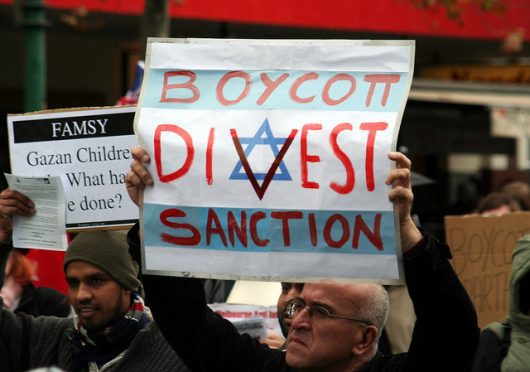
In 2009 “Lifesource” partnered with the global campaign Boycott, Divestment and Sanctions (BDS).

Lifesource led a program called “BDS for Palestinian Water Justice,” supporting boycott divestment and eschewing sanctions that infringe on Palestinians right to water and sanitation. The BDS Movement works to increase economic and political pressure on Israel to end the occupation and colonization of Palestinian land. By organizing demonstrations that target companies that have contracts with Israel, companies are pressured to break ties with Israel, thus deterring the country from continuing to occupy Palestine. Their work led to some success: water companies profiteering from human rights violations, such as Eden Springs and Veolia, lost important contracts and had to downsize or close their doors.

Although Lifesource came to an end in 2012, the BDS movement is still up and running, giving Palestinians in Gaza hope that their basic human needs will continue to be addressed.

– Marcelo Guadiana

Photo: Flickr

August 28, 2016
https://borgenproject.org/wp-content/uploads/borgen-project-logo.svg 0 0 Borgen Project https://borgenproject.org/wp-content/uploads/borgen-project-logo.svg Borgen Project2016-08-28 01:30:432024-12-13 17:55:39Water Quality in Palestine: Gaza in Crisis
Water

Rulindo Challenge to Improve Water Quality in Rwanda District

Rulindo ChallengeThe Rulindo Challenge is an initiative developed in 2010 by the partnership of the non-governmental organization (NGO) Water For People and the Rwandan government. The Challenge acts as a permanent solution to provide full water access to the northern, rural Rwandan province of Rulindo by 2018.
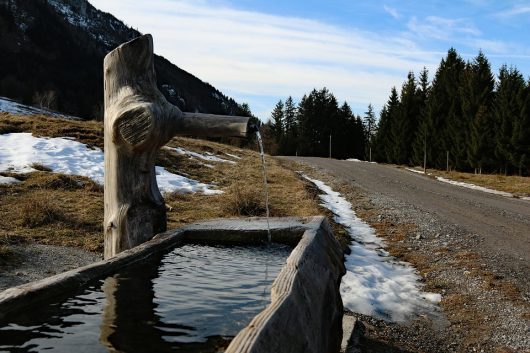
Approximately 285,000 people reside in the Rulindo District. The terrain of the area is mostly hills and valleys, so springs and groundwater make up the main sources of water in Rulindo.

According to a report by Water For People, prior to the Rulindo Challenge the area lacked proper standards in terms of the water quality in Rwanda. Only 29% of the population had access to safe drinking water and just six percent of water systems were likely to provide sustainable water service.

Goals of the Rulindo Challenge

Rulindo’s 2016 goals include increasing the levels of water access by 11% through sustainable water infrastructure, such as installing eight piped water systems in five areas and water tanks in 13 schools. A new health care facility was also constructed as a result of the goals.

The Rulindo Challenge also seeks to increase the newly established water infrastructure’s sustainability to 100% at the end of 2016, building the technical and financial capacity needed for two private operators and the district water board members and staff. To implement these goals, the progressive partnership has developed a systematic approach in order to meet district-wide demands for clean water and sanitation. The joint partners set out to achieve sustainability challenges to meet current local capacity and strength, leveraging locally available resources and striving to serve as a model for replication.

What Has it Already Accomplished?

According to a report by Water For People, “community water service has increased 20 percentage points to 49 percent in the district as a result of these activities.” The water and sanitation at schools and clinics also increased drastically to 67% in the Rulindo District.

Currently, nearly 118,000 community water beneficiaries, 114 connections at 68 public institution water systems and over 51,500 public water beneficiaries have been created since the beginning of the Rulindo Challenge to improve water quality in Rwanda.

The initiative resulted in improved access to water supply for 60,000 people. In addition, the quality of the water mechanisms is expected to last well into the future. Sustainability measures in 2012 recorded just six percent prior to the Rulindo Challenge.

The increase in sustainability to 89% resulted in an 83-point percentage overall improvement. Due to the increased sustainability in the district, the implementation of the strategies and approaches shows that communities and public institutions will have safe, reliable access to drinking water for many years to come.

When the Rulindo Challenge concludes in 2018, the partners will implement a thorough exit strategy to ensure that the maintenance and protection of the water resources remain intact. In addition, the partners will implement a plan for climate change resilience to promote sustainability and access to adequate water sources for generations to come.

– Haylee Gardner

Photo: Flickr

August 28, 2016
https://borgenproject.org/wp-content/uploads/borgen-project-logo.svg 0 0 Borgen Project https://borgenproject.org/wp-content/uploads/borgen-project-logo.svg Borgen Project2016-08-28 01:30:202020-06-17 20:16:15Rulindo Challenge to Improve Water Quality in Rwanda District
Global Poverty, Water

Water Quality in China: The Danger Beneath the Surface

Water quality in china

From a poverty alleviation perspective, the rapid growth of the Chinese economy over the last several decades is an unprecedented success story. In 1984, the rate of extreme poverty in China was 84 percent, but by 2010 that number had fallen to 12 percent. At the same time, the rapid industrialization that has driven this growth has produced its own negative effects. Some of these effects are visible on an everyday basis, while others, like the poor water quality in China, are less obvious.

Under the Fog

Air quality is the face of China’s struggle with pollution. Images of China’s capital, Beijing, choked by smog have resonated with environmental movements around the world. While water quality in China may not have made as many headlines, it has come under severe strain as well. According to new statistics by the Chinese media, underground water pollution has become a full-on crisis, with 80 percent of the water samples taken from a wide range of wells across northern and central China being unsafe.

Across the North China Plain, which has been hit hard by deforestation and desertification over the last several decades, groundwater is a key water source for both rural and urban areas. Northern China is also the site of the vast majority of China’s coal reserves, a major problem as coal mining is highly damaging to groundwater, unless mitigating measures are taken.

However, cheap supplies of coal are so central to China’s model of economic growth that, thus far, these measures have not been taken, leading to a steady deterioration of water quality in China. According to official statistics, every metric ton of coal mined leads to 1 cubic meter to 2.5 cubic meters of groundwater being destroyed. That number is sobering, considering that in 2015, 3.65 billion metric tons of coal were mined in China.

Hope for Improvement

That same year, The State Council of the People’s Republic of China, the nation’s highest administrative body, issued the “Water Ten Plan.” This ambitious plan laid out a series of steps to improve water quality in China. It includes both broad goals and specific measures for improving groundwater quality. The plan calls for the percentage of groundwater of “very bad” quality to fall to 15 percent by 2020, a target that should be achievable, given that as of 2014, 16.1 percent of groundwater fell into this category.

The Chinese government’s response targets industries that are seen as being major contributors to groundwater pollution, in particular, the coal mining industry. The plan calls for the effective handling of water used during the coal mining process.

It also addresses groundwater depletion, stemming from industrial use of water by declaring a moratorium on further extraction of groundwater from threatened areas. The textile, paper and dyeing industries, significant sources of harmful run-off, are another major target of the plan’s strict controls.

Equal Access to Clean Water

One key aspect of water quality in China is the rural-urban divide that permeates so much of Chinese society. Cities in China benefit from access to deeper underground reservoirs, while those living in rural areas extract shallower water that is more likely to be polluted. Thus, just as industrialization led to the gap in incomes between rural and urban markets, it has also meant that access to safe water supplies has become more bifurcated. Alleviating this divide is vital in the years ahead.

– Jonathan Hall-Eastman

Photo: Pixabay

August 9, 2016
https://borgenproject.org/wp-content/uploads/borgen-project-logo.svg 0 0 Borgen Project https://borgenproject.org/wp-content/uploads/borgen-project-logo.svg Borgen Project2016-08-09 01:30:062024-12-13 17:54:53Water Quality in China: The Danger Beneath the Surface
Activism, Development, Water

Orlando Bloom’s Dedication to Water Conservation

Orlando Bloom

Orlando Bloom has traveled to Nepal twice to learn about how UNICEF aids impoverished communities. He has become informed about the impact UNICEF has, whether it be educating people about water sanitation, providing vaccinations or providing safe homes for young girls.

Bloom and UNICEF

During a trip to Nepal in 2007, Orlando Bloom was made aware of the power and importance of spreading information. He learned about the process, supported by UNICEF, that young kids often use to create clean and sanitary water using UV rays from the sun. By filling a clear plastic water bottle to the top (leaving no air inside) and placing it at a 30-degree angle on a rooftop, the sun’s rays are able to kill any unsafe bacteria and germs.

In an interview, Bloom explains, “When the message is made clear to people, they can start to advance forward.”

By educating and spreading valuable information to kids on creating safe water, they are able to bring multiple bottles of clean water home to their families. He encourages people to spread valuable information that can help communities, as he has first-hand seen the benefits of this through UNICEF’s water sanitation programs.

Rita’s Story

Bloom’s trip to Nepal opened his eyes to how precious a resource water is. He was able to spend time with a 6 year old girl named Rita, who occupies half of her day collecting water.

She uses a water tank in a basket, which connected to a strap that goes over her head. He explains her journey, “She walks a few miles up and down a mountain to get to a well and collects water to bring back to her house. And the water she’s collecting from the well is not clean, it can make her sick.”

Bringing it Home

Now at home in the United States, Bloom is speaking out about the importance of conserving water. Inspired by his trip to Nepal, he explains that we cannot take our daily access to water for granted. He has instilled this mindset into his son, for example, by teaching him to turn off water while brushing his teeth.

Orlando Bloom has also visited places including Liberia, Jordan and Moscow to learn about the struggles families go through, to further raise awareness for other issues besides water conservation and sanitation.

– Casey Marx

Photo: Flickr

August 8, 2016
https://borgenproject.org/wp-content/uploads/borgen-project-logo.svg 0 0 Borgen Project https://borgenproject.org/wp-content/uploads/borgen-project-logo.svg Borgen Project2016-08-08 01:30:592024-12-13 17:54:55Orlando Bloom’s Dedication to Water Conservation
Development, Food & Hunger, Health, Water

Water Quality in Afghanistan

Water quality in Afghanistan pollution

Water is a basic necessity for all life–it must be safe and clean for use. For the people of Afghanistan, water that is safe and clean is especially hard to come by. Fortunately, poor water quality in Afghanistan is a problem that both a global organization and its Afghan partners are working to resolve.

After more than a decade of armed conflict and neglect, Afghanistan has a problem with getting sanitary water to its people. The country of 32.5 million people gets its water from rivers and underground supply, which is reliant on rainfall and snow.

In recent years, climate change has caused a reduction in precipitation, resulting in a drop in water levels of six meters.

Other major obstacles stand in the way of improving the water quality in Afghanistan. Not only is there less water, but the water that is available is contaminated. In most major cities, underground water supplies have been compromised, due to the lack of canalization, proper waste management and proper waste disposal.

In big cities, hospitals commonly bury their waste underground or leave it above ground. Medical waste can contain poisons and infectious inhabitants, seeping into the underground water supply over time.

However, change is underway to improve this dire situation.

The Improvement of Water Quality in Afghanistan

Domestically, the Afghan Urban Water Supply and Sewerage Corporation has been working for the last 30 years constructing 40,000 clean water posts, with access for one million people. But, the Afghanis cannot do it alone. Much work is still to be done to meet all water needs in Afghanistan.

External help is underway from GIZ, a German company that specializes in developing solutions to global problems. With the backing of the German Federal Ministry for Economic Cooperation and Development, GIZ is making great strides.

In collaboration with the Afghan Urban Water Supply and Sewerage Corporation, GIZ has developed and is implementing a massive plan to decentralize and overhaul the Afghani water infrastructure. They will work with and train Afghani workers to complete the project and independently maintain it, also creating a sanitation and management program for water in Afghanistan.

Between 2011 and 2013, GIZ trained around 2,000 employees from the institutions involved. As a result, they are now able to better perform the work necessary improve water quality in Afghanistan.

Now that the workforce has been trained, substantial progress is being seen.

From 2007 to 2013, the number of households with a newly connected water supply in Kunduz, a major city in northeastern Afghanistan, rose from 370 to 7,700. This represents about 75 percent of Kunduz’s population. Kunduz is only one example of a trend spreading around the country.

Currently, newly constructed water infrastructure is not only becoming self-sufficient, but also now has the ability to self-fund more growth. In 2012, the Afghani government introduced a water tariff, which significantly increased the income of the water infrastructure. In some cities, Afghanis are willing and able to pay for their new access to clean water.

Since then, in the major cities of Kabul, Harat and Kunduz, the proportion of water that is paid for has risen greatly. As a result, the cities of Herat, Kunduz and Mazar-e Sharif have built and are operating six new wastewater plants. Big change is taking place for the better.

Not long ago, the majority of Afghanis were desperate for clean water. Today, with the help and intervention of Germany, the major components that led to the water problem in Afghanistan are on the way to being improved. The work being done is changing lives, communities and cities across Afghanistan.

– Steven Jenkins

Photo: Flickr

August 6, 2016
https://borgenproject.org/wp-content/uploads/borgen-project-logo.svg 0 0 Borgen Project https://borgenproject.org/wp-content/uploads/borgen-project-logo.svg Borgen Project2016-08-06 01:30:112024-12-13 17:54:54Water Quality in Afghanistan
Health, Water

Japan Working to Improve Water Quality in South Sudan

Water quality in South Sudan

Water quality in South Sudan and clean water access has been a problem for a long time. However, Japan is trying to help with the Project for Improvement of Water Supply System in Juba.

Since 2012, Japan has been contributing money to the Republic of South Sudan—$310 million—in order to promote the development of a clean water supply.

Valentino Achak Deng’s Story

Valentino Achak Deng, subject of  the 2007 novel “What Is the What,” describes his childhood in the Republic of South Sudan. His story evokes empathy and increases awareness of the country’s living conditions.

Here is an example:

“I […] immerse my jerry can in the milky brown water. I fill the container, but am not satisfied with the amount of sediment inside.”

Previously, Deng used to run to the river without a thought in order to fetch water for a woman he liked. The passage went on to describe Deng filtering the water through his shirt into a bowl. This process was normal for Deng—there was no question that the water he drank would come from the river.

The Water Situation Today

The water situation in Sudan has not changed since Deng’s childhood. South Sudan’s 2010 Household Health Survey (SHS) found that only about 5.6 percent of households in have access to improved water sources and sanitation.

In Juba, the capital of the Republic of South Sudan, 13 percent of its residents can access municipal water. This water comes through either a small piped network, boreholes or a single public water filling station on the riverbank. Without clean water access, many of the Sudanese people end up fetching water from rivers, ponds and open wells.

Fetching water is the norm in the Republic of South Sudan—a behavior that must be broken. Otherwise, the population of the Republic of South Sudan will continue to catch water-borne diseases such as cholera and diarrhea. In addition, women and children will continue to lose time for employment and education opportunities.

Individuals used this contaminated water for drinking, food preparation and hygiene. As a result, the SHS found that poor water quality in South Sudan contributed to about 88 percent of deaths from diarrhea.

Japanese Assistance

Fixing this problem will require considerable funds. To address the cost increase, the Japanese government allocated an additional $40 million toward the project. With this, they intend on keeping the original project scale.

Through this project, Japan aims to provide easily accessible clean water to 60 percent of Juba’s population. An estimated 390,000 Juba residents will have clean water access by the end of September 2017.

Japan also encourages the women and children of Juba to spend more time on their personal and professional development rather than collecting water for their families.

However, because fetching water from rivers has been the norm in Sudanese behavior, community engagement is vital in this process. This improvement in water quality in South Sudan is vital, and it will vastly improve the lives of Sudanese citizens.

– Alice Gottesman

Photo: Flickr

August 4, 2016
https://borgenproject.org/wp-content/uploads/borgen-project-logo.svg 0 0 Borgen Project https://borgenproject.org/wp-content/uploads/borgen-project-logo.svg Borgen Project2016-08-04 01:30:212024-12-13 17:54:38Japan Working to Improve Water Quality in South Sudan
Global Poverty, Water

Rainwater Harvesting Systems: Water Insecurity in Kenya

Rainwater Harvesting Systems
With a rapidly growing population and unpredictable climate, the citizens of Kenya find themselves in an increasingly dire situation of water insecurity. However, a few recent innovations using rainwater harvesting systems are taking key steps towards changing that and eliminating water insecurity in Kenya.

In a population of 46 million people, nearly 50% live below the poverty line. To make matters worse, an extreme weather climate means that the country at times enjoys plentiful rain and an abundant water supply, while at other times drought leaves much of the country with little water.

The resultant water insecurity in Kenya means that many — particularly women and children — spend as much as one-third of their day walking to get water. In times of extreme drought, citizens can be forced to walk more than nine miles in search of fresh water.

Several non-governmental organizations in Kenya and abroad are currently working hard to end this trend and create innovations to combat water insecurity in Kenya.

The Africa Sand Dam Foundation, along with several other organizations, have begun partnering with communities to build rock catchment systems that can be used as effective rainwater harvesting systems during Kenya’s wet seasons.

The system uses naturally occurring rock outcroppings to divert the rainwater into a large collection tank where it can be saved and stored for later use. Using the new system allows villages to collect upwards of 90% of the total rainwater in the area and because it uses no chemicals or fuels, the system has very little environmental impact.

Experts who’ve developed the infrastructure work closely with local villagers to teach them how to build and maintain the system. Each village also has the opportunity to form a committee to oversee the construction and maintenance of the system, ensuring that it will be used properly and continue to be efficient long after the experts have left.

This new method has the potential to dramatically change the situation of water insecurity in Kenya since a consistent, reliable water source will allow citizens to be more productive and focus their energy on other areas instead of spending much of their day searching for water. Many schools have already seen benefits and many no longer have to ration water during lengthy dry seasons.

Since the rainwater is run through a filter embedded within the system, the number of waterborne diseases has also been dramatically reduced and places that have begun to use the system have already seen improvements to overall health.

Water insecurity in Kenya isn’t the only thing being improved by these new innovations either. The village committees that oversee the systems are also able to sell some of the excess water that is collected that they can then use to invest in other projects.

One village, for example, earned $160 from selling water that they used to purchase ten goats for the community. The goats can then generate their own income that results in a multiplying effect within the community. The end result is a drastic improvement to the overall health and welfare of the community and an avenue through which these communities can lift themselves out of poverty.

Water insecurity in Kenya is a significant, ongoing problem that for years has hindered growth in the country and left Kenya’s citizens at the mercy of the weather with few resources to combat their situation.

New rainwater harvesting systems currently being developed have the potential to reverse this problem and provide the people of Kenya with the help they need to make the necessary push towards development. The hope is that in time the entire country will have consistent access to clean water and the ability to thrive without development assistance.

– Sara Christensen

Photo: Flickr

August 1, 2016
https://borgenproject.org/wp-content/uploads/borgen-project-logo.svg 0 0 Borgen Project https://borgenproject.org/wp-content/uploads/borgen-project-logo.svg Borgen Project2016-08-01 01:30:572024-12-13 17:54:55Rainwater Harvesting Systems: Water Insecurity in Kenya
Water, Women

The Hippo Roller: A Water Collection Solution

Hippo Roller

Almost 1 billion people in Africa struggle for access to water. According to the Water Project, this is equal to one in eight of the world’s population. Water supplies are often many miles from the village. Women and children must travel to collect water and carry full buckets back home.

However, solutions like the Hippo Roller are helping revolutionize this process.

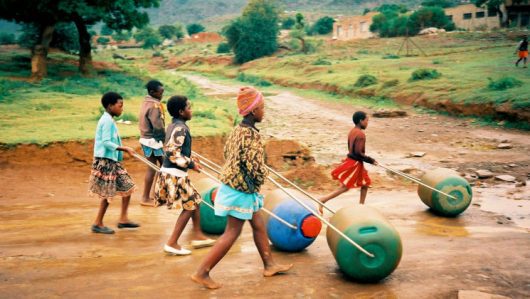
When water supply points are as far as 10 kilometers (6 miles) from home, water is often carried in 20-liter (5 gallons) buckets balanced on top of heads. The Hippo Roller is a simple solution that allows the people who collect water to collect up to five times more.

The Hippo Roller is a 90 liter (24 gallon) container that is rolled along the ground. The water collectors are usually elders, women and children. Instead of being carried on the head, as usual, the water is rolled–either pushed or pulled. This allows more people to access water, which improves food security and income generation.

Two South Africans, Pettie Petzer and Johan Jonker, invented the Hippo Roller in 1991. They both knew the water crisis’ effects on daily life. The Hippo Roller Project was established in 1994 with the mission of “helping communities to improve access to water–90 liters at a time.”

As of Sept. 2015, there had been 46,000 Hippo Rollers distributed in 20 countries. This has helped 300,000 people in families where the average size is seven. The ability to roll the water instead of carrying it reduces injuries and gives more time for school and other activities.

Grant Gibbs, Project Leader for Hippo Water Roller Project explains that women in rural Africa can spend up to 26 percent of their time collecting water. This automatically includes the children. When women can collect more water at a time, they can spend more of their day on other important tasks. When children are needed less to collect water, they can go to school.

The innovation of transporting more water more efficiently makes more “time available for education, household tasks and food production.” The design allows for hygienic collection and storage of water and even irrigation of crops.

– Rhonda Marrone

Photo: Hippo Roller

August 1, 2016
https://borgenproject.org/wp-content/uploads/borgen-project-logo.svg 0 0 Borgen Project https://borgenproject.org/wp-content/uploads/borgen-project-logo.svg Borgen Project2016-08-01 01:30:082024-12-13 17:54:44The Hippo Roller: A Water Collection Solution
Disease, Global Poverty, Water

Issues with Water Quality in India

Water quality in IndiaIndia may be reaching a crisis-level situation in regards to water quality and access. While India’s population continues to grow, access to water continues to dwindle. The country’s future may be greatly affected by the limited water for households and agriculture.

Over 20 percent of the country’s diseases can be traced back to the poor water quality in India. To make matters worse, less than 35 percent of the entire population of India has access to traditional sanitation, further exacerbating the spread of diseases in the country.

Most cities in India produce almost 40,000 million liters of sewage per day, the majority of which is dumped into rivers which feeds into groundwater that becomes used for agriculture or citizens’ homes. In fact, less than 20 percent of the sewage in India is properly treated.

There are almost 76 million people in India who are forced to spend 20 percent of their income on water, and often are forced to use the contaminated water instead, according to Water Aid. Although the groundwater in India is of poor quality, many rural residents have no choice but to use it for daily needs. However, the overall water availability in India is soon running dry.

The water crisis in India can partially be attributed to government corruption and lack of planning, as well as increased corporate privatization, which drives up the cost of clean water. If India is unable to control the water crisis, scarcity is predicted to significantly worsen by the year 2050 and become the main cause of political conflict.

Though many environmentalists are opposed, building dams in India could improve the issue with water quality and scarcity in India. Dams would collect water during the rainy season and provide during the dry season, but building storage dams would potentially submerge forests, disturb habitats, and displace tribal communities.

In order to improve water quality in India, the country needs to place more sewage treatment plants in more cities and towns. Overall, there are only 160 towns with sewage treatment plants out of the 8,000 towns total. As long as factories continue to dump untreated sewage into rivers that run into groundwater, the water quality in India has little chance of improvement.

– Amanda Panella

Photo: Global Moms Challenge

July 28, 2016
https://borgenproject.org/wp-content/uploads/borgen-project-logo.svg 0 0 Borgen Project https://borgenproject.org/wp-content/uploads/borgen-project-logo.svg Borgen Project2016-07-28 01:30:062024-05-27 09:34:05Issues with Water Quality in India
Page 43 of 57«‹4142434445›»

Get Smarter

  • Global Poverty 101
  • Global Poverty… The Good News
  • Global Poverty & U.S. Jobs
  • Global Poverty and National Security
  • Innovative Solutions to Poverty
  • Global Poverty & Aid FAQ’s
Search Search

Take Action

  • Call Congress
  • Email Congress
  • Donate
  • 30 Ways to Help
  • Volunteer Ops
  • Internships
  • Courses & Certificates
  • The Podcast
Borgen Project

“The Borgen Project is an incredible nonprofit organization that is addressing poverty and hunger and working towards ending them.”

-The Huffington Post

Inside The Borgen Project

  • Contact
  • About
  • Financials
  • President
  • Board of Directors
  • Board of Advisors

International Links

  • UK Email Parliament
  • UK Donate
  • Canada Email Parliament

Get Smarter

  • Global Poverty 101
  • Global Poverty… The Good News
  • Global Poverty & U.S. Jobs
  • Global Poverty and National Security
  • Innovative Solutions to Poverty
  • Global Poverty & Aid FAQ’s

Ways to Help

  • Call Congress
  • Email Congress
  • Donate
  • 30 Ways to Help
  • Volunteer Ops
  • Internships
  • Courses & Certificates
  • The Podcast
Scroll to top Scroll to top Scroll to top