• Link to X
  • Link to Facebook
  • Link to Instagram
  • Link to TikTok
  • Link to Youtube
  • About
    • About Us
      • President
      • Board of Directors
      • Board of Advisors
      • Financials
      • Our Methodology
      • Success Tracker
      • Contact
  • Act Now
    • 30 Ways to Help
      • Email Congress
      • Call Congress
      • Volunteer
      • Courses & Certificates
      • Be a Donor
    • Internships
      • In-Office Internships
      • Remote Internships
    • Legislation
      • Politics 101
  • The Blog
  • The Podcast
  • Magazine
  • Donate
  • Click to open the search input field Click to open the search input field Search
  • Menu Menu

Archive for category: Water

Global Poverty, Water

Jordan Examines Plan to Increase its Water Supply

Jordan Examines Plan to Increase its Water Supply
According to a recent report in Petra, the news agency of Jordan, a considerably large incursion of Syrian refugees has intensified Jordan’s already distressed water supply.

During a panel discussion between the U.N. and the World Bank on developing and managing water resources and improving water and sanitation related services, the Jordanian minister of Planning and International Cooperation, Imad Fakhoury, said the Kingdom’s demand for water has risen 25 percent in the last five years. He further stated that due to the massive influx of Syrian refugees, the country now hosts more than 1.3 million or 19 percent of the population.

Fakhoury also stated that water is a significant and unrelenting concern for Jordan because of the country’s critical water shortage. In terms of water supply, Jordan is considered one of the world’s most vulnerable. The World Health Organization (WHO), has asserted that water scarcity in Jordan will grow more daunting in the next two decades as its population of 6 million doubles and the effects of climate change produce increased precipitation uncertainty.

Currently, Jordan has one of the lowest concentrations of available water supply per capita. The minister emphasized the importance of “partnership between governments, the private sector, civil society, institutions and the U.N.” as pivotal to establishing a sustainable water and sanitation policies.

EcoMena, a consulting and environmental awareness raising organization, has said the Jordanian government seeks to begin a water supply management program that would impose regulation on water extracted from groundwater aquifers. Lack of rigorous legislation has led to illegal well-drilling and irresponsible use of water and untenable water extraction from aquifers. The natural water replacement procedure is being thwarted due to the aquifers being used at twice the allowable recharge rate.

The government is also discussing plans to renew old and rusted water pipes allocated to private homes. According to EcoMena, water leaks in the U.S. alone account for 1 trillion gallons of water wastage each year. Wastewater treatment plants that allow for the use of wastewater are also an important element in the government’s supply management program as it allows for supporting water supplies in addition to reducing dependence on natural water supplies which will give aquifers adequate time to recharge.

Fakhoury emphasized the importance of the international community’s support to assist Jordan with any financial variance brought on by the large inflow of Syrian refugees.

– Heidi Grossman

Photo: Flickr
November 12, 2016
https://borgenproject.org/wp-content/uploads/borgen-project-logo.svg 0 0 Borgen Project https://borgenproject.org/wp-content/uploads/borgen-project-logo.svg Borgen Project2016-11-12 01:30:002024-05-27 23:53:49Jordan Examines Plan to Increase its Water Supply
Global Poverty, Sanitation, Water

Sanitation and Water for All: A Global Partnership

Sanitation and Water for All: A Global Partnership
Access to clean water is a basic human right. Sanitation and Water for All (SWA) is a partnership made up of over 150 country governments, research and learning institutions, external support agencies and civil society and private sector organizations that aims to drive political action that will contribute to accountability and the effective use of resources.

The organization aims to universally and permanently provide safe water and sanitation services across the globe. By fighting for secure and equitable access to clean water, SWA is motivating governments to prioritize this issue and strengthening legislative presences relating to clean water and sanitation.

SWA recognizes the failings of the global community in providing the world’s people with adequate sanitation facilities and access to clean water as well as the implications of these failings. Approximately 2.4 billion people live today without access to quality sanitation means, and 663 million still lack improved water sources.

Both children and adults die every day from diseases caused by unsafe water or lack of appropriate sanitation and hygiene. These diseases strain already ineffective health systems in vulnerable communities and take away from economic productivity. When women and girls are required to walk dozens of miles each week to obtain clean water, they effectively miss out on educational opportunities or chances to become involved in civil society.

The SWA was initially founded with the purpose of addressing water-related millennium development goals and aiding countries that were struggling to reach these goals. Now the partnership focuses on the sustainable development goals (SGDs) related to the WASH sector and is committed to playing a crucial role in reaching SDG targets.

The SWA identifies and outlines the issues involved with the inability to address the WASH (water, sanitation and hygiene) sector of policy. Investment in WASH often competes with the financial need to support health, education, infrastructure and other aspects of society.

Another issue is that while many countries have decided upon comprehensive plans relating to water and sanitation, they often lack the capacity to implement these plans in an influential way. This inability to successfully put plans into action can defer investors and political leaders from further contributing to the WASH-related legislature. On the other hand, many countries still lack the information and aid to even construct a plan to protect and improve water, sanitation and hygiene.

Through the alignment of donors behind transparent and accountable means of national planning, the harmonization of countries and organizations, mutual accountability and management of results, the SWA hopes to continuously advocate both domestically and internationally for people who lack clean water or sanitation.

Sanitation and Water for All aims to “turn the current situation around by creating a virtuous cycle of robust planning, institutional strengthening, better resources utilization and higher investment” that has the likelihood of creating an environment where everyone has access to clean water and effective sanitation measures.

– Peyton Jacobsen

Photo: Flickr

November 11, 2016
https://borgenproject.org/wp-content/uploads/borgen-project-logo.svg 0 0 Borgen Project https://borgenproject.org/wp-content/uploads/borgen-project-logo.svg Borgen Project2016-11-11 01:30:212024-05-27 23:54:13Sanitation and Water for All: A Global Partnership
Global Poverty, Water

Two Innovative Solutions for Cleaner Water

Two Innovative Solutions for Cleaner Water
As recently as 2013, the United Nations reported that 783 million people across the planet do not have access to clean water and another 2.5 billion people have inadequate sanitation. With demand for food predicted to rise 50 percent by 2030, new and innovative solutions for cleaner water are needed more than ever.

One company actively researching solutions for cleaner water is the Austrian solar company, Pumpmakers. This company develops solar powered water pumps for use anywhere in the world via either the DIY Solar Pump or the larger scale PM Solar Pump System. This Solar Pump System has application beyond drinking water for families, enabling water access for agriculture, irrigation, livestock and fish farming.

The DIY pump is capable of pumping 18,000 liters of clean water per day, and the Solar Pump System delivers up to 50,000 liters per hour. Intentionally affordable and easy to use, these pump systems also require minimal maintenance.

The technology is utilized by countries such as Cameroon, where pumps supply the village of Ndoki with clean water for its 5,000 people.

Another, perhaps even more inventive solution for cleaner water comes in the form of the Waterseer pump, capable of cultivating water literally out of thin air.

The pump uses a wind turbine to draw air into the underground water chamber, where the change in temperature will cause condensation. The result is clean, safe water that uses a simple yet effective filtration system to keep foreign particles out of the water chamber.

The Waterseer pump is currently capable of producing 11 gallons of water each day and will continue to be optimized over time to increase clean water production for areas around the world.

UC Berkeley and the National Peace Corps Association have already teamed up with Waterseer to make an impact. Given that it is a non-profit group, 100 percent of all proceeds go to further developing the technology.

Access to clean water is a necessity for human life, so much so that in some water-scarce regions people are forced to give up six hours of their day to retrieve water that may be unsafe for consumption to survive. Continued research and support are instrumental in fighting the world’s water crisis and ensuring a better life for the entire planet.

– Aaron Walsh

Photo: Flickr

November 10, 2016
https://borgenproject.org/wp-content/uploads/borgen-project-logo.svg 0 0 Borgen Project https://borgenproject.org/wp-content/uploads/borgen-project-logo.svg Borgen Project2016-11-10 13:10:332024-12-13 17:56:03Two Innovative Solutions for Cleaner Water
United Nations, Water

Scientist Joan Rose: World Water Week’s Champion

Joan Rose: World Water Week's Champion
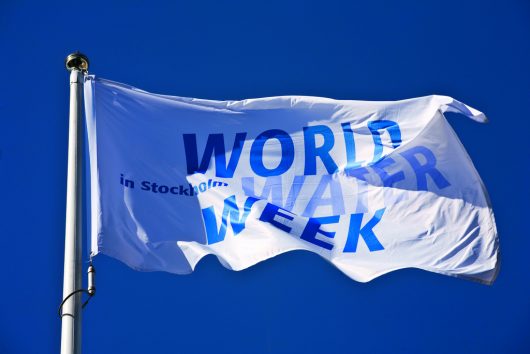
The 2016 World Water Week, attended by 3,100 people from more than 120 countries, was held in Stockholm, Sweden, where the theme was “Water for Sustainable Growth.” While this year’s World Water Week was primarily focused on water as it relates to the new Sustainable Development Goals (SDG) of the U.N. General Assembly and last year’s COP 21 climate agreement, many issues, such as pollution and sanitation, were raised.

The worldwide contamination of water is one of the greatest health threats of our time, as many experts believe that our oceans, rivers, lakes and wetlands are more polluted now than at any other time in history.

A recent report released by the United Nations Environment Program (UNEP) found that as many as 323 million people in Africa, Asia and Latin America are at risk of contracting infections from pathogen-ridden water. Apart from being a health issue, polluted water in these continents negatively affects food supplies, economies and inequality experienced by women, children and the poor.

Professor Joan Rose, a microbiologist and the Homer Nowlin Chair in Water Research at Michigan State University, is one of the foremost scientists working to end worldwide water pollution. At this year’s World Water Week, Rose won the 2016 Stockholm Water Prize, the greatest honor that an individual working in water research or development can receive.

Rose has dedicated most of her life to this field, working in countries such as Malawi, Kenya and Singapore, as well as numerous organizations including the World Health Organization, the International Water Association and the United Nations Educational, Scientific and Cultural Organization.

Throughout her career, Joan Rose has led research, set standards and educated the public about water pollution. While the issue may seem overwhelming, Rose believes that the future is bright, stating in an article published by the Guardian that, “There is more public support, more money, more political will to clean up water. We have more knowledge and more willingness to pay.”

– Liam Travers

Photo: Flickr

November 9, 2016
https://borgenproject.org/wp-content/uploads/borgen-project-logo.svg 0 0 Borgen Project https://borgenproject.org/wp-content/uploads/borgen-project-logo.svg Borgen Project2016-11-09 01:30:262024-12-13 17:55:47Scientist Joan Rose: World Water Week’s Champion
Global Poverty, Water

Improving the Water Quality in Djibouti

Improving the Water Quality in Djibouti
Water is a human necessity. The issue of water quality in the developing world is one that affects millions of people daily. More than half of the population of the developing world suffers from a water-related disease and about 6,000 children die from a water-related disease every day.

Djibouti, a small country off the eastern coast of Africa, is one of these developing countries. Currently, the country is experiencing a major national water crisis. Citizens in rural areas are the most affected: according to UNICEF, nearly 50% of people in rural communities do not have access to a safe water source.

Despite its coastal location, Djibouti is a country heavily affected by drought due to its arid climate. Most of the country’s water supply comes from groundwater resources, which have dwindled dramatically in recent years because of widespread drought.

Water quality in Djibouti is also a national problem. The little groundwater resources that are available are often of poor quality which has resulted in an epidemic of many waterborne illnesses.

The most high-risk water-related diseases in Djibouti are hepatitis A, hepatitis E and typhoid fever. These illnesses are contracted when people come into direct contact with water contaminated by fecal matter. Typhoid fever is the most deadly of the three, with a mortality rate of 20 percent.

Water conditions are slowly improving in the country thanks to efforts made by UNICEF, the European Union and Djibouti’s Ministry of Agriculture. This partnership, which began in 2007, has given more than 25,000 of the poorest people in rural communities access to clean water close to their homes.

The European Union has given UNICEF 2 million euros toward improving water sanitation in Djibouti. UNICEF also agreed to include an additional 60,000 euros to provide technical expertise.

More still needs to be done to improve the water quality in Djibouti. According to the Central Intelligence Agency (CIA), about 35% of the rural population has not received any improvements to their water supply.

Luckily, the Djibouti government has shown proactive concern in erasing the national water crisis. With help from UNICEF and the implementation of climate change policy in the country, Djibouti is looking toward a future of increased health and adaptability.

– Laura Cassin

Photo: Flickr

November 5, 2016
https://borgenproject.org/wp-content/uploads/borgen-project-logo.svg 0 0 Borgen Project https://borgenproject.org/wp-content/uploads/borgen-project-logo.svg Borgen Project2016-11-05 01:30:122024-05-27 23:54:07Improving the Water Quality in Djibouti
Disease, Global Poverty, Water

The Quality of Fiji’s Water is Misrepresented

The Quality of Fiji's Water is Misrepresented by its Bottled Ambassador
The quality of Fiji’s water is drastically decreasing with the relentless presence of rotting pipes, inadequate wells and improper water treatment plants becoming more frequent.

Climate change continues to cause droughts in Rakiraki, Fiji. Throughout history, half the country has needed emergency water supplies of at least four gallons a week per family. Dirty water has led to outbreaks of typhoid and parasitic infections.

Fijian hospital patients have reported fetching their own water, and children have found shells, leaves and frogs in their school’s pipes. People resorted to breaking into fire hydrants and manipulating water truck drivers just to get a regular supply, according to Mother Jones.

Children die from a waterborne disease every minute. There are 750 million people worldwide without access to clean water. In 2014, the Water Authority of Fiji gave its allegiance to the U.N.’s Millennium Development Goals, aiming to complete 60 percent of its protocol.

However, the quality of Fiji’s water is under scrutiny by international experts across the African Continent because they are below the average sanitation levels, even though the Fiji Water company claims it helped roughly 40,000 people get clean drinking water access. Warwick Pleass, the rotary pacific water chairman, tested the quality of Fiji’s water and found it is worse than Uganda in Africa.

Fiji Water, established in 1995, brought business to the impoverished country, but also benefits from tax exemptions. While co-founder David Gilmour stated in 2003 that he wanted Fiji Water “to become the biggest taxpayer in the country,” the tax break scheduled to end in 2008 has not yet expired.

When the Fijian government tried to impose a tax on the company in 2008, Fiji Water protested by temporarily shutting down the plant, describing the taxes as draconian. While the Fiji Water company is featured at the hands of celebrities and politicians in full-page ads, the country of Fiji is riddled with faulty water supplies and plagued by typhoid outbreaks.

Among the volcanic foothills with metal shacks and wooden homes, the Fiji Water factory is located in the Yagara Valley, immersed in cow pastures and swaying palm trees. Chickens roam through these vibrant houses and at the feet of market locals. A sweet smell of burning sugar cane fills the air, according to Mother Jones Reporter Anna Lenzer.

Only half an hour from the bottling plant is the small town Rakiraki, riddled with dusty marketplace shops. A sign advertises a “Coffin Box for Sale – Cheapest in Town.”

Even though Lenzer’s destination guide claims the quality of Fiji’s water is unfit for human consumption, Fiji Water bottles line grocery store aisles for 90 cents a pint, roughly the same as U.S. market sale prices.

– Rachel Williams

Photo: Flickr

November 4, 2016
https://borgenproject.org/wp-content/uploads/borgen-project-logo.svg 0 0 Borgen Project https://borgenproject.org/wp-content/uploads/borgen-project-logo.svg Borgen Project2016-11-04 12:02:082020-05-24 17:50:44The Quality of Fiji’s Water is Misrepresented
Development, Global Poverty, Water

5 Examples of Sustainable Development

Examples of Sustainable DevelopmentAlthough sustainable development is defined in multiple ways, the most often cited definition of the term comes from the Bruntland Report titled, “Our Common Future.” According to the report, sustainable development is “development that meets the needs of the present without compromising the ability of future generations to meet their own needs.” From this particular definition, sustainable development can be reduced to two key concepts: needs and limitations. Needs refers to those in need—the world’s poor.  The limitations are those “imposed by the state of technology and social organization on the environment’s ability to meet present and future needs.” Though many examples of sustainable development exist, the leading models are discussed below.
Top 5 Examples of Sustainable Development

  1. Solar Energy: The greatest advantages of solar energy are that it is completely free and is available in limitless supply. Both of these factors provide a huge benefit to consumers and help reduce pollution. Replacing non-renewable energy with this type of energy is both environmentally and financially effective.
  2. Wind Energy: Wind energy is another readily available energy source. Harnessing the power of wind energy necessitates the use of windmills; however, due to construction cost and finding a suitable location, this kind of energy is meant to serve more than just the individual. Wind energy can supplement or even replace the cost of grid power, and therefore may be a good investment and remains a great example of sustainable development.
  3. Crop Rotation: Crop rotation is defined as “the successive planting of different crops on the same land to improve soil fertility and help control insects and diseases.” This farming practice is beneficial in several ways, most notably because it is chemical-free. Crop rotation has been proven to maximize the growth potential of land, while also preventing disease and insects in the soil. Not only can this form of development benefit commercial farmers, but it can also aid those who garden at home.
  4. Efficient Water Fixtures: Replacing current construction practices and supporting the installation of efficient showerheads, toilets and other water appliances can conserve one of Earth’s most precious resources: water. Examples of efficient fixtures include products from the EPA’s WaterSense program, as well as dual-flush and composting toilets. According to the EPA, it takes a lot of energy to produce and transport water and to process wastewater, and since less than one percent of the Earth’s available water supply is freshwater, it is important that sustainable water use is employed at the individual and societal level.
  5. Green Space: Green spaces include parks and other areas where plants and wildlife are encouraged to thrive. These spaces also offer the public great opportunities to enjoy outdoor recreation, especially in dense, urban areas. According to the UW-Madison Department of Urban and Regional Planning, advantages of green spaces include, “helping regulate air quality and climate … reducing energy consumption by countering the warming effects of paved surfaces … recharging groundwater supplies and protecting lakes and streams from polluted runoff.” Research conducted in the U.K. by the University of Exeter Medical School also found that moving to a greener area could lead to significant and lasting improvements to an individual’s mental health.


– Samantha Davis

Sources: World Bank , International Institute of Sustainable Development, Green Living, Science Daily, Project Evergreen, U.S. Environmental Protection Agency
Photo: Flickr

November 3, 2016
https://borgenproject.org/wp-content/uploads/borgen-project-logo.svg 0 0 Borgen Project https://borgenproject.org/wp-content/uploads/borgen-project-logo.svg Borgen Project2016-11-03 08:00:392024-05-25 00:21:335 Examples of Sustainable Development
Global Poverty, Water

Water Quality in Jamaica

Water Quality in Jamaica
The Government of Jamaica has revealed that the series of dry weather that the country is experiencing will continue to affect the country. “That is a problem that is critical in Jamaica right now,” said Albert Gordon, director general of the Office of Utilities Regulation and chairman of the Organization of Caribbean Utility Regulators (OOCUR).

The recent drought caused the National Water Commission (NWC) to take action by strategically shutting off water in certain areas during scheduled times. With disparities between urban and rural areas, water availability varies with each area, often revealing the country’s need of proper water storage facilities and distribution systems to improve accessibility and water quality in Jamaica.

Water Quality in Jamaica: Regional Assessment

  • Water in Rural Jamaica: Access to household running water remains something that most residents living in rural Jamaica have been without for most of their lives. The Minister of Water Robert Pickersgill expressed that some parishes are experiencing more severe signs of drought with as low as eight percent rainfall since May of 2016. Schools, particularly in rural Jamaica, that lack drinking water and hand washing facilities create high risks for children and staff to environmental health hazards.
  • Water in Urban Jamaica: Water storage levels at the Mona Reservoir have depleted significantly to 32.8 percent. This reservoir serves as a critical source of water for the island. In addition, water levels at the Hermitage Dam have depleted by 44.2 percent of its capacity. Individuals living in the outskirts of the urban area or in illegal settlements have little or no access to piped water supply. According to Gordon, the government of Jamaica needs assistance in tackling their current water issues. “There are things that need to be strengthened. We don’t have a water sector law that can facilitate more people coming in and providing alternatives to NWC (National Water Commission),” said Gordon. “How do we incentivise others to come in? Because NWC cannot do it.”

Government Involvement in Water Quality in Jamaica

Access to water will be one of the main issues discussed at the 14th Annual Conference Organization of Caribbean Utility Regulators (OOCUR) in Montego Bay set to happen Oct. 26 to 28. The conference will feature presentations from the Inter-American Development Bank (IDB) on the benefits of international water investments as well as the importance of public-private water partnership to improve water quality in Jamaica.

While there are no immediate plans to build additional dams or reservoirs, mitigation measures have been employed to assist southern farmers who have been most affected by the drought. Trucking via the Rapid Response Unit and through the National Irrigation Commission allows access to water by the gallon in these areas.

– Shanique Wright

Photo: Flickr

November 1, 2016
https://borgenproject.org/wp-content/uploads/borgen-project-logo.svg 0 0 Borgen Project https://borgenproject.org/wp-content/uploads/borgen-project-logo.svg Borgen Project2016-11-01 01:30:432024-05-27 23:54:09Water Quality in Jamaica
Global Poverty, Sanitation, Sustainable Development Goals, Water

Water For People: Ending Water Scarcity Through Infrastructure

Ending Water ScarcityAn international organization believes in ending water scarcity in developing countries. Water For People is a non-profit that focuses on establishing proper infrastructure and sanitation to remedy the lack of clean water around the globe.
They are especially concerned with the impact water scarcity has on women and girls, who often bear the burden for water collection.

They work at the ground level to build trust within the community and by tailoring their solutions to the issues at hand. Local governments, community members and business owners are all required to co-invest, ensuring that all partners have an equal stake in the results. This collaboration allows for a better understanding of the abilities of a community to finance and maintain the projects for the future.

The U.N. states that more than 2 billion people are affected by water scarcity. That figure is expected to rise due to climate change. This is especially problematic for developing countries struggling with poverty.

According to Jim Yong Kim, president of the World Bank Group, “Economic growth in some regions could be cut by as much as six percent because of water scarcity alone.”

That is why one of the U.N.’s Sustainable Development Goals for 2030 includes improved access to clean water and sanitation. There are several targets for doing so, including moves to:

  1. End open defecation, which can threaten the viability of water resources;
  2. Improve water quality by reducing pollution, dumping and the release of hazardous materials;
  3. Protect and restore water-related ecosystems;
  4. Support the participation of local communities in improving water management;

This last target is where Water For People comes in. The organization, which was established by the American Water Works Association (AWWA) in 1991, has provided access to clean water in nine developing countries: Honduras, Guatemala, Nicaragua, Bolivia, Peru, Malawi, Rwanda, Uganda and India.

Sanjay Wijesekera, UNICEF’s global head of water, sanitation and hygiene put it simply: “No matter where you look, access to clean drinking water makes a difference in the lives of people.”

The fight for ending water scarcity is ongoing but there continues to be an increase in access to clean water thanks to Water For People.

– Sabrina Santos
Photo: Flickr

October 31, 2016
https://borgenproject.org/wp-content/uploads/borgen-project-logo.svg 0 0 Borgen Project https://borgenproject.org/wp-content/uploads/borgen-project-logo.svg Borgen Project2016-10-31 01:30:252024-12-13 17:55:51Water For People: Ending Water Scarcity Through Infrastructure
Sanitation, Water

Addressing Problems with Water Quality in Russia

Water Quality in Russia
During the final preparation stages for the 2014 Sochi Olympics, journalists covered the peculiar conditions of their and the athletes’ living quarters for the duration of the sporting event, including water quality in Russia.

A Chicago Tribune reporter posted a picture on social media of the warning near the sink of her hotel bathroom that read, “Do not use on your face because it contains something very dangerous.” Another reporter tweeted, “peach juice…oh wait, that’s water,” and many other reporters joined in on the spectacle.

However, what seemed entertaining for the press was and continues to be a harsh reality for Russians. Over 10 million people lack access to quality drinking water in Russia and 60 percent of the country’s population drinks water from contaminated wells.

Russian regulatory bodies report that between 35 percent and 60 percent of the country’s drinking water reserves do not meet sanitary standards. Forty percent of surface water and 17 percent of underground spring water are not safe enough to drink. Russian rivers and lakes contain pollution from agricultural and industrial waste in amounts that exceed all minimum standards.

The poor water quality in Russia is due to the “thousands of companies [that] have dumped dangerous chemicals into rivers and lakes, and these pollutants are inevitably absorbed into the human body through water and food,” according to Greenpeace. Waterborne illness as a result of such pollution behaviors contributes to the deaths of more than 3 million people every year — more deaths than those a war causes.

Greenpeace also reports that “companies are not adopting clean technologies, and the government is ineffectual when it comes to preventing criminals from poisoning the water.” However, many Russian companies have started to improve water quality, offering an increasing number of water purifying technologies.

Traditional water purification methods include ozonation, chlorination, UV treatment, ultrafiltration and electrolysis. The use of chlorine and ozone is dangerous because they are poisonous substances and the use of ultraviolet light is inefficient because it purifies water only near the source. Thus, the safest and most effective is electrolysis.

A team of former equipment suppliers to Russia’s largest energy company, Gazprom, and the Novosibirsk Institute of Mining have created and implemented a new water purification system called the Aquifer. The system uses electrolysis to kill bacteria and stirs the water intensively to give it more oxygen. Because the system has no moving parts, the Aquifer will improve the water quality in Russia while reducing energy consumption.

Experts predict that the demand for water supply will exceed the global supply by more than 50 percent by 2025 if there is no improvement in access to quality drinking water. Sustainable solutions like the Aquifer give hope to reversing the trend.

– Ashley Leon

Photo: Flickr

October 31, 2016
https://borgenproject.org/wp-content/uploads/borgen-project-logo.svg 0 0 Borgen Project https://borgenproject.org/wp-content/uploads/borgen-project-logo.svg Borgen Project2016-10-31 01:30:172024-12-13 17:55:53Addressing Problems with Water Quality in Russia
Page 41 of 57«‹3940414243›»

Get Smarter

  • Global Poverty 101
  • Global Poverty… The Good News
  • Global Poverty & U.S. Jobs
  • Global Poverty and National Security
  • Innovative Solutions to Poverty
  • Global Poverty & Aid FAQ’s
Search Search

Take Action

  • Call Congress
  • Email Congress
  • Donate
  • 30 Ways to Help
  • Volunteer Ops
  • Internships
  • Courses & Certificates
  • The Podcast
Borgen Project

“The Borgen Project is an incredible nonprofit organization that is addressing poverty and hunger and working towards ending them.”

-The Huffington Post

Inside The Borgen Project

  • Contact
  • About
  • Financials
  • President
  • Board of Directors
  • Board of Advisors

International Links

  • UK Email Parliament
  • UK Donate
  • Canada Email Parliament

Get Smarter

  • Global Poverty 101
  • Global Poverty… The Good News
  • Global Poverty & U.S. Jobs
  • Global Poverty and National Security
  • Innovative Solutions to Poverty
  • Global Poverty & Aid FAQ’s

Ways to Help

  • Call Congress
  • Email Congress
  • Donate
  • 30 Ways to Help
  • Volunteer Ops
  • Internships
  • Courses & Certificates
  • The Podcast
Scroll to top Scroll to top Scroll to top