• Link to X
  • Link to Facebook
  • Link to Instagram
  • Link to TikTok
  • Link to Youtube
  • About
    • About Us
      • President
      • Board of Directors
      • Board of Advisors
      • Financials
      • Our Methodology
      • Success Tracker
      • Contact
  • Act Now
    • 30 Ways to Help
      • Email Congress
      • Call Congress
      • Volunteer
      • Courses & Certificates
      • Be a Donor
    • Internships
      • In-Office Internships
      • Remote Internships
    • Legislation
      • Politics 101
  • The Blog
  • The Podcast
  • Magazine
  • Donate
  • Click to open the search input field Click to open the search input field Search
  • Menu Menu

Archive for category: Water

Global Poverty, Water

Water Quality in Germany: The Gold Standard

Water Quality in Germany: The Gold Standard
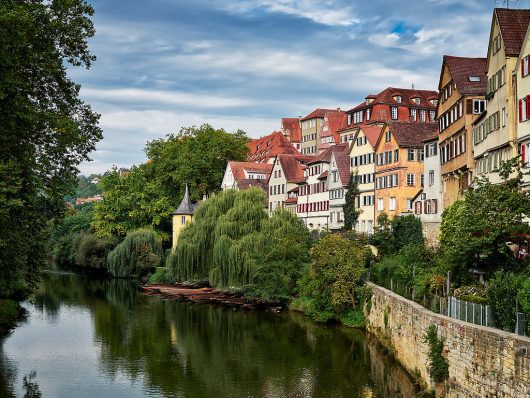
Water quality in Germany has been regulated by an effective water management division. The country’s water technology and purification processes are highly regarded internationally. The German government implemented water protection procedures such as water waste charges, the preservation of natural habitats and laws to penalize water pollution.

Germany has an abundance of fresh water; 2.2 percent of the country’s surface area is covered by 11 predominant rivers, 291 dams, and other natural lakes. Approximately 11.7 percent of the fresh water is assigned to drinking water protection.

In 1998 the European Union (EU) adopted the ‘Drinking Water Directive’ (DWD), which set a foundation for high-quality standards for European drinking water. The DWD guidelines include parameters that must be fulfilled to assess drinking water quality.

Currently, the German Association of Energy and Water Industries (BDEW), represents 80 percent of drinking water production and 60 percent of wastewater disposal in Germany. BDEW supports sustainable energy, the protection of water supply and proper wastewater disposal.

On October 4, 2016, BDEW convened with the Federal Ministry for Environment to state its opinions on major energy developments to be implemented over the next 15 years. The meeting focused on “the future of public services in the water sector.” Key results of the collaborative effort include extending fresh water and groundwater protections to unused resources, creating an “integrated cross-sectoral environmental legislation,” as well as implementing consequences for “enforcement deficiencies in the environmental law.”

As the water quality in Germany increases, the cost of tap water rises as well. A solution to water inflation is the re-use of wastewater, also known as water recycling. By reusing processed water, the required heating and cooling energy are lowered, saving energy and money. Recycling water also reduces the cost and effort needed to filter and purify unprocessed water. When the processed water is reused, it is already free from unwanted micro-organisms and harmful elements.

Germany’s strict environmental legislation and multiple industrial measures have enhanced its water quality and advanced long-term sustainability.

– Madison O’Connell

Photo: Flickr
May 2, 2017
https://borgenproject.org/wp-content/uploads/borgen-project-logo.svg 0 0 Borgen Project https://borgenproject.org/wp-content/uploads/borgen-project-logo.svg Borgen Project2017-05-02 01:30:342024-06-11 23:17:12Water Quality in Germany: The Gold Standard
Global Poverty, Water

Water Quality in Guyana Improving

Water Quality in Guyana
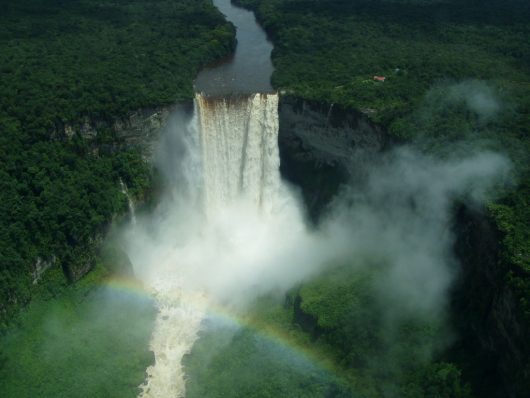
One of any civilization’s most important resources is its water supply, and in Guyana, the importance of water quality is paramount. Guyana’s top exports and leading industries are agricultural, which requires a massive proportion of the country’s water withdrawals (94.4 percent in 2010). The country’s long-term average annual precipitation is 2.4 meters, and the average actual renewable water resources total around 600,000 gallons a year.

According to U.N. Water, Guyana invested around $36 million into water-related infrastructure and programs from 2003 to 2011, and more than 37 percent of that money, approximately $13 million, was put into the large water supply and sanitation systems. “In 2003, water supply and sanitation – large systems received 7.9 million constant 2010 U.S. dollars, representing the largest amount invested by the government in one water-related category over this period,” the U.N. Water Guyana country brief states.

In that seven-year span, official development assistance totaled more than $84 million, of which nearly 35 percent, or $29 million, went toward large water supply and sanitation systems. The U.N. Water report on Guyana states that water, sanitation and hygiene factors contributed to more than 300 deaths in 2004, which is nearly 3.5 percent of all deaths in the country. Since 1990, the under-five child mortality rate has dropped from a probability of 65 per 1,000 lives births to fewer than 30 per 1,000 live births in 2010. This may be due to the increased number of children with access to improved drinking water sources and sanitation facilities.

The U.N. water report also states that 94 percent of the country’s 758,000 people used an improved drinking water source in 2010, compared to 88 percent in 1994. In addition, the number of people with access to improved sanitation facilities rose 10 percentages points in those 16 years.

The report notes that little data is available on drinking water quality in Guyana. It clearly states that the country faces water-related challenges, including contamination of potable water supplies, which lead to water-borne diseases such as vector-borne lymphatic filariasis and leptospirosis. It also notes that there is a lack of highly qualified personnel within water sector institutions.

According to the World Health Organization and the Center for Disease Control (CDC), these diseases are generally associated with standing water, mosquito-borne lymphatic filariasis and contaminated (water related) leptospirosis.

A July 2014 news release from the Inter-American Development Bank (IADB) states that water quality in Guyana may soon vastly improve with The Program to Improve Water and Sanitation Infrastructure and Supply.

The IADB loaned Guyana Water Incorporated more than $16 million while the European Union invested more than $14 million, in part to educate residents on proper hygiene practices.

This program could help decrease the prevalence of leptospirosis as it is commonly correlated with coming in contact with waters contaminated by animal waste, according to the CDC.

– Shaun Savarese

Photo: Flickr

May 1, 2017
https://borgenproject.org/wp-content/uploads/borgen-project-logo.svg 0 0 Borgen Project https://borgenproject.org/wp-content/uploads/borgen-project-logo.svg Borgen Project2017-05-01 01:30:452024-12-13 17:57:34Water Quality in Guyana Improving
Global Poverty, Sanitation, Water

Poverty and the Environment: Ways to Help the World’s Poor

Poverty and the Environment: 5 Ways Helping the World’s PoorAddressing issues that concern poverty and the environment are not mutually exclusive, since they both are pervasive human issues with distinctive causes and any number of solutions. Here are just a few ways helping the world’s poor helps our environment.
Solid Waste Management

Better solid waste management reduces air and water pollution caused by open burning and chemical seepage. Open burning in backyards or public spaces is a common method of waste disposal, particularly in developing nations. This is due to a lack of efficient disposal infrastructure. Open burning releases copious amounts of carbon monoxide and dioxide, carcinogens and other air pollutants detrimental to human and environmental health.

Improve Sanitation

Improved sanitation decreases chemical and waste runoff, reduces the risk of disease and creates a better environment for people, plants and animals.

Adequate sanitation is essential to human health, but approximately 2.5 billion people still lack access to it. This is a problem because human waste often leaches into surrounding groundwater when it is not disposed of properly or latrine pits are unlined. Also, if the latrine is lined, when it is emptied, it remains common practice to simply dump its contents into the nearest body of water, or onto the ground. This poses great health risks in terms of disease epidemics, bacterial infection and water pollution.

Water Purification

Water purification helps alleviate water pollution and decrease the risk of bacteria harmful to the habitat and the people who inhabit it.

Nearly 85 percent of the world’s population lives in the driest parts of the planet and 783 million people lack access to a clean water source. Due to inadequate sanitation and practices like open burning, there is a far greater risk to the poorest, most rural segments of the population living in developing nations when it comes to disease outbreak and water contamination. However, water pollution does not just hurt people, it also hurts the plants and animals that draw their source of life from the same body of water. Water purification would decrease the risks to human and environmental health posed by chemical runoff, waste seepage and acid rain.

Ending Harmful Practices

Education spreads awareness that would help reduce the frequency of harmful practices such as open burning, slash-and-burn agriculture or overfishing.

Slash-and-burn agriculture is a common method of food production in which a patch of land is cleared of its forestation, after which the remaining vegetation is burned. This is an agricultural practice that accelerates deforestation. Meanwhile, overfishing hurts future fish populations making it harder to secure food in the future and damaging the marine ecosystem from which the fish came. Education is a simple method to help alleviate the problems that are posed by poverty and the environment by promoting conscientiousness and discouraging unsustainable practices such as these.

Caring about people entails caring about the environment in which they live. Helping one helps the other. Currently, many developing nations are forced to resort to practices that hurt the environment out of sheer necessity or lack of knowledge concerning their effects. Therefore, efforts to reduce problems surrounding poverty and the environment act cyclically to benefit each other.

– Jaime Viens

Photo: Flickr

April 30, 2017
https://borgenproject.org/wp-content/uploads/borgen-project-logo.svg 0 0 Borgen Project https://borgenproject.org/wp-content/uploads/borgen-project-logo.svg Borgen Project2017-04-30 01:30:482024-12-13 17:57:51Poverty and the Environment: Ways to Help the World’s Poor
Global Poverty, Water

Water Crisis in Paraguay


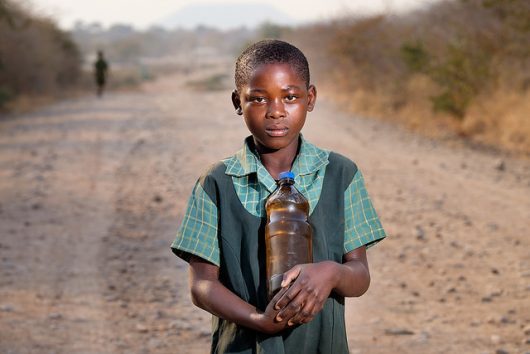
Throughout the last year, the rural population in Paraguay has had an increasingly tough fight for clean water. The country’s economic woes have trickled down to the most vulnerable populations, affecting clean water accessibility for a majority of people. Paraguay’s water crisis has even affected animals living along the river region. Here are three things you need to know about the water crisis in Paraguay.

Three Facts About the Water Crisis in Paraguay

  1. The water crisis has been affecting animals. Infrastructures for water strongly affect resident water collection. On-and-off droughts in the regions within Paraguay also play an important role. This type of on-and-off seasonal drought not also affects the human water supply, but also heavily affects animals, especially those living in the lake region.This past summer, the extended drought along the Pilcomayo River became an ecological crisis, leaving 435 miles worth of land completely dry. The water crisis in Paraguay left masses of the population of animals dead. According to National Geographic, 98 percent of caimans and 80 percent of capybaras were left dead.The river running through Argentina often faces severe drought each year, sparking the creation of the 1991 Water Distribution agreement between both countries. The agreement says that both countries would share the water equally every year through infrastructures built between the borders of each country. The mass amount of animal death is due to negligence and lack of commitment to this agreement.
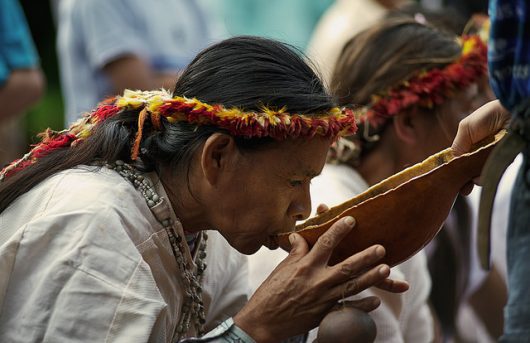
  2. Drinkable water is hard to find. For the average household among Paraguay’s rural population, drinking water is a rarity. Forty percent of Paraguay’s population of 6.9 million is rural. In 2015, the Inter-American Development Bank reported that the water crisis in Paraguay affects around 870,000 people lacking drinkable water.In the city of Chuco, which has a population of 53,000 people, only 15.4 percent of people have a water supply network that reaches their homes. Only half of the nation’s poorest homes have access to drinkable water.Life for the indigenous population in Paraguay is even harder regarding to access to water. Sixty percent of indigenous households use rainwater as their primary source of water and are not connected to any sources of water.
  3. Rural and Ingenious People Have Little Access to Sanitation. Overall, one million people do not have access to sanitation, as part of the water crisis in Paraguay. This population consists of mostly rural and indigenous people. Only three percent of indigenous people have access to sanitation. Only 10 percent of the poorest households in the nation have access to sewage treatment.Luckily, sanitation is improving in Paraguay with the assistance of the inter-American Development Bank, who disbursed a loan to the nation of $40 million dollars to support the building of infrastructures to allow access to sanitation of rural and indigenous households.The Development Promotion Fund from Spain also donated $20 million dollars to this plight, specifically supporting constructing draining systems for 380,000 residents in rural areas. This project will connect 7,000 people to sanitation networks.

– Maria Rodriguez

Photo: Flickr

April 27, 2017
https://borgenproject.org/wp-content/uploads/borgen-project-logo.svg 0 0 Borgen Project https://borgenproject.org/wp-content/uploads/borgen-project-logo.svg Borgen Project2017-04-27 01:30:452024-12-13 17:57:53Water Crisis in Paraguay
Global Poverty, Water

Drought Affects Water Quality in Somalia


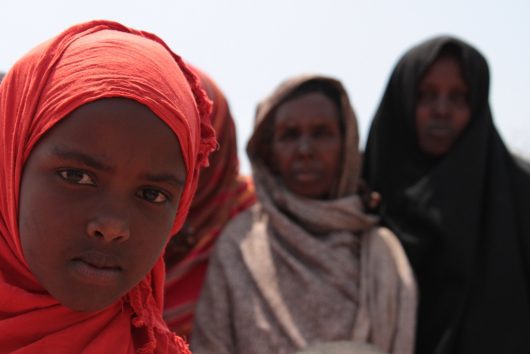
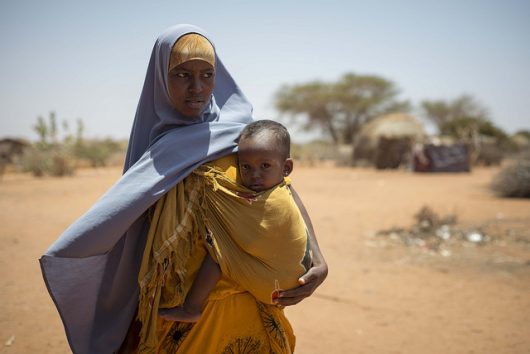
Clean water is essential to the survival of all living things. Weather conditions in the Horn of Africa, the lack of the yearly rainy season in 2016 and an increase in sea surface temperatures have created an extreme emergency. Drought conditions have affected water quality in Somalia and have created both a food and health crisis.

According to the World Health Organization (WHO), extreme drought affects more than 6.2 million people. Water quality in Somalia has deteriorated, placing 5.5 million people in danger of contracting waterborne illnesses — with half being women and children under the age of five. Drought conditions have also led to a food crisis affecting at least three million people and prompting President Abdullahi Mohamed to declare a national disaster. If conditions do not improve, the U.N. expects these numbers to double this year.

As the water quality in Somalia worsens so does the spread of diseases, such as acute watery diarrhea and cholera. More than 17,000 cases have been reported at the local Cholera Treatment Centre, and the number is expected to increase. The situation has been made worse by the food crisis, as people become undernourished and weak.

A lack of knowledge also contributes to the crisis. Ruun Ali, the mother of four-year-old Asma, said, “We don’t know what causes it, but many people are getting sick.” She brought Asma to the Cholera Treatment Centre when she became sick with vomiting and diarrhea.

UNICEF is providing support for treatment centers and hopes to save lives by providing medical supplies and educating people on health and hygiene.

UNICEF is working to improve the situation in Somalia. In addition to providing 400,000 people with vouchers good for a daily water supply, it is also digging wells and providing water, sanitation and hygiene kits, along with drums of chlorine to improve the water quality in Somalia.

– Mary Barringer

Photo: Flickr

April 19, 2017
https://borgenproject.org/wp-content/uploads/borgen-project-logo.svg 0 0 Borgen Project https://borgenproject.org/wp-content/uploads/borgen-project-logo.svg Borgen Project2017-04-19 01:30:082024-12-13 17:57:50Drought Affects Water Quality in Somalia
Global Poverty, Water

Water Quality in South Korea

water quality in south korea
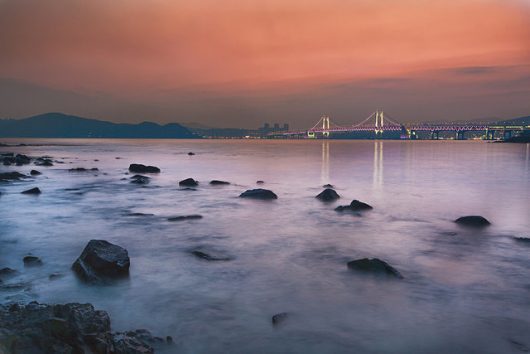
Over the last few decades, government officials have been devising ways to improve water quality in South Korea. Up until the 1970s, the water quality in South Korea was subpar due to the lack of a managed sewerage system and overall poor water management services.

Past reports made by the Korean Journal of Parasitology found that more than 84 percent of fecal samples were contaminated with helminth, which is a dangerous parasitic worm that can lead to severe health infections and diseases. This contamination resulted in part from poor water quality in South Korea.

However, in 1965, things began to take a turn for the better after the Korean government decided to implement a plan known as the 20-Year National Water Resource Plan. The idea behind this plan was that adequate and managed water services were implicitly necessary for the health and wellbeing of individuals living in the country.

According to the Korean Water and Wastewater Association, the country has received ample assistance from the World Bank. Other international organizations have also helped in developing and implementing this system for providing clean water in South Korea to benefit its residents and visitors.

One tactic that South Korea has used in its water management plan is harvesting rainwater during its monsoon seasons. According to an article by Water and Wastewater International, the rainwater “is collected from the rooftops via gutters, which divert flows to a sedimentation tank, then connects via piping to the rainwater tanks, installed below ground.” Residents and businesses have installed these systems.

Furthermore, rainwater has been described as the best source of drinking water in South Korea. Rainwater has also helped to save energy for the country’s water supply. The government is seeking to eventually implement this system throughout thousands of islands around the country.

– Lael Pierce

Photo: Flickr

April 17, 2017
https://borgenproject.org/wp-content/uploads/borgen-project-logo.svg 0 0 Borgen Project https://borgenproject.org/wp-content/uploads/borgen-project-logo.svg Borgen Project2017-04-17 01:30:542020-05-06 14:04:08Water Quality in South Korea
Global Poverty, Water

Water Quality in Norway

Water Quality
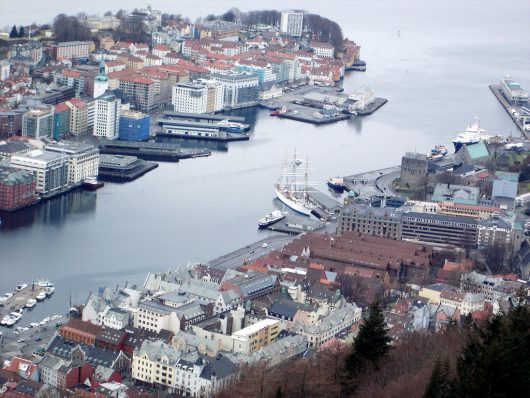
Norway is generally a very healthy place, making it one of the top countries to live in. Water quality in Norway is exceptional, as tap water is always safe to drink.

Water quality in Norway ranks second in having the best tap water in the world. The country has special programs that protect its groundwater and other water systems that safeguard the quality of water for its citizens.

Norway’s tap water is exceptional and can be consumed from anywhere, however, this does not guarantee complete safety. More than 1.3 million Norwegians live in regions where their drinking water is not treated against parasites. Experts advise those living in the untreated areas to pay special attention to the water’s tint. The color of the water is an indication of overall quality, and if water quality is poor, it is colored or foul-smelling or recently changed, and should not be used without taking precautions.

The current water quality in Norway can be attributed to its strong hydropower expertise. The country’s main sources of water contamination are agriculture, municipal sewage and fish farming, which are integrated with water in terms of irrigation, drinking water supply and livestock.

More than 80 percent of the population in Norway is connected to the drinking water systems, which serve more than five thousand persons each. Ninety percent of the Norwegian populous drinks surface water while ten percent drink groundwater.

The water quality in Norway is exceptional and the Norwegian government continues to actively work to maintain the standard of drinking water.

Norway provides one of the best water supply systems in the world. While the challenges for Norway in maintaining its water supply include increased overflow discharges, leakage from sewers, reduced treatment capacity and minor outbreaks that could be linked to the country’s water supply, the water quality in Norway remains far superior compared to many countries in the world.

– Rochelle R. Dean

Photo: Flickr

April 14, 2017
https://borgenproject.org/wp-content/uploads/borgen-project-logo.svg 0 0 Borgen Project https://borgenproject.org/wp-content/uploads/borgen-project-logo.svg Borgen Project2017-04-14 01:30:322024-05-27 23:59:56Water Quality in Norway
Developing Countries, Global Poverty, Water

10 Facts About Water Pollution

water pollution facts
Water is one of the most important natural resources that is essential to sustain every form of life, but it is becoming increasingly scarce in many parts of the world. According to the World Economic Forum, rising water pollution is the foremost global risk in terms of its potentially devastating impact on society. Below are ten interesting water pollution facts.

Water Pollution Facts

  1. One of the prominent causes of water pollution is extensive eutrophication caused by agricultural, sewage, animal, human and industrial runoff, resulting in excessive concentrations of nutrients, such as phosphorus and nitrogen. This results in enhanced plant and depleted animal life due to lack of oxygen, creating a dead zone. Lakes and reservoirs, two freshwater sources, are particularly prone to the negative impact of eutrophication due to their proximity to pollutant-generating sources and the water’s relative stillness.
  2. Personal care products and pharmaceuticals, including birth control pills, antibiotics and painkillers, are washed into water reservoirs and lakes, contributing to the rising water pollution. They have a damaging effect on the aquatic ecosystems and cause hormonal imbalances in humans and animals.
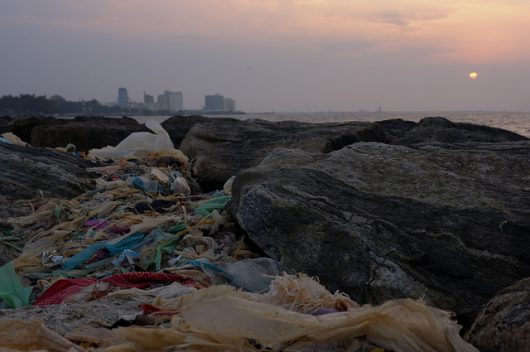
  3. About two million tons of sewage is dumped into the world’s water bodies daily. Annually, 14 billion pounds of garbage containing mostly plastic is thrown into the world’s oceans, causing large-scale destruction of marine life.
  4. Millions are consuming contaminated or chemically adulterated drinking water due to a lack of adequate treatment of urban wastewater. More than 80 percent of human activity generated and about 70 percent of industrial untreated wastewater is dumped into rivers, lakes and oceans. In the U.S. alone, about 1.2 trillion gallons of untreated sewage and industrial waste is discharged into the water bodies.
  5. At least 70 percent of lakes and rivers in China are polluted, and more than half are too polluted for human use. The Yangtze River, China’s largest and the world’s third-largest river, is inundated with approximately 25 billion tons of sewage and industrial refuge.
  6. Many do not have access to clean drinking water, including the 663 million people reliant on precarious sources — with 159 million relying on surface water and 1.8 million dependent on drinking water potentially contaminated with human waste.
  7. Sanitation facilities are a luxury not enjoyed by 2.4 billion people across the globe. Approximately 946 million people are forced to defecate in street gutters and near water bodies, exacerbating the rising water pollution. Wastewater is sometimes used for crop irrigation and at least 10 percent of the population globally consumes food grown using wastewater.
  8. The scarcity of water instinctively causes people to conserve water and avoid its use for hygiene, leading to preventable diseases such as diarrhea, dysentery, cholera, typhoid and polio. Approximately 842,000 people, including 361,000 children under five, die yearly from diarrhea. Contaminated drinking water and inadequate sanitation cause more deaths annually than violence from the ongoing wars. Debilitating diseases including schistosomiasis, intestinal worms and trachoma prevalent in tropical regions are also a result of inadequate sanitation services and hygiene habits.
  9. Currently, about 40 percent of the world’s population is facing water scarcity and 1.7 billion are living in river basins where water usage exceeds renewal. Without immediate action, by 2025 half of the world’s population will be experiencing a water shortage, and by 2050 one in four people will be living in a country with an insufficient fresh water supply.
  10. The 17 Sustainable Development Goals (SDG) set forth by the U.N. to “end poverty, protect the planet, and ensure prosperity for all” by 2030. Reducing water pollution by restricting the disposal of garbage and other hazardous chemicals into water bodies and adapting more effective means of treating wastewater, is part of the SDG’s six targets to ensure equitable access to safe drinking water.

There is ample water for everyone, but these 10 facts about water pollution illustrate how it is becoming scarce due to insufficient infrastructure. Safe, clean water is a human right, yet rising water pollution is a serious health threat for the world’s poorest.

– Preeti Yadav

Photo: Flickr

April 13, 2017
https://borgenproject.org/wp-content/uploads/borgen-project-logo.svg 0 0 Borgen Project https://borgenproject.org/wp-content/uploads/borgen-project-logo.svg Borgen Project2017-04-13 01:30:482024-12-13 17:57:4810 Facts About Water Pollution
Global Poverty, Water

Water Quality in Chile: A Multifaceted Problem

Water Quality in Chile
Water quality in Chile includes many facets and issues that must be resolved. One recent event that has drawn attention to this issue is a drought during the weekend of Feb. 25, affecting five million people. This water quality emergency is due to runoff and debris in the Maipo River, the main water supply for Chile’s capital Santiago. Runoff is created by drought and wildfires, making it difficult for the land to retain water. When land is unable to retain water, mudslides are created and debris flows.

Chile measures the levels of precipitation, surface water, groundwater and water needed to remove the pollution in order to access its water footprint. These standards were created by the Water Footprint Network and the Chile Foundation.

Not only does poor water quality affect citizens in Chile, it affects entire industries. Copper is a major export from Chile, and mines must use expensive desalination technology in order to have suitable water. In addition, poor water quality affects agriculture. There are projects in place to improve both the removal of contaminants and water quality.

Former military ruler General Pinochet made water a private commodity in Chile in 1980, a move meant to encourage investment in infrastructure used to distribute water. In reality, privatizing water has created high tariffs and removed the incentive to distribute water in low-income areas. Citizens have to pay for water and to have their water quality improved. The Chilean government has a plan to invest $5 billion into irrigation projects by 2022 and encourage private sector investment into these projects.

Water quality in Chile is a multifaceted problem to solve, but there is impressive research and progress being made to resolve it.

– Jennifer Taggart

Photo: Flickr

April 12, 2017
https://borgenproject.org/wp-content/uploads/borgen-project-logo.svg 0 0 Borgen Project https://borgenproject.org/wp-content/uploads/borgen-project-logo.svg Borgen Project2017-04-12 01:30:312024-12-13 17:57:33Water Quality in Chile: A Multifaceted Problem
Developing Countries, Global Poverty, Water

Stella Artois Supports Clean Water Campaign


Take a moment to imagine waking up in the morning, and instead of reaching for the faucet or filtered system you may use for water, you reach for a bulky jar and begin the trek to fill it with water. Imagine filling that jar until it weighs more than 40 pounds and carrying it for miles to bring home. For millions of women living in poverty, this is a daily routine. More than 600 million people worldwide, most of whom live in sub-Saharan Africa, still lack access to clean water. Stella Artois is partnering with water.org through the Buy a Lady a Drink campaign to bring clean water to those still living without it.

To raise money for clean water, Stella Artois is selling limited-edition chalices. The chalices feature artwork from countries like Brazil, Cambodia and Uganda. Only $6.25 from each sale is needed to provide clean water for five years. So far, the Buy a Lady a Drink campaign has helped provide 800,000 people in the developing world with clean water.

For women like Anita, in developing countries, the Buy a Lady a Drink campaign offers much more than clean water — it creates opportunity. Since Anita no longer has to waste precious time collecting water, she is able to contribute to the family business and grow crops for the household. In addition, her children have hope for a better future as they are able to attend school instead of waiting in line for water.

Although the Millennium Development Goal to halve the proportion of people without access to clean water has been reached, there are still millions of people living without easy access to this precious and essential resource. Through the Buy a Lady a Drink campaign, Stella Artois is bringing not only clean water to needy communities, but hope for building a better future.

– Rebecca Yu

Photo: Flickr

April 11, 2017
https://borgenproject.org/wp-content/uploads/borgen-project-logo.svg 0 0 Borgen Project https://borgenproject.org/wp-content/uploads/borgen-project-logo.svg Borgen Project2017-04-11 01:30:512024-12-13 17:57:42Stella Artois Supports Clean Water Campaign
Page 38 of 57«‹3637383940›»

Get Smarter

  • Global Poverty 101
  • Global Poverty… The Good News
  • Global Poverty & U.S. Jobs
  • Global Poverty and National Security
  • Innovative Solutions to Poverty
  • Global Poverty & Aid FAQ’s
Search Search

Take Action

  • Call Congress
  • Email Congress
  • Donate
  • 30 Ways to Help
  • Volunteer Ops
  • Internships
  • Courses & Certificates
  • The Podcast
Borgen Project

“The Borgen Project is an incredible nonprofit organization that is addressing poverty and hunger and working towards ending them.”

-The Huffington Post

Inside The Borgen Project

  • Contact
  • About
  • Financials
  • President
  • Board of Directors
  • Board of Advisors

International Links

  • UK Email Parliament
  • UK Donate
  • Canada Email Parliament

Get Smarter

  • Global Poverty 101
  • Global Poverty… The Good News
  • Global Poverty & U.S. Jobs
  • Global Poverty and National Security
  • Innovative Solutions to Poverty
  • Global Poverty & Aid FAQ’s

Ways to Help

  • Call Congress
  • Email Congress
  • Donate
  • 30 Ways to Help
  • Volunteer Ops
  • Internships
  • Courses & Certificates
  • The Podcast
Scroll to top Scroll to top Scroll to top