• Link to X
  • Link to Facebook
  • Link to Instagram
  • Link to TikTok
  • Link to Youtube
  • About
    • About Us
      • President
      • Board of Directors
      • Board of Advisors
      • Financials
      • Our Methodology
      • Success Tracker
      • Contact
  • Act Now
    • 30 Ways to Help
      • Email Congress
      • Call Congress
      • Volunteer
      • Courses & Certificates
      • Be a Donor
    • Internships
      • In-Office Internships
      • Remote Internships
    • Legislation
      • Politics 101
  • The Blog
  • The Podcast
  • Magazine
  • Donate
  • Click to open the search input field Click to open the search input field Search
  • Menu Menu

Archive for category: Activism

Information and stories on social activism.

Activism, Food & Hunger, Global Poverty

Supporting Companies Fighting Poverty

Global poverty is an ever prevalent issue in the world today. Poverty affects at least one billion children worldwide and is responsible for the death of 22,000 children daily. Many companies are emerging with missions to help stop global poverty by selling things jewelry or food products and donating some of the proceeds to charitable organizations. Some companies are working directly with the people they are helping. A way to contribute to the fight to stop global poverty is to support and buy from these companies fighting poverty.

Jewelry Companies Fighting Poverty

There is an exorbitant number of accessory companies around the world. In 2018, people spent 18 billion euros on luxury jewelry globally. Many people buy jewelry from large, name-brand corporations. One way to help global poverty is by buying jewelry from smaller companies who give back to the cause. Here are companies fighting poverty with jewelry sales.

  1. Starfish Project: Starfish Project is a jewelry company whose mission is to help exploited women in Asia through a variety of Holistic Care programs. The project’s Community Outreach Services are helping train women to be entrepreneurs. So far, more than 140 women have found employment through Starfish Project.
  2. Noonday Collection: Noonday Collection is a small business created by Jessica Honegger that specializes in selling jewelry. Women learn to make and then sell jewelry at Noonday jewelry markets called Trunk Shows. So far, Noonday Collection has helped more than 1,700 women around the world launched their own businesses.
  3. Nightlight Design: Nightlight Design is an international organization whose mission is to end commercial sexual exploitation in Thailand. The jewelry proceeds go towards supporting the organization and its efforts to employ these women.

Food Companies Fighting Poverty

Hunger is a pressing issue that comes with global poverty. Those in extreme poverty often do not have the resources to get access to food. In developing countries, 12.9 percent of the population suffers from undernourishment. There are many companies that sell food in order to fight world hunger. Here are some companies fighting poverty that are giving back by selling food.

  1. KIND: KIND is a company that mostly sells granola bars. The KIND Movement started in 2004 as the company’s way of trying to make the world a little better and a little kinder. KIND and The Kind Foundation have spent more than $34.5 million to fight world hunger. Volunteers through the companies have donated 50,490 hours to charitable causes.
  2. Annie’s: Annie’s is a company famous for its boxed macaroni and cheese as well as other snacks. Its creator and founder, Annie Withey, has strong values geared towards helping the planet and the people on it. She set out to create a socially conscious business through Annie’s. In the last six years, Annie’s has “donated more than $2.5 million” to a variety of organizations working to make a better world.
  3. Justin’s: Justin’s is a nut butter company created by Justin Gold. It gives back to the planet through poverty relief efforts. The company works with the Whole Planet Foundation and Conscious Alliance to provide hunger relief around the world. Justin’s works with many other organizations committed to helping global poverty.

Clothing Companies Fighting Poverty

For those living in poverty around the world, clothing is a huge problem. Many do not have the resources to buy clothing that accommodates often harsh weather conditions, leading to sickness and injury. Fortunately, there are many clothing companies who give back by employing people in developing countries. Through the proceeds, these people are able to make a living. Here are some poverty helping companies that give back by selling clothing.

  1. ASOS: ASOS is a large clothing company that is home to hundreds of well-known brands. It recently launched ASOS ‘Made in Kenya,’ a line encouraging people to live up to their ethical values by buying clothes made by garment workers in Kenya. ASOS has also released 11 collaborations with SOKO, Kenya. Proceeds from the collection boosted the workforce and helped parents afford school for their children.
  2. People Tree: People Tree is a clothing company based in the U.K. whose supply chain is 100 percent ethical and fair trade. The clothing company partnered with many humanitarian organizations such as Bombolulu Workshop, which works to empower physically disabled people in Kenya. It works with a variety of groups in several countries.
  3. Elegantees: Elegantees is a clothing company whose mission is to end sex trafficking largely caused by poverty in Nepal. The company’s goal is to employ women from Nepal to help manufacture their clothing. It offers women stable jobs to provide for themselves and their families and keep them safe from sex trafficking.

Although world poverty numbers can seem daunting at times, there are many small choices one can make in their everyday lives to help create an impact. One way to help end global poverty is to buy products such as clothes, food and jewelry from companies fighting poverty.

– Natalie Chen and Jenna Chrol
Photo: Pixabay

November 2, 2019
https://borgenproject.org/wp-content/uploads/borgen-project-logo.svg 0 0 Jennifer Philipp https://borgenproject.org/wp-content/uploads/borgen-project-logo.svg Jennifer Philipp2019-11-02 01:30:022024-06-06 00:26:26Supporting Companies Fighting Poverty
Activism, Advocacy, Developing Countries, Global Poverty

Social Media Interactions In Eritrea

social media interactions in Eritrea
Eritrea is a nation located in the Horn of Africa boasting a population of just under 6 million people. Isaias Afwerki and the People’s Front for Democracy and Justice (PFDJ) have presided over the nation since 1993 having barred independently run news outlets and arrested journalists to crackdown on all opposition against the government. This crackdown had a serious effect on internet access in the country, as barely over 1 percent of the population has internet access as of 2019. While there is currently little information available on whether the Eritream government has plans to rectify this, there are ways that the citizens have made their strides to increase social media interactions in Eritrea and gain information with limited resources.

Working Around Barriers for Social Media Access

Just as only a tiny percentage of the population has internet access, approximately 1 percent of Eritreans interacted on social media as of January 2019. Access to social media is incredibly difficult, as the government regularly shuts down access to social media sites on numerous occasions. For example, it closed access to social media in the days leading up to the country’s Independence Day on May 24, 2019, forcing citizens to use proxy servers and VPNs to bypass those restrictions. The internet’s limited availability is an issue Eritrea currently struggles with, but Eritreans are using resources to work around restrictions to gain access to social media sites if need be.

News Outside of Eritrea

Government official Yemane Ghebremedkel stated on Twitter that 91 percent of households had a satellite carrier as of 2017. However, the Eritrean government has full control of the media in Eritrea and has jammed signals to limit any potential rival service. Alternative news sources have primarily come from outside Eritrea, one of which includes the Paris-based Radio Erena that former Eritrean journalists founded, which provides news about Eritrea without consequence. People in Eritrea proper have limited access, however. The government’s control of media and telecommunication services makes obtaining alternative news sources difficult, largely keeping the populous inline with the nation’s media. Alternative news sources such as Radio Erena serve Eritreans outside of the country but nevertheless provides news that the government currently does not report.

Social Media Revolution

Social media has become a powerful unit in uniting citizens to push movements for change inside Eritrea. Beginning in January 2019, the Twitter movement #EnoughIsEnough began after peace deals emerged between Eritrea and neighboring Ethiopia. People are using the platform as a way to bring forth demands to the Eritrean government to improve the country, most notably, in regard to freedom of speech. The #EnoughIsEnough movement also united voices inside and out of Eritrea, giving citizens a way to stand in solidarity against their government without the concern of physical clashes. The movement that social media powered managed to give a united voice to stand against the government in a more peaceful manner.

Increasing social media interactions in Eritrea has shown the potential to have a powerful effect when used for movements for change. While internet access as a whole is highly restrictive, making access to social media difficult, there are alternative methods for Eritreans to get their news and their government to hear their voices. Progress on Eritrea’s movements have been slow, but it will likely have a powerful effect on both those inside and outside of Eritrea.

– Henry Elliott
Photo: Flickr

October 31, 2019
https://borgenproject.org/wp-content/uploads/borgen-project-logo.svg 0 0 Lynsey Alexander https://borgenproject.org/wp-content/uploads/borgen-project-logo.svg Lynsey Alexander2019-10-31 12:45:072024-05-29 23:13:26Social Media Interactions In Eritrea
Activism, Developing Countries, Development, Global Poverty, Health, Water, Water Quality

Rotary Club’s Water Relief in Haiti

Water Relief in Haiti

Political corruption and unstable governments can be a huge problem for organizations trying to bring aid to a developing country. On top of the already difficult logistics, corrupt governments can heap on restrictions, red tape and, at times, cause violence. The 2008 Transparency International’s Corruption Perception Index ranked Haiti at number four of the most corrupt nations in the world. This same Index also ranked Haiti as the most corrupt country in the Caribbean region in a 2013 study. This political corruption was the main difficulty faced by Brian Merriam and his Rotary Club Chapter when they tried to aid efforts for water relief in Haiti in 2014.

The Rotary Club’s Contribution

For more than 110 years, Rotary Club International and its 1.2 million members have prided themselves in bringing aid to impoverished countries around the globe. With more than 35,000 chapters, Rotary Club is able to make a lasting worldwide change. Brian Merriam, a third-generation member of Rotary Club International, discussed his initial motivation and the challenges involved in helping Haiti.

Merriam took to heart something that his father always said, “find the greatest problems in your community and find a way to solve them.” It was this motto that led him to first visit Haiti in 1999 with the Episcopalian organization, Food For The Poor. What Merriam saw shocked him, “I traveled the world when I was fifteen,” said Merriam “I’ve seen poverty but never the amount of Haiti.” With 59 percent of the country surviving on less than $2 a day, Haiti it the poorest country in the Western Hemisphere.

A Lack of Clean Drinking Water

After a few more visits to the country, Merriam knew something had to be done. Getting everyone from his Rotary Chapter to help was the easy part. Having been to Haiti several times Merriam knew the problems facing the nation and how to help. “Haiti isn’t lacking water,” said Merriam, “it’s lacking clean drinking water.” More than 90 percent of the country has been deforested, leading to poor soil quality. This combined with the country’s predominantly porous limestone bedrock makes the water that comes up from the earth unfiltered and unhealthy to drink.

The condition of the water supply is made only worse by the nation’s poverty. People wash themselves and their clothes in Haiti’s waterways, further contaminating the water. With more than two-thirds of the population unemployed, many families can’t afford bottled water. They are forced to drink from these polluted bodies of water instead. With this in mind, the Rotary Club Schenectady Chapter brought filtration systems to the community of Matogou in 2014 in order to boost water relief in Haiti.

Political Instability

Along with the many natural factors, an increase in political protests and the proceeding violence have further crippled the country’s ability to distribute aid. This has made it more difficult for organizations to facilitate water relief in Haiti. Large mobs, vandalism and blocked roads make it harder to get basic goods out to Haiti’s most needy.

The tumultuous protests are a reaction by the Haitian people to both the corruption of President Jovenel Moise’s and the ineptitude of the Haitian parliament. According to Haiti’s senate, President Moise and his predecessor, Michel Martelly, embezzled as much as $2 billion. That money was supposed to go to Haiti’s poor to improve their infrastructure, health and education systems. Adding to the instability, the Haitian parliament failed to ratify a government or appoint a new Prime Minister after the ousting of their last one, Jean-Henry Ceant.

Merriam knows firsthand the difficulties this kind of political instability can cause. The largest problem for the Rotary Club was not financial, nor was it logistical. Getting the water filtration systems to the intended people intact was the real difficulty. Merriam recalls having to sneak the filtration systems past customs, “We have to smuggle them into the country. Not cause they’re illegal but because I’ll get extorted at the airport if they know I have them.” After getting the filtration systems past customs, Rotary Club was ready to bring them into the communities that desperately needed water relief in Haiti.

One Success Story

The Rotary Club Schenectady Chapter has changed lives for the better by increasing water relief in Haiti. The water filtration systems Rotary installed have a shelf life of 10 years and can filter out 99.99 percent of bacteria from 1,000,000 gallons of water. Each system can provide clean water to 40 people per day. The organization shows communities how to maintain and clean the filtration systems. Rotary club exceeded its goal in providing 24-hour clean water to Matogou.

It is Merriam’s belief that people born into good fortune have to social obligation to help those less fortunate than themselves. “We are on this one globe and if we don’t make it better, we’ve squandered it,” said Merriam. It is this attitude that has led him to fight for the people of Haiti for 20 years. His actions through the Rotary Club have provided much-needed water relief in Haiti.

– Henry Burkert
Photo: Wikimedia

October 27, 2019
https://borgenproject.org/wp-content/uploads/borgen-project-logo.svg 0 0 Jennifer Philipp https://borgenproject.org/wp-content/uploads/borgen-project-logo.svg Jennifer Philipp2019-10-27 07:30:432020-01-18 14:37:37Rotary Club’s Water Relief in Haiti
Activism, Developing Countries, Development, Global Poverty, Human Rights

Consequences of Violence in Nicaragua

Consequences of Violence in Nicaragua
Since April 2018, the citizens of Nicaragua have been protesting against its government. What started originally as a movement against changes to the social security program quickly turned into an opposition movement demanding President Daniel Ortega and his wife’s resignations. The protests turned violent when anti-government protesters clashed with pro-government protesters and police. As a result, these protests resulted in the killings of more than 300 people and about 2,000 people becoming injured. Here are the major consequences of violence in Nicaragua.

Human Rights Concerns

One of the consequences of violence in Nicaragua has been the concerns surrounding human rights abuses by the government. According to Human Rights Watch, the Ortega administration has violated Nicaraguan citizens’ human rights by “[banning] public demonstrations by any group critical of the government, (…) [stripping] nine non-governmental organizations of their legal registration, [shutting] down media outlets, [prosecuting] journalists under the anti-terrorism law, and [expelling] international monitors from the country. The Ortega government has harassed and threatened the media, human rights defenders and other members of civil society.”

Additionally, it appears that the Nicaraguan government is not only denying its people the freedoms they are entitled to, but it is also retaliating against the reports the UN High Commissioner for Refugees (UNHCR) published. This becomes especially apparent by the government’s reactions to the release of these reports: “Following the high commissioner’s first report, the Ortega administration failed to hold perpetrators accountable for abuses and instead promoted senior officials who bear responsibility for killings and torture of demonstrators. In response to the high commissioner’s second report, the government has even defended the armed pro-government thugs that participated in repressing protests.”

Forced Migration

Additional consequences of the violence in Nicaragua is the forced displacement of 80,000 Nicaraguan citizens who are no longer able to live in their home country. Many are seeking asylum and refuge in neighboring countries like Costa Rica, Panama, Mexico and the United States. Of the 33,000 asylum requests that Costa Rica received in this past year, the country has only processed about 4,900 leaving more than 28,000 people to seek refuge elsewhere. Due to the mass displacement of these Nicaraguan citizens, many must survive on temporary employment or none at all, leaving them to suffer as a result.

Limited Access to Resources

One of the major consequences of violence in Nicaragua is the limited access to necessary resources such as food and health care as a result of the unexpected roadblocks that continually appear throughout the country and the capital, Managua. It is rather unclear whether these roadblocks are government-sponsored or a result of government opposition leaders, however, these often lead to detours and inconveniences when Nicaraguans are attempting to access grocery stores and gas stations. Additionally, government hospitals across the country have begun denying treatment to those who they suspect of being a part of the anti-government movement, which has led to people being unable to receive any kind of treatment for their injuries.

Economic Growth Concerns

In the past, Nicaragua has maintained a steady economic growth rate. In 2017, the growth rate was 4.5 percent. However, in the last year, since the outbreak of violence and political unrest, the economy has contracted about 3.8 percent and the World Bank suspects that this contraction will grow up to 5 percent in 2019. These violent protests have caused many to lose their jobs, while also causing a decrease in consumer and business confidence. As a result, some fear that the violence in Nicaragua will cost recent progress the country has made in poverty reduction efforts.

During the years of 2014 and 2016, poverty rates in Nicaragua had fallen from 29.6 percent to 24.9 percent due to the support of international organizations such as the World Bank’s International Development Association (IDA). Additionally, the extreme poverty rate also dropped from 8.3 percent to 6.9 percent in the same timeframe. It is too early to predict what the poverty rates will be for Nicaragua in 2019, but there is speculation that poverty rates will rise again.

Efforts by International Organizations

After six weeks of protests, U.N. Secretary-General Antonio Guterres addressed the situation in Nicaragua by asking the government to consider allowing the Office of the U.N. High Commissioner for Human Rights (OHCHR) to visit the country. On many occasions, the U.N. has established its willingness to resolve the situation by acting as a mediator in “national dialogue efforts to strengthen the rule of law, respect for human rights and the peaceful resolution of differences.” Additionally, there have been requests for the government to investigate allegations of human rights violations in order to hold perpetrators accountable and to bring much-needed justice and peace of mind for victims’ relatives.

Furthermore, representatives for Amnesty International have spoken out condemning the Nicaraguan governments’ repression of its people. They also suggested the creation of a committee in order to prosecute those guilty of serious human rights violations and crimes. In a report released by Amnesty International titled “Shoot to kill: Nicaragua’s strategy to suppress protest,” there appears to be evidence of Nicaraguan paramilitary forces using lethal weapons against protesters, of which many were students. This report sheds light on the situation in Nicaragua and hopes to bring international awareness in order for others to take action against the repressive forces of the Nicaraguan government.

The consequences of violence in Nicaragua range from human rights concerns to limited access to health care and even issues regarding Nicaragua’s economic growth rate. Though there appears to be no end in sight, there is hope for Nicaragua’s citizens as international organizations attempt to raise awareness and investigate the ongoing crimes committed against the Nicaraguan people. The situation is far from resolution but as it gains more international interest, there is hope that efforts will not be in vain and that the country can find a peaceful resolution.

– Laura Rogers
Photo: Flickr

October 20, 2019
https://borgenproject.org/wp-content/uploads/borgen-project-logo.svg 0 0 Jennifer Philipp https://borgenproject.org/wp-content/uploads/borgen-project-logo.svg Jennifer Philipp2019-10-20 14:00:442019-12-18 11:13:14Consequences of Violence in Nicaragua
Activism, Global Poverty, Health

The Starkey Hearing Foundation

Starkey Hearing Foundation
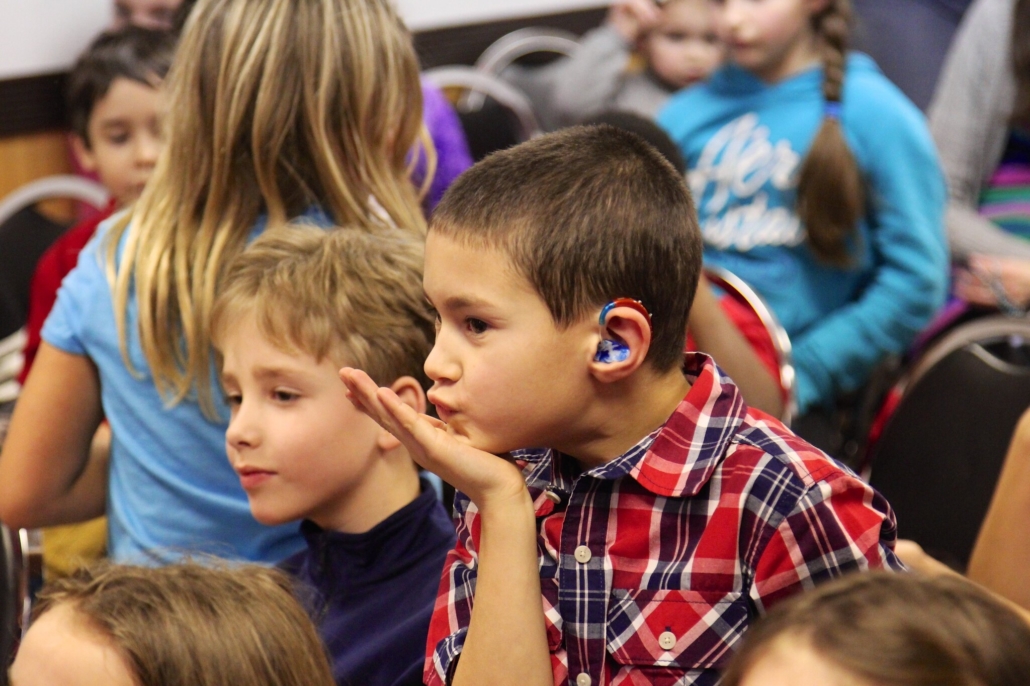
The Starkey Hearing Foundation is an organization that William F. Austin founded and it is on a mission to help people with hearing loss around the world. Its goal is to make hearing health care services more accessible for people worldwide, and thanks to the Minnesota Vikings, more people are aware of the cause.

Hearing Disadvantage Facts

Around 466 million people around the world have disabling hearing loss. According to the World Health Organization, of these 466 million people, less than 3 percent can actually afford hearing aids. They also lack the funds in order to pay for the care they need. Hearing aids can cost anywhere between $40 and $3,000, so developing countries will have a hard time paying for these if they are already having a hard time making ends meet.

Impoverished people in countries around the world receive poor treatment from uneducated doctors and can face preventable medical issues that can cause hearing loss. One of the most common issues is Otitis Media, which is a chronic ear infection in the middle ear that causes inflammation. This infection is most common within babies under 5 years old and can go undetected in foreign countries due to doctors being unable to give proper treatment.

Twenty-five percent of adults around the world who are over the age of 65 have hearing loss. Most of these people come from Asian and African countries. Lack of resources and awareness are the reason why so many Africans and Asians have a hearing impairment.

Pregnancy complications also contribute to hearing loss, not just for the unborn baby, but for the mother as well. Researchers have found that if a mother were to spend time in excess noise, the baby would likely be susceptible to being hearing impaired. Consumption of alcohol and smoking cigarettes also play a role in a baby possibly being deaf. Both cigarettes and alcohol have toxins and can cause malnutrition for an unborn child.

Starkey Hearing Foundation

The Starkey Hearing Foundation has a goal to make sure everyone around the world has access to health care services so they can get the proper care they need. Its goal is to also help people afford hearing aids. The organization teamed up with the government and other organization health leaders to make this possible. The Foundation has talked with global health professionals to advocate for hearing health and provide support to the government in developing hearing health policies.

Over the years, the Starkey Hearing Foundation has been to over 100 countries and has helped people receive the proper care they needed in order to hear again. Because of this, the organization now has the largest hearing health care database in the world. Many people from different countries have traveled to its headquarters in Minnesota to receive help.

The organization has helped different medical practices with research by figuring out the reason behind hearing loss within a specific country. It also supports other physicians who have worked on the hearing problem around the world.

The Foundation has shared different strategies with the government who are currently working on developing hearing policies in developing countries. It has also shared its knowledge on how hearing care could improve within the existing health systems.

Minnesota Vikings

The Minnesota Vikings, who are a national football team based in Minneapolis, are the biggest supporters of the Starkey Hearing Foundation because the organization is also based out of Minnesota.

In 2013, the Vikings partnered with the Starkey Hearing Foundation in order to help spread awareness to their fanbase about the issue. With over 2 million followers on Facebook, over 1 million followers on Twitter, over 800,000 followers on Instagram and drawing in roughly 66,000 people to games every year, at least 3 million people are aware of the Foundation and how to support it.

During every home game, radio and television stations would promote the campaign so even more people would become aware of the cause. Fans who attended the home games also received Starkey brand ear protection. The Vikings also made a commitment that for every touchdown the team scored, they would donate $500 to the Starkey Hearing Foundation.

– Reese Furlow
Photo: Flickr

October 12, 2019
https://borgenproject.org/wp-content/uploads/borgen-project-logo.svg 0 0 Kim Thelwell https://borgenproject.org/wp-content/uploads/borgen-project-logo.svg Kim Thelwell2019-10-12 10:26:072019-11-05 07:37:24The Starkey Hearing Foundation
Activism, Developing Countries, Development, Global Poverty

10 Facts about the Protests in Honduras

Protests in Honduras
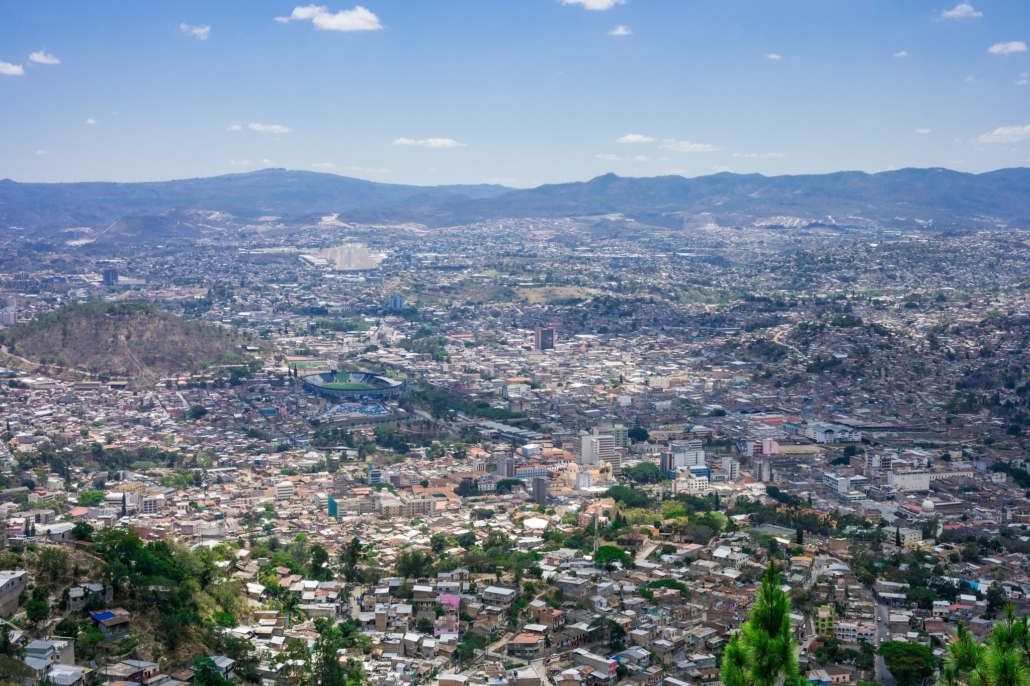
People have accused Juan Orlando Hernández, current president of Honduras, of corruption, electoral fraud and drug trafficking since his reelection in 2017. With his sudden change of the Honduran constitution that allowed him to run for two terms instead of just one, the people of Honduras have felt his corruption and repression. The lack of involvement from the government to end organized crime and gang violence and provide aid to those suffering from the poverty that affects 60 percent of the country’s population has caused hundreds of protests across the country.  Although finding asylum in the United States is the reason so many Hondurans are migrating north, others are using their right to protest as their biggest weapon towards finally receiving the justice and aid that they deserve. Here are 10 facts about the protests in Honduras.

10 Facts About the Protests in Honduras

  1. The protests in Honduras first began through trade unions that represented doctors, nurses and teachers. The Hernandez Administration and Congress were working on an initiative to restructure the country’s health care and education systems which would have resulted in mass layoffs and privatization. These first protests led to them dropping the initiative, however. This positive result made many people believe that they could also make their voices heard. Soon protests made up of university students, the poor, ministers and their churches, civil rights defenders, land rights activists, other unions and even some branches of the police began to take place in the streets of Honduras and these have not stopped.
  2. Despite the many different groups of people in the streets, one common demand that all protesters share is the removal of President Hernandez from office. Cid Gallup’s recent survey showed that the president’s approval rating dropped from 61 to 36 percent since 2017. It also found that more than 80 percent of interviewees did not trust the country’s main judicial and political institutions. Many Hondurans believe that President Hernandez has been receiving money from drug cartels to not only fund his campaigns but to let drugs go through Honduras. The people see him as the main source of the corruption found in their country and believe his removal would allow them to begin to rebuild its democratic government once again.
  3. According to the human rights organization, CONADEH, violent protests that were post-election in mid-January 2018 led to the killing of 31 people, the wounding of 232 people and the detainment of 1,805 people. The United Nations and the Inter-American Commission on Human Rights expressed concern about the excessive use of force that the Military Police of Public Order, released by President Hernandez, have been using on the crowds of protestors. Many of them are throwing tear gas at the crowds, homes and shopping centers which not only harms the protesters but children and senior citizens in the area. The police have also gone as far as shooting into crowds with live ammunition. This type of repression that the president issued is not only putting the people of Honduras in danger but also their right to protest peacefully.
  4. The Military Police of Public Order is a force of around 5,000 troops who are under the control of the president. It comprises of soldiers who patrol neighborhoods as policemen and are the first to arrive at protests to break them up. Honduran human rights organizations have been calling for the dismantlement of this force since its introduction into the country’s streets due to the lack of training that the soldiers are receiving. According to the Latin America Working Group, training periods for these soldiers only last a couple of months. Unlike the Military Police of Public Order, some members of the police department and the COBRA Special Forces have refused to take action to repress their fellow citizens.
  5. An Amnesty International report in 2018 stated that Hondurans who authorities arrest during protests are oftentimes denied their right to due process and held in inhumane conditions. Authorities have prolonged pre-trial detention for many prisoners in attempts to suppress the formations of more protests. Authorities also seek after the leaders and activists of these protests to discourage and instill fear in fellow protesters. Authorities hold many of these prisoners in terrible conditions for months and even after their release, they still face criminal charges. Although the government is attempting to generate fear through prison time, many Hondurans refuse to be silent and continue to protest in places like the United States’ Embassy in Tegucigalpa.
  6. In an attempt to discredit the protesters, Security Minister Julian Pacheco Tinoco and other government officials have claimed that the people participating in the protests are drug traffickers and gang members. No government institution has followed these allegations taking measures to protect Honduran citizens from the Military Police of Public Order’s repressive actions during protests. The government human rights office, CONADEH, did report on the killings and called on authorities to avoid the use of lethal arms against protesters. It even went as far as asking the Public Ministry to investigate cases of abuse but its calls for justice did not receive any attention from the Public Ministry or the government. No investigations launched on the abusive measures that the Military Police of Public Order partook in.
  7. Despite the violence, deaths and abuse of power from the President’s Military Police, Hondurans continue to protest and limit their silence. From March to June 2019, at least 346 protests have occurred throughout the country. Protests can range from 40 to 50 people to a couple hundred and even thousands. The want for change in their country is greater than the fear the Miltary Police is administering. As the protests grow in numbers and people, the thirst for change also grows within the country’s people.
  8. Social media has become a huge tool for the protests in Honduras. Due to the large and fast reach of the internet, young protesters are able to call on fellow Hondurans and create spontaneous protests at any time of the day. Because people often believe that the government manipulates Honduras’ media due to the harassment of dozens of reporters, social media and personal networks are helping protesters create a community online. They not only set up protests but also use their platforms to share reliable news articles with one another.
  9. These protests have also inspired smaller groups of people such as the LGBTQ+ community. In May 2019, an LGBTQ+ march occurred in Tegucigalpa and 350 members walked through the streets asking to end the violence against the LGBTQ+ community. Since 2009, more than 300 gay and transgender people have been murdered in Honduras. Activists within the group, such as the coordinator of Lesbian Network CATTRACHAS, are also asking the Supreme Court to establish a process by which transgender people can change their name and gender on official documents while also asking for same-sex marriage to be legal. The fact that these people, who usually are victims of violence, are not afraid to protest shows how courageous they are and how determined they are to rebuild their country.
  10. Women are also making their voices heard in their fight for human rights despite the violent turns a protest in Honduras can take. According to the National Observer, there is one woman murdered every 16 hours in Honduras. In the first six months of 2017, there were 99 murders of women in the country. The women of Honduras ask for a country that provides security to them. More and more women are holding rallies and forming marches. Women’s groups in the country are even creating legislation that will protect them in the hope that Congress will pass them. This is yet another way that protests are having an impact on Honduras.

These 10 facts about protests in Honduras show that it is necessary to have a democratic institution to protect and serve the people. President Hernandez is continuously using his power to repress his people in the hopes of silencing them and their protests. But the people of Honduras have not let themselves be discouraged and are gaining the will to continue to fight. Protests are the biggest tool for Honduran citizens to call for change and gain the attention of the government and the rest of the world. As protests in Honduras continue, Hondurans hope to rebuild the democratic government that they deserve.

– Jannette Aguirre
Photo: Flickr

October 10, 2019
https://borgenproject.org/wp-content/uploads/borgen-project-logo.svg 0 0 Kim Thelwell https://borgenproject.org/wp-content/uploads/borgen-project-logo.svg Kim Thelwell2019-10-10 20:26:552019-12-17 14:54:3610 Facts about the Protests in Honduras
Activism, Global Poverty

10 Facts About Social Activism

ten facts about social activism
Social activism is a purposeful action with the mission of bringing about lasting social change. Anyone with a cause that they feel passionate about can become a social activist if they work to create effective and positive change. Social activism generally refers to working to right the wrongs of unjust practices affecting humans, such as the Rohingya genocide in Myanmar or the separation of families at the United States and Mexico border by immigration officers. However, activists can work to create change with any cause, including environmental activism and animal activism. These 10 facts about social activism will provide information on the evolution of activism, as well as careers relating to social activism.

10 Facts About Social Activism

  1. The social services industry works to address the direct needs of individuals, while social activism deals with uncovering the root cause of a negative issue impacting a group of people. A social activist may use various techniques to bring light to an issue, either through advocacy campaigns to raise public awareness on an issue, or by coordinating help to aid an affected population. Social activism deals more heavily with bringing light and change to societal issues.
  2. Social activism has changed drastically with the rise of social media. For example, the civil rights movement had mostly peaceful demonstrations and protests and is still one of the most successful social activism campaigns. Nowadays, social media has become a key player in social activism. Hashtags such as #BlackLivesMatter and #MeToo have taken over the role of advocacy and are very successful in bringing light to social justice issues by providing accessible information across the world.
  3. A survey that the Pew Research Center carried out found that 69 percent of Americans believe that online platforms are essential for successful social activism campaigns. Americans believe that online platforms accomplish various political goals such as getting the attention of legislators and creating sustained movements for social change. There is a debate over slacktivism versus social media activism. Slacktivism is the belief that social media leads to passive activism.
  4. The same survey found that certain demographics of social media users – most notably African and Latino Americans – see these platforms as an essential tool for their own political expression and activism. Around half of all African American social media users state that these platforms are at least somewhat important for them to express their political views. Many minorities feel that social media allows them to be more active in speaking up for their own rights. Those views fall to about one-third of all white social media users.
  5. Organizations, corporations and government agencies are frequent targets for social activists aiming to influence society by altering established practices and policies. Activists may use techniques such as naming and shaming to bring about social change. Naming and shaming is when a group or organization calls out another group for unethical practices. An example of this is when the United States placed sanctions on South Africa for apartheid. The sanctions shamed South Africa and brought this issue to the attention of the international community.
  6. One can place activists into two categories depending on their relationship to an organization. Insider activists are employees of a targeted organization. They have certain benefits and challenges compared to outsider activists who are members of independent social activism movements. Insider activists are also called whistleblowers and they expose unethical practices happening within the organization they are a part of.
  7. Activists may use boycotts and protests to target businesses and get them to change their practices or behaviors. Boycotts are successful in targeting businesses as they cut them off from economical transactions and limit their profits. Businesses will often adhere to the demands of customers if the boycott is large enough to severely impact them. Therefore, boycotts are an effective way of getting businesses to change their business models to something more ethical that pleases their consumer base.
  8. Millennials are often socially active consumers as they consider the ethics of their products before purchasing. The shoe brand Toms promises to donate a pair of shoes to a child in need for every pair purchased. Paper straws have also become a popular environmental alternative to the traditional plastic straw. The clothing brand Reformation claims to be the most sustainable option in clothing second to being nude. Millennial consumption habits have created a whole market for sustainable and ethical products.
  9. There are many careers that incorporate some elements of social activism, with careers in law and public policy creating change through human rights law, lobbying and public interest law. Careers in government and international relations can bring one into agencies such as the State Department or the Environmental Protective Agency (EPA), as well as international organizations like the United Nations. Community organizers empower and develop local community leadership to enable them to meet community needs, ranging from clean water to better education. Careers in nonprofit organizations, like Save the Children or CARE, both of which provide humanitarian assistance to developing countries, are also great paths to go down.
  10. There are certain skills that make individuals qualified for a career in social activism. Individuals must be able to work with a diverse array of people, have excellent communication skills and be able to speak persuasively. Strong writing and critical analysis skills are also helpful, in order to strategize and envision an improved society.

These 10 facts about social activism show the evolution of activism with the rise of modern technology and social media. The form and pace of social activism will continue evolving to keep up with changing technologies. Technology and social media have sped up the exchange of information and knowledge, which largely contributes to the basis of many worldwide social activism campaigns.

– Laura Phillips-Alvarez
Photo: Flickr

October 1, 2019
https://borgenproject.org/wp-content/uploads/borgen-project-logo.svg 0 0 Jennifer Philipp https://borgenproject.org/wp-content/uploads/borgen-project-logo.svg Jennifer Philipp2019-10-01 07:20:342024-06-04 01:17:5410 Facts About Social Activism
Activism, Global Poverty, Water

Top 6 Water NGOs in Latin America

Top 6 Water NGOs in Latin America

A number of countries in the Latin America and Caribbean region are experiencing water crises which present an obstacle in achieving the U.N.’s Sustainable Development Goal of universal access to clean water access by 2030. Fortunately, there are a number of organizations actively working to help them get there as quickly as possible. Keep reading to learn more about the top six water NGOs in Latin America.

Top 6 Water NGOs in Latin America

  1. Founded in 2007, Water Charity’s first project focused on improving the health of garbage dump workers by providing water filters in Guatemala City. Since then, the NGO has executed numerous water missions throughout 12 Latin American countries, among other projects worldwide. Each of its projects is innovative and tailored toward the specific needs of the communities in which they work. For instance, through the Dajabon Latrine Project in rural northwestern Dominican Republic, 110 families now have access to safe and sanitary latrines. Moreover, the initiative strives to educate families on the importance of health and hygiene given Dajabon’s poor education system.
  2. Living Water International in Mexico has been working to improve water access, hygiene and sanitation throughout the country’s poorest and often most rural communities. With operations spanning from water systems to hygiene education, the organization aims to focus on the marginalized regions of southern Mexico. Living Water’s “Lazos de Agua” program from 2013 to 2016 promoted WASH (“water, sanitation and hygiene) services to 68,000 beneficiaries in Oaxaca and Puebla. The organization’s projects, such as a new initiative to serve beneficiaries in 65 Mexican rural communities, continue to emerge across the nation and beyond.
  3. blueEnergy knows that the most efficient way to create change is through community consultation and working with local actors. Recognizing the context of a changing climate, blueEnergy has delivered water and sanitation to more than 30,000 people in marginalized regions of Nicaragua. Regarding a recently built water filter, Victorio Leon, a resident of Bluefields, Nicaragua only had positive feedback. “This filter has helped me economically and helped me avoid being sick a lot of the time… now we know we can drink this water with confidence.” Indeed, according to the World Bank, lack of water and sanitation results in a loss of 0.9 percent of Nicaragua’s GDP. Promoting health, and ultimately economic opportunity is among blueEnergy’s primary goals.
  4. WaterStep recognizes that making a true difference in developing countries requires planning for the long-term. For this reason, the nonprofit educates vulnerable communities on why and how to use safe water solutions such as bleach making as well as how to use WaterStep’s on-the-ground technologies. One of its ongoing projects includes that in Ecuador, which began following the country’s 7.8 magnitude earthquake in 2016. Thousands of Ecuadorian survivors were misplaced and lacked any source of clean water. WaterStep responded to the situation by implementing water technologies and training people in refugee settlements on how to use this equipment.
  5. Water For People has targeted Honduras’ marginalized and rural regions such as Chinda and San Antonio de Cortés, since 1997. The NGO invests in public and private sectors alike to provide proper water and sanitation solutions. Since the nineties, Honduras has seen success not only in meeting the Millennium Development Goal of reducing the percentage of people lacking clean water by 50 percent. Moreover, at least 84 percent of the rural population now have access to improved water. Grassroots efforts such as those by Water For People are making clear steady strides towards achieving SDG goal six: providing clean and safe water to all regions.
  6. Solea Water acknowledges the clear inequalities between rural and urban Panama. While Panama City has seen outstanding economic growth in recent years, in marginalized indigenous areas, extreme poverty affects nine in 10 inhabitants. Consequently, clean water access remains a critical issue in these regions. One of the organization’s many projects includes work in Sinai, Panama, where seven in 10 people lack safe drinking water. In addition to implementing a municipal water system which utilizes sustainable technologies to pump water, the organization has supported WASH education to locals. Solea Water’s goals of better health, education and overall improved standards of living within regions like Sinai are made a reality through the organization’s tireless dedication.

What Happens Now?

While access to water has improved in poor and marginalized regions in-line with the decrease in global poverty, disparities remain. These disparities are clear between regions, where 94 percent of citizens in the United States and Europe have access to safe drinking water compared to 65 percent in Latin America and the Caribbean. Moreover, even larger disparities can be seen within a given region, such as the gap between urban and rural regions within Latin America. While 96 percent of citizens living in the Dominican Republic’s cities can obtain piped water, less than 25 percent of Dominicans in rural areas have this same access.

While the fight to universalize access to clean water and sanitation remains a pressing matter, these top six water NGOs in Latin America present the importance of civil society’s proactive planning, hard work and progress.

– Breana Stanski
Photo: Flickr


September 29, 2019
https://borgenproject.org/wp-content/uploads/borgen-project-logo.svg 0 0 Kim Thelwell https://borgenproject.org/wp-content/uploads/borgen-project-logo.svg Kim Thelwell2019-09-29 04:44:252019-12-16 13:47:47Top 6 Water NGOs in Latin America
Activism, Children, Development, Global Poverty, Health

5 Ways Convoy of Hope is Making an Impact

Convoy of Hope is Making an ImpactFounded in 1994, Convoy of Hope is a faith-based, nonprofit organization that works domestically in the U.S. as well as internationally in more than 120 countries around the world. Convoy of Hope as a rating of 96.46 from Charity Navigator and has also made its way to Forbes’ list of the 100 largest charities. The organization has reached millions of people through its focus on disaster relief, children’s feeding programs, women’s empowerment and more. Here are five ways Convoy of Hope is making an impact.

5 Ways Convoy of Hope is Making an Impact

  1. Convoy of Hope provides meals to more than 200,000 children in 14 countries while monitoring the health and growth of these children each day. The organization partners with various food companies and also has its own campaign, feedONE. The goal of providing these meals is to create a starting point to build strong communities, healthy living environments, education and eventual career opportunities. Convoy of Hope is also committed to providing clean water and filtration systems so that these communities are able to access safe drinking and cleaning water.
  2. Through an agricultural program, piloted in Haiti in and now used in eight countries, the organization trains and educates farmers to grow their own crops and has helped schools, churches and orphanages around the world to start their own urban gardens. For instance, since 2012, the on-the-ground team has trained more than 5,000 farmers in “best management practices for culturally relevant agriculture.” Convoy of Hope proudly notes that in 2018, the team provided some 1.2 million meals through its school feeding program — locally grown by the farmers the organization trained.
  3. The organization is also focused on empowering women through Convoy:Women by providing training and education programs covering topics like finance, nutrition, literacy, cooking and health. Since 2011, almost 17,000 women across four countries have been trained through these programs, receiving the help and empowerment needed to make independent life choices. Importantly, the organization also provides start-up capital as a way to promote entrepreneurship and economic empowerment. In addition, there is also a spin-off program called Empowered Girls that focuses on young girls in various schools and communities. More than 4,000 participants are enrolled in this program which covers topics like self-esteem, gendered violence and gendered cultural beliefs.
  4. Convoy of Hope prides itself on being one of the first relief programs to respond to natural disasters around the world. The organization offers on-the-ground response teams as well as shipment of relief supplies from their distribution center in order to bring both immediate and long-term relief and recovery to affected areas. Convoy of Hope has also responded to 379 disasters so far, helping more than one million people in 2018 alone. The organization has also offered help to refugees in the Middle East and Europe since 2014, providing meals, supplies and finances.
  5. Convoy of Hope has partnered with Dr. Kerri Miller, CEO of Make People Better, LLC, in order to provide “reiimmune” to thousands of children. Re:iimune is an “oral hydrobiotic therapy” full of probiotics used to treat dehydration and provide intestinal support to help children absorb important nutrients and medications effectively. To date, Convoy of Hope has distributed 80,000 doses of reiimmune.

It goes without saying that Convoy of Hope has made strides helping those dealing with poverty around the world, with more than 115 million people receiving various forms of assistance since 1994.

– Jessica Winarski
Photo: Flickr

September 23, 2019
https://borgenproject.org/wp-content/uploads/borgen-project-logo.svg 0 0 Jennifer Philipp https://borgenproject.org/wp-content/uploads/borgen-project-logo.svg Jennifer Philipp2019-09-23 07:08:582024-05-29 23:12:565 Ways Convoy of Hope is Making an Impact
Activism, Global Poverty

10 Martin Luther King Jr. Quotes on Courage

10 Martin Luther King Jr. Quotes on CourageFew leaders of change have so successfully exemplified the concept of courage the way Martin Luther King Jr. was able to in his legacy as one of the United States’ most prominent civil rights activists. Keep reading to learn the top 10 Martin Luther King Jr. quotes on courage.

10 Martin Luther King Jr. Quotes on Courage

  1. “An individual has not started living until he can rise above the narrow confines of his individualistic concerns to the broader concerns of all humanity.” – From an interview with Dr. King
  2. “We must develop and maintain the capacity to forgive. He who is devoid of the power to forgive is devoid of the power to love … The degree to which we are able to forgive determines the degree to which we are able to love our enemies.” – From A Gift of Love, a collection of 16 select sermons delivered by Martin Luther King Jr.
  3. “If you can’t fly, then run. If you can’t run, then walk. If you can’t walk, then crawl; but whatever you do, you have to keep moving forward.” – In a speech at a college rally
  4. “Our lives begin to end the day we become silent about things that matter.” – From King’s famous, I Have A Dream speech
  5. “Injustice anywhere is a threat to justice everywhere.” – From a letter written in a Birmingham Jail, April 1963
  6. “Courage is an inner resolution to go forward despite obstacles. Cowardice is submissive surrender to circumstances. Courage breeds creativity; Cowardice represses fear and is mastered by it. Cowardice asks the question, is it safe? Expediency asks the question, is it politic? Vanity asks the question, is it popular? But conscience asks the question, is it right? And there comes a time when we must take a position that is neither safe, nor politic, nor popular, but one must take it because it is right.” – From Martin Luther King Jr.’s autobiography
  7. “A genuine leader is not a searcher for consensus but a molder of consensus.” – From “The Domestic Impact of War”, 1967
  8. “We must accept finite disappointment but never lose infinite hope.” – From a speech in February 1968
  9. “People fail to get along because they fear each other; they fear each other because they don’t know each other; they don’t know each other because they have not communicated with each other.” – From a speech given in October 1962
  10. “There comes a time when one must take a position that is neither safe, nor politic, nor popular, but he must take it because conscience tells him it is right.” From A Testament to Hope: The Essential Writings and Speeches

Courage is the first step to growth, especially when the growth occurs in spite of unjust circumstances. Remembering these top 10 Martin Luther King Jr. quotes on Courage quotes may be the perfect catalyst to push one forward on whichever path they choose.

– Fatemeh Zahra Yarali
Photo: Flickr

September 23, 2019
https://borgenproject.org/wp-content/uploads/borgen-project-logo.svg 0 0 Jennifer Philipp https://borgenproject.org/wp-content/uploads/borgen-project-logo.svg Jennifer Philipp2019-09-23 01:30:542024-05-29 23:12:3710 Martin Luther King Jr. Quotes on Courage
Page 8 of 56«‹678910›»

Get Smarter

  • Global Poverty 101
  • Global Poverty… The Good News
  • Global Poverty & U.S. Jobs
  • Global Poverty and National Security
  • Innovative Solutions to Poverty
  • Global Poverty & Aid FAQ’s
Search Search

Take Action

  • Call Congress
  • Email Congress
  • Donate
  • 30 Ways to Help
  • Volunteer Ops
  • Internships
  • Courses & Certificates
  • The Podcast
Borgen Project

“The Borgen Project is an incredible nonprofit organization that is addressing poverty and hunger and working towards ending them.”

-The Huffington Post

Inside The Borgen Project

  • Contact
  • About
  • Financials
  • President
  • Board of Directors
  • Board of Advisors

International Links

  • UK Email Parliament
  • UK Donate
  • Canada Email Parliament

Get Smarter

  • Global Poverty 101
  • Global Poverty… The Good News
  • Global Poverty & U.S. Jobs
  • Global Poverty and National Security
  • Innovative Solutions to Poverty
  • Global Poverty & Aid FAQ’s

Ways to Help

  • Call Congress
  • Email Congress
  • Donate
  • 30 Ways to Help
  • Volunteer Ops
  • Internships
  • Courses & Certificates
  • The Podcast
Scroll to top Scroll to top Scroll to top