• Link to X
  • Link to Facebook
  • Link to Instagram
  • Link to TikTok
  • Link to Youtube
  • About
    • About Us
      • President
      • Board of Directors
      • Board of Advisors
      • Financials
      • Our Methodology
      • Success Tracker
      • Contact
  • Act Now
    • 30 Ways to Help
      • Email Congress
      • Call Congress
      • Volunteer
      • Courses & Certificates
      • Be a Donor
    • Internships
      • In-Office Internships
      • Remote Internships
    • Legislation
      • Politics 101
  • The Blog
  • The Podcast
  • Magazine
  • Donate
  • Click to open the search input field Click to open the search input field Search
  • Menu Menu

Archive for category: Activism

Information and stories on social activism.

Activism, Education, Global Poverty

Supporting Entrepreneurs in Developing Countries

Supporting Entrepreneurs in Developing CountriesFrom 2002 to 2012, the World Bank invested around 9 billion dollars in skills training programs for aspiring entrepreneurs in developing countries. The hope was to counteract the shortage of schools worldwide. However, because these programs suffered from low participation and high dropout rates, they seldom lasted long enough to make any real impact. After doing a cost and benefits analysis of these programs, the World Bank found that they were not successful in increasing participant income. Consequently, the World Bank has started to withdraw its support from these programs, citing that there are several problems with the initiatives.
With the failure of such programs, aspiring entrepreneurs in developing countries need a more efficient system to support them. Currently, more than two billion workers in these countries are unable to meet the requirements of possible employers, including necessary literacy skills. There are now about 420 million incapable workers below the age of 25. As a country’s economy evolves, locals need to adapt to changing needs. However, an overwhelming amount of people do not have the skill sets to do so.

Possible Solutions

One solution to this problem has been introducing programs that cultivate entrepreneurship in Africa’s youth and women. There have been several programs already instituted to work towards this goal, including the Pan-African Youth Entrepreneur Development (paid), BeniBiz, Apoio e Geração e Incremento de Renda (AGIR), Impulsa Tu Empresa 2.0 (ITE 2.0) and Crece Tu Empresa (CRECE). 

These programs offer content and training in creating and maintaining businesses. They also offer lessons on accounting, management and finance. Some cater to individuals, while others cater to business owners. Graduation programs, which are now in the works, also intend to provide entrepreneurship learning services for lower prices. Overall, there are many options for aspiring entrepreneurs in developing countries. Two programs that especially stand out are the Start and Improve Your Business (SIYB) graduation program and Business Lab Africa (BLA).

Start and Improve Your Business (SIYB)

The International Labor Organization created Start and Improve Your Business (SIYB) in 1977. It offers vocational training that has shown concrete results. People can use the locally relevant knowledge they gain from this program to work jobs that are in-demand and make a living for themselves and their families. The program also offers business management training. It teaches skills in accounting, finance, creating and maintaining business and management practices. Thus far, this program has more than 15 million users and is still growing. 

SIYB has been able to change the lives of many of its users. In 2011, the program conducted a SIYB Global Tracer Study that examined the effects of the program on users’ lives. About one-third of users who had no prior experience in business before receiving SIYB training were able to generate an average of three new jobs following its curriculum. SIYB is continuing to update its technology. In fact, a new version of its web-based monitoring platform (SIYB Gateway) is expected to launch in 2020.

Business Lab Africa (BLA)

The Business Lab Africa program (BLA) works to help African entrepreneurs succeed in business areas. The program itself is subscription-based and provides quality entrepreneurship training at inexpensive price points. This makes it easily accessible to entrepreneurs in developing countries. The program’s services can be accessed via mobile or web.

BLA “offers practical, qualitative and locally relevant” knowledge around marketing, sales, global expansion, business structure, processes and business models. Teachers in this program are distinguished business experts who teach relevant skills that entrepreneurs in developing countries can use to support themselves. Thus far, it has trained more than one million entrepreneurs both online and in person. By 2022, BLA estimates that its user base will increase to at least 100,000 people.

These programs are generally tailored to fit the needs of underprivileged individuals, offering both asset transfer and training. Additionally, they do not require repayment of initial grants, which would usually create an insurmountable barrier to student success and self-sustainability. With these programs, people living in underdeveloped countries will have the opportunity to access the educational tools needed to succeed despite staggering economic situations. 

– Nyssa Jordan
Photo: Flickr

January 23, 2020
https://borgenproject.org/wp-content/uploads/borgen-project-logo.svg 0 0 Lynsey Alexander https://borgenproject.org/wp-content/uploads/borgen-project-logo.svg Lynsey Alexander2020-01-23 01:30:222024-05-29 23:13:59Supporting Entrepreneurs in Developing Countries
Activism, Developing Countries, Education, Global Poverty

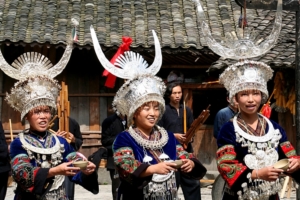
Preserving China’s Indigenous Minority Languages

Indigenous Minority Languages 

Approximately half of the world’s 7,000 distinct spoken languages are at risk of extinction within this century as a result of market globalization. Generational language loss emerges from the prioritization of dominant languages over minority languages. Yet, online communications technology expands outlets for the promotion and preservation of endangered indigenous minority languages. 

The People’s Republic of China (PRC) recognizes 56 ethnic minority groups, of which 55 have indigenous languages, numbering approximately 130. Indigenous peoples consisting of 1,000 or fewer people speak at least 20 of those languages. Out of 11 million ethnic Manchus, fewer than 100 have conversational fluency, a symptom of Standard Mandarin supplanting the Manchu language. The Hezhen, Tatar and She languages face circumstances like Manchu, while the Jinuo, Nu, Pumi and Yilao languages risk losing their conversational status.  

Historic Policies for Preserving China’s Indigenous Minority Languages

The PRC Ministry of Education has implemented policies for the preservation of indigenous minority languages. These policies rest on the premise of the legal equality of all ethnicities and autonomous governments in the nation. Hence, minority ethnicities have considerable self-government in the form of five autonomous regions, 30 autonomous prefectures, 120 autonomous counties and 1,256 autonomous communities. Autonomous ethnic minority areas comprise 64 percent of China‘s total landmass, governing 75 percent of the ethnic minority population.

The law guarantees the provision of language interpreters for ethnic minority representatives in the PRC’s parliamentary assemblies. Likewise, official bodies translate all laws, regulations and major political documents into indigenous minority languages. Autonomous governments conduct their affairs in these languages. Standard Mandarin and minority languages coexist on autonomous government seals, identity cards and in the commercial sector.  

Plaintiffs may file lawsuits in indigenous minority languages, and defendants without fluency in Standard Mandarin may request translators. Courts may conduct trials in native languages for the sake of convenience and efficiency, while the translation of court documents into many languages occurs in multilingual regions.  

Autonomous regions receive latitude in structuring education in many languages. But such schools must also ensure skill in Standard Mandarin. As of 2012, bilingual education existed in 21 autonomous regions and 13 provinces, encompassing approximately 10,000 schools.

Policies incentivize minority authors and translators to write and publish in their native tongues. No cap exists on the quantity of minority language writings permitted, while the free provision of stripe codes further facilitates publication. State proposals to fund minority language magazines and journals raise questions of integrity and autonomous development.  

Kazakh, Korean, Mongolian, Tibetan, Uyghur, Zhuang and Yi are among the sixteen indigenous minority languages in which CCTV has broadcast since May 22, 1950. The national radio has broadcast in more than 20 minority languages, compared with local radio broadcasting encompassing 30-plus languages.

The Increased Role of Digital Technology in Present-Day Language Preservation Measures

As a supplement to these earlier measures, authorities now explore the opportunities afforded by technology for moving language preservation into a globalized digital world. In 2010, the PRC began developing a vocal database of the nation’s officially-recognized languages and dialects. Xinjiang-based ethnic Kazakh university professor Akbar Majit notes that as of 2010, online communication had already made inroads in minority communities. In 2010, the PRC began developing a vocal database of the nation’s officially-recognized languages and dialects. Majit notes that as of 2010, online communication had already made inroads in minority communities.

An event held in September 2018 in Hunan province showcased technological options, such as the comprehensive recording of endangered languages. Among the advanced technologies discussed as language preservation tools were AI speech recognition and synthesis.

Conclusion

Tibetan monk and software developer Lobsang Monlam notes that even small inroads of digital technology on Tibet make a considerable impact. Internet, word processing and other adaptations of the Tibetan language currently exist. From grammar, character and spell-check programs to optical character recognition, speech-to-text and translation software, digital technology may substantially assist minority language preservation and promotion throughout China. Building upon the policies of the past with the technology of the present and future, justification exists for optimism about the future of China’s minority languages. 

– Philip Daniel Glass
Photo: Everystockphoto

December 7, 2019
https://borgenproject.org/wp-content/uploads/borgen-project-logo.svg 0 0 Lynsey Alexander https://borgenproject.org/wp-content/uploads/borgen-project-logo.svg Lynsey Alexander2019-12-07 07:30:372024-05-29 23:13:17Preserving China’s Indigenous Minority Languages
Activism, Developing Countries, Global Poverty, Hunger

Kelvin Beachum Fighting to End World Hunger

Kelvin Beachum

As an offensive tackle in American Football, Kelvin Beachum is accustomed to being in tough circumstances. But as a child, he remained unaware of the harsh reality of food insecurity that his hardworking parents struggled with. His family grew up poor but his parents always found a way to provide, sometimes having to rely on government programs like food stamps or WIC (Women, Infants and Children) to put food on the table. Now, the football player does his part by giving back to ensure that fewer families have to worry about where their next meal will come from.

Beachum and World Vision

There are 795 million hungry people throughout the world, and malnutrition is the cause of almost half of all deaths of children under the age of 5. These sobering facts have inspired Beachum to take his cause for food security international. In the summer of 2016, he traveled to Honduras with World Vision, a global Christian humanitarian organization, to witness how another country deals with the issue of childhood hunger. He was surprised to discover that finding a source of clean water is just as difficult as finding food within the country.

During his travels, he visited a rural school where he witnessed a water tank system that is part of a World Vision water project and will eventually provide access to clean water for more than 200,000 people. In another community he visited, World Vision facilitated the growth of an economic empowerment project, which provides clean drinking water for the entire community as well as water for agricultural irrigation.

Beachum and World Food Day

Beachum also advocates for World Food Day, which is celebrated every year on October 16th to honor the founding of the U.N.’s Food and Agriculture Organization in 1945. For World Food Day 2018, he created a match challenge for five food banks throughout the U.S. His plan entailed donating $5,000 to each food bank and doubling his donation if members of the community matched his contribution.  Eventually, he reached his goal of $70,000, which provided 327,000 meals for hungry individuals throughout the U.S.

“It allows me to keep things in perspective,” Beachum states. “I was…on food stamps growing up…We had people who helped us out. So, for me, that keeps me grounded, honestly, because I was there.”

Kelvin Beachum and Feed the Future

His advocacy extends Feed the Future (FTF), the U.S. government’s global hunger and food security initiative. FTF works with partner countries to break the vicious cycle of poverty and hunger by developing their agricultural sectors and working to sustainably grow enough food to feed their people. They are also leading the implementation of the Global Food Security Act of 2016, which promotes global food security, resilience and nutrition. FTF draws on resources and expertise from multiple U.S. federal departments and agencies, such as the U.S. Department of Agriculture (USDA) and the U.S. Agency for International Development (USAID).

The progress speaks for itself; it is projected that 23.4 million more people are living above the poverty line, 3.4 million more children are living free of stunting, and 5.2 million more families do not go hungry within the countries that FTF partners with. The Global Food Reauthorization Act, signed by President Donald J. Trump in 2018, ensures that funding continues for FTF so the assistance they provide for hungry individuals around the world will persist.

Conclusion

Through his advocacy and partnership with organizations such as FTF, Kelvin Beachum is breaking the mold of the stereotypical football player. His interest in humanitarian issues all started with a canned food drive in college and has blossomed into global efforts that are making real change. His hope is to inspire others to take action through advocacy, donations, and volunteering. “The world is going through a lot right now,” Beachum writes. “Anything [one] can do to bring light to it—that’s impactful.”

– Rachel Baum
Photo: Flickr

November 25, 2019
https://borgenproject.org/wp-content/uploads/borgen-project-logo.svg 0 0 Kim Thelwell https://borgenproject.org/wp-content/uploads/borgen-project-logo.svg Kim Thelwell2019-11-25 07:30:012024-05-29 23:13:42Kelvin Beachum Fighting to End World Hunger
Activism, Global Poverty

4 Instagrammers Showcasing Africa

4 Instagrammers showcasing Africa

Social media is a definitive way people connect with parts of the world they will never see in person. The image sharing site of Instagram is an example, garnering over 1 billion monthly users as of June 2018. Instagram has also been an effective method for users across the continent of Africa to broadcast their rich lives and careers. BBC author Adora Mba in October 2019 made a case for Instagram being beneficial for Africa as a way to challenge stereotypes, particularly in the countries of Ethiopia and Ghana. With the main focus on these countries, this article will highlight four Instagrammers showcasing Africa, and how they’re making a difference.

4 Instagrammers showcasing Africa

  1. Everyday Africa: An Instagram that describes itself as a “collective of photographers looking to broaden the perception of Africa beyond the headlines.” With 404K followers on Instagram, Everyday Africa uses its large platform to display African life and highlight positive actions being taken. On Oct 21st, 2019, Everyday Africa posted about environmental activist Modou Fall from Dakar in Senegal. With a goal to raise awareness about plastic waste in Senegal, Fall travels through Dakar in a costume made out of recycled plastic to invite conversation. This Instagram also posts about sporting events, such as a Uganda vs. Nigeria basketball game held in Kampala, Uganda on September 9th, 2019. Through the Everyday Projects part of Every Africa’s site, photographers are also hired within their community to accurately portray life in their countries; another positive aspect of the Instagram account. Everyday Africa is a noteworthy part of the 4 Instgrammars showcasing Africa because of all the organization publicizes.
  1. Prince Gyasi: The Ghanain Instagrammer has 82.6K followers and uses his platform to highlight the stories from marginalized communities in his home city of Accra. Gyasi uses his Instagram platform to advertise for the nonprofit BoxedKids that he is a co-founder of. Boxedkids is a campaign that seeks to provide education to children in the district of Jamestown in Accra, Ghana. Gyasi will mainly use his account to highlight ordinary people in his community, such as a photo showcasing the “mothers of Jamestown” posted on February 17th, 2019. As part of the Boxedkids series, Gyasi posted two children fishing in Jamestown in November 2018. Prince Gyasi recently did an interview with BBC News to expose others to his work, making him a prominent one of the 4 Instagrammers showcasing Africa.
  1. Nana Kofi Acquah: With the username “Africashowboy”, Acquah has 9.5K followers on Instagram. Acquah uses his platform to highlight life in Ghana, such as the Jamestown fishery life photo posted on August 15th, 2019. The popular Instagrammer will also use his platform to highlight societal issues going on in the country of Ghana: such as men working in illegal mining operations, women who are surviving Obstetric Fistula during childbirth, or birthing traditions for Ghanaian women. Acquah’s account will vary from urgent posts about child labor in the fishery industry to one’s about weddings in Ghana. Acquah’s variety of content that always includes a story of text with each photograph makes him a significant Instagram influencer for Ghana.
  1. Eyerusalem Jiregna: An Ethiopian photographer with almost 9,000 followers, Jiregna is a feminist addition to these 4 Instagrammers showcasing Africa.  Primarily focused in the capital of Ethiopia, Addis Ababa, Jiregna’s The City of Saints 2017 photography series highlights the women in her area. In a 2019 interview with Whitewall Art, the Instagram artist describes her main focus of photography as: “architecture, fashion, culture, and history.” Examples of this include a photo posted on Nov 8th, 2019, depicting women in the Addis Merkato (marketplace). She also spotlights mothers with their children under a hashtag of #motherhood to give credit to mothers in Ethiopia and their livelihoods. Another very prominent part of Jiregna’s photography is to highlight religious celebrations for Christians in her country.

The power of photography can give insight into the culture of a people. The use of images has been a significant way people in the African countries of Ghana and Ethiopia have been expressing themselves to the world, and these 4 Instagrammers showcasing Africa are just a few examples of them. Advocacy can be done through people telling their own stories, and the platform of Instagram has been a way to introduce African life to the world in the 21st century.

– Natalie Casaburi
Photo: Flickr

November 25, 2019
https://borgenproject.org/wp-content/uploads/borgen-project-logo.svg 0 0 Lynsey Alexander https://borgenproject.org/wp-content/uploads/borgen-project-logo.svg Lynsey Alexander2019-11-25 07:30:012020-01-18 13:01:264 Instagrammers Showcasing Africa
Activism, Extreme Poverty, Global Poverty

Poverty and Protests in Hong Kong

Protests in Hong KongIn February 2019, the Hong Kong government proposed new changes to its extradition law that would change the country’s security and judicial laws altogether. The new changes will allow people to be tried in mainland China for crimes committed in Hong Kong. This has caused multiple protests in Hong Kong.

Why People in Hong Kong Are Protesting

The cause of the uproar lies in the inequality between freedoms and liberties for citizens of China versus citizens of Hong Kong. On a late Sunday in March, people in Hong Kong began protesting against changes to Hong Kong’s current extradition law. What began as peaceful protests about 11 weeks ago, turned violent after many protesters clashed with police during one of the largest protests ever held in Hong Kong.

Due to the authorities’ violent response to the protesters, including the use of beanbags, tear gas and rubber bullets, the protests slowly turned into a movement against Hong Kong’s government as a whole. The indefinite suspension of the bill that began the protest movement just sparked more controversy, given that many are speculating that the chief executive, Ms. Lam, does not have the authority to formally withdraw the bill. As many as 2 million people walked the streets to show their displeasure with the government’s response.

As of yet, the protesters have five demands. They want the resignation of current chief executive Carrie Lam and to keep mainland Chinese tourists out of Hong Kong. They also demand the removal of the word “riot” to describe the demonstrations, the release of those that have been arrested during the protests and an investigation into the police and its alleged excessive use of force.

Relation Between Protests and Poverty in Hong Kong

These protests are likely to have detrimental impacts on the poor population. Approximately one in five Hong Kong residents live below the official poverty line. Many receive a monthly income of less than $700. Additionally, monthly rent currently makes up 70 percent of the median household income for half the population in Hong Kong. This further contributes to people’s economic demise while also allowing avenues such as illegal housing markets to open up.

The minimum wage in Hong Kong has not increased in the past several years. To make matters worse, the government began outsourcing jobs in 2002 as a way to downsize and reduce spending. However, the plan led to the development of a poor working class, which now must rely on social programs like the Low-Income Working Family Allowance (LIFA) scheme and the Comprehensive Social Security Assistance (CSSA) scheme. These schemes help families who cannot support themselves solely with their monthly wages.

As the situation further deteriorates in Hong Kong, the government will continue reducing expenditures. This will be more costly for those living below the poverty line as social programs are the first to be cut. The economy will worsen as tourism declines and the effects of the trade war with China fully sink in. In turn, this will leave approximately 1.38 million people without any form of government assistance.

How to Help

For situations like this, it is important to have bills like the Global Fragility Act passed in Congress, since this bill would not only work towards preventing conflict from occurring but it would also address those regions that are more at risk of developing violent conflict.

Protests and poverty in Hong Kong are deeply intertwined. As the government cracks down, the poor will be the first to suffer. That is why it is important to urge Congress to take action and help those who need it the most. By contacting your representative in the Senate and encouraging them to pass the Global Fragility Act, also known as S.727, each person can be a part of the movement that is improving living conditions across the globe.

–Laura Rogers
Photo: Pixabay

November 23, 2019
https://borgenproject.org/wp-content/uploads/borgen-project-logo.svg 0 0 Kim Thelwell https://borgenproject.org/wp-content/uploads/borgen-project-logo.svg Kim Thelwell2019-11-23 07:30:062020-01-18 13:05:33Poverty and Protests in Hong Kong
Activism, Advocacy, Education, Global Poverty

3 NBA Players Shooting to End Poverty

nba players shooting to end poverty

NBA players display their passion and skills on the court. They are recognized for both the number of points they score and shots they block. However, several players display their passions and aspirations off the court through charitable work. They are indeed recognized for both the number of lives they affect and the smiles they paint on the faces of the less fortunate. Here are three NBA players shooting to end poverty.

Buddy Hield

A native Bahamian, Buddy Hield grew up in Freeport, The Bahamas. Excelling in the sport of basketball, the University of Oklahoma recruited him to their team where he became a sensational collegiate player in the United States. His feats in collegiate basketball landed him a spot on the Sacramento Kings basketball team of the NBA. When Hurricane Dorian struck The Bahamas on September 9, 2019, Buddy Hield immediately began sending help.

Threatening the lives of 2,000 people and throwing many more under the poverty line, Hurricane Dorian became the worst hurricane in Bahamian history. Hield raised a significant amount for his birthplace and sent needed supplies. Hield has raised about 300,000 dollars in total through the Buddy Hield Foundation and the Kings organization. He also spearheads the donation cause of food and clothing to his people. He even plans to travel to the Bahamas with his mother to cook for the impacted Bahamians.

LeBron James

LeBron James is an extraordinary man on and off the court. Born in Akron, Ohio, LeBron James showed superstar potential as early as high school. Breaking records and winning the NBA Finals is important to James but so is his charity work. In his hometown of Akron—where the poverty rate is approximately 25 percent—James founded his own public elementary school called the I Promise School. He founded this school to improve the well-being of the Akron population, offering education to the less fortunate to help increase living conditions and decrease the poverty line. The school opened with only grades three and four but hopes to be fully functional by 2022, teaching grades one through eight. Amazingly, the school has shown promising results in which 90 percent of students have reached goals in both math and reading. The LeBron James Family Foundation evens covers all schooling expenses in the school’s family resource center where parents are provided with services from work advice to legal services. All of this is in an attempt to increase the living conditions of James’ beloved Akron community.

Pau Gasol

Two-time NBA champion, Pau Gasol epitomizes an outstanding citizen. Born in Barcelona, Spain, the Memphis Grizzlies drafted Gasol in 2001, where he became the first foreign player to win Rookie of the Year. While balancing his basketball career, Gasol became heavily involved in global issues, ranging from AIDS to obesity.

He has been a UNICEF Spanish Ambassador since 2003, tackling childhood obesity and malnutrition to better the lives of children globally. He aims to see that children live their full potential in eating the proper foods. Around the world, 149 million children below the age of 5 are stunted from the effects of malnutrition, and over 40 million are obese. Since 2003, Gasol has dedicated his time, outside of basketball, to advocate UNICEF’s work in nutrition, education and other humanitarian work by traveling to impact children in Iraq, Lebanon, Chad and other needful countries.

In collaboration with his brother, Mark, the two founded the Gasol Foundation to decrease childhood obesity through physical activity and healthy eating habits. Just recently, Gasol was named the Global Champion for Nutrition and Zero Childhood Obesity by UNICEF.

These three NBA players shooting to end poverty demonstrate excellence on and off the court. Their kind hearts and charitable acts deserve as much recognition as their athletic abilities do. From donating clothes to building schools, these NBA players have indeed shot and scored both on the court and in their communities, global or domestic.

– Colin Crawford
Photo: Unsplash

November 23, 2019
https://borgenproject.org/wp-content/uploads/borgen-project-logo.svg 0 0 Kim Thelwell https://borgenproject.org/wp-content/uploads/borgen-project-logo.svg Kim Thelwell2019-11-23 07:30:032020-01-18 13:06:013 NBA Players Shooting to End Poverty
Activism, Global Poverty

Mobilizing Congress Matters

Mobilizing Congress Matters In today’s society, most people think it won’t make a difference when they are asked to vote or contact Congress. However, this is not the case. Congress is “the People’s Branch,” meaning that Congress is supposed to be representative of the people. Every single member of Congress is elected into office by their constituents; therefore, they can be elected out as well. So, they pay close attention to the demands of their citizens. They make frequent trips back home to stay in touch with their constituents. The staff of these representatives dedicates a lot of time to reviewing mail from citizens. Members of Congress keep in touch with local officials and attend meetings with their constituents. The nature of this job ensures that mobilizing Congress matters because a congressperson’s position is entirely dependent on the will of the people.

The Misconception

Recent data indicates that the reason the majority of people don’t vote is that they either don’t care or don’t think their vote matters. In fact, a 2008 survey showed that 13.4 percent of people were not interested in voting. Socioeconomic status and cultural norms have proven to affect whether people believe mobilizing Congress matters. Some are taught that it is expected that they vote in order to make a difference in the country. Other people, however, believe that “politics is a kind of abstract, dirty business. So, a lot of people come to adulthood with a different understanding of their place in the political system.”

Inequalities reinforce themselves throughout every aspect of life. If someone is from a highly affluent community, they are likely to associate with people who believe in voting. This may inspire them to go out and vote. Whereas, those in poorer communities are more apt to believe that their voice doesn’t matter. This creates a pattern in these communities. Members from wealthier communities continue to show up to elections, but members from poorer communities are underrepresented. Conversely, residents from affluent areas see their preferences being represented. However, preferences from struggling areas continue to go ignored.

Past Mobilization Victories

Mobilizing Congress matters, and the historical record shows it. The following are two examples of global poverty reduction movements that succeeded thanks to U.S. citizens rallying together to enforce change.

  • The Global Security Food Act was signed into law by President Obama on July 20, 2016. The law works to make getting food to the world’s poor as cost-effectively and efficiently as possible. The Global Security Food Act faced an uphill battle. However, it was the power of mobilization that turned this bill into law. Thousands of people wrote letters to their congressional officials in support of the bill. More than 270,000 people showed up to the Global Citizen 2015 Earth Day Event. In June 2015, 86,000 citizens signed a petition, and more than 34,000 people called their representatives in support of the bill. These voices were heard. The House of Representatives passed the bill in a majority of 369 to 53.
  • The Water for the World Act was signed into law by President Obama on December 19, 2014. This law seeks to address the issue of 2.5 million people who do not have access to toilets and more than 750 million people who do not have clean drinking water. The mobilization of Congress played a key role in this act’s passage. Organizations like WaterAid worked tirelessly alongside non-profit and faith-based organizations to get people to lobby Congress. Congress recognized the efforts of these groups and individuals, which culminated in its unanimous passage in both houses of Congress.

Congress Wants to Hear from its Citizens

Politicians have always been aware of the power a constituent’s voice holds. One of America’s first Congressmen, Thomas Jefferson, held that “the functionaries of every government have propensities to command at will the liberty and property of their constituents.” Jefferson believed that the government functioned only by the will of the people.

Furthermore, it is Congress’ job to represent its citizens. Therefore, congressmen need to hear from their constituents to make their preferences known. The conversations congressmen have with their people guide policymaking. Members of Congress also look at letters and e-mails that have personal touches to see what issues citizens are passionate about. Members of Congress want to stay in touch with their people and they are willing to use modern technological innovations to do it.

Mobilizing Congress matters! Congress says it, the historical record indicates it and Congress’ job description requires it. However, it is up to the people of the U.S. to take advantage of it.

– Gabriella Gonzalez
Photo: Wikimedia

November 21, 2019
https://borgenproject.org/wp-content/uploads/borgen-project-logo.svg 0 0 Kim Thelwell https://borgenproject.org/wp-content/uploads/borgen-project-logo.svg Kim Thelwell2019-11-21 07:30:532024-05-29 23:12:56Mobilizing Congress Matters
Activism, Advocacy, Developing Countries, Global Poverty

Maxima Acuña: In Defense of the Land

Maxima Acuña

News about native peoples fighting for the rights to their land is, sadly, nothing new. For many years, the indigenous populations of many nations around the world have struggled to keep their rights to their land. They are often ignored by their own country’s governments as well as international entities. However, that didn’t stop Maxima Acuña from fighting against the powerful Newmont and Yanacocha Mining Companies in defense of her land.

The Case

Maxima Acuña’s battle started one day when the Peruvian Mining Company Yanacocha, through the Newmont Mining Company, claimed rightful ownership of her property. Acuña’s land, as well as four lagoons near it, were the new grounds for the Conga mining project. While Conga was projected to be one of the most ambitious gold extraction projects, it didn’t sit well with the farmers that live around the land.

For the successful extraction of the materials, four critical lagoons would have to be “sacrificed” as they would be turned into waste pits or be completely dried out. Since 2011, the Newmont Mining company has been trying to claim the rights to her land. Maxima and her family were told to move as they were on official mining grounds. But, there was no way Maxima Acuaña would go out without a fight.

The Brutality of the Authorities

Because of her refusal, Yanacocha and the Newmont committed several acts of brutality and abuse of power against Maxima Acuña and her family. On more the one occasion, armed men destroyed her home and crops. They sent death threats and even “beat her and one of her daughters unconscious.” Despite all of this, Maxima refused to leave her land. The local authorities accused her of invasion of private land and sentenced her to three years in prison with a $2,000 fine. Luckily, through the help of an environmental NGO called GRUFIDES, Maxima Acuña was released from her sentence and granted legitimate property rights.

With the majority of the local population opposing the Yanacocha and the Conga project and the unconditional support of Grufindes, Maxima Acuña had the means to fight the mining companies. GRUFIDES fights for the environmental rights that were ignored by the Conga Project. With their help, Maxima Acuña was able to overturn the court’s decision. This huge win was not only for her but also for the farmers protesting the Conga project and protecting the lakes. Maxima Acuña now had the support of the local and even the international community.

The Lesson of Hope

In 2016, she became the winner of The Goldman Environmental Prize, making her case known in America. In March 2019, Maxima Acuña and her family won a vital appeal against the Newmont Mining Company against the company’s abuse. The motion guaranteed a fair trial for both parties, something big for Peruvian Farmers.

For many years, the abuse against indigenous farmers has been a topic that many choose to ignore. However, Maxima Acuña’s case is not the first and won’t be last. Her case shows that the fight is not over yet. Even with all the stakes against the environment, even the big companies can overthrow a fighting spirit.

– Adriana Ruiz
Photo: Flickr

November 15, 2019
https://borgenproject.org/wp-content/uploads/borgen-project-logo.svg 0 0 Kim Thelwell https://borgenproject.org/wp-content/uploads/borgen-project-logo.svg Kim Thelwell2019-11-15 08:06:342020-01-18 13:34:18Maxima Acuña: In Defense of the Land
Activism, Developing Countries, Development, Global Poverty, Health, Water, Water Quality

8 Companies Working to End the Global Water Crisis

Global Water CrisisWater is a fundamental resource for the sustainment of human life. The accessibility of clean water throughout many underdeveloped countries is rapidly becoming a detrimental humanitarian problem, a direct result of exponential population growth. And with such swift consumption, usable water sources are quickly drying up and diminishing. Over the past couple of years, daily conservation of water has become a global plea to help preserve water sources for future generations. This may seem like a bleak issue, but there is hope. Many corporations and nonprofit organizations around the world are invested in ending to the global water crisis. Here are eight companies working to end the global water crisis.

8 Companies Invested in Putting an End to the Global Water Crisis

  1. charity: water – Founded in 2006, this nonprofit organization is working to end the global water crisis by providing clean drinking water to citizens in 24 developing countries. charity: water focuses on three methodologies for providing clean water to communities in need: hand-dug wells, drilled wells and rainwater catch equipment that collects the water and sanitizes it. In addition, by collaborating with a number of local partners, the organization has funded more than 24,000 successful water projects as of 2018. Instead of just accepting donations, charity: water inspires people to start their own campaigns to raise money for clean water. Overall, the organization’s efforts have benefitted approximately 8.2 million people and counting.
  2. Global Water Challenge – The Global Water Challenge, also known as the GWC, is part of a leading team of organizations heavily invested in bringing clean water, for both consumption and hygiene purposes (WASH Sustainability Program), to each corner of the globe. While the GWC’s programs benefit entire communities, women’s empowerment is an important area of focus. After all, women are typically responsible for spending a huge portion of their days gathering water to sustain their families. Thanks to its public-private partnerships, the organization has reached more than 1 million individuals to date.
  3. water.org – The organization’s WaterCredit Initiative works with local businesses to provide loans to people who lack adequate water and sanitation resources. The organization mainly works with people through financing safe access to water in efforts to diminish the global water crisis, more sustainable methods and have effectively enabled more than 25 million people to obtain access to clean water and sanitation services.
  4. Drop in the Bucket – Similar to the previous organization, Drop in the Bucket also operates on a community loan basis to fund wells.  The organization has built 300 wells in schools in East Africa since its founding in 2006, recognizing this area as one in need when seeking to address the global water crisis.
  5. PepsiCo – Through partnerships with NGOs such as WaterAid and 2030 Water Resources Group of the World Bank, Pepsi has made it a priority to invest in ending the global water crisis. The company is focused on helping developing communities in the United States, Latin America, India and China by offering strategic grants that teach various methods for effectively conserving water. As of the middle of 2018, the company has donated $40 million to these organizations.
  6. The Nature Conservancy – One of the biggest charitable environmental organizations in North America, the Nature Conservancy concentrates its efforts on the preservation of land and water sources. The organization works in three continents — specifically focusing on Europe, as well as in Latin America and India. With more than one million members actively working to conserve natural landscapes through science and technological means, this group instills hope for future generations.
  7. UN Water – An arm of the United Nations, this agency works in more than 30 countries to provide clean water and sanitary techniques to assist the underprivileged. UN Water uses a data-driven approach to effect change in the countries where it operates.
  8. World Resources Institute – The World Resources Institute (WRI) is focused on the “mapping, measuring and mitigating global water challenges.” One of the organization’s current projects utilizes aqueduct systems as a method for preserving and sustaining water sources. The group is also working to rehabilitate ecosystems, to lessen the burden on diminishing water sources. The WRI is active in more than 50 countries and has global offices in Brazil, China, Europe, India, Indonesia, Mexico and the United States.

– Joanna Buoniconti
Photo: Flickr

November 11, 2019
https://borgenproject.org/wp-content/uploads/borgen-project-logo.svg 0 0 Kim Thelwell https://borgenproject.org/wp-content/uploads/borgen-project-logo.svg Kim Thelwell2019-11-11 12:39:192024-05-29 23:13:108 Companies Working to End the Global Water Crisis
Activism, Developing Countries, Development, Global Poverty

Magatte Wade Fights Poverty in Africa

Magatte Wade Fights Poverty in Africa
As of 2019, poverty in Africa continues to be a prevalent issue. According to Brookings Institution, around one in three Africans, or 422 million people, live below the global poverty line. African people, in general, represent more than 70 percent of the world’s poorest people. While other parts of the world have dedicated some effort to combat the issue of poverty in places like Africa, it is apparent that these efforts are not enough. Thankfully, there are wealthy people from Africa who are trying to help make a difference, such as Senegalese businesswoman Magatte Wade.

Magatte Wade

Magatte Wade specializes in selling organic skincare products through her company, Tiossan. She believes that entrepreneurship is an important step in achieving economic prosperity throughout the world, including her home continent of Africa. Additionally, Magatte Wade fights poverty in Africa by providing TED Talks and documentaries on the issue of poverty in Africa and has spoken about what she believes are the core economic issues facing the continent. Wade attributes the primary issue of poverty in Africa to unemployment, which she believes is the result of people not being able to learn how to be entrepreneurs.

Wade Takes Action

Magatte Wade fights poverty in Africa in her home country as well. She has worked to bring the manufacturing of her products to Senegal, particularly to her hometown, Mekhe. In addition to her skincare products, Wade helps local businesses in Africa, such as CAWAAN, which produces the leather bags that hold Wade’s skincare products. The people in charge of CAWAAN now commit themselves to work harder and focus more on optimization due to Wade’s words.

Wade has also worked closely with the mayor of Mekhe to provide opportunities for things like farming, energy, training and education, including creating a business school in Senegal that aims to teach important entrepreneurial skills to young people. According to a 2018 annual report by the Fraser Institute, Senegal ranked at number 125 out of 162 countries in terms of economic freedom. While the country still has a long way to go, Wade’s efforts are helping to push the country in the right direction.

Center of African Prosperity

In 2019, Magatte Wade became director of the then-recent Center of African Prosperity, in association with Atlas Network. The purpose of this organization is to promote movements such as free markets, property rights and institutions to build strong economic reforms throughout Africa. According to the company website, Magatte Wade fights poverty in Africa by bringing about inclusive prosperity, a pushback against negative stereotypes and a message of freedom for an international audience.

While poverty in Africa continues to be a prevalent issue as of 2019, entrepreneurs like Magatte Wade are doing what they can to ensure that they create more jobs throughout the continent. According to World Bank, Senegal has experienced economic growth of around 6 percent since 2014 and the Brookings Institution report estimated that by the end of 2019, the rate of people escaping poverty in Africa per day will be around 3,000. This suggests that there may very well be brighter days ahead for Africa.

– Adam Abuelheiga
Photo: Flickr

November 5, 2019
https://borgenproject.org/wp-content/uploads/borgen-project-logo.svg 0 0 Lynsey Alexander https://borgenproject.org/wp-content/uploads/borgen-project-logo.svg Lynsey Alexander2019-11-05 10:30:182024-05-29 23:13:37Magatte Wade Fights Poverty in Africa
Page 7 of 56«‹56789›»

Get Smarter

  • Global Poverty 101
  • Global Poverty… The Good News
  • Global Poverty & U.S. Jobs
  • Global Poverty and National Security
  • Innovative Solutions to Poverty
  • Global Poverty & Aid FAQ’s
Search Search

Take Action

  • Call Congress
  • Email Congress
  • Donate
  • 30 Ways to Help
  • Volunteer Ops
  • Internships
  • Courses & Certificates
  • The Podcast
Borgen Project

“The Borgen Project is an incredible nonprofit organization that is addressing poverty and hunger and working towards ending them.”

-The Huffington Post

Inside The Borgen Project

  • Contact
  • About
  • Financials
  • President
  • Board of Directors
  • Board of Advisors

International Links

  • UK Email Parliament
  • UK Donate
  • Canada Email Parliament

Get Smarter

  • Global Poverty 101
  • Global Poverty… The Good News
  • Global Poverty & U.S. Jobs
  • Global Poverty and National Security
  • Innovative Solutions to Poverty
  • Global Poverty & Aid FAQ’s

Ways to Help

  • Call Congress
  • Email Congress
  • Donate
  • 30 Ways to Help
  • Volunteer Ops
  • Internships
  • Courses & Certificates
  • The Podcast
Scroll to top Scroll to top Scroll to top