• Link to X
  • Link to Facebook
  • Link to Instagram
  • Link to TikTok
  • Link to Youtube
  • About
    • About Us
      • President
      • Board of Directors
      • Board of Advisors
      • Financials
      • Our Methodology
      • Success Tracker
      • Contact
  • Act Now
    • 30 Ways to Help
      • Email Congress
      • Call Congress
      • Volunteer
      • Courses & Certificates
      • Be a Donor
    • Internships
      • In-Office Internships
      • Remote Internships
    • Legislation
      • Politics 101
  • The Blog
  • The Podcast
  • Magazine
  • Donate
  • Click to open the search input field Click to open the search input field Search
  • Menu Menu

Archive for category: Activism

Information and stories on social activism.

Activism, Development, Education, Global Poverty

How the EU is Fighting Poverty

E.U. is Fighting Poverty
Poverty does not disappear by itself and Europe understands this. The European Union (E.U.) prioritizes poverty as an issue and has helped start many poverty reduction projects throughout the world. Within Europe, the E.U. fights poverty based on its Europe 2020 Strategy that strives to lift 20 million people out of poverty by 2020. Globally, the E.U.’s development policy aims to eradicate poverty through sustainable development. In both of these endeavors, the E.U. is making tremendous progress in reducing poverty. Here is how the E.U. is fighting poverty in Europe.

The EU Fights Poverty in Europe

The Europe 2020 Strategy is an ambitious plan that could drastically change Europe’s economy and social landscape. Some of the strategy’s targets include employing 75 percent of people aged 20-64, providing higher education to 40 percent of people aged 30-34, increasing energy efficiency by 20 percent and using 3 percent of the E.U.’s GDP for research and development. These targets are mutually reinforcing as improvements in education should help reduce unemployment, and improving energy efficiency should make European businesses more competitive, creating more jobs.

The Europe 2020 Strategy is only a “reference framework” that E.U. countries use to create national targets. These national targets mean that governments can now measure their progress and determine whether or not they are reaching their poverty reduction goals. Thus, even though the Europe 2020 Strategy does not force countries to do anything, it has helped countries to measure their progress and determine whether they are doing enough. The strategy receives constant review and the European Commission still believes that the Europe 2020 Strategy is an effective framework that can help create jobs and promote economic growth.

What have the results been? As of 2017, the E.U. managed to provide 39.9 percent of people aged 30-34 with higher-level education, 0.1 percent away from their 2020 goal of 40 percent. Between 2013 and 2017, the number of people at risk of poverty in the EU dropped from 122.8 million to 112.8 million. The percentage of 18-24-year-olds leaving school early dropped from 14.7 percent in 2008, to 10.6 percent in 2017. While the European Commission admits that people need to do more to combat poverty in Europe, the progress so far has been promising.

The EU Fighting Poverty Internationally

The E.U. wants to end poverty worldwide. It is attempting to do so using a couple of different methods. In 2007, the Joint Africa-EU Strategy (JAES) created a partnership between the E.U. and Africa. The partnership helped create a relationship between the two groups that could help foster sustainable development that will benefit both parties. The partnership deals with other issues besides development and poverty but has made significant impacts on the latter. For instance, the E.U. accounts for one-third of all the foreign direct investment in Africa. Supporting the Africa-E.U. partnership is the Pan-African Programme which strives to create sustainable human and economic development. The E.U. has allocated $845 million euros to the program between 2014 and 2020. Outside of Africa, the E.U. also plays a large role in poverty reduction. E.U. aid represents more than 50 percent of global aid.

In conclusion, the E.U. is fighting poverty and promoting sustainable development. Within the continent, the E.U. is making progress as education rates improve and poverty levels continue to recover from the 2008 financial crisis. Globally, the E.U. continues to lead by example as it sets the bar for providing foreign aid to developing countries. The U.S. has the capability to match these achievements but needs more people to voice their concerns about international poverty. Reach out to congress and encourage the U.S. to end international poverty by clicking this link here.

– Nick Umlauf
Photo: Flickr

September 20, 2019
https://borgenproject.org/wp-content/uploads/borgen-project-logo.svg 0 0 Kim Thelwell https://borgenproject.org/wp-content/uploads/borgen-project-logo.svg Kim Thelwell2019-09-20 14:23:462019-10-30 10:20:23How the EU is Fighting Poverty
Activism, Developing Countries, Development, Global Poverty

The Link Between Art and African Poverty Reduction

Art and African Poverty Reduction
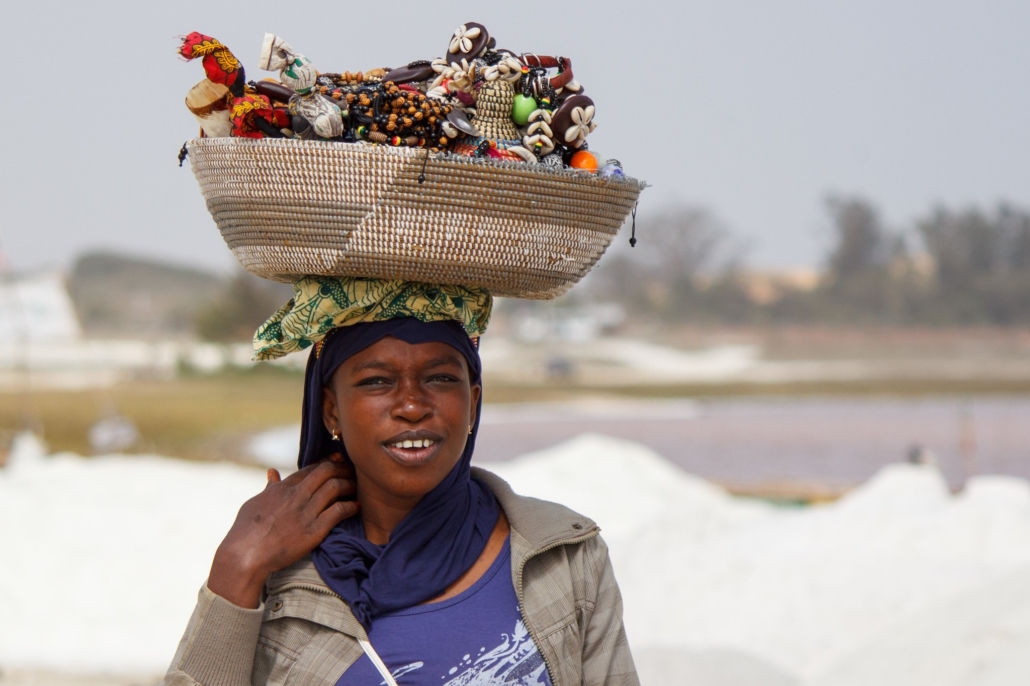
In Africa, poverty is an immense issue as 43 percent of the nation’s people live below the international poverty line. Despite this painful reality, art is playing a large role in pulling many of the continent’s people out of the poverty they started life in. Thanks to organizations such as Bead for Life in Uganda and ASTEP in South Africa, creativity is providing these impoverished people with both a platform for self-expression and a means to fiscal independence. Here are some organizations that show the link between art and African poverty reduction.

Bead for Life

After meeting Millie, a poor Ugandan mother who had a passion for transforming objects into colorful handmade creations, Ginny Gordin, Torkin Wakefield and Devin Hibbard came up with an idea. Following this event in 2004, they founded Bead for Life, a nonprofit organization that supports female financial independence by providing African women with recycled paper that they can craft into jewelry and sell for profit. The organization also works to educate these impoverished women on how to run small-businesses through an initiative known as Street Business School. Since its founding, the 15-year-old organization now exists in 10 countries across Africa and is currently providing 52,000 African women with financial independence. The link between art and African poverty reduction is undeniable, making it a necessary step towards eradicating the poverty that rules too many African lives.

Artists Striving to End Poverty (ASTEP)

When ASTEP founder and Broadway Musical Director, Mary Mitchell Campbell, saw the power of art in cultivating the skills necessary to succeed at life, alongside the help of Juilliard students, Campbell founded Artists Striving to End Poverty (ASTEP), a nonprofit organization that works to heal poverty-stricken communities through art. When Evan Todd and Dick Scanlan recognized the link between art and African poverty reduction, they worked with the organization to establish artsINSIDEOUT in South Africa, a program that works to improve the lives of South Africa’s impoverished mothers and children who the AIDS epidemic strongly impacted. Through the help of ASTEP’s volunteer artists, the organization runs two-week-long art camps that not only foster storytelling and the visual arts for these South African people but also provides them with the tools necessary to lead successful future lives.

Gahaya Links

The Rwandan Genocide in 1994 caused thousands to become economically unstable and hit women the hardest. Thanks to the founders of Gahaya Links, Janet Nkubana and Joy Ndungste, however, basket-making is addressing Rwanda’s female economic instability. By holding workshops that teach impoverished women how to weave, Gahaya Links is able to provide its female weavers with a stable income, as the organization sells its finished baskets in the U.S. market, with top buyers being Macy’s and Fairwind’s Trading Inc.

The organization’s social impact has been astounding, as 100 percent of Gahaya Links female weavers can now afford health insurance, 10 percent have received a promotion to become community leaders and 80 percent have their own bank accounts. These women also now have access to clean water, are able to afford an education for their children and lead better lives overall. The organization has not only granted these women the economic stability they deserve but has also provided them with a pathway to fiscal independence.

The Amal Foundation

In North Africa, Libyan women do not receive encouragement to earn an income, and so when they become widowed or undergo a divorce, many become impoverished. Thanks to the Amal Foundation, however, these women are using embroidery as a means of attaining financial stability. Thanks to the Amal Foundation’s mandate to teach these women how to embroider and help them sell their work in local markets, these women are able to achieve financial independence. This organization’s work exemplifies the connection between art and African poverty reduction, as these women no longer endure the poverty that once dominated their lives.

Just One Africa

Through the initiative Beads for Water, Just One Africa is working in unique ways to provide impoverished African children with access to clean drinking water. The organization purchases handmade necklaces from African artists and then restrings them into bracelets that it sells in the U.S. market. Thanks to this organization, these African artisans are not only earning a stable income, but Africa’s poor children are also reaping the benefits, as a single Beads for Water bracelet provides 200,000 gallons of clean drinking water to Africa’s impoverished children.

Giving impoverished African space where they can profit from their self-expression is a wonderful poverty-fighting strategy whether they are making baskets or jewelry. Art’s ability to grant financial stability to these poverty-stricken citizens exemplifies the immense power of human creativity and its connection between art and African poverty reduction. Thanks to organizations such as The Amal Foundation and Gahaya Links, Africa’s impoverished people are not only rising out of poverty, but they are getting to do it in a fun and meaningful way.

– Candace Fernandez
Photo: Flickr

September 19, 2019
https://borgenproject.org/wp-content/uploads/borgen-project-logo.svg 0 0 Kim Thelwell https://borgenproject.org/wp-content/uploads/borgen-project-logo.svg Kim Thelwell2019-09-19 08:39:022024-05-29 23:12:41The Link Between Art and African Poverty Reduction
Activism, Advocacy, Development

The Elders Organization Makes An International Impact

the eldersIn 2007, Richard Branson and musician Peter Gabriel discussed an idea: what if former leaders of the world used their previous experience and influence to establish a non-profit tackling pressing modern issues? The Elders, an independent organization led by global leaders who no longer hold public office and are independent of any government affiliation, was born.
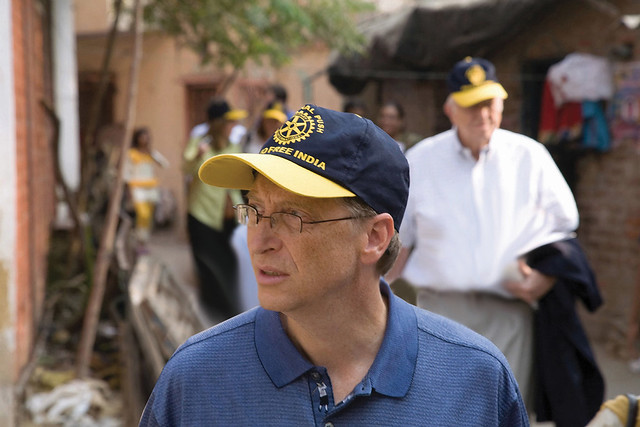

Who Are The Elders?

The first and founding member of the organization was Nelson Mandela, the former President of South Africa, who dedicated his life to ending apartheid. Like Mandela, peace makers, peace builders, social revolutionaries, and pioneering women comprise this group of influential individuals. The current Chair of the Elders is Mary Robinson, the first female Prime Minister of Ireland. Former Presidents of Mexico, Chile, and Liberia are also among the elite group. Currently, 11 individuals comprise the organization, while there are an additional five leaders considered “Elder Emeritus,” including former U.S. President Jimmy Carter.

Focuses of The Elders

The Elders focus on six programming areas. Firstly, the organization works to support international cooperation in solving issues that threaten all global citizens. For example, The Elders believe that nuclear weapons are a threat to all humans on Earth and are working on nuclear non-proliferation and disarmament. The organization believes that the only way to achieve this, and many other overarching goals, is through practical steps and global cooperation. The Elders also use their experience in peace making and building to aid in securing peaceful solutions to conflicts throughout the world. Specific priorities of the Elders include tension and conflict in the Korean Peninsula, the Middle East, and Zimbabwe.

Through global and country-level lobbying and activity, the Elders aim to build support for the importance of universal health coverage. Through keynote speeches and visits to countries in need of healthcare, the Elders are committed to achieving universal health coverage. The organization also believes that global complacency in climate change is one of the largest injustices in human history. To combat climate change, the organization is seeking to ease the transition to a low carbon economy and encourage creative solutions to keeping the planet sustainable.

In response to the number of migrants and refugees, The Elders works to keep struggles of these individuals at the forefront of the news and the minds of the public. Lastly, the group works with governments and countries to ensure that access to justice remains an important human right.

This esteemed group of individuals has massive impacts in unstable regions of the world, from Israel and Palestine to Sudan and South Sudan. Using its six programming focuses, the organization tackles a massive variety of issues, challenging injustice and praising and supporting strong governments and ethical leadership.

– Orly Golub
Photo: Flickr

September 10, 2019
https://borgenproject.org/wp-content/uploads/borgen-project-logo.svg 0 0 Kim Thelwell https://borgenproject.org/wp-content/uploads/borgen-project-logo.svg Kim Thelwell2019-09-10 15:42:162024-05-29 23:11:01The Elders Organization Makes An International Impact
Activism, Food & Hunger, Global Poverty, NGOs

Top Five People Who Fight Poverty Globally

People who Fight Poverty
Poverty is a global issue that affects at least 80 percent of the world’s population. The number seems frightening and can intimidate any person who might want to help. Some come together to fight as a united front and tackle the worldwide issue due to the sheer magnitude of the dilemma. Either way, every solution starts with a single person and a single idea. Below describes the top five people who fight poverty today, who they are and what they do (or did) to combat poverty.

Top Five People Who Fight Poverty

  1. Suzanna Mayo Frindt Empowers Rural Communities
    She is the current President and Chief of Staff of The Hunger Project, a nonprofit organization which aids countries in South Asia, Latin America and Africa. The organization provides aid through the establishment of self-reliance within the community. The Hunger Project begins by encouraging women to take active roles within the locale by training them to obtain leadership positions. Then, it enforces self-reliance. It does this by having individuals mobilize their peers through local government to take action and improve the conditions of the area. Finally, The Hunger Project works closely with these governments to ensure it is aiding the people. This system helps bring entire communities out of poverty. As President, Frindt is in a powerful position to fight poverty. She earned her position through 25 years of experience in the field as she worked in impoverished areas, like Peru. Additionally, she co-founded the firm, 2130 Partners. The firm is another organization that dedicates itself to guidance and education. Though these are just a few of her accomplishments, these key points showcase why Frindt is one of the top five people who fight poverty.
  2. Ellen Gustafson Feeds the Hungry
    This woman is an entrepreneur, activist, author and speaker whose primary cause is to work to eliminate world hunger. She focuses on hunger of particularly impoverished areas where the problem is most prominent. Gustafson co-founded FEED Projects, a charity which provides food for people around the world. As of 2019, it has provided 60 million meals to schools around the world. She has also tackled the issue of obesity through educational activism. Overall, Ellen Gustafason’s goals may center around food, but her work has improved the lives of impoverished people in places where they often need help the most.
  3. Bono Advocates Against Poverty
    He is an American musician and frontman of the popular music group, U2. Bono’s infamy stems not only from his musical persona but also from his philanthropic efforts. The singer is the founder of ONE, an advocacy organization that works to raise awareness of poverty and fight against the issue. Similar to The Borgen Project, ONE addresses its cause through legislation and lobbying of governments. ONE focuses on reducing poverty in Africa’s poorest areas. It is just one of the few organizations Bono supports with a target against poverty. This fact showcases the musician’s dedication to both his art and beliefs.
  4. Anthony Lake Leads UNICEF in the Fight Against Poverty
    He has been the director of UNICEF (United Nations Children’s Fund) since 2010. He earned his role through a longstanding career as a foreign policy advisor to various presidential candidates and officers of the United States. During the office of President Bill Clinton, Lake served as National Security Advisor. His political career prepared him well to undertake the leadership position of UNICEF, the organization responsible for a significant amount of the world’s humanitarian aid. Specifically, it focuses on the needs of children in over 190 countries. As Lake has taken directorship, his prominence in the fight against poverty has risen immensely.
  5. Bill Gates Shares His Financial Success with Developing Countries
    People primarily know Bill Gates as a technological innovator and a record-breaking billionaire. Through the creation of Microsoft, he has amassed substantial financial benefits. People also know Gates as an impressive philanthropist who gears his saving towards aid programs. Specifically, he has established the Bill and Melinda Gates Foundation, a joint project between him and his wife. The program receives a significant amount of his donations. Since its establishment in 2000, the foundation has “spent more than $36 billion to fund work in global health, emergency relief, education, [and] poverty,” as reported by Business Insider. The organization is using some of that money to fight malaria and ebola outbreaks in developing countries.

From political professionals to celebrities, these five people who fight poverty show that stepping up for the world’s poor does not require a designated hero. Anyone, with the right drive and ambition, can make a change for the better. The list features only a few prominent people who fight poverty, though it does not have to end there.

– Eleanora Kamerow
Photo: Flickr

September 4, 2019
https://borgenproject.org/wp-content/uploads/borgen-project-logo.svg 0 0 Kim Thelwell https://borgenproject.org/wp-content/uploads/borgen-project-logo.svg Kim Thelwell2019-09-04 06:39:562024-05-29 23:10:10Top Five People Who Fight Poverty Globally
Activism, Global Poverty

Top 10 Revolutionary Nelson Mandela Quotes on Love

Nelson Mandela Quotes on Love

As the first democratically elected president of South Africa, Nelson Mandela put persistent effort in dismantling the apartheid that divided the nation for 46 years. His peaceful protests against the racist legislation of the South African government exemplified legendary courage and leadership. These Nelson Mandela quotes on love reflect that through social activism and philanthropy, a passion for the betterment of humankind can change the world.

Nelson Mandela continuously inspires liberation movements across the world. His prison sentence of 27 years for the political offense of organizing and supporting the anti-apartheid movement lives on as a principle of a true hero. After being released from prison, Mandela won the Nobel Peace Prize. Then in 1994, he became the nation’s first democratically elected President. Inspiration for any oppressed group of people can be found in Mandela’s quotes about love for others and love of justice.

Ten Nelson Mandela Quotes on Love

  1. “The truth is that we are not yet free; we have merely achieved the freedom to be free, the right not to be oppressed. We have not taken the final step of our journey, but the first step on a longer and even more difficult road. For to be free is not merely to cast off one’s chains, but to live in a way that respects and enhances the freedom of others. The true test of our devotion to freedom is just beginning.”
  2. “No one is born hating another person because of the color of his skin, or his background, or his religion. People must learn to hate, and if they can learn to hate, they can be taught to love, for love comes more naturally to the human heart than its opposite.”
  3. “You will achieve more in this world through acts of mercy than you will through acts of retribution.”
  4. “During my lifetime I have dedicated myself to this struggle of the African people. I have fought against white domination, and I have fought against black domination. I have cherished the ideal of a democratic and free society in which all persons live together in harmony and with equal opportunities. It is an ideal which I hope to live for and to achieve. But if needs be, it is an ideal for which I am prepared to die.”
  5. “Everyone can rise above their circumstances and achieve success if they are dedicated to and passionate about what they do.”
  6. “As long as many of our people still live in utter poverty, as long as children still live under plastic covers, as long as many of our people are still without jobs, no South African should rest and wallow in the joy of freedom.”
  7. “Overcoming poverty is not a task of charity, it is an act of justice. Like slavery and apartheid, poverty is not natural. It is man-made and it can be overcome and eradicated by the actions of human beings. Sometimes it falls on a generation to be great. You can be that great generation. Let your greatness blossom.”
  8. “What counts in life is not the mere fact that we have lived. It is what difference we have made to the lives of others that will determine the significance of the life we lead.”
  9. “It is not our diversity which divides us; it is not our ethnicity or religion or culture that divides us. Since we have achieved our freedom, there can only be one division amongst us: between those who cherish democracy and those who do not.”
  10. “Let there be justice for all. Let there be peace for all. Let there be work, bread, water and salt for all. Let each know that for each the body, the mind and the soul have been freed to fulfill themselves.”

These Nelson Mandela quotes on love depict the ways in which he witnessed the world, and sought to change it. With love for oneself, others and one’s country, anything is possible.

– Nia Coleman
Photo: Wikimedia Commons

September 3, 2019
https://borgenproject.org/wp-content/uploads/borgen-project-logo.svg 0 0 Kim Thelwell https://borgenproject.org/wp-content/uploads/borgen-project-logo.svg Kim Thelwell2019-09-03 11:38:042024-05-29 23:10:54Top 10 Revolutionary Nelson Mandela Quotes on Love
Activism, Global Poverty, Women and Female Empowerment, Women's Empowerment, Women's Rights

The Best Countries to Live in for Women

Live in For Women
Where in the world do women have the most opportunities? One must consider many factors when evaluating a country’s appeal to women. Gender equality, women’s rights, equal pay, the poverty rate for women, the rate of education for women and more specific issues like paid parental leave all play a significant role in building an egalitarian society. The following five countries are the best countries to live in for women.

Sweden

The Swedish government has declared itself a feminist government, setting forth a nation-wide standard of gender equality. Gender equality in Sweden goes beyond equality of opportunities and extends into ensuring equal qualities of life to ensure a positive future for Sweden. Workplace gender discrimination has been illegal beginning in 1980 and Swedish legislation further developed gender equality when the Swedish Discrimination Act passed in 2009. This law states that all employers and businesses must take active steps to ensure the existence of equality between women and men and the absence of harassment in the workplace. In 2017, the law expanded to include the prevention of all harassment, not only harassment on the basis of gender. Notably, Sweden’s legislation prevents discrimination against individuals seeking to take parental leave, the absence of which causes a major financial burden on families worldwide. These policies ensure that women, whether single or married, mothers or not, receive protection against all major forms of harassment. A telling fact of the extent of gender equality in Sweden is the percentage of women comprising Swedish parliament and cabinet – 46 and 50 percent, respectively.

Denmark

Women in Denmark integrate incredibly into the workplace, as women generally maintain jobs outside of their homes. With a generous parental leave policy, women are able to raise families while working without worrying about maintaining income. Similar to women in Sweden, Danish women have respect and can participate in government affairs, with 40 percent of Swedish parliament being female. According to a 2016 survey that the U.S. News and World Report conducted, Denmark is the number one country in the world for women to live in. Respondents considered five factors including safety, progressiveness, income equality and gender inequality.

Canada

Canadians have ample legislation to preserve the presence of equality for women and men. Previously, Canadian women did not experience such egalitarianism, and the government of Canada has made tremendous strides in bettering the country for women. In 2015, Justin Trudeau famously appointed an equal number of males and females to his cabinet, setting forth a precedent for his time in office. Canadian women receive protection from discrimination through the Charter of Rights and Freedoms. Women are, on average, more educated than men in Canada, indicating definite equality when it comes to educational opportunities. However, Candian women still experience the wage gap and income inequalities in the workplace. Canadians claim that these issues are the largest and greatest obstacles standing in the way of true equality in Canada.

Norway

In 2014, the Constitution of Norway expanded to include more human rights, including the Equality and Anti-Discriminatory Act. This act improved the status and rights of women and minorities and was necessary due to violence against women and the segregation of men and women in the workplace. In 2016, the Government of Norway signed a new plan into action that would take steps to further women’s rights and gender inequality. The Action Plan for Women’s Rights and Gender Equality in Foreign and Development Policy focused on five different goals, including equal participation for men and women in politics, full economic rights for women to participate in the labor workforce and inclusive education programs for all children, male or female. These policies contribute to why Norway is on the list for top countries for women to live in.

The Netherlands

Prior to 1956, women in the Netherlands automatically lost their job as soon as they married. This fact is hard to fathom when compared to the state of women’s rights and gender equality of the Scandinavian country today. Dutch law legally prevents discrimination and explicitly bans any type of inequality in men’s rights and women’s rights. However, a closer look into the Netherlands reveals that the country is not exactly a perfect place to live for women. For example, though men and women have close to equal levels of education, there still exists a gap in the comparison of individuals doing paid versus unpaid labor. In terms of safety, 45 percent of Dutch women will experience domestic violence in their lifetimes. Governments in countries like the Netherlands have had to implement new platforms and legislation to ensure that citizens feel safer in favor of true gender equality.

These best countries for women to live in concentrate in North America and Scandinavia. The top 10 list also includes Finland, Switzerland, Australia, New Zealand and Germany, expanding the geographic regions outward. The United States of America ranks at around number 16, appearing lower on the list due to crippling income inequality. Additionally, some regions in the world provide very dangerous environments for women, including the Middle East and Asia in countries such as Afghanistan and India.

– Orly Golub
Photo: Flickr

August 23, 2019
https://borgenproject.org/wp-content/uploads/borgen-project-logo.svg 0 0 Kim Thelwell https://borgenproject.org/wp-content/uploads/borgen-project-logo.svg Kim Thelwell2019-08-23 13:00:032024-06-07 05:07:58The Best Countries to Live in for Women
Activism, Global Poverty

What You Need to Know about Mental Health in India

Mental Health in IndiaIndia is home to more than one billion citizens. According to a 2015 World Health Organization (WHO) report, of that billion, 56 million suffer from depression and 38 million have anxiety disorders. When adjusted for population size, India is the country with the greatest burden of mental and behavioral disorders, leading some to call the lack of mental health care in India a burgeoning crisis.
Although India is working to improve the mental health of its citizens, initiatives have been slow going. Some roadblocks to improving mental health are the social stigma, its low priority in the healthcare budget and a shortage of mental health professionals.

Stigma

One major barrier to improving mental health in India is the social stigma around mental illness. According to a survey by the Live Laugh Love Foundation, of the 3,556 respondents, 47 percent could be considered judgmental of people with mental illnesses while 26 percent were categorized as being afraid of the mentally ill. This study looked at people between the ages of 18 and 45 from different socio-economic backgrounds. Surprisingly, most of the respondents in those categories were well educated and from higher social classes. When asked to describe the mentally ill, many used derogatory terms or harmful stereotypes.

However, 26 percent of the respondents were categorized as supportive of people with mental illnesses. These respondents tended to be younger—between the ages of 18 and 24—and from a relatively lower educational and socio-economic background.

Advocates and activists are also working to destigmatize mental health in India. Recently, India passed the Mental Health Care Act of 2017, which protects the rights of people with mental illnesses so that they are treated without discrimination.

Low Priority

According to a 2015-16 survey by the Bengaluru-based National Institute of Mental Health and Neuroscience, 150 million Indians are in need of mental health care, but only 30 million have access to the care they need. Although India began implementing its National Mental Health Program in 1982 with the goal of integrating mental health care with general care, the rollout has been slow. As of 2015, only 27 percent of the 630 districts intended to have a mental health program had created one. The District Mental Health programs have also struggled with inaccessible funding and administrative issues like an inability to fulfill the required number of professionals for each district.

While this program has struggled, the government has been working on other means of improving mental health in India. In 2014, it began implementing its first National Mental Health Policy, which aims to increase funding for training mental health professionals and universal access to mental healthcare.

A Need for Mental Health Professionals

Perhaps one of the biggest roadblocks to improving mental health, though, is the extreme shortage of mental health professionals. In 2014, the WHO found that there is on average only one mental health professional for every 100,000 citizens. These doctors, psychiatrists and psychologists tend to be overworked leading to misdiagnoses in too many cases.

One way the government of Karnataka in southwest India has been trying to fill in the gap is with community health workers called accredited social health activists or ASHA workers. Though they usually are women who council other women in their communities on pregnancy, breastfeeding and parenting, in 2016, they began training these workers to identify and deal with mental health issues. While ASHA workers can help fill some of the gaps, there remains a need for more specialized care. India’s National Mental Healthcare Policy and District Mental Healthcare Policy is a good start, but for it to be successful, the Indian Government has to be proactive in training mental health professionals.

While people with mental illnesses are still struggling, the topic of mental health in India is gaining traction. Activists are working to destigmatize and protect people with mental illness while the government is working to increase accessibility to mental health professionals.

– Katharine Hanifen
Photo: Flickr

August 15, 2019
https://borgenproject.org/wp-content/uploads/borgen-project-logo.svg 0 0 Kim Thelwell https://borgenproject.org/wp-content/uploads/borgen-project-logo.svg Kim Thelwell2019-08-15 01:30:332019-09-07 07:57:21What You Need to Know about Mental Health in India
Activism, Charity, Global Poverty, Nonprofit Organizations and NGOs

5 NGOs Aiming to End Poverty and Hunger

NGOs aiming to end poverty
Hunger and poverty are problems millions of people face around the globe. According to The U.N. Food and Agriculture Organization, 815 million people were chronically undernourished in 2016. However, in the past few decades, the world has made major progress in terms of alleviating hunger and poverty overall. Between 1990-92 and 2012-14, the global undernourished population reduced by 42 percent. There are several non-governmental and nonprofit organizations continuing on that trend to eradicate world hunger and poverty through several different methods. Below are five NGOs aiming to end poverty and hunger.

Akshaya Patra

Akshaya Patra is a nonprofit organization that began in Bengaluru, India. Since the year 2000, the organization has been providing poor children with fresh and nutritious meals at schools. The aim of the organization is to eliminate malnutrition in children, as well as support the right to education for children whose families cannot afford it. When the organization started out, it was a very small-scale project that focused on local schools in rural regions. Initially, the organization began with feeding 1,500 children locally. Today, Akshaya Patra partners with the Indian government and multiple state governments. Additionally, it feeds 1.7 million children across the country. This makes it the largest mid-day meal program in the world and one of the most successful nationwide NGOs aiming to end poverty.

Green Shoots Foundation

Green Shoots is an organization that emerged in 2010. The organization approaches poverty through microfinance, sustainable development and holistic programs. The main aim of the organization is to improve access to education and access to medical aid in developing Asian and African countries. There are multiple programs that the foundation has implemented based on the specific needs of each region. Some of these programs include Education Loans and Social Entrepreneurship (ELSE), Food Agriculture and Social Entrepreneurship (FASE) and Medical Assistance and Medical Education (MAME). Countries that the Green Shoots Foundation has worked in include Cambodia, the Philippines, Myanmar, Vietnam and Kyrgyzstan.

Action Against Hunger

Action Against Hunger is an organization that focuses on ending hunger around the globe. The organization focuses on families with young children. So far, Action Against Hunger has contributed to providing aid in over 45 countries to over 21 million people. Its main aim is to double the number of children it is aiding by 2020, due to the fact that millions of children around the globe still remain undernourished. The organization deals with problems that stem from or worsen hunger as well, including nutrition and health, water and sanitation, food security and livelihoods and emergency response.

BRAC

BRAC is a non-governmental organization from Bangladesh. The organization mainly aims to end poverty but also focuses on several other issues that people living in rural or poor communities face. Its main social development goals include eliminating extreme poverty, increasing financial opportunities and choices, developing skills for employment and investing in education. BRAC emerged in 1972, and has since positively impacted the lives of over 100 million people globally. The program focuses on developing and improving conditions in 11 major countries including Afghanistan, Bangladesh, Liberia, Myanmar, Nepal, the Philippines, Rwanda, Sierra Leone, South Sudan, Tanzania and Uganda. Today, BRAC is the largest development organization in the world.

Water School

Water School is an organization with the aim to provide clean water and make it easily accessible to rural and poor communities in Uganda. It also educates such communities on sanitary practices involving water, health and education. Water school believes that health and education go hand in hand, and therefore focusses on improving conditions for both issues in poor communities.

Hunger and poverty are extremely large scale global issues that will take time, global effort and multiple solutions to solve. The examples of the non-governmental and nonprofit organizations above show that though progress is slow, it is steadily progressing.

These five NGOs aiming to end poverty have made significant progress on their own. Several similar organizations across the globe are working towards meeting multiple hunger and poverty goals as well.

– Nupur Vachharajani
Photo: Flickr

August 14, 2019
https://borgenproject.org/wp-content/uploads/borgen-project-logo.svg 0 0 Kim Thelwell https://borgenproject.org/wp-content/uploads/borgen-project-logo.svg Kim Thelwell2019-08-14 15:24:302024-05-29 23:11:085 NGOs Aiming to End Poverty and Hunger
Activism, Global Poverty, World Hunger

10 Interesting Facts About Albert Einstein

Facts about Albert EinsteinEinstein changed our scientific understanding of the universe. He was also and continues to be a palpable figure in the zeitgeist. After receiving global acclaim for his research, culminating with the Nobel Prize in 1922, Einstein put his newly acquired fame to good use. He used his platform on the world stage to promote and fight for causes of global development and unity. Below are 10 interesting facts about Albert Einstein.

10 Interesting Facts About Albert Einstein

  1. Einstein was a peacekeeper. Einstein was an ardent pacifist. While World War I raged across Europe, many of Einstein’s colleagues put forth a “Manifesto of Ninety-Three.” The document declared their unequivocal support for the war. Einstein attempted to put forth a counter-manifesto to no avail. Einstein continued to be a fervent ambassador for peace for the rest of his life.
  2. He understood the political turmoil that comes from world hunger. Einstein once observed, “An empty stomach is not a good political advisor.” The physicist was a witness to the effects of poverty. After his emigration from Nazi Germany, Einstein saw how the need for food and basic resources created instability within a country and had the potential to engulf the world in chaos.
  3. He believed in equality. Einstein also put his name, along with thousands of other signatories, on the Magnus Hirschfeld petition. This petition was a direct infringement of paragraph 175 of the German penal code which outlawed homosexuality in Germany.
  4. He didn’t claim any nationality. Einstein was the 20th century’s man without a country. In other words, he was a self-proclaimed “citizen of the world.” He was a passionate supporter of a world government, which is a far-reaching body that can rise above nationalist tendencies. As he wrote in his open letter to the United Nations General Assembly in 1947, Einstein was fearful that institutions such as the United Nations would be toothless bureaucracies. He advocated for a global, apolitical body that would be above all governments. Furthermore, he believed that it would broaden the U.N.’s powers above individual nations. This, in Einstein’s opinion, would be the surest way to prevent another world war and the use of newly acquired nuclear weapons.
  5. Einstein was a refugee. Another among this list of facts about Albert Einstein concerns how he was a refugee from Germany. Adolf Hitler’s regime threatened Jewish intellectuals like Einstein. Due to this, he was one of 125,000 Germans who immigrated to the U.S. to escape persecution in the years between 1933 and 1945.
  6. He was a supporter of his Jewish background. Following the atrocities against the Jewish population during the Nazi regime, Einstein became an outspoken supporter of the establishment of a Jewish state. While he supported the creation of Israel, Einstein was not sold on the necessary characteristics of a state. Some characteristics, for example, are borders or a standing army. So, while he would lobby for the support of such a nation, he never lost touch with his pacifist roots. Einstein was even offered the position of Israeli President in 1952. He declined the opportunity, stating: “I am deeply moved by the offer from our State of Israel, and at once saddened and ashamed that I cannot accept it.”
  7. He was a passionately curious person. Einstein was “passionately curious” his whole life. Therefore, access to education and information and general love for learning were close to his heart. He was aware of the threat that figures such as Senator Joseph McCarthy posed to the world. He condemned McCarthy’s tactics of public shaming as a “matter of using people as tools for the prosecution of others that one wants to label as ‘unorthodox.'” Einstein was keen to point out the dangers that McCarthy reflected blatant attacks on intellectualism and educational freedom and access.
  8. He fought for civil rights. Following the Second World War, Einstein could not help but notice some disheartening similarities between the treatment of German Jews with the institutional segregation and racism in America. Einstein infamously turned down engagements to speak at prestigious American universities. Instead, he opted to speak at the historically-black Lincoln University in 1946. He is quoted as saying, “The separation of the races is not a disease of colored people. It is a disease of white people. And I do not intend to be quiet about it.” This was quite controversial at the time.
  9. Einstein was a humanitarian. In 1927, Einstein was a participant and supporter of the League Against Imperialism in Brussels. This organization was a transnational anti-imperialist organization that pushed back against rampant colonialism and colonial power. Einstein and others felt that it would help countries that have been negatively impacted by the world’s colonial powers.
  10. He was a socialist. In order to promote a freer and fair society, Einstein was in favor of socialism over capitalism as the reigning social, political and economic ideology. In his article, “Why Socialism?” Einstein stated, “I am convinced there is only one way to eliminate these grave evils…the establishment of a socialist economy, accompanied by an educational system which would be oriented toward social goals.” Einstein felt that socialism would instill in people a sense of collective responsibility to one another, “in place of the glorification of power and success in our present society.”

A Genius of Injustice

Einstein was nothing short of tenacious. He would continue to speak out against foreign and domestic injustices where he saw them. Near the end of his life, Einstein saw his voice as one of his greatest assets. He understood that those who can speak out also share an obligation to do so. This was, perhaps, the most important on this list of interesting facts about Albert Einstein.

Though some of the ideas that Einstein promoted never came to be, he never stopped promoting global unity. These facts about Albert Einstein only scratch the surface of his work. However, the continued efforts of organizations such as the United Nations and UNICEF carry out the values he believed in. They have taken up the mantel to ensure global health, stability and development.

– Connor Dobson
Photo: Flickr

August 6, 2019
https://borgenproject.org/wp-content/uploads/borgen-project-logo.svg 0 0 Jennifer Philipp https://borgenproject.org/wp-content/uploads/borgen-project-logo.svg Jennifer Philipp2019-08-06 11:05:132024-06-06 00:26:2010 Interesting Facts About Albert Einstein
Activism, Advocacy, Development, Global Poverty

The Northern Triangle Enhanced Engagement Act

United States-Northern Triangle Enhanced Engagement Act
On July 15, 2019, the United States House of Representatives unanimously passed the United States-Northern Triangle Enhanced Engagement Act. The bill, announced by New York Representative Eliot L. Engel and Texas Representative Michael McCaul, seeks to provide greater safety and security for the Northern Triangle countries. The highest volume of immigrants from South America come from Honduras, El Salvador and Guatemala. It is the hope of the United States Congress that increasing aid and promoting a stronger economy and sense of security in these nations will address the root causes of the current migration crisis. This bipartisan legislation outlines several ways the United States may assist the Northern Triangle nations.

Details About The Bill

Firstly, the bill details a five-year program which focuses on economic development, the strengthening of democratic institutions and anti-corruption efforts. Because the insecurity of these countries’ economies is driving so many to seek refuge in foreign nations, enhancing market-based internal solutions for Honduras, El Salvador and Guatemala is a priority of this plan. Furthermore, it will implement institutions and programs that will allow these places to remain resilient in the wake of frequent natural disasters.

In order to support the integrity of the democratic institutions of the Northern Triangle, this bill intends to provide support to ensure free, fair elections and the continuation of an independent media. This measure is to prevent the spread of political propaganda and to make the democratic process accessible to all.

This bill includes many measures to support and fund anti-corruption efforts, which is so important when so many migrants from these countries are leaving to escape the prevalent gang violence. It provides support for such efforts as faith-based organizations for at-risk youth. Many young people have no choice but to engage in violent gang activities in order to protect themselves or their families.

Funding From The United States

The United States-Northern Triangle Enhanced Engagement Act is allotting $577 million dollars in monetary aid to these three countries for the 2020 fiscal year but includes strong conditions as to how the countries must use the funding.

The bill also includes measures to protect the safety of not only those native to Guatemala, Honduras and El Salvador but also the many American people who have concerns regarding immigration into the United States. The act calls for visa bans and asset freezes for corrupt individuals in an effort to halt some of the corruption in government and drug trafficking which are making these nations unsafe.

This bipartisan legislation will also provide increased support for development efforts in southern Mexico. The hope is that there will be more peaceful relations between Mexico and the Northern Triangle nations to diminish some of the reasons for the mass exodus from these countries.

Lastly, Congress has mandated that the State Department and USAID provide reports regarding the root causes of migration in the Northern Triangle countries after the implementation of the United States’ aid. The bill mentions some of the root causes including drug trafficking, human trafficking, extortion, corruption, gender-based violence, gang activities and the forcible recruitment of children into gang activities. These reports will allow Congress to determine how aid from the United States and the implementation of social services has altered the social and political climate of the Northern Triangle.

A Promising Victory

With so much ever-heightening concern regarding the immigration crisis, the unanimous, bipartisan passing of the United States-Northern Triangle Enhanced Engagement Act, which the Borgen Project supports, is a victory for the current state of poverty amongst immigrants. If this bill officially becomes law, it is the hope of Congress that the United States’ assistance and aid to the Northern Triangle countries will target the many causes of immigration and allow people to remain in their homes with a sense of security.

– Gina Beviglia
Photo: Flickr

August 5, 2019
https://borgenproject.org/wp-content/uploads/borgen-project-logo.svg 0 0 Kim Thelwell https://borgenproject.org/wp-content/uploads/borgen-project-logo.svg Kim Thelwell2019-08-05 01:30:502024-05-29 23:10:20The Northern Triangle Enhanced Engagement Act
Page 9 of 56«‹7891011›»

Get Smarter

  • Global Poverty 101
  • Global Poverty… The Good News
  • Global Poverty & U.S. Jobs
  • Global Poverty and National Security
  • Innovative Solutions to Poverty
  • Global Poverty & Aid FAQ’s
Search Search

Take Action

  • Call Congress
  • Email Congress
  • Donate
  • 30 Ways to Help
  • Volunteer Ops
  • Internships
  • Courses & Certificates
  • The Podcast
Borgen Project

“The Borgen Project is an incredible nonprofit organization that is addressing poverty and hunger and working towards ending them.”

-The Huffington Post

Inside The Borgen Project

  • Contact
  • About
  • Financials
  • President
  • Board of Directors
  • Board of Advisors

International Links

  • UK Email Parliament
  • UK Donate
  • Canada Email Parliament

Get Smarter

  • Global Poverty 101
  • Global Poverty… The Good News
  • Global Poverty & U.S. Jobs
  • Global Poverty and National Security
  • Innovative Solutions to Poverty
  • Global Poverty & Aid FAQ’s

Ways to Help

  • Call Congress
  • Email Congress
  • Donate
  • 30 Ways to Help
  • Volunteer Ops
  • Internships
  • Courses & Certificates
  • The Podcast
Scroll to top Scroll to top Scroll to top