• Link to X
  • Link to Facebook
  • Link to Instagram
  • Link to TikTok
  • Link to Youtube
  • About
    • About Us
      • President
      • Board of Directors
      • Board of Advisors
      • Financials
      • Our Methodology
      • Success Tracker
      • Contact
  • Act Now
    • 30 Ways to Help
      • Email Congress
      • Call Congress
      • Volunteer
      • Courses & Certificates
      • Be a Donor
    • Internships
      • In-Office Internships
      • Remote Internships
    • Legislation
      • Politics 101
  • The Blog
  • The Podcast
  • Magazine
  • Donate
  • Click to open the search input field Click to open the search input field Search
  • Menu Menu

Archive for category: Sanitation

Education, Global Poverty, Sanitation

Guatemala City’s ‘Basurero’

Basurero_Guatemala_garbage_dump
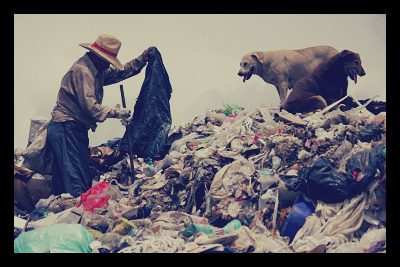
According to Vice, the “basurero”, Guatemala City’s garbage dump, is considered an official neighborhood within the city despite the humanitarian crisis it creates.

Benjamin Reeves, the author of the article, said roughly 7,000 people, including poor families, visit the site every day to look for sellable items that can potentially earn them a few extra bucks.

“Many families have been driven to the basurero by poverty brought on by the global economic crisis coupled with mismanagement on the part of the Guatemalan government,” said Reeves.

The people who live in or near the basurero are called “guajeros”. The work environment of the guajeros is often hazardous. Accidents occur frequently and the air quality makes it difficult for residents to breathe.

The most recent fire broke out in January 2014. Reeves said that the local fire department hardly put any effort in extinguishing “the inferno” that was “fueled by the chemical waste and toxic refuse” below the trash.

“Residents of the basurero complain of chronic congestion, constant headaches, and high rates of asthma and respiratory problems,” Reeves explained.

Although the basurero itself is problematic, the situation for the guajeros is not any better across the street from the mountain of trash.

The “maras”, Guatemala City’s most infamous street gangs, wield more power than NGOs within the neighborhood.

“On a good day, a guajero earns around 40 Quetzales ($5). However, the street gangs regularly extort the workers for about half of their daily earnings, often leaving them with as little as $2.50 for an entire day of back-breaking labor,” said Reeves.

Crimes such as rape, homicide, theft and child abuse are common in the basurero despite the police’s presence. Most of the time they would look the other way or hardly make any effort to maintain order and protect the residents.

While these crimes and fires continue to occur, Reeves argues that the Guatemalan media fails to report the issues related to the basurero.

Why do people live in impoverished conditions in or near Guatemala City in the first place?

According to Gretchen Kroth, a research associate at the Council on Hemispheric Affairs, the extreme poverty and economic inequality affecting the city are due to a civil war, which started in 1960 and ended in 1996.

The conflict fought between the Guatemalan National Revolutionary Unity (URNG) and Guatemalan government in rural locations “forced the migration of many families from the highlands of Guatemala to urban centers, including the neighborhoods adjacent to the landfill,” explained Kroth in a Counterpunch article regarding the education system of the basurero.

Kroth argues that the Guatemalan government today does little to support the poorly structured educational system around the country.

“As public schools are sparsely equipped due to limited government funding a corrupt management, private schools have been established to provide educational services in their place for those who can afford the fee”, she said. But the families of the children who live in the basurero cannot afford paying $20 to $60 a month for education expenses.

As Reeves explained, the guajeros can make up to $5 on a good day. Thus, how can people living in the basurero pay for an education when the money for it does not exist?

To alleviate poverty, more needs to be done in Guatemala apart from receiving the attention of the world, such as the government taking the goal of eliminating poverty seriously and learning how to manage the economy in an honest and transparent fashion.

Each day the government refuses to aid what Reeves calls “a humanitarian crisis”, the lives of the guajeros will continue to be threatened by the conditions in the basurero.

– Juan Campos

Sources: Counterpunch, Vice
Photo: Taringa
April 9, 2014
https://borgenproject.org/wp-content/uploads/borgen-project-logo.svg 0 0 Borgen Project https://borgenproject.org/wp-content/uploads/borgen-project-logo.svg Borgen Project2014-04-09 04:00:292024-12-13 17:50:12Guatemala City’s ‘Basurero’
Global Poverty, Sanitation

Gates Foundation to Improve Sanitation in India

The Bill and Melinda Gates Foundation announced on March 20, 2014 that they were awarding $2 million worth of grants to multiple teams of researchers in India to work towards solving global sanitation issues.

These grants are part of the foundation’s “Grand Challenges,” a series of grant programs that was started ten years ago. The Gates Foundation describes Grand Challenges as a way to work with partners to “support innovative research to radically improve key problems in health and development around the world.”

In India, the foundation has partnered with the Biotechnology Industry Research Assistance Council (BIRAC) IRK Knowledge Park, and the Department of Biotechnology in hopes of designing a toilet that will provide sanitation services to the billions of people who currently lack those services.

Currently, 2.5 billion people worldwide do not have access to safe means of sanitation, which leads to the deaths of 1.5 million children under the age of five every year. Additionally, UNICEF reported that 2,000 children die every day because of poor sanitation and contaminated water. Many of these children die due to diarrhea, which can originate from the use of unsanitized toilets.

In India, more than half of the population does not have access to basic sanitation, which necessitates the building of proper toilets.

In the announcement of the grant, professor and biotechnologist K.Vijay Raghavan said, “Effective and comprehensive sanitation seems an impossible dream for India.” Raghavan went on to say, “Yet today we see a congruence of new and applicable science and technology, its affordability and sustainable implementation.”

The day after the announcement, the Reinvent the Toilet Fair took place in New Delhi and featured a variety of new devices, such as solar-powered electronic toilets. Other prototypes included a portable toilet that is capable of collapsing as well as another that emptied into a pit with waste-consuming insects.

The Gates Foundation’s goals for the scientists participating in the fair were to sanitize any waste, use a minimal amount of water or electricity, and produce a “usable product at low cost.” Another requirement was for the toilet to be something that people would want to use.

The World Bank currently estimates $260 billion to be the total global cost of poor sanitation every year, with India accounting for $54 billion of that total. These poor sanitation in India warrants change before things get worse and more lives are lost.

India is considered to have the worst conditions worldwide in regard to sanitation, an issue that is considered to be more of an annoyance in the Western world. Additional regions that lack basic sanitation include sub-Saharan Africa, southern Asia, Oceania and various islands in the Pacific Ocean. In countries where sanitation is a major issue, people commonly lose their lives due to preventable issues.

The Gates Foundation previously partnered with the BIRAC and Department of Biotechnology for the “Achieving Healthy Growth through Agriculture and Nutrition” program in August 2013.

In continuing its work with innovators in India, the foundation hopes to prevent these unnecessary deaths and improve sanitation worldwide.

– Julie Guacci

Sources: CNBC, Gates Foundation, The Japan Times, CNBC
Photo: InstaBlogs

March 29, 2014
https://borgenproject.org/wp-content/uploads/borgen-project-logo.svg 0 0 Borgen Project https://borgenproject.org/wp-content/uploads/borgen-project-logo.svg Borgen Project2014-03-29 04:00:592024-05-26 23:23:15Gates Foundation to Improve Sanitation in India
Advocacy, Developing Countries, Development, Disease, Food & Hunger, Food Aid, Food Security, Global Health, Global Poverty, Health, Human Rights, Hunger, Inequality, Sanitation, Water

5 Facts About Hunger in Rwanda

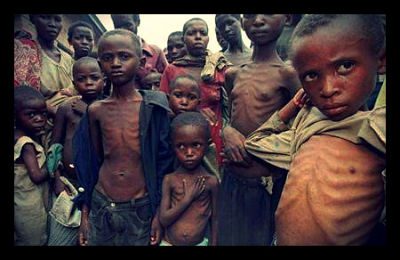
hunger_rwanda
The Republic of Rwanda is a small sovereign state in the Eastern part of Central Africa. Rwanda ranked at 166 of 187 countries on the UNDP Human Development Index in 2011. Rwanda also has the highest population density in the region with 416 people per square kilometer.

Low income, limited natural resources, and food and water insecurity pose a problem for citizens in Rwanda every day. In the years following the Rwandan Genocide in 1994, international rebuilding efforts have been on the ground trying to make sustainable changes to alleviate some of the hunger and water issues.

Here are five facts that explain the state of hunger in Rwanda and how it may change in the coming years:

  1. The 1994 Rwandan Genocide marked the end of the ceasefire signed the year before that stopped the fighting of the Rwandan Civil War. The war began between two ethnic groups the Hutu and Tutsi. The Genocide began when the plane carrying the Hutu supported president Juvenal Habyarimana was shot down and he, along with several other members of the government, were killed. The genocide lasted 100 days and an estimated 800,000 to 1,000,000 people were killed. The fallout from the Rwandan Genocide is the cause for much of the instability in the region that lasts today.
  2. Secondary school attendance in Rwanda is one of the lowest in the world and the literacy rate is 55%.
  3. Approximately 65% of the population has access to safe, clean drinking water
  4. 45% of children under 5 years of age are malnourished.
  5. Over 67,000 refugees from neighboring countries currently reside in Rwanda.

Even though there is a lot of strain on the country today, organizations have been working with the government to address one of Rwanda’s major problems: food insecurity. Agriculture was the country’s main sector before the genocide, and since then, major efforts have been made to make it profitable one more.

Updating the agricultural practices is what the World Food Programme credits with directly reducing the number of food insecure people.

The country hopes that with the reliance on agricultural programs it will improve its GDP to US$900 by the year 2020, up US$380 from its current GDP. Rwanda was also the first country to sign the Comprehensive Africa Agriculture Development Programme (CAADP), meaning that addressing malnutrition and food insecurity is one of the government’s main priorities.

Even though Rwanda still has a long way to go, the government has been taking steps in the right direction that could provide a template for other countries in the region to follow.

– Colleen Eckvahl

Sources: World Food Programme, World Vision
Photo: Rising Continent

February 26, 2014
https://borgenproject.org/wp-content/uploads/borgen-project-logo.svg 0 0 Borgen Project https://borgenproject.org/wp-content/uploads/borgen-project-logo.svg Borgen Project2014-02-26 22:20:472024-05-24 23:56:425 Facts About Hunger in Rwanda
Global Poverty, Sanitation, Water

Tendulkar and UNICEF: Hygiene and Sanitation

tooth brushing
UNICEF signs Tendulkar as Goodwill Ambassador: “Thanks for allowing me to start this wonderful second innings of my life. I’m looking forward to being an ambassador for UNICEF and serve to the best of my ability. This is an innings that is really important to me, so I will try my best,” – Tendulkar.

Recently, the well-known Cricket star Sachin Tendulkar (AKA Master Blaster) and UNICEF joined forces. Tendulkar is now the UNICEF Ambassador for South Asia and will focus primarily on hygiene and sanitation needs.

“I humbly accept the responsibility for being Ambassador for UNICEF in South Asia. I look forward to working with children and communities in the region, urging them to use toilets and wash their hands. Following simple practices can contribute to a hygienic lifestyle which is important for the good health of children and women across the world,” stated Tendulkar during a signing ceremony in November.

UNICEF hopes that Tendulkar will be able to raise an incredible amount of awareness for these issues through his successful career as a Cricket star. Tendulkar is newly retired from India’s team but not before he was able to become the first cricket player to ever bat a double hundred in a one a day international.

With his far reaching reputation as being the greatest cricketer pushing South Asians toward better sanitation practices should have a large impact. South Asia is number two when it comes to the highest number of underage five deaths. It is also an area where the largest amounts of people do not have access to toilets.

There is definitely a connection between these issues and child mortality rates.  Besides Tendulkar’s newest partnership with UNICEF, in past years he has made many contributions to the well-being of others. Tendulkar has definitely offered his share of good deeds throughout his career, although the deeds have been kept mostly out of the public eye until now. Starting next year Tendulkar will begin his journey with UNICEF by visiting several countries to spread the word about Sanitation.

– Amy Robinson

Sources: UNICEF
Photo: Giphy.com

January 18, 2014
https://borgenproject.org/wp-content/uploads/borgen-project-logo.svg 0 0 Borgen Project https://borgenproject.org/wp-content/uploads/borgen-project-logo.svg Borgen Project2014-01-18 04:00:282024-05-25 00:52:28Tendulkar and UNICEF: Hygiene and Sanitation
Disease, Global Health, Global Poverty, Health, Sanitation

Sanitation and Poverty

Sanitation and Poverty
Two and a half billion people – over a third of the entire world’s population – have no access to adequate sanitation facilities, which leads to the rapid spread of disease and heightened child mortality rates. Most commonly, poor sanitation practices lead to diarrhea: little more than an annoying byproduct of bad hygiene practices for first-world residents, it is often fatal in developing countries. In fact, it is estimated that 5,000 children die daily from complications related to the ailment. Consequently, one person dies every minute due to the lack of basic sanitation.

Why is the lack of well-formulated means of sanitation such a large problem in modern times, when technology has reached such an advanced stage? One reason is the negative stigma associated with it: the discussion of toilets simply feels dirty or inappropriate and is not as popular nor does it appear at first glance as urgent as, for example, the issue of access to drinking water. However, the two are related and equally pressing; disease control is an impossible goal without proper sanitation adjustments. In many places around the third world, toilet stalls are completely nonexistent. Essentially, this means that people are forced to defecate in public, populated areas, leaving waste behind which will remain on the ground spreading disease. Just a gram of human feces may contain as much as ten million viruses and a hundred parasite eggs.

Besides the obvious health benefits, according to the World Health Organization (WHO,) improved sanitation in developing countries would provide $9 economic benefit per $1 spent. The year of 2008 was dubbed by WHO as the International Year of Sanitation. Through various conferences and seminars, five key principles of sanitation were determined: 1. Sanitation is vital for human health. 2. It generates economic benefits. 3. It contributes to dignity and social development. 4. It helps the environment, and most importantly. 5. It IS achievable. South-East Asia and Sub-Saharan Africa are two regions most affected by poor sanitation practices. Coincidentally, they are also the two areas with the highest death rates from various diseases. It is especially prevalent in rural areas, where open defecation is six times more likely and use of unimproved sanitation is four times higher than in urban areas. Being one of the 2015 Millennium Goals, improved sanitation should not be taken for granted. To heighten the quality of sanitation is to improve the quality of life as well as economic efficiency for millions of individuals worldwide. In this day and age, no one should have to defecate publicly; not only for reasons of dignity and civility, but also due to personal awareness and dedication towards reducing of the spread of deadly disease.

– Natalia Isaeva


Sources: The Global Poverty Project, World Health Organization: International Year of Sanitation, UNICEF: Progress on Drinking Water and Sanitation

January 17, 2014
https://borgenproject.org/wp-content/uploads/borgen-project-logo.svg 0 0 Borgen Project https://borgenproject.org/wp-content/uploads/borgen-project-logo.svg Borgen Project2014-01-17 23:01:312024-05-26 23:02:04Sanitation and Poverty
Health, Sanitation, Water

Can This Straw Save the World?

Wil_Filteration_Straw_Save_the_World_Clean_Water
Water is Life founder Ken Surritte was on a well-drilling trip to Africa in 2007 when he realized the limitations of using this method of providing clean water alone. After building a well for an orphanage outside of Kisumu, Kenya, Surritte was surprised to find that kids were still getting sick. The culprit was a “drinking fountain” at the local school which was actually a stagnant pond. Surritte wondered what he could give kids to take to school with them, and the idea for a portable filtration straw was born.

884 million people around the world do not have access to clean water, resulting in 6,500 deaths from waterborne diseases like typhoid, cholera, dysentery, E-coli, guinea worms, and diarrhea every day.  Children under five are at the greatest risk. In fact, diarrhea is the second leading cause of death among this age group in the world, and a child dies every 21 seconds from this preventable disease.

Water is Life is a nonprofit that works to distribute its WiL filtration straws to communities in need across the world. The straws, which are made of a hard plastic and measure ten inches long and one inch in diameter, come on a lanyard for easy transport. The straws use a combination of membrane filters, iodine crystals, and charcoal filters to purify water, filtering out harmful waterborne illnesses and particles as small as 15 microns. The WiL straws work just like an ordinary straw: users place the straw in a water source and suck, drawing water through the filtration components until clean water reaches the mouth. They can clean a minimum of 800 liters of water, and on average, a straw will last one person a year. The straws clog internally when no longer effective. These life saving devices cost only ten dollars each.

The WiL straw is just the first part of a comprehensive plan to provide sustainable clean-water solutions to communities around the world, and is meant to provide immediate relief to communities while longer-term solutions are sought. After straws are distributed by Water is Life teams on the ground, the teams get to work evaluating and developing a plan to provide a sustainable, pure water source within one year, using technologies like wells and point-of-use filters. Teams also provide hygiene and sanitation education in community centers and village schools. This unique “crawl, walk, run” approach allows for immediate intervention and long-term prevention of waterborne illnesses, saving lives now and in the future.

Water is Life has been hugely successful in the four short years since it began distribution of straws and implementation of its sanitation programs. The non-profit has worked in North and South America, Asia, and the Middle East, distributing over 60,000 straws in 32 countries, and has plans to grow the program.

For those looking to get involved, Water is Life provides many volunteer opportunities for individuals and groups, ranging from speaking at schools to get students involved with campaigns, to repackaging filters at the organization’s Oklahoma office, to traveling to help distribute WiL straws and other life-saving materials on the ground. Have the money, but not the time? Just ten dollars provides someone in need with immediate and long-term access to clean drinking water. Check out waterislife.com for more ways to help.

– Sarah Morrison
Sources: Water is Life, Oklahoma City News
Photo: Seasons for Life

December 6, 2013
https://borgenproject.org/wp-content/uploads/borgen-project-logo.svg 0 0 Borgen Project https://borgenproject.org/wp-content/uploads/borgen-project-logo.svg Borgen Project2013-12-06 18:08:162024-06-07 04:44:45Can This Straw Save the World?
Children, Global Poverty, Health, Sanitation, USAID, Women & Children

Hand Washing Can Save Millions of Lives

A mother’s typical question to a child, “did you wash your hands?” may have seemed like a pesky reminder when growing up, but research shows that hand-washing is one of the most important and live-saving habits that can be instilled in a society. Hand-washing with soap has been shown to reduce the incidence of diarrhea by almost one half and of acute respiratory infections by roughly one third.

Since hand-washing is one of the most cost-effective ways to reduce deaths of children under five from diseases like diarrhea and pneumonia – possibly by up to 70% -, the global health soap brand Lifebuoy is teaming up with USAID to create a neonatal program designed to raise awareness of the link between newborn survival and hand washing with soap.

The program targets new mothers and birth attendants through antenatal clinics and health workers. The campaign also uses innovative videos to appeal to the mother’s maternal instinct by communicating the message “hand-washing helps your child survive.” Persuasive advocates such as the Indian actress Kajol also support the cause and help generate awareness of the importance of hand-washing, especially after having used the toilet or before preparing food.

Another initiative which aims to modify everyday behavior is the Global Scaling Up Hand-washing Project, supported by the World Bank in countries such as Peru, Senegal, Tanzania, and Vietnam. These interventions found that while will and motivation to change habits might be present, hand-washing is also dependent on the ease of access to both water and soap. In this way, the program has aimed to make changes in the way soap and water are accessed in households.

The initiative has also found that in countries such as Senegal, men can also play a critical part in the behavior-changing process. Since they are seen as the role-models or leaders of their households, future interventions will also incorporate campaigns that include or are aimed at men.

– Nayomi Chibana
Feature Writer 

Sources: USAID, World Bank
Photo: Old Picture of the Day

October 21, 2013
https://borgenproject.org/wp-content/uploads/borgen-project-logo.svg 0 0 Borgen Project https://borgenproject.org/wp-content/uploads/borgen-project-logo.svg Borgen Project2013-10-21 11:06:442024-05-25 00:29:42Hand Washing Can Save Millions of Lives
Developing Countries, Global Poverty, Sanitation, Water

Pack H2O: Bringing Water to Developing Nations

pack_h2o
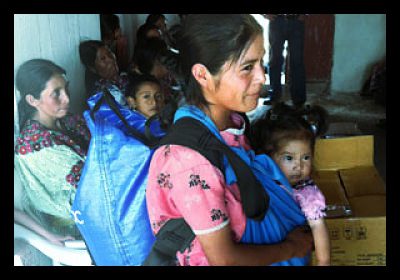
Greif Inc., a well-known packaging company, has spearheaded the opportunity to develop a way for people in developing nations to obtain clean water. Greif has developed an innovative backpack that safely and easily transports water to homes in developing areas. The backpack is officially called the Pack H20. It even has been nominated on the National Design Museum’s list of “products that make a difference in everyday lives.”

According to Greif Inc., the H20 pack has been “replacing jerry cans and buckets as the mode of transport for drinking water in Haiti, Guatemala and Kenya and more than 20 other countries.” The backpacks are designed to carry 5.25 gallons of water and are made of extremely resistant fabric and plastic liner, which makes them puncture resistant. Each backpack is also sold at an affordable price of $10.

The backpacks have been so successful that over 100,000 have been distributed to women and children. According to Justin Moodley, Marketing Director for PackH2O LLC, these women and children don’t have to rely on these traditional and burdensome methods for water transportation. Moodley also mentioned that these people will not have to come in contact with heavy and contaminated containers any more.

Moreover, representative officials for Pack H20 have taken other initiatives to better developing communities’ access to clean drinking water. Some have taken notice of the distance between water sources and these communities. They plan to grant more instant access to water to these communities in the near future. As a result, Greif Inc. plans on spearheading other clean water access projects in developing nations.

– Stephanie Olaya

Sources: Biz Journal, Pack H2O
Photo: Pack H2O

October 16, 2013
https://borgenproject.org/wp-content/uploads/borgen-project-logo.svg 0 0 Borgen Project https://borgenproject.org/wp-content/uploads/borgen-project-logo.svg Borgen Project2013-10-16 10:30:392020-07-02 20:34:43Pack H2O: Bringing Water to Developing Nations
Global Poverty, Sanitation, Water

The Water Crisis in Sub-Saharan Africa

water_crisis_sub_saharan
Water is a necessary means for survival. Water covers two-thirds of planet Earth. The human body consists of 75 percent water. Water is involved in all bodily functions including digestion, respiration, maintaining body temperature, and adequate performance of all bodily functions. Early civilizations developed around easily accessible clean drinking water sources. Water is vital to life; that is a given. But what if accessing clean drinking water was not as easy as turning on the faucet, or opening a bottle of Dasani? The continuing water crisis in sub-Saharan Africa proves that this kind of access is not always so easy.

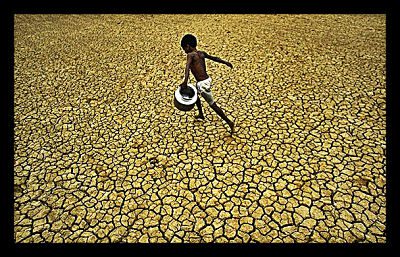
Water scarcity is a tragic reality for many regions of the world. Astoundingly, 85 percent of the world’s people live in the driest regions of the world. According to UN Water, 783 million world citizens do not have access to clean water. Among that demographic, 6 to 8 million die every year from water related disasters and diseases. Incredibly, in the year 2000, 2.4 billion people lacked access to water sanitation, and 1.1 billion lacked access to fresh water sources. The populations suffering the most are in rural, poor areas of the world.

The most common water related diseases occur due to lack of sanitation. According to Dr. Lee Jong-wook, Director General at World Health Organization (WHO), “Water and Sanitation is one of the primary drivers of public health,” and refers to water and sanitation as “Health 101.” Jong-Wook further explains that if communities secure access to water and sanitation, “a huge battle against all kinds of diseases will be won.” Two of the deadliest water and sanitation related diseases are diarrhea and malaria.

According to data by World Health Organization, the four driving factors in the water and sanitation crisis are: access to water supply and sanitation, sanitation gap, emergencies and disasters, and water resources.

The sanitation gap refers to an increase in population growth combined with low sanitation development growth. The number of people with access to hygienic sanitation facilities, such as toilets and hand washing tools, has declined slightly since the 1990s because construction cannot keep up with population growth.

Floods and drought are the most dangerous water-related disasters. Flooding causes contamination of drinking water, and destructed systems of hygiene and wastewater. Droughts cause the most death because they can initiate malnutrition and deny the community a water supply. 66 percent of people dwelling in sub-Saharan Africa live in areas of little to no rainfall which often results in failed vegetation and agricultural efforts. More than 300 to 800 sub-Saharan Africans live in a water-scarce location.

Water resource development is the key to helping world citizens fulfill the basic human right of accessing clean water. As former United Nations Secretary General Kofi Annan stated, “Access to safe water is a fundamental human need and therefore a basic human right.”

– Laura Reinacher

Sources: Rights to Water and Sanitation, UNICEF, UN Water
Photo: Because water

October 4, 2013
https://borgenproject.org/wp-content/uploads/borgen-project-logo.svg 0 0 Borgen Project https://borgenproject.org/wp-content/uploads/borgen-project-logo.svg Borgen Project2013-10-04 20:31:562024-05-25 00:23:17The Water Crisis in Sub-Saharan Africa
Global Poverty, Health, Nonprofit Organizations and NGOs, Sanitation, War and Violence, Water

Sanitation and Clean Water is an Issue In Liberia

In 2003, Liberia finally came out of a thirteen-year long civil war that ravaged the country and left the inhabitants riddled with poverty. Right after the end of the war, the unemployment rate was listed at 85 percent of the population. The populations in the slums skyrocketed and the people living there were left with little choice of where to obtain water or where to use the bathroom. During the war, rebels destroyed much, if not all, of the water and sanitation infrastructure the country once had. A decade later, much of the population is still impoverished and lacking access to the basic needs of potable water and a sanitary living area. In 2010, there were almost 4 million people living in Liberia, over 1 million of which were rural poor. However, there is a stress for clean water in slums, from where a number of people from rural areas fled to Monrovia during the fighting and violence in an attempt to find refuge. For every four people, there is one living without access to clean water and sanitation in Liberia, and for every five deaths in the country, one is a result of contaminated water sources. In fact, in 2012, the World Health Organization discovered that E. coli was present in 58 percent of the city’s water due to public defecation. This spreads illness such as diarrhea and perpetuates the issue, creating a cycle of illness through dirty water. Liberian president, Ellen Johnson Sirleaf, has pledged to double the amount of access to safe water in four years, but has clearly fallen short of this claim. Phillip Marcelo of Rhode Island’s Providence Journal is spending two weeks in Liberia this month to investigate what progress has been made since the end of the war and the installation of democracy within the country. He notes that at the entry to the slums at West Point Beach, there is a massive pile of trash marking the place. The defecation of children is all over the beach and people are being forced to buy their water from “distributors.” While adults have been banned from using the beach as a bathroom and there are pay toilets in the slum, there is often still no other option. Because of this, the spread of cholera is common along with other water-borne diseases. The government is opening up nine new toilets for the area, but the inhabitants are not sure a real difference can be made considering there are more than 50,000 people living the area. Aid groups are investing time and money into providing Liberia with better access to clean water, with the hope that this will cease to be an issue in the coming years, if not in time to meet the Millennium Development Goals. Non-profit organization Waves for Water has raised $15,100 towards the goal of $25,000 to help provide clean water filters for over 60,000 people living in poverty in Liberia. WaterAid, another NGO, also works in Liberia and happens to be an organization for which President Sirleaf is an ambassador. Last year, they were able to reach 17,000 people and provided them with clean water or sanitation facilities. Help for Liberians is out there and there are solutions to the present issues, but it will take a while to recover completely from the devastation of the war. Simply put, it is going to take plenty of hard work and a revamp of the entire infrastructure of the country in order to change the conditions of those living in the slums of Liberia. – Chelsea Evans Sources: Providence Journal, Rural Poverty Portal, Waves for Water, PBS, WaterAid Photo: Sanitations Update [hr top]

  • $30 billion per year is needed to end world hunger.

  • $660 billion per year is the amount Congress spends on Defense.


August 24, 2013
https://borgenproject.org/wp-content/uploads/borgen-project-logo.svg 0 0 Borgen Project https://borgenproject.org/wp-content/uploads/borgen-project-logo.svg Borgen Project2013-08-24 05:32:242016-02-16 11:55:06Sanitation and Clean Water is an Issue In Liberia
Page 27 of 29«‹2526272829›»

Get Smarter

  • Global Poverty 101
  • Global Poverty… The Good News
  • Global Poverty & U.S. Jobs
  • Global Poverty and National Security
  • Innovative Solutions to Poverty
  • Global Poverty & Aid FAQ’s
Search Search

Take Action

  • Call Congress
  • Email Congress
  • Donate
  • 30 Ways to Help
  • Volunteer Ops
  • Internships
  • Courses & Certificates
  • The Podcast
Borgen Project

“The Borgen Project is an incredible nonprofit organization that is addressing poverty and hunger and working towards ending them.”

-The Huffington Post

Inside The Borgen Project

  • Contact
  • About
  • Financials
  • President
  • Board of Directors
  • Board of Advisors

International Links

  • UK Email Parliament
  • UK Donate
  • Canada Email Parliament

Get Smarter

  • Global Poverty 101
  • Global Poverty… The Good News
  • Global Poverty & U.S. Jobs
  • Global Poverty and National Security
  • Innovative Solutions to Poverty
  • Global Poverty & Aid FAQ’s

Ways to Help

  • Call Congress
  • Email Congress
  • Donate
  • 30 Ways to Help
  • Volunteer Ops
  • Internships
  • Courses & Certificates
  • The Podcast
Scroll to top Scroll to top Scroll to top