• Link to X
  • Link to Facebook
  • Link to Instagram
  • Link to TikTok
  • Link to Youtube
  • About
    • About Us
      • President
      • Board of Directors
      • Board of Advisors
      • Financials
      • Our Methodology
      • Success Tracker
      • Contact
  • Act Now
    • 30 Ways to Help
      • Email Congress
      • Call Congress
      • Volunteer
      • Courses & Certificates
      • Be a Donor
    • Internships
      • In-Office Internships
      • Remote Internships
    • Legislation
      • Politics 101
  • The Blog
  • The Podcast
  • Magazine
  • Donate
  • Click to open the search input field Click to open the search input field Search
  • Menu Menu

Archive for category: Sanitation

Sanitation, Technology

The Future of Toilets in Poor Countries

The future of toilets in poor countries
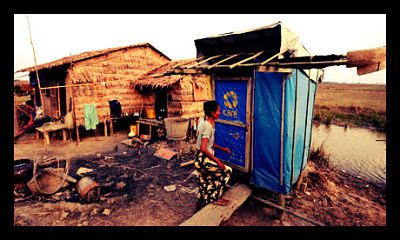
What does the future of toilets in poor countries look like? The Gates Foundation hosted a competition to reinvent the toilet to process human waste without utilizing piped water, sewer or electrical connections and to transform waste into useful resources like water and energy.

The grand prize design was a solar-powered toilet that creates hydrogen and electricity. The second place prize was taken by a toilet that creates biological charcoal, minerals and clean water. A toilet that sanitizes feces and urine and recovers resources and creates clean water won third place.

Why all the excitement about toilets? In a nutshell, return on investments in sanitation is huge. For every dollar spent on sanitation, 5.5 dollars are returned. At a national level, lack of access to proper sanitation costs countries up to 7 percent of their GDP. In addition to being a smart investment, investing in sanitation is also a moral imperative. Diarrhea is the cause of an estimated 5000 child deaths every day. In areas where people defecate in the open or share large community bathrooms, women and girls are more frequently victimized.

Despite these striking numbers, improved sanitation is neglected at every political level. Without a drastic shift in strategies and the courage to undertake this stigmatized issue, the Millennium Development target of cutting the proportion of the population without access to clean water and basic sanitation by a half will be missed by a long shot.

In addition to the Reinvent the Toilet Challenge, the government of India is running multiple campaigns to improve sanitation such as the “No toilet, no bride” campaign and an information and shaming campaign aimed at changing the culture of open-space defecation.

The World Bank also recently wrapped up a sanitation hackathon where mobile phone application developers were challenged to create apps to improve sanitation. Many involved mapping public toilets and reporting malfunctioning toilets. Several were designed as games to teach children good sanitation.

– Katherine Zobre


Sources: Gates Foundation , Global Poverty Project
Photo: The Guardian
May 8, 2013
https://borgenproject.org/wp-content/uploads/borgen-project-logo.svg 0 0 Borgen Project https://borgenproject.org/wp-content/uploads/borgen-project-logo.svg Borgen Project2013-05-08 10:00:102024-05-24 23:49:57The Future of Toilets in Poor Countries
Health, Sanitation

160 Toilets for the Kavango Region of Namibia

160 Toilets for the Kavango Region of Namibia
The Kavango Regional Council (KRC) has placed aside N$5.4 million to build 160 toilets for rural residents. Overseeing the northeastern region of Namibia, the Council has made a commitment to help sustain and improve the region by better utilizing the resources located within it. As well, the Council works to improve the conditions of residents so that they can optimally contribute to the region.

By constructing 160 toilets and improving sanitation in most of the constituencies in the region, the Kavango Regional Council hopes to improve health conditions and combat disease. As of now, more than half of the residents located in the densely populated Kavango region do not have proper access to toilet facilities. Constructing communal toilets, at a cost of approximately N$33,800 each, will provide the necessary access and adequate sanitation. The toilets will also have positive effects on the environment, allowing for more use of land.

Another positive of the decision to build 160 toilets is the job opportunities that it provides. The toilets have to be built and put in place and the KRC is committed to ensuring that a great number of individuals have the opportunity to work and make some income from their investment. The job of constructing the toilets has been given to 40 contractors, 5 for each constituency. Chief Regional Officer of the KRC Sebastian Kantema said that “Although this is little, we really commend the government for availing these funds so that we can alleviate the suffering of our people.”

The government will be monitoring the progress of all the contractors to ensure that the money is spent wisely and that the jobs are completed in an orderly fashion. This is just one of many steps that the Kavango Regional Council is taking to improve the lives of its people in Namibia. It is also taking steps to construct more health facilities closer to villages located in very rural areas, as well as improving water provisions to ensure everyone has access to clean, drinkable water.

– Angela Hooks
Source: AllAfrica
Photo:Forbes

April 18, 2013
https://borgenproject.org/wp-content/uploads/borgen-project-logo.svg 0 0 Borgen Project https://borgenproject.org/wp-content/uploads/borgen-project-logo.svg Borgen Project2013-04-18 10:00:592020-06-12 20:49:45160 Toilets for the Kavango Region of Namibia
Education, Sanitation

The Importance of Sanitation to Education


The Importance of Sanitation to Education
Many people know the importance of clean water and basic sanitation for health, yet, hardly think of what not having these amenities means for schools and education. According to a program called Support My School, studies have shown that schools lacking “basic amenities like Toilets, Access to Water and Basic Infrastructure create[s] an unwelcome environment in schools, which leads to a higher rate of absenteeism, finally resulting into drop-outs.”

For rural India, this becomes an extremely large issue because an estimated 50 percent of schools here are without functioning toilets. This is why Coca-Cola India, NDTV and UN-Habitat have teamed up to start to Support My School, a program in India geared to revive schools in semi-urban and rural towns and improve their sanitary and water efforts.

Support My School does not just help get clean water and working toilets into school, it also builds awareness on just how important water and sanitation are too many aspects of life, including education, utilizes whole communities to find solutions for the schools, and raises money through donations from stakeholders, corporations, and the general public. The program believes that improved sanitation and the provision of other basic amenities will make schools and students happier, healthier, and more active.

As of today, Support My School has raised 13.6 crore, which is equivalent to 2.495 million dollars.  272 schools in India have been revitalized. And over 43,000 students have reaped the benefits of the campaign.

– Angela Hooks


Sources: Support My School, Coca-Cola India

February 26, 2013
https://borgenproject.org/wp-content/uploads/borgen-project-logo.svg 0 0 Borgen Project https://borgenproject.org/wp-content/uploads/borgen-project-logo.svg Borgen Project2013-02-26 09:00:222020-05-11 04:10:38The Importance of Sanitation to Education
Sanitation, Technology, Water

“Survival Still” Offers Help in Disasters

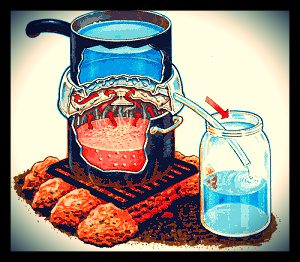
"Survival Still" Offers Help in DisastersThe “Survival Still” System was announced a few months ago by inventor Glenn Meder. It is a new water distillation system that changes unsanitary, undrinkable water into water that is completely safe for human consumption. Contaminated water of any kind can be transformed into drinkable water, including muddied or ocean water. This product could be incredibly helpful to people in disaster situations, or even those who normally live with limited access to safe drinking water, as most of the world does.

The system relies heavily on distillation; it boils the water and collects the steam, which is the only pure part of the process. The Survival Still is made of stainless steel and does not need any filters. As seen in the photograph above, the Survival Still only needs the water and heat to provide fresh drinking water for the user. In any case, the process can be done in almost any location, provided there is an acceptable heating source.

Although the Survival Still was primarily created for victims of catastrophes such as Hurricane Sandy or other devastating natural disasters, it can be used by those who constantly struggle for access to clean drinking water, such as those in the developing world who face poverty on a daily basis. Many people do not have easy access to clean, safe drinking water that many U.S. citizens enjoy. They travel miles to reach clean water, and if they choose to drink water closer to their homes, they run a high risk of receiving potentially fatal waterborne diseases.

The design of this product was mastered over 20 years, and the current version is simple but functional. The reason Meder created the Survival Still was both to give one to every home in the United States (just in case) and also to help attempt to solve the water crisis that is occurring on a global scale. The lack of water in developing countries is one of the biggest issues of today, and the Survival Still, if distributed properly, could help move us towards a sustainable solution.

– Corina Balsamo

Source: Water World

February 5, 2013
https://borgenproject.org/wp-content/uploads/borgen-project-logo.svg 0 0 Borgen Project https://borgenproject.org/wp-content/uploads/borgen-project-logo.svg Borgen Project2013-02-05 13:36:312020-05-07 23:16:17“Survival Still” Offers Help in Disasters
Page 29 of 29«‹272829

Get Smarter

  • Global Poverty 101
  • Global Poverty… The Good News
  • Global Poverty & U.S. Jobs
  • Global Poverty and National Security
  • Innovative Solutions to Poverty
  • Global Poverty & Aid FAQ’s
Search Search

Take Action

  • Call Congress
  • Email Congress
  • Donate
  • 30 Ways to Help
  • Volunteer Ops
  • Internships
  • Courses & Certificates
  • The Podcast
Borgen Project

“The Borgen Project is an incredible nonprofit organization that is addressing poverty and hunger and working towards ending them.”

-The Huffington Post

Inside The Borgen Project

  • Contact
  • About
  • Financials
  • President
  • Board of Directors
  • Board of Advisors

International Links

  • UK Email Parliament
  • UK Donate
  • Canada Email Parliament

Get Smarter

  • Global Poverty 101
  • Global Poverty… The Good News
  • Global Poverty & U.S. Jobs
  • Global Poverty and National Security
  • Innovative Solutions to Poverty
  • Global Poverty & Aid FAQ’s

Ways to Help

  • Call Congress
  • Email Congress
  • Donate
  • 30 Ways to Help
  • Volunteer Ops
  • Internships
  • Courses & Certificates
  • The Podcast
Scroll to top Scroll to top Scroll to top