• Link to X
  • Link to Facebook
  • Link to Instagram
  • Link to TikTok
  • Link to Youtube
  • About
    • About Us
      • President
      • Board of Directors
      • Board of Advisors
      • Financials
      • Our Methodology
      • Success Tracker
      • Contact
  • Act Now
    • 30 Ways to Help
      • Email Congress
      • Call Congress
      • Volunteer
      • Courses & Certificates
      • Be a Donor
    • Internships
      • In-Office Internships
      • Remote Internships
    • Legislation
      • Politics 101
  • The Blog
  • The Podcast
  • Magazine
  • Donate
  • Click to open the search input field Click to open the search input field Search
  • Menu Menu

Archive for category: Sanitation

Development, Health, Sanitation, Water

Urban Water and Sanitation Project to Benefit 590,000 in Dakar

Urban_Water
Only 62% of households in Senegal’s capital city have access to sanitation facilities. Considering that nearly half the Senegalese people live in urban areas, improving access to clean water and proper sanitation in these regions is imperative to the population’s health and the country’s development.

In an effort to help Senegal extend water and sanitation access throughout urban and peri-urban areas, the World Bank’s International Development Association has just approved $70 million in credit to fund an Urban Water and Sanitation Project, which is estimated to better the lives of 590,000 Senegalese people by 2030.

Senegal has made great strides in the past, achieving a 98% rate of urban access to safe water; however, population growth in the capital city, Dakar, and Petite Côte, a prominent tourist destination, has led to increased water shortages. The water deficits are set to worsen over the next five years, reaching 35,000 cubic meters and 60,000 cubic meters per day respectively in Petite Côte and Dakar by 2020.

Tackling these water deficits will be a major component of the Urban Water and Sanitation Project. One strategy proposed is the desalination of seawater as a supplement to groundwater and surface water resources.

Another area that the project will address is social sustainability, seeking to develop “pro-poor policies” that will improve access for impoverished Senegalese households. The program will target low-income areas in and around urban centers currently underserved by water and sanitation networks.

The project proposal promises that the newly developed water connections will be freely available to beneficiary households after “a small refundable deposit of $31, whereas the average price of a standard connection is $145. Similar rules will apply to social connections to sewers.”

In addition to supplying important access to sanitation services and safe water, the initiative hopes to promote gender equality. As is the case in many developing nations, Senegalese women and girls are largely responsible for the burden hauling water in areas without pipelines and distribution systems. The development of water and sanitation systems to impoverished areas will afford those women and girls more time for employment, education and other activities that promote social mobility.

The Urban Water and Sanitation Project also seeks to actively promote women’s interests, stating: “Attention will be given to promoting women’s entrepreneurship through the project as well as access to opportunities for training, business and leadership where feasible.”

Furthermore, women will take a central role in hygiene education and information programs associated with the Urban Water and Sanitation Project. The proposal also promises that women will also participate in selecting the locations of public sanitation facilities.

“By expanding access to clean water and sanitation, the project will help boost the health of Senegal’s urban population,” noted Matar Fall, World Bank Task Team Leader for the Urban Water and Sanitation Project. “Water access can also form the basis for many types of income-generating activities such as home-based manufacturing and services that can turn the poor into local entrepreneurs.”

The World Bank and Senegal are looking ahead to a future in which sanitation and water work to promote equality and opportunity, rather than functioning as a sign of poverty.

– Emma-Claire LaSaine

Sources: The World Bank, All Africa, USAID, WASH
Photo: Hampton Roads PDC
July 31, 2015
https://borgenproject.org/wp-content/uploads/borgen-project-logo.svg 0 0 Borgen Project https://borgenproject.org/wp-content/uploads/borgen-project-logo.svg Borgen Project2015-07-31 08:19:582024-05-27 09:26:12Urban Water and Sanitation Project to Benefit 590,000 in Dakar
Global Poverty, Sanitation, Women

Product Helps Women in India Who Don’t Have Access to Clean Toilets

access_to_clean_toilets

A new product, launched by a Delhi startup last year, gives women the ability to urinate while standing up.

The PeeBuddy is a single-use funnel created from paper that is both coated and waterproof. The funnel is seen as one possible solution to India’s lack of clean toilets.

The country is one of the worst in terms of access to clean toilets. A study released by the World Bank in 2013 showed that over 600 million people defecate without the use of a toilet. This figure corresponds to over 53% of households.

Even if women can find a public toilet to use, it is often dirty. As a result, it is common for them to drink less water, which can lead to health issues.

A study published in the Journal of Nutrition demonstrated that dehydration was a primary factor in instigating headaches, loss of focus and fatigue.

By using the PeeBuddy and urinating while standing up, women in India are able to create a more hygienic atmosphere in an otherwise dirty bathroom. The startup’s website says the product is ideal for restaurants, nightclubs, public toilets and other popular destinations.

The idea for such a creation was born during a road trip consisting of four couples, according to Deep Bajaj, PeeBuddy’s founder.

During the trip from India’s capital territory to Jaipur, a city to the south in the Rajasthan state, Bajaj said the group made frequent stops to look for clean bathrooms, as only around one in five met the wives’ standards.

When one of the women on the trip commented how she wished she were in Europe so she could have access to a plastic device to use when encountering unsanitary toilets, Bajaj came up with the idea for the PeeBuddy.

The product is favored over others that have been produced because of the relatively cheap cost. A pack of 20 funnels costs 375 rupees (less than $6).

GoGirl, for example, is a reusable device made of silicone, but costs $9.99 each. Pee Pocket, also a disposable, coated-paper funnel, costs $24.99 for a 48-pack.

While some stores have been slow to put PeeBuddy on shelves, possibly because of the unusual product name, 20,000 packs had been sold through April of this year, due in large part to Amazon India.

The startup is also currently working with several corporations to help make the PeeBuddy more widely available.

– Matt Austin Wotus

Sources: PeeBuddy, The Huffington Post 1, The Huffington Post 2, The Huffington Post 3, YourStory
Photo: My Choices

July 25, 2015
https://borgenproject.org/wp-content/uploads/borgen-project-logo.svg 0 0 Borgen Project https://borgenproject.org/wp-content/uploads/borgen-project-logo.svg Borgen Project2015-07-25 09:11:242020-07-03 16:31:03Product Helps Women in India Who Don’t Have Access to Clean Toilets
Health, Sanitation, Water

Ingredients for Clean Drinking Water: Saltwater and a Car Battery

clean_drinking_water
As of 2013, around 738 million people across the world do not have access to clean drinking water. Of these people, an approximate 8 million die as a consequence of this inaccessibility.

Water is the paramount need for all human being. Sanitation of this water is vital for preventing many water-borne diseases that can potentially be fatal. Despite the development of new methodologies to sanitize water, the process of chlorination remains unparalleled in its prevalence and efficiency.

The process of chlorination, as the name suggests, uses chlorine gas or bleach to purify water. Chlorine gas is highly toxic and an effective antimicrobial agent. Chlorine also remains in water through longer periods of time than its alternatives. This reduces the costs of repeated purifications.

Despite these advantages that put chlorination far ahead of its counterpart purification methods, it is still difficult to successfully utilize this technique in developing countries. Chlorine gas and its derivatives – such as bleach – are highly reactive and can be dangerous in excessive quantities. The chlorine gas is sold compressed in cylinders, and its pressure requirements change in accordance with the water source to be chlorinated. Hydraulic equipment necessary for safe chlorination is not always accessible in remote areas.

These safety considerations pose a dilemma for the safe sanitation of drinking water. Recently, Mountain Safety Research (MSR), an outdoor gear manufacturer, collaborated with an NGO to release an innovative solution to the problem.

Their device, Smart Electrochlorinator or SE200, uses saltwater and a car battery to produce a carefully-calculated amount of chlorine gas. It consists of a canister that attaches to a battery through jumper cables. The canister is filled with salt solution, and the dissolved salt is dissociated into ionic chloride ions.

The ions are then converted into bleach electrochemically. The hydrogen gas produced from the battery reacts with the chloride ions to form perchlorate, or bleach. The added advantage of the device is in its specificity – it is designed to calculate and produce specific amounts of chlorine per gallon of water. This maintains the concentration of chlorine in water at a constant level and within safe ranges.

The chlorinator is lightweight and portable, which is important in smaller remote areas. It can purify up to 20 liters in a meager 5 minute interval. The device is also notably energy efficient: a 12 volt battery can be used to generate enough chlorine to purify 400,000 liters of water.

The device has so far been tested successfully in field operations in Kenya, Mali, Tanzania, Zimbabwe and Thailand. It is especially noted for its feasibility in small population communities, where large-scale sanitation does not reach and household purification is a hassle. The chlorination is relatively inexpensive as well: at around US$200, it can provide a clean supply of water for 200 people for a period of five years.

As with any new technology, there are issues with this device as well. As it is designed for use in remote areas, it is questionable as to how technical issues might be dealt with. Any of the maintenance issues needing to be fixed can seriously jeopardize a steady supply of clean water. Moreover, in spite of pictorial instructions, there is always the danger for misuse. These are some of the issues that need to be fine-tuned for the chlorinator’s effective usage.

Despite the issues that need to be resolved, the chlorinator is undoubtedly an innovative initiative in the provision of clean drinking water to each and every human being in the world.

– Atifah Safi

Sources: CDC 1, NPR, Cascade Designs, CDC 2
Photo: Flickr

July 24, 2015
https://borgenproject.org/wp-content/uploads/borgen-project-logo.svg 0 0 Borgen Project https://borgenproject.org/wp-content/uploads/borgen-project-logo.svg Borgen Project2015-07-24 18:29:082024-12-13 17:51:52Ingredients for Clean Drinking Water: Saltwater and a Car Battery
Sanitation

India: Still The Most Insanitary Place on Earth?

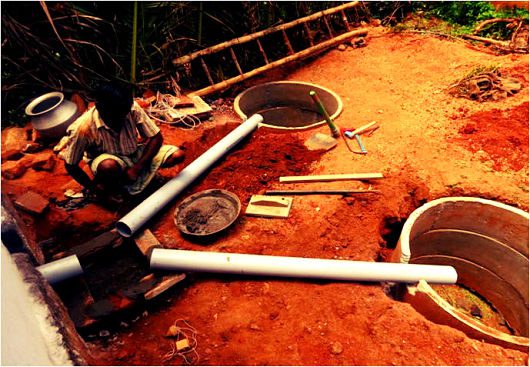
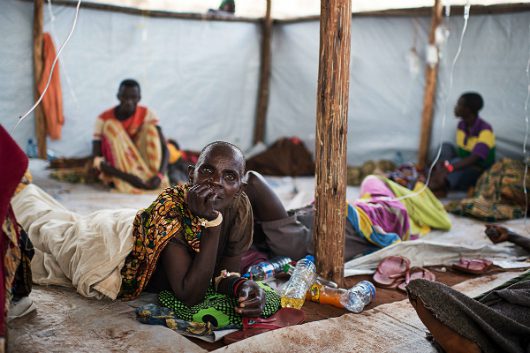
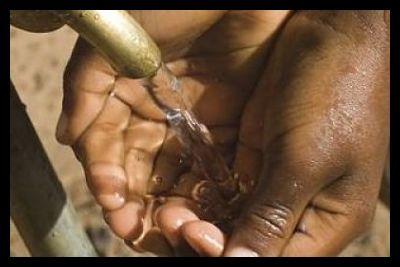
India-Most-Unsanitary-PlaceHow exactly did the country of India suffer from extremities relating to insanitary conditions? Since the beginning of this year, controversy has erupted over data analysis of an air pollution crisis so drastic that life expectancy has been reduced by an average of 3.2 years.
According to the latest World Health Organization (WHO) data report, India is the number one country in terms of having the most catastrophic levels of outdoor air pollution. This is an issue that has not been met with proper treatment. What’s more, 13 out of the 20 most polluted cities in the world are located in India.

For decades, the issue has reportedly derived from a culmination of treacherous chemical particles; “smog” is included among them as the leading pollutant. However, a 2014 BBC News report by Shannti Dinnoo argues that the issue of unsanitary conditions probably stems from cultural causes.

As noted in Dinnoo’s findings, open defecation is a socially accepted daily ritual. When children learn how to walk and talk for the first time, their parents also teach them how to defecate out in the open, and that doing so is acceptable.

The normalized practice most frequently happens among financially-deprived families: toilets are luxuries usually only available to wealthy people. However, as was unearthed in an accompanying BBC News reading, it was found that these people fail to properly sanitize their toilets.

Last year, UNICEF used the phenomenon of public defecation to structure a theory in which the organization correlated the insanitary issue with the prevalence of malnutrition, which alters growth and immunity in children under the age of five.

Children are not the only sufferers of the extreme consequences caused by the horrendous air and hygiene issue.

As documented in Dinnoo’s BBC report, outdoor defecation places women at risk, because they are more likely to be in a susceptible state of sexual assault. This is especially concerning when one considers the rapid rate of rape crimes within the country.

Additionally, the lack of sanitation has potentially inflicted adverse effects among pregnant Indian women, where premature births and low birth weight are more likely to occur.

At the time, with minimal assistance in aiding India’s pollution issue, various individuals have spoken out to produce public awareness in encouraging Indian governmental powers to sustain quality air control. Mohammed Kamal Professor of Public Policy Rohini Pande, alongside University of Chicago collaborators, addressed the public a few months ago and strongly recommended the Indian government to enforce stricter regulations.

Other individuals stepping up to promote awareness include economist Michael Greenstone, who shared suggestions with Internet website vox.com on tactics India should follow, such as the proposal of an effective emission trading system alongside the idea of penalizing citizens who purposely pollute (a factor that is rarely enforced, let alone rarely considered).

On February 21, 2015, United States Secretary of State John Kerry confirmed the launch of a program called AirNow. This would monitor foreign countries’s air quality, specifically that of India, to assist foreign service officers and U.S. military personnel by providing them with information about the air they’re breathing in efforts to “mitigate some of the harmful impacts,” according to The Indian Express.

Already, a small form of action has made a difference for children between the ages of 11 and 15. On July 7, 2015, The Indian Express revealed that UN efforts in alleviating India’s climatic disaster have reduced open defecation by 25 percent.

This reduction has been attributed to the enforcement of stricter regulations and federal emission standards. Overall, people hope to improve respiratory functions for adolescents and young teenagers because that general age is considered the “critical period” of vital lung development.

– Jeff Varner

Sources: The Indian Express 1, BBC News 1, The Indian Express 2, Harvard Kennedy School, VOX, The New York Times, BBC News 2
Photo: Global Press Journal

July 13, 2015
https://borgenproject.org/wp-content/uploads/borgen-project-logo.svg 0 0 Borgen Project https://borgenproject.org/wp-content/uploads/borgen-project-logo.svg Borgen Project2015-07-13 14:07:242020-07-02 21:30:41India: Still The Most Insanitary Place on Earth?
Global Poverty, Sanitation, Water

India’s Sanitation Solutions

India's Sanitation Solutions Poor Sanitation
Build toilets, not temples. This is the message from India’s Prime Minister, Narendra Modi, reflecting on India’s sanitation solutions.


A Need for Solutions to Poor Sanitation


The goal is to end defecation in public places by 2019. About 130 million households do not have toilets – 53 percent of India’s population. The number jumps to 70 percent when villages are singled out, where most people simply relieve themselves in fields, on the side of roads or behind bushes.

The issues that come with this are massive. Health is impacted in numerous ways. The spread of disease is pervasive when open defecation is common: “because India’s population is huge, growing rapidly and densely settled, it is impossible even in rural areas to keep human feces from crops, wells, food and children’s hands. Ingested bacteria and worms spread diseases, especially of the intestine.”

Poor sanitation is the reason for 80 percent of illnesses in India, as well as the leading cause of death for children under 5-years-old. Malnutrition is also a huge problem, despite some children’s diets improving and others getting more than enough to eat. When bacteria gets into children’s intestines, it causes something called enteropathy, which prevents bodies from absorbing nutrients and calories. Because of this, half of India’s children are still considered malnourished.

Hundreds upon hundreds die each year from diseases related to poor sanitation, but politicians have been slow to face up to the problem, and locals have been known to actually prefer “going” in a field instead of a government-built toilet. Culture comes into play here: in the Hindu tradition, it is sometimes encouraged to relieve oneself far away from the home to preserve its purity.

There is a safety aspect to the issue, as well as the issue that people have to leave their homes at night to relieve themselves. There have been instances of young women being raped and murdered while venturing out to take care of business.


Innovative Aid at the Heart of India’s Sanitation Solutions


What is being done to help solve India’s waste problems? The government’s toilet building campaign is a good start, despite the usage issues that they face. Convincing the public to forget old ways is never easy. Even more worrisome is the fact that while many toilets have been built – around 77 percent of households under the poverty line have toilets – countless numbers of them are out of order.

While toilets are certainly needed, safe water is also key. The Bill and Melinda Gates Foundation is investing in a machine called the Omni Processor which is capable of turning sewage into drinking water while powering itself independently.

Bill Gates even tried out the water it produces. One machine can produce enough clean water for 100,000 people. Construction is already underway for a machine in Senegal, and Gates says that there is one in India’s near future as well.

A simple Google search provides a multitude of water-filtering devices similar to searching for solar-powered flashlights. However, the problem runs deeper than simply purifying water in India. There simply is not enough of it. The country is home to 16 percent of the world’s population, but it only has four percent of the world’s freshwater. The groundwater for many of India’s major cities is quickly disappearing, with levels so low in places like Mumbai and Delhi that they could be depleted entirely within a few years. Machines like the Omni Processor could be the answer to this water depletion catastrophe.

– Greg Baker

Sources: Economist, The Guardian, The Washington Post, Clean Leap, New York Times, India Sanitation Solutions,
Photo: Acumen

June 22, 2015
https://borgenproject.org/wp-content/uploads/borgen-project-logo.svg 0 0 Borgen Project https://borgenproject.org/wp-content/uploads/borgen-project-logo.svg Borgen Project2015-06-22 11:50:292024-12-13 17:51:33India’s Sanitation Solutions
Global Poverty, Refugees and Displaced Persons, Sanitation, Water

Cholera Outbreak Among Burundian Refugees Contained

cholera_outbreak
A cholera outbreak in Tanzania that claimed the lives of 30 Burundian refugees and local Tanzanians has been curbed.

The epidemic occurred in western Tanzania near Lake Tanganyika, in a remote village that is overcrowded with refugees. Authorities estimate refugees consumed contaminated lake water, which facilitated the spread of cholera. A total of 4,408 cases have been reported.

A UN Refugee Agency (UNHCR) spokesman, Adrian Edwards, said that no new deaths have been reported since last Thursday, and the number of new daily cases has fallen from around 915 per day at the height of the outbreak on May 18 to less than one hundred per day. According to Edwards, the situation is improving but it still could take several weeks to see cholera completely eradicated among this population.

The majority of the cholera victims are refugees of Burundi who are fleeing to avoid violence stemming from a failed political coup in Burundi’s capital, Bujumbura.

The influx of refugees from Burundi to surrounding countries has not stopped. The UNHCR estimates that over 100,000 Burundian refugees have escaped, leaving over 64,000 Burundians in Tanzania, and the remaining in Rwanda, Uganda and the Democratic Republic of the Congo. About 100 Burundians per day arrive to each of these surrounding countries.

The refugees that arrive in Tanzania must walk four hours through the mountains to reach the border. Some immediately are bussed to the camp called Nyarugusu, and some wait for boats that will take them to a camp called Kigoma. Tens of thousands wait by Lake Tanganyika, a tiny beach area that is only 800 meters by 500 meters. The overcrowding and high density of refugees on the move has facilitated the quick spread of cholera.

Many refugees are being moved from Lake Tanganyika because it is overcrowded and unsanitary. Kahindo Maina, a public health officer of the UNHCR, said, ”Our priority is to get all the refugees out of Kagunga because the situation is dire. We have built latrines and brought supplies to provide clean water but the terrain and the crowded situation does not allow for a good sanitary situation there.”

Refugees have been moved to the Tanganyika stadium in Kigoma where there are better facilities, and cleaner water and sanitation. Tanzanian health authorities, the UNHCR, the World Health Organization and other partners have helped stem the spread of cholera by the promotion of hygiene, treatment of patients, implementation of effective prevention measures and the creation of access to sanitation and safe water.

Other preventative measures provided by the Ministry of Health, the UN and NGO partners include airlifting medicine and providing medical supplies and protective gear. UNHCR spokesman Edwards explained that “together with the government and our UN and NGO partners, we are providing oral rehydration solutions, soap and water purification tablets, and increasing hand-washing facilities.”

Around 30,000 refugees have also been moved from the lake area to Nyarugusu. Here, they receive vaccinations for childhood illnesses, get dewormed and have nutritional assessments done. New latrine and sanitation facilities are being built.

– Margaret Anderson
Sources: AllAfrica, Humanosphere, UNHCR 1, UNHCR 2
Photo: UNHCR

June 15, 2015
https://borgenproject.org/wp-content/uploads/borgen-project-logo.svg 0 0 Borgen Project https://borgenproject.org/wp-content/uploads/borgen-project-logo.svg Borgen Project2015-06-15 14:46:242024-12-13 17:51:27Cholera Outbreak Among Burundian Refugees Contained
Global Poverty, Sanitation, Water

Obstacles in Water and Sanitation Goals

water_and_sanitation
Currently, approximately 2.5 billion people around the world do not have access to basic sanitation services, according to the World Health Organization (WHO).

On November 19, the UN released a report highlighting the gaps in water and sanitation progress. “Water and sanitation are essential to human health. Political commitment to ensure universal access to these vital services is at an all-time high,” said WHO Director of the Department of Public Health and the Environment, Dr Maria Neira. “International aid for the sector is on the rise. But we continue to see major financial gaps at the country level, particularly in rural areas.”

Ninety-four countries were surveyed in the UN-Water Global Analysis and Assessment of Sanitation and Drinking-Water report. Data revealed that over 80 percent of these countries have enacted national policies for drinking-water and sanitation, with over 75 percent enacting policies for hygiene as well. The report also recognized that international aid for improved water and sanitation conditions is increasing. Aid rose from $8.3 billion to $10.9 billion between 2010 and 2012- an increase of 30 percent. Most recent increases in international aid have been the result of strives toward the Millennium Development Goals.

However, WHO points out the major gaps in the MDGs. Approximately 748 million people lack access to clean drinking water sources while a billion people have no sanitary system in place and are forced to practice open defecation.

Still today, hundreds of millions of people lack clean water and soap to wash their hands. This leads to transmission of diarrhoeal disease which is the second largest killer of children under five. Lack of clean water can cause many other water-borne diseases as well, including cholera, typhoid and hepatitis while poor sanitation can cause debilitating diseases like blinding trachoma, intestinal worms and schistosomiasis.

WHO reports that the key obstacles which inhibit progress to water and sanitation development include insufficient funding and weak national capabilities to carry out water, sanitation and hygiene (WASH) initiatives. While statistics show that international aid is increasing, 80 percent of countries have declared that their current financial resources are too low to meet WASH targets.

The funding gap is even more extreme in rural areas which represent the majority of people in need of sanitation and water systems. According to the new report, less than 10 percent of WASH financing goes to improvement in rural areas. Additionally, the report cites challenges in implementing WASH programs in national institutions like schools and health facilities. Fewer than 30 percent of surveyed countries have institutional WASH plans that are being fully carried out, funded and reviewed.

Despite these obstacles to WASH and Millennium Development Goals, many are still hopeful that countries will get back on track to achieving their targets.

“Now is the time to act,” says Michel Jarraud, Chair of UN-Water and Secretary-General of the World Meteorological Organization. “We may not know yet what the post-2015 sustainable development agenda will look like. But we do know that water and sanitation must be clear priorities if we are to create a future that allows everyone to live healthy, prosperous and dignified lives.”

 – Meagan Douches

Sources: UN, UNHCR, WHO
Photo: U.S. Chamber Foundation

December 9, 2014
https://borgenproject.org/wp-content/uploads/borgen-project-logo.svg 0 0 Borgen Project https://borgenproject.org/wp-content/uploads/borgen-project-logo.svg Borgen Project2014-12-09 12:00:062024-06-05 01:58:19Obstacles in Water and Sanitation Goals
Sanitation

New Smart Toilet For Disaster Relief

After a disaster, outbreaks of cholera and other diseases often plague suffering communities due to the absence of proper water sanitation. Natural disasters and war can destroy toilets and sanitary systems, and when refugees flee their homes, they often move to camps without adequate sanitation. However, Damir Brdjanovic and a group of Netherland scientists at UNESCO’s Institute for Water Education have developed an emergency Sanitation Operation System to try to alleviate this problem.

Though the eSOS is currently only an experimental prototype, it is set to be tested in September in a refugee camp in the Philippines. The development of this smart toilet was funded by the Bill and Melinda Gates Foundation’s SaniUP project, whose goal is “stimulating local innovation on sanitation for the urban poor in Sub-Saharan Africa and South East Asia.” The toilet was developed in collaboration with FLEX/The INNOVATIONLAB and SYSTECH.

The eSOS includes a series of techniques to provide sanitation: the smart toilet itself, a “smart transport” system, a way to dislodge the toilets, the treatment of feces and urine, “the safe disposal of materials, like dry sludge, which is pathogen free” and the development of clean water from urine that can be reused in the system.

New membrane bio-reactor technology can turn urine into water that can be used for toilets, irrigation and horticulture.

The smart toilet system is lightweight, which makes it easier to transport, and it has a set of tools that provide information to officials about the community. It includes an S.O.S. button, “an energy supply unit, a GPS sensor, and a monitor that keeps track of waste accumulation.” The information is send to an emergency coordination center to help officials determine what aid needs to be sent.

Testing in the Philippines will be supported by the Bill and Melinda Gates foundation and the Asian Development Bank. Dr. Fiona Zakaria, a fellow at UNESCO-IHE, will carry out the testing with relief agencies.

With the development of new technology, scientists may be able to use inventions like the eSOS to provide crucial relief and disease prevention to threatened communities.

– Kimmi Ligh

Sources: UNESCO, Voice of America
Photo: UNESCO

August 15, 2014
https://borgenproject.org/wp-content/uploads/borgen-project-logo.svg 0 0 Borgen Project https://borgenproject.org/wp-content/uploads/borgen-project-logo.svg Borgen Project2014-08-15 08:00:152024-06-05 01:57:59New Smart Toilet For Disaster Relief
Health, Sanitation

Controlling Cholera: Vaccination vs. Sanitation

The cholera crisis in South Sudan continues to worsen, as do fears of a probable outbreak in Syrian refugee camps in Iraq. The World Health Organization (WHO) reports that 2,400 people have been infected and 62 have been killed so far. As these numbers rise, the demand for a more comprehensive international response grows. This urgent situation polarizes aid providers into two camps: those advocating for widespread vaccination and those directing their focus toward sanitation.

Cholera is highly contagious and fast-acting. It spreads through bacteria-contaminated food and water, and is most common in places with poor water quality and sanitation. Many at-risk areas lack a widespread and comprehensive strategy for cholera prevention. The effectiveness of vaccines overshadows this issue, especially during time sensitive periods when outbreaks have already begun.

A study by The New England Journal of Medicine about a cholera outbreak in Guinea shows that two doses of a particular vaccine were able to protect people with 86 percent effectiveness.

Doctors Without Borders and the Guinean Ministry of Health were able to vaccinate 75 percent of the affected population, thereby containing the outbreak. Similar results were observed in a larger trial in Kolkata. Another benefit is that the vaccine is inexpensive – at approximately $3 per two doses – making it affordable to patients in vulnerable developing countries.

Successes like those seen in Guinea and Kolkata have encouraged the use of vaccination to control future cholera outbreaks and provide quick, inexpensive protection.

However, vaccines are not always suitable for settings with weak health systems. They require refrigeration – often up to the point of delivery – which, in some areas is impossible. Developing countries often must deal with unreliable electricity, transportation issues, high temperatures and deliveries to remote, rural  communities. Also, it is necessary to mix the vaccine with clean water – a scarce commodity in the poor areas where cholera is most likely to take hold.

Factors such as these have created debates over how best to allocate resources. Instead of spending them solely on vaccines, some argue that resources should be used to develop and strengthen basic water and sanitation infrastructure. Vaccinations, though effective, can only reach a percentage of the population, while proper sanitation benefits all.

Also, vaccinations are often implemented only after an outbreak has begun, rather than as a preventative measure. Water and sewage facilities play a major role in preventing cholera once they have been implemented. The WHO has endorsed the use of re-hydration solutions and antibiotics for the treatment of cholera, rather than advocating for vaccination alone.

Access to clean water and sanitary conditions are necessary to effectively control and eliminate cholera. It may be a challenge to focus on these basic needs when the research behind vaccines is so promising. Though providing better hygiene infrastructure for communities will not only help prevent diseases, but also set the foundation for growth in other areas such as health and development.

It is hopeful that both vaccination and sanitation will be used in tandem to provide a multifaceted, integrated approach to preventing and controlling cholera in the future.

– Mari LeGagnoux

Sources: The Guardian 1, The Guardian 2, New England Journal of Medicine
Photo: The Guardian

July 29, 2014
https://borgenproject.org/wp-content/uploads/borgen-project-logo.svg 0 0 Borgen Project https://borgenproject.org/wp-content/uploads/borgen-project-logo.svg Borgen Project2014-07-29 16:00:132024-05-27 09:19:06Controlling Cholera: Vaccination vs. Sanitation
Activism, Health, Sanitation

UNICEF Campaign in Haiti

UNICEF and the Haitian government have combined forces to combat the cholera epidemic by providing access to safe drinking water and sanitation facilities in the rural areas of Haiti. This week they launched the National Sanitation Campaign, which will target 55 communities, 3.8 million people, 2,500 schools and 500 health centers.

Cholera has not been documented in Haiti for a century prior to its outbreak in 2010. Since then, the government has reported 703,000 suspected cases of cholera and 8,500 cholera-related deaths in Haiti.

In 2012, UN Secretary-General Ban Ki-moon launched an initiative for the elimination of cholera in Haiti and the Dominican Republic through prevention, treatment and education.

The UN’s efforts in fighting the epidemic have included establishing mobile teams for rapid health response, setting up 150 cholera treatment facilities and 700 water chlorination points and distributing buckets, water tanks and cholera kits to Haitian residents. International aid has contributed to reducing the toll of cholera: rates have declined 74 percent in the first five months of 2014 compared to the same time period last year and the fatality rate is below the World Health Organization’s one  percent goal.

Despite this progress, cholera still remains a global health emergency for the Haitian population, one that will only be resolved by keeping infected waste out of food and water. With lack of sanitation infrastructure and poor hygienic practices, cholera and other waterborne diseases which can lead to dehydration and death will remain a potential threat to Haitians, particularly those residing in rural communities.

According to UNICEF, less than one in two families have access to a safe, improved water source in rural areas of Haiti, compared with 77 percent in urban areas. In addition, only one in four families have access to functional toilets. Risks of cholera are increased by the environment and are even higher during the rainy season.

Edouard Beigbeder, the UNICEF representative in Haiti, claims that the partnership’s approach is to “address the root causes of the problem and offer sustainable solutions.” The National Sanitation Campaign involves the combination of community outreach and infrastructure building to provide working water points in at-risk communities and appropriate toilets for up to 90 percent of the population in areas where cholera is present. The current program aims to “stop the spread of cholera and cut the incidence of diarrhea by half within the next two years.”

Ki-moon called attention to the cholera epidemic in Haiti after departing on a “necessary pilgrimage” to Los Palmas and attending a local church service. He sought support for the $2.2 billion 10-year cholera elimination initiative of 2012, which struggled to raise an initial $400 million needed for the first two years. Ki-moon’s visit will hopefully reach donors who have previously been slow to respond to the campaign.

Some Haitians criticized Ki-moon’s visit, as the UN refused to accept responsibility for introducing the disease to Haiti. Past evidence suggests that Nepalese peacemakers stationed near a tributary of the Artibonite river had discharged raw sewage that carried a strain of cholera which sparked the outbreak. Now lawsuits are being filed demanding compensation for victims of the epidemic and affected families.

But UNICEF recognizes that it has a “moral duty” to end the world’s worst cholera epidemic. Major donors including the Canadian government and Japanese Agency for International Cooperation will facilitate the fulfillment of this goal. With new initiatives and a specific focus on sanitation systems and clean water, the National Sanitation Campaign aims to eradicate cholera from Haiti once and for all.

– Abby Bauer
Sources: UNICEF, United Nations News Centre, The Guardian, Global Research
Photo: UNICEF

July 24, 2014
https://borgenproject.org/wp-content/uploads/borgen-project-logo.svg 0 0 Borgen Project https://borgenproject.org/wp-content/uploads/borgen-project-logo.svg Borgen Project2014-07-24 14:32:002024-06-05 01:57:50UNICEF Campaign in Haiti
Page 25 of 29«‹2324252627›»

Get Smarter

  • Global Poverty 101
  • Global Poverty… The Good News
  • Global Poverty & U.S. Jobs
  • Global Poverty and National Security
  • Innovative Solutions to Poverty
  • Global Poverty & Aid FAQ’s
Search Search

Take Action

  • Call Congress
  • Email Congress
  • Donate
  • 30 Ways to Help
  • Volunteer Ops
  • Internships
  • Courses & Certificates
  • The Podcast
Borgen Project

“The Borgen Project is an incredible nonprofit organization that is addressing poverty and hunger and working towards ending them.”

-The Huffington Post

Inside The Borgen Project

  • Contact
  • About
  • Financials
  • President
  • Board of Directors
  • Board of Advisors

International Links

  • UK Email Parliament
  • UK Donate
  • Canada Email Parliament

Get Smarter

  • Global Poverty 101
  • Global Poverty… The Good News
  • Global Poverty & U.S. Jobs
  • Global Poverty and National Security
  • Innovative Solutions to Poverty
  • Global Poverty & Aid FAQ’s

Ways to Help

  • Call Congress
  • Email Congress
  • Donate
  • 30 Ways to Help
  • Volunteer Ops
  • Internships
  • Courses & Certificates
  • The Podcast
Scroll to top Scroll to top Scroll to top