• Link to X
  • Link to Facebook
  • Link to Instagram
  • Link to TikTok
  • Link to Youtube
  • About
    • About Us
      • President
      • Board of Directors
      • Board of Advisors
      • Financials
      • Our Methodology
      • Success Tracker
      • Contact
  • Act Now
    • 30 Ways to Help
      • Email Congress
      • Call Congress
      • Volunteer
      • Courses & Certificates
      • Be a Donor
    • Internships
      • In-Office Internships
      • Remote Internships
    • Legislation
      • Politics 101
  • The Blog
  • The Podcast
  • Magazine
  • Donate
  • Click to open the search input field Click to open the search input field Search
  • Menu Menu

Archive for category: Refugees

Refugees

Kurdish Refugees in Ireland Find a Home in Carrick-On-Shannon

Kurdish

Western Ireland does not have much in common with the Kurdish regions of Iran, Iraq, Turkey and Syria. It lacks the mountainous sanctuary that harbored the traditional nomadic lifestyle of the Kurds, as well as the constant ethnic battles. What Carrick-on-Shannon, a small town in the west of Ireland, does have is Kurd-owned businesses, Kurdish athletes and Kurdish New Year celebrations.

With a population estimated to be around 30 million people, the Kurdish ethnic group is one of the largest stateless nations in the world. Years of political turmoil in their traditional homeland of Kurdistan has forced the Kurdish population to become divided along the borders of Iran, Turkey, Iraq and Syria after centuries of persecution. Currently, 1.2 million Kurds live outside of Kurdistan.

The group of Kurdish families, who were first resettled in Carrick-on-Shannon by the United Nations, fled from years of political persecution in Iran and Iraq. After escaping from the violence against their ethnic group in Iran in 1979, many Kurds crossed into their relatively safe neighbor Iraq. The Iraq War in 2003 then forced Kurds to live in refugee camps toward the Iraq-Jordan border. In 2005 and 2006, around 100 Kurdish refugees in Ireland were resettled to Carrick-on-Shannon.

The Irish government, through services that now comprise the Irish Refugee Protection Programme, helped these Kurdish refugees in Ireland build a home in Carrick-on-Shannon. Adults enrolled in language courses to learn English while receiving social welfare to support their families, and children attended local schools.

However, government assistance wasn’t the only welcoming committee for the Kurds. Volunteers from the small Irish town brought food and clothes and built relationships with the mostly Muslim group of Kurds who resettled in their town. Nuns helped them practice English and tutored them in school subjects to help alleviate the difficulties of the language barrier. Though it was not easy, the small community came to foster a mutual respect between its old residents and the new.

After over a decade, the Kurds of Carrick-on-Shannon have become an integrated part of the town. They have received opportunities for education, work and freedom of which their parents could only dream.

This success story of resettlement offers hope during times when the fate of refugees in Europe remains uncertain. With the support of both the Irish government and volunteers, friends and neighbors in Carrick-on-Shannon, these Kurdish refugees in Ireland have been able to claim a new home after years of displacement.

– Richa Bijlani

Photo: Flickr

October 19, 2017
https://borgenproject.org/wp-content/uploads/borgen-project-logo.svg 0 0 Kim Thelwell https://borgenproject.org/wp-content/uploads/borgen-project-logo.svg Kim Thelwell2017-10-19 01:30:022024-05-29 22:27:37Kurdish Refugees in Ireland Find a Home in Carrick-On-Shannon
Global Poverty, Government, Refugees, United Nations

Ethereum Blockchain in Jordan Is Changing Aid

Ethereum Blockchain in Jordan Is Changing How the United Nations Delivers Aid
Distributing aid within areas of conflict, especially those ruled by unstable authoritarian governments, has proven to be a struggle for organizations like the United Nations. These efforts are often plagued by a myriad of issues, such as the distribution of funds to individuals by relief agencies. The Ethereum blockchain in Jordan is shifting the paradigm.

Blockchain technologies, cryptocurrencies and digital banking, however, have the potential to alleviate many of these complications. On May 31, 2017, the United Nation’s World Food Programme (WFP) completed the first successful large-scale trial of the Ethereum blockchain in Jordan to distribute humanitarian aid to Syria.

In order to fully understand the tangible effects that blockchain technology has on the lives of these individuals, it is first necessary to establish a basic background of what exactly this new platform is and what it can do.

Ethereum essentially lends itself to decentralized data recording, meaning that no single person or entity owns the final ledger. Instead, everyone who participates in the network becomes part of the record keeping process.

Blockchain, the technology behind the infamous cryptocurrency Bitcoin as well as Ethereum, has many other applications past transferring money between parties. Like Bitcoin, Ethereum acts as a distributed public blockchain network. However, while Bitcoin’s main application involves peer-to-peer exchange of payments, Ethereum blockchain focuses on both cryptocurrency, called Ether, as well as deploying decentralized applications. These applications generally contain smart contracts: computer codes that facilitate the exchange of money, content, property or anything else of value.

Ethereum offers an unprecedented capacity to carry out nonspecific applications, meaning that instead of just offering peer-to-peer transfer of digital currencies, Ethereum enables the development of potentially thousands of different applications on a single platform. Additionally, hacking and fraudulent activities are virtually impossible on a decentralized network like Ethereum.

Ethereum has many widespread applications, one of which includes legal identification. With current estimates suggesting that there are 1.1 billion people around the world with no official documentation, many of whom are refugees, aid organizations struggle to provide health, financial and educational services without proper identification.

While smartphones or Internet-capable devices are an obvious access point for the identification platform, the project implemented by the WFP was built under the assumption that its beneficiaries might not have access to such luxuries. Instead, the WFP made it possible for thousands of Syrian refugees to pay with a scan of their eyes using the Ethereum blockchain in Jordan.

In this month-long trial, instead of administering funds directly to the recipients, the WFP issued unspecified amounts of cryptocurrency-based vouchers to thousands of Syrian refugees. The U.N. allocated money to the merchants of participating stores where the coupons could be redeemed, effectively cutting out the banking middlemen in the aid distribution processes. Iris recognition devices verified the identities of the refugees at the supermarket in the Azraq camp in Jordan and deducted what they spent from the total sum the WFP provided.

By the end of May 2017, the Ethereum blockchain in Jordan was successfully used to record and authenticate transfers to about 10,000 individuals. WFP consultant Alexandra Alden helped oversee the implementation of this project and stated, “All funds received by the refugees from WFP were specifically used to purchase food items such as olive oil, pasta, and lentils.”


The Future of Ethereum Blockchain in Jordan and Beyond


In terms of future expansion, the WFP intends to include upwards of 100,000 individuals in Jordan in the program as early as August 2017, with hopes of serving the entire Jordanian refugee population by the end of 2018. If this expansion proves successful, the agency will look to expand beyond Jordan to other countries in need of aid.

Additionally, companies including Accenture and Microsoft have been working to design a more comprehensive digital ID network for the U.N. using blockchain technology.

Instead of just receiving food from local merchants, this identification network will provide undocumented refugees with unique identifiers called “stamps” that authenticate services received at camps or through other agencies, such as vaccinations. This system of record keeping will be tested in the near future.

While blockchain technology has the potential to serve the rest of society in various capacities, Ethereum offers those individuals who have been forced to renounce their identities over and over again the possibility of retaining important parts of who they are.

– Richa Bijlani

Photo: Flickr

October 15, 2017
https://borgenproject.org/wp-content/uploads/borgen-project-logo.svg 0 0 Kim Thelwell https://borgenproject.org/wp-content/uploads/borgen-project-logo.svg Kim Thelwell2017-10-15 07:30:162024-06-04 01:08:25Ethereum Blockchain in Jordan Is Changing Aid
Global Poverty, Refugees, Refugees and Displaced Persons

Important Organizations that Are Helping Burundian Refugees

Refugees in Burundi

In September 2017, at least 36 Burundian refugees that were attempting to leave the violence inside their home country were killed in Congo, informed The New York Times. Since 2015, when President Pierre Nkurunziza was re-elected for a third term in a highly controversial election, 300,000 people have abandoned Burundi pursuing freedom.

Despite a decade of peace that Burundians saw after the civil war between the Hutus and Tutsis ends in 2005, 66.9 percent of the population in the Eastern African country are below the national poverty line. This problem makes conditions for refugees worse, as they lack basic services like water, shelter and health care. Four out of every 10 Burundians have been displaced from their country by the violent ethnic conflict.

However, several organizations provide aid to refugees fleeing Burundi. The following foundations work on assisting conditions in the African nation and are always accepting help from volunteers or donors.

  • The United Nations Refugee Agency (UNHCR) fights to provide better living conditions for the refugees, improving things such as shelter, health care and education. Also, the organization uses advocacy to direct public policy in certain countries to ensure the protection of refugees.
  • International Rescue Committee, like the UNHCR, provides education, safety and health aid to Burundian refugees. The organization believes in empowerment through education so that refugees have the proper information to help them make accurate decisions about their future. Through this strategy, the Rescue Committee ensures a better future for refugees still in Burundi and those who have already fled.
  • Help Age International is an organization that focuses on direct contact with the refugees. So far, its team has supported more than 14,000 vulnerable people in Mtendeli and Nduta, Burundian refugee camps in Tanzania. The work Help Age has accomplished includes giving rations cards and cash payments and highlighting issues such as domestic violence.
  • Other organizations aim to reduce poverty in Burundi, like Concern Worldwide, an organization that focuses on the health and nutrition of the citizens of Burundi.

Some countries have adopted public policies that ensure the welfare of refugees around the world, especially after the crisis in the Middle East in 2011. For example, Germany offers asylum applications for refugees, and Sweden provides refugees with rights like the immediate capacity to work and the possibility to choose a place of residence. Countries in Africa surrounding Burundi must adopt similar policies to allow the Burundian refugees a safe environment to shelter themselves and their families.

– Dario Ledesma

Photo: Flickr

October 12, 2017
https://borgenproject.org/wp-content/uploads/borgen-project-logo.svg 0 0 Kim Thelwell https://borgenproject.org/wp-content/uploads/borgen-project-logo.svg Kim Thelwell2017-10-12 07:30:232020-04-09 04:44:34Important Organizations that Are Helping Burundian Refugees
Nonprofit Organizations and NGOs, Refugees

Addressing the Violence Against Rohingya Refugees

Cycle of RefugeesThe Rohingya are the most persecuted people in the world. The population has lived in Myanmar for centuries, but the government continues to view the people as illegal immigrants. Across the border, Bangladesh believes the group is Burmese. Thus, the population is stateless.
Since August of 2017, the Rohingya people have been forced to flee Myanmar to Bangladesh due to intense persecution and attempted ethnic cleansing. Human Rights Watch recently released new satellite imagery showing 62 villages in northern Rakhine suffering from arson attacks. The U.N. Human Rights Chief, Zeid Ra’ad Al Hussein, describes the violence as “crimes against humanity, systematic attacks and forcible deportation of civilians.”

What is the reason for so much anger and violence? According to MSN, the answer is “nationalism-fuelled racism.”

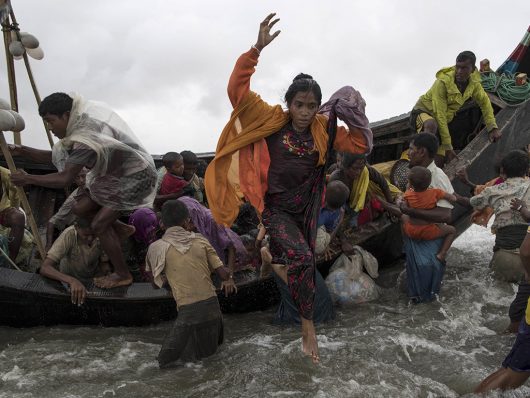
The majority of the Rohingya refugees arrive in Bangladesh on foot, crossing a border lined with landmines by the Myanmar army. The government denies reports of landmines despite numerous claims from NGOs, such as Amnesty International. Other refugees have used small boats to flee. However, some of the passengers have drowned or the boats have sunk. Accounts have been devastating for many of the refugees at sea.

These allegations made by the international community are horrific, and they paint a picture bordering on genocide. Myanmar’s government responded to these claims, stating its military was fighting a terrorist insurgency.

In July of 2017, Arakan Rohingya Salvation Army claimed responsibility for attacks with machetes and rifles in Myanmar. This single attack is believed to have triggered the mass violence and cleansing of the Rohingya population within Myanmar. The government of Myanmar has chosen to view the whole population as a terrorist organization, instead of locating the terrorists within the population.

The situation has become so extreme, the U.N. Security Council publicly rebuked the violence. The council acknowledged attacks on Myanmar security forces, but condemned the violence in response, urging for steps to end the violence.

The stateless people simply want a home, a land of their own. “We want to live peacefully in our native land. We don’t want to be on the strain of other countries,” Tun, a U.K. based activist, told MSN.

The international community wants to see urgent action to protect the welfare of the Rohingya refugees, as well as plan for the future. Formal recognition of the Rohingya as a minority in Myanmar is vital to prevent this cycle of violence. Provision of humanitarian aid and dispatch of U.N. peacekeepers are vital to the health and safety of the Rohingya refugees in Bangladesh.

– Danielle Preskitt

Photo: Flickr

October 8, 2017
https://borgenproject.org/wp-content/uploads/borgen-project-logo.svg 0 0 Borgen Project https://borgenproject.org/wp-content/uploads/borgen-project-logo.svg Borgen Project2017-10-08 07:30:262024-05-25 00:19:06Addressing the Violence Against Rohingya Refugees
Children, Nonprofit Organizations and NGOs, Refugees

Nonprofit Organizations Support and Educate Refugees

Nonprofit Organizations Support and Educate RefugeesThe International Rescue Committee and Sesame Workshop both provide support and education to refugees throughout Jordan, Lebanon, northern Iraq and Syria. Through care and education, these two nonprofit organizations plan to aid children who are dealing with any potential or existing trauma and neglect.

Refugee crises happening today often leave a lasting impact on the children involved. Children of refugees experience a great deal of trauma and sometimes torture. These children are exposed to war and violence, separation from their caregivers and malnutrition. Many of these factors lead to lasting negative effects on the children such as anxiety, insomnia, introversion, depression, behavioral issues, anorexia and many more.

The International Rescue Committee is a nonprofit organization which aims to help those who have been affected by war, conflict and natural disasters. The organization works in countries in which people lack the support they need in order to overcome a crisis; they do this by helping restore health, safety, education and economics. The International Rescue Committee also welcomes those refugees moving into the U.S. and helps them to resettle and thrive in their new home. This committee has responded to the world’s humanitarian crises for 83 years.

Sesame Workshop is the nonprofit organization that is behind Sesame Street, the popular children’s television show. This organization works to help children who have lost parents and caregivers, help families who are unemployed and provide education to children throughout the world. For 40 years, Sesame Workshop has reached millions of children in over 150 countries.

Together, International Rescue Committee and Sesame Workshop give support and provide education to refugees who are in desperate need for help and guidance through the rough environment they are living in.

“Our Partnership with Sesame Street will help transform children’s lives by making sure that their social-emotional needs are met so they are able to receive and education, contribute to their community and succeed as adults,” said David Miliband, President and CEO of the International Rescue Committee, on the committee’s webpage. With the efforts of these two organizations, hopefully there will be progress made in improving refugees’ lives, especially for children.

– Chloe Turner

Photo: Flickr

October 7, 2017
https://borgenproject.org/wp-content/uploads/borgen-project-logo.svg 0 0 Borgen Project https://borgenproject.org/wp-content/uploads/borgen-project-logo.svg Borgen Project2017-10-07 01:30:102020-07-23 09:49:13Nonprofit Organizations Support and Educate Refugees
Global Poverty, Hunger, Refugees

Quality of Life Uncertain for Refugees in Kenya

Refugees in KenyaKalobeyei is a town located in the northwestern part of Kenya that was built by the U.N. refugee agency (UNHCR) along with the local government of Turkana county. The town was designed as a location where refugees could become integrated with the local community and where this integration would benefit shared services and markets, thereby reducing the cost for Western aid donors. Unfortunately, this has not exactly worked out as planned for refugees in Kenya.

There have been quite a few issues that have risen since the town’s creation. The most prominent of these issues is that Kalobeyei was established just as South Sudan’s civil war greatly intensified, causing many refugees in Kenya to arrive with hardly anything more than the clothes on their backs, as well as without the proper resources that would help them make an attempt at a new life.

The World Food Programme provides $14 per month as a cash allowance to each refugee, which is supposed to cover up to 80 percent of an individual’s needs in the town. This may not be enough to live off of due to the current conditions these refugees are left in after the civil war, especially since Kalobeyei is hosting nearly 40,000 refugees, including individuals from places such as South Sudan, Ethiopia, Uganda, the Democratic Republic of Congo and Burundi.

There have also been many complaints from the refugees in Kenya who are currently residing in Kalobeyei. Refugees say that little to nothing that they were promised has been offered in the town. They have found themselves in an isolated camp where both food and water are in short supply and that residents are at the mercy of thievery that goes on within Kalobeyei. One resident of the town—an Ethiopian refugee—said, “When they brought us here, we were told that the place would be like a community village with many development projects, a school, clinic, market and almost everything close by,” but there is close to nothing within the settlement that is within walking distance.

When the UNHCR’s office in Kenya heard of this story, communications director Yvonne Ndege had a drastically different description of what life was like residents of Kalobeyei saying that the town was in fact not built in a remote area and had markets, water tanks and primary schools on-site, as well as stating that “there is no heightened security situation or security threat at Kalobeyei or Kakuma.” She went on to explain that refugees had the option to visit the camp before relocating and that perhaps they “may have had different expectations,” despite having viewed Kalobeyei in advance.

Whatever the case may be, it is wise to be empathetic and understanding toward refugees in Kenya when it comes to these situations—having to relocate yourself and your family is never easy, and struggling in a new environment does not make anything less difficult. Hopefully, the UNHCR will empathize and refugees in Kenya will be able to resolve and overcome the issues with Kalobeyei, for the town is meant to only do good.

– Sara Venusti

Photo: Flickr

October 4, 2017
https://borgenproject.org/wp-content/uploads/borgen-project-logo.svg 0 0 Kim Thelwell https://borgenproject.org/wp-content/uploads/borgen-project-logo.svg Kim Thelwell2017-10-04 07:30:212020-07-22 07:49:55Quality of Life Uncertain for Refugees in Kenya
Global Poverty, Refugees

Yemeni Refugees in Oman: Finding a Welcome Home

Yemeni Refugees in OmanOman is a coastal nation that sits on the Arabian Peninsula, south of Saudi Arabia and east of Yemen. In light of the Syrian civil war and refugee crisis, as well as the ongoing conflict in Yemen, Oman hasn’t been as prominent in the news. However, Yemeni Refugees in Oman are faced with a stark reality.

Oman has taken in many refugees from its neighbor Yemen, which is currently experiencing a civil war sparked by a rough transition of power from longtime authoritarian leader Ali Abdullah Saleh to his deputy, Abdrabbuh Mansour Hadi, in 2011.

The Houthi rebels, representing Yemen’s Shi’a minority, took advantage of the chaos and seized large swathes of territory, including the capital of Sana’a, while Hadi fled to the coastal city of Aden. Al Qaeda, which has long had a foothold in the region, has also been involved in the conflict. As of May 2017, the U.N. estimated about 10,000 people have been killed in Yemen, mainly civilians.

In response to the increasing instability in Yemen, an eight-nation coalition of Arab states, led by Saudi Arabia, launched Operation Storm of Resolve against the Houthis. Oman, while a member of the Gulf Cooperation Council alongside the Saudis, is one of the few nations in the region in the region and the only one in the council not to intervene militarily. Instead, it has opted to support Yemen through humanitarian aid and taking in Yemeni refugees.


Difficult Conditions Facing Yemeni Refugees in Oman


Officially, the Omani government refuses to give the exact numbers of refugees it takes in, but its officials estimate about 2,500 Yemenis live in the country, many illegally. Many of the refugees have lost their families, or come to Oman in search of adequate medical care. According to the U.N., only 45 percent of Yemeni hospitals are fully equipped. By March 2017, about 1,200 Yemeni refugees in Oman have received medical treatment at Omani hospitals, according to Oman’s health ministry.

Oman forbids refugees from working in the country, but many do to send money back home to families who desperately need it, with Omani authorities often turning a blind eye. However, the strain the intake of Yemeni refugees puts on the country has not gone unnoticed. “It is definitely going to be a burden to Oman if the war situation escalates in Yemen,” political analyst Khalfan al Maqbali saisd.

Still, as of now, there are no plans for Yemeni refugees in Oman to be turned away or removed. For the near future, Yemeni refugees in Oman are here to stay.

– Andrew Revord

Photo: Flickr

October 4, 2017
https://borgenproject.org/wp-content/uploads/borgen-project-logo.svg 0 0 Borgen Project https://borgenproject.org/wp-content/uploads/borgen-project-logo.svg Borgen Project2017-10-04 07:30:012024-05-25 00:19:06Yemeni Refugees in Oman: Finding a Welcome Home
Disease, Global Poverty, Refugees

Causes of Poverty in Guinea

Causes of Poverty in Guinea

Guinea is a West African country known for its rich reserves of iron ore, gold, bauxite and other minerals. Despite the wealth these resources generate, Guinea is one of the poorest countries in the world.

Guinea has the highest per capita income on the continent of Africa, yet more than half of the population lives below the poverty line, with around 20 percent in extreme poverty. So where does this huge disparity come from?

The poverty statistics in Guinea are staggering, especially in rural areas. 55 percent of people live below the poverty line, and unemployment rates are very high. Hunger also poses a serious threat, with 17.5 percent of the population experiencing food insecurity, 230,000 children suffering from moderate acute malnutrition and 25.9 percent of the population experiencing chronic malnutrition.

Bearing all that in mind, what are the causes of poverty in Guinea?

Disparities Between Rural and Urban Areas
There is a significantly higher occurrence of poverty in rural areas compared to urban areas. Many Guineans rely on agriculture and do not receive help from any national safety net program; therefore, when frequent floods and natural disasters hit, rural areas are especially devastated. Approximately 63 percent of the rural population is poor, and a huge discrepancy exists between the availability of services like healthcare and education between rural and urban areas.

Influx of Refugees
Another factor contributing to the poverty in Guinea is the significant influx of refugees from Liberia and Sierra Leone into Guinea due to political instability in those countries. These refugees put a strain on the already struggling economy and contribute to political instability that deters investors from helping Guinea.

Insecurity Due to Ebola
Another one of the causes of poverty in Guinea was the 2014 outbreak of Ebola that ravaged Guinea and neighboring countries. The Ebola outbreak continues to have an economic impact, as certain trading restrictions curb economic activities. Ebola has affected almost a million people in Guinea, and many communities require rebuilding that will require a lot of time and money.

Domestic Corruption
Rampant corruption among government officials helps explain why such a rich country has such high poverty rates. Senior government officials have accumulated huge personal fortunes from the oil boom. A money laundering investigation revealed systemic corruption in the government. The government invests heavily in sketchy infrastructure projects that have inflated prices and little social value, at the cost of the well-being of their citizens. To put it into perspective, the government of Guinea spends US$80 out of every US$100 in its budget on construction projects, but only dedicates US$2-3 to health and education. Thus, the citizens continue to suffer from illiteracy and poor health and have no way to escape poverty.

Despite the concerning causes of poverty in Guinea, some aid is coming to the poor. For example, the World Food Programme has a number of programs dedicated to assisting those in Guinea. The World Food Programme is helping by providing emergency support for communities affected by Ebola, food assistance and nutrition, resilience building, school meals and support for local farmers. Although the plight of the poor in Guinea is concerning, efforts by organizations like the World Food Programme can alleviate some of the suffering.

– Lauren McBride

Photo: Flickr

October 1, 2017
https://borgenproject.org/wp-content/uploads/borgen-project-logo.svg 0 0 Kim Thelwell https://borgenproject.org/wp-content/uploads/borgen-project-logo.svg Kim Thelwell2017-10-01 07:30:452024-05-24 23:51:39Causes of Poverty in Guinea
Global Poverty, Refugees

10 Facts About Dominican Refugees

10 Facts About Dominica RefugeesNations such as the Commonwealth of Dominica, and in the Caribbean in general, have become increasingly popular for those seeking asylum throughout the world, demanding an understanding of refugees throughout Caribbean nations. Here on ten facts about Dominican refugees.

  1. Dominica does not actually have a significant refugee problem. In 2015, The World Bank recorded there to be 38 Dominican refugees. Comparatively, it reported that there were almost five million Syrian refugees, and even 4,832 American refugees, showing the Dominican refugee population to be rather small.
  2. Because the population of Dominican refugees is so small, there is little to no data about them.
  3. Dominica is not involved in any military operations and does not actually have a regular military force. Dominica’s only security force is its Commonwealth of Dominica Police Force. Due to the lack of internal and external military conflicts, there are no Dominican refugees fleeing from war.
  4. It is likely that refugees from neighboring islands use Dominica as a stop along their routes. The UNCHR believes Dominica could be a “point of transit” for Haitians traveling to the French territories of Guadeloupe and Martinique.
  5. In 2016, 26 people from Dominica applied for asylum in the United States, United Kingdom and France. All were rejected.
  6. The government of Dominica is committed to providing the necessary provisions to those seeking asylum in Dominica, but due to common economic migration movements throughout the Caribbean, as nationals of different islands travel to work, it is difficult for the government to know who is a refugee that needs aid. The UNCHR has highlighted this issue as key to the protection of refugees seeking asylum in Dominica.
  7. It has been proposed that Dominica could serve as the location for a “refugee nation,” an internationally recognized state for the settlement of refugees. Jason Buzi leads Refugee Nation, a project aimed at petitioning the UNCHR to charter a new country for refugees. Buzi proposed Dominica as an example of a prospective location for a refugee nation because it is an island with a small population that could accept a great influx of people. The goal of Refugee Nation is to establish a new nation by 2020.
  8. The numbers of refugees seeking asylum in the Caribbean continued to rise between mid-2015 and mid-2016. It has been shown that there was a 257 percent increase in asylum seekers in the Caribbean during this time period. Most of these refugees come from other Caribbean nations such as Cuba and Haiti, but others come from Venezuela, Syria, Sri Lanka and other South American, African, Asian and Middle Eastern nations.
  9. The current influx in refugees to the Caribbean poses issues for small Caribbean governments that have limited resources to support refugees, as the UNCHR highlighted with Dominica. However, refugees also bring skills and manpower to the economy, making them positive additions to small Caribbean countries.
  10. Refugees travel to the Caribbean seeking asylum due to the historical culture of immigration and mixed communities within the Caribbean, and the high level of human development in many Caribbean countries. Dominica is 96th, ranking high for quality of life on the UNDP’s Human Development Index.

– Mary Luft
Photo: Flickr

September 30, 2017
https://borgenproject.org/wp-content/uploads/borgen-project-logo.svg 0 0 Borgen Project https://borgenproject.org/wp-content/uploads/borgen-project-logo.svg Borgen Project2017-09-30 07:30:232024-05-28 00:16:1710 Facts About Dominican Refugees
Global Poverty, Refugees

10 Facts About Refugees From The Comoros

Comoros Refugees

The U.N. Human Rights Council estimates that, currently, there are over 21 million refugees. While coverage tends to be concerned primarily with those from Syria, Somalia and Afghanistan, because of their large refugee populations, a smaller, ongoing crisis exists in the Comoros Islands, off the cost of Mozambique, where people flee economic hardship. Here are the 10 facts about refugees from the Comoros.

  1. Many refugees from the Comoros Islands flee to one of the nation’s smaller islands, called Mayotte. This island lies to the southeast of the rest of the Comoros Islands – Moheli, Anjouan, and Grande Comore.
  2. The Comoros at one time belonged to France, but the three major islands gained independence, while Mayotte is still a French territory.
  3. In 1995, the French government made traveling between the islands without a visa illegal, leading to major problems with illegal immigration.
  4. As much as 40 percent of Mayotte’s population are considered illegal immigrants, according to estimates by the French government.
  5. Those living illegally in Mayotte face severe prosecution and deportation. Authorities have stepped up patrols in order to detain and deport those without proper papers. Mayotte deports as many as 20,000 illegal immigrants a year.
  6. Immigrants detained in Mayotte face what a 2008 Council of Europe Human Rights Report deemed “unacceptable” holding conditions, yet many still make the trip seeking better education and healthcare. Detained persons stay in overcrowded rooms and often face inhumane treatment by guards.
  7. Desperation by those leaving the major Comoros Islands has resulted in many tragedies in the ocean. Official numbers from France state that there have been less than ten thousand deaths from the Comoros to Mayotte since 1995. However, governor of Anjouan, Anissi Chamsidine, puts the number at an alarming 50,000.
  8. Although many Comorians travel to Mayotte to find a better life, many who do reach there are disappointed. Those who have left for Mayotte still live in poverty, fearful of deportation. The Red Cross estimates that immigrants working in agriculture or fishing make an average of only $370 a month, while local citizens make $958.
  9. Some Comorians who leave the country will flee to France, although at much fewer rates. In 2016, 294 Comorians applied for asylum in France. Only 16 percent of applications were accepted.
  10. Over 150,000 people with Comorian citizenship live abroad, largely in France, where they can find better access to jobs, education and healthcare.

These facts about refugees from the Comoros Islands illustrate a situation that is in dire need of a solution. The international community must take a stand in assisting to lift the Cormorian people out of a circle of poverty and deportation.

– Selasi Amoani

Photo: Flickr

September 27, 2017
https://borgenproject.org/wp-content/uploads/borgen-project-logo.svg 0 0 Borgen Project https://borgenproject.org/wp-content/uploads/borgen-project-logo.svg Borgen Project2017-09-27 07:30:232024-05-28 00:02:3610 Facts About Refugees From The Comoros
Page 32 of 53«‹3031323334›»

Get Smarter

  • Global Poverty 101
  • Global Poverty… The Good News
  • Global Poverty & U.S. Jobs
  • Global Poverty and National Security
  • Innovative Solutions to Poverty
  • Global Poverty & Aid FAQ’s
Search Search

Take Action

  • Call Congress
  • Email Congress
  • Donate
  • 30 Ways to Help
  • Volunteer Ops
  • Internships
  • Courses & Certificates
  • The Podcast
Borgen Project

“The Borgen Project is an incredible nonprofit organization that is addressing poverty and hunger and working towards ending them.”

-The Huffington Post

Inside The Borgen Project

  • Contact
  • About
  • Financials
  • President
  • Board of Directors
  • Board of Advisors

International Links

  • UK Email Parliament
  • UK Donate
  • Canada Email Parliament

Get Smarter

  • Global Poverty 101
  • Global Poverty… The Good News
  • Global Poverty & U.S. Jobs
  • Global Poverty and National Security
  • Innovative Solutions to Poverty
  • Global Poverty & Aid FAQ’s

Ways to Help

  • Call Congress
  • Email Congress
  • Donate
  • 30 Ways to Help
  • Volunteer Ops
  • Internships
  • Courses & Certificates
  • The Podcast
Scroll to top Scroll to top Scroll to top