• Link to X
  • Link to Facebook
  • Link to Instagram
  • Link to TikTok
  • Link to Youtube
  • About
    • About Us
      • President
      • Board of Directors
      • Board of Advisors
      • Financials
      • Our Methodology
      • Success Tracker
      • Contact
  • Act Now
    • 30 Ways to Help
      • Email Congress
      • Call Congress
      • Volunteer
      • Courses & Certificates
      • Be a Donor
    • Internships
      • In-Office Internships
      • Remote Internships
    • Legislation
      • Politics 101
  • The Blog
  • The Podcast
  • Magazine
  • Donate
  • Click to open the search input field Click to open the search input field Search
  • Menu Menu

Archive for category: Refugees

Politics, Refugees

From Albert Einstein to Freddie Mercury: 15 Famous Refugees

Famous Refugees
In the wake of recent attacks on refugees, many have spoken out against the blanket statements and incorrect generalizations made about those who flee their homelands due to violence or disaster. As a further reminder that refugees are a large and diverse population that is difficult to adequately describe, this list of 15 famous refugees details people you might not know were refugees.

Meet 15 Famous Refugees

  1. Aristotle Onassis
    The famous Greek shipping magnate fled Smyrna during the Greco-Turkish War in 1922 after several of his family members were killed during the Great Fire of Smyrna.
  2. K’Naan
    The author of the hit song “Wavin’ Flag”, which became popular in the wake of the 2010 earthquake in Haiti, was born in Somalia and resettled in Canada in 1991 after the outbreak of the Somali civil war.
  3. Freddie Mercury
    Freddie Mercury was born in the Sultanate of Zanzibar, which is now Tanzania. He fled with his family in 1964 during the Zanzibar Revolution and resettled in the United Kingdom.
  4. Georg Ludwig and Maria von Trapp
    The Sound of Music was based on the true story of these two famous refugees. The parents of the real-life von Trapp family, Georg and Maria, fled Austria after the Anschluss, or Nazi annexation of Austria. They eventually resettled in the United States, where they moved around before finally settling in Vermont.
  5. Madeleine Albright
    The first female American Secretary of State arrived in the U.S. as a child in 1948. Her family fled the modern-day Czech Republic (which was then Czechoslovakia) after a communist takeover.
  6. Henry Kissinger
    Another famous American Secretary of State, Henry Kissinger was born in Furth, Germany and fled Germany with his family in 1938 to escape persecution on the basis of their Jewish faith.
  7. Karl Marx
    As a result of his controversial political views, Karl Marx was exiled from multiple countries over the course of his lifetime. For the last 35 years of his life, he was a stateless person after being expelled from France and subsequently renouncing his Prussian citizenship.
  8. Sigmund Freud
    The famed psychoanalyst was a refugee for the last year of his life. He fled Austria as a Jewish refugee during the Anschluss in 1938, resettled in the United Kingdom, and died there in 1939.
  9. Jesus
    Jesus of Nazareth and his parents could technically be considered refugees on the basis of their having fled Israel and gone to Egypt to escape King Herod.
  10. Enrico Fermi
    The Nobel Prize-winning physicist and contributor to the Manhattan Project was a native of Italy and fled to the United States after the passage of anti-Semitic legislation by the Mussolini regime.
  11. Albert Einstein
    Perhaps one of the most famous physicists in history, Albert Einstein was a German-Jewish refugee who came to the United States in 1938 and became a professor at Princeton University.
  12. Jerry Springer
    While not technically a refugee himself, Jerry Springer was born to German refugees who had resettled in the United Kingdom.
  13. Victor Hugo
    The acclaimed French author was expelled from France multiple times and forced to flee as a result of his political views.
  14. Wyclef Jean
    The popular musician and member of The Fugees was born in Haiti and resettled in New York after fleeing the DuValier regime.
  15. Peter Carl Faberge
    Peter Carl Faberge was a renowned Russian jeweler who personally served the imperial court under Nicholas II and was known for the decorative eggs he created for the Russian imperial family and aristocracy. After the revolution in 1917, he was forced to flee to Switzerland. His surviving pieces have sold for tens of millions of dollars.

Amid all this talk of famous refugees, it is important to reiterate that refugees should not and do not have to possess any special talent or perform any extraordinary feat in order to be treated with basic human dignity. Rather, this list of famous refugees should serve as a reminder that someone’s refugee status does not define them and does not make their contributions to society any less valuable.

– Michaela Downey

Photo: Flickr

March 8, 2018
https://borgenproject.org/wp-content/uploads/borgen-project-logo.svg 0 0 Borgen Project https://borgenproject.org/wp-content/uploads/borgen-project-logo.svg Borgen Project2018-03-08 01:30:522024-05-29 22:39:43From Albert Einstein to Freddie Mercury: 15 Famous Refugees
Global Poverty, Refugees, Refugees and Displaced Persons

Relief from Crisis as US Issues TPS for Syrian Refugees

TPS for Syrian refugeesThe Syrian refugee crisis has been the world’s largest humanitarian crisis for the past six years. The U.S. government has made a decision to grant temporary protected status (TPS) to 7,000 displaced Syrians. The announcement came on January 31, 2018, which granted 18 months of TPS for Syrian refugees in America.
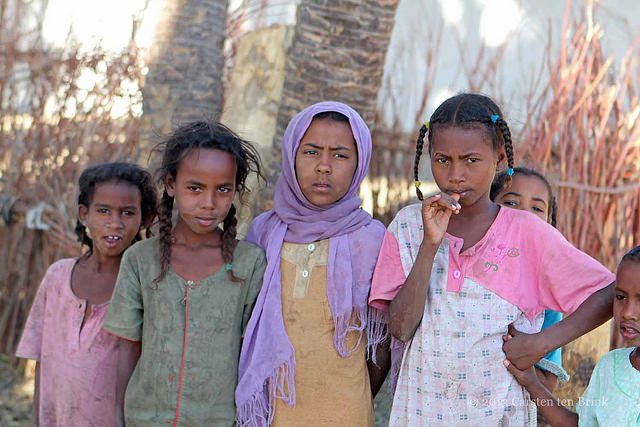
About 400,000 deaths have resulted from the Syrian conflict since April 2016. Nearly 13.5 million people living in Syria face threats, displacement, hunger, injury and death. 6.1 million people living in Syria are displaced from their homes, and more than 4.8 million have fled the country.

Egypt, Iraq, Jordan, Lebanon and Turkey have taken in millions of Syrian refugees. The majority of refugees are children, who face malnutrition, forced labor, child marriage, militant drafting, disease and death. A recent survey by U.N. cooperatives shows that children living in Lebanese refugee camps are more vulnerable to forced labor and child marriage than ever before. Syrian refugees in Lebanon live on less than $4 a day.

Jordan, considered one of the United States’ partners in alleviating the Syrian refugee crisis, has recently made breakthroughs to alleviate the dependence of refugees. As part of a compact deal that has increased international aid to Jordan, the country was able to issue more than 88,000 work permits to Syrians, allowing refugees the ability to meet their basic needs. Of the 655,000 Syrian refugees exiled in Jordan, approximately 80 percent of them live outside camps, living below the poverty line on less than $3 a day.

Recognizing the terror that Syrian refugees face by returning to their home country, the U.S. has decided to grant a TPS for Syrian refugees for 18 more months. This decision was directly influenced by the extraordinary conditions surrounding the ongoing armed conflict. The TPS for Syrian refugees only applies to those who have continuously resided in the U.S. since August 1, 2016, and have been continuously physically present in the United States since October 1, 2016. The designation of the TPS for Syrian refugees is subject to be renewed based on conditions in Syria after the 18-month period expires.

This TPS designation comes after years of abuse by Syria’s Assad regime, and extremist groups such as the Islamic State of Iraq and the Levant. The crisis in Syria is by far the most tragic humanitarian crisis in the world today.

The U.S. government has spent nearly $6 billion on humanitarian assistance in response to the Syrian conflict. Funding supports the provision of emergency food, medicine, safe drinking water and other relief supplies to conflict-affected people in Syria and neighboring countries. This humanitarian aid comes in the form of cash for medicine and food, stoves and fuel for heating, insulation for tents, thermal blankets and winter clothing. Shelter kits, non-food items, protection services and psychosocial support are provided to those who have been displaced but remain in Syria.

International officials ministering to Syrian refugee camps state that more international aid is needed for humanitarian efforts to lift millions of Syrian refugees out of poverty.

– Alex Galante 

Photo: John Stanmeyer

February 21, 2018
https://borgenproject.org/wp-content/uploads/borgen-project-logo.svg 0 0 Borgen Project https://borgenproject.org/wp-content/uploads/borgen-project-logo.svg Borgen Project2018-02-21 01:30:212024-05-29 22:39:26Relief from Crisis as US Issues TPS for Syrian Refugees
Global Poverty, Refugees, Refugees and Displaced Persons

Five of the Most Predominant Stateless Groups in the World Today

stateless groups
According to the United Nations High Commissioner for Refugees (UNHCR), the internationally recognized legal definition of a stateless person is “a person who is not considered a national by any State under the operation of its law.” A person or a group of people with the status of “stateless” usually means they are not allowed to get an education at school, see a doctor, get a job or have access to other basic human rights within a nation.

Some people are born stateless; other groups become stateless if their government does not establish them as nationals that have representation under state law.

Here is a list of five currently stateless groups in the world:


1. The Rohingya

The Rohingya are a group of Muslims of South Asian descent that populate western Myanmar and Bangladesh. Myanmar’s government pushed many Rohingya out of Myanmar, which is how they ended up in Bangladesh and other nearby regions. Myanmar, dominantly Buddhist, doesn’t want to accept this ethnic group into their nation. As a result, many Rohingya suffer from intense discrimination, hatred and unkind deaths. With nowhere and no one to support them, the Rohingya are completely dependent on foreign aid.


2. The Roma

While the exact origin of Roma is unknown, it is certain that this group of people arrived in Europe prior to the ninth century. Historically, many Roma were forced into slavery and sentenced to death throughout the medieval era for being “heathens.” They, alongside the Jews, were persecuted and forced into labor camps during World War II. Today, millions of Roma live in isolated slums without running water or electricity. There is a great health disparity among the population, but governments have kept them at the brink of death without offering help.


3. The Nubians

The Nubians, originally from Sudan, were brought to Kenya over 150 years ago when the British government asked them to fight in the colonial army; since then, they haven’t been able to return home. Today, Kenya will not grant Nubians basic citizenship rights so this group lives in one of the largest slums on Earth despite trying to receive title rights to land and seeking solutions to their disparity.


4. The Bidoon

In the state of Kuwait, the Bidoon is one of the stateless groups attempting to break free from the status of “illegal residents.” The Bidoon are descendants of the Bedouin people, a desert-dwelling Arabian ethnic group. They have tried and failed dozens of times to gain official recognition in Kuwait; instead of citizenship, they are told to seek residency elsewhere.


5. The Yao

The Yao is one of many Thailand hill tribes that don’t have a Thai citizenship. This means they can’t vote, buy land or seek legal employment. The Thai government has previously granted temporary citizenship to a select few, but this is after they go through a strenuous process to prove they should be granted a pass.

These five stateless groups — Rohingya, Roma, Nubians, Bidoon and Yao — are just a select few from an extensive list. In total, there are more than 10 million people that are denied a nationality; however, the UNHCR made an announcement that they hope to end statelessness by 2024. On their website, viewers can sign the #IBelong campaign in order to show support. If successful, this will not only grant millions of men, women and children a nationality, but it will also grant increased access to clean food and water, healthcare, jobs, education and so much more.

– Caysi Simpson

Photo: Flickr

February 8, 2018
https://borgenproject.org/wp-content/uploads/borgen-project-logo.svg 0 0 Borgen Project https://borgenproject.org/wp-content/uploads/borgen-project-logo.svg Borgen Project2018-02-08 01:30:412024-05-29 22:39:09Five of the Most Predominant Stateless Groups in the World Today
Economy, Global Poverty, Refugees, Refugees and Displaced Persons

Economic Impact of Refugees on Neighboring Countries

impact of refugees on neighboring countries
Refugees taking asylum within other countries’ borders affect the economy of the host country and surrounding countries. People fleeing usually choose neighboring countries of their homeland, some of these being lower-income developing countries. While the effects are varying, several outcomes influence the economy of the host country in a positive manner and indirectly act as an economic impact of refugees on neighboring countries.


Education for Refugees

One such outcome is the development of education for refugees. This provides education for children in the host country that originally could not obtain such an opportunity. The use of international aid organizations has furthered the building of schools and training of teachers. These organizations seek to invest in the host countries development to ensure that the needs of the refugees are met, and thus bolstering that country’s economy.

Each individual person seeking asylum also brings a skill from home to the new country. As unemployed refugees come, there are a variety of skills and occupational backgrounds that are also brought — for instance, doctors, lawyers, nurses and carpenters. This influx of vocational skills can alleviate issues of a demographic crisis or an in-country population decrease.


Refugee Economic Status

Establishing desirable economic status as an individual provides an economic gain to the country and allows refugees to more easily integrate or move into other surrounding countries. An economic gain to the host country in the form of a working-class can result in positive economic impacts on neighboring countries.

Economic stimulus for the host country can further be developed through local food purchase, non-food items such as shelter materials, disbursements made by aid workers and assets brought by refugees. Purchasing products from neighboring countries is another of the positive impact of refugees on neighboring countries.


Refugee Strain on Infrastructure and Foreign Aid

A large influx of refugees to host countries does strain the country’s current economic infrastructure and call for emergency financial assistance. In a case study done on the 1999 Kosovar refugees, the International Monetary Fund and the World Bank estimated that host countries needed $52 to $188 million to appropriately deal with humanitarian needs. To accomplish this, these countries often look to developed countries to provide foreign aid.

Foreign aid given by countries can help increase the host country’s economy while also providing a peaceful presence to aid the in-need nation. Aid simultaneously benefits the receiving countries economy and the giving-country’s future economic gain and presence in foreign affairs.

Although hosting a large population of refugees can create a burden (especially on developing countries), the positive impact of refugees on neighboring countries is extremely apparent. These benefits provide an incentive to give asylum to those fleeing from conflict.

– Bronti DeRoche

Photo: Flickr

February 2, 2018
https://borgenproject.org/wp-content/uploads/borgen-project-logo.svg 0 0 Borgen Project https://borgenproject.org/wp-content/uploads/borgen-project-logo.svg Borgen Project2018-02-02 01:30:372019-12-18 05:44:22Economic Impact of Refugees on Neighboring Countries
Global Poverty, Human Rights, Refugees, Refugees and Displaced Persons

10 Famous People Who Are Actually Refugees

10 famous refugeesThe world has witnessed the severe effects of violence, poverty and injustice throughout the globe, and innocent people continue to suffer the consequences. The United States and several other countries have often offered refuge to those fleeing war and injustice. Below are 10 famous people who are actually refugees who made iconic contributions in various fields.

  1. Gloria Estefan
    Estefan is a singer, writer and actress who fled Cuba for the United States in the 1960s as a result of Castro’s communist revolution.
  2. Albert Einstein
    Einstein was a Nobel Prize-winning physicist who escaped Nazi Germany in 1938. Einstein took matters into his own hands, providing visa applications and vouching for other refugees also fleeing Nazi Germany.
  3. Madeleine Albright
    Albright fled Czechoslovakia with her family in 1938, settling in the U.K. before moving to the U.S. She became the first woman appointed to the position of U.S. Secretary of State in 1997.
  4. Alek Wek
    Wek was nine years old when she fled South Sudan for Britain with her family in the wake of a civil war. Wek was discovered by a modeling agent and rose to international fame.
  5. Elie Wiesel
    Writer, professor, political activist, Nobel laureate and Holocaust survivor, Wiesel wrote several books about the horrors of the Holocaust. Elie and his wife, Marion, started the Elie Wiesel Foundation in remembrance of the Holocaust and to combat intolerance and injustices.
  6. Freddie Mercury
    Singer, songwriter and producer, Freddie Mercury is best known as the frontman for the rock band Queen. Born in a British Protectorate of the Sultanate of Zanzibar, now Tanzania, Mercury and his family fled during the Zanzibar Revolution in 1964, settling in the U.K.
  7. Marlene Dietrich
    Dietrich was a German-born actress and singer whose career spanned decades. She applied for U.S. citizenship after being offered an acting contract by members of the Nazi Party. Dietrich was also known for her humanitarian efforts during WWII, housing exiles and advocating for their U.S. citizenship.
  8. Wyclef Jean
    Another of these 10 famous people who are actually refugees is Wyclef Jean, Haitian rapper, musician and actor. Jean immigrated to the U.S. as a child with his family during the Duvalier regime in Haiti.
  9. Andy Garcia
    Garcia and his family fled Cuba after the failed Bay of Pigs invasion when he was five years old. He is best known for his role in The Godfather Part III, receiving a Golden Globe for his portrayal of Vincent Santino Corleone. Garcia celebrates his roots and challenges Latino stereotypes in Hollywood.
  10. Theanvy Kuoch
    Kuoch was a slave of the Khmer Rouge between 1975 and 1979, before being found by the Red Cross. With her family, she relocated to the United Nations refugee camp and spent two years working as a nurse in various camps before moving to the U.S. In 1982, she founded Khmer Health Advocates with three American nurses to provide health services for survivors of the Cambodian genocide.

These 10 famous people who are actually refugees have paved the way for themselves and others. Refugees are simply people seeking out a better life in a new country; this is a humanitarian issue, and refugees need our help in rebuilding their lives.

– Jennifer Serrato

Photo: Pixabay

January 28, 2018
https://borgenproject.org/wp-content/uploads/borgen-project-logo.svg 0 0 Borgen Project https://borgenproject.org/wp-content/uploads/borgen-project-logo.svg Borgen Project2018-01-28 01:59:442024-06-05 02:12:1710 Famous People Who Are Actually Refugees
Global Poverty, Refugees, Refugees and Displaced Persons

Ten Facts About Refugee Camps, Home to 2.6 Million Worldwide

facts about refugee campsPeople from all over the world seek asylum in refugee camps. But what exactly is a refugee camp? A refugee camp is a quickly built shelter for refugees who are fleeing for their lives because of violence and persecution. Approximately 28,300 people are forced to flee their homes every day because of persecution and crises. Refugee camps serve as a temporary safe haven for people in need and provide aid such as food, water and medical attention. Understanding key facts about refugee camps better explains their purpose and their struggles.

Here are the top 10 facts about refugee camps.

  1. 2.6 million refugees live in refugee camps.
  2. 80,000 refugees live in the Za’atari refugee camp in Jordan. In comparison, this is about the same as the population of Scranton, Pennsylvania. Jordan has sheltered approximately 635,000 Syrian refugees since its development, equaling 10 percent of Syria’s population.
  3. Fifty-five percent of refugees come from Afghanistan, South Sudan and Syria.
  4. Refugee camps are most often found near the border of neighboring countries.
  5. More than half of the people seeking asylum in refugee camps are children.
  6. Most refugee camps are created to be temporary, but some of them have turned into functioning cities because of the continued needs of the refugees.
  7. People living in refugee camps often suffer from chronic malnutrition because there is not always enough food for everyone within the camps.
  8. In October 2017, Bangladesh announced that they will be building one of the biggest refugee camps yet. They plan to house the 800,000-plus Rohingya Muslims who are seeking refuge from violence and crisis in Myanmar. More than half a million Muslims arrived and were dispersed among 23 scattered refugee camps. Bangladesh authorities plan to bring all of those refugees together into one large refugee camp.
  9. Most refugee camps lack schools, which is detrimental to children’s development, especially if they are there for long periods of time.
  10. On average, refugees remain in refugee camps for more than 12 years. Their temporary solution often has to become more permanent.

These facts about refugee camps give people insight into what exactly refugee camps are, how they help and the complications they face. Although refugee camps face extreme difficulties, they help countless numbers of refugees every single day, whether it be temporary or long-term. This is why it is imperative to continue to spread awareness and ensure that forms of assistance like refugee camps continue to be a priority across the globe.

– McCall Robison

Photo: Flickr

January 13, 2018
https://borgenproject.org/wp-content/uploads/borgen-project-logo.svg 0 0 Borgen Project https://borgenproject.org/wp-content/uploads/borgen-project-logo.svg Borgen Project2018-01-13 07:30:502024-12-13 17:49:12Ten Facts About Refugee Camps, Home to 2.6 Million Worldwide
Global Poverty, Migration, Refugees, Refugees and Displaced Persons

What is the Difference Between an Immigrant and a Refugee?

Difference Between an Immigrant and a RefugeeWhat is the difference between an immigrant and a refugee? The terms migrant and refugee are often used interchangeably despite the fact that there are definitive differences between the two.

A migrant is a person who consciously makes a choice to leave their homeland and seek a better life in another state. These individuals or families can take the time to learn about the country to which they intend on relocating and prepare themselves as much as possible for the journey. While the process varies from country to country, it usually involves screening, pre-departure training, and obtaining work permits. The process can take months, if not years, and migration has become more common in the last two centuries.

According to the 1951 Refugee Convention, a refugee is a person who “owing to a well-founded fear of being persecuted for reasons of race, religion, nationality, membership of a particular social group or political opinion, is outside the country of his nationality, and is unable to, or owing to such fear, unwilling to avail himself of the protection of that country.”

This definition falls under international law, and therefore a refugee that arrives on foreign soil looking for safety and claiming refugee status cannot be deported immediately. Their case will be reviewed before there is a chance they are sent back their homeland, as it must be considered whether their safety is in jeopardy. This is a United Nations convention that was ratified by 144 countries.

Not all migrants are refugees, but sometimes refugees can fall under the category of a migrant. Knowing the difference between an immigrant and a refugee is especially important for international law and domestic law. Immigration policies and requirements typically only apply to the country that established them. Basically, they are different from country to country and are categorized under domestic law. For example, the application process for migrating into the United States is a different application process than applying to Japan.

However, a refugee is protected by international law, therefore, while legal documentation can be lacking, countries have an obligation to abide by these laws. Even the countries that didn’t ratify the convention are still expected to respect it because it falls under the protection of basic human rights.

There are still similarities between the two, which is why people might confuse them. In both cases, each party will have to either assimilate or find some way to adapt to life in a new country. They will face a shock in culture, the workforce and language. Entering a new country, whether by choice or due to persecution, will always be a frightening process.

Either way, despite the difference between an immigrant and a refugee, both groups deserve a chance at feeling a sense of security within their lives.

– Caysi Simpson

Photo: Flickr

January 4, 2018
https://borgenproject.org/wp-content/uploads/borgen-project-logo.svg 0 0 Borgen Project https://borgenproject.org/wp-content/uploads/borgen-project-logo.svg Borgen Project2018-01-04 07:30:282019-12-06 13:25:27What is the Difference Between an Immigrant and a Refugee?
Refugees

Important Facts about the South Sudanese Refugees in Uganda

South Sudanese Refugees in UgandaSouth Sudan is a country located in East-Central Africa with a population of approximately 13 million. The country is rich in fertile agricultural land, as well as precious gems and metals such as diamonds and gold. Yet, South Sudan is one of the world’s poorest countries and ranks low in many socioeconomic categories, due to its brutal history of civil war and current tensions with Sudan.

South Sudan has a history of upheaval and political unrest. Prior to gaining its independence in 2011, the country was part of the large Sudan. Yet citizens from the south were not given the same political rights as those in the north, leading to two prolonged periods of conflict occurring from 1955-1972 and 1983-2005.

During this time, an estimated 2.5 million Sudanese died due to starvation and drought.  Finally, in 2005, a Comprehensive Peace Agreement was reached, in which the south was given a six-year period of autonomy to eventually be followed by a referendum to determine the final status of the country. The result of the referendum indicated that 98 percent of the population was in favor of secession.

Despite gaining independence, South Sudan has struggled to control rebel militia groups operating in the region. Following a year of peace, fighting broke out again in July 2016, leaving millions of South Sudanese displaced, as many were forced to flee their country into the neighboring country of Uganda.

The U.N. Refugee Agency estimates that over one million South Sudanese refugees have fled to Uganda over the last year, meaning approximately 1,800 refugees arrive each day. It has become one of the fastest-growing refugee crises in the world, with more than 85 percent of the South Sudanese refugees in Uganda being women and children under the age of 18. One refugee camp, just south of the border called the Adjumani Settlement, has over 210,000 South Sudanese refugees. These settlements often have limited space and resources, including limited water availability, yet thousands of refugees continue to pour into Uganda.

Despite Uganda having its own internal struggles, many experts have applauded the country for maintaining its open borders as well as its progressive approach to asylum. Uganda provides refugees with land to build shelter and grow crops. It allows the South Sudanese refugees the freedom to work, while also giving them access to public services including health care and education.

The Ugandan government is also working to garner additional financial support from other foreign countries including the United States. It hosted a Solidarity Summit in June to raise funds for South Sudanese refugees in Uganda; however, only 21 percent of the $674 million needed was actually received from the countries invited.

Despite the lack of funding, many organizations have provided their assistance to the South Sudanese refugees in Uganda. Medecins Sans Frontieres, also known as Doctors Without Borders, has provided tremendous medical assistance to many of the refugee camps. Between January and April 2017, Doctors Without Borders provided over 20,000 medical consultations, and delivered over 250 babies and provided their mothers with adequate health care. Not only does Doctors Without provide basic health care, it also provides mental health care services to refugees who have experienced trauma through their displacement.

The government of Ireland also has airlifted over $500,000 of essential relief items, including blankets, shelter construction materials and mosquito nets, to assist the South Sudanese refugees in Uganda. Over the past year, Ireland has spent over $3.5 million in support of the refugees. The country also pledged solidarity and a willingness to support the refugees in any way it can.

Many organizations and countries have shown their support to the South Sudanese refugees in Uganda. However, the country is still in need of desperate financial resources to provide individuals with basic necessities, including food and water. Greater education on the South Sundanese refugee issue around the globe, coupled with additional financial support to fund the nearly $700 million needed, can provide displaced citizens with basic necessities in order to give them the ability to rebuild their lives in Uganda.

– Sarah Jane Fraser

Photo: Flickr

November 12, 2017
https://borgenproject.org/wp-content/uploads/borgen-project-logo.svg 0 0 Borgen Project https://borgenproject.org/wp-content/uploads/borgen-project-logo.svg Borgen Project2017-11-12 07:30:272024-05-29 22:29:11Important Facts about the South Sudanese Refugees in Uganda
Refugees

Solar Panels in Refugee Camps Show Widely Positive Impacts

Solar Panels in Refugee CampsEscalating conflicts around the world, particularly in nations such as Yemen, Nigeria and Somalia, has led to a global refugee crisis. According to the United Nations Refugee Agency (UNHCR), there were 65.3 million displaced people around the globe as of December 2015, a number which includes refugees, asylum seekers and those internally displaced within their own countries of origin. Addressing the needs of refugee camps, which include medicine, food, clean water and electricity, is no small task. Renewable energy in the form of solar panels in refugee camps, however, can help to address one or more issues surrounding dire conditions in these makeshift communities.

Jordan’s Zaatari camp, which houses over 100,000 refugees and asylum seekers, recently installed solar-powered street lamps in and around sanitation and toilet facilities, with the help of Oxfam Canada. Not only do these lamps use a 100 percent environmentally friendly source of power to operate, but they also make these facilities safer to use at night.

The Zaatari camp is by no means the only, or even most prime, example of solar panels in refugee camps providing help to tens of thousands of people.

The Azraq camp, also located in Jordan, is powered completely by renewable energy derived from solar panels. A two-megawatt solar plant, funded by the Ikea Foundation, supplies electricity to over 20,000 refugees living within Azraq’s shelters free of charge. Its energy is used to power fridges, fans, televisions and cell phones. Not only is the solar plant capable of immediately saving the UNHCR $1.5 million per year, but a planned output upgrade from two to five megawatts means that soon electricity will be available to all 36,000 residents in Azraq.

Solar panels in refugee camps also show a promising, optimistic future for the non-refugee population of Jordan as well.

According to Ala Qubain, the head engineer at Mustakbal (the firm that constructed Azraq’s solar plant), once the camp is no longer needed by refugees and asylum-seekers, the power plant “will remain as a contribution to Jordan to reduce its dependence on foreign fuel supplies.”

Unlike its neighbors, Saudi Arabia and the Gulf States, Jordan does not have an abundant supply of oil reserves to power homes and businesses and has struggled with electricity supply in the past. Now that solar panels in refugee camps have proven to be both effective and cheap, the push for renewable energy practices in Jordan, and possibly the wider Middle East, have been reinforced.

It is often difficult to find a positive message in the world’s refugee crisis, with figures and statistics of those displaced and struggling continuously rising. The effect of solar panels in refugee camps, however, has both short- and long-term benefits.

Neighborhoods are made safer at night for women and children thanks to solar-powered lamps. The energy source’s cheap implementation and maintenance is economically viable for businesses and the implications of the future use of solar panels are nothing short of positive and promising.

– Brad Tait

Photo: Flickr

November 7, 2017
https://borgenproject.org/wp-content/uploads/borgen-project-logo.svg 0 0 Borgen Project https://borgenproject.org/wp-content/uploads/borgen-project-logo.svg Borgen Project2017-11-07 01:30:052019-12-27 15:14:45Solar Panels in Refugee Camps Show Widely Positive Impacts
Global Poverty, Refugees, Water Quality

Water Quality in Nauru: Rainwater and Desalination Plants

Water Quality in Nauru

Surrounded by the Pacific Ocean, Nauru struggles to find secure potable water sources. The island has no rivers and the groundwater is limited due to increasing salinity and contamination, problems that make rainwater collection and desalination plants the only reliable sources of water for almost 10,000 Nauruans. As a result, the water quality in Nauru has suffered.

Utilizing Rainwater

People in Nauru can take advantage of rainwater thanks to a system installed on the roofs of domestic and commercial buildings. A structure of tubes directs rain towards a small tank in which Nauruans store water, which can later be used for drinking and cooking.

However, between rainy seasons groundwater is the major source of water on the island. Unfortunately, the low water quality in Nauru means that groundwater is clean in few areas.

In the remaining areas, groundwater quality in Nauru is affected by wastewater disposal from houses, shops, commercial buildings and the refugee camp. In addition, some zones have an increasing salinity rate, which makes the water inadequate for human usage.

To resolve this problem, Nauru’s administration launched an expansion of the national water storage capacity in order to improve the water supply. The project consists of building more water tanks which will prevent water shortage during periods of drought. This solution also protects the environment since the desalination plants are energy-intensive and use fossil fuels for power.

Desalination Plants

Nauru’s secondary source of water are the four desalination plants throughout the island. However, the desalination plants require high quantities of energy for power. The desalination process is also expensive and affects the beach environment.

In 2014, water quality in Nauru took a remarkable turn with the development of a project by the Nauruan government to install a solar PV system and desalination plant. It is expected that this project could produce 100 cubic meters of safe water per day. In addition, the PV system will generate 1.3 percent of the energy demand in the island, doubling the existing energy production of solar energy. With these advantages, the project would also reduce water delivery to only three weeks.

Refugee camp

Nauru has a refugee camp that holds about 400 refugees that tried to enter Australia by boat. This camp requires water and other basic necessities such as shelter, food and clothes. As a result, when people in Nauru face water shortage, refugees also experience the same difficulty.

The camp often faces water shortages, resulting in serious water restrictions.

The PV system desalination plant and the new storage tanks that the Nauruan government is planning to implement are good solutions to addressing water quality and supply in Nauru for both citizens and refugees alike.

– Dario Ledesma

Photo: Flickr

November 6, 2017
https://borgenproject.org/wp-content/uploads/borgen-project-logo.svg 0 0 Kim Thelwell https://borgenproject.org/wp-content/uploads/borgen-project-logo.svg Kim Thelwell2017-11-06 01:30:462024-05-29 22:29:04Water Quality in Nauru: Rainwater and Desalination Plants
Page 30 of 53«‹2829303132›»

Get Smarter

  • Global Poverty 101
  • Global Poverty… The Good News
  • Global Poverty & U.S. Jobs
  • Global Poverty and National Security
  • Innovative Solutions to Poverty
  • Global Poverty & Aid FAQ’s
Search Search

Take Action

  • Call Congress
  • Email Congress
  • Donate
  • 30 Ways to Help
  • Volunteer Ops
  • Internships
  • Courses & Certificates
  • The Podcast
Borgen Project

“The Borgen Project is an incredible nonprofit organization that is addressing poverty and hunger and working towards ending them.”

-The Huffington Post

Inside The Borgen Project

  • Contact
  • About
  • Financials
  • President
  • Board of Directors
  • Board of Advisors

International Links

  • UK Email Parliament
  • UK Donate
  • Canada Email Parliament

Get Smarter

  • Global Poverty 101
  • Global Poverty… The Good News
  • Global Poverty & U.S. Jobs
  • Global Poverty and National Security
  • Innovative Solutions to Poverty
  • Global Poverty & Aid FAQ’s

Ways to Help

  • Call Congress
  • Email Congress
  • Donate
  • 30 Ways to Help
  • Volunteer Ops
  • Internships
  • Courses & Certificates
  • The Podcast
Scroll to top Scroll to top Scroll to top