U.S. Response to the Rohingya Crisis in Myanmar
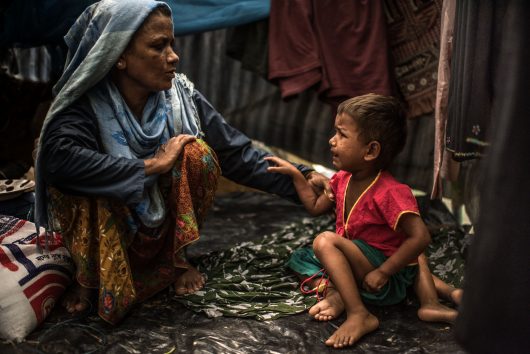 The Rohingya are a Muslim minority in Buddhist-majority Myanmar. Many Rohingya trace their roots in Myanmar back to the 15th century, yet they have been denied citizenship since 1982. For decades, the Rohingya have also been denied some of the most basic human rights that are “reserved for citizens only” such as access to secondary education and freedom of movement. Additionally, the Rohingya are constantly subjected to arbitrary confiscation of property and forced labor. Tension has long fomented between the Rohingya and their Buddhist neighbors; however, the current Rohingya crisis has seen tensions escalate into deadly violence.
The long-persecuted Rohingya civilians are bearing the brunt of death and destruction caused by this conflict. Hundreds of Rohingya villages have been burned to the ground, leaving more than a thousand civilians dead. The violence has caused more than half a million Rohingya to seek refuge in Bangladesh since August 25, 2017, and has emptied at least 175 Rohingya villages in Myanmar.
The House Foreign Affairs Committee convened a hearing on October 5, 2017, to discuss the U.S.’ response to Myanmar’s escalating violence against the Rohingya and how to best address the multifaceted crisis.
The goal of the U.S. is to address the unprecedented magnitude of suffering and urgent humanitarian needs of the Rohingya crisis. Yet, there is a major obstacle in the way of the U.S. response: “Our main challenge in responding to the humanitarian crisis is not due to a lack of resources, but a lack of access,” Acting Deputy Assistant Administrator for the USAID’s Bureau for Democracy, Conflict and Humanitarian Assistance, Kate Somvongsiri announced at the hearing.
Although the White House, State Department, and the U.S. Mission to the United Nations have all issued statements calling for immediate unfettered humanitarian access to all affected populations, relief agencies remain severely limited and even suspended in some regions.
“In Myanmar, there is no coverage of [the ethnic cleansing] so people do not actually know what is happening. The generals that run the country have a different narrative and so there is very little recognition of the reality,” Chairman Royce (R-CA) said, “In order to get to that reality it is important to get reporters and [relief agencies] on the ground. As long as that presence is there, it is a check on these types of atrocities.”
The honest and forthright assessment of the Rohingya crisis at the hearing was crucial. Leaders are not complacent and there is a common understanding that increased humanitarian action is desperately needed.
The United States is providing $32 million in additional humanitarian assistance to address the urgent needs of the Rohingya, bringing the U.S. 2017 fiscal year total to $104 million. Additionally, the hearing on October 5, 2017, solidified the opinion of the U.S. that the Rohingya crisis is, in fact, ethnic cleansing. Immediate action is required to stop the violence, deliver humanitarian assistance and hold accountable those who have perpetuated abuses and violations of international standards.
– Jamie Enright
Photo: Flickr
