• Link to X
  • Link to Facebook
  • Link to Instagram
  • Link to TikTok
  • Link to Youtube
  • About
    • About Us
      • President
      • Board of Directors
      • Board of Advisors
      • Financials
      • Our Methodology
      • Success Tracker
      • Contact
  • Act Now
    • 30 Ways to Help
      • Email Congress
      • Call Congress
      • Volunteer
      • Courses & Certificates
      • Be a Donor
    • Internships
      • In-Office Internships
      • Remote Internships
    • Legislation
      • Politics 101
  • The Blog
  • The Podcast
  • Magazine
  • Donate
  • Click to open the search input field Click to open the search input field Search
  • Menu Menu

Archive for category: Refugees

Refugees, Refugees and Displaced Persons

Three Companies Changing the Future of Refugee Shelters

Refugees SheltersThere are about 59 to 67 million refugees and asylum seekers around the world, forced to leave their home to pursue freedom and security. In this journey, shelter alternatives are short; the only real options are refugee camps that organizations have helped establish. In addition, given the geographic and demographic conditions of some camps, the facilities are not adequate to maintain minimum safety requirements.

To resolve this issue, different architecture companies have begun designing modern refugee shelters that can fulfill important needs in tough environments. The following companies have invented innovative shelters that provide basic services such as water, power and protection from extreme weather.

The Better Shelter

Ikea Foundation and the United Nations High Commissioner for Refugees (UNHCR) developed the Better Shelter in 2015. It is a safe, long lasting and efficient home that can be built with just four people.

The Better Shelter’s base is made from a galvanized steel frame. The roof and walls are made of polyolefin panels, to protect refugees from strong sunlight exposure. An innovative feature of the facility is the PV System, which is a solar panel installed on the roof that charges an LED light inside of the shelter. The power that the PV obtains during the day can be used for a total of four hours at night. In addition, thanks to a USB port located on the LED light, refugees can charge their cellphones and other electronics with renewable electricity.

The adaptable characteristics of the Better Shelter redefine the space in refugee shelters since it can be placed in different locations. Sections can be added and removed in order to create longer structures or even hold medical equipment.

In 2015, 16,000 units of the Better Shelter were deployed for humanitarian operations world-wide, especially in Nepal and Iraq where there are a considerable number of refugees.

SURI

SURI is a refugee shelter that is easy to ensemble with a low-cost architecture modular system. These features make it faster to transport in many types of emergencies. Suricatta Systems, the creator of the shelter, defines SURI as a Shelter Unit for Rapid Installation.

One of the most important characteristics of the shelter is that each unit can be joined in different directions, providing flexibility in order to create distinct building forms. Moreover, SURI is lightweight, as its walls are designed to be refillable with local materials like sand or debris. Like the Better Shelter, SURI also employs solar panels that provide light inside the home.

An essential advantage of shelter for refugees is the water recollection system. SURI can store rainwater in a tank after it has passed through a filter, in order to convert it in drinkable water. It is expected that SURI will be used in emergencies such as earthquakes and flooding.

Shigeru Ban Architects

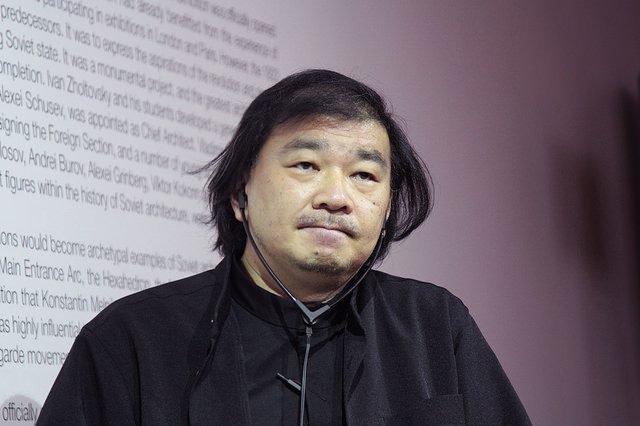
Shigeru Ban is a Japanese architect that uses principally recycled materials for his constructions. In 1992, when Rwanda fell into a violent civil war, Shigeru developed a refugee shelter made of cardboard to host Rwandan families that were affected by the war. The structure was convenient given its reusable features, as the buildings made from paper can be easily removed from certain places, and can be easily built again.

After the events in Rwanda, the architect has focused his research on creating facilities built by low-cost materials that can be used in emergencies. Shigeru’s shelters have been implemented in disasters such as the 2011 earthquake in Japan.

With continued philanthropic advancements from companies like these, it may be possible to completely reinvent the space within refugee shelters. In the near future, perhaps all refugees around the globe will have access to clean water, running electricity and a warm shelter.

– Dario Ledesma

Photo: Flickr

November 4, 2017
https://borgenproject.org/wp-content/uploads/borgen-project-logo.svg 0 0 Borgen Project https://borgenproject.org/wp-content/uploads/borgen-project-logo.svg Borgen Project2017-11-04 01:30:492024-06-04 01:08:26Three Companies Changing the Future of Refugee Shelters
Global Poverty, Human Trafficking, Refugees

10 Facts About the Libyan Crisis

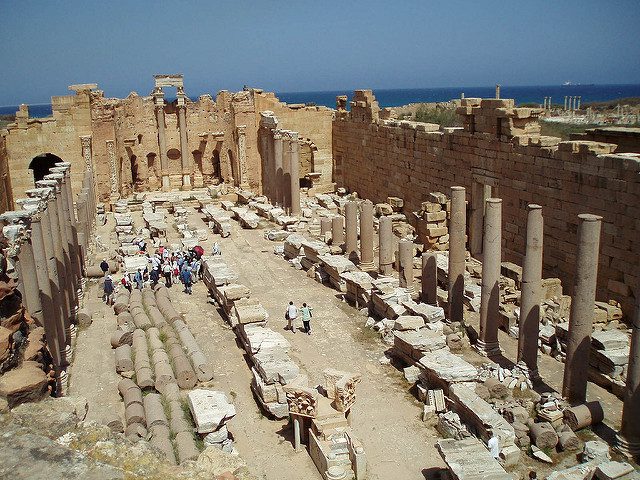
When the 2011 Arab Spring swept through the Middle East, it left behind a number of ongoing conflicts that still continue to rage. One of the most serious of these conflicts is the Libyan civil war, which began with the ousting and subsequent death of longtime ruler Muammar Gaddafi. The conflict has been a long and complicated one, with many different factions taking their turn in the spotlight. Below are 10 facts about the Libyan crisis:
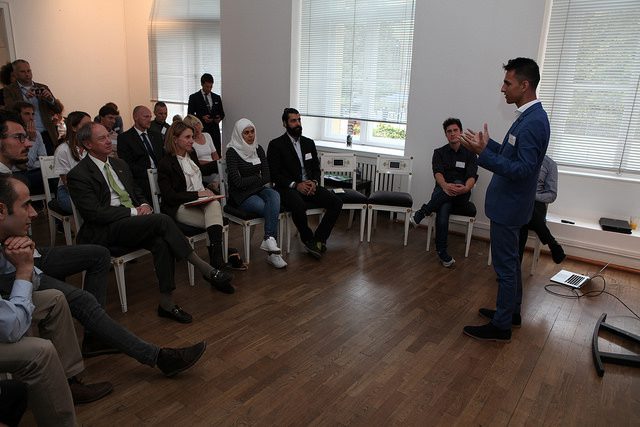
  1. The current phase of the war is primarily being fought by the House of Representatives government, based out of Tripoli, and the rival General National Congress, elected in 2014, as they both vie to take control of the whole nation.
  2. The U.N. brought the two sides together in 2016 to sign the Libyan Political Agreement (LPA) and form a transitional government, led by Fayez al-Sarraj, that would help bring stability to the nation. It still remains unclear whether the new government will be able to enforce its U.N. mandate.
  3. Khalifa Haftar, general of the Libyan National Army, has aligned himself with the House of Representatives, who voted against the U.N. agreement, and has been aiding them in their struggle with al-Sarraj’s Government of National Accord (GNA).
  4. When the House of Representatives was voted into office in 2014, only 18 percent of eligible voters turned out and cast their ballots. This was largely due to a lack of confidence in the ability of an elected government to make meaningful change.
  5. Considering such low voter confidence and the fact that the original LPA expires in December of this year, the U.N. has begun taking steps to amend the LPA to ease the divisions between the House of Representatives and the GNA, as well as create free and fair elections.
  6. The Libyan crisis is commonly divided into two official civil wars. The first lasted for several months in 2011 and was marked primarily by the deposing and killing of Muammar Gaddafi. The currently ongoing civil war began in 2014 when the national government came into conflict with the General National Congress, a Muslim Brotherhood-backed Islamist government.
  7. The second civil war has already claimed nearly 7,000 lives, with over 20,000 people wounded in the conflict and many thousands more displaced from their homes. Fighting in Sabratha, a city near Tripoli, saw nearly 10,000 people fleeing their homes to seek aid from U.N. groups in Libya.
  8. Fleeing the same fighting in Sabratha, a group of immigrants, as over 100,000 others from all across North Africa have sought to do this year alone, tried to cross the Mediterranean to Italy in a dinghy that subsequently ran out of fuel and capsized. Of the 100 refugees in the boat, more than 50 are feared to have drowned. They join the over 2,400 of that 100,000 that have drowned crossing the Mediterranean while fleeing the fighting in their home countries.
  9. The BBC reports that refugees caught fleeing Libya are thrown into crowded and dirty detention centers where they are held to keep them from fleeing. There are also rumors that the falling numbers of Libyans fleeing to Italy is spurred by the GNA’s use of Libyan militias, who may be involved in human trafficking.
  10. Though representatives of the U.S. government have made statements in favor of the measures being taken to end the crisis, actions such as the United States’ past military involvement with the Libyan oil industry and the inclusion of Libya in President Trump’s travel ban have led many to questions as to what the U.S. is doing to help bring stability to the nation.

The wars in Libya are an increasingly complex, evolving and seemingly convoluted issue. These 10 facts about the Libyan crisis can serve as an overview of the conflict, but there is far more information to be delved into as the world seeks a resolution to the crisis.

– Erik Halberg

Photo: Flickr

November 2, 2017
https://borgenproject.org/wp-content/uploads/borgen-project-logo.svg 0 0 Kim Thelwell https://borgenproject.org/wp-content/uploads/borgen-project-logo.svg Kim Thelwell2017-11-02 07:30:182024-05-29 22:28:0210 Facts About the Libyan Crisis
Education, Global Poverty, Refugees

UNHCR Financing Higher Education for Refugees

Higher Education for RefugeesIn 2016, the United Nations Office of the High Commissioner for Refugees (UNHCR) published its annual Global Report on the state of the world’s refugee crisis. Among other things, the report highlights a 6 percent rise in what it terms ‘populations of concern’ over the past year alone. That is a total increase of one million people.
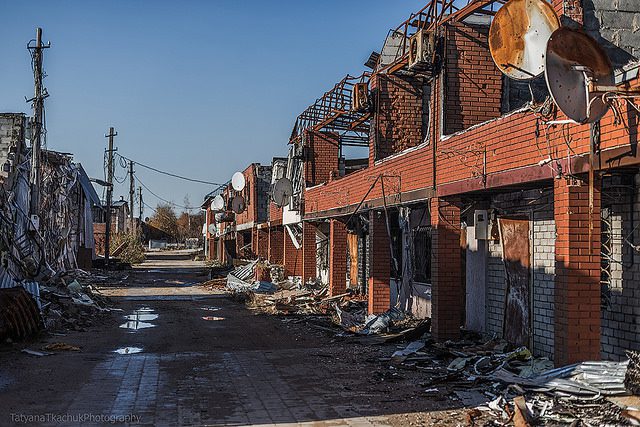
Specifically, the global number of refugees — people who have been forced from their home countries due to war or other life-threatening occurrences — has risen by 6.7 million in just five years.

Imagine if nearly the entire population of Washington state was suddenly forced to leave, and depend entirely on their ability to convince a political body, over which they have no control, of the unequivocal necessity of their leaving home. The total number of people living this reality stands at 16.5 million.

What does this situation mean for college-aged adults? What access is there to higher education for refugees? According to UNHCR statistics on refugee education, the situation is bleak. Just 1 percent of all college-aged refugees are able to seek higher education, while the other 99 percent is left out.

However, there is one program that seems to have had a profoundly positive impact on thousands of college-aged refugees. The UNHCR’s Albert Einstein German Academic Refugee Initiative Fund (DAFI).

DAFI was first implemented in 1992, and has continued to receive a majority of its funding from the government of Germany. Through the financing of higher education for refugees at approved universities, DAFI aims to:

  • Promote self-reliance and empowerment for sponsored students and their family
  • Help sponsored students to become adept community leaders capable of assisting their home countries
  • Provide the training necessary for scholarship recipients to work within refugee communities while awaiting repatriation
  • Facilitate host country integration for scholarship recipients and their families
  • Demonstrate to all, especially women and girls, the value of education

So, what does it take for a potential scholar to be granted a DAFI scholarship? First, students must be in what the UNHCR terms “developing countries or countries in transition”, as well as have been granted asylum from the country in which they will pursue their studies. Second, they must be under 28 years of age when their studies begin.

Additionally, as the program is intended to arm a generation with the necessary skills required to help rebuild their countries of origin, all students must decide on a course of study that will see them quickly employed upon repatriation.

As of 2015, 2,321 people were able to achieve their dream of attending university. This is a substantial increase from a total of just 4,774 scholars in the first 15 years of its operation.

For its relatively short history, it would seem that the program of higher education for refugees has been hugely successful. Indeed, one of its only critiques may be that it cannot reach more would-be college students faster.

– Katarina Schrag

Photo: Flickr

October 29, 2017
https://borgenproject.org/wp-content/uploads/borgen-project-logo.svg 0 0 Borgen Project https://borgenproject.org/wp-content/uploads/borgen-project-logo.svg Borgen Project2017-10-29 07:30:462019-12-31 12:53:46UNHCR Financing Higher Education for Refugees
Global Poverty, Refugees, War and Violence

The War in Donbass – 10 Facts


After Ukraine’s 2014 revolution and reorganization of its government, several of the southeastern regions of Ukraine took up arms against the new government. These regions of primarily Russian-speaking Ukrainians, collectively termed the “Donbass,” feel that the new government of Ukraine does not represent the people, and so they have attempted to set up their own, separate government. Here are 10 facts about the War in Donbass, to help raise awareness around the current conflict:

  1. The war in Donbass has claimed about 10,000 lives since it began in 2014, between the forces of the new government and the pro-Russia separatists in Donbass.
  2. Though the Russian government continues to deny claims that it began the war in the Donbass, Russia has been providing supplies and arms to the separatists for years. Considering Russia’s 2014 annexation of Crimea, Ukrainians fear that they are next on Russia’s list.
  3. Roughly 100,000 professional soldiers and volunteer combatants are scattered around the “gray zone” that exists between the opposing sides’ territories.
  4. The U.N. High Commissioner of Refugees reports that over 1.6 million Ukrainians have been displaced by the fighting, most of them moving away from the fighting towards Kiev. Russia reports that as many as twice that number have similarly fled the fighting eastwards into Russia.
  5. A peace deal, known as Minsk II, was agreed upon and signed by both sides in Minsk, Belarus in 2015, but the implementation of said deal has been a disaster. Neither Russia nor the new Ukrainian government wants to admit responsibility for the conflict, so the process of peace has stalemated.
  6. During the 2016 U.S. Presidential election, many Ukrainians had hope that the new president would be tough on Russia’s involvement in Ukraine and would provide aid for the people in the war zones. The election of President Trump – and his seemingly pro-Russia leaning – has led to much discouragement and disappointment that the aid they counted on is not forthcoming.
  7. Experts have come to believe that the conflict – which has never been an official war between Ukraine and Russia – will only end if Russia concedes a defeat in the Donbass – an outcome many consider highly unlikely – or if Russia ramps up into a full-scale invasion of the Ukraine.
  8. To that end, Russia has been quietly moving to improve its military infrastructure by creating new divisions that can be rapidly expanded should it mobilize its forces, as well as deploying existing forces along the Ukrainian border.
  9. In mid-September, Russian president Vladimir Putin stated that he was open to allowing U.N. peacekeepers into the separatist areas of east Ukraine, though the Ukrainian government insists that Russian forces not be among said peacekeepers.
  10. The U.S. envoy to Ukraine, Kurt Volker, said in late September that the U.S. is against working with Russia to bring in the U.N. peacekeeping forces, as it would only further destabilize the country. Volker also stated that he believes Russia and the separatists are finally willing to come to the table with a resolution to the conflict.

The war in the Donbass is a highly complex and constantly evolving situation, and these 10 facts only serve to summarize some of the more recent developments and how they affect the overarching conflict.

– Erik Halberg

Photo: Flickr

October 27, 2017
https://borgenproject.org/wp-content/uploads/borgen-project-logo.svg 0 0 Kim Thelwell https://borgenproject.org/wp-content/uploads/borgen-project-logo.svg Kim Thelwell2017-10-27 01:30:162020-01-10 12:37:19The War in Donbass – 10 Facts
Refugees

10 Facts About the South Sudanese Civil War

South Sudanese Civil WarSouth Sudan became independent from Sudan in 2011. In the six years since, the nation in northeastern Africa has fought to keep the peace, first during an armed conflict with Sudan that ended in 2015, then during a violent civil war which is still going on. These are 10 facts about the South Sudanese civil war that are important to understanding the conflict.

  1. South Sudan is the youngest nation in the world. It declared independence from Sudan in 2011, after a referendum in which 98 percent of people voted for separation from the north.
  2. The South Sudanese civil war began in December 2013, after President Salva Kiir Mayardit accused Vice-President Riek Machar of planning a failed coup.
  3. Kiir is a member of the country’s majority ethnic group, the Dinka. Vice-President Machar is Nuer, the country’s largest-second group.
  4. In 2015, the two sides signed a peace agreement to end the civil war.
  5. Violence broke out again in 2016 when the Liberation Army, loyal to Kiir, fought against Machar’s soldiers.
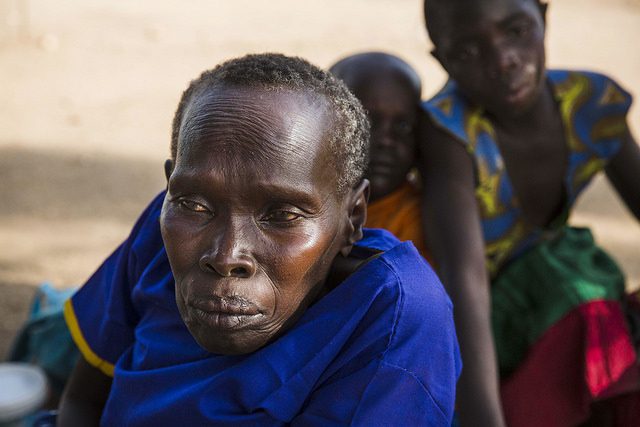
  6. During the South Sudanese civil war, at least 50,000 people have been killed, more than two million have become refugees in other countries and around five million South Sudanese have faced severe food shortages.
  7. Two million South Sudanese have fled the country because of the civil war. Ethiopia, Uganda and Sudan are the principal nations where the refugees have gone.
  8. 62 percent of all South Sudanese refugees are under 18 years old.
  9. The United Nations projects that six million people, about 50 percent of South Sudan’s population, will be severely food insecure in 2017.
  10. Inside the country, where the South Sudanese civil war still continues, 4.9 million people need urgent food assistance.

Violence persists in the northeastern African nation. The South Sudanese civil war has increased unemployment and famine rates. In addition, nearby countries have opened their borders to the South Sudanese, overcrowding refugee camps and making the delivery of aid harder. However, nonprofit organizations and global institutions, primarily the U.N. Refugee Agency, are working to end the conflict in South Sudan and provide its people with basic need like food and shelter.

– Dario Ledesma

Photo: Flickr

October 26, 2017
https://borgenproject.org/wp-content/uploads/borgen-project-logo.svg 0 0 Kim Thelwell https://borgenproject.org/wp-content/uploads/borgen-project-logo.svg Kim Thelwell2017-10-26 07:30:222024-05-29 22:27:3910 Facts About the South Sudanese Civil War
Refugees

Syrian Refugees in Turkey Create Jobs

Syrian Refugees in Turkey Create JobsToday, there are three million Syrian refugees in Turkey, more than there are in all other European countries combined. Despite xenophobic fears that Syrians are a drain on Turkish resources, the Turkish government spends less than one percent of GDP per year on refugees. Furthermore, economists estimate that Syrians have invested between $1 billion and $1.5 billion into Turkey thus far.

Globally, migrants compose only 3.4 percent of the worldwide population but add 10 percent to the overall GDP. In the U.S., the average refugee has a positive net fiscal effect after eight years of residency. Additionally, these refugees pay $21,000 more in taxes than they are awarded in benefits after 20 years of residency. This indicates that government assistance to refugees can be an investment in future profits.

According to research conducted by Building Markets, Syrian refugees in Turkey have invested almost $334 million into 6,033 formal companies since 2011. There are an estimated 10,000 formal and informal Syrian-owned businesses in Turkey. Syrian business owners employ an average of 9.4 people, with most employees coming from prior jobs in the informal sector.

Most Syrian business owners in Turkey plan on expanding. Approximately 55 percent have indicated that they intend to hire additional employees over the next year. Over the next few years, owners plan to add an average of 8.2 jobs to their companies.

Syrian refugee business owners intend to stay in Turkey. Around 39 percent plan to open a second business in Turkey. In the event of stabilization in Syria, 76 percent would keep their Turkish businesses while also expanding operations to Syria.

About 40 percent of surveyed Syrian business owners cited a language barrier as the biggest challenge facing their business. Lessening this inhibitor by conducting business in both Turkish and Arabic could encourage Syrian business expansion and create additional jobs.

Better integration of Syrian refugees into Turkey’s formal economy could further increase existing economic benefits. Out of the three million Syrian refugees in Turkey, only about 14,000 had work visas in January 2017. Work visas can only be obtained by companies, not individual employees, and employers are then required to pay monthly Social Security for each registered worker. The responsibility should shift from companies to employees who are more incentivized to pursue registration.

Turkey’s unemployment rate is 10.8 percent. Some fear that expediting entry to the formal labor market for refugees will displace Turkish workers. However, according to research on refugees conducted by the Center for Global Development (CGD), when native workers are displaced by refugee labor competition, they end up in higher-paying jobs. The native labor force has a competitive advantage as they possess language proficiency and job skills that are valued in their domestic market. The CGD found that displaced native workers receive, on average, a three percent salary increase at their new jobs.

The CGD concluded that the most important determining factor in the economic effect of a refugee influx is how quickly arriving refugees enter the domestic labor market and begin producing new tax revenues.

Ultimately, encouraging total integration of the Syrian refugees in Turkey into the formal sector could benefit the Turkish economy by creating new jobs and additional tax revenues. The positive fiscal payoff could grow with the mitigation of existing regulatory and cultural barriers.

– Katherine Parks

Photo: Flickr

October 25, 2017
https://borgenproject.org/wp-content/uploads/borgen-project-logo.svg 0 0 Kim Thelwell https://borgenproject.org/wp-content/uploads/borgen-project-logo.svg Kim Thelwell2017-10-25 01:30:492024-05-24 23:41:33Syrian Refugees in Turkey Create Jobs
Refugees

How ATMs Are Helping Syrian Refugees in Jordan

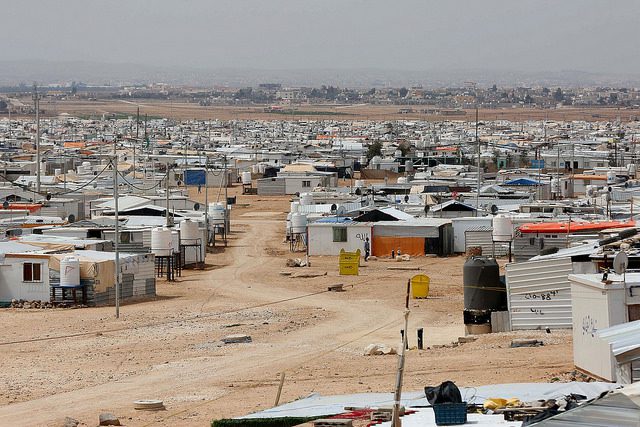
Syrian refugeesMost refugees around the world do not have access to monetary resources. This problem has affected their economy, by preventing them from getting cash for their basic needs and essential supplies like food and good quality shelter materials. Syrian refugees face this difficulty in Jordan, where more than 650,000 people have arrived since 2011.

However, the U.N. Refugee Agency (UNHCR), along with private companies, created a new technological system that enables Syrian refugees to obtain cash assistance through intelligent ATMs around Jordan that identifies the user via iris detector.

UNHCR’s cash assistance program process is direct. First, the refugees’ irises are captured and registered. Then, families on the UNHCR cash waiting list are selected for assistance based on the Vulnerability Assessment Framework ranking. Finally, beneficiaries receive a text message which informs them when the cash is available for withdrawal.

This system, called EyeCloud, has helped over 39,000 households in Jordan, giving several advantages to Syrian refugees. For instance, the biometric recognition installed in the ATMs reduces fraud and increases refugee data protection. Another important feature of this process is that it can be made by the users without the mediation of a bank, increasing the number of beneficiaries. In addition, the UNHCR expects that the system will increase cash coordination with other humanitarian agencies around the world.

A small sample of Somali and Sudanese refugees tasted the EyeCloud system in 2015, and it was extended in Jordan the next year where $21 million was distributed among Syrians refugees. It is expected that this kind of project can help other refugees in areas where there are struggles to obtain basic needs.

The iris identification system is part of the UNHCR Biometric Identity Management System, a project that collects fingerprints, iris scans and photographs of refugees. This information is not only used to provide monetary aid but also to gather important information like citizenship records and dates of birth of the refugees. This makes future identification easier for various international institutions.

Due to the violence and civil war in Syria, more than 5 million people have been forced to flee. Countries like Turkey, Lebanon and Jordan have received thousands of Syrian refugees. The EyeCloud technology and ATMs will help refugees preserve their dignity, providing them with access to basic resources that are essential for their future.

– Dario Ledesma

Photo: Flickr

October 25, 2017
https://borgenproject.org/wp-content/uploads/borgen-project-logo.svg 0 0 Kim Thelwell https://borgenproject.org/wp-content/uploads/borgen-project-logo.svg Kim Thelwell2017-10-25 01:30:252024-05-27 23:54:22How ATMs Are Helping Syrian Refugees in Jordan
Global Poverty, Refugees

Approaches for Helping Refugees Through Entrepreneurship

Helping RefugeesOne-fourth of the population in Lebanon is made up of Syrian refugees. War and political turmoil have forced these refugees to leave behind their lives and start from scratch in Lebanon. The initial humanitarian response to this problem was to supply short-term aid for the refugees until they could return to Syria. Many refugees have been in Lebanon for almost 10 years, so returning to Syria is unlikely.

Each year, $2.75 billion is needed to address the needs of these refugees, but less than half of that is available. Simply donating the bare necessities for survival to these refugees is not a sustainable solution.

Alfanar is a venture philanthropy organization that supports social entrepreneurs aiming to improve refugee life in Lebanon. A shift to helping refugees through entrepreneurship offers a viable long-term solution.

The Ana Aqra Association is an organization in Lebanon that provides educational support services to Syrian refugees and underprivileged Lebanese children. Programs are offered in literacy, accelerated learning and social and emotional development. In order to fund their efforts in public schools, the organization sells teacher training services to private schools and international NGOs.

Another sustainable solution is pioneered by the Nawaya Network, which connects refugees in Lebanon with the resources needed to develop their talents. The organization has developed a workshop to teach young people how to launch businesses to solve problems in their community.

The United Nations High Commissioner for Refugees works to create environments in which innovative ideas for helping refugees through entrepreneurship can emerge, some of which are social enterprises. An employee of the organization, Natalia Nahra, launched an app to provide refugees in Israel with the information needed for them to utilize services available.

Nahra noticed throughout her life that people without access to information cannot make informed choices, from U.S. workers being unaware of their rights to families in Southeast Asia sending young girls to big cities alone, unaware of the risk of human trafficking.

The problem also exists for refugees in Israel. Information for refugees is provided in English and Hebrew, which most refugees cannot read. In addition, information is scattered on Facebook or at various organizations. As a result, refugees seeking services waste frustrating amounts of time visiting organizations that cannot help them. With better access to information on services available, refugees could better access resources by only visiting organizations that have what they need.

Information such as reception hours and new policies change daily, so the information needs to be distributed quickly. Nahra launched her app in June 2017 with the hope of eliminating these unnecessary obstacles for refugees.

These solutions are examples of the viability of shifting from short-term aid to sustainable solutions for helping refugees.

– Kristen Nixon

Photo: Flickr

October 23, 2017
https://borgenproject.org/wp-content/uploads/borgen-project-logo.svg 0 0 Kim Thelwell https://borgenproject.org/wp-content/uploads/borgen-project-logo.svg Kim Thelwell2017-10-23 01:30:582024-05-29 22:27:43Approaches for Helping Refugees Through Entrepreneurship
Refugees

U.S. Response to the Rohingya Crisis in Myanmar

Rohingya CrisisThe Rohingya are a Muslim minority in Buddhist-majority Myanmar. Many Rohingya trace their roots in Myanmar back to the 15th century, yet they have been denied citizenship since 1982. For decades, the Rohingya have also been denied some of the most basic human rights that are “reserved for citizens only” such as access to secondary education and freedom of movement. Additionally, the Rohingya are constantly subjected to arbitrary confiscation of property and forced labor. Tension has long fomented between the Rohingya and their Buddhist neighbors; however, the current Rohingya crisis has seen tensions escalate into deadly violence.

The long-persecuted Rohingya civilians are bearing the brunt of death and destruction caused by this conflict. Hundreds of Rohingya villages have been burned to the ground, leaving more than a thousand civilians dead. The violence has caused more than half a million Rohingya to seek refuge in Bangladesh since August 25, 2017, and has emptied at least 175 Rohingya villages in Myanmar.

The House Foreign Affairs Committee convened a hearing on October 5, 2017, to discuss the U.S.’ response to Myanmar’s escalating violence against the Rohingya and how to best address the multifaceted crisis.

The goal of the U.S. is to address the unprecedented magnitude of suffering and urgent humanitarian needs of the Rohingya crisis. Yet, there is a major obstacle in the way of the U.S. response: “Our main challenge in responding to the humanitarian crisis is not due to a lack of resources, but a lack of access,” Acting Deputy Assistant Administrator for the USAID’s Bureau for Democracy, Conflict and Humanitarian Assistance, Kate Somvongsiri announced at the hearing.

Although the White House, State Department, and the U.S. Mission to the United Nations have all issued statements calling for immediate unfettered humanitarian access to all affected populations, relief agencies remain severely limited and even suspended in some regions.

“In Myanmar, there is no coverage of [the ethnic cleansing] so people do not actually know what is happening. The generals that run the country have a different narrative and so there is very little recognition of the reality,” Chairman Royce (R-CA) said, “In order to get to that reality it is important to get reporters and [relief agencies] on the ground. As long as that presence is there, it is a check on these types of atrocities.”

The honest and forthright assessment of the Rohingya crisis at the hearing was crucial. Leaders are not complacent and there is a common understanding that increased humanitarian action is desperately needed.

The United States is providing $32 million in additional humanitarian assistance to address the urgent needs of the Rohingya, bringing the U.S. 2017 fiscal year total to $104 million. Additionally, the hearing on October 5, 2017, solidified the opinion of the U.S. that the Rohingya crisis is, in fact, ethnic cleansing. Immediate action is required to stop the violence, deliver humanitarian assistance and hold accountable those who have perpetuated abuses and violations of international standards.

– Jamie Enright

Photo: Flickr

October 23, 2017
https://borgenproject.org/wp-content/uploads/borgen-project-logo.svg 0 0 Borgen Project https://borgenproject.org/wp-content/uploads/borgen-project-logo.svg Borgen Project2017-10-23 01:30:082020-04-04 08:12:27U.S. Response to the Rohingya Crisis in Myanmar
Education, Refugees

Education Programs Help Young South Sudanese Refugees

The civil war in South Sudan has forced nearly two million people to flee the country. They have traveled mostly to Ethiopia, Uganda and Sudan. But the youngest nation in the world also has a young population. The median age is 17, an issue that has affected refugee camps across northeastern Africa, since 62% of South Sudanese refugees are under 18 years old.

These numbers have highlighted the concern of the diverse foundations that are trying to ensure young South Sudanese refugees have basic rights, such as healthcare and employment aid. However, education has become a severe problem in several African camps because they lack classrooms, teachers and resources.

The current refugee situation started in 2011, after a referendum was held to define the future of South Sudan. Around 98% of people voted for separation from the northern part of the country. In the following years, violent conflicts between Sudan and South Sudan broke out over oil-producing areas. In 2013, the two governments signed an agreement in order to end the confrontations.

However, after a short period of peace, a domestic political problem divided the country when President Salva Kiir Mayardit dismissed his cabinet and a civil war began. Many South Sudanese have left the country, going mainly to Uganda. One million refugees, 85% of whom are women and children, now reside there. The following organizations are helping young South Sudanese refugees continue their studies.

Education Aid is a Global Effort

The overpopulation in the settlements makes it harder to provide facilities for children, especially in regards to education, where a classroom can have 200 students. The United Nations High Commissioner for Refugees declared the South Sudan refugee crisis as an emergency operation in 2013. Thanks to donations and agreements, the organization has enrolled 41,000 refugee children in primary school and 31,000 more received livelihood kits.

Save the Children is developing a project for relief education principally in Uganda, which hosts the largest number of young South Sudanese refugees. Along with the Ugandan government, NGOs and donations, the organization is planning to construct more than 400 schools and hire 5,307 primary and secondary teachers. In addition, Save the Children provides early schooling for young children and classes for those who have fallen behind.

Technology could be another solution for young South Sudanese refugees that are looking for a better education. Columbia University has developed a program called Teachers for Teachers that provides training, coaching and mobile mentoring to educators in refugee camps. The goal of this program is to generate highly qualified teachers that can provide quality education to refugee students. The system works through mobile technology, resource sessions, discussion, participation and photo and video content.

There are several education options that refugee camps can adopt in order to improve the education of young South Sudanese refugees. The success of these programs can translate into better education for refugees all across Africa.

– Dario Ledesma

Photo: Flickr

October 20, 2017
https://borgenproject.org/wp-content/uploads/borgen-project-logo.svg 0 0 Borgen Project https://borgenproject.org/wp-content/uploads/borgen-project-logo.svg Borgen Project2017-10-20 01:30:382024-05-29 22:27:39Education Programs Help Young South Sudanese Refugees
Page 31 of 53«‹2930313233›»

Get Smarter

  • Global Poverty 101
  • Global Poverty… The Good News
  • Global Poverty & U.S. Jobs
  • Global Poverty and National Security
  • Innovative Solutions to Poverty
  • Global Poverty & Aid FAQ’s
Search Search

Take Action

  • Call Congress
  • Email Congress
  • Donate
  • 30 Ways to Help
  • Volunteer Ops
  • Internships
  • Courses & Certificates
  • The Podcast
Borgen Project

“The Borgen Project is an incredible nonprofit organization that is addressing poverty and hunger and working towards ending them.”

-The Huffington Post

Inside The Borgen Project

  • Contact
  • About
  • Financials
  • President
  • Board of Directors
  • Board of Advisors

International Links

  • UK Email Parliament
  • UK Donate
  • Canada Email Parliament

Get Smarter

  • Global Poverty 101
  • Global Poverty… The Good News
  • Global Poverty & U.S. Jobs
  • Global Poverty and National Security
  • Innovative Solutions to Poverty
  • Global Poverty & Aid FAQ’s

Ways to Help

  • Call Congress
  • Email Congress
  • Donate
  • 30 Ways to Help
  • Volunteer Ops
  • Internships
  • Courses & Certificates
  • The Podcast
Scroll to top Scroll to top Scroll to top