• Link to X
  • Link to Facebook
  • Link to Instagram
  • Link to TikTok
  • Link to Youtube
  • About
    • About Us
      • President
      • Board of Directors
      • Board of Advisors
      • Financials
      • Our Methodology
      • Success Tracker
      • Contact
  • Act Now
    • 30 Ways to Help
      • Email Congress
      • Call Congress
      • Volunteer
      • Courses & Certificates
      • Be a Donor
    • Internships
      • In-Office Internships
      • Remote Internships
    • Legislation
      • Politics 101
  • The Blog
  • The Podcast
  • Magazine
  • Donate
  • Click to open the search input field Click to open the search input field Search
  • Menu Menu

Archive for category: Refugees

Global Poverty, Refugees

10 Facts About Refugees from Sao Tome and Principe

10 Facts About Refugees from Sao Tome and Principe
A Brief History

The islands of Sao Tome and Principe are some of the most remote and beautiful islands in the Atlantic Ocean. The island has a reputation of having a tropical climate usually associated with islands located in the South Pacific.

In recent history, Sao Tome and Principe struggled with government corruption and attempts at a coup d’etat of the government. February 12, 2009 marked the first attempt of a coup d’etat of the government. Although the plotters of the coup were imprisoned, many citizens of the nation still fear the potential for another political uprising. This fact has led to an increase of residents leaving the country which increased the number of refugees from Sao Tome and Principe.

Below are ten facts about refugees from Sao Tome and Principe.

  1. Within refugee camps, women refugees from Sao Tome and Principe deal with daily struggles of misogyny. This misogyny has led to many women believing that they should have fewer rights than men. In fact, seven percent of women who are refugees from these countries think a husband is justified in beating his wife when she argues with him, and 6.4 percent believe men have the right to beat women when they burn food they are cooking.
  2. Women also deal with misogyny by refusing to accept health care without a male bringing them to the hospital. Women refugees from these two countries have a 51.8 percent chance of not accessing health care without having a man take them to the doctors.
  3. Sexual contact begins early for women who are refugees from Sao Tome and Principe. The median age for women aged between 25-49 for their first sexual contact was only 17.1 years old on average.
  4. Condom use is not common for refugees from Sao Tome and Principe, and women between the ages of 15-24 have a 24.3 chance of using a condom regularly.
  5. Lack of condom use has led to many children being born refugees from Sao Tome and Principe. The number of infant deaths has risen in these camps to an average of 219 deaths.
  6. For the children that make it past birth, they continue to have relatively short lives — last year, 297 refugee children from Sao Tome and Principe died due to numerous causes.
  7. Refugee camps are dangerous for refugees from Sao Tome and Principe and the rate of dying from an injury has increased to 10.5 percent.
  8. The dangers of living in a refugee camp may be immense, but refugee camp health centers have ensured that vaccinations are commonplace. Child refugees from these two countries have a vaccination rate for BCG, DPT and measles at 97.7 percent, 96 percent and 95.2 percent accordingly.
  9. Although refugees from Sao Tome and Principe receive vaccinations, many continue to die from disease. Last year 19 migrants died from malaria.
  10. On top of death from disease, refugees from these countries continue to die from tobacco and alcohol use. The smoking prevalence for women rests currently at 1.51 percent and 9.27 percent for males. The total alcohol consumption per capita (measured in liters) was measured last year to be 6.8 liters for migrants over the age of 15.

The Takeaway

Even though Sao Tome and Principe possess all the natural resources it could even need and the support from the United Nations and NGOs, the nation still suffers from its citizens leaving to become migrants. Refugees from these countries suffer from misogyny, death by injury, disease and substance abuse.

However, understanding these facts can allow groups focused on helping these people create solutions for the future. Although the present may be grim for refugees from Sao Tome and Principe, their future continues to look bright.

– Nick Beauchamp

Photo: Flickr

September 4, 2017
https://borgenproject.org/wp-content/uploads/borgen-project-logo.svg 0 0 Borgen Project https://borgenproject.org/wp-content/uploads/borgen-project-logo.svg Borgen Project2017-09-04 07:30:592020-07-03 13:49:4110 Facts About Refugees from Sao Tome and Principe
Global Poverty, Refugees

10 Facts About Refugees in St Lucia

Refugees in St. LuciaA Brief History:
A refugee is often defined as a person seeking asylum in a country other than the one of their origin, either because they seek better economic prospects or due to political instability in their home nation.

The country of St Lucia is a Caribbean nation, which is home to numerous refugees. St Lucia has a gorgeous landscape, tropical weather and an incredible culture. These facts are one of the reasons why St Lucia has become a primary destination for many migrants. The purpose of this article is to explain 10 facts about refugees from St Lucia.

The 10 Facts:

  1. In 2014, St Lucia was home to over 922 refugees from countries all around the world. Migrants come to St Lucia because of its generous social welfare programs, stable political system and booming economy.
  2. The refugee camps in St Lucia have done significant work in increasing the immunization rate for many of the migrants living in the nation. The immunization rate for DPT and measles is 99 percent and 97 percent respectively.
  3. Having a child while in a St Lucia refugee camp is not a risky proposition for many migrants living in the nation. The lifetime risk of maternal death is .0912 percent for the refugees living in St Lucia. This statistic is due to 96.9 percent of pregnant female refugees receiving prenatal care.
  4. Although having a child while a refugee in St Lucia may not be risky, many women in these migrant camps are having children at a very young age. Around 53.42 out of every 1,000 female refugees under the age of 19 have had a child.
  5. About 92.2 percent of children born to refugees in St Lucia are registered at birth. This high rate of registration allows the camps to ensure these children get the proper care to maintain their health.
  6. Due to the large quantity of refugees’ children registered here, the children born in these regions are treated very well. Only 2.5 percent of children growing up in these refugee camps suffer from malnutrition. This low rate is due to the incredible social programs available for these migrants at the camps in St Lucia.
  7. The likelihood of a refugee in St Lucia being overweight is very small. Currently, the rate of being overweight as a migrant rests at 6.3 percent. Having a healthy body weight reduces the chance of prolonged illness and other diseases.
  8. The life expectancy for refugees in St Lucia is also very high. Men, on average, live until they are 72.54 years old and women are expected to live until they are 77.96 years old.
  9. Men who are refugees in St Lucia have a very high chance of living until the age of 65. Currently, this rate rests at 74.23 percent.
  10. The majority of the population of refugees in St Lucia tends to be young. Currently, only nine percent of these migrants are over the age of 65.

The Takeaway:
Although the migrant crisis continues all throughout the world, refugees in St Lucia often have a high quality of life. High immunization rates, intensive social programs and registration at birth allows for the nation to ensure its migrant populations have the best chance at a higher quality of life. The work that St Lucia has done in its refugee camps should be something all other nations housing migrants should attempt to emulate.

– Nick Beauchamp
Photo: Flickr

August 25, 2017
https://borgenproject.org/wp-content/uploads/borgen-project-logo.svg 0 0 Borgen Project https://borgenproject.org/wp-content/uploads/borgen-project-logo.svg Borgen Project2017-08-25 01:30:082020-06-19 08:24:0510 Facts About Refugees in St Lucia
Global Poverty, Refugees

Visa Gives Refugee Athletes a New Beginning

Refugee AthletesPreceding the 2016 Rio Olympic Games, the International Olympics Committee (IOC) announced that a team of 10 refugee athletes would be allowed to compete in the games and carry the Olympic flag. The team was called Team Refugee Olympic Athletes and was treated just like any other Olympic team.
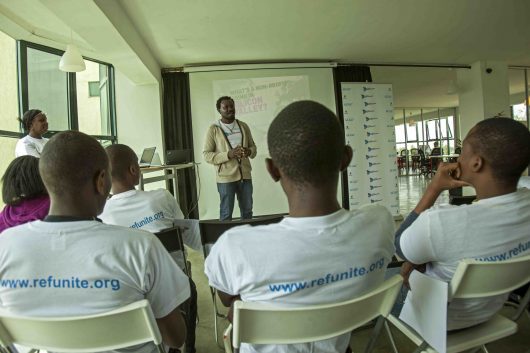
By allowing the refugee athletes to be a part of the Olympic Games Rio 2016, the IOC is hoping to give hope to refugees everywhere.

“Having no national team to belong to, having no flag to march behind, having no national anthem to be played, these refugee athletes will be welcomed to the Olympic Games with the Olympic flag and with the Olympic Anthem,” said IOC President Thomas Bach in a news release. “They will have a home together with all the other 11,000 athletes from 206 National Olympic Committees in the Olympic Village.”

While these athletes now have a chance to be a part of a team in uncertain times, Visa, the world’s largest payments network, saw that there was an even bigger opportunity for comradery. Team Visa is a network of Olympic and Paralympic athletes who are sponsored by Visa.

In July 2016, all 10 refugee Olympic athletes signed on to become a part of Team Visa. Through the partnership, the refugee athletes are supported in their athletic journey’s and in turn, help Visa to promote a culture of acceptance.

According to Chris Curtin, Visa’s Chief Marketing Innovation and Brand Officer, the perseverance the refugee Olympic athletes is inspiring not only Visa, but the world. The bravery that allowed the athletes to get to the Olympic games and march with the Olympic flag directly embodies Visa’s belief in acceptance for everyone, everywhere.

While the Rio Games proved a success for the refugee athletes and Team Visa overall, neither party shows sign of stopping there. On July 9, 2017, the IOC confirmed that a Refugee Olympic Team will compete at the 2020 Tokyo Games.

Team Visa’s involvement with the athletes has not yet been confirmed, but a source says they are looking to extend relationships.

“We are committed to sustaining our message of acceptance worldwide and are exploring longer term partnership opportunities with the IOC on their Olympic Solidarity Initiatives, and with the International Paralympic Committee (IPC) on their refugee development programs,” a spokesperson told The Wrap. “We are also exploring contract renewals for select Team Visa athletes in preparation for the Tokyo 2020 Olympic Games.”

– Madeline Boeding
Photo: Flickr

August 22, 2017
https://borgenproject.org/wp-content/uploads/borgen-project-logo.svg 0 0 Borgen Project https://borgenproject.org/wp-content/uploads/borgen-project-logo.svg Borgen Project2017-08-22 07:30:332020-06-18 10:57:23Visa Gives Refugee Athletes a New Beginning
Aid, Global Poverty, Refugees, Technology

New Apps That Are Helping Refugees

Helping RefugeesToday, web and cellphone apps are being used by billions of people around the world. With so many applications being free there is an increased number of people who can access them. Today new apps are being created in order to help those who are in distress, such as refugees. Here is a list of just three new apps of this year that are helping refugees translate, gain access to information and connect with their families.
Tarjimly is a new translator app that connects volunteer translators to people, such as refugees or immigrants, who need translations in real-time for medical or legal purposes. Tarjimly acts as a Facebook messenger bot connecting an immigrant or refugee to a translator in an anonymous conversation. This app just recently launched in February of this year and already has more than 2,000 translators signed up.

Arrived is another app that is helping refugees gain quick access to information. Called “the hub of immigrant information,” this app is free and is available on Apple and Android phones. One of the things the app provides is the latest news about immigration. This news section also provides analysis of legislative proposals and actions in Washington. Arrived also provides information about deportation processes, English lessons and a study guide for citizenship tests. There is a section of answered questions that are most common that have been researched and a map to show law clinics and sanctuary cities in the U.S.

RedadAlertas is a web app that has not been released yet but will be arriving soon. Created by Celso Mireles who was previously an undocumented immigrant, this app delivers alerts about what is happening in different areas. Notifications about areas that have ICE raids, checkpoints or any type of confrontation will be sent out to its users. The app will work through crowdsourcing, which relies on people at scenes of an area to verify and provide details about what is happening. RedadAlertas hopes to help vulnerable immigrants in risk areas while also allowing legal aid groups, community organizations or activists to help immigrants.

These apps are helping refugees and immigrants around the world. These apps are versatile and all free so that they can be accessible to all users. By providing access to information, translators and up to date notifications these apps are allowing refugees and immigrants to get the help they may need.

– Deanna Wetmore
Photo: Flickr

August 21, 2017
https://borgenproject.org/wp-content/uploads/borgen-project-logo.svg 0 0 Borgen Project https://borgenproject.org/wp-content/uploads/borgen-project-logo.svg Borgen Project2017-08-21 07:30:182024-12-13 17:58:26New Apps That Are Helping Refugees
Global Poverty, Government, Refugees

Uganda’s Refugee Policy a “Shining Example”

Uganda's refugee policyUganda’s refugee policy currently attempts to admit on average 2,000 refugees per day. Looking to spark the Comprehensive Refugee Response Framework (CRRF), outlined in an annex to the New York Declaration, Uganda is appealing for funding to support its development-oriented refugee response strategy.

Although Uganda and the U.N. appealed for $2 billion at a fundraising summit in Entebbe, donor governments only pledged $352 million. Although Uganda is becoming the key to the CRRF, after further pledges made weeks after, the total remains just $637 million.

As a response to the influx of South Sudanese refugees in Uganda, the government desires enough aid to fund the response to these refugees and a long-term sustainable response to this issue.

“Uganda is a shining example when it comes to hosting refugees,” says Norwegian Refugee Council regional director for the Horn of Africa. With the 2006 Refugees Act and the 2010 Refugees Regulations, Uganda is granting refugees the right to work and freedom of movement, as well as giving them ownership of land. These are all highlighted as key components of the CRRF.

Despite this, the massive influx of South Sudanese refugees is bringing Uganda to its breaking point. With Uganda’s pivotal role in fostering new developmental refugee response strategies, donors have finally begun to fund its cause at the required level. The World Bank has allocated $2 billion in grants and loans over the next three years to fund future socioeconomic development.

Uganda’s refugee policy is amongst the most progressive in the world. Its developmental focus is in two key areas: inclusive and effective governance and sustainable and inclusive economic development.

Its goal is to ensure that the government’s development operations align with the government’s refugee response. With Uganda’s refugee policy, it presents a strategy that all developing nations should follow.

– Tucker Hallowell
Photo: Flickr

August 21, 2017
https://borgenproject.org/wp-content/uploads/borgen-project-logo.svg 0 0 Kim Thelwell https://borgenproject.org/wp-content/uploads/borgen-project-logo.svg Kim Thelwell2017-08-21 07:30:172020-06-18 09:18:55Uganda’s Refugee Policy a “Shining Example”
Global Poverty, Refugees, Women

Half of Humanity: Healthy Menstruation for Female Refugees

The organization Half of Humanity is working to combat an issue that often gets swept under the rug: unhealthy menstrual practices within refugee populations.

The organization’s most recent efforts have been teaming up with NuDay Syria to provide culturally appropriate feminine hygiene products to Syrian refugees. The kit includes a one-month supply of absorbent pads, wipes, soap, two doses of ibuprofen, candies and a handwritten note in Arabic that says, “You are beautiful!”

While other organizations share the goal of promoting healthy menstruation in vulnerable populations, Half of Humanity takes a culturally sensitive approach. For example, Syrian culture condemns the use of tampons, which is why none are included in the hygiene kit. All of the candies are halal out of respect for practicing Muslims.

Half of Humanity’s aid has concentrated primarily on displaced female populations in the Middle East and North Africa, where women are particularly vulnerable to stigma as well as unhealthy menstrual practices. Refugees who cannot afford hygienic products in these low-income areas are likely to use unsanitary alternatives to hide their menstruation, such as unclean rags, grass or even trash.

The organization’s mission in target areas is critical. For example, in 2012, 51 percent of displaced Syrian women in Jordan experienced symptoms of a reproductive tract infection. Improper menstrual practices can also increase chances of HIV and pregnancy complications.

Menstruation also limits many women’s societal engagement. Studies conducted in Africa have shown that many girls consistently miss out on important opportunities such as schooling every month because public areas lack proper sanitation facilities.

Brianna Curran, the founder of Half of Humanity, hopes to enable female refugees to engage in civil action regardless of where they are in the menstrual cycle. Curran has received much recognition for her dedication to the cause, including a spot on the “30 under 30” list of remarkable young people working towards development, sustainability and human rights, created by the Center for Development and Strategy.

While Half of Humanity’s goals are constantly shifting to meet the needs of target populations, its overall impact has served to empower female refugees in both North Africa and the Middle East to engage with the rest of society all days of the month.

– Kailey Dubinsky

Photo: Flickr

August 20, 2017
https://borgenproject.org/wp-content/uploads/borgen-project-logo.svg 0 0 Borgen Project https://borgenproject.org/wp-content/uploads/borgen-project-logo.svg Borgen Project2017-08-20 07:30:472024-06-04 01:08:23Half of Humanity: Healthy Menstruation for Female Refugees
Refugees

10 Facts About Refugees in San Marino You Might Not Know

10 Facts About San Marino Refugees
San Marino is a small country ensconced by its neighboring country, Italy. It is considered to be the world’s oldest surviving republic. Its population is a little over 30,000. The refugee population in the area is small, which makes it a low concern for the region. However, previous years reveal higher numbers of refugees. Here are 10 facts about refugees in San Marino.

10 Facts About Refugees in San Marino

  1. Refugees in San Marino have come from Italy, Czech Republic, Brazil and even Mexico in the past.
  2. During World War II, San Marino, who was neutral during the war, hosted approximately 100,000 refugees from Italy.
  3. Between 1998 and 2000, the refugee population in San Marino was four. In the years following San Marino did not see its refugee population exceed this number.
  4. Currently, there is only one reported case of a refugee in San Marino, making the region’s refugee population at one.
  5. San Marino is not included in the Geneva Convention of 1951 or the Protocol of 1967. However, the government still has a system in place for protecting refugees. This means that the San Marino government can protect refugees at risk of persecution based on race, religion, social group affiliation, political opinions and more.
  6. By action of the cabinet, the government can grant refugee status or asylum to those seeking refuge in San Marino. Requests for asylum are rare.
  7. Laws in San Marino allow for foreign travel, emigration and repatriation. The country’s government follows suit with the Office of the U.N. High Commissioner for Refugees by providing assistance to asylum seekers and people who are considered stateless. This is also reflective of policies from other comparative humanitarian organizations.
  8. According to the Council of Europe Development Bank, as of 2015 San Marino contributed 20,000 euros to the Bank’s Migrant and Refugee Fund. This contribution was a sign of solidarity with San Marino’s support of European social cohesion and refugees in the area, according to the Bank’s report.
  9. According to a report from the United Nations High Commissioner for Refugees, requests for softer citizenship requirements have been declined in the past, making it difficult for refugees to eventually obtain citizenship.
  10. More than one million migrants and refugees landed in European countries. By comparison, the refugee population in San Marino is a mere fraction of a percentage of that total. While there are numerous facts about San Marino refugees, these are 10 facts about San Marino refugees that are important to know.

Though the refugee population in the country is minute these 10 facts about refugees in San Marino are important to achieving a deeper understanding the European refugee crisis as a whole.

– Leah Potter
Photo: Flickr

August 20, 2017
https://borgenproject.org/wp-content/uploads/borgen-project-logo.svg 0 0 Kim Thelwell https://borgenproject.org/wp-content/uploads/borgen-project-logo.svg Kim Thelwell2017-08-20 01:30:012020-03-09 09:46:5310 Facts About Refugees in San Marino You Might Not Know
Refugees

10 Facts About Refugees From Timor-Leste

Refugees From Timor-LesteTimor-Leste, also known as East Timor, is a Southeast Asian country comprising the eastern portion of the island of Timor. Timor-Leste has a population of about 1,211,000. Here are 10 facts about refugees from Timor-Leste:

1. Once a Portuguese colony, Timor-Leste was invaded by Indonesia in 1975 and endured years of political violence until 1999, when the overwhelming majority of Timorese people – 80 percent – voted for independence from Indonesia. In 2002, Timor-Leste became the first new sovereign nation of the century; it remains Asia’s newest – as well as one of its poorest – nations. The period between 1999 and 2002 in Timor-Leste was plagued with violence, as forces loyal to Indonesian rule fought with independence seekers. Hundreds of thousands of refugees from Timor-Leste left the country during this time. Today, many refugees from Timor-Leste have returned home, but many remain in other Southeast Asian nations and other countries around the world.

2. Nearly a quarter of a million refugees from Timor-Leste fled the country following the violent independence referendum in August 1999. According to the World Bank, in 2015 there were only 20 refugees from Timor-Leste living in other countries.

3. Evidently, the official count of the number of refugees from Timor-Leste has sharply dropped over the last two odd decades. The greatest reductions happened between 1999 and 2003, when the number of Timorese people with refugee status in other countries fell from 162,472 refugees to 127 refugees, according to the World Bank’s count.

4. The reason the number of refugees from Timor-Leste has plummeted so significantly is that many Timorese have returned to their newly-independent homeland, and others have gained residency or non-refugee status in their respective host countries.

5. The Office of the United Nations High Commissioner for Refugees (UNHCR) is the UN agency responsible for tracking and providing humanitarian assistance to refugees. UNHCR opened an office in Dili, the Timor-Leste capital, in 1999 during the political crisis regarding independence. The agency assisted hundreds of thousands of refugees from Timor-Leste and displaced persons within the country, providing medicine, resources and travel to the refugees. In 2012, the UNHCR closed its office in Dili, considering its campaign regarding refugees from Timor-Leste a success. The closure was marked by a public ceremony, in which former President of Timor-Leste, José Ramos-Horta, thanked the agency for its tremendous work during the young country’s humanitarian and political crisis.

6. The UN helped repatriate 220,000 refugees from Timor-Leste during its work with the country – the real reason that today’s official count of refugees from Timor-Leste is so low.

7. Former President José Ramos-Horta himself was a refugee from Timor-Leste. During the occupation of Timor-Leste by Indonesia from 1975 until 1999, Ramos-Horta was a strong proponent of Timorese independence, although he never took up arms himself. He presented the case for Timorese independence while living as a refugee in Australia and the U.S., and in the 1980s began a process of negotiations with Indonesia, culminating in his presentation of a peace plan to Indonesia in 1992. His peace plan included an agreement between Indonesia and Timor-Leste on humanitarian cooperation, and allowing international organizations like the UN to work in Timor-Leste. His work as a refugee from Timor-Leste and his peaceful advocacy for Timorese independence won him the Nobel Peace Prize, which he shared with Timorese Bishop Carlos Belo.

8. Not all of the refugees from Timor-Leste fled the country of their own volition. Thousands were forcibly removed from the country by government and pro-Indonesian forces and pushed into Western Timor, controlled by Indonesia. This was done to quell the independence movement in Timor-Leste. Many of these refugees were also repatriated by the UN, but about 100,000 chose to remain in the Indonesian province of East Naru Tenggara following full Timorese independence in 2002.

9. The refugees from Timor-Leste in Indonesia received little to no assistance from the Indonesian government, but private groups, international agencies and religious organizations provided help. For example, Holy Spirit Sister Sesilia Ketut, an Indonesian nun, donated money to refugees to help them start weaving businesses and make a living while in Indonesia. Sister Sesilia started the Forum for Women and Children in 2000 to help more than 300 widows living in Indonesia who had lost their husbands in the fight for Timorese independence. She provided business training, helped the widows with their children and even personally helped repatriate more than 400 refugees from Timor-Leste.

10. Because of its own history regarding refugees, Timor-Leste has vowed to never stop helping asylum seekers who come to Timor-Leste fleeing conflicts around the world. Former President Ramos-Horta said, “We are always ready to live up to our responsibilities. That’s the best way to thank UNHCR and all the countries that all these years have assisted our refugees.” Although a small country where relatively few seek asylum, Timor-Leste has laws in place to process refugee requests and assist refugees from other countries.

– David Mclellan

Photo: Flickr

August 19, 2017
https://borgenproject.org/wp-content/uploads/borgen-project-logo.svg 0 0 Kim Thelwell https://borgenproject.org/wp-content/uploads/borgen-project-logo.svg Kim Thelwell2017-08-19 01:30:222024-06-11 02:48:3110 Facts About Refugees From Timor-Leste
Refugees

10 Facts About Comoros Refugees

10 Facts About Comoros Refugees
The Comoros is a small island north of Madagascar. It is one of the least populous countries in the world, with a total population of 826,009. The number of Comoros refugees has decreased tremendously since 2001. Here are 10 facts about Comoros refugees and why the number has diminished significantly.

  1. Eighty-three percent of asylum applications from Comoros refugees were rejected in 2016. The most successful were the refugees in France, because of the two countries’ close diplomatic relations.
  2. In 2016, zero Comoros refugees were accepted into other European countries, such as Italy, England, Greece and Germany.
  3. Approximately 294 people applied for asylum in 2016.
  4. In 2004, 13.5 percent of the population of Comoros lived on less than $1.90 per day. This has improved, impressively, with the help of a poverty reduction strategy created by the country’s president in 2012.
  5. Many of the human rights problems reported in 2001 had to do with meager prison conditions, restrictions on freedom, corruption, discrimination, child abuse and child labor. The reported restrictions on freedom encompassed religion, movement and the press.
  6. These reported human rights violations were valid reasons for seeking asylum. However, conditions in Comoros have improved in the last decade. In regards to freedom of the press, the Comoros’ press freedom index was at 24.33 in 2016, down from 24.52 the previous year (the lower the number, the more freedom, meaning freedom of the press has improved recently).
  7. The child mortality rate fell to 73.5 deaths per 1,000 live births. In 2004 it was 99.4, and in 2001 it was 100.8.
  8. Life expectancy in 2001 was 59.5 years, and a decade later it was 62.2. In 2015, life expectancy has increased to 63.6.
  9. The rate of literacy among adults in 2000 was 68 percent. By 2015, it rose to 78 percent.
  10. The overall prosperity score for Comoros is showing a steady increase. In 2007, the score was 43.12. In 2016, the value was at 47.71.

Using various measures of a country’s overall success, child mortality rate, life expectancy, literacy rate, and overall prosperity, we see improvements in life in Comoros. Citizens of Comoros are no longer fleeing persecution or meager conditions. These 10 facts about Comoros refugees display the progress made in the last decade and a half.

– Lucy Voegeli

Photo: Flickr

August 18, 2017
https://borgenproject.org/wp-content/uploads/borgen-project-logo.svg 0 0 Borgen Project https://borgenproject.org/wp-content/uploads/borgen-project-logo.svg Borgen Project2017-08-18 07:30:532019-12-17 13:18:2910 Facts About Comoros Refugees
Global Poverty, Refugees

10 Facts About Refugees in Gabon

Refugees in Gabon

Gabon is a Central African country with a population of about 1,763,000. President Ali Bongo Ondimba, son of the former President Omar Bongo, was elected in 2009 and has run the country since. The period immediately following his election was marked by violence, primarily due to claims that election fraud took place. According to Amnesty International, Gabon is home to many cases of human rights abuse. However, conflicts in surrounding countries gave rise to a population of people seeking refuge in Gabon. Here are 10 facts about refugees in Gabon:

1. In Gabon, there were 943 refugees in 2015, according to the World Bank. This places the country behind neighboring countries Cameroon (342,973 refugees) and the Republic of the Congo (44,955 refugees). Neighboring country Equatorial Guinea’s official refugee count is zero.

2. The peak population of refugees was in 2000 at 17,982 refugees. The refugees came to Gabon fleeing civil wars and political violence in surrounding countries during the 1990s.

3. Most of the refugees fleeing to Gabon are from the Republic of the Congo. In 1997, civil war broke out between paramilitaries loyal to former President Denis Sassou Nguesso and military forces loyal to liberalizing President Pascal Lissouba, driving tens of thousands of refugees into Gabon.

4. Refugees in Gabon have come from at least 25 different countries including Angola, Burundi, Chad, the Democratic Republic of the Congo, Equatorial Guinea, Rwanda, Sao Tome and Principe, and Togo.

5. Refugees do not live in refugee camps, but rather in Gabonese cities. About 80 percent of refugees in Gabon live in these urban areas, with many concentrated around the capital of Libreville.

6. Refugees have some freedoms in Gabon that are not always guaranteed in other African countries. They obtain special refugee ID cards and can move freely throughout Gabon. They are even allowed to choose where they seek residency. Furthermore, the Gabonese government has allowed UN entry into Gabon to provide humanitarian services for people seeking refuge. These include providing medical treatment, courses on integrating into Gabonese society and helping refugees voluntarily repatriate themselves.

7. Refugees face high unemployment rates and can have difficulty in finding work. The country’s businesses can prefer to hire other Gabonese people over refugees, and the Gabonese government even requires businesses to prove that there are no Gabonese available for a position before hiring a refugee.

8. Refugees in Gabon sometimes face harassment and detention by local police. Although the country has laws protecting them, refugees can be mistaken for illegal immigrants, or encounter police unfamiliar with the protection laws. The UN had to step in and secure the release of wrongfully detained refugees.

9. The Gabonese government – in partnership with the UNHCR, the UN’s agency responsible for refugees – gradually revoked the refugee status for refugees in Gabon. Refugees who wish to remain in the country must apply for permits to become migrant workers or apply for permanent residency somewhere in the country.

10. The population of refugees in Gabon has decreased every year since 2011 when the Gabonese government announced the end of refugee status in the country. Hundreds of refugees have voluntarily signed up for repatriation every year since that time, and, with help from the UN, have safely returned to their respective countries.

– David Mclellan

Photo: Flickr

August 17, 2017
https://borgenproject.org/wp-content/uploads/borgen-project-logo.svg 0 0 Borgen Project https://borgenproject.org/wp-content/uploads/borgen-project-logo.svg Borgen Project2017-08-17 01:30:502020-06-25 13:41:5710 Facts About Refugees in Gabon
Page 34 of 53«‹3233343536›»

Get Smarter

  • Global Poverty 101
  • Global Poverty… The Good News
  • Global Poverty & U.S. Jobs
  • Global Poverty and National Security
  • Innovative Solutions to Poverty
  • Global Poverty & Aid FAQ’s
Search Search

Take Action

  • Call Congress
  • Email Congress
  • Donate
  • 30 Ways to Help
  • Volunteer Ops
  • Internships
  • Courses & Certificates
  • The Podcast
Borgen Project

“The Borgen Project is an incredible nonprofit organization that is addressing poverty and hunger and working towards ending them.”

-The Huffington Post

Inside The Borgen Project

  • Contact
  • About
  • Financials
  • President
  • Board of Directors
  • Board of Advisors

International Links

  • UK Email Parliament
  • UK Donate
  • Canada Email Parliament

Get Smarter

  • Global Poverty 101
  • Global Poverty… The Good News
  • Global Poverty & U.S. Jobs
  • Global Poverty and National Security
  • Innovative Solutions to Poverty
  • Global Poverty & Aid FAQ’s

Ways to Help

  • Call Congress
  • Email Congress
  • Donate
  • 30 Ways to Help
  • Volunteer Ops
  • Internships
  • Courses & Certificates
  • The Podcast
Scroll to top Scroll to top Scroll to top