• Link to X
  • Link to Facebook
  • Link to Instagram
  • Link to TikTok
  • Link to Youtube
  • About
    • About Us
      • President
      • Board of Directors
      • Board of Advisors
      • Financials
      • Our Methodology
      • Success Tracker
      • Contact
  • Act Now
    • 30 Ways to Help
      • Email Congress
      • Call Congress
      • Volunteer
      • Courses & Certificates
      • Be a Donor
    • Internships
      • In-Office Internships
      • Remote Internships
    • Legislation
      • Politics 101
  • The Blog
  • The Podcast
  • Magazine
  • Donate
  • Click to open the search input field Click to open the search input field Search
  • Menu Menu

Archive for category: Refugees

Global Poverty, Inequality, Refugees

10 Facts About Poverty in Istanbul

10 Facts About Poverty in Istanbul Turkey plays an important role geopolitically, and its most important city, Istanbul, bears the majority of that burden. The government in the only city that spans two continents is currently going through significant changes. Addressing poverty in Istanbul is now at the top of the to-do list. Below are 10 facts about poverty in Istanbul that will illuminate some of the issues that plague the region and megacities across the world, and will provide some insight into the best ways of tackling them.

Facts About Poverty in Istanbul

  1. The number of people living below the poverty line in Istanbul has never been smaller. Over the past 10 years, the share of the population living on less than $4 a day has fallen from more than 20 million to just 1.7 million.
  2. The expanding difference between the rich and poor is a global issue and is one of the most commonly referenced facts about poverty in Istanbul. The Ministry of Development released data indicating that while the wealthiest 20 percent used to make 9.59 times what the poorest 20 percent did, that number has fallen to 7.96. This shows that poverty in Istanbul is being addressed by the shrinking the number of impoverished people and by closing the gap between the rich and poor.
  3. The lack of urban planning has perpetuated the realities of many facts about poverty in Istanbul. Much of Istanbul’s impoverished population resides in shanty towns, or gecekondu. More than 70 percent of the city’s housing has been built in the past 30 years. Over the same period, the population more than doubled. This has created problems with development as the government razes these properties to give way to larger projects, causing many forced evictions of the city’s most vulnerable populations.
  4. While poverty in Istanbul is a major concern, the city is doing much better than the rest of the country. This is problematic for the nation as a whole, as Istanbul residents on average make almost three times more than citizens in the more impoverished southeastern region.
  5. A significant cause for concern illustrated by these facts about poverty in Istanbul are the more than 500,000 Syrian refugees that call Istanbul home. To help reduce poverty among the refugees, Turkey has allowed them to live and work where they please, rather than being subjected to the often brutal conditions of refugee camps. Syrians can move freely throughout the city, and municipal governments have built schools that follow a Syrian curriculum, soup kitchens and even Beyaz Masalar, which are community centers that provide a venue for the Syrians to voice their needs and concerns.
  6. All is not great for children in Istanbul, however. More than 40,000 children are forced to work on the streets, many of whom are migrant children.
  7. Turkey’s football clubs are helping. Partnered with the UNDP, one of Turkey’s most famous football clubs, Galatasaray, pledged to raise funds for programs that fight poverty, inequality and exclusion.
  8. The country is tackling illiteracy as a way to bridge the gap. Literacy has been an important issue in Turkey since its modern inception in 1928. Nationwide. more than 3.8 million Turks cannot read or write. To address this issue, the organization ACEV started in Istanbul with three principles: “ (1) Equal opportunity in education for all; (2) Learning is a lifelong process that must begin in early childhood; (3) The child, as well as his or her immediate caregivers, must be educated and supported.” More than 125,000 people have learned to read with the assistance of this program.
  9. The government sponsors women’s literacy programs to address gender inequality. Access to education for women has long been an issue for Turkey. According to UNESCO, 9.7 percent of women could not read in 2014, compared to just 2.1 percent of men. As a result, President Erdogan and his wife Emine launched a female literacy campaign with the hopes of giving women greater access to the professional market, as well as providing greater independence throughout their everyday lives.
  10. When analyzing poverty in Turkey as a whole, poverty in Istanbul serves as a microcosm. Statistics regarding inclusion (or lack thereof) of minorities, women and immigrants mirror the rest of the country. However, the city and its superior economic resources and infrastructure provide a model that other cities can use when they look to address their poverty issues.

The economic situation for Turkey has been improving, but factors like the refugee crisis and urban-rural divide complicate it. Still, despite political tension within its borders, both sides of the aisle are putting a significant focus on the impoverished, citizen or not. Hopefully, countries in similar situations can look to Turkey and its handling of Istanbul as a model for poverty reduction.

– David Jaques

Photo: Google

May 11, 2018
https://borgenproject.org/wp-content/uploads/borgen-project-logo.svg 0 0 Borgen Project https://borgenproject.org/wp-content/uploads/borgen-project-logo.svg Borgen Project2018-05-11 01:30:062024-05-29 22:42:1910 Facts About Poverty in Istanbul
Global Poverty, Refugees, Refugees and Displaced Persons

10 Facts About Poverty in Syria 

facts about poverty in Syria
Since the beginning of the crisis in 2011, poverty in Syria has dramatically increased due to violence and a collapsed economy. Below are 10 facts about poverty in Syria.

  1. Before the crisis, Syria was a middle-income country. Now, more than 80 percent of people are living in poverty, perhaps the most severe of these facts about poverty in Syria. Within Syria’s shattered economy, 70 percent of people lack regular access to clean water and 95 percent lack satisfactory healthcare. From 2011 to 2016, cumulative GDP loss is estimated at $226 billion.
  2. Since the war began, an estimated 470,000 people have been killed. Of those, 55,000 have been children. Since foreign powers have joined the conflict, the war has become even deadlier.
  3. Before the civil war, Syria was polio-free. However, in 2017, 74 cases of polio were detected.
  4. Since December 2017, an estimated 212,000 people have fled their homes. Most displaced people are living with insufficient access to aid in makeshift shelters. Eastern Ghouta, near Damascus, is a particular area of intense fighting unreached by aid. In total since the beginning of the crisis, more than 11 million Syrians have fled their homes to other Syrian cities or to neighboring countries.
  5. Turkey currently hosts the highest number of Syrian refugees at 3.5 million. However, 90 percent of them in Turkey live outside of aid camps and have limited access to basic services.
  6. Children lack educational opportunities and the war has reversed two decades of education progress. More than two million Syrian children are no longer in school. One-third of schools are not in use due to damage.
  7. Children are often seen as a nation’s hope for a better future, but these children have undergone high amounts of stress through having lost loved ones, suffering injuries, missing years of schooling, and experiencing violence and brutality. In addition, children are particularly vulnerable to health risks, abuse or exploitation. Many are drafted into the war or captured on the long trips they must make to safety.
  8. The war has destroyed Syria’s agricultural infrastructure and irrigation systems resulting in decreased food production. Wheat has dramatically suffered from both conflict and low rainfall. Since 2010, the overall food production in Syria has dropped by 40 percent.
  9. Since the beginning of the crisis in 2011, Syrian humanitarian needs have increased twelve-fold. An estimated 13.1 million people are in need, and close to three million people are trapped in besieged and hard-to-reach areas. Of these, more than 90 percent are in Eastern Ghouta.
  10. Charity organizations across the globe are working to help the millions of Syrians affected by the war. Five of the top charity groups are UNICEF, Save The Children, Syrian American Medical Society, The White Helmets and International Rescue Committee.

These facts about poverty in Syria illustrate the need for more help. Humanitarian organizations are struggling to meet the needs that continue to grow. In 2017, $4.6 billion was required to give emergency support and stabilization to families throughout the region. Only half was received. To build resilience against poverty in Syria and to increase peaceful communities, it is essential to increase funding.

– Anne-Marie Maher

Photo: Flickr

May 4, 2018
https://borgenproject.org/wp-content/uploads/borgen-project-logo.svg 0 0 Borgen Project https://borgenproject.org/wp-content/uploads/borgen-project-logo.svg Borgen Project2018-05-04 07:30:382024-05-29 22:42:1510 Facts About Poverty in Syria 
Global Poverty, Refugees, Refugees and Displaced Persons, United Nations

What You Might Not Know: Facts About Refugees

The recent use of chemical weapons in Syria has once again brought attention to the country and its citizens, those remaining within Syrian territory and facts about refugees who have been forced to flee. The conflict in Syria has created an unprecedented amount of refugees, the largest number on record. The United Nations High Commissioner on Refugees defines a refugee as “any person forced to flee from their country by violence or persecution.”
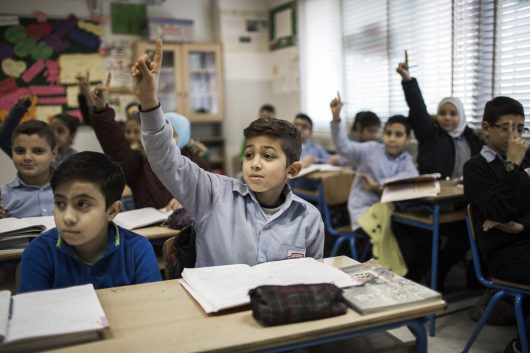
The journey of the refugee is riddled with uncertainty. The person is forced to leave their home and become an asylum seeker. The asylum seeker enters a foreign state in search of refugee status. For many asylum seekers, the journey is perilous. Traditional and safe forms of transportation across state boundaries are rare. For Syrians hoping to make landfall in Europe or Libya, options were limited and sea voyages were often part of the journey.

The lack of adequate vessels and safety equipment led gave way to unfortunately high mortality rates on the sea. The images emerging from the shores of Greece, Turkey and Libya capture the dire situation under which this journey was made. Major media outlets have published images showing refugees tired, distressed or worse. What is missing from this seemingly hopeless narrative are the rights guaranteed to these people as global citizens.

Refugees are entitled to certain rights. These persons are entitled to security, are not to be involuntarily returned to the country from which they are fleeing and should receive the same rights as other foreign nationals. Often, the influx of large quantities of people into already fragile economies creates an environment that does not allow the refugee the living conditions and opportunities for education, work and healthcare that are called for by human rights standards.

Often the very meaning of the word refugee is misunderstood. Surrounding the issue of displaced persons are numerous misconceptions and the facts are lost in assumptions. In hopes of clarity and dissuading any misconceptions about who refugees are, here are some facts about refugees:

Facts About Refugees

  • Around 65 million people are displaced currently; this number accounts for refugees living inside and outside the country where they are facing persecution.
  • More than half of refugees are produced by only three countries: Syria, Afghanistan and South Sudan.
  • More than half of the refugees around the world are under the age of 18. These children are five times less likely to be enrolled in school.
  • Lack of economic opportunity and poverty do not qualify a person as a refugee.
  • Refugee crises are far-reaching and impact almost every continent. The Middle East and North Africa is not the only region impacted by refugees.
  • The average length of displacement is more than 10 years.
  • Being granted asylum in a state does not guarantee resettlement in that state.
  • In 2016, 189,900 refugees were resettled, compared to the 22.5 million refugees that were living outside their home country.
  • African and Middle Eastern countries host more than half of all current refugees. European countries and the Americas account for a little more than 30 percent of refugees.
  • The United States accepted the largest amount of refugees in its modern history in 1980.
  • The United States Refugee Admission Ceiling in FY 2016 was 85,000 persons.

The story of the refugee cannot be easily described through numbers and statistics. The larger narrative is more complex than can be easily summarized into key facts. The numbers neglect the individual experience of the refugee. These facts about refugees not do justice to the larger issue of statelessness but rather offer a snapshot of the problems facing displaced persons and the global community.

As these facts about refugees illustrate, refugees are often subjected to living in extreme poverty due to lack of resources available in camps and the slow, bureaucratic process of resettlement. These individuals lack access to adequate healthcare, education and opportunity for economic growth. Camps intended for emergency shelter become long-term solutions. There are many organizations doing incredible work to provide food, shelter and services to displaced persons.

– Madison Shea Lamanna

Photo: Flickr

May 2, 2018
https://borgenproject.org/wp-content/uploads/borgen-project-logo.svg 0 0 Borgen Project https://borgenproject.org/wp-content/uploads/borgen-project-logo.svg Borgen Project2018-05-02 07:30:012019-11-05 13:39:22What You Might Not Know: Facts About Refugees
Refugees

Efforts to Expand Education for Syrian Refugees in Turkey

Education for Syrian Refugees in TurkeyTurkey is home to 833,039 Syrian school-aged children displaced by civil conflict. Since 2016, the Turkish government has worked to expand education for Syrian refugees in Turkey by integrating refugee children into the public school system. The initiative has some demonstrable success: there was a 25 percent increase in Turkish public school enrollment by refugee children in the 2017 school year.

Of the school-aged Syrian refugees living in Turkey, 612,603 were enrolled in either Turkish public school or temporary education centers as of October 2017. The Turkish government plans to close temporary education centers by the end of 2018. Approximately 300,000 refugee children attending these centers will be transferred to public schools and will transition to a Turkish-language curriculum. Another 360,000 refugee students who are not currently enrolled will also be sent to public school.

The Current Situation

For the first time since the policy was announced, more refugee school-aged children are enrolled in the Turkish public school system, at 59 percent, than in temporary education centers, 41 percent. The Turkish government plans to close all temporary education centers by the end of the year.

Temporary education centers teach an accredited curriculum in Arabic. For the past seven years, these facilities have provided education for Syrian refugees in Turkey in their mother tongue. However, these centers have been criticized for fostering cultural and linguistic separation between refugees and natives.

What Must Still Be Done

To accommodate the influx of students, the Turkish government is building 150 new schools with donated funds. However, this new construction will not adequately incorporate matriculating refugees from temporary education centers and additional funding is still needed.

Currently, the Ministry of National Education is adjusting to the increased number of students attending public school by sending some Syrian children to imam-hatip schools. Imam-hatip schools teach religious texts alongside other curriculum.

Critics of the new policy worry that Syrian students will drop out of school rather than attend Turkish-language public schools. Cultural tensions between Turkish and Syrian students, aggravated by resource shortages in public schools, could create hostile learning environments for Syrian children.

Working Toward Education for Syrian Refugees in Turkey

To mitigate the risk, the Ministry of National Education has declared that kindergarten and primary school are compulsory for all Syrian children. The government plans to enroll refugee children in intensive Turkish language courses to help students adjust to a Turkish curriculum. Also, refugee children will be offered additional classes on Arabic language and culture to help Syrian students stay connected to their heritage.

Additionally, to encourage older refugee children to stay in school, an E.U. program offers subsidies to Syrian schoolchildren. Subsidies are awarded to students who attend 80 percent of their classes and payments differ based on age and gender. Female high school students are entitled to the largest subsidies.

The Ministry of National Education’s public education initiative shows a real commitment to creating inclusive education for Syrian refugees in Turkey. Despite cultural and language barriers, more Syrian refugee children than ever before are enrolled in schools in Turkey.

– Katherine Parks

Photo: Flickr

April 28, 2018
https://borgenproject.org/wp-content/uploads/borgen-project-logo.svg 0 0 Borgen Project https://borgenproject.org/wp-content/uploads/borgen-project-logo.svg Borgen Project2018-04-28 07:30:232024-05-29 22:42:07Efforts to Expand Education for Syrian Refugees in Turkey
Foreign Aid, Refugees, War and Violence

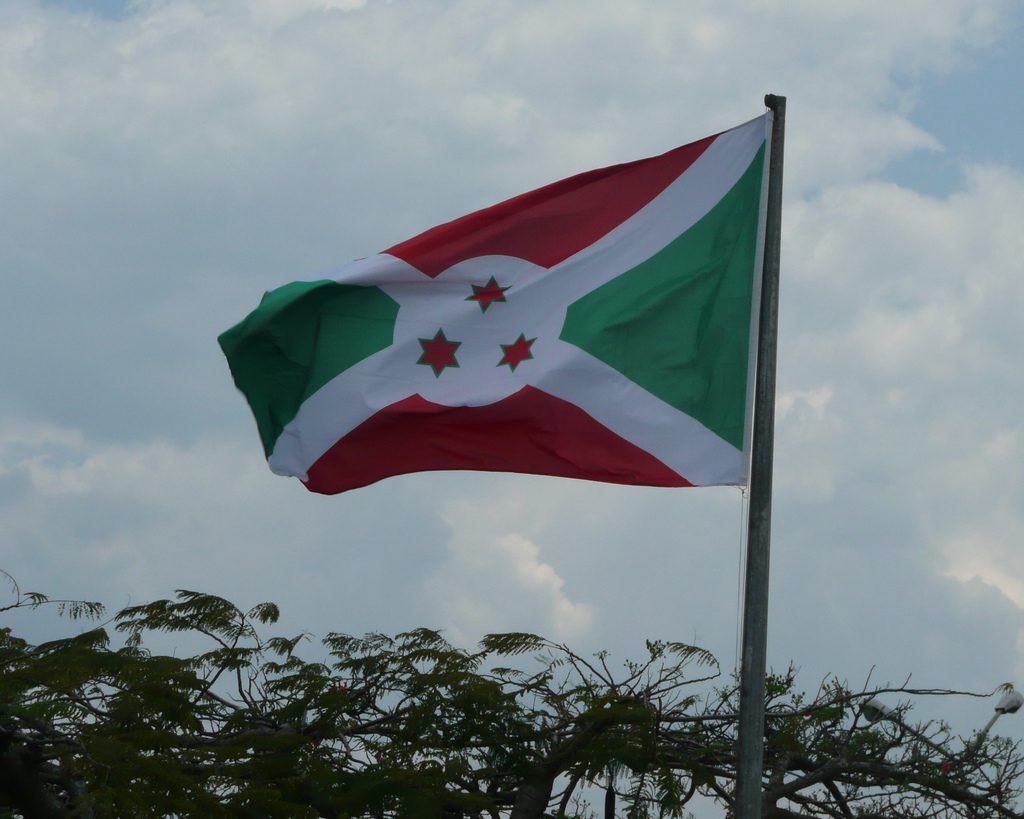
Struggle and Sanctuary: How the Media Misrepresents Burundi


The general public is unable to form any positive conclusions from media sources due to how the media misrepresents Burundi. Through closer analysis, however, the public may see a shimmer of hope behind all the destruction that the media portrays is occurring in Burundi.

How Does the Media Portray Burundi?

The media portrays Burundi as economically unstable; however, this fact is only partially true. Population growth in Burundi continues to rapidly increase, leaving the nation fighting to support their growing nation.

Burundi’s economy is lacking in their growth rate with the population growth rate at 3.1 percent annually, and the GDP per capita not growing more than 1.5 percent even in the best of recent years. Because of these economic difficulties the country has endured, Burundi’s economy relies 49 percent on international financial aid.

International Aid

The media states that Western donors are in the process of cutting support towards Burundi, pushing the nation even more towards intolerable levels of poverty; however, in the past three years alone, the United States has donated over $135 million in foreign aid towards the country of Burundi.

Other organizations such as the World Bank pledged $440 million towards helping the country’s financial crisis, and the EU has already made firm commitments towards achieving this goal. Overall, donors have pledged over $2 billion for Burundi’s development strategy in order to rebuild the nation after its civil war and national political crises.

Internal Controversy

How the media misrepresents Burundi can also be seen in the violence occurring in the country due to political turmoil. Burundi’s president, Pierre Nkurunziza, who has been in office since 2005, released a referendum date for May 17 for a controversial constitutional reform. If this reform is passed, it would allow President Nkurunziza to remain in power until 2034 — an unjust situation that would cause public uproar.

The violence has increased to such a degree that the U.S. State Department has warned Americans not to travel to Burundi, and that Burundi citizens are trained to promote violence and on the path towards another civil war. However, this media representation fails to mention measures taken within the nation to ensure the people of Burundi have alternative methods to violence.

New Generation

Diedonné Nahimana, an award-winning Burundi citizen, created the program of New Generation in Bujumbura to coach victims of war to become ambassadors for peace. New Generation was created to provide victims or orphans of war with alternative opportunities for a successful life rather than turning to violence.

This program develops a new generation of leaders who will restore Burundi after their 12-year civil war, and hopefully prevent the return of war. The foundation of their teaching is based upon non-violence as in the steps of Ghandi and Martin Luther King Jr.

The dream is that by 2020, this new generation will control leadership positions in the country and teach this method of non-violence to others and ensure peace in the country. Due to all of this violence, more than a quarter of a million people have Burundi in terror, seeking refuge in other countries.

Global Priority

Despite this, sources claim that the world doesn’t seem to notice this violence occurring in Burundi and thus serve as another example of how the media misrepresents Burundi.

The people of Burundi are under constant persecution and live in terror in their country due to the political crises and increased poverty conditions; however, it is not the case that the world has turned their back on this African country. Since 2015, over 300,000 people have fled the country of Burundi, many to refugee camps in neighboring African countries where unfortunately, persecution and inhumane actions still exist.

Struggle and Sanctuary

Other countries, such as Canada, have developed methods to ensure Burundi refugees are welcome in their countries. Canada has designated refugee claims from Burundi which welcomes refugees into their country. In fact, Canada proudly holds a Burundian community of roughly 10,000 and continues to allow refugees inside its borders. The United States has also welcomed over 2,000 Burundian refugees in the past two years and the numbers increase daily.

Although Burundi endures many hardships from political crises, poverty and population growth, there is more good occurring in the country than what the media showcases to the public.

– Adrienne Tauscheck

Photo: Flickr

April 20, 2018
https://borgenproject.org/wp-content/uploads/borgen-project-logo.svg 0 0 Borgen Project https://borgenproject.org/wp-content/uploads/borgen-project-logo.svg Borgen Project2018-04-20 01:30:072019-11-08 13:39:22Struggle and Sanctuary: How the Media Misrepresents Burundi
Global Health, Refugees

Cholera in Uganda: A Nation’s Attempt to Aid Refugees

cholera in Uganda
There has been a stream of refugees to Uganda due to the violence in the Democratic Republic of the Congo and Republic of the Congo. The majority of the individuals who escape the brutality in those countries oftentimes find their way into the neighboring state of Uganda.

Killings and burnings of people’s homes are just a few reasons the Congolese are deciding to flee. Determination to evade the violence comes also with a sense of urgency for the Ugandan government and the people, even though there may be downfalls in the process.

Cholera in Uganda

The people of Uganda have recognized both their intake of refugees, and also the refugees’ individual issues. Ever since these people entered the country, there has been an outbreak of cholera in Uganda. This is a bacterial disease that can be contracted by drinking contaminated water and, if not treated properly, can be fatal. Since this disease is highly contagious, it is spreading rapidly throughout the country.

Most of the people coming from the Congo are screened but, unfortuantely, they are oftentimes already contaminated with the bacteria that leads to cholera at the time of their screening. “We are not doing enough to respond first,” said David Alula of Medical Teams International. “More attention needs to be paid to address the situation.”

Medical professionals understand that the situation occurs more widely and at a larger scale in the Congo, but 36 refugees have died thus far from the highly infectious disease.

Governmental Measures

The Ugandan government is doing everything it can to assist its people as well as the refugees experiencing the cholera outbreak. The nation’s head is working on emphasizing water treatment, staff recruitment to allow more people to be treated appropriately and the factors of what may have caused the severe outbreak of this disease.

“We had not planned for this kind of sickness all along. Everything is being doubled on the ground, and more efforts are [being] put in place to make sure it’s contained,” stated the Ugandan official in charge of Kyangwali, Jolly Kebirungi. It is quite remarkable to see the efforts that the Ugandan government is putting forth to help out; it treats the refugees as they would their own citizens. It shows a sign of unitedness and care that can lead to an ultimately more stable community.

A More Stable Community

“In Uganda, refugees are accommodated not in tented camps but in settlements, where they are allocated plots of land that they can farm and build their homes on.” Once Uganda accumulates enough power to ensure health and safety regulations through its medical professionals, the nation will have what it takes to contain and eradicate the disease in this region.

The main priority for Uganda is to maintain the well-being and safekeeping of the refugees they let enter the country. This strategy will lead to a nation of respect and will allow the country to prosper.

– Matthew McGee

Photo: Flickr

April 12, 2018
https://borgenproject.org/wp-content/uploads/borgen-project-logo.svg 0 0 Borgen Project https://borgenproject.org/wp-content/uploads/borgen-project-logo.svg Borgen Project2018-04-12 01:30:332019-11-10 10:22:12Cholera in Uganda: A Nation’s Attempt to Aid Refugees
Global Poverty, Refugees, Refugees and Displaced Persons

Combating Statelessness for Rohingya Refugees Continues

combating statelessness for Rohingya refugees
The Muslim Rohingya minority found in Myanmar have been systematically stripped of citizenship in bureaucratic ways, which has led to combating statelessness for Rohingya refugees.

In 1982, the ruling military junta put in place discriminatory citizenship laws in Myanmar. The law favors the country’s “national races” and excludes the Muslim Rohingya and several other ethnic minorities, automatically granting full citizenship to these “national races.” The national races include groups that were present in Myanmar before the British conquest in 1824.

Removing Rohingya Rights

Throughout past years in Myanmar, each form of ID was declared invalid and then taken from the Rohingya, replaced with a card that indicated fewer rights. The “white cards,” created in 1982, were temporary documents that left the Rohingya in legal limbo.

Currently, the authorities urge the Rohingya to apply for a “national verification card.” The new identification card is highly criticized because of the multistep citizenship process associated with the cards. Many Rohingya, in addition, don’t feel confident that they would have “full” citizenship or basic rights with the new cards.

Nurul Hoque and his family are Rohingya refugees that are fearful of these new cards. He holds on to his grandfather’s old and frail identity card from Myanmar from before the implementation of the discriminatory citizenship laws. This old document is a reminder of a life that he and his family had left behind in Myanmar.

Nick Cheesman, a political scientist at Australian International University, describes to DW that the deprivation of citizenship among Rohingya was not a result of the 1982 law but more an inaccurate implementation of the law.

United Nations High Commissioner of Refugees and Combating Statelessness

In combating statelessness for Rohingya refugees, the United Nations High Commissioner of Refugees (UNHCR) has declared a worldwide effort to end statelessness by 2024. Around 10 million people in the world are denied citizenship, which causes many obstacles in obtaining basic rights.

To overcome statelessness, the UNHCR works with many other organizations to assemble and endorse more compelling solutions. It collaborates with other international organizations, nongovernmental organizations, civil society groups, national human rights institutions and academic and legal associations. The United Nations General Assembly granted, through a series of resolutions in 1995, the UNHCR the formal approval to combat statelessness through identification, prevention, reduction and protection of stateless individuals.

The UNHCR believes that citizenship, or some structure of documented status within a state, is required for basic rights to be achieved. This statelessness determination status, though, is to give individuals an interim way to attain basic rights. The final goal is to end statelessness altogether.

United States Assistance to Myanmar

The United States humanitarian policy in Myanmar has been guided by the importance of protection of basic rights for refugees and asylum seekers. On September 20, 2017, the State Department allocated $28 million in humanitarian aid for displaced people in Bangladesh.

The overall objective for United States policy in Myanmar is to establish a democratically elected civilian government that recognizes human rights and civil liberties of all Myanmar citizens and residents, revealing another effort in combating statelessness for Rohingya refugees.

– Andrea Quade

Photo: Flickr

April 5, 2018
https://borgenproject.org/wp-content/uploads/borgen-project-logo.svg 0 0 Borgen Project https://borgenproject.org/wp-content/uploads/borgen-project-logo.svg Borgen Project2018-04-05 07:30:402019-11-17 11:44:10Combating Statelessness for Rohingya Refugees Continues
Aid, Refugees

Update on Aid to the Rohingya

Aid to the Rohingya
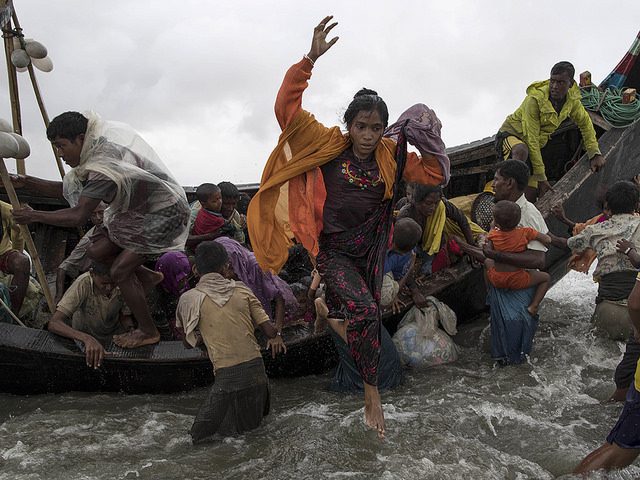
At the border of Myanmar and Bangladesh, almost 700,000 people are living in makeshift refugee camps in a location called Cox’s Bazar. These people are Rohingya refugees who fled from Myanmar in late August due to targeted violence and persecution. Faced with such challenges, various agencies are providing aid to the Rohingya refugees.

The Rohingya are a Muslim population formerly located on the western coast of Myanmar. Myanmar is a majority Buddhist country and the Rohingya are among a small number of people who practice Islam. The minority group has endured prosecution for centuries, but a new wave of violence escalated in the summer of 2017 to levels never before witnessed in the country.

Primarily an issue of land rights, the tension between the Rohingya and the majority of Myanmar’s population has caused thousands of people to flee and cross the border into neighboring Bangladesh. After a treacherous journey across the river, refugees find themselves in a country without persecution but with no place to go.

The refugee camps are not a sustainable solution. Makeshift homes have been created out of primarily plastic and bamboo. Inadequate water and sanitation conditions persist as more and more people flee across the border. The refugees are stuck in limbo as Bangladesh does not have room for an additional 700,000 people and the prospect of going back to Myanmar is off the table for many of the refugees.

In the midst of all of this uncertainty and desperation, many international organizations are working to provide aid to the Rohingya.

Doctors Without Borders

One of the larger organizations providing aid to the Rohingya is Doctors Without Borders. The organization has been present in the camps since the beginning of the crisis in late August. At first, Doctors Without Borders focused on water, sanitation and emergency health care assistance. As the crisis continues to unfold, the organization has been adapting to the needs of the refugee community.

Mental health services have recently been offered as the trauma of the violence continues to haunt many of the Rohingya victims. Additionally, Doctors Without Borders is working with both other aid organizations and the Bengali government to address the crisis and how to proceed.

UNICEF

UNICEF is another organization working to improve camp conditions and provide aid to the Rohingya. The group is looking to move toward a more permanent solution for the refugee population. Mostly focused on proper shelter, adequate food and clean water, UNICEF also has plans to install water pumps in the future.

Another major project for UNICEF is providing vaccinations. In September, the organization set a goal to vaccinate at least 150,00 children against diseases like rubella, polio and measles.

Bracing for Rain

As spring approaches, the Rohingya refugees must brace for a new crisis. Monsoon season in Bangladesh brings the threat of floods and landslides. Cyclones are also a major threat to the area, with their primary season spanning March to June.

The U.N. is fervently working on prepping for the potential crisis. In February, U.N. agencies sent out engineering crews to clear blocked sewage canals that had the potential of overflowing during the monsoon season. Rice husks have also been distributed to refugees as an alternative to firewood.

U.N. agencies are working on relocating 100,000 refugees from the major camp at Cox’s Bazar. As monsoon season quickly approaches, all of the organizations working will need the support of the broader international community to lift up efforts to provide aid to the Rohingya.

– Sonja Flancher

Photo: Flickr

April 2, 2018
https://borgenproject.org/wp-content/uploads/borgen-project-logo.svg 0 0 Borgen Project https://borgenproject.org/wp-content/uploads/borgen-project-logo.svg Borgen Project2018-04-02 01:30:432024-12-13 17:58:40Update on Aid to the Rohingya
Global Poverty, Refugees, Refugees and Displaced Persons

SOS Méditerranée Works to Save the Distressed at Sea

SOS Méditerranée Saving the Distressed at Sea
Thousands of migration attempts across the Mediterranean take place every year. By mid-November of 2017, over 150,000 people reached Europe by sea. During this time, almost 3,000 were found dead or declared missing. NGOs accounted for 40 percent of all lives saved in the Mediterranean during the first half of 2017.

SOS Méditerranée is a European maritime and humanitarian organization responsible for the rescue of lives in the Mediterranean. The organization was created in response to the deaths in the Mediterranean and the failure of the European Union to prevent them. Its mission focuses on three key points: to save lives, to protect and assist and to testify. It was founded by private citizens in May of 2015 and works as a European association with teams in Germany, France, Italy and Switzerland. Together the countries work as a European network,  jointly financing and operating the rescue ship Aquarius.

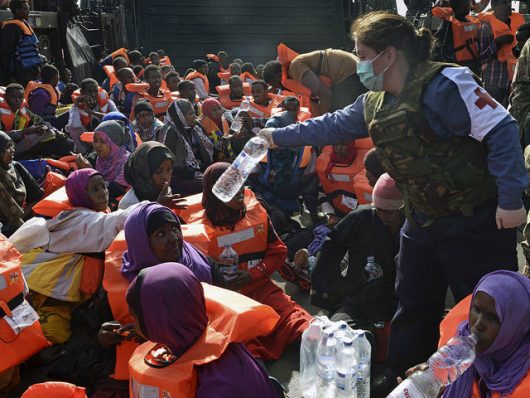
Since February of 2016, Aquarius has operated in international waters between Italy and Libya. Since then, the rescue ship has welcomed more than 27,000 refugees aboard. Once aboard, Aquarius provides emergency medical treatment through its partnership with Doctors Without Borders. This supports the organization’s second key mission, to protect and assist. It provides both medical and psychological care to those on board and then works to connect them to supporting institutions in Europe.

In early March of 2018, the Aquarius welcomed aboard 72 survivors from a merchant ship after two tragic operations in the Central Mediterranean. The Aquarius was the only search and rescue vessel present in the area. It was mobilized to search for a boat in distress in international waters east from Tripoli by the Maritime Rescue Coordination Centre in Rome. Its rescue operations involved a complex search of 120 nautical miles over the course of 24 hours. Those rescued were from 12 different countries, mainly in West Africa, but also from Sudan and South Sudan. Once aboard, the survivors were able to receive the medical treatment they desperately needed.

SOS Méditerranée wants to give those rescued a voice, to testify, and show the actual faces of migration in the hope of bringing awareness about refugees in the Mediterranean and remembering those who were unsuccessful in their journeys. Evidence from the Mediterranean Migration Research Programme (MMRP) has examined the dynamics of migration to Europe from 2015 and 2016, as well its difficulties. Its key findings challenge assumptions about the dynamics of migration, including that migration is primarily driven by the need to access jobs and welfare support.

Instead, the MMRP found that the vast majority of people migrate across the Mediterranean by boat because of the belief that their lives are in danger or in hopes of a better future. During its study in 2015 and 2016, nearly 1.4 million people crossed the Mediterranean to Europe. However, due to the absence of legal routes to reach the E.U., migrants resort to dangerous crossings with smugglers. There is an urgent need to greatly expand safe and legal routes for the protection of these migrants.

Thanks to organizations like SOS Méditerranée, there have been thousands of lives saved in the Mediterranean. However, joint efforts must be made in order to prevent any further lives from being lost.

– Ashley Quigley

Photo: Flickr

April 1, 2018
https://borgenproject.org/wp-content/uploads/borgen-project-logo.svg 0 0 Borgen Project https://borgenproject.org/wp-content/uploads/borgen-project-logo.svg Borgen Project2018-04-01 07:30:312024-05-29 22:40:00SOS Méditerranée Works to Save the Distressed at Sea
Advocacy, Global Poverty, Refugees, Refugees and Displaced Persons

The Four Key Components of United Nations Refugee Agency

The Four Key Components of United Nations Refugee Agency
Currently, more than 65.6 million of the world’s population has been forcibly displaced due to conflict, persecution or inhospitable living conditions within their home countries. A majority of these refugees end up in temporary refugee camps, awaiting relocation in both private and state-backed developments. Unfortunately, resources in resettlement countries tend to be limited in capacity to help the millions of displaced.

Policy of Hope and the United Nations Refugee Agency

Fortunately, the international community is making strong efforts to provide both on-the-ground and financial resources to the countries that house the greatest number of refugees. Many organizations see this policy of hope as a universal good, and deem it paramount to find new homes and lives for those who are displaced.

Organizations like the United Nations Refugee Agency (UNHCR) work tirelessly to ensure that those displaced have a global advocate looking out for them.

The organization operates on several different levels to assist refugees around the world and saves the lives of thousands who would otherwise be left without any critical survival resources. Several of the most impactful divisions within UNHCR are its protection, shelter, health and advocacy programs.

1. Protection

The protection program seeks to ensure the safety of individuals under the label of refugee. The United Nations Refugee Agency provides funding to security partners who offer legal and physical protection to refugees and minimize the threat of physical violence in refugee camps. The protection program also generates funding for law schools and government agencies to emphasize coursework and professional development in refugee protection.

2. Shelter

The shelter unit of the United Nations Refugee Agency distributes tents and plastic sheeting that are used to make simple shelters in refugee camps throughout the world. The shelter program also funds the rehabilitation of communal displacement shelters, the construction of brand new homes, and also provides materials for those who choose to build homes themselves under self-help schemes.

3. Healthcare

The United Nations Refugee Agency also has a healthcare provision program which assesses the basic health needs of those living in a refugee camp. On a more general scale, UNHCR provides communities with HIV protection, reproductive health services, food and water security, as well as sanitation and hygiene services.

If there is a specific disease that is particularly prevalent in the camp, the United Nations Refugee Agency assesses the situation and provides what is most necessary. For instance, to flee conflict in the Democratic Republic of the Congo, many settled in refugee camps in Uganda. Unfortunately, the Ugandan refugee camps were rampant with malaria. Accordingly, UNHCR provided over 40,000 malaria nets to the camps, protecting many.

The provision of these essentials greatly benefits the refugees living in the camps and helps to ensure that they have a greater chance of survival and relocation.

4. Advocacy

The United Nations Refugee Program advocates for policy changes as well. The UNHCR has specific policy guidelines and standards that it advocates governments adopt. Each year a team assesses how trends in refugee movement and aid shift and adjusts the standards to ensure that needs of the many are met most effectively.

Overall, the world refugee crisis is both an overwhelming and daunting issue. Despite the scale of the problem, organizations like the United Nations Refugee Agency will continue to work as long there are refugees who need its help.

– Daniel Levy

Photo: Flickr

March 16, 2018
https://borgenproject.org/wp-content/uploads/borgen-project-logo.svg 0 0 Borgen Project https://borgenproject.org/wp-content/uploads/borgen-project-logo.svg Borgen Project2018-03-16 01:30:252024-05-29 22:39:50The Four Key Components of United Nations Refugee Agency
Page 29 of 53«‹2728293031›»

Get Smarter

  • Global Poverty 101
  • Global Poverty… The Good News
  • Global Poverty & U.S. Jobs
  • Global Poverty and National Security
  • Innovative Solutions to Poverty
  • Global Poverty & Aid FAQ’s
Search Search

Take Action

  • Call Congress
  • Email Congress
  • Donate
  • 30 Ways to Help
  • Volunteer Ops
  • Internships
  • Courses & Certificates
  • The Podcast
Borgen Project

“The Borgen Project is an incredible nonprofit organization that is addressing poverty and hunger and working towards ending them.”

-The Huffington Post

Inside The Borgen Project

  • Contact
  • About
  • Financials
  • President
  • Board of Directors
  • Board of Advisors

International Links

  • UK Email Parliament
  • UK Donate
  • Canada Email Parliament

Get Smarter

  • Global Poverty 101
  • Global Poverty… The Good News
  • Global Poverty & U.S. Jobs
  • Global Poverty and National Security
  • Innovative Solutions to Poverty
  • Global Poverty & Aid FAQ’s

Ways to Help

  • Call Congress
  • Email Congress
  • Donate
  • 30 Ways to Help
  • Volunteer Ops
  • Internships
  • Courses & Certificates
  • The Podcast
Scroll to top Scroll to top Scroll to top