• Link to X
  • Link to Facebook
  • Link to Instagram
  • Link to TikTok
  • Link to Youtube
  • About
    • About Us
      • President
      • Board of Directors
      • Board of Advisors
      • Financials
      • Our Methodology
      • Success Tracker
      • Contact
  • Act Now
    • 30 Ways to Help
      • Email Congress
      • Call Congress
      • Volunteer
      • Courses & Certificates
      • Be a Donor
    • Internships
      • In-Office Internships
      • Remote Internships
    • Legislation
      • Politics 101
  • The Blog
  • The Podcast
  • Magazine
  • Donate
  • Click to open the search input field Click to open the search input field Search
  • Menu Menu

Archive for category: Refugees

Food Security, Global Poverty, Refugees, Technology

Top 7 Blockchain Projects for Poverty

Top Seven Blockchain Projects
Traditional perceptions of blockchain technology involve uses in financial technology and under the table transactions. Blockchain, however, has possibilities far beyond finance and digital currency. By its nature, blockchain provides unparalleled security and transparency. By creating a decentralized network of highly-encrypted blocks, a blockchain system creates a secure, unchangeable ledger. No one person can make changes and the encryption means that it is extremely difficult to hack, thus making blockchain one of the most secure and transparent technologies in the world. This technology has the power to revolutionize poverty reduction. Below are the top seven blockchain projects that represent the most successful blockchain for poverty projects that address real, pressing global issues.

Top 7 Blockchain Projects for Poverty

  1. Agri-Wallet: Agri-Wallet is a mobile app that allows farmers to remotely and securely receive payment for their produce and save money on business expenses. The majority of smallholder farmers do not have enough funding, both due to delayed payments for goods and a lack of access to credit. This is because banks are hesitant to lend to poor farmers that do not have a strong credit history or collateral. Through the blockchain financial ecosystem, Agri-Wallet allows farmers access to small loans and guarantees payment the first week of every month, which has been a major boon to Kenyan farmers. Agri-Wallet has already seen extensive success in Kenya, with approximately 4,000 farmers, 14 suppliers and 25 buyers using the app only one year after its large-scale release.
  2. Mojaloop: In developed countries, some may take access to banking for granted, but 1.7 million adults around the world do not have access to a secure banking system. The Gates Foundation sought to change this by releasing Mojaloop, an open-source solution that allows anyone to build financial services software, providing financial security through blockchain-based encryption. The key to Mojaloop’s importance is its egalitarian nature – a developer does not have to be connected to a major company or bank to develop technology using Mojaloop, and the code bridges all financial products and applications in any given market, providing unprecedented access to financial services for poor populations. The app has already gained the confidence of two of Africa’s largest mobile operators and the Gates Foundation estimates that it will reach 338 million existing mobile money accounts through the entire continent of Africa. In other words, this blockchain for poverty app could provide a flexible, universal banking system to 338 million people in Africa.
  3. Diwala: As of June 2019, there are more than 70 million displaced people worldwide fleeing war, persecution and conflict. The ability to join the workforce of refugee’s new home is critical for their integration into their new community and to rebuild their lives. However, when fleeing a war-torn country, it is difficult for refugees to retain certifications or diplomas. Diwala provides a secure, unchangeable digital resume that verifies a person’s skills, education and certifications that employers can rely on to provide an accurate record. The organization currently works with multiple organizations and universities to help issue credentials via Diwala to further verify education and certifications. Diwala is already bringing digital employment verification to Kenya and Uganda.
  4. BitGive: BitGive’s goal is to provide better transparency and accountability between donors and charitable organizations. The company’s blockchain for poverty product, GiveTrack™, allows donors to trace their donations in real-time to see exactly where their money goes. BitGive’s use of blockchain technology provides high-level security while also providing an unalterable ledger that donors can refer to at any time to ensure their money goes to the cause they want and see the real impact they are having on a community. The use of cryptocurrency also means that BitGive can quickly and efficiently transfer funds across the globe. The organization has seen amazing success, including partnerships with Save the Children and The Water Project.
  5. Goodr: According to the U.S. Department of Agriculture, Americans waste approximately 30-40 percent of the U.S. food supply, while 820 million people around the world suffer from hunger. Goodr provides blockchain-based supply chain management tools that allow companies, such as airlines, convention centers and other food operations, to redirect surplus foods to food-insecure communities. As an added incentive, Goodr provides companies with blockchain-based ledgers that allow them to track their food and identify areas of waste. During the 2019 Superbowl alone, Goodr rescued over 100,000 pounds of food.
  6. OneSmart: The World Bank considers government corruption a significant challenge in reducing global poverty, particularly because corruption disproportionately affects poor populations. In 2018, UNICEF funded OneSmart’s OS City project to combat corruption and bring more transparency to local and national governments. OneSmart created a blockchain platform that is flexible enough to be integrated with existing city management platforms, allowing for the implementation of blockchain and artificial intelligence throughout government to avoid waste and increase transparency.
  7. SOLshare: SOLshare seeks to help the 1.1 million people worldwide without consistent access to electricity. It is the first-ever peer-to-peer electricity trading network, allowing villages to create mini-power grids by connecting houses with solar panels to other homes in the neighborhood. The blockchain-based platform allows for the fast, efficient and safe transfer of funds between neighbors, allowing for local, independent electricity grids. SOLshare has already brought electricity to 65 million people in Bangladesh and is helping helps poor villages shape a greener future.

People limit the use of blockchain technology by relegating it to banking or shady online transactions alone. The above top seven blockchain projects show that blockchain has value as a tool to develop solutions for multiple global issues. A blockchain is a useful tool that can address multifaceted issues in fighting poverty. Though it is still an emerging technology, blockchain deserves widespread research and support.

– Melanie Rasmussen
Photo: Flickr

September 24, 2019
https://borgenproject.org/wp-content/uploads/borgen-project-logo.svg 0 0 Kim Thelwell https://borgenproject.org/wp-content/uploads/borgen-project-logo.svg Kim Thelwell2019-09-24 14:56:122024-12-13 18:01:56Top 7 Blockchain Projects for Poverty
Global Poverty, Refugees, Refugees and Displaced Persons

How Hiring Refugees Benefits the Global Economy

Hiring Refugees
The world is currently facing a record-high number of displaced people. Globally, more than 70 million people fled or are fleeing their homes as a result of domestic war, systematic persecution, hunger or any number of other life-threatening conditions. These people are refugees.

Refugees who have fled their home countries rely on other countries to take them in and provide them with the basic necessities for survival, like food, water and shelter. Many of these people, however, have extremely limited access to the job markets of their host countries. Therefore, it is difficult for them to find a source of personal income.

Recent studies show that integrating refugees into the host country’s workforce can be economically beneficial on multiple levels. Some have estimated that closing job and pay gaps for refugees around the world could generate as much as $2.5 trillion globally. Displaced refugees represent a largely under-utilized source of labor, and giving them the opportunity to be part of the workforce could profoundly impact productivity.

Employment Benefits Refugees and Host Countries

Hiring refugees has the potential to benefit all parties involved. The refugees themselves often benefit most directly from integration into the workplace. Having a source of personal income can be extremely liberating for displaced families; it increases financial independence and allows them to rely less on the aid of their host country. It also means that children can go to school and receive an education instead of staying home to help support the family. Essentially, it allows refugees to become more productive members of society.

Contrary to popular rhetoric, the host country also benefits economically from hiring refugees. By having jobs, refugee workers are contributing to the productivity of the country and increasing the gross domestic product. Additionally, most economists found that one cannot substantiate the fear native workers have over refugees and other migrants “stealing” jobs—displaced people generally look for vacant positions that do not require a mastery of the host country’s language.

Refugees and Migrants Create Jobs

Refugees and migrants also tend to have much higher rates of entrepreneurship than the rest of society, meaning that they create jobs. It may be helpful to use the U.S. as an example here. In the U.S., migrants—a larger distinction of people living in a foreign country that encompasses refugees—represent about 15 percent of the population. However, migrants constitute about 25 percent of America’s entrepreneurs, indicating that they have a higher rate of entrepreneurship than the average citizen. In 2015, over 180,000 refugees created $4.6 billion in American income due to entrepreneurial ventures.

Organizations that hire refugees have reported much higher retention rates than the average. For example, manufacturing represents the industry where the highest proportion of refugees find work—about 20 percent. The refugee rate of turnover in this industry is just 4 percent, compared to the 11 percent national average. This means that refugees often make industrious and loyal workers on whom businesses can depend. Overall, refugees generate billions of dollars each year through entrepreneurship, consumer spending and job retention.

Finally, the country of origin can also benefit economically when other countries take in its refugees. Host and origin countries share a relationship that could potentially open up networks of trade and investment that boost the origin country’s economy. Additionally, when people from the origin country integrate into the host country’s workforce, it creates business networks where refugees might learn skills and master technology that they can communicate back home. These networks of trade and business can help update the origin country’s economy and make it more competitive.

Global Companies Hiring Refugees

Below are just a few of the companies hiring refugees and working to better integrate refugee populations into the workforce in a variety of different countries.

  1. Sodexo: A facilities management company, Sodexo pledged to hire 300 refugees in the U.S., Canada, Sweden and Brazil by 2020.
  2. Ben & Jerry’s: The beloved ice cream company plans on hiring at least 500 refugees throughout Europe once it completes a business incubator program in 2023.
  3. Barilla: The pasta magnate Barilla plans on hiring 75 refugees in Europe by 2023.
  4. Care.com: Building on a German pilot program that trains refugee women to be nannies and childcare workers, Care.com will train 1,000 refugee women to enter the care industry by 2020.
  5. Hissho Sushi: The sushi chain plans on aiding 1,250 refugees in becoming franchise owners by 2023, in conjunction with more locations opening across the U.S.
  6. Amplio Recruiting: Amplio hopes to provide 10,000 refugees in the United States with employment opportunities by 2023.

– Morgan Johnson
Photo: Flickr

September 15, 2019
https://borgenproject.org/wp-content/uploads/borgen-project-logo.svg 0 0 Jennifer Philipp https://borgenproject.org/wp-content/uploads/borgen-project-logo.svg Jennifer Philipp2019-09-15 17:28:122019-10-30 13:30:54How Hiring Refugees Benefits the Global Economy
Food Security, Global Poverty, Refugees, Water

The Biggest Global Issues Facing Humankind

Biggest Global Issues
Hundreds of millions of people around the world experience insufficient living conditions due to environmental factors, displacement, disease, poverty or some combination of the four. Here is a list of the biggest global issues that plague humankind.

The Biggest Global Issues Facing Mankind

1. Food and Malnutrition

  • Food and nutrition are essential for just about every life form on the planet, especially humankind. Although countries such as China, India, Brazil and the United States produce vast amounts of food for the world, about one in nine people will not eat enough food today. Malnourishment leads to the inability of about 795 million people to lead active and healthy lives around the globe.

  • Malnutrition leads to poor health and can stunt development in education and employment. According to The Food Aid Foundation, 66 million school-aged children will go to school hungry today. Consistent hunger in schools is linked to a lack of concentration.

  • World hunger has decreased by about 219 million people within the past two decades. It is through the innovative and ambitious work of organizations like the World Food Programme, in partnership with governments and communities, that the world can fill empty stomachs and provide communities with the resources to fill their own stomachs without aid, overtime.

  • The World Food Programme provides the Home Grown School Feeding Programme to counter the effects of consistent hunger in schools. One model of the  Home Grown School Feeding Programme in Kenya provides school meals to over 600 million schoolchildren. The organization purchases the meals from local farmers which helps boost Kenya’s agriculture-dependent economy. Constant meals in school serve as an incentive for poor families to send their children to school every day and enhance the quality of children’s education by reducing hunger.

2. Access to Clean Water

  • Water covers about 70 percent of planet Earth. Inadequate water supply, water supply access and lack of sanitation kill millions of people annually. Used for drinking and hygiene practices, lack of water sanitation is a leading cause of child mortality around the world.

  • Two days of the year educate the world about one of the biggest global issues facing humankind: the global water crisis. World Water Day and World Toilet Day are reminders that 700 million people around the globe could be facing displacement due to decreased access to fresh water by 2030. Severe droughts are a major reason for displacement. When there is no more water for drinking or for crops and livestock, people must leave their homes in search of a place where there is an adequate supply of water.

  • Within the past two decades, the percentage of countries without basic sanitation services decreased by 17 percent. Forty countries are on track to receive universal basic sanitation services by the year 2030. In the meantime, 88 countries are progressing too slowly in their sanitation advancements and 24 countries are decreasing in their advances toward universal sanitation coverage.

  • The Water Project is committed to providing safe water to Africa. It builds wells and dams to provide access to safe water. The project also delivers improved technology for more sanitary toilets that keep flies away. The Water Project provides and monitors 157 water projects in Sierra Leone including wells, dams and sanitary toilets. The Water Project builds these projects in schools and communities in the Port Loko region of Sierra Leone, serving some 7,000 Sierra Leoneans. The Water Project’s save water initiative impacts over 40,000 people on the continent of Africa.

3. Refugee Crisis

  • The refugee crisis is one of the biggest global issues facing humankind today. Refugees are seeking asylum from persecution, conflict and violence. A grand total of 68.5 million people have been forcibly displaced from their home countries. Some 54 percent of those displaced are children.

  • Developing countries host a third of the world’s refugees. Many refugees reside in the neighboring countries of those they left behind. Turkey, Jordan, Pakistan and Lebanon lead the world in hosting refugees.

  • Asylum seekers from Syria, Democratic Republic of Congo and South Sudan continuously flee ongoing persecution, conflict and violence in their home countries. More recently, four million Venezuelans have fled their home country, 460 thousand of whom are seeking asylum in Spain, Central America and North America.

  • Venezuelans are fleeing dire political unrest and hyperinflation. Shortages in food, water, electricity and medicine also afflict the country. The Red Cross now provides at least $60 million worth of aid to Venezuela, reaching at least 650,000 Venezuelans. The World Vision Organization delivers aid to Venezuelan refugees in Venezuela’s neighboring countries. For example, in Colombia, World Vision provides economic empowerment, education, food and health essentials to some 40,000 refugees.

4. AIDS Epidemic

  • Acquired immunodeficiency syndrome (AIDS) is a longstanding global issue. With at least 36.9 million AIDS or HIV (the virus that causes AIDS) infections around the world, the disease is one of the biggest global issues facing humankind. Since 2004, AIDS-related deaths have been reduced by over half. In 2004, almost two million people worldwide died of AIDS-related illnesses, compared to 940,000 in 2017.

  • Organizations like the International AIDS Society, UNAIDS, Kaiser Family Foundation and PEPFAR are dedicated to stopping the spread of HIV/AIDS. These organizations help to ensure that infected people have access to treatment and the opportunity to live healthy lives. Adolescent girls and young women (AGYW) are 14 times more likely to contract HIV than boys. The DREAM initiative by PEPFAR and partners prioritizes the safety of AGYW against new HIV infections. PEPFAR is reaching at least 144,000 AGYW in Kenya, one country where HIV infections are most prevalent.

  • Although there is currently no cure, UNAIDS has a Sustainable Development Goal of bringing the number of new HIV infections down to zero by the year 2030. The Kaiser Family Foundation conducts research and analyzes data regarding U.S. AIDS policy and funding, both domestic and globally. It serves as a source of information about AIDS and other global health issues for U.S. policymakers and the media.

5. Eradicating Poverty

  • Poverty is the lack of income necessary to access basic everyday needs and/or living below a specific country’s standard of living. Living in poverty can result in malnutrition,  poor health, fewer opportunities for education and increased illness. With an estimated 783 million people living in poverty, eradicating poverty is one of the biggest global issues facing humankind.

  • Malnutrition, contaminated water, the refugee crisis and the AIDS epidemic all contain some aspects of poverty. Organizations like the United Nations and the Bill and Melinda Gates Foundation focus on sustainable development strategies to alleviate global poverty. The number of people living in poverty has decreased by half, thanks to the U.N.’s Millennium Development Goals. The Millennium Development Goals have lifted at least one billion people out of extreme poverty within the last two decades.

  • The Gates Foundation is proving that poverty can be ameliorated through Agricultural Transformation. Increasing a country’s food production can counter malnutrition and boost the country’s economy by increasing farmer’s crop productivity. Poverty in Ethiopia has decreased by at least 45 percent since the Gates Foundation first started investing in agricultural development there in 2006. Ethiopia, one of the poorest countries in the world, is witnessing an overall increase in its economy.

With the help of innovative organizations partnered with governments, the world is implementing practical techniques to help eliminate hunger, water scarcity, AIDS/HIV and poverty from the list of the biggest global issues facing humankind. Eliminating these problems will improve the living conditions of millions of people around the world, including refugees and internally displaced people.

– Rebekah Askew
Photo: Flickr

September 10, 2019
https://borgenproject.org/wp-content/uploads/borgen-project-logo.svg 0 0 Jennifer Philipp https://borgenproject.org/wp-content/uploads/borgen-project-logo.svg Jennifer Philipp2019-09-10 01:30:162024-05-29 23:09:51The Biggest Global Issues Facing Humankind
Global Poverty, Refugees, Refugees and Displaced Persons

How the United States Can Help Refugees

The United States Can Help Refugees
The world has seen an incessant cycle of violent conflict, famine and environmental catastrophes in recent years. These events have caused an increase in refugees and displaced people to a number that human history has not seen before. To date, a record 70 million people worldwide are displaced. A significant question is how the United States can help refugees.

The United States has not only the resources but an obligation to remedy this ever-growing humanitarian crisis. Through humanitarian assistance, the United States has the ability to curb global instability for national security purposes. It is important to first understand how the United States can help refugees before looking at how to improve the current system.

U.S. refugee policy has historically set the standard for the rest of the world. However, modern policy has not evolved to meet the growing crisis at hand. It is crucial to continue the search for an adequate policy to end the push factors causing the refugee crisis and improve the quality of life for displaced people. The United States can accomplish this goal in two ways: by expanding upon existing humanitarian assistance and restructuring the United States’ current humanitarian system.

How the United States Helps Refugees and Displaced People

The United States has implemented a number of programs to improve the lives of refugees around the world. One such program is the Julia Taft fund. This program supports projects aimed at assisting refugees or refugee returnees to become self-sufficient in ways that are beneficial to their host communities. The fund provides financial assistance to local NGOs, community-based and faith-based organizations that seek to ameliorate the lives of refugees by improving economic conditions in their host communities.

With the support of the Julia Taft fund, the U.S. embassy in Chad helped open a salon in collaboration with a local NGO. The salon opened in April 2019, aims to reduce sexual violence against refugee women in urban areas. The 12 women selected for the project participated in an apprenticeship at a local salon and now have the skill set necessary to run their own business. This example demonstrates that the United States can use the fund to increase the self-sufficiency of displaced people while bringing value to the economy of the local host communities.

The implementation of programs, such as the Julia Taft Fund, demonstrates how the United States can help refugees. This fund provides refugees with the tools to be self-sufficient while also benefitting local economies. In order to continue and expand programs such as this, the U.S. must increase funding and the efficiency of its humanitarian aid delivery system. The United States sets the standard for humanitarian assistance to refugees. The United States must modernize this system for the benefit of global stability and national security.

How the United States Can Better Help Refugees and Displaced People

Increasing the capabilities of the United States humanitarian aid delivery system is crucial to managing the growing number of refugee crises. It is important to ask how the United States can help refugees and what the U.S. can do better to address this issue. The U.S. needs to empower its humanitarian organizations with increased funding and a sound organizational structure in order to address the changing needs of displaced people around the world.

In order to achieve a more efficient and influential U.S. humanitarian system, it is important to maintain and gradually increase funding to the State Department and USAID. The Trump administration is proposing cuts to both of these state entities. The proposed cuts would reduce funding by nearly one-third, from $8.7 billion to $6.3 billion. This potential decrease in funding would cripple the United States’ ability to effectively address the causes and mitigate the effects of refugee crises.

A well funded and autonomous USAID would be better equipped to implement humanitarian response programming for displaced people and their host communities. The State Department’s Bureau of Population, Refugees and Migration would simultaneously remain an independent entity focusing on policy and diplomatic responses to refugee crises. This structure would act to create a cohesive diplomatic and humanitarian response to the growing number of crises that impact people around the world.

– Peter Trousdale
Photo: Flickr

September 3, 2019
https://borgenproject.org/wp-content/uploads/borgen-project-logo.svg 0 0 Kim Thelwell https://borgenproject.org/wp-content/uploads/borgen-project-logo.svg Kim Thelwell2019-09-03 11:59:232019-09-03 11:59:23How the United States Can Help Refugees
Food Aid, Food Security, Global Poverty, Health, Refugees

3 Organizations Improving Food Security for Refugees

Food security for refugeesAround the world, a record number of people have become forcibly displaced due to violence, natural disasters or a variety of other reasons. According to the U.N. Human Rights Council, 70.8 million people are forcibly displaced, and 25.9 million of those are considered refugees. At the same time, millions of people lacked food security around the world. The Peace Corps defines food security as “when families are able to afford and obtain enough nutritious food.” In 2018, more than 700 million people faced severe food insecurity.
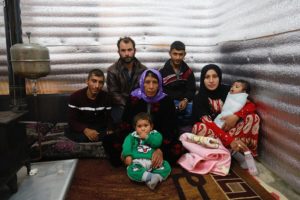
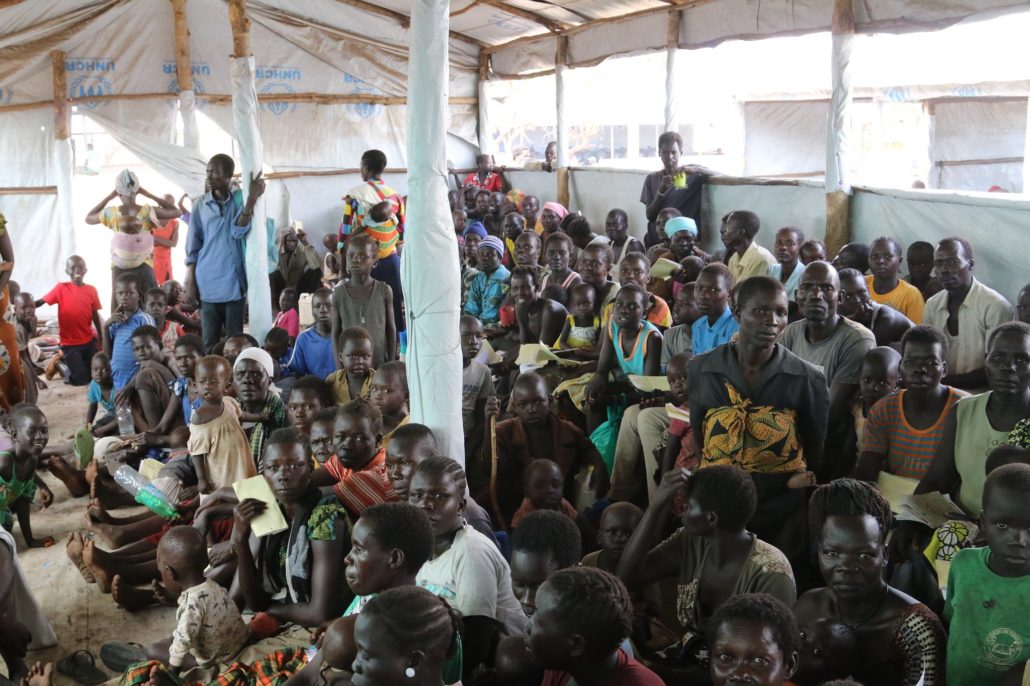
Food security and refugee issues are deeply intertwined, as refugees are particularly vulnerable to becoming food-insecure. Worldwide, millions of refugees face food insecurity. Thankfully, many organizations are using their resources to create innovative solutions to provide healthy food to refugees who are not able to afford or access it. Here are three organizations that are improving food security for refugees:

African Women Rising

The Palabek refugee camp in northern Uganda hosts more than 38,000 refugees who have fled the brutal civil war in South Sudan. Humanitarian organizations have been struggling to find a long-term solution to food insecurity in the camp. While the Ugandan government allocates plots of land for refugees to farm on, these plots of land are usually too small for traditional farming techniques to work. However, the NGO African Women Rising (AWR) thinks it has found an innovative solution to malnutrition among refugees. In 2017, AWR introduced the camp to 30 by 30-meter plots of land known as “permagardens”.

AWR’s permagardens are specially cultivated in a way that allows them to maximize the number of crops, trees and plants that can be grown in them. It can take anywhere from a few months to a year to teach someone permagarden farming techniques. The total cost of developing, training and supporting a permagarden is just $85. The gardens primarily grow various fruits and vegetables, which provide vital micronutrients and vitamins that are not present in their monthly World Food Programme portions. Many other organizations are already starting to replicate the microgarden approach in refugee settings, including the U.N., the Danish Refugee Council and USAID.

Sunrise-USA

Sunrise-USA was founded in 2011 by a group of Syrian-American professionals and claims to be one of the world’s leading humanitarian aid organizations focused on victims of war inside Syria and in refugee camps in neighboring countries. In addition, to providing food security for refugees, Sunrise-USA provides refugees with healthcare, orphan sponsoring services, education, water and sanitation. The organization also helps Syrian refugees, who are mostly Muslim, observe Islamic religious traditions such as Ramadan, Udhiya and Zakat.

Within Syria, Sunrise-USA works to deliver badly needed food baskets to besieged cities. These baskets typically contain chicken, eggs, dates, oils, margarine, tuna cans, sugar and powdered milk, and only cost $45 to produce. While the city of Aleppo was under siege, the organization delivered over 5,000 food baskets, as well as two containers of jackets, sweaters and mattresses. Sunrise-USA’s “Feed Them” campaign has delivered food aid to 30,000 families in need and has provided milk and baby formula to 20,000 vulnerable families with children.

Action Contre La Faim (Action Against Hunger)

Action Contre La Faim (ACF) is a French organization that works in more than 45 countries to treat and prevent malnutrition. For more than 40 years, it has provided various forms of food aid where it is needed most. Its 7,500-member staff currently assists 21 million people worldwide. The organization has responded to various humanitarian crises that have generated large numbers of refugees, including the civil wars that have taken place in South Sudan and Syria, as well as the genocide of the Rohingya people in Myanmar.

In Bangladesh, ACF works to increase food security for refugees who have escaped into the country from Myanmar. Every day, the organization provides 83,000 hot meals and 551,497 liters of water to Rohingya refugees. The organization has also conducted malnutrition screenings for 100,000 Rohingya children and has diagnosed over 11,000 malnourished children. These malnourished children were then referred to ACF’s emergency nutrition programs for treatment through mobile clinics.

As the global refugee crisis continues to intensify, more and more organizations will need to come together to provide both short-term and long-term solutions to food security for refugees. These organizations have shown they are more than willing to rise to this task and have each made a measurable impact on the wellbeing of refugees around the world.

– Andrew Bryant
Photo: Flickr

August 30, 2019
https://borgenproject.org/wp-content/uploads/borgen-project-logo.svg 0 0 Kim Thelwell https://borgenproject.org/wp-content/uploads/borgen-project-logo.svg Kim Thelwell2019-08-30 18:14:032019-10-30 10:10:413 Organizations Improving Food Security for Refugees
Refugees

5 Facts About Organized Crime in the Northern Triangle

Organized Crime in the Northern Triangle
Two previously published articles on The Borgen Project’s website have mentioned the issues of violence, poverty and corruption in the Northern Triangle of Central America (NTCA). This article’s focus is on the organized crime in the northern triangle that engenders the violence and corruption, which includes street gangs, drug cartels and paramilitary organizations. Daily life in the NTCA is rife with immediate danger from many different sources.

5 Facts About Organized Crime in the Northern Triangle

  1. Gangs’ Influence: Gangs are a part of daily life, particularly for urban residents in the cities of the Northern Triangle. Gangs control swaths of city territory and young children must learn the boundaries from an early age—or risk being harassed, kidnapped, or even killed. In the Honduran capital of Tegucigalpa, gang violence is so common that the residents have adapted to it. Fortunately, there are local organizations (along with the help of foreign humanitarian aid) that are working to provide children with safe places where they can play without having to worry about crossing gang borders.
  2. Hard National Borders Exaberates Gang Activity: During the late 1970s and throughout the 1980s, the Northern Triangle became a focus of U.S. Policy—not for aid, but as a theater of operations in the War on Drugs. This led to a tightening of both the U.S. and Mexico’s southern border. Lack of adequate protection in Mexico and the U.S. put Northern Triangle migrants at risk of violence from paramilitaries and cartels, and detention and deportation from local authorities. Detention comes with its own set of health and safety risks, and deportation is tantamount to a death sentence for many migrants that were fleeing violence in the first place.
  3. Majority of Refugees Fleeing the Northern Triangle are Women and Children: Although there are several factors contributing to the surge of refugees coming from the NTCA, the two main ones are systemic poverty and the threat of gang violence. Many citizens of Northern Triangle countries live on less than $1.90 per day, making them extremely vulnerable to extortion from gangs which pose the threat of sexual violence and even death. In some cases, poverty leads to desperation for young men, prompting them to voluntarily join gangs for day-to-day security.
  4. Violence and Organized Crime in the Northern Triangle: In the last two decades of the 20th century, both Guatemala and El Salvador experienced violent civil wars that resulted in a major shakeup of the entire states’ power structures. Honduras itself was not involved in a civil conflict but the southern regions of the country were used as staging areas for the Nicaraguan contras during their rebellion against the Sandinista government in the 1980s. The end of the military conflicts instead led to a surge in criminal violence, with large numbers of armed and unemployed men forming their own paramilitary organizations, or finding work with street gangs and drug cartels.
  5. U.S. Deportations are a Direct Contributor to the Problem: While gang violence (both domestic and foreign) has been a consideration for the U.S. government for some decades now, methods differ on how to address it. U.S. Immigration and Customs Enforcement (ICE) usually deport any immigrant that commits a crime on U.S. soil, even if the deportee was not a member of a gang before deportation. This means they have limited recourse upon return to their home countries for reintegration, and tracking deportees after their return is difficult without information sharing. The lack of shared information is something that entities such as USAID and the State Department are hoping to address, via NGOs and independent commissions.

Organized crime in the Northern Triangle is one of the biggest obstacles to promoting stability and welfare in the region, exacerbated by many political and economic factors—the largest being the influence of international gangs. Corruption also enables many of the organized crime entities to operate with impunity, which in turn forces immigrants northward to flee threats of violence, extortion and forced recruitment. However, other articles have touched upon growing international visibility of the corruption—and efforts to fight it—in the Northern Triangle, and the spotlight on corruption has revealed the full extent of these gangs’ power and influence over the region.

In addition, U.S. Congress has introduced legislation targeted at addressing the root causes of migration from the NTCA which includes the threat of gang violence and organized crime. One such bill, the United States-Northern Triangle Enhanced Engagement Act already passed in the House of Representatives in July 2019. Click here to encourage your Senators to support this bill when it is introduced in the Senate.

– Rob Sprankle
Photo: Flickr

August 30, 2019
https://borgenproject.org/wp-content/uploads/borgen-project-logo.svg 0 0 Kim Thelwell https://borgenproject.org/wp-content/uploads/borgen-project-logo.svg Kim Thelwell2019-08-30 01:30:332019-09-27 09:18:505 Facts About Organized Crime in the Northern Triangle
Global Poverty, Refugees

Helping Syrian Refugees After Arrival

Helping Syrian Refugees After Arriving
The Syrian refugee crisis has been ongoing for more than eight years since the civil war that started in 2011. More than 5 million people have fled Syria, while many more were displaced within Syria itself. Externally, Lebanon, Turkey and Jordan have the highest proportion of Syrian refugees in the world. Since refugees often try to live in urban areas for better employment opportunities, they frequently struggle with financial resources and end up living below the poverty line. In response, domestic and international organizations are helping Syrian refugees after arriving in each of these three countries.

Lebanon

As of June 30, 2016, Lebanon had the most Syrian refugees relative to its population, which was about 173 refugees per 1,000 people, or a total of 1,035,700. Lebanon also hosts a high number of refugees compared to its GDP, equating to 20 refugees per $1 million in GDP. While Lebanon hosts a large number of refugees, it is struggling to provide for them. There are around a million Syrian refugees in Lebanon, 70 percent of whom live below the poverty line. These refugees often have little to no financial resources, which leads them to live in crowded homes with other families in more than 2,100 communities.

One organization helping Syrian refugees in the country is the Lebanese Association for Development and Communication (LADC), which emerged to help both Palestinian and Syrian refugees. Its projects range from community-based projects to aid projects with both local and more than 500 international volunteers helping to establish more than 6,500 beneficiaries. One of its projects was the Paradise Wall, a community art project to smooth the integration process between 120 Syrian and Lebanese children by asking them to work together creatively to produce a wall full of designs.

Turkey

Turkey hosts the largest number of registered Syrian refugees – currently at 3.3 million. Authorities claim that there are more than 3 million Syrian refugees, but that they have not registered. This is because they see Turkey as a transit country or fear deportation. The fear of deportation comes from the fact that Turkey offers temporary protection status to Syrians instead of internationally-recognized refugee status. This increases the likelihood of Turkey deporting the refugees while avoiding the risk of receiving international renouncement for doing so. Most refugees attempt to settle in urban areas in these countries, as opposed to refugee camps where only 8 percent of registered Syrian refugees live.

In Turkey, the UNCHR, EU and WHO have come together to fund the Association for Solidarity with Asylum Seekers and Migrants (ASAM), which is a multi-regional organization that does a wide variety of work to help Syrian refugees after arriving in Turkey. It has many projects ranging from legal counseling to psycho-social support for children through playful activities. One of its projects titled Women and Girls’ Safe Space emerged to offer training sessions on women’s reproductive health.

Jordan

Jordan is proportionally the second-largest host of the Syrian refugees, sheltering about 89 refugees per 1,000 inhabitants as of 2016. Fifty-one percent of these refugees are children and 4 percent are elderly, meaning that 55 percent are dependents who rely on the remaining 45 percent of adult, working-age Syrian refugees. Consequently, more than 80 percent of them live under the poverty line.

To deal with this, the Jordanian government has initialized formal processes to help them escape poverty. In 2017 alone, the country issued 46,000 work permits so that Syrian refugees work. Recently, in collaboration with UNHCR, the International Labor Organization (ILO) established an employment center, The Zaatari Office of Employment, in the biggest camp for Syrian refugees. By August 2017, around 800 refugees benefited from this center by registering official work permits in place of one-month leave permits.

While the Syrian refugee crisis is still ongoing, it is important to note that many are helping Syrian refugees to settle and integrate into their host societies. Many countries from all over the world are starting to resettle the refugees within their borders to lift off the burden of poverty and overcrowding in certain areas. People often recognize Lebanon, Jordan and Turkey for their willingness to take in large numbers of Syrian refugees, but this must not erase the work a variety of organizations are doing to help refugees after arriving in their new homes.

– Nergis Sefer
Photo: Flickr

August 26, 2019
https://borgenproject.org/wp-content/uploads/borgen-project-logo.svg 0 0 Jennifer Philipp https://borgenproject.org/wp-content/uploads/borgen-project-logo.svg Jennifer Philipp2019-08-26 13:03:392024-06-04 01:17:54Helping Syrian Refugees After Arrival
Global Poverty, Homeless, Refugees, World Hunger

What Else Could the Money for Notre-Dame Repairs Be Used For?

Notre-Dame RepairsThe cathedral of Notre-Dame de Paris is a cultural, religious, and architectural icon that has stood at the center of Paris for nearly a millennium. For many, this cathedral is a sacred place of refuge, an escape from the world or a childhood memory. On April 15, a fire nearly destroyed the cathedral, severely damaging the spire and roof of the building. In the aftermath of this tragedy, news headlines focused on the noteworthy flurry of donations from billionaires and small donors pledged to Notre-Dame repairs.

After reaching nearly $1 billion just days after the fire, several articles marveled at how easy it was to raise these funds when investing the same amount of money and public support for other pressing issues seems so difficult. In a few op-ed pieces, authors even expressed the sadness and disappointment of how vigorous the funding was to repair a church whose religion preaches helping the poor and oppressed. This begs the question of what else could $1 billion be used for? Here are five different ways the funds for the Notre-Dame repairs could have been used.

What $1 Billion in Aid Could Do Around the World

    1. International Aid: In 2017, the United States Agency for International Development (USAID) spent more than $1 billion on agricultural aid worldwide, which includes investment in capital for agricultural and technological development. USAID spent a similar amount on maternal and child health worldwide to treat cases of illness and provide medical technology to assist in childbirth.
    2. World Hunger: Through local partnerships and government leadership, the Feed the Future Inititiaive spent roughly $3.3 billion in agricultural and rural loans between 2011 and 2017 to mobilize farmers and families in developing countries. The average spending per year for this program amounts to about half of what was donated to the Notre-Dame repairs ($0.5 billion), yet the progress made through this initiative has added an estimated value of nearly $42 billion in economic output.
    3. The Refugee Crisis: The Office of the United Nations Higher Commissioner for Refugees (UNHCR) has requested $783 million to aid the South Sudan crisis where there are an estimated 2.4 million refugees. It raised $783 million in just 24 hours after the Notre-Dame fire. The funds UNHCR has requested for the crises in the countries of Burundi, the Democratic Republic of the Congo (DRC) and Afghanistan comes to around $879 million. That money would aid more than a million refugees collectively in the three countries.
    4. Homelessness: In Beijing, China, homelessness is an increasing problem. The Fengtai Shelter, located in Beijing, serves almost 3,000 people annually and receives just $1.2 million each year in aid from the government. With $1 billion, nearly 800 similar homeless shelters could receive $1.2 million in aid.
    5. Climate Change Relief: Alaskan residents have witnessed dramatic changes where whole villages have been sliding into rivers. The United States Army Corps of Engineers (USACE) said relocating one such village, Newtok, would require anywhere between $80 to $130 million. Given this analysis, $1 billion could be used to relocate roughly ten such villages in Alaska, impacting thousands of people who are being displaced by increasing water levels.

Here are just five different ways that $1 billion could be used towards important problems in the world. These examples go to show the magnitude of what can be done with $1 billion to help the poor and oppressed. Although it is hearting to see so many people rally together to help with the Notre-Dame repairs, it would be an amazing leap to see that kid of dedication put towards humanitarian aid efforts.

– Luke Kwong

Photo: Wikimedia Commons

August 22, 2019
https://borgenproject.org/wp-content/uploads/borgen-project-logo.svg 0 0 Kim Thelwell https://borgenproject.org/wp-content/uploads/borgen-project-logo.svg Kim Thelwell2019-08-22 07:30:182024-05-29 23:00:58What Else Could the Money for Notre-Dame Repairs Be Used For?
Advocacy, Refugees

What is the NGO Innovation Award?

NGO Innovation AwardEach year the International Council of Voluntary Agencies (ICVA) and the U.N. High Commissioner on Refugees (UNHCR) host more than 500 representatives of nongovernmental organizations around the world in their Annual Consultations in Geneva. These delegates debate refugee issues affecting both international and regional audiences as well as discuss new advocacy issues.

These annual consultations discuss data analytics as a pathway to better welfare systems; the implementation of the 2018 Global Compact on Refugees; the maintenance of moral, legal and safe aid to refugees; and UNHCR’s transition to an increasingly decentralized, local system.

Starting in 2018, the UNHCR has presented annual NGO innovation awards to celebrate NGOs they believe embody innovative practices required to truly integrate refugees into their new societies.

Honoring Partnerships and Connectivity in NGOs

Through the NGO Innovation Award, the UNHCR showcases exceptional NGOs with new kinds of solutions in refugee aid in order to inspire further innovation in the field. Recipient NGOs fall into two categories: inclusive partnerships and connectivity.

UNHCR describes previous winners of the partnership category as having people-centered, community-based, non-traditional and creative partnerships. Focusing on inclusion and diversity, these organizations drive solution-based, positive interventions in their environments.

In the category of connectivity, UNHCR looks for organizations that demonstrate creative and novel solutions to connectivity challenges of displaced people (e.g. literacy or access to finance).

The Winners Are Archetypes of Innovative NGOs

One of the 2018 winners was SINA Loketa (SINAL), a team of six Africans from different countries helping young refugees and marginalized youths become self-sustainable and self-actualized members of their (new) communities. Specifically, this NGO aims to help individuals from these two disadvantaged communities to design and launch social enterprises from their refugee camp and host community in Uganda.

Each year, SINA Loketa leads 90 new scholars through a personal and professional transformation based on project-based learning and hands-on experimentation. After being matched with a mentor, these individuals go through training covering team building, trauma healing, one-on-one life coaching, social innovation and entrepreneurship.

SINA Loketa envisions directly creating thousands of jobs by their startups and reducing Ugandan youth unemployment by three percent by 2028.

The second winner of the 2018 NGO Innovation award was Artemisszio, a charitable foundation based in Budapest, Hungary. It strives to build an open, tolerant society based on interculturality. Artemisszio focuses on young people disadvantaged by rural circumstances, incomplete schooling, Roma ethnicity and migration. This organization helps them integrate into the labor market and into society as a whole.

Artemisszio works with central members of these marginalized individual’s communities to create supportive relationships outside of the NGO. For example, the organization hosts classes for health care workers, educators, police and military personnel, about interculturality and stress management. Artemisszio also spearheads a multitude of other innovative outreach programs, including teaching at local primary and secondary schools.

An Archetype for Future NGO Innovation

The first two winners of the NGO Innovation Award, SINA Loketa and Artemisszio, engage disadvantaged members of society as well as society as a whole to create cohesion between them. Their multifaceted approach bridges what initially seems like a fixed divide between these two groups in both Hungarian and Ugandan communities.

UNHCR is calling for innovative solutions to issues that are constantly evolving. Each year they celebrate solutions that introduce refugees as positive influences in their new communities.

The answer to what is the NGO Innovation Award lies in the annual celebration of organizations that fill a need in their communities that had not been duly addressed previously. These two winners can serve as an inspiration for current and future NGOs to better their communities.

– Daria Locher
Photo: Flickr

August 7, 2019
https://borgenproject.org/wp-content/uploads/borgen-project-logo.svg 0 0 Kim Thelwell https://borgenproject.org/wp-content/uploads/borgen-project-logo.svg Kim Thelwell2019-08-07 12:09:372024-05-29 23:10:29What is the NGO Innovation Award?
Global Poverty, Refugees, Women's Empowerment

Syrian Jasmine House and Jobs for Refugee Women

Jobs for Refugee Women

Lara Shaheen, a Syrian woman in Jordan, has managed to create jobs for refugee women while taking advantage of pre-existing skills. The Syrian Jasmine House in Amman, Jordan allows displaced women to monetize their crafting abilities by giving them the resources to create and sell handmade items, most commonly artisan soaps. According to the Jordanian Ministry of Planning, Jordan hosts 1.5 million Syrian refugees who migrated after a civil war broke out in 2012. The conflict between the Syrian government and rebel forces destroyed significant infrastructure and caused the displacement of 13.5 million Syrians.

The Origins of Syrian Jasmine House

Shaheen fled Damascus in 2012, settling in Jordan with the common mindset that the displacement was temporary. But as the war continued, she decided to create a business that would help her break free of the aid dependence many refugees find themselves reliant upon. The initial team comprised of Shaheen and five other Syrian women who left Zaatari camp in 2014 to work on expanding their marketing of hand-sewn goods.

Since that time, the Jasmine House has created jobs for over 40 refugee women and trained thousands of women of all ages in tailoring, embroidery, stained glass, wool knitting, crochet and natural soap making. Females head over 30 percent of Syrian displaced households. As many women have lost husbands or sons due to the war, the need for female financial independence is critical. 

Although Shaheen named the company in honor of her home Damascus, often called “the capital of Jasmine,” her objective is to give Syrian women a way to integrate into Jordanian society so that they can be both productive and dependent on themselves. According to The Jordan Times, she has also trained numerous Palestinian and Jordanian women to create handmade Syrian goods, promoting independence for all vulnerable women in Jordan. 

How Syrian Jasmine House Benefits Others

 Once Shaheen realized the situation in Jordan might not be temporary, she created a for-profit initiative to help women become less dependent on aid agencies. The women first sell their products to Shaheen, making an average of $280-560 a month, according to National Geographic. Shaheen then uses her contacts and social media platforms, such as her Facebook page, to sell the goods to the general public. The income women can make through the Syrian Jasmine House is higher than the average $218 a month UNHCR gives refugee families in Jordan.

The Syrian Jasmine House helps bring in an income which can be difficult since work permits are challenging to obtain in Jordan due to already scarce jobs for Jordanians. In February 2019, Shaheen received her first large international order from the United Kingdom. The Jasmine House also offers workshops through the Airbnb Experiences network for tourists to learn new Syrian skills. A writer for The Medium, Ashlea Halpern, learned the craft of making Aleppo-soap while listening to the story of Maya Albabili who is part of the Syrian Jasmine House.

As conflict dies down in Syria and the country stabilizes, organizations have begun to look at repatriation as an option. UNHCR has labeled repatriation as the only durable solution for Syrians in Jordan, however, they are still not able to safely recommend return. Until it is absolutely safe for Syrians to return to Syria, larger organizations, such as UNICEF, are focusing on providing education and employable skills to people. Smaller organizations emphasize small business building through workshops and microloan services. 

In June 2019, Shaheen opened her second location in Istanbul, Turkey. According to UNHCR, Turkey hosts 3.2 million Syrians and Shaheen is hopeful that she can provide jobs to more refugee women and enable them to become self-dependent. The Syrian Jasmine House denotes the motto “we are producers, not refugees,” and continues to work at breaking the aid-dependent cycle countries post-conflict often find themselves in.


– Carly Campbell
Photo: Flickr

August 6, 2019
https://borgenproject.org/wp-content/uploads/borgen-project-logo.svg 0 0 Jennifer Philipp https://borgenproject.org/wp-content/uploads/borgen-project-logo.svg Jennifer Philipp2019-08-06 10:56:412024-05-29 23:09:50Syrian Jasmine House and Jobs for Refugee Women
Page 23 of 54«‹2122232425›»

Get Smarter

  • Global Poverty 101
  • Global Poverty… The Good News
  • Global Poverty & U.S. Jobs
  • Global Poverty and National Security
  • Innovative Solutions to Poverty
  • Global Poverty & Aid FAQ’s
Search Search

Take Action

  • Call Congress
  • Email Congress
  • Donate
  • 30 Ways to Help
  • Volunteer Ops
  • Internships
  • Courses & Certificates
  • The Podcast
Borgen Project

“The Borgen Project is an incredible nonprofit organization that is addressing poverty and hunger and working towards ending them.”

-The Huffington Post

Inside The Borgen Project

  • Contact
  • About
  • Financials
  • President
  • Board of Directors
  • Board of Advisors

International Links

  • UK Email Parliament
  • UK Donate
  • Canada Email Parliament

Get Smarter

  • Global Poverty 101
  • Global Poverty… The Good News
  • Global Poverty & U.S. Jobs
  • Global Poverty and National Security
  • Innovative Solutions to Poverty
  • Global Poverty & Aid FAQ’s

Ways to Help

  • Call Congress
  • Email Congress
  • Donate
  • 30 Ways to Help
  • Volunteer Ops
  • Internships
  • Courses & Certificates
  • The Podcast
Scroll to top Scroll to top Scroll to top