• Link to X
  • Link to Facebook
  • Link to Instagram
  • Link to TikTok
  • Link to Youtube
  • About
    • About Us
      • President
      • Board of Directors
      • Board of Advisors
      • Financials
      • Our Methodology
      • Success Tracker
      • Contact
  • Act Now
    • 30 Ways to Help
      • Email Congress
      • Call Congress
      • Volunteer
      • Courses & Certificates
      • Be a Donor
    • Internships
      • In-Office Internships
      • Remote Internships
    • Legislation
      • Politics 101
  • The Blog
  • The Podcast
  • Magazine
  • Donate
  • Click to open the search input field Click to open the search input field Search
  • Menu Menu

Archive for category: Refugees

Education, Global Poverty, Nonprofit Organizations and NGOs, Refugees

Education in Syrian Tent Cities: NGO Initiatives

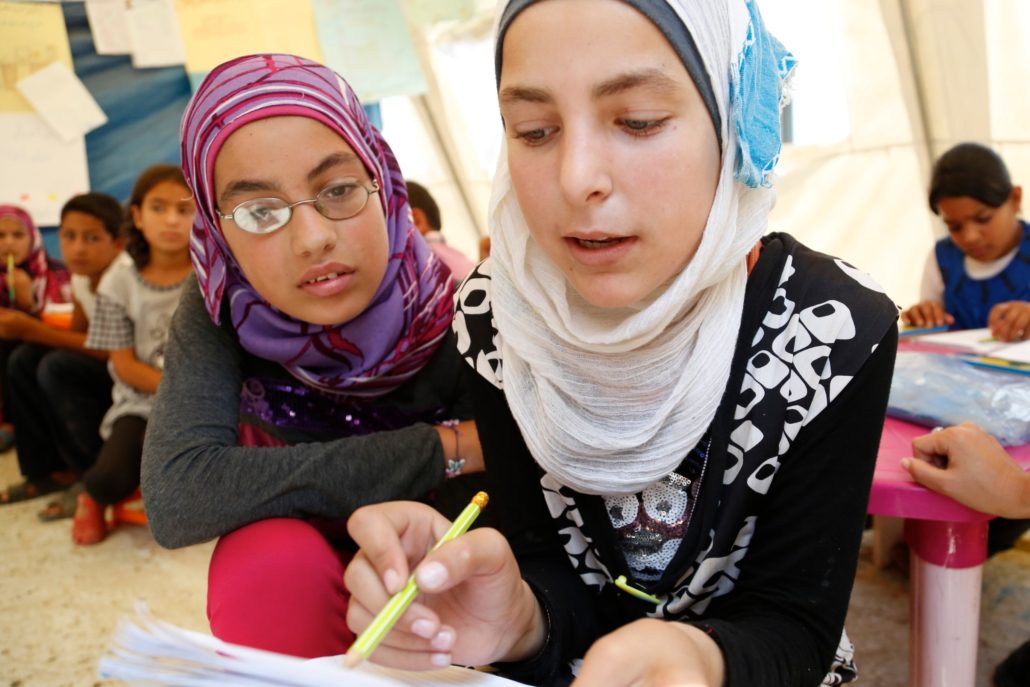
Education in Syrian Tent Cities
2020 marks the 10th year of the ongoing conflict in Syria. A war that began with the Arab Spring uprising in 2011, the Syrian Civil War has accounted for over 400,000 deaths and the displacement of more than 12 million people. Amidst this conflict, NGOs are working to expand children’s access to education in Syrian tent cities.

The Crisis in Syria

Fighting between Bashar Al-Assad’s authoritarian regime and Syrian separatist groups increased the prevalence of terrorist organizations. Groups, including ISIS, are using this ongoing conflict to strengthen their power in the region. Caught in the crossfire are innocent civilians. Pushed out of their homes, they have been forced to find refuge elsewhere. Thousands of Syrian refugees are now located in neighboring countries, including Lebanon, Turkey, Iraq and Egypt.

According to World Vision, a nonprofit dedicated to lifting children out of poverty, over half of Syrian refugees are children. Bombings limit children’s access to education and healthcare, and the devastation is tearing families apart. Consequently, refugees are relying on resources within refugee camps, also known as “tent cities.”

Problems in Syrian Tent Cities

Syrian tent cities are loose constructions of temporary shelters made from the limited resources refugees can find, including boxes, bed sheets, blankets and plastics. With minimal safety precautions, resources and sanitation practices, tent cities are insecure and put refugees at risk.

Additionally, high levels of displacement exacerbate the financial plight of families, especially for children. UNICEF reports that 85 percent of children are living below the poverty line. According to the World Bank, Syrian children have low levels of enrollment and are especially at risk of succumbing to the numerous pressures involved with poverty. However, local NGOs are working to provide quality education in Syrian tent cities.

NGOs Support Education in Syrian Tent Cities

Many NGOs are continuing to expand throughout Syria and neighboring regions to provide educational assistance to children in tent cities.

  1. Nowell’s Mission: In 2014, Nowell Sukkar established Nowell’s Mission, a nonprofit that raises money to provide education to Syrian refugees living in Lebanon and Jordan. Sukkar and volunteers travel to Syrian refugee camps, providing basic education to children, including training in literacy.
  2. Children on the Edge: Another NGO, Children on the Edge, was established in 2000 by UNESCO to work with traumatized children and youth post-conflict in Timor-Leste. In 2004, when Children on the Edge became an independently registered charity, they expanded their support to include a wide range of children’s advocacy work across the world. These projects include building refugee education camps in Lebanon, the country with the largest Syrian refugee population per capita. These education camps have served over 300 children, providing education to children in their own dialect. Subjects include math, science, history, geography and English.
  3. Karam: Karam, the Arabic word for generous, is the name of one NGO, created in 2007. Their mission is to provide support to people across the globe, through education, employment and leadership training. One of their initiatives, operating out of Turkey, raises funds to rebuild schools and to provide Syrian children with opportunities in higher education.

While these are just a few NGOs helping support and rebuild education for Syrian refugee children, they represent the diverse ways children’s education can be improved. Whether it’s funding teachers, building schools or providing access to higher-education opportunities, initiatives to improve education in Syrian tent cities are helping children rebuild after tragedy.


With new global humanitarian problems emerging every day, it’s easy to forget the children impacted by sustained crises – like the one in Syria – who are now facing the long-term effects of insufferable war. By raising awareness, we can change the lives of Syrian children and provide them with the education they deserve.

– Aly Hill
Photo: Flickr

April 15, 2020
https://borgenproject.org/wp-content/uploads/borgen-project-logo.svg 0 0 Lynsey Alexander https://borgenproject.org/wp-content/uploads/borgen-project-logo.svg Lynsey Alexander2020-04-15 10:30:222020-04-15 09:36:59Education in Syrian Tent Cities: NGO Initiatives
Global Poverty, Refugees

Ending Violence in Burkina Faso

Ending Violence in Burkina Faso
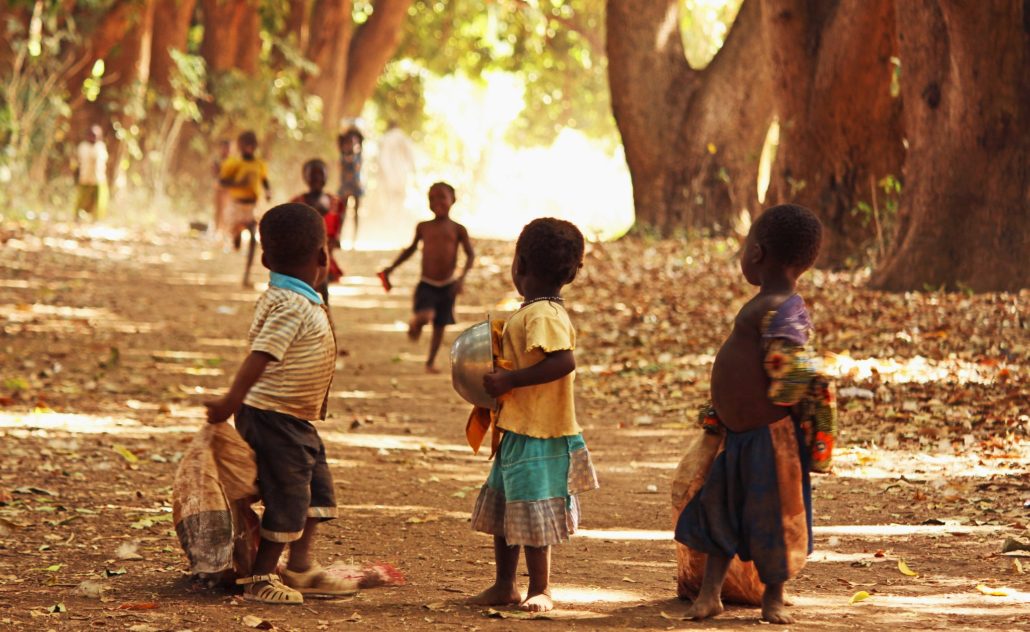
Burkina Faso is a small African nation that lies between the more well-known countries Ghana and Mali. Like many other underprivileged nations, Burkina Faso experiences excessive rates of violence. Fortunately, humanitarian organizations noticed and began efforts to calm the violence. Keep reading to find out who and what organizations are ending violence in Burkina Faso.

The Statistics

In Burkina Faso, the United Nations’ report reveals the harsh reality that citizens live through. The homicide rate is 9.8 per 100,000 people. The homicide rate for men is 14.1 out of 100,000 people, while the homicide rate for females is 5.2. In addition, with a population of 20,321,378, the total number of homicides for 2019 was 1,991 deaths. For comparison, the homicide rate in the United States in 2018 was 5.0 people per 100,000 people, which is nearly 50 percent less Burkina Faso’s homicide rate. These astronomical homicide rates are why ending violence in Burkina Faso is a crucial issue.

How Violence Affects the Nation

The extreme homicide rate in Burkina Faso is detrimental to society, but in many more ways than just an increased death toll. Between January 26 and February 15, 2020, approximately 150,000 people fled their villages in the Sahel region. In addition, United Nations News reported that nearly 4,000 people flee their communities every day. The violence in Burkina Faso forces communities from their villages. Additionally, the violence forced over 2,000 schools to close due to threats toward education personnel, military usurping school facilities and assaults directed at the schools themselves in February 2019. As a result, about 133,333 children had their education interrupted, and 3,050 teachers became jobless.

Who is Ending Violence in Burkina Faso?

Fortunately, the violence in Burkina Faso is not going unnoticed. Many different humanitarian organizations are working toward ending violence in Burkina Faso. The United Nations High Commissioner for Refugees (UNHCR) is a branch of the United Nations that focuses on the well-being of refugees, people forcibly removed from their communities and stateless people. The UNHCR is working to provide safe zones for fleeing individuals. Its distinct focus is relocating the elderly, children and single women.


The United Nations Children Fund (UNICEF) works to decrease the impact of the closure of schools on the youth’s education. Additionally, UNICEF works toward this goal by implementing innovative learning methods. For example, radio learning is a way that UNICEF works toward ending violence in Burkina Faso. Radio learning is an inventive way to provide education to the many children who have to flee their homes because of violence. The radio lessons follow a basis of literacy and arithmetic.
 Moreover, UNICEF works with education and government officials to bring a resolution to the table. The organization works on the ground to assist teachers in resolving the threat of violence to their schools. Also, UNICEF provides psychological support to students and teachers who have become emotionally scarred from the harsh reality they witness daily.


– Cleveland Lewis
Photo: Flickr

April 3, 2020
https://borgenproject.org/wp-content/uploads/borgen-project-logo.svg 0 0 Lynsey Alexander https://borgenproject.org/wp-content/uploads/borgen-project-logo.svg Lynsey Alexander2020-04-03 06:00:102020-04-16 09:37:24Ending Violence in Burkina Faso
Global Poverty, Refugees, Water, Water Quality, Water Sanitation

9 Facts About the Refugee Water Crisis

Refugee Water Crisis
It’s no secret that there is a refugee crisis. In fact, the United Nations High Commissioner of Refugees (UNHCR) stated that as of January 2019, 70.8 million people were refugees. To put that into perspective, one in every eight persons is either in transit, seeking asylum or living in camps. Roughly 2.6 million reside in managed camps, and this has created an all-new challenge: a refugee water crisis.

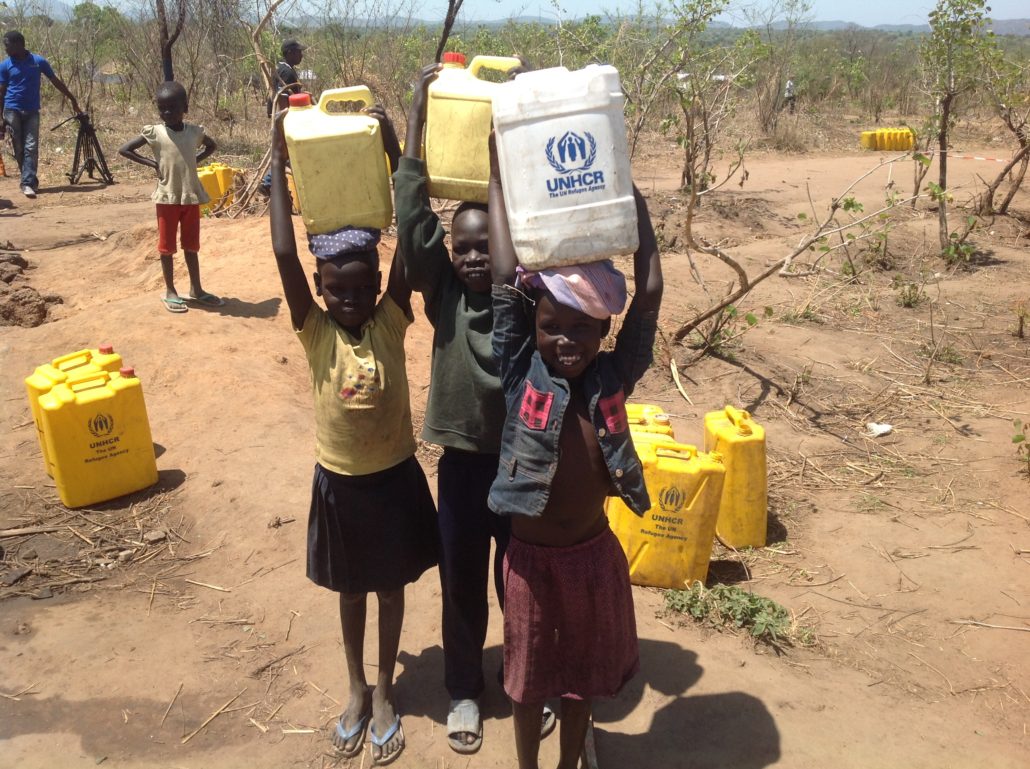
UNHCR estimates that more than half of the world’s refugee camps do not have enough water to fulfill the recommended 20 liters per person per day. There are a number of health risks associated with lack of water. To address them, WASH has intervened with several programs.

9 Facts About the Refugee Water Crisis

  1. Global Water, Sanitation and Hygiene (WASH) is a CDC program designed to improve access to healthy water, sanitation practices and hygiene. Ultimately, they strive for long-term solutions that will reduce poverty and improve the health and socio-economic development of everyone. WASH has impacted countless refugee camps and bettered the water crisis for many.
  2. Nyamithuthu Refugee Camp in Malawi received hygiene education training and successfully implemented the “improved bucket” initiative. Water does not have to be contaminated from its source to pose a threat to close-corridor inhabitants. Infection can spread from touching and storing water in improperly sanitized containers. To control any possible spread of disease, WASH provided 20-liter water buckets with constraining lids and water spouts to limit secondhand contamination.
  3. Though formal camps typically have better WASH services, they are not always up to ‘safely managed’ standards. These standards include the limitation of shared facilities and on-premise water sources with water sources less than 200 meters (656 feet) away. For example, there are 11 refugee camps managed in Uganda and only 43 percent of the inhabitants have access to water less than 200 meters away. The physical burden of carrying 80 liters of water from a well that far uses one-sixth of rationed calories for the day.
  4. The refugee water crisis inhibits proper sanitation practices, which is the first defense against communicable diseases. Roughly 30 percent of managed camps have inadequate waste disposal. Latrines shared between three or more families increase the risk for cholera outbreaks which are transmitted through fecal-oral contact. Several refugee camps in Bangladesh with sanitation facilities were three times less likely to have cholera outbreaks than camps without them.
  5. Undocumented refugees and migrants in transit have particular difficulty in finding basic water and sanitation services. They risk detection by authorities and tend to revert to unsafe and often dangerous methods to obtain water. For example, undocumented refugees on the French-Italian border use the river as a water source, toilet and place to cook in order to avoid detection by the Red Cross.
  6. Low-income and undocumented refugees are also more likely to live in informal urban areas with non-standardized infrastructures. On the US/Mexico border, Matamoros, Mexico, has an estimated 50,000 migrants settled in an unofficial refugee camp. Sources reveal there are less than 10 portable toilets, no running water and only two wooden showers located in the woods. Refugees use river water to bathe, cook, drink and clean laundry. The majority of the provisions (water and food parcels) are given through religious organizations, immigration activists and individual donors.
  7. The United Nations International Children’s Emergency Fund (UNICEF) addressed this humanitarian crisis through the Protocol for the Protection of Migrant Children. The Protocol ensures all necessary actions are taken to protect the rights of migrant children including their access to water.
  8. The true nature of the refugee water crisis is underrepresented, leaving water provisions inadequately rationed. WASH services are estimated based on census and survey data, excluding refugees in transit or informal settings. Undocumented refugees have no chance of consideration with this form of data collection, meaning that the crisis is more serious than the data indicates.
  9. The 2030 Agenda for Sustainable Development details several plausible and lasting solutions to address and end the water crisis, specifically initiating and protecting policies in support of universal and inclusive water services. It also includes recommendations for governments and international agencies to strengthen water governance in correlation with migration.

Access to water is a human right protected under Article 25 of the Universal Declaration of Human Rights. The refugee water crisis threatens the lives of every migrant already running for their lives. Continued efforts from WASH, government agencies and humanitarian organizations are crucial to ending this crisis.

– Marissa Taylor
Photo: Flickr

March 18, 2020
https://borgenproject.org/wp-content/uploads/borgen-project-logo.svg 0 0 Kim Thelwell https://borgenproject.org/wp-content/uploads/borgen-project-logo.svg Kim Thelwell2020-03-18 10:00:552024-05-29 23:15:119 Facts About the Refugee Water Crisis
Development, Global Poverty, Health, Refugees

The Mental Health of Syrian Refugees

Mental Health for Syrian Refugees
Since the Syrian crisis in 2011, the displaced population has migrated to neighboring countries such as Turkey, Lebanon and Jordan. Currently, 50 percent of the population are children without parents. Mental health issues have risen in the Syrian refugee community since then and the world has stepped up in treating the debilitating aspects of suffering traumatic events. This article highlights the improvements in the mental health of Syrian refugees.

Challenge and Impacts

Refugees that have to leave their homes and migrate elsewhere face many obstacles and challenges. Post-migration challenges often include cultural integration issues, loss of family and community support. Refugees also experience discrimination, loneliness, boredom and fear, and children can also experience disruption. Circumstances uproot them from friends and family and cut their education short. Refugees experience barriers in gaining meaningful employment and they face adverse political climates.

Depression, anxiety and post-traumatic stress disorders (PTSD) are all effects of exposure to traumatic events. Traumatic events for Syrian refugees include war terrorist attacks, kidnapping, torture and rape. Meta-analysis all show a positive association between war trauma and the effects of certain mental health disorders. For example, a study examining the mental health of post-war survivors from Bosnia, Croatia and Kosovo showed PTSD as the most common psychological complication.

Post-Traumatic Stress Disorder is a debilitating disorder that intrudes on the patient’s mind. It also intrudes on relationships and the patient’s ability to live a quality life. Thoughts of suicide and/or avoidance are also symptoms of PTSD.

A study of Syrian trauma and PTSD participants found that those between the age of 18 and 65 have experienced zero to nine traumatic events. Of those, 33.5 percent experienced PTSD and 43.9 percent depression. Another study in Lebanon showed that 35.4 percent of Syrian refugees will experience a lifetime prevalence of PTSD.

According to the United Nations High Commissions, 65.6 million people worldwide are “persons of concern.” That total includes 22.5 million termed “refugees” and several other millions termed “asylum seekers” or “internally displaced persons.” Survivors of torture account for 35 percent.

Health Care and Integrated Care

The National Institute of Mental Health identifies integrated care as primary care and mental health care; cohesive and practical. Primary care practitioners recommend conducting a thorough history check of any exposure to or experience of traumatic events. Health care professionals must be able to effectively address mental health issues. Barriers have long been the cause of mental health issues left untreated. Such barriers include communication, lack of health practitioners to patients in need, the physical distance patients must travel and the stigma of having the classification of “crazy.”

Treatments and Evidence-Based Interventions for Refugees

There have been several test instruments that provided significant results in the treatment of mental health as well as scalable interventions. Currently, the only FDA-approved drug both abroad and in the U.S. are paroxetine and sertraline; both selective serotonin reuptake inhibitors (SSRI). Other instruments include the Narrative Exposure Therapy, Eye Movement Desensitization and Reprocessing. Many found EMDR to be successful in reducing episodes of PTSD and depression in a study with Kilis refugees.

In 2008, the World Health Organization launched the Mental Health Gap Action Programme (mhGAP). This endeavor focused on assisting low and middle-income countries in providing effective mental health treatments. Inventions such as Task-shifting, E-Mental Health and PM+ fall under the mhGAP umbrella. First, the task-shifting initiative aims at alleviating the pressure on a limited number of specialized practitioners. Task-shifting shifts duties and tasks to other medical practitioners which otherwise highly-trained specialists would perform. This initiative is cost-effective and proves to be a promising alternative. Refugees can receive treatment in primary and community care locations instead of specialized facilities. Meanwhile, E-Mental Health and PM+ aim to address multiple mental health symptoms at once, while allowing treatment to remain private and within reach to Syrian refugees. Finally, the EU STRENGTHS, also created under the mhGAP umbrella, strives to improve responsiveness in times of refugees affected by disaster and conflict.

Many Syrian refugees continue to face obstacles and barriers, however, there is hope. Initiatives such as those mentioned in this article provide a promising outlook for the continued mental health improvements of Syrian refugees.

– Michelle White
Photo: Flickr

March 13, 2020
https://borgenproject.org/wp-content/uploads/borgen-project-logo.svg 0 0 Lynsey Alexander https://borgenproject.org/wp-content/uploads/borgen-project-logo.svg Lynsey Alexander2020-03-13 01:30:002024-05-29 23:14:58The Mental Health of Syrian Refugees
Global Poverty, Refugees

Examining 10 Myths About Refugees

10 Myths about RefugeesRefugees have long been a much-debated topic in the United States and Europe. As the internet and media technology grows, so does the potential for the rapid spread of false information. It is imperative to separate fear-driven inaccuracies from tangible facts in order to dissolve inaccurate myths about refugees. Here are 10 myths about refugees.

10 Myths About Refugees

  1. Refugees pose a health risk to U.S. citizens. Refugees’ medical problems usually arise from a lack of access to appropriate medical care in their home country. Other refugees may also contract illnesses while running from persecution. Either way, preventative measures are readily available. Medical treatment in first-asylum camps and in refugee processing centers are two examples of these measures.
  2. The U.S. does not take sufficient preventative measures to make sure terrorists posing as refugees do not enter the country. The refugee screening process is one of the most rigorous screenings for people entering the U.S. The entire process takes approximately 18 to 24 months and involves collaboration with a number of security agencies, including the Department of Homeland Security and the FBI. The U.S. considers fewer than 1 percent of incoming refugees for residency in the country.
  3. Smartphones are not a necessity for refugees. Social connectivity across the internet platform is a vital part of job networking, maintaining finances and staying up-to-date with the news. Although refugees should have access to smartphones, less than 50 percent of them have access due to the inflated price rates for smartphone plans and maintenance.
  4. Refugees and migrants are the same. Refugees and migrants are distinctly different groups of people. Refugees are people who must leave their homes and flee for safety because of life-threatening internal conflict happening within their homeland. Migrants are people who voluntarily leave their homeland in order to search for better job opportunities and living arrangements.
  5. Refugees take away jobs from local communities. Unemployment exists independently from refugees seeking asylum in other countries. In fact, migrants and refugees have helped increase the workforce in the U.S. by 47 percent over the past 10 years. This is because they tend to take jobs that most people are not willing to do, thus filling in gaps in the job market.
  6. Most refugees seeking asylum are young men. Approximately 75 percent of incoming Syrian refugees are women and children, according to UNHCR. Additionally, more than half of the refugee population entering Europe to seek aid are women and children.
  7. Refugees are all Muslims. Although Muslims do fall into the mix of refugees that are fleeing war and persecution, not all refugees are Muslims. Only 24,768 refugees who arrived between January 2016 and August 2016 were Muslim, according to the U.S. Office of Admissions Refugee Processing Center. More than 30,000 refugees were either Christian or of another religious faith.
  8. All refugees that come to the U.S. lead financially comfortable lives. This varies substantially based on their origins and other important factors. For example, Russian and Iranian refugees may come to the U.S with better education and income than the U.S. average. On the other hand, fewer than 60 percent of Liberian and Somali refugees that arrived were literate in their native language.
  9. Refugees are exempt from paying taxes. Refugees have an obligation to pay employment, property, sales and other types of taxes just as every U.S. citizen. However, they cannot vote.
  10. History is repeating itself and the inevitable is bound to happen, no matter what people try to do to prevent mass persecutions. Refugee crises like these stir up fears that a travesty could occur in the near future. People should use education about history should as a motivator to take preventative measures to ensure that such an attack on human rights may never happen again. Displacement could be a sign of dictatorships forming, but through international unity and intervention, preventing such formations is possible.

The inaccuracy of these 10 myths about refugees can be harmful to their integration into new countries like the U.S. With further understanding and knowledge, however, their refugees’ transition into a new life should be much easier.

– Lucia Elmi
Photo: Flickr

February 29, 2020
https://borgenproject.org/wp-content/uploads/borgen-project-logo.svg 0 0 Lynsey Alexander https://borgenproject.org/wp-content/uploads/borgen-project-logo.svg Lynsey Alexander2020-02-29 07:30:262024-05-29 23:14:52Examining 10 Myths About Refugees
Global Poverty, Refugees

Complex Problems with Asylum in the U.S.

Complex Problems with Asylum in the U.S.

It is no secret that the U.S. immigration system is broken. With thousands of immigrants seeking asylum in the U.S., Customs and Border Protection (CBP) is detaining them at the border. CBP has effectively jailed immigrant children in detention camps. There are somewhat secretive limits on asylum applications. In order to fix a system, it is necessary to first understand its complexities. The U.S. immigration structure as a whole is a huge and complex system that cannot be simplified into one article. This article will discuss the asylum process and specific areas that have begun to undermine asylum in the U.S.

What is the asylum process?

The U.S. Citizenship and Immigration Services (USCIS) website defines asylum applicants as people who are “seeking protection because they have suffered persecution or fear that they will suffer persecution due to race, religion, nationality, membership in a particular social group or political opinion.” The process begins after an immigrant enters the U.S. either under a different status or as an asylum applicant. An immigrant seeking asylum is required to file a form with USCIS  within one year of entering the country. They must provide extensive evidence that the applicant has a credible fear of returning to his or her home country.

As per regulation, applicants for asylum in the U.S. are able to make a claim at the U.S. border crossing or while they are in the custody of the Department of Homeland Security (DHS), which includes custody with Immigration Customs Enforcement (ICE) or Customs and Border Protection (CBP). In fact, there is no way to request asylum in advance. Olga Byrne, Director of Immigration for the non-profit International Rescue Committee, confirmed that “There’s no way to ask for a visa or any type of authorization in advance for the purpose of seeking asylum. You just have to show up.”

After arriving at the border and going through an initial asylum interview. The interviewer then determines whether the applicant’s fear is credible. If the interviewer determines that there is a credible fear, then the applicant is released and given a court date to plead their case before an immigration judge in addition to filing the USCIS form. If it is found not credible, DHS begins deportation proceedings, though the applicant does have the option of requesting that his or her case be heard by an immigration judge.

What are the immediate problems?

The first and most immediate issue is the lack of legal counsel. The government does not provide counsel to immigrants going through the asylum process. Navigating the U.S. legal system can be difficult for anyone, let alone an asylum seeker that may or may not have full command of the English language. Having an attorney makes a significant difference. A 2016 study by Syracuse University found that having representation increases an applicant’s chances of approval for an asylum case by 40 percent.

In the same study, researchers found that 90 percent of claims for asylum in the U.S. without representation are ultimately denied. This is partly because the burden of proof is entirely on the applicant to show to the courts and USCIS that he or she is eligible under the regulations. This can be a difficult prospect for someone who does may struggle with the language or lacks have access to documents containing regulations and applicable evidence while detained.

The second issue is immense pressure to deny cases. Former immigration judge Jeffry S. Chase confirms that immigration judges are assigned quotas for cases each year. Every day, each judge sees a dashboard of their statistics with a green/yellow/red layout to show them whether they are getting through the appropriate amount of cases each day. Though the quotas are meant to help keep cases moving forward, in reality, they push judges to deny cases since denials go faster. Pushing through cases means that applicants and attorneys do not have time to build the record of evidence and ultimately build their case.

What can people do to help?

There are multiple organizations that provide pro bono representation to asylees. The Immigration Justice Campaign is an organization devoted to providing due process for non-U.S. citizens. Another organization is the American Association of Immigration Lawyers’ pro bono project, which provides pro bono immigration counsel to vulnerable populations such as asylum seekers.

For long-term solutions, it is important that people continually contact their representatives about issues in immigration. One can support immigration reform, such as getting rid of judge quotas or providing those seeking asylum in the U.S. with free legal counsel. Government employees generally are not allowed to disclose any information about their work nor are they allowed to speak publically about what goes on behind the scenes at USCIS, DHS, or similar governmental organizations, but that does not mean that they do not care. There are people in government who want to help, but they need citizens to speak up and speak out against unfair immigration policies.

The immigration system as a whole has problems, but they are not irreversible. The asylum process is currently complicated and difficult, but it does not have to be that way. With the right amount of political activism from U.S. citizens and cooperation, change is possible.

– Melanie Rasmussen
Photo: Flickr

January 23, 2020
https://borgenproject.org/wp-content/uploads/borgen-project-logo.svg 0 0 Jennifer Philipp https://borgenproject.org/wp-content/uploads/borgen-project-logo.svg Jennifer Philipp2020-01-23 07:30:402020-07-16 21:05:52Complex Problems with Asylum in the U.S.
Education, Global Poverty, Refugees

10 Facts About the Importance of Primary Education

Importance of Primary EducationOf all the resources that may cause enrichment of a nation, none are as valuable as the cognitive attainments of its population. The issue of access to primary education remains a critical one for many nations, particularly those in the developing world. Access to primary education and the impediments to its universalization may determine a nation’s trajectory for many years. Below are 10 facts about the importance of primary education.

10 Facts About the Importance of Primary Education

  1. Primary Education Consequences: Major life-long consequences accrue from access to primary education. The cumulative nature of the learning process, whether in literacy or numeracy, requires the early internalization of basic abstractions. Without this process at a young age, children fall behind in the trajectory of cognitive development and fail to reach their potential. Moreover, primary educational access facilitates the identification of, and assistance to, both gifted and struggling young minds.
  2. Nations’ Development: A nation’s development relies considerably on the access of its population to educational institutions. Access to primary education, regardless of class or caste or income, levels the social playing field. Gender equality, another significant marker of national development, improves alongside the universalization of access to educational institutions, including primary schools.
  3. Refugee Children: According to the United Nations, roughly 39 percent of refugee children across the globe do not receive a primary school education. This enrollment statistic contrasts sharply with that of non-refugee children, with 92 percent receiving primary school education. From 2017 to 2018, the number of unenrolled primary-school-age refugee children rose to a total of four million.
  4. Teachers: UNESCO’s Institute for Statistics calculates that ensuring primary education access for all requires roughly 24.4 million more primary school teachers. Sub-Saharan Africa suffers a scarcity of primary school teachers in more than 70 percent of its constituent nation-states. South Asia falls directly behind Sub-Saharan Africa in its primary school teacher scarcity crisis, requiring approximately four million more teachers by 2030 to attain the goal of universal primary education.
  5. Disabled Children: A UNESCO study of 37 countries determined that children with disabilities face a greater likelihood than their non-disabled peers of total exclusion from primary school and are more likely to experience fewer years enrolled in school and suffer major literacy deficits. These disadvantages are more likely to afflict disabled girls, thus sharpening gender asymmetries. Of the studied countries, Cambodia exhibited the most dramatic gap between disabled students and their peers, with 57 percent of the former unenrolled compared to 7 percent of the latter.
  6. Gender Parity Improvements: Data suggests improvements in gender parity in access to primary education. Sub-Saharan Africa features a 2 percent gap between the genders in non-delayed access to primary education, with 29 percent of girls unenrolled compared to 27 percent of boys. However, of children two or more years above the standard enrollment age, girls remain at a disadvantage compared to boys, attesting to the persistent influence of gender expectations on access to primary education.
  7. Violence and Exploitation: Children deprived of access to primary education risk a greater likelihood of suffering violence and exploitation. Where educational deprivation results from conflict or natural catastrophe, the danger of child trafficking intensifies. Conflict and natural disasters impeded educational access for approximately 39 million girls in 2015. As girls face a greater likelihood of impeded educational access than boys in conflict-ridden or disaster-affected regions, girls likewise face an increased risk of child trafficking out of proportion with their population percentage.
  8. Education Cannot Wait (ECW): On December 11, 2019, Education Cannot Wait (ECW) announced a $64 million educational funding initiative in the conflict-ridden countries of Chad, Ethiopia, South Sudan and Syria. Though targeting affected youth of all backgrounds, this project places particular focus on girls, disabled children and refugees. This initiative will facilitate teacher training and student enrollment in vulnerable regions. Ultimately, this project anticipates the mobilization of governments, NGOs and civilians for the growth and maintenance of secure and effective educational sectors.
  9. The LEGO Foundation: The LEGO Foundation announced a grant of $100 million on December 10, 2019, for an early learning solutions initiative targeting crisis-affected groups in Ethiopia and Uganda. Play-oriented learning programs will improve the skill sets of both primary-school-aged and pre-school children. These play-oriented learning strategies assist children in surmounting trauma that may otherwise impede their scholastic potential. Roughly 800,000 children will benefit from this project.
  10. The Global Partnership for Education: December 10, 2019, witnessed the grant of $100 million by The Global Partnership for Education for educational initiatives across Asia and Africa. Burkina Faso, for instance, plans investment of its four-year GPE grant of $21 million toward improving primary school enrollment and developing pedagogical infrastructure. The investment of $21 million in Somalia’s Somaliland region seeks to rectify gender imparity in access to primary education.

Access to primary education provides the foundation upon which the talents of a nation’s youth may grow. Moreover, there exists a strong relationship between primary education and the promotion of such values as gender equality and social mobility. Although an indispensable institution in the contemporary age, crises both man-made and natural threaten primary education across continents. Fortunately, initiatives involving NGOs and governments promise to overcome these impediments, the importance of primary education weighs more as a right rather than a mere privilege.

– Philip Daniel Glass
Photo: Flickr

January 12, 2020
https://borgenproject.org/wp-content/uploads/borgen-project-logo.svg 0 0 Kim Thelwell https://borgenproject.org/wp-content/uploads/borgen-project-logo.svg Kim Thelwell2020-01-12 11:30:092024-12-13 18:02:0010 Facts About the Importance of Primary Education
Homelessness, Refugees

Homelessness in Germany On the Rise

Homelessness in Germany
The latest stats by the Federal Association of Homelessness Help (BAGW) show that there were 678,000 homeless people in Germany in 2018. This figure marked an increase of more than 4 percent between 2017 and 2018. The majority of these people sleep in emergency quarters, while 41,000 sleep on the streets.

Causes of Homelessness

In Germany, there are several factors that contribute to homelessness. One is the decreased number of social housing units. Social housing units have reduced by 60 percent since 1990 as the government continues to sell its stock of housing units to private investors. Additionally, there has been a decrease in affordable housing, particularly in large cities and urban centers. Studies show that housing costs in Germany are among the highest in Europe. This affects those with incomes below the poverty threshold, as well as young people (ages 18-24). Munich is reported to have the highest prices for both renting and buying houses in Germany. Berlin, which is said to be at the center of housing shortages in Germany, could account for about 20 percent of the country’s homeless.

Finally, the increase in immigrants has greatly contributed to the rise of homelessness in Germany. The immigrants are from other European Union countries, particularly Eastern European, and are also refugees and asylum seekers. It is estimated that 440,000 of the homeless are migrants. The number of homeless people with migrant backgrounds rose by 5.9 percent compared to a 1.2 percent increase for those without a migrant background.

Housing Rights in Germany

In large cities and urban centers, such as Berlin and Munich, the homeless set up makeshift tent camps in parks and other open spaces. During the winter, in an attempt to avoid the adverse winter conditions, they relocate to U-Bahn (underground railway) stations. Law requires German municipalities to provide basic emergency accommodation to those at risk of homelessness. Various municipalities and NGOs are providing temporary and emergency housing services.

In addition, the Social Code in Germany stipulates that the risk of losing a home entitles the owner to some form of assistance. Covered by the municipalities, this could be a loan or allowance for rental debts. Of the 16 German states, only four of them have the right to housing enshrined in their state constitutions including Bavaria, Berlin, Brandenburg and Bremen. However, regulation throughout the country still establishes the right.

Current Efforts

In 2018, the German Chancellor Angela Merkel pledged to spend €6.85 billion on solutions to homelessness. She announced that the federal government would aim to build 1.5 million new housing units and 100,000 new social housing units by 2021. There are also more immediate relief efforts that individuals and German cities provided. For example, the city of Berlin is offering a warm hall in Kreuzberg as an alternative to the U-Bahn stations the homeless would stay in during the winter. Entrepreneur Matthias Müller is doing his part to help the homeless in Germany by introducing a shower caravan in Berlin. Matthias transformed a bus into the shower caravan, which is a unit with a sink, shower and toilet so that homeless women can maintain personal hygiene. The caravan is also accessible to people with disabilities.

Solutions

BAGW estimates that Germany needs 200,000 new affordable housing units each year to manage homelessness. The federal government, various municipalities and NGOs could also work together to emulate Finland’s Housing First approach. In this method, the goal is not to have temporary or emergency accommodation, but instead, permanent housing and needs-based support. This way, instead of just managing homelessness, Germany could end it completely.

– Sophia Wanyonyi
Photo: Flickr

January 5, 2020
https://borgenproject.org/wp-content/uploads/borgen-project-logo.svg 0 0 Kim Thelwell https://borgenproject.org/wp-content/uploads/borgen-project-logo.svg Kim Thelwell2020-01-05 07:30:152024-05-29 23:14:24Homelessness in Germany On the Rise
Aid, Global Poverty, Refugees

7 Democratic Candidates on the Refugee Crisis

refugee crisisThe question regarding what should be done about the refugee crisis is currently one of the most heated debates in Congress. But, where does each Democratic Candidate stand on the refugee crisis? Here are the Democratic candidates on immigration.

Joe Biden

Former U.S. Vice President, Joe Biden, is primarily focused on addressing the Southern border crisis by admitting more refugees and asylum-seekers, particularly from Central America. When referring to refugees and immigrants Biden stated, “We could afford to take in a heartbeat another two million. The idea that a country of 330 million cannot afford people who are in desperate need and who are justifiably weak and fleeing depression is absolutely bizarre.”

Cory Booker

Senator Cory Booker of New Jersey similarly plans to expand pathways for refugees and asylum-seekers as well as to address the root causes of migration and the refugee crisis. Not only does Booker hope to increase the cap on refugees but also staffing at the border to assist with interviews and to improve in-country refugee processing. Additionally, Booker plans to investigate the root causes of migration through the lens of corruption, violence, poverty and climate change by creating a role in the State Department. He is committed to spending foreign aid in order to address the root causes of the refugee crisis.

Pete Buttigieg

Mayor Pete Buttigieg of South Bend, Indiana hopes to return the refugee admissions target to 110,000 or potentially more. Buttigieg believes letting in more refugees will “help grow our tax base and plug labor gaps as Americans age.” Buttigieg also wants to help other countries resettle refugees and integrate them into society so that resettlement will be mutually beneficial. Ultimately, Buttigieg hopes to change the discussion around immigrants and refugees. He stated on Twitter, “Immigrants and refugees are not a problem that we need to handle; they are an asset to our nation and an essential part of the fabric of this country—our policies must reflect that.”

Amy Klobuchar

The two primary plans Senator Amy Klobuchar of Minnesota has for addressing the refugee crisis are reinstating the 110,000 refugees cap while simultaneously increasing spending on foreign aid. In order to process this number of refugees, Klobuchar would reopen the International U.S. Citizenship and Immigration Services offices. Klobuchar would also accept more Muslim refugees into the country because she adamantly opposes the “Muslim Ban.” Klobuchar believes that a strengthened vetting process for visitors and refugees would eliminate any need for this ban. Additionally, Klobuchar plans to increase foreign aid and the State Department’s budget to address the current crisis and deter future crises by promoting global stability.

Bernie Sanders

Senator Bernie Sanders of Vermont has a platform of immigration reform that is “grounded in civil and human rights.” He plans to achieve these values by changing the treatment of individuals at the border, such as ending family separation, the detention of children at the border and the detention of asylum seekers while their applications are being processed. Sanders plans to end the United States’ for-profit detention centers entirely. Additionally, Sanders wants to support refugees globally by providing foreign aid to other host countries to create an international community committed to resettling refugees and ending the refugee crisis it created.

Elizabeth Warren

Senator Elizabeth Warren of Massachusetts has the most progressive target for resettlement. If elected, Warren aims to resettle 125,000 refugees in the U.S. in her first year in office and then at least 175,000 by the end of her first presidential term. She hopes to address the refugee crisis by providing foreign aid in Central America in order to stabilize this region. Warren plans to implement a system that would make it easier for asylum seekers to get a day in court. She has also stated she will reduce immigration detention for all immigrants crossing the border.

Andrew Yang

Entrepreneur Andrew Yang is most concerned with the crisis occurring in Venezuela. Yang wants to both support the Venezuelan people through humanitarian aid and through distributing foreign aid to the countries that are admitting massive numbers of Venezuelan refugees. Although Venezuela is Yang’s primary concern, he also plans to work with the entire international community in order to address the global refugee crisis. Yang believes that the U.S. should disengage in military efforts abroad attempting to promote peacekeeping because these efforts are causing more destabilization than peace.

There is a lot to consider when choosing who to vote for in the 2020 Presidential Election. However, the refugee crisis has certainly been a priority. There are currently 25.9 million refugees and 41.3 million internally displaced people throughout the world. The need for a president that understands the importance of diplomacy and foreign aid spending when it comes to addressing the refugee crisis is, therefore, imperative.

– Ariana Howard
Photo: Flickr

January 4, 2020
https://borgenproject.org/wp-content/uploads/borgen-project-logo.svg 0 0 Jennifer Philipp https://borgenproject.org/wp-content/uploads/borgen-project-logo.svg Jennifer Philipp2020-01-04 07:30:182024-05-29 23:12:297 Democratic Candidates on the Refugee Crisis
Advocacy, Global Poverty, Refugees

Albert Einstein’s Life as a Refugee

Albert Einstein's Life as a Refugee
Lauded for his array of riveting breakthroughs and accomplishments in physics, Albert Einstein became emblematic of brilliance in the modern world. His general Theory of Relativity continues to aid modern astronomy and has paved the way for new theories involving black holes and the physical origin of the universe. However, Einstein’s legacy does not solely comprise of his scientific achievements. Albert Einstein’s life as a refugee was arduous and many regard him as a humanitarian for his efforts to help the underprivileged.

Albert Einstein’s Origins

Albert Einstein was born in Germany in 1879 but renounced his German citizenship 17 years later due to his fondness for Swiss education. He began his work in physics in Switzerland but returned to Germany to work as a professor at the Prussian Academy of Sciences in 1914. A few short years later in 1921, Einstein won the Nobel Prize in physics for his work on the photoelectric effect. However, antisemitic harassment in Germany rose in the early months of 1932, and Einstein resigned from his professorship at the Prussian Academy for Sciences and relocated to Belgium.

How Albert Einstein Became a Refugee

In December 1932, Einstein and his wife visited the United States where he had secured a position at the Institute for Advanced Study in Princeton, New Jersey. Adolf Hitler rose to power in 1933 and unleashed a wave of antisemitism across the nation. The new government curbed the liberties of the Jewish people and they became prone to vicious attacks. Because of his fame as an accomplished Jewish physicist and the Third Reich accusing him of treason, Einstein became a target, especially when he traveled to Europe briefly in 1933. The Nazis burned his books and desecrated his property in Berlin. While he was initially unfazed, Einstein began to fear for his life and moved to the U.S. in the fall of 1933 and never visited Europe again.

After settling in Princeton, Einstein and his wife, Elsa, helped other refugees fleeing Nazi Germany apply for visas and advocated for their stay in the United States. Albert Einstein’s life as a refugee finally ended when he received citizenship in 1940, but his legacy lives on to this day.

Albert Einstein as a Humanitarian

Albert Einstein is one of the most prominent scientists to have ever walked the earth, but his accomplishments do not stop there. In 1933, the International Relief Association emerged at Einstein’s behest. A group of American academics, artists and politicians, including John Dewey and first lady Eleanor Roosevelt, came together to aid German Jews who were suffering at the hands of Adolf Hitler’s oppressive regime. Furthermore, Einstein was a staunch opponent of segregation, discrimination and the violation of human rights. He encouraged scientists to develop technology to help people, not destroy them. Following the atrocities of World War II, Einstein signed a document now known as the Russell-Einstein Manifesto that calls for nuclear disarmament and arms reduction in the world. Albert Einstein’s life as a refugee compelled him to predict that “The world will not be destroyed by those who do evil, but by those who watch them without doing anything.” Albert Einstein’s scientific successes and humanitarian efforts will echo throughout the world for generations to come.

– Jai Shah
Photo: Flickr

December 13, 2019
https://borgenproject.org/wp-content/uploads/borgen-project-logo.svg 0 0 Kim Thelwell https://borgenproject.org/wp-content/uploads/borgen-project-logo.svg Kim Thelwell2019-12-13 07:30:212019-12-12 12:15:51Albert Einstein’s Life as a Refugee
Page 21 of 53«‹1920212223›»

Get Smarter

  • Global Poverty 101
  • Global Poverty… The Good News
  • Global Poverty & U.S. Jobs
  • Global Poverty and National Security
  • Innovative Solutions to Poverty
  • Global Poverty & Aid FAQ’s
Search Search

Take Action

  • Call Congress
  • Email Congress
  • Donate
  • 30 Ways to Help
  • Volunteer Ops
  • Internships
  • Courses & Certificates
  • The Podcast
Borgen Project

“The Borgen Project is an incredible nonprofit organization that is addressing poverty and hunger and working towards ending them.”

-The Huffington Post

Inside The Borgen Project

  • Contact
  • About
  • Financials
  • President
  • Board of Directors
  • Board of Advisors

International Links

  • UK Email Parliament
  • UK Donate
  • Canada Email Parliament

Get Smarter

  • Global Poverty 101
  • Global Poverty… The Good News
  • Global Poverty & U.S. Jobs
  • Global Poverty and National Security
  • Innovative Solutions to Poverty
  • Global Poverty & Aid FAQ’s

Ways to Help

  • Call Congress
  • Email Congress
  • Donate
  • 30 Ways to Help
  • Volunteer Ops
  • Internships
  • Courses & Certificates
  • The Podcast
Scroll to top Scroll to top Scroll to top