• Link to X
  • Link to Facebook
  • Link to Instagram
  • Link to TikTok
  • Link to Youtube
  • About
    • About Us
      • President
      • Board of Directors
      • Board of Advisors
      • Financials
      • Our Methodology
      • Success Tracker
      • Contact
  • Act Now
    • 30 Ways to Help
      • Email Congress
      • Call Congress
      • Volunteer
      • Courses & Certificates
      • Be a Donor
    • Internships
      • In-Office Internships
      • Remote Internships
    • Legislation
      • Politics 101
  • The Blog
  • The Podcast
  • Magazine
  • Donate
  • Click to open the search input field Click to open the search input field Search
  • Menu Menu

Archive for category: Refugees

Global Poverty, Refugees

Poverty in Palestinian Refugee Camps

Poverty in Palestinian Refugee Camps
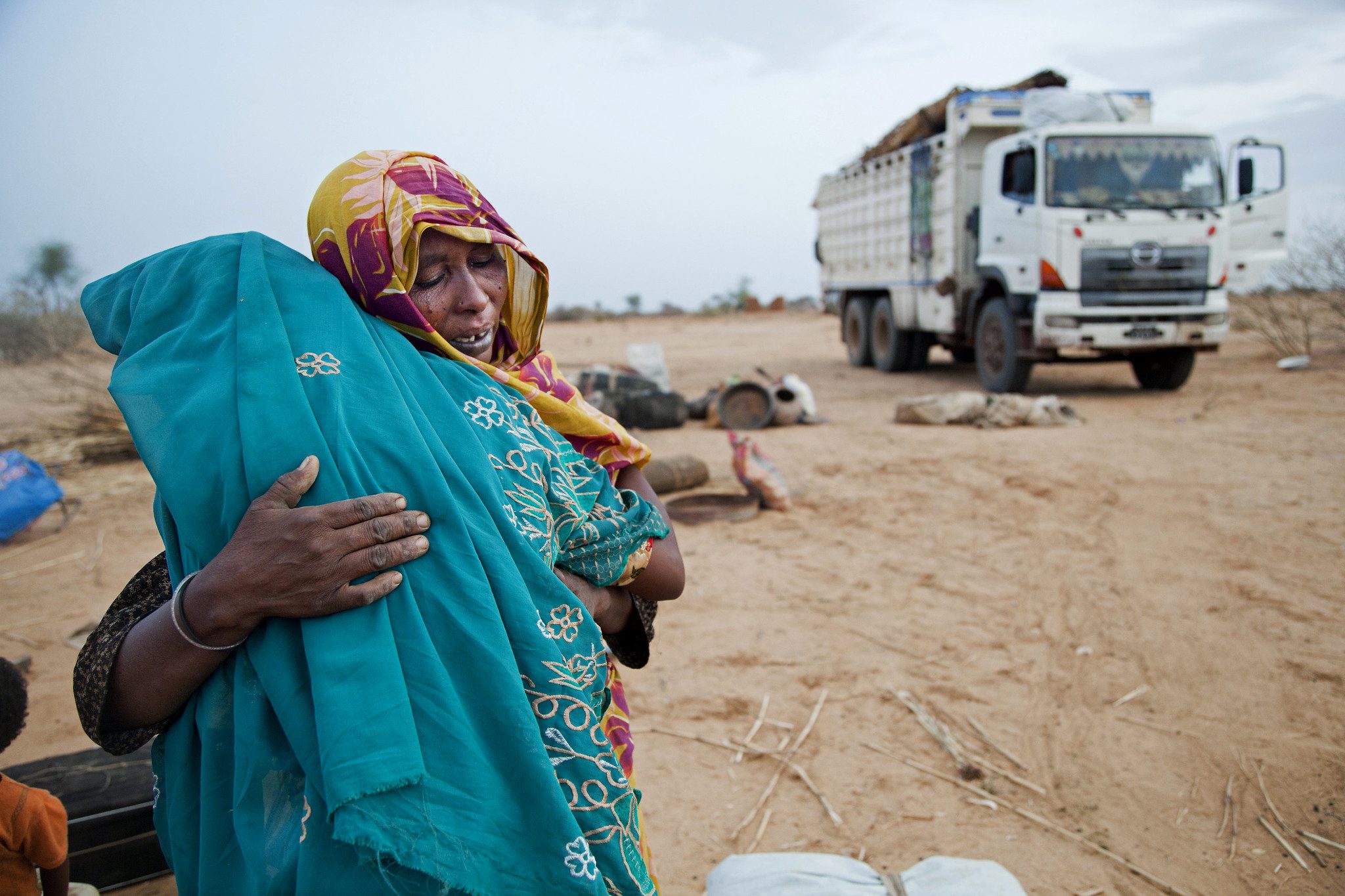
The first Arab-Israeli War in 1948 resulted in the mass, forced displacement of approximately 750,000 people throughout the Middle East, including in Jordan, Lebanon, Syria, the West Bank and Gaza. Today, over 5 million Palestinian refugees live in the region, where socio-economic issues, health conditions, food security, education and living conditions are all deteriorating, plunging refugees deeper into poverty. This article will discuss poverty in Palestinian refugee camps and what some are doing to alleviate the situation.

The Gaza Strip

There are 1.4 million Palestinian refugees in the Gaza Strip, and according to the Palestinian Central Bureau of Statistics (PCBS), the poverty rate increased to 53 percent by the end of 2017, from 38.8 percent in 2011. The poverty line in Palestine is at $4.60 per day to cover the minimum needs of a household, basic health care and education. Nonetheless, 656,000 people live in absolute poverty in Palestinian refugee camps in Gaza with less than $3.60 per day, which only suffices to cover food, clothing and shelter. This drastic increase in the poverty rate is due to several factors including the volatile nature of the economy due to the ongoing Israeli-Palestinian conflict, the Israeli blockade on land, air and sea since 2007, and the United States’ $300 million budget cut towards the United Nations Relief and Works Agency for Palestine Refugees in the Near East (UNRWA) in 2018.

Indeed, the drastic economic conditions not only increase food insecurity in Gaza due to the lack of economic access to food but also caused the average unemployment rate to rise above 50 percent in 2018, reaching one of the highest in the world. Moreover, the United States’ decision to cut $300 million from the UNRWA’s annual budget directly impacted education and schools in refugee camps. There is a shortage of staff in Gaza schools as the UNRWA and the Ministry of Education runs over two-thirds of them on double shifts, generating overcrowded schools and so impeding students’ learning and the level of education. The continuing blockade on Gaza affects health care as medical supplies are scarce and deficient, including medication for cancer and immunological diseases. All these factors have led to the impoverishment of Palestinian refugees in Gaza, leaving an estimated 80 percent dependent on international assistance.

Syria

There are 552,000 registered Palestinian refugees in Syria, however, since the start of the Syrian crisis in 2011, approximately 120,000 PRS have fled to neighboring countries like Lebanon and Jordan where they have an irregular status. The poverty rate among PRS is approximately 89 percent, including 9 percent living in extreme poverty in Palestinian refugee camps.

The UNRWA stepped up its activities in the nine official camps in Syria, as well as issued a Syria regional crisis emergency appeal in 2018 stating that 95 percent of Palestine refugees in Syria was in “critical need of sustained humanitarian assistance,” and improving PRS’ living conditions.

Lebanon

The legal restrictions that the Lebanese government imposed upon refugees combined with the country not being a signatory of the U.N. Refugee Convention (recognizing the legal obligations and basic rights of refugees), jeopardizes economic, political and social aspects of the lives of Palestinian refugees. Indeed, two-thirds (160,000 people) of the Palestinian refugees in Lebanon are either poor or extremely poor, which is the highest percentage of people living in poverty in Palestinian refugee camps.

Palestinian refugees face strong discriminatory labor laws; only 2 percent have an official work permit, 75 percent earn below the national minimum wage of $200 per month and 95 percent have no health insurance. Moreover, Palestinian refugees in Lebanon do not receive full citizenship and so suffer from limited access to public services, including public schools and Lebanon’s public health system. The UNRWA provides schools and medical facilities in the country’s 12 refugee camps, however, these suffer from understaffing and limited funds, and so do not suffice to secure decent education and health care for all Palestinian refugees. Besides, the Syrian conflict caused 30,000 Palestinian refugees to move to Lebanon, adding a new dimension to the existing issue. This reinforces the declining housing conditions in the overcrowded refugee camps which lack basic infrastructures and experience continuous electrical outages.

Jordan

Jordan hosts the largest amount of Palestinian refugees in the region with over 2 million registered people. Jordan is the only host country that grants full citizenship to Palestinian refugees, integrating them more into society. However, the 158,000 Palestinian refugees coming from the Gaza strip did not receive citizenship, limiting their rights in the country and making them more prone to poverty. In addition, 17,000 Palestinian refugees left Syria and entered Jordan during the Syrian conflict, of which 30 percent were highly vulnerable, according to the UNRWA. These refugees’ irregular or uncertain legal status in Jordan as Palestinian Refugees from Syria (PRS) exposes them to an insecure environment including difficulties to access government services. UNRWA is in dire need of funding and financial assistance in order to protect the most vulnerable Palestinian refugees living in Jordan.

Conclusion

UNRWA provides cash assistance to over 400,000 Palestinian refugees in one of the largest cash programs in the world, and it has deeply affected poverty levels among Palestinian refugees. Indeed, cash assistance decreased the number of Palestinian refugees living in absolute poverty (under $2 per day) from 90 percent to 74 percent in 2017. However, the lack of financial aid and assistance limits the UNRWA’s activities in refugee camps, and the ongoing state of conflict in the region prevents significant improvements from occurring.

– Andrea Duleux
Photo: Flickr

December 2, 2019
https://borgenproject.org/wp-content/uploads/borgen-project-logo.svg 0 0 Jennifer Philipp https://borgenproject.org/wp-content/uploads/borgen-project-logo.svg Jennifer Philipp2019-12-02 10:30:332024-05-29 23:14:38Poverty in Palestinian Refugee Camps
Global Poverty, Migration, Refugees

Safe and Voluntary Refugee Repatriation

Safe and Voluntary Refugee Repatriation
Despite the constant divisive debates about whether to welcome refugees, they have protection under international law by the 1951 refugee convention, a multilateral United Nations treaty. It defines who people can consider refugees and outlines their basic rights, including access to fair and efficient asylum procedures. Despite the ever-present debates about acceptance, very little of it has actually been to talk about what happens when countries refuse asylum seekers including the problem of ensuring safe and voluntary refugee repatriation rather than returning them to dangerous situations in their home countries.

Refugees in the US

A country must ensure that refugees live in safety and dignity while it is processing their claims, and safety and dignity are also integral to voluntary repatriation. In 2020, the United States will only accept 18,000 refugees. This will be the lowest number of refugees that the U.S. resettled in a single year since 1980 when Congress created the nation’s refugee resettlement program. In light of such low acceptance rates, a national debate around safe and voluntary repatriation is crucial so that those a country turns away will have safe alternatives. Without debate, there is no clear answer to where those refugees should go, if not the United States.

Migrants, Refugees and Asylum Seekers

People often confuse the matter even more because they use the terms “migrants,” “refugees” and “asylum seekers” interchangeably, despite very different legal meanings and obligations. Amnesty International defines an asylum seeker as an individual who is seeking international protection whose claim a host country has not yet determined. In short, a country will not recognize every asylum seeker as a refugee, but every refugee is initially an asylum seeker. “Migrant” is a broad term that describes anyone who moves to another country for at least one year, for any reason.

“Repatriation” is when a person returns to their country of origin, whether it is because conditions have improved and they want to go home or because their host country has refused their request for asylum. According to the U.N. Refugee Repatriation Agency, safe and voluntary refugee repatriation requires not only the commitment of the international community to safely bring displaced people home but also the cooperation of the country of origin, which has to do the difficult work of reintegration and ensuring stability and safety.

So who will be the 18,000 refugees the U.S. allows in 2020? In 2019, refugees coming to the United States from the Democratic Republic of Congo far outnumbered those from other countries. D.R. Congo accounted for nearly 13,000 refugees, followed by Burma (Myanmar) with about 4,900, then Ukraine (4,500), Eritrea (1,800) and Afghanistan (1,200).

Repatriation

As of November 13, 2019, a total of 1,439 individuals repatriated. ReliefWeb, an online news source for humanitarian information on global crisis and disasters, reported that approximately 14,700 refugees chose to return to their country spontaneously and by their own means. However, home countries and the international community are working together to help with safe and voluntary refugee repatriation.

The United Nations, the U.N. High Commissioner for Refugees (UNHCR) and the Angolan government collaborated on organizing convoys for voluntary repatriation. Wellington Carneiro, UNHCR’s interim representative in Angola, stated that voluntary repatriation faced challenges like poor road conditions in the rainy season and the need to find suitable vehicles as a result. However, Carneiro assured that the operation, which he expected to finish by mid-December 2019, would fully guarantee the returning Angolans’ safety and dignity. While the international community’s collaborative work was a big part of the success of these trips, the Angolan government played the most important role. Paolo Balladelli, the U.N. Resident Coordinator in Angola, highlighted this when he said that “the Angolan authorities have shown their solidarity by welcoming people, including children, who were at risk of life due to serious ethnic conflicts. The conclusion of this chapter demonstrates to Africa and the world that Angola is a good example of good international practices.”

– Julia Stephens
Photo: Flickr

November 27, 2019
https://borgenproject.org/wp-content/uploads/borgen-project-logo.svg 0 0 Lynsey Alexander https://borgenproject.org/wp-content/uploads/borgen-project-logo.svg Lynsey Alexander2019-11-27 07:01:552020-01-24 23:17:29Safe and Voluntary Refugee Repatriation
Developing Countries, Development, Education, Global Poverty, Refugees

Link Between Poverty and Integration of Refugees

Poverty and Integration
When refugees flee their countries of origin in search of safety, they often end up living below the poverty line in each of the countries that they settle in. These refugees lack the financial resources for a stable livelihood with or without their families. However, there are also some refugees who seem to flawlessly integrate into the host society and become an accepted member of society. There seems to be a key factor that is causing the difference in whether a refugee can integrate successfully into the host society or not. This article will explore the link between poverty and integration.

The Link Between Poverty and Integration

Dr. Dogus Simsek, a professor who teaches sociology at University College London, has researched the matter within the context of the Syrian refugees in Turkey post-2011. She looked into the Turkish policies regarding migration and developed an argument through her sociological analysis of the literature. She looked into the concepts of market citizenship, refugee economics and the concept of methodological individualism while conducting fieldwork with around 120 Syrian refugees all throughout 2016. Upon concluding her hypothesis, she argued that poverty and integration interlink because the refugees who lack financial resources often lack the stability in their lives that they need to begin the integration process into the host society. When The Borgen Project interviewed her about what made her believe that there was a link between poverty and integration, she replied saying that the laws, rules and policies on migration were in favor of those who were investing in Turkey. The Syrian refugees themselves also backed this up when they talked about their daily life.

Integration and Market Citizenship

In everyday life, the public uses the word integration every day without settling on its definition. To fix that, Alistair Ager and Alison Strang operationalized the definition of integration and have attempted to conceptualize a framework with four domains: markers and means, social connection, facilitators and foundation. Markers and means include the key measurements of employment, housing, education and health. The social connection includes social bridges, social bonds and social links. Facilitators include language, cultural knowledge, safety and stability whereas the domain of foundation includes rights and citizenship. Ager and Strang argue that this conceptualization of integration can be the foundation of how people should define integration.

Simsek also tries to contextualize the concepts of market citizenship, refugee economics and methodological individualism while reaching her hypothesis. She defines the concept of market citizenship as an instance where access to rights and citizenship depends on the economic resources and access to the labor market, given the neoliberal globalized world, such as the case in the Burmese refugees in Michigan.

Market citizenship hindered their integration process economically, socially and linguistically. Countries start to view refugees as a possible case of investment in the economy. Additionally, refugee economics refers to when the government conducts a separate resource allocation system for the refugees that is fundamentally different from the generic model that countries use for the host society. This perpetuates the notion that refugees lead to complex economic lives. Lastly, it is important to not take the concept of methodological nationalism with a grain of salt because the concept itself argues that when one attempts to analyze the cases of refugees, the primary unit of analysis is the nation-state rather than the lives and experiences of the refugees themselves, which already establishes a power inequality between the two.

Class-Based Integration

The main argument remains that poverty and integration greatly interlink. Simsek attempts to develop the notion of class-based integration in the case of Syrian refugees in Turkey, which she has defined as when the availability of economic resources allows the refugee to relax on the domain of means and markers and the chance to start expanding on the other domains of the integration framework mentioned above. This argument also highlights that each refugee has its integration process and that people should not see them as a single unit of analysis. The concept of class-based integration also encapsulates that the allocation of rights, “especially the labor market and citizenship rights, is easier for refugees who can invest in the receiving country compared to those without.”

Simsek said that the NGOs in Turkey are aware of such policies that favor those who can invest in the country and that they try to run their organizations in line with the policies. The events or activities that they organize usually allows refugees to become aware of these policies. Simsek also said that some NGOs might not be aware of the situation if they only attempt to assist the refugees in poverty and integration is a far road for them, unlike the more well-off refugees for whom integration can be like a slide in a playground. When The Borgen Project asked Simsek if she believes that the world can apply the concept of class-based integration to refugees and migrants across the globe, she answered saying that it is a possibility since the world is globalized in a neoliberal context which leads to nation-states viewing refugees as an investment.

Overall, the idea of class-based integration acts as a missing link or bridge between poverty and integration and allows for more scholars, NGOs and governments to obtain a clearer image of what is going with the Syrian refugee crisis. Furthermore, one can possibly extrapolate this notion to other refugee waves around the world given that the policies of the country also view refugees as an investment into their societies within a neoliberal context.

– Nergis Sefer
Photo: Flickr


October 20, 2019
https://borgenproject.org/wp-content/uploads/borgen-project-logo.svg 0 0 Jennifer Philipp https://borgenproject.org/wp-content/uploads/borgen-project-logo.svg Jennifer Philipp2019-10-20 11:30:382020-01-25 06:56:22Link Between Poverty and Integration of Refugees
Children, Global Poverty, Poverty, Refugees, Refugees and Displaced Persons

10 Facts About Child Labor in Turkey

Child Labor in Turkey
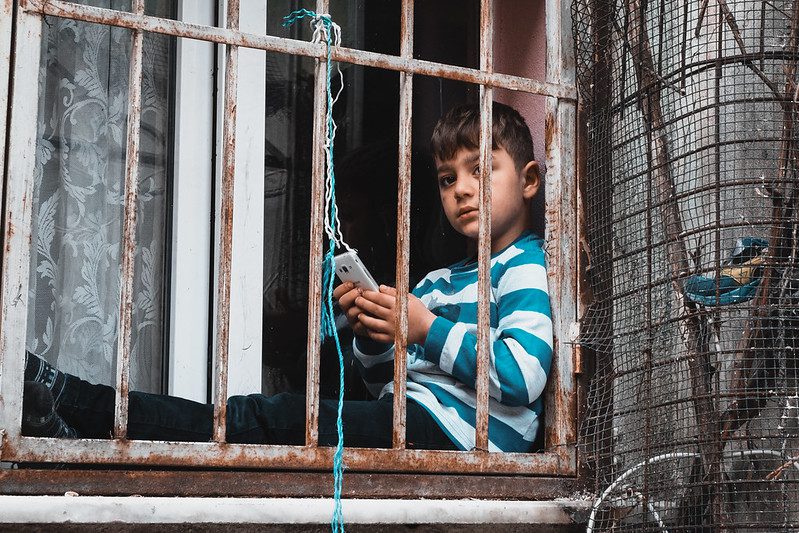
Child labor in Turkey continues as both an international and domestic issue for the country. Despite Turkish and international community efforts to establish policies and initiatives to prevent child labor and protect the interests of children, child labor persists. The below facts highlight the details of the type of labor children typically perform as well as the efforts the government of Turkey has made to end child labor.

10 Facts About Child Labor in Turkey

  1. Work in Hazelnut Fields: Hazelnut production in Turkey is the largest sector of agricultural production, making up approximately 20 percent of Turkey’s agricultural exports. For this reason, many migrant agricultural workers travel along the eastern and western regions of Turkey looking for work during the hazelnut harvesting season. The children of these workers travel with their families and also contribute to the harvest of hazelnuts in Turkey. In 2017, nearly 800,000 children worked in the hazelnut fields. Most children work 11 hour days, seven days a week in the fields.
  2. The Second National Action Plan on Combating Human Trafficking: The Second National Action Plan on Combating Human Trafficking is an existing program in Turkey. This program identifies and protects both the victims of child trafficking as well as those children who are at high-risk for trafficking, such as the children of migrant agricultural workers. The high-risk children this program identified are the recipients of additional security precautions that the shelters took in. Victims of human trafficking frequently become migrant agricultural workers.
  3. Children of Syrian Refugees are High-Risk: As the number of Syrian refugees in Turkey continues to grow, so does the number of Syrian families working as migrant agricultural workers. Due to their status within the country of Turkey, many of these laborers work longer hours than those of the Turkish migrant workers and receive lower wages, with children oftentimes earning half of an adult’s wage. The children of the Syrian refugees are at an even higher risk of becoming permanently part of the sector of migrant labor due to lower access to education, discrimination and financial barriers.
  4. Efforts of the Turkish Government to Eradicate Child Labor: The Turkish government has made efforts to combat the high levels of child labor with a variety of government-funded programs. The Conditional Education and Health Care Assistance Program “aims to reduce poverty through cash transfers,” which takes the form of free milk and books given to primary school children. In 2017, approximately 190,000 children benefited from this program. By providing food and educational support, the Turkish government aims to create a learning environment for children where their families feel that they can afford the time for their children to be in school instead of working to earn extra money.
  5. Child labor in Turkey Increased in 2018: Despite the sweeping measures that the Turkish government has taken to prevent and eventually put an end to child labor in Turkey, the number of child laborers saw a marked increase in 2018. The Turkish government made a commitment to the International Labor Organization (ILO) that it would put an end to child labor by 2015, but that has not been the case thus far.
  6. Education Rates of Child Laborers: Due to the long hours that child laborers in Turkey work, they are unable to consistently attend schools in the areas where they work on hazelnut farms. The children also move around too frequently with their families to establish a lasting record at any one school, contributing to these children’s decreased likelihood of school attendance. In addition, the vocational schools that exist in areas that have heavy industry provide an education to children that promotes their continued work in the industrial sphere.
  7. Minimum Age for Child Labor: Turkey has existing laws in place that are to protect children from child labor. There is a minimum age requirement of 15 for agricultural work and a minimum age of 18 for hazardous work. A prohibition of forced labor and child trafficking also currently exists in Turkey. Despite the efforts of the government of Turkey, holes continue to exist in the legal framework that aims to protect children from hazardous child labor.
  8. Effective Enforcement of Existing Child Labor Laws: Though the Turkish government has age limits in place for child labor, as well as a list of light work that the Regulation on the Principles and Procedures Governing the Employment of Children and Young Workers permits, high levels of child labor in Turkey persist. Part of this gap in the legislation and actual protection of child laborers is due in part to the low numbers of inspectors and the classification of agricultural work as light labor. The Regulation on Principles has indicated that the country must legally consider picking fruit and vegetables as light work, therefore placing very few restrictions on migratory agriculture. Despite this, the gaps that exist in the legal framework “may hinder adequate enforcement of [Turkey’s] child labor laws.”
  9. National Program to Combat Child Labor in Turkey: The government of Turkey has made an effort to maintain compliance with international child labor laws. The National Program to Combat Child Labor began in 2017 and is to run until 2023. This program focuses on maintaining surveillance of the labor sectors of migratory agriculture, street work and work performed in small to medium industries to ensure that none of Turkey’s existing child labor laws are in violation.
  10. The Global March Against Child Labour: There are multiple NGOs in the international sphere that are fighting to end child labor worldwide. The Global March Against Child Labour is one such organization with a mission is to “mobilise worldwide efforts to protect and promote the rights of all children, especially the right to receive a free and meaningful education and the right to be free from economic exploitation.” Global March operates through the advocacy of issues to policymakers, raising awareness of child labor around the world and building partnerships with existing organizations such as the International Labour Organization. The Global March has seen success in many of its areas of focus. In 2018, Global March organized the Meet of Parliamentarians Without Borders for Children’s Rights in Brussels, Belgium. At the conclusion of the parliament, in which MPs from Sri Lanka, Benin, Togo, Paraguay, Uganda, Ghana, the Netherlands and Costa Rica attended, all MPs committed to working within their respective parliaments to end child labor in their countries.

Turkey still requires progress to put an end to dangerous and damaging child labor, but the steps that it has made in its own programs, as well as international programs, shows hope for a future for child labor in Turkey. That future includes stronger protection of a child’s right to receive an education and lead a stable life out of the fields.

– Anne Pietrow
Photo: Flickr

October 13, 2019
https://borgenproject.org/wp-content/uploads/borgen-project-logo.svg 0 0 Jennifer Philipp https://borgenproject.org/wp-content/uploads/borgen-project-logo.svg Jennifer Philipp2019-10-13 11:59:442019-12-16 14:32:3210 Facts About Child Labor in Turkey
Global Poverty, Refugees, War and Violence

10 Facts About Vietnamese Boat People

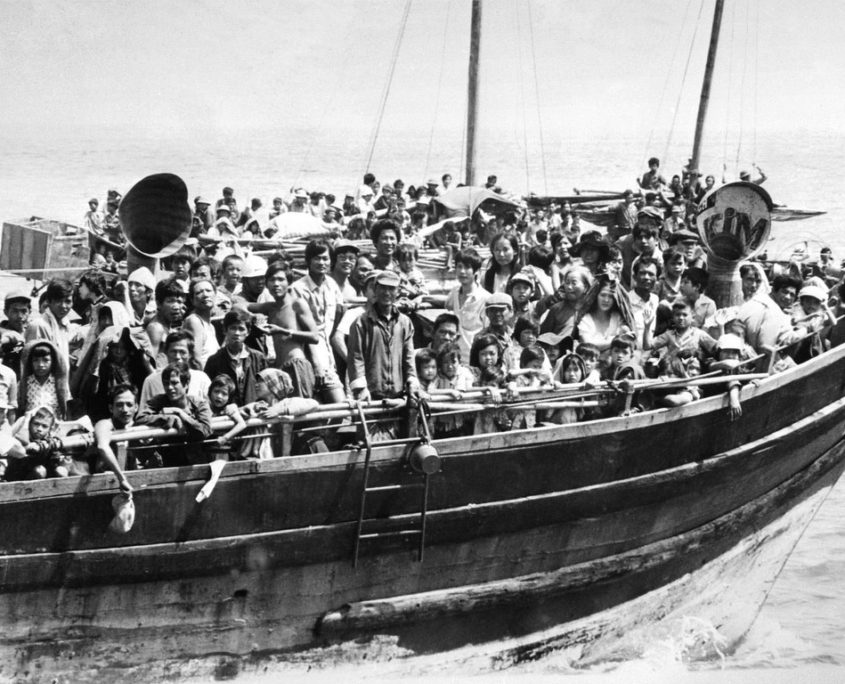
Many remember the Vietnam War as one of the most appalling in American history, and, as one can image, a harrowing chapter for Vietnam. The 1975 reunification of Vietnam established a brutally oppressive regime, striking fear into the hearts of those who lived in Vietnam. The result was a mass exodus of refugees now known as Boat People. Here are ten facts about Vietnamese Boat People who fled in search of better futures.

10 Facts About Vietnamese Boat People

  1. As the name implies, refugees relied on small boats. Under the new regime of the Republic of Vietnam, leaving the country was initially illegal. While this would change with time and the intervention of the United Nations High Commissioner for Refugees (UNHCR), escaping occurred illegally by sea. Many of those who left were families of farmers, fishermen, and people with other rural jobs who had access to boats that were well suited for sailing near shore but were not designed for travel on the open sea. The only option for leaving was by cramming families into small boats.
  2. Diverse communities were at risk. The war devastated the country’s infrastructure. While relief eventually came, it did not reach everyone. To make matters worse, in 1979 the Sino-Vietnamese War left those with Chinese heritage fearing for their lives. As there was already a precedent of executions and re-location to labor camps, people also fled the northern areas of Vietnam, at one point accounting for 70 percent of refugees.
  3. Fleeing Vietnam was dangerous. Partly because a large number of refugees from other countries were in the Indochinese area at the time, it is difficult to estimate exactly how many people fled Vietnam. However, experts estimate up to 1.5 million refugees escaped but a high estimate of 10 percent died from drowning, piracy, dehydration, or otherwise never made landfall.
  4. The crisis went unrecognized until refugee numbers grew. An estimated 62,000 Vietnamese Boat People sought refuge throughout Southeast Asia by 1978. This number rose to 350,000 by mid-1979, with another 200,000 having moved to permanent residence in other countries. At first, countries close to Vietnam accepted refugees and provided asylum, however many of those countries’ policies changed.
  5. Refugees often passed through multiple countries. Boat People initially sailed to countries closest to their own such as Malaysia, Hong Kong, and Indonesia. The UNHCR established a temporary agreement whereby these countries, many of which began refusing asylum to further refugees, would serve as “first asylums.” This meant the refugees would only stay there temporarily until they could be screened and enter nations like the U.S. and Canada.
  6. Countries grew less welcoming to refugees as time went on. Despite the 1979 agreement, the number of Vietnamese Boat People increased in first asylum countries faster than they could process. Some estimate that for every refugee who left one of these countries, three more arrived. Hostility towards the refugees eventually increased, while political situations within each country further exacerbated tensions. Hong Kong, for example, refused to accept Chinese economic migrants but accepted Vietnamese refugees, causing conflict between the nations.
  7. Swamped by refugees to the point of exhaustion, Malaysia faced difficult choices when it came to Boat People. The situation worsened to the point that Malaysians pushed back one vessel having approximately 2,500 refugees on board. This was due in part to ethnic tension between Malay Muslims and the native Chinese. Boat People landing in areas largely inhabited by a Muslim populace further aggravated tension. As Robert Miller, the ambassador to Malaysia at the time put itA “From the Malaysian standpoint they have a very delicate ethnic balance in the country… they have an ‘ethnic fault line running the length and breadth of their country between the Malay Muslims and the pork-eating Chinese.” As a result, they, like other Southeast Asian countries, eventually refused to accept further refugees.
  8. “Full asylum” nations showed fatigue as the crisis continued. As more refugees entered the United States, people began to question whether the Vietnamese refugees were fleeing due to fear or financial situations. Suspicion arose and screening processes intensified as fewer nations wanted to house the refugees at all. As Miller put it “From the field we were always pressing for earlier decisions and decisions for bigger quotas. From the Washington perspective, they were pressing us to increase international cooperation –get more countries to take more so we could take less.”
  9. Thousands of refugees found stable homes. Though Vietnamese Boat People constituted a refugee crisis, it soothed over several years. Refugees who passed screening and inspection entered the U.S., Canada, Britain, and Australia able to begin new lives. While most ultimately flew the last leg of their journey on planes, at least one group made it to Australia by boat. The main solution for refugees resettling included working directly with the Vietnamese government, which eventually sanctioned departures from the country.
  10. Survival stories live on. Fleeing Vietnam was dangerous and offered no guarantee, but survivors found new lives in their new homes. Vietnamese immigrant communities eventually flourished. The UNHRC continued its work making transportation out of Vietnam legal and even encouraged. Nowadays, descendants of those who left in fear can return to discover their heritage and the stories of their ancestors, ensuring that the legacy of Boat People will live on. The preservation of their history and ongoing peaceful relations with Vietnam created a solution that finally materialized.

The fallout from the Vietnam War was, as the fallout from many wars, far worse than anticipated. These stories  and day’s refugee crisis show that people can be far less welcoming to refugees than we might hope. However, the survival of those who lived to tell these stories indicates that dangerous risks can lead to safer futures. These 10 facts about Vietnamese Boat People show that when accepted, refugees can thrive and improve relationships between nations.

– Mason Sansonia
Photo: Flickr

October 6, 2019
https://borgenproject.org/wp-content/uploads/borgen-project-logo.svg 0 0 Kim Thelwell https://borgenproject.org/wp-content/uploads/borgen-project-logo.svg Kim Thelwell2019-10-06 09:43:292019-12-16 14:55:0110 Facts About Vietnamese Boat People
Global Poverty, Refugees, Technology

The App to Help Refugees in Uganda

App to Help Refugees in Uganda
Uganda has been accepting refugees for many years. Unfortunately, these refugees have limited access to economic opportunity. That is where LevelApp comes in. The nonprofit Refunite created the app to help refugees in Uganda. The program creates small tasks for refugees to complete in exchange for payment. It is not a substitute for a regular income, but it provides some money on the side that refugees can save for the future. The work pays well too; a refugee may normally make around $1 a day, but the app gives them the potential to make up to $20 a day.

Uganda’s Refugee Crisis

Refugees have been seeking shelter in Uganda for many years now. Here are some facts about refugees in Uganda.

  • The refugee population in Uganda rose by 48 percent in the past year.
  • There are over 1.3 million refugees in Uganda.
  • Over 60 percent of those refugees are from South Sudan.
  • The South Sudanese are coming to Uganda to escape an oppressive government.
  • Many South Sudanese refugees are between 15 and 25 years old.
  • Almost 30 percent of refugees come from the Democratic Republic of the Congo.
  • The Congolese are escaping ethnic violence and an Ebola outbreak.

How LevelApp is Helping Refugees

Refugees need to be able to save money if they are to lift themselves out of poverty. The app helps women, who are important in local economies, by giving them tasks they can do from home. Almost 30 percent of users are women and they can use extra money in many beneficial ways. Some ways are to send kids to school, buy livestock and access health care, which might make them less dependent on foreign aid. Another important benefit is that by using this new technology, refugees learn new skills that they can use when they return home.

How LevelApp Works?

Refugees complete simple tasks like categorizing images and datasets. The more tasks they complete, the more money they make. They can download tasks and complete offline, which is important because many refugees do not have access to a consistent internet connection. Refugees can make almost $200 a month with this simple work. As of July 2019, LevelApp had around 1,500 users and the hope is that this number will grow.

The tasks are to help Refunite develop artificial intelligence. The basic tasks refugees complete, like labeling and mapping, help the AI learn. For Refunite, this is a win-win scenario because it is helping refugees climb out of poverty while developing AI.

Unexpected Benefits of LevelApp

While LevelApp is helping to lift refugees out of poverty, there are also some other positive effects. Using the app, refugees are beginning to learn English, which is an incredibly useful language to know. Also, through LevelApp, young people can new people. This is beneficial because a high number of refugees are young, and they are often stuck in limbo socially and economically. The youth often have difficulty making friends and progressing their careers. The app has also benefited the careers of young people by teaching them 21st-century skills that they can use when they return home.

LevelApp is helping refugees by providing an income that they normally would not have. It is a unique economic opportunity that greatly benefits refugees by providing them with 21st-century technological skills to use to access higher-paying jobs when they return home. The creator, Refunite, is also benefitting because the work refugees do for the company helps develop its artificial intelligence program. The company could easily develop this technology at home in the United States, but giving this opportunity to refugees is beneficial to combatting poverty. This app to help refugees in Uganda has created benefits that stretch beyond just poverty reduction and display the need for innovative solutions to global poverty.

– Gaurav Shetty
Photo: Flickr

October 1, 2019
https://borgenproject.org/wp-content/uploads/borgen-project-logo.svg 0 0 Jennifer Philipp https://borgenproject.org/wp-content/uploads/borgen-project-logo.svg Jennifer Philipp2019-10-01 12:54:532024-12-13 18:01:56The App to Help Refugees in Uganda
Global Poverty, Refugees, Women

Hiring Refugee Women Can Boost the Global GDP

Hiring Refugee Women Can Boost Global GDP
Women and girls make up about half of the refugee population worldwide, but less than half have a paid job. In some countries, such as Germany and Lebanon, females make up just 6 percent of the working world compared to the United States’ 40 percent. Even in the United States, the number is low. Many refugee women do not have paid work because they face violence and discrimination in workplaces, including sexual assault and exclusion. However, if accepted into the working world, hiring refugee women could boost the global GDP by $1.4 trillion.

How Hiring Refugee Women Could Boost the Global GDP

More workers mean more hands to create products. Companies can sell more if they produce more. The global GDP is an annual measurement of all the final goods sold worldwide. Statistically, only four out of 10 migrant women are getting paid to work compared to seven out of 10 men. As mentioned earlier, the gap in women workers is partly due to workplace discrimination and partly to pay gap. In places such as Turkey,  where the pay gap between women and men is highest, the difference in salaries is about 94 cents per dollar. In the United States, where the gap is lower, the difference is 29 cents per dollar. By increasing women’s pay and making workplaces more accessible, women could not only become more motivated to enter the field, but the hiring of refugee women could also boost the global GDP to a total of $2.5 trillion.

Effect of Businesses Hiring Refugee Women

The hiring of refugee women could have a positive impact on the economy and local businesses as well. In 2017, Starbucks Coffee pledged to hire around 10,000 refugees by 2022, which will help give more opportunities for refugee women to go out and seek work. With hiring refugee women, Starbucks hopes to help “a population who seeks a chance to rebuild their lives and have a fresh start.” By giving refugee women a paid job, they are able to start over and put the money towards their families. 

The Pay Gap Status

The way to help employ more refugee women would be to close the pay gap between men and women. Worldwide, only 63 percent of the wage gap has closed, meaning men are making more than women in over half of the world. This rate is highest in countries such as Germany, Lebanon and Jordan. By closing the pay gap, refugee women in these countries will have a steady income to support their families, and make them less dependent on aid from their governments.

Besides economic growth, refugee women can make improvements in society, as well as make personal improvements. In Baalbeck, Lebanon, a Syrian woman refugee named Bushra makes her living by fixing electronic devices. Not only does it bring in a source of income, but it is also making an impact on the world around her, “The role of an electrician is mostly for men,” Bushra says. “But it shouldn’t be exclusively for men. We can work even better than them.” Bushra is one of the few women in the village that has a paid job. She is using her skills to help improve the society around her, while still providing for her family.

Over half of the world’s refugee women do not hold a paying job. If brought into the working world, hiring refugee women can boost global GDP by $1.4 trillion, bringing the total to $2.5 trillion. There will not only be an economic increase but an increase in societal empowerment as well. By encouraging women to use the skills that they have, they will not only improve the production of goods but can use their skills to help others.

– Destinee Smethers
Photo: Flickr

September 27, 2019
https://borgenproject.org/wp-content/uploads/borgen-project-logo.svg 0 0 Jennifer Philipp https://borgenproject.org/wp-content/uploads/borgen-project-logo.svg Jennifer Philipp2019-09-27 07:30:302019-09-23 13:47:59Hiring Refugee Women Can Boost the Global GDP
Food & Hunger, Food Insecurity, Global Poverty, Refugees

10 Facts About Hunger in Jordan

10 facts about hunger in Jordan
Jordan is located in Southwest Asia with a population of 9.5 million. Although there have been improvements, the country still suffers from high rates of food insecurity. Here are 10 facts about hunger in Jordan.

10 Facts About Hunger in Jordan

  1. Food Security: According to the Global Hunger Index, Jordan is a food secure country where the levels of hunger are moderate. However, the arrival of Syrian refugees is putting pressure on food and water supplies in Jordan. Nonetheless, The World Food Programme (WFP) supports refugees in Jordan by offering them cash and food-restricted vouchers. In 2014, the organization, started its school meal program, which aimed to reach more than 320,000 schoolchildren through 2016, concentrating on the most food-insecure areas in Jordan. In addition, the program provided locally produced date bars three times a week as well as high energy biscuits and fresh fruit during the last two days of the school week.
  2. E-cards: In an effort to fight hunger, WFP created an innovative electronic voucher program known as e-cards. The e-cards are a multi-year collaboration with MasterCard that will help refugees buy their own food. Every month, the e-cards load with $27 for each family member to buy food based on their own specific needs, such as fresh produce. In addition, WFP has provided about $192 million to local economies in Jordan along with refugees in Turkey, Iraq and Egypt. Aiding Syrians is WFP’s biggest and most complex emergency operation.
  3. Population: In Jordan, population increase is a major challenge that affects food and water security. In 2014, the population stood at 7,930,491 and continues to grow by 3.86 percent each year. The rise in numbers causes a strain on supplies for survival.
  4. Unemployment: According to the Department of Statistics, unemployment rose to 19 percent in the first quarter of 2019, a 0.6 percent increase compared to the first quarter of 2018. The rate of unemployment among men was at 16.4 percent in comparison to 28.9 percent among women. Due to the global economic crisis of 2008, the Arab Spring, a large number of refugees and the closing of borders with Iraq and Syria all contributed to Jordan’s economic issues. The average income of Jordan decreased, making household food hard to attain and families had to opt for cheaper, less healthy food.
  5. Save the Children: Jordan’s government is struggling to provide for vulnerable refugees and Jordanians. Nonetheless, the Save the Children organization has provided aid, education and protection to children in need. Save the Children is a nonprofit that dedicates itself to helping children around the world. It has been in Jordan since 1985. The organization has protected 38,097 children from harm, supported 129,003 children in times of crisis and given 22,363 children vital nourishment.
  6. Stunting: According to UNICEF, stunting declined from 12 percent in 2002 to 8 percent in 2012, but numbers have not changed much since because of a lack of access to quality food, information on care practices and proper hygiene.
  7. Alliance Against Hunger: Jordan’s poorest people living in rural areas are the most susceptible to food and water insecurity because they own small pieces of agricultural property with low production. However, the Ministry of Agriculture has collaborated with an NGO called Alliance Against Hunger, an organization that helps strengthen agricultural production, assists in local market activity, supports micro-enterprise initiatives and helps vulnerable communities gain access to food and income. In 2018, the organization helped a total of 52,805 people. It helped 52,569 people through food security and livelihood programs and aided 165 people through water, sanitation and hygiene programs.
  8. Diet: In Jordan, the average diet is based on wheat and rice. Due to economic issues, Jordanians are transitioning into an unhealthy lifestyle of consuming a lot of sugar and carbohydrates. Consequently, this causes people, specifically women, to become obese and anemic.
  9. Food Insecurity: According to a study in the United Nations Development Program, 34 to 46 percent of households are food insecure and cannot afford to have three meals a day.
  10. CARE: Due to the influx of refugees from Iraq and Syria, food and water insecurity have been on the rise. The population will most likely double in the next two decades and water resources will become a huge problem for farmers. CARE is an NGO working around the world to end poverty. CARE has worked in Jordan since 1948 to help Palestinian refugees and continues to support Syrian refugees as well.

These 10 facts about hunger in Jordan present areas of focus and improvement to better the country and reduce food insecurity. Despite these challenges, there are several organizations that work towards helping fight food insecurity in Jordan. With the attention and support of political leaders, these issues can come to a stop.

– Merna Ibrahim
Photo: Flickr

September 24, 2019
https://borgenproject.org/wp-content/uploads/borgen-project-logo.svg 0 0 Kim Thelwell https://borgenproject.org/wp-content/uploads/borgen-project-logo.svg Kim Thelwell2019-09-24 15:53:052024-06-05 02:12:2210 Facts About Hunger in Jordan
Food Security, Global Poverty, Refugees, Technology

Top 7 Blockchain Projects for Poverty

Top Seven Blockchain Projects
Traditional perceptions of blockchain technology involve uses in financial technology and under the table transactions. Blockchain, however, has possibilities far beyond finance and digital currency. By its nature, blockchain provides unparalleled security and transparency. By creating a decentralized network of highly-encrypted blocks, a blockchain system creates a secure, unchangeable ledger. No one person can make changes and the encryption means that it is extremely difficult to hack, thus making blockchain one of the most secure and transparent technologies in the world. This technology has the power to revolutionize poverty reduction. Below are the top seven blockchain projects that represent the most successful blockchain for poverty projects that address real, pressing global issues.

Top 7 Blockchain Projects for Poverty

  1. Agri-Wallet: Agri-Wallet is a mobile app that allows farmers to remotely and securely receive payment for their produce and save money on business expenses. The majority of smallholder farmers do not have enough funding, both due to delayed payments for goods and a lack of access to credit. This is because banks are hesitant to lend to poor farmers that do not have a strong credit history or collateral. Through the blockchain financial ecosystem, Agri-Wallet allows farmers access to small loans and guarantees payment the first week of every month, which has been a major boon to Kenyan farmers. Agri-Wallet has already seen extensive success in Kenya, with approximately 4,000 farmers, 14 suppliers and 25 buyers using the app only one year after its large-scale release.
  2. Mojaloop: In developed countries, some may take access to banking for granted, but 1.7 million adults around the world do not have access to a secure banking system. The Gates Foundation sought to change this by releasing Mojaloop, an open-source solution that allows anyone to build financial services software, providing financial security through blockchain-based encryption. The key to Mojaloop’s importance is its egalitarian nature – a developer does not have to be connected to a major company or bank to develop technology using Mojaloop, and the code bridges all financial products and applications in any given market, providing unprecedented access to financial services for poor populations. The app has already gained the confidence of two of Africa’s largest mobile operators and the Gates Foundation estimates that it will reach 338 million existing mobile money accounts through the entire continent of Africa. In other words, this blockchain for poverty app could provide a flexible, universal banking system to 338 million people in Africa.
  3. Diwala: As of June 2019, there are more than 70 million displaced people worldwide fleeing war, persecution and conflict. The ability to join the workforce of refugee’s new home is critical for their integration into their new community and to rebuild their lives. However, when fleeing a war-torn country, it is difficult for refugees to retain certifications or diplomas. Diwala provides a secure, unchangeable digital resume that verifies a person’s skills, education and certifications that employers can rely on to provide an accurate record. The organization currently works with multiple organizations and universities to help issue credentials via Diwala to further verify education and certifications. Diwala is already bringing digital employment verification to Kenya and Uganda.
  4. BitGive: BitGive’s goal is to provide better transparency and accountability between donors and charitable organizations. The company’s blockchain for poverty product, GiveTrack™, allows donors to trace their donations in real-time to see exactly where their money goes. BitGive’s use of blockchain technology provides high-level security while also providing an unalterable ledger that donors can refer to at any time to ensure their money goes to the cause they want and see the real impact they are having on a community. The use of cryptocurrency also means that BitGive can quickly and efficiently transfer funds across the globe. The organization has seen amazing success, including partnerships with Save the Children and The Water Project.
  5. Goodr: According to the U.S. Department of Agriculture, Americans waste approximately 30-40 percent of the U.S. food supply, while 820 million people around the world suffer from hunger. Goodr provides blockchain-based supply chain management tools that allow companies, such as airlines, convention centers and other food operations, to redirect surplus foods to food-insecure communities. As an added incentive, Goodr provides companies with blockchain-based ledgers that allow them to track their food and identify areas of waste. During the 2019 Superbowl alone, Goodr rescued over 100,000 pounds of food.
  6. OneSmart: The World Bank considers government corruption a significant challenge in reducing global poverty, particularly because corruption disproportionately affects poor populations. In 2018, UNICEF funded OneSmart’s OS City project to combat corruption and bring more transparency to local and national governments. OneSmart created a blockchain platform that is flexible enough to be integrated with existing city management platforms, allowing for the implementation of blockchain and artificial intelligence throughout government to avoid waste and increase transparency.
  7. SOLshare: SOLshare seeks to help the 1.1 million people worldwide without consistent access to electricity. It is the first-ever peer-to-peer electricity trading network, allowing villages to create mini-power grids by connecting houses with solar panels to other homes in the neighborhood. The blockchain-based platform allows for the fast, efficient and safe transfer of funds between neighbors, allowing for local, independent electricity grids. SOLshare has already brought electricity to 65 million people in Bangladesh and is helping helps poor villages shape a greener future.

People limit the use of blockchain technology by relegating it to banking or shady online transactions alone. The above top seven blockchain projects show that blockchain has value as a tool to develop solutions for multiple global issues. A blockchain is a useful tool that can address multifaceted issues in fighting poverty. Though it is still an emerging technology, blockchain deserves widespread research and support.

– Melanie Rasmussen
Photo: Flickr

September 24, 2019
https://borgenproject.org/wp-content/uploads/borgen-project-logo.svg 0 0 Kim Thelwell https://borgenproject.org/wp-content/uploads/borgen-project-logo.svg Kim Thelwell2019-09-24 14:56:122024-12-13 18:01:56Top 7 Blockchain Projects for Poverty
Global Poverty, Refugees, Refugees and Displaced Persons

How Hiring Refugees Benefits the Global Economy

Hiring Refugees
The world is currently facing a record-high number of displaced people. Globally, more than 70 million people fled or are fleeing their homes as a result of domestic war, systematic persecution, hunger or any number of other life-threatening conditions. These people are refugees.

Refugees who have fled their home countries rely on other countries to take them in and provide them with the basic necessities for survival, like food, water and shelter. Many of these people, however, have extremely limited access to the job markets of their host countries. Therefore, it is difficult for them to find a source of personal income.

Recent studies show that integrating refugees into the host country’s workforce can be economically beneficial on multiple levels. Some have estimated that closing job and pay gaps for refugees around the world could generate as much as $2.5 trillion globally. Displaced refugees represent a largely under-utilized source of labor, and giving them the opportunity to be part of the workforce could profoundly impact productivity.

Employment Benefits Refugees and Host Countries

Hiring refugees has the potential to benefit all parties involved. The refugees themselves often benefit most directly from integration into the workplace. Having a source of personal income can be extremely liberating for displaced families; it increases financial independence and allows them to rely less on the aid of their host country. It also means that children can go to school and receive an education instead of staying home to help support the family. Essentially, it allows refugees to become more productive members of society.

Contrary to popular rhetoric, the host country also benefits economically from hiring refugees. By having jobs, refugee workers are contributing to the productivity of the country and increasing the gross domestic product. Additionally, most economists found that one cannot substantiate the fear native workers have over refugees and other migrants “stealing” jobs—displaced people generally look for vacant positions that do not require a mastery of the host country’s language.

Refugees and Migrants Create Jobs

Refugees and migrants also tend to have much higher rates of entrepreneurship than the rest of society, meaning that they create jobs. It may be helpful to use the U.S. as an example here. In the U.S., migrants—a larger distinction of people living in a foreign country that encompasses refugees—represent about 15 percent of the population. However, migrants constitute about 25 percent of America’s entrepreneurs, indicating that they have a higher rate of entrepreneurship than the average citizen. In 2015, over 180,000 refugees created $4.6 billion in American income due to entrepreneurial ventures.

Organizations that hire refugees have reported much higher retention rates than the average. For example, manufacturing represents the industry where the highest proportion of refugees find work—about 20 percent. The refugee rate of turnover in this industry is just 4 percent, compared to the 11 percent national average. This means that refugees often make industrious and loyal workers on whom businesses can depend. Overall, refugees generate billions of dollars each year through entrepreneurship, consumer spending and job retention.

Finally, the country of origin can also benefit economically when other countries take in its refugees. Host and origin countries share a relationship that could potentially open up networks of trade and investment that boost the origin country’s economy. Additionally, when people from the origin country integrate into the host country’s workforce, it creates business networks where refugees might learn skills and master technology that they can communicate back home. These networks of trade and business can help update the origin country’s economy and make it more competitive.

Global Companies Hiring Refugees

Below are just a few of the companies hiring refugees and working to better integrate refugee populations into the workforce in a variety of different countries.

  1. Sodexo: A facilities management company, Sodexo pledged to hire 300 refugees in the U.S., Canada, Sweden and Brazil by 2020.
  2. Ben & Jerry’s: The beloved ice cream company plans on hiring at least 500 refugees throughout Europe once it completes a business incubator program in 2023.
  3. Barilla: The pasta magnate Barilla plans on hiring 75 refugees in Europe by 2023.
  4. Care.com: Building on a German pilot program that trains refugee women to be nannies and childcare workers, Care.com will train 1,000 refugee women to enter the care industry by 2020.
  5. Hissho Sushi: The sushi chain plans on aiding 1,250 refugees in becoming franchise owners by 2023, in conjunction with more locations opening across the U.S.
  6. Amplio Recruiting: Amplio hopes to provide 10,000 refugees in the United States with employment opportunities by 2023.

– Morgan Johnson
Photo: Flickr

September 15, 2019
https://borgenproject.org/wp-content/uploads/borgen-project-logo.svg 0 0 Jennifer Philipp https://borgenproject.org/wp-content/uploads/borgen-project-logo.svg Jennifer Philipp2019-09-15 17:28:122019-10-30 13:30:54How Hiring Refugees Benefits the Global Economy
Page 22 of 53«‹2021222324›»

Get Smarter

  • Global Poverty 101
  • Global Poverty… The Good News
  • Global Poverty & U.S. Jobs
  • Global Poverty and National Security
  • Innovative Solutions to Poverty
  • Global Poverty & Aid FAQ’s
Search Search

Take Action

  • Call Congress
  • Email Congress
  • Donate
  • 30 Ways to Help
  • Volunteer Ops
  • Internships
  • Courses & Certificates
  • The Podcast
Borgen Project

“The Borgen Project is an incredible nonprofit organization that is addressing poverty and hunger and working towards ending them.”

-The Huffington Post

Inside The Borgen Project

  • Contact
  • About
  • Financials
  • President
  • Board of Directors
  • Board of Advisors

International Links

  • UK Email Parliament
  • UK Donate
  • Canada Email Parliament

Get Smarter

  • Global Poverty 101
  • Global Poverty… The Good News
  • Global Poverty & U.S. Jobs
  • Global Poverty and National Security
  • Innovative Solutions to Poverty
  • Global Poverty & Aid FAQ’s

Ways to Help

  • Call Congress
  • Email Congress
  • Donate
  • 30 Ways to Help
  • Volunteer Ops
  • Internships
  • Courses & Certificates
  • The Podcast
Scroll to top Scroll to top Scroll to top