Content or Dissatisfied: 10 Facts About Living Conditions in Turkey
Turkey is a country where a great deal of misinformation exists online. There have been many ups and downs in the country’s agenda lately, and gathering the top 10 facts about living conditions in Turkey is difficult due to the massive instability of continuous changes. Here are the top facts about living conditions in Turkey.
Top 10 Facts About Living Conditions in Turkey
- According to the UNDP’s Human Development Index (HDI), Turkey ranks at 71. The UNDP’s HDI is an indicator of many dynamics concerning the quality of living conditions all around the world. The dynamics that HDI focus on are primarily health, education, income, gender and human security. Turkey has been increasing its HDI since 1990, but the rate of increase has declined since 2010.
- Fifty-one percent of the Turkish people between the ages of 15 to 64 have a paid job. The statistics of OECD states that 51 percent of the Turkish people aged between 15 to 64 have a paid job. Unfortunately, this rate of 51 percent is below the average of OECD countries by 16 percent. Another important issue is that of income inequality. Most people either experience a problem of unfair income distribution or an unjust necessity of working hours; today, the minimum wage in Turkey is approximately 1600 Turkish lira, or $260.
- Sixty-three percent of the people state they are satisfied with the quality of their water. Unlike most U.S. and European cities, drinking the tap water is not the preferable option in Turkey. The current government took steps in order to increase the quality of the water in the country, and their efforts have shown distinctive progress. Even though the image looks brighter compared to years ago, there is still a need for further steps in order to satisfy the living condition of water quality.
- Trying to understand the living conditions in Turkey by taking a look at Istanbul is often inaccurate. Cities like Istanbul, Ankara, Bursa and İzmir stand considerably higher in the quality of life index. Overall, these cities offer better living conditions to individuals than in Turkey, which can cause internal migration from time-to-time.
- The lack of political stability in the country affects living conditions. Over the years, the political arena of the country has witnessed the competing interest of political parties of the left and the right wing, and the country faced a deadly coup attempt in July 2016. The unstable political arena affects various dynamics that directly impact the living conditions of the Turkish people.
- People work for extremely long hours to earn money. According to the better life index of OECD, almost 34 percent of people in Turkey work for inordinate amounts of time in Turkey.
- There are only four universities that ranked in the top 500 of Times Higher Education. Education quality is a problem that affects the living conditions of people living in Turkey. There has been a lack of equal spread of quality educations in all cities of the country. In fact, one often must live in a major city to receive a qualified, world-level education. According to Times Higher Education, there are only four Turkish universities listed in the global top 500: Koç, Sabancı, Bilkent and Boğaziçi.
- A weak social network between communities is a problem for the living conditions. Due to its geographical location, Turkey’s demographics are often influenced by European, Asian and Middle Eastern motifs. Rather than caused by ethical problems, the lack of social networks between communities are generally caused by the modernist and conservatism favoritism of specific groups of people. Even though Turkey is not an Islamic state, the majority of its people are Muslim and the country hosts a variety of Islamic practices with groups of distinct interests. As a result, there are places and times where religious interests and characteristics of people can work as a discriminating force in the society.
- Taxation is a massive problem in Turkey. The tax system in Turkey is a progressive one, and citizens generally pay 15 to 35 percent tax on their employment income. The main problem of Turkey’s taxation system is that the tax rates of products in markets are sometimes more than the item being bought. Today, the tax problem is highly visible, especially on imported products.
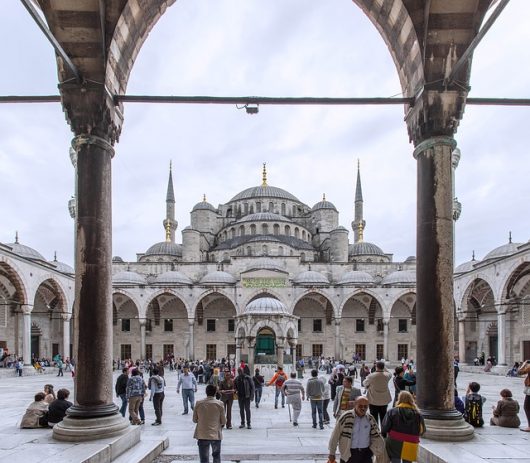
- The historical and cultural environment in the country is vibrant. Overall, Turkey is still a safe and sound place to live; every city has some cultural and historical beauty to astound and fascinate its visitors and residents. Starting with Istanbul’s amazing scenery, rich architecture and cultural habitat, the country still has its own way of providing a satisfying living standard.
Fostering Satisfaction
Despite Turkey’s struggles, many of the nation’s inhabitants are satisfied with their ways of life. The nation still has far to go for complete equality of living standards, but with fiscal, social, and economic changes, the nation can continue to steadily improve its inhabitants’ lives.
– Orçun Doğmazer
Photo: Pixabay
