10 Facts About the Importance of Primary Education
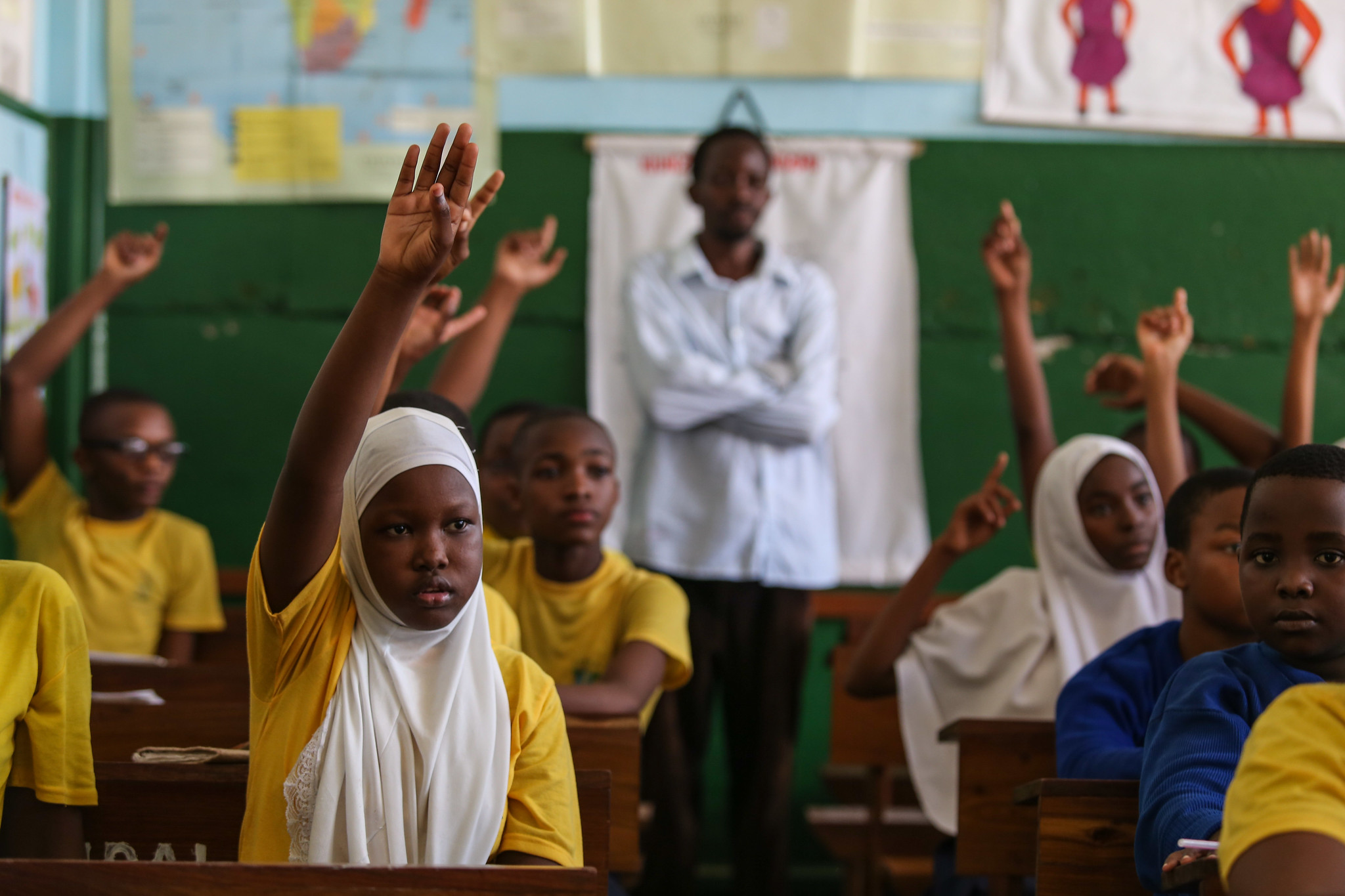 Of all the resources that may cause enrichment of a nation, none are as valuable as the cognitive attainments of its population. The issue of access to primary education remains a critical one for many nations, particularly those in the developing world. Access to primary education and the impediments to its universalization may determine a nation’s trajectory for many years. Below are 10 facts about the importance of primary education.
10 Facts About the Importance of Primary Education
- Primary Education Consequences: Major life-long consequences accrue from access to primary education. The cumulative nature of the learning process, whether in literacy or numeracy, requires the early internalization of basic abstractions. Without this process at a young age, children fall behind in the trajectory of cognitive development and fail to reach their potential. Moreover, primary educational access facilitates the identification of, and assistance to, both gifted and struggling young minds.
- Nations’ Development: A nation’s development relies considerably on the access of its population to educational institutions. Access to primary education, regardless of class or caste or income, levels the social playing field. Gender equality, another significant marker of national development, improves alongside the universalization of access to educational institutions, including primary schools.
- Refugee Children: According to the United Nations, roughly 39 percent of refugee children across the globe do not receive a primary school education. This enrollment statistic contrasts sharply with that of non-refugee children, with 92 percent receiving primary school education. From 2017 to 2018, the number of unenrolled primary-school-age refugee children rose to a total of four million.
- Teachers: UNESCO’s Institute for Statistics calculates that ensuring primary education access for all requires roughly 24.4 million more primary school teachers. Sub-Saharan Africa suffers a scarcity of primary school teachers in more than 70 percent of its constituent nation-states. South Asia falls directly behind Sub-Saharan Africa in its primary school teacher scarcity crisis, requiring approximately four million more teachers by 2030 to attain the goal of universal primary education.
- Disabled Children: A UNESCO study of 37 countries determined that children with disabilities face a greater likelihood than their non-disabled peers of total exclusion from primary school and are more likely to experience fewer years enrolled in school and suffer major literacy deficits. These disadvantages are more likely to afflict disabled girls, thus sharpening gender asymmetries. Of the studied countries, Cambodia exhibited the most dramatic gap between disabled students and their peers, with 57 percent of the former unenrolled compared to 7 percent of the latter.
- Gender Parity Improvements: Data suggests improvements in gender parity in access to primary education. Sub-Saharan Africa features a 2 percent gap between the genders in non-delayed access to primary education, with 29 percent of girls unenrolled compared to 27 percent of boys. However, of children two or more years above the standard enrollment age, girls remain at a disadvantage compared to boys, attesting to the persistent influence of gender expectations on access to primary education.
- Violence and Exploitation: Children deprived of access to primary education risk a greater likelihood of suffering violence and exploitation. Where educational deprivation results from conflict or natural catastrophe, the danger of child trafficking intensifies. Conflict and natural disasters impeded educational access for approximately 39 million girls in 2015. As girls face a greater likelihood of impeded educational access than boys in conflict-ridden or disaster-affected regions, girls likewise face an increased risk of child trafficking out of proportion with their population percentage.
- Education Cannot Wait (ECW): On December 11, 2019, Education Cannot Wait (ECW) announced a $64 million educational funding initiative in the conflict-ridden countries of Chad, Ethiopia, South Sudan and Syria. Though targeting affected youth of all backgrounds, this project places particular focus on girls, disabled children and refugees. This initiative will facilitate teacher training and student enrollment in vulnerable regions. Ultimately, this project anticipates the mobilization of governments, NGOs and civilians for the growth and maintenance of secure and effective educational sectors.
- The LEGO Foundation: The LEGO Foundation announced a grant of $100 million on December 10, 2019, for an early learning solutions initiative targeting crisis-affected groups in Ethiopia and Uganda. Play-oriented learning programs will improve the skill sets of both primary-school-aged and pre-school children. These play-oriented learning strategies assist children in surmounting trauma that may otherwise impede their scholastic potential. Roughly 800,000 children will benefit from this project.
- The Global Partnership for Education: December 10, 2019, witnessed the grant of $100 million by The Global Partnership for Education for educational initiatives across Asia and Africa. Burkina Faso, for instance, plans investment of its four-year GPE grant of $21 million toward improving primary school enrollment and developing pedagogical infrastructure. The investment of $21 million in Somalia’s Somaliland region seeks to rectify gender imparity in access to primary education.
Access to primary education provides the foundation upon which the talents of a nation’s youth may grow. Moreover, there exists a strong relationship between primary education and the promotion of such values as gender equality and social mobility. Although an indispensable institution in the contemporary age, crises both man-made and natural threaten primary education across continents. Fortunately, initiatives involving NGOs and governments promise to overcome these impediments, the importance of primary education weighs more as a right rather than a mere privilege.
– Philip Daniel Glass
Photo: Flickr
