• Link to X
  • Link to Facebook
  • Link to Instagram
  • Link to TikTok
  • Link to Youtube
  • About
    • About Us
      • President
      • Board of Directors
      • Board of Advisors
      • Financials
      • Our Methodology
      • Success Tracker
      • Contact
  • Act Now
    • 30 Ways to Help
      • Email Congress
      • Call Congress
      • Volunteer
      • Courses & Certificates
      • Be a Donor
    • Internships
      • In-Office Internships
      • Remote Internships
    • Legislation
      • Politics 101
  • The Blog
  • The Podcast
  • Magazine
  • Donate
  • Click to open the search input field Click to open the search input field Search
  • Menu Menu

Archive for category: Poverty Reduction

Information and stories about poverty reduction.

Advocacy, Developing Countries, Economy, Global Poverty, Poverty, Poverty Reduction

How China’s Protests Affect its Poverty and Economy

China's Protests Affect its Poverty and Economy
As protests in Hong Kong have continued to escalate between protesters and China’s ruling Communist Party, each side appears to become increasingly distant from the other. The term One China is not new, but what is new is the number of protests that have occurred and the amount of support that it is receiving from citizens. The protests in Hong Kong began to occur in April 2019 following an extradition bill that would have allowed the extradition of the citizens of Hong Kong to the mainland. Here is how China’s protests affect its poverty and economy.

Tourism and the Economy

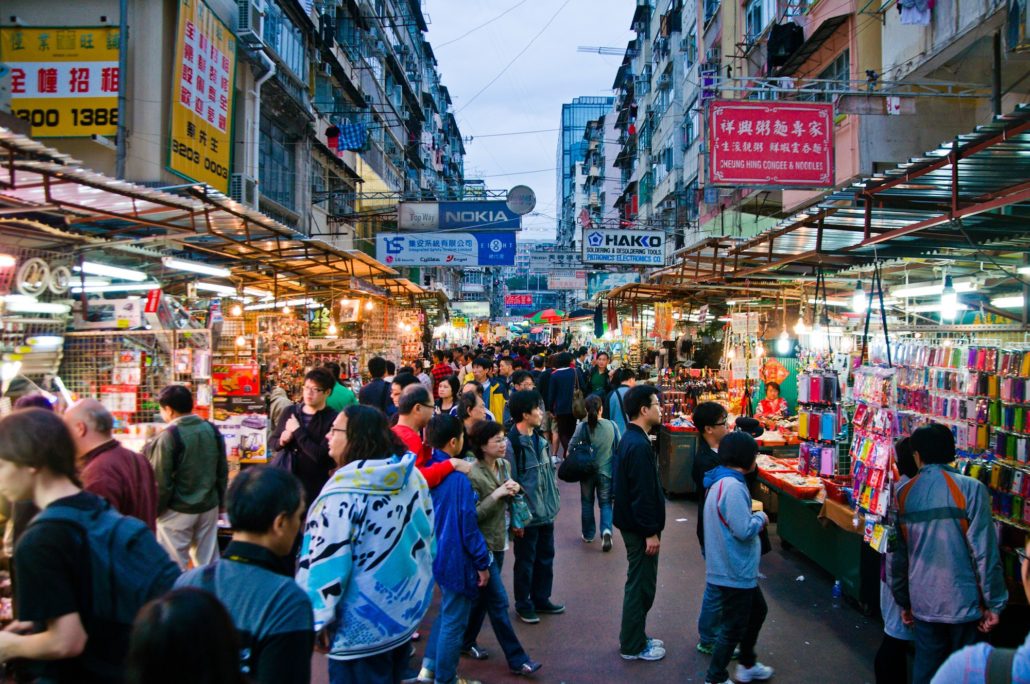
In Hong Kong’s top tourist area Tsim Sha Tsui, many shop workers tend empty shops waiting for consumers. This district holds an assortment of luxury hotels, restaurants and boutiques that attract tourists. In recent months, however, it has seen an inverse of traffic as shoppers occupy it less and protesters occupy it more. At the beginning of 2019, businesses started to struggle from the strained U.S. and Beijing trade war. In the months following, the economic state worsened and the protesting has lasted for months to date.

Similar to the tourism business, other industries across the region have felt comparable effects from the protests as well. A large number of startup companies are beginning to consider other areas like Singapore for future operations. Some economists believe that China may be one step closer to a recession as GDP has decreased. Select industries are seeing a decline rate in the double-digits from previous years.

Immigration

As the economy of China has been on the decline for months, immigrants from the mainland have moved to Hong Kong at high rates for the past 10 years. Estimates determine that between 60 to 70 percent of China’s population came from the mainland. In 2017, approximately 40 percent of immigrants from the mainland to Hong Kong were living under the poverty line.

Success So Far

Chinese leaders have held a goal to eliminate national poverty for several years now. Even with the protest and political tension that the region is facing, it still seeks to eradicate poverty. In the last seven years, nearly a billion citizens have risen from their impoverished status. In 2018, official counts determined that there were only 16 million people living below the poverty line. If the country continues at the rate it has been going, there will be just a few million people still in poverty by the end of 2019.

Distractions or Support

People have made numerous cases against the middle class, the largest class in the country. Some believe that this initiative has drowned out other issues that impact the nation. Topics such as extreme poverty and class status are beyond the realm of politics and legislation that people typically see. Another claim is that the economic frustrations of China’s citizens are pushing the protest to expand. What initially was about an extradition bill also serves as an opportunity for protesters to speak out about their concerns.

In the last decade, China has reduced the number of people living in poverty substantially, however, it has been occurring at a decreasing rate. In recent months, the discussion of China relates to the increasing rate of protests in Hong Kong. Many people have taken notice of how China’s protests affect its poverty and economy. The nation’s finances have been a point of interest as numbers fail to match those of previous years.

– Kimberly Debnam
Photo: Flickr

October 25, 2019
https://borgenproject.org/wp-content/uploads/borgen-project-logo.svg 0 0 Lynsey Alexander https://borgenproject.org/wp-content/uploads/borgen-project-logo.svg Lynsey Alexander2019-10-25 11:30:382020-01-18 14:42:56How China’s Protests Affect its Poverty and Economy
Global Poverty, Poverty, Poverty Reduction

Proximity Designs in Myanmar Aids its Economy

Proximity Designs in Myanmar
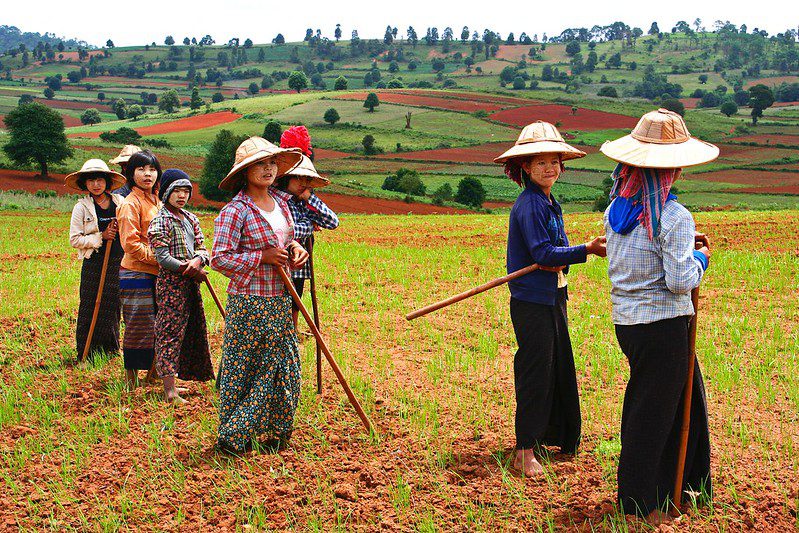
The South Asian country of Myanmar has some of the best farmland in all of Asia. Considered the breadbasket of Asia, Myanmar grows a substantial amount of crops. Unfortunately, despite boasting some of the best growing conditions, Myanmar is not as prosperous as it should be. Fortunately, the company Proximity Designs has been aiding Myanmar’s economy through farmers.

The State of Farming in Myanmar

The potential for Myanmar to boost its economy through farming is there for the taking, but there are some roadblocks to recovery. Here are some facts about farming in Myanmar:

  • Agriculture makes up almost 40 percent of Myanmar’s economy.

  • Agricultural exports make up almost 30 percent of Myanmar’s total export earnings.

  • The farming industry employs 70 percent of the country’s workforce.

  • One day of work in Myanmar produces only 23 kg of crops while neighboring countries may produce 10 times that amount.

  • During monsoon season, a farmer may make around $2 a day and during the dry season around $3 a day.

  • Farmers in neighboring countries, like Thailand, make at least $7 a day in both seasons.

Poverty in Myanmar

Given the resources, both natural and human, the productivity of Myanmar is very low. With farmers making less than $4 a day and far less than farmers in neighboring countries, they have a tough time fighting poverty. One in four people in Myanmar are poor and a large number of them live in rural areas. The number of poor people in rural areas is almost seven times higher than those living in urban areas.

The government has attempted to aid the poor with some success, but a third of the population is still at risk of falling into poverty. The people of Myanmar struggle financially because their farming industry is not productive. The lack of productivity is down to a lack of education and tools in farming.

How Proximity Designs is Helping Farmers in Myanmar

Proximity Designs is a company that aims to increase the productivity of farmers in Myanmar. Its founders are Jim Taylor and Debbie Aung Din and they created the organization in 2004. Based in Yangon, Myanmar’s largest city, the company wants to raise the poor out of poverty by helping them increase their profits. To start, the company created high-tech irrigation tools like custom irrigation systems and solar-powered pumps. Despite having such rich farmland, the people of Myanmar still rely on monsoon season to provide water for their crops. If farmers can find a better way to nourish their crops in the dry season, then they can increase productivity, which is exactly what Proximity Designs is trying to do.

Another way the company helps the poor is by providing microloans. People primarily use loans during the dry season when men move to cities to find better work. They use the money to cover the cost of transportation to the city and any living expenses for the rest of the family. Proximity Designs has used its business to reach 80 percent of Myanmar’s farming population. Its work has been aiding Myanmar’s economy for almost 15 years now and the country’s economy has been on a steady rise.

The work Proximity Designs is doing in Myanmar is very important. The government alone has not done enough for the country, but with the help of foreign entities aiding Myanmar’s economy, the agricultural sector could boom. The potential to excel is clear and the workforce is available to support the industry. It is just a matter of giving farmers the right tools and education to make smart choices and increase the number of crops that they are producing. With increased production, the economy of Myanmar should grow and raise the incomes of farmers all over the country.

– Gaurav Shetty
Photo: Flickr


October 25, 2019
https://borgenproject.org/wp-content/uploads/borgen-project-logo.svg 0 0 Lynsey Alexander https://borgenproject.org/wp-content/uploads/borgen-project-logo.svg Lynsey Alexander2019-10-25 02:30:362024-05-29 22:39:13Proximity Designs in Myanmar Aids its Economy
Education, Global Poverty, Poverty, Poverty Reduction

Artists Against Poverty

Artists against PovertyHistorically, art is a concept too broad to comprehend on a simplistic term. It can reference painting, drawing, music, writing, sculpting, acting, most creative ventures tend to fall under the category of art. With such a wide scape, it is no surprise that art also covers a range of topics, from love to politics to recycling. Poverty is a matter which has not escaped the global creative community and artists all over the world use their work to either raise awareness or take action against poverty. There are hundreds of thousands of relevant artists and projects around the world, though a few have caught significant attention for their contributions to the problem. Though a small sample, this article features a few of these artists against poverty and shows how art can be more than a pretty picture.
Willie Baronet

Willie Baronet is an artist, advocate, professor, entrepreneur and creative director who has dabbled in various projects and industries throughout the years. According to SMU (Southern Methodist University), his career includes advertising and design for several graphic projects, such as Communication Art, New York Art Annual and Annual Report Design: A Historical Retrospective 1510-1990. Baronet was also named as an AIGA Fellow in 2013 for his work in establishing a higher standard of performance for the creative community. His significant work as one of the artists against poverty, however, started back in 1993 with a project called We Are All Homeless.

Baronet began collecting signs from the homeless in an effort to raise awareness of the issue and try to understand their situation better. The project touches on both the moral challenge of those in a higher socio-economic position, as well as the more obvious subject of those in need. The work has won several awards and been exhibited all over the country, proving to be a powerful piece in the global conversation of poverty. Baronet’s contributes to such discussion establishes him as a powerful advocate for the homeless and leading voice in the fight against poverty.

Caitlin Beidler

Caitlin Beidler has taken advocacy to new heights with her art career. Back in 2006, she launched Redemption Art, a business that works to “free people through art,” according to the official website. The project has allowed this artist against poverty to directly interact with those in need by fostering a healthier community through small projects, such as murals with local children and live art events. Beidler has also taken global action by going to Haiti to paint murals with the children there in an effort to boost local morale. The work in Haiti has been done primarily through her sister’s non-profit, Growing Roots, an organization that works to help local communities in Haiti through direct action.

Beidler is a founding member of Growing Roots and helps oversee its four primary branches: Camp Hope, Community Mural Projects, the Planting Project and Mercy Relief. Each project touches on a different aspect of daily life for the Haitian people. Camp Hope is a day camp for local children, the Community Mural Projects are an artistic outlet (as previously mentioned), the Planting Project provides education and Mercy Relief provides aid during crisis periods. The work Beidler as done showcases the important facets of an artist’s life, they can both promote creativity while still contributing to the community. Art is both a means of emotional and practical support.

Michael Rakowitz

Michael Rakowitz is one of the artists against poverty who has taken direct action in fighting for the underdog. His career has spanned decades, with work being featured in such prominent venues as MoMA. Rakowitz is famous for its pieces with multiple purposes outside the artistic realm. In 2013, he opened a restaurant in Dubai called Dar Al Sulh. The art project doubled as nourishment for others as it told the history of the Jewish community in Iraq through the cuisine, showcasing the downfall of an entire people. Additionally, Rakowitz has been working on a long-term project since 1998 in which he turns art into a shelter.

The project, entitled paraSITE, utilizes the heat emitting from ventilation systems to create tent-like structures on the sides of buildings. These temporary homes often look like parasitic insects due to their bulbus form and positioning in the city. They have double lining as space between fills with air to inflate the structure while also heating the area inside for the homeless to sit in. The work—still ongoing today—has garnered mass attention for both its versatility and creative representation in the community. Rakowitz (throughout his career and with paraSITE in specific) proves art isn’t just for viewing or experience; it is an active part of life that can truly help others.

Conclusion

A common misconception about artists is that they are only a voice, they cannot contribute physically to the modern world. Art, however, has been evolving with the times the same way every other industry has for centuries. Artists have adapted to today’s fast-paced, efficiency-focused mindset. They raise the topic to eager ears, find creative ways to asses the problem and act as emotional and mental support to those in need all the while.

– Eleanora Kamerow
Photo: Flickr

October 23, 2019
https://borgenproject.org/wp-content/uploads/borgen-project-logo.svg 0 0 Kim Thelwell https://borgenproject.org/wp-content/uploads/borgen-project-logo.svg Kim Thelwell2019-10-23 06:01:532019-11-11 06:30:11Artists Against Poverty
Global Poverty, Poverty, Poverty Reduction, Women & Children, Women and Female Empowerment, Women's Empowerment, Women's Rights

3 Programs Aiding Women in Vietnam

Programs Aiding Women in Vietnam

Too many Vietnamese women find themselves locked into a life of abuse and poverty, with no skills or access to education to become gainfully employed. One example lies in the story of Sung Thi Sy. Sy resides in the Sa Phin village in the Dong Van District of Vietnam. According to the Asia News Network, her family lived in severe poverty for much of her life and she constantly lived in fear of her husband who would regularly abuse her. She considered running away, but she was worried about providing for her two young children. However, thanks to the support of a locally-funded program, Sy and her children are now thriving. There are many other programs aiding women in Vietnam including the following.

3 Programs Aiding Women in Vietnam

  1. Education and Training: One of the most well-known organizations that work to solve this problem is the Vietnamese Women’s Union (VWU). Founded in 1930, the VWU originally found roles for women during the liberation of Vietnam from French colonialism. After the end of the Vietnam War in 1975, the VWU focused on helping women rebuild their lives by pulling them out of poverty and introducing them to the workforce. Today, the VWU has more than 19 million members that constantly work towards gender equality for Vietnamese women. The VWU offers loans to help poor Vietnamese women afford a higher education and training programs to provide the skills needed to find higher-paying careers.
  2. Agriculture: Women in the Dong Van district of Vietnam face a high risk of human trafficking and domestic violence and an unpredictable climate with barren land which makes farming a challenge. One of the programs aiding women in Vietnam with these struggles is the Lanh Trang (White Flax) Agricultural and Forestry Services Cooperative. Launched in 2017, the program works to provide vocational skills for disadvantaged women and invests in the necessary equipment to grow and harvest flax for the women in the Dong Van area. Since its inception, the Lanh Trang Cooperative has created stable jobs for 95 women, including Sung Thi Sy, all of whom live on a budget of around $170 to $260 per month.
  3. Entrepreneurship: The United Nations Development Programme launched an initiative dubbed the Economic Empowerment of Ethnic Minority Women via Application of 14.0 to aid women in Vietnam through entrepreneurship. This initiative creates an online platform in which Vietnamese women can learn modern financial solutions, take online courses on creating a business, obtain new technology for production and many more services.

Today, Sung Thi Sy has a job in the production of flaxseed products and brings home a consistent paycheck to feed her children and preserve the roof above their heads. Women like Sy are living proof that with enough funding, programs like these can promote tangible improvements in the fight against poverty and inequality in Vietnam.

– Charles Nettles
Photo: Flickr

October 22, 2019
https://borgenproject.org/wp-content/uploads/borgen-project-logo.svg 0 0 Lynsey Alexander https://borgenproject.org/wp-content/uploads/borgen-project-logo.svg Lynsey Alexander2019-10-22 01:30:132024-05-29 23:13:253 Programs Aiding Women in Vietnam
Development, Education, Global Poverty, Poverty, Poverty Reduction

South Africa’s Unemployment

South Africa's Unemployment
South Africa’s unemployment rate is witnessing some of its worst times since 2008. Formal jobs are seeing a major downturn and many families within the country are suffering from larger amounts of poverty as a result. Despite these trying times, there are those who are trying to create opportunities in the face of hardship and help those trying to stand on their own feet through jobs and special education. One example is the fashion designer company OneOfEach and how it is not only creating jobs but showing a blueprint on how to fight South Africa’s unemployment by providing opportunity.

Economic Ups and Downs

South Africa’s economy is actually doing quite well in comparison to many of its neighbors. It has the second largest GDP in all of Africa, as well as having a large working force that has helped the country create the second-largest economy on the continent. Despite these breakthroughs, South Africa is currently undergoing one of its worst unemployment rates since 2008. This has lead to many people questioning how one of the largest economies in Africa can have such a large unemployment rate. The answer is simply lack of jobs and wage inequality.

South Africa has extremely wealthy business owners that own large conglomerates and industries including many labor workers. The problem with this is that the number of people working in labor was and still is far outpacing the number of people creating small businesses and new jobs as a result. South Africa is suffering from a crippling problem that causes a small business to not receive the support it needs to be an accessible venture for those not willing to work in the labor force. Limited job creation stifles job growth as a result.

Strength of Small Business

This is where the company OneOfEach comes in. This is a company that fully displays the culture of South Africa through the designs of clothing and handbags. What started in 2013 as a small business between Pauline Chirume and her daughter, Tamburai Chirume, has evolved into a chain that has 17 stores across the globe. This company stands out not only because of how successful it has been as a small business, but how much it contributes back to the populace. This company has taken it upon itself to make sure others profit from their success to help fight South Africa’s unemployment by providing opportunity.

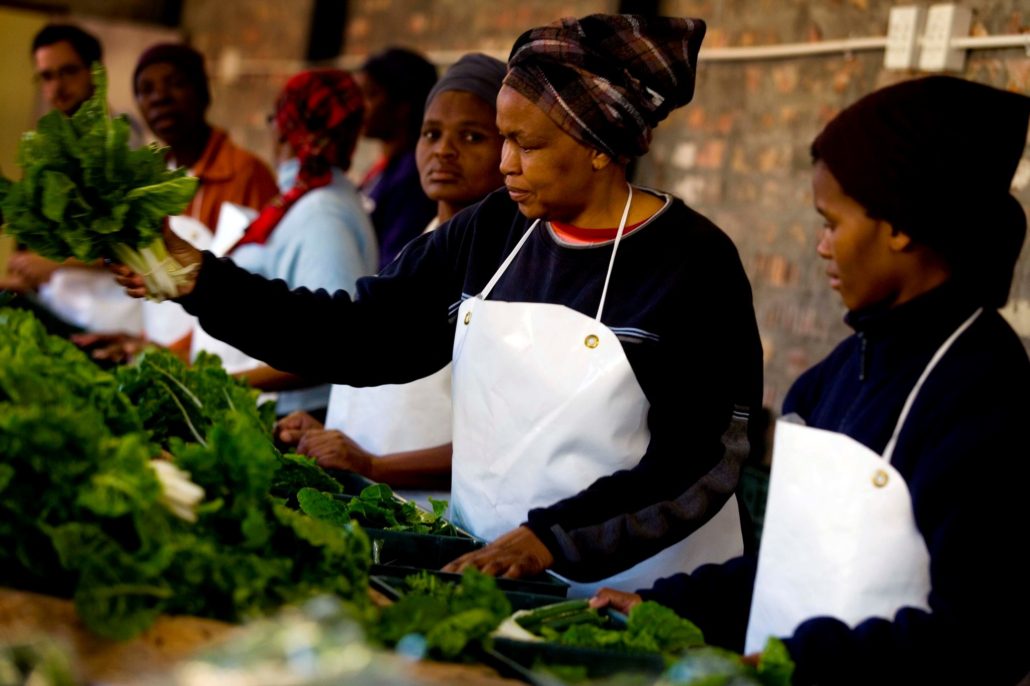
The Borgen Project interviewed the founder’s daughter to gain more insight into the organization’s operations. Pauline handles the creative side of the business while Tamburai handles the business end of things. Tamburai seeks to heavily involve female youth within the company as she wants to grant them an opportunity which is rare in South Africa. Tamburai mentioned that there are fewer opportunities for women to work in South Africa, which makes it especially difficult for single mothers. Tamburai seeks to employ women and single mothers so that they receive a stable income and job security. These women are also able to gain knowledge that can help them in the future and furthers the cause of fighting unemployment.

OneOfEach has several workshops where it teaches young girls how to manufacture items. These girls are all under the age of 35 and most of them come from poverty-stricken areas, including women’s shelters. The girls that receive training learn how to create items and the basics of the creative process. This is a great boon since most of the girls have never had any experience in retail or fashion design and thus earn a great amount of work experience. Despite all of this, what Tamburai considers one of the greatest accomplishments in her business is the fact that she can give health care to her employees, which is difficult for a small business in South Africa to grant. Tamburai feels that granting health care to her employees is a big step towards them gaining a decent lifestyle. She essentially wants to help these young ladies stand on their own two feet so that eventually they may gain enough education and experience to start small businesses of their own.

Helping the Jobless

Tamburai also notes how she feels that more opportunities like her business need to come into fruition to make a difference in South Africa. She notes that there are 6.7 million unemployed people in the country and she wants to do her part to make sure they have a chance. Tamburai also goes as far as to direct those under her wing to the American Corner, which is an opportunity hub where many can learn about different entrepreneurial possibilities in the country. The co-owner of OneOfEach feels that teaching people how to reach out and create jobs for themselves is one of the more effective ways to help deal with the unemployment rate in South Africa. She fears, however, that unless the government lends more funds and support towards small jobs, the impact will be monetary at best and stagnant at worst.

Tamburai is not incorrect about her observations regarding unemployment, nor should one fault her for trying to help women through her business. While 35 percent of men are out of a job, 43 percent of women are out of a job and having children or being single mothers may exacerbate this. With an unemployment rate of 29 percent which is currently climbing little by little, the country of South Africa has nearly 7 million people that are out of a job. The problem is not getting any better as the employment rate has only increased by 1.4 percent since the first quarter of 2019. If the job market does not include a flood of new jobs then the unemployment rate is unlikely to change in the foreseeable future. If some of these young women can make the most out of the tools, skills and experience that Tamburai and her mother have provided, however, they may be able to make a difference in the fight against South Africa’s unemployment.

– Collin Williams
Photo: Flickr

October 20, 2019
https://borgenproject.org/wp-content/uploads/borgen-project-logo.svg 0 0 Kim Thelwell https://borgenproject.org/wp-content/uploads/borgen-project-logo.svg Kim Thelwell2019-10-20 11:08:232024-05-29 23:13:08South Africa’s Unemployment
Global Poverty, Poverty, Poverty Reduction

5 Products Tackling Global Poverty

Products Tackling Global Poverty
People who live in poverty-stricken communities typically do not have access to simple products that can be the difference between life and death. Below are five products tackling global poverty.

5 Products Tackling Global Poverty

  1. The Shoe That Grows: The Shoe That Grows produces a shoe for kids living in poverty. It expands up to five sizes and lasts for years. Kenton Lee founded the shoe after he traveled to Nairobi, Kenya. He lived and worked with kids at a small orphanage and noticed that many of the children either had broken, worn shoes or none at all. He came up with the idea of a shoe that expands to prevent soil-transmitted diseases and parasites that can cause children to miss out on their education and even death. As of now, the company has distributed over 200,000 pairs of shoes to 100 different countries. The organization sent 30,000 of those to Ethiopia alone.
  2. NIFTY Cup: The NIFTY Cup is a device that some use to feed premature babies in Malawi and Tanzania who are unable to breastfeed. Unlike the metal cups and spoons that people in poverty-stricken countries often use, the NIFTY Cup contains durable, soft silicone that one can shape to allow all nutrients to reach babies’ mouths without causing them to cough or choke. The cup serves as a life-saving resource for mothers who do not have the necessary medical assistance necessary to keep premature babies healthy. Donors have made it possible to send over 6,000 NIFTY Cups to hospitals in Malawi and Tanzania.
  3. The Lucky Iron Fish: The Lucky Iron Fish is a tool used to fight iron deficiency in developing countries. Families place the iron fish in boiling water before cooking to add proper nutrients to meals. One of these iron fish is equivalent to five years of iron pill bottles. The Lucky Iron Fish company works on a one-to-one donation scale. This means that when people in developed countries buy one of the fish, the company donates another to a family in a developing country. As of 2018, the company impacted 54,000 lives because of the buy-one-give-one system. The impact fund has distributed the fish to Nicaragua, Tanzania, Cambodia, Haiti, Benin and more.
  4. Embrace Warmer: Embrace Warmer is a life-saving tool that developing countries use. In these places, newborn babies often suffer hypothermia due to being premature and low weight. The tool is essentially a sleeping bag that helps regulate the body temperature of newborn babies during their first few days of life. Embrace Warmer began as a class project at Stanford, when students had to design a cost-effective product to help battle neonatal hypothermia. Eventually, the product expanded to rural India and has now helped 200,000 infants in developing countries.
  5. Flo: Flo is a reusable menstrual hygiene kit that Mariko Higaki Iwai designed to provide a solution for women and girls in developing countries to take care of their bodies. The kit allows girls to wash, dry and carry reusable sanitary pads. This kit makes it easier for girls to stay in school, prevent reproductive diseases and illnesses and take care of their menstrual cycle in privacy. Flo is still a prototype but people working in the field in developing countries have been trying to make Flo available for their communities. The team is currently seeking manufacturers to make this possible.

These life-saving products are working at tackling global poverty, while also giving those who live in poverty-stricken communities a better chance at having a healthy lifestyle.

– Juliette Lopez
Photo: Flickr


October 18, 2019
https://borgenproject.org/wp-content/uploads/borgen-project-logo.svg 0 0 Jennifer Philipp https://borgenproject.org/wp-content/uploads/borgen-project-logo.svg Jennifer Philipp2019-10-18 10:53:042024-05-29 23:13:135 Products Tackling Global Poverty
Advocacy, Global Poverty, Poverty, Poverty Reduction, United Nations

China’s Contribution to Global Poverty Reduction

China's Contribution to Global Poverty Reduction
China has lifted 82.39 million rural poor out of poverty over the past six years. Additionally, recent data from the National Bureau of Statistics showed that the proportion of people living below the poverty line dropped from 10.2 to 1.7 percent in the same period. The population living below the current poverty line in the rural areas was 16.6 million by the end of 2018, down 13.86 million from the previous year. The poverty rate in 2018 was also down by 1.4 percent points from 2017. A lot has happened on the way for China‘s contribution to global poverty reduction, though.

China’s History

In 1958, Mao’s Communist Party introduced the Great Leap Forward, a failed effort to achieve rapid industrialization, and which, by its end in 1962, left as many as 45 million people dead as food output plunged and a famine wreaked havoc. The decade-long Cultural Revolution, which brought disaster to the country, only ended with Mao’s death in 1976. Because of such campaigns, China basically stood still as the rest of the world moved ahead.

Today, China’s huge strides over 70 years seem impressive but those gains occurred in the 40 years after Mr. Deng launched China on the road to economic reform after taking over from Mao’s chosen successor. Deng Xiaoping paved the way for how China contributes to global poverty reduction.

Poverty Alleviation in China

According to statistics that the World Bank released, over the past 40 years, the number of people in China living below the international poverty line has dropped by more than 850 million. This represents 70 percent of the total world figure. With the highest number of people moving out of poverty, China was the first developing country to realize the UN Millennium Development Goal for poverty reduction.

Indeed, poverty across the globe has seriously hindered the fulfillment and enjoyment of human rights for many. As such, many see reducing and eliminating poverty as the major element of human rights protection for governments across the world. It is really encouraging that, over the years, poverty eradication has always remained a goal for the Chinese government in its pursuit of a happy life for its people.

China’s Efforts to Alleviate Poverty Around the World

In the meantime, China’s poverty alleviation results are benefiting other countries and their peoples. China, with an aim to build a community with a shared future for humanity, is actively responding to the UN Millennium Development Goal and 2030 Agenda for Sustainable Development. It is conducting broad international collaboration on poverty reduction. Some examples of China contributing to global poverty reduction are the implementation of the China-Africa cooperation plan for poverty reduction and people’s livelihood and the 200 initiatives of the Happy Life Project.

Over the past 70 years, China provided financial aid of over 400 billion yuan to nearly 170 countries and international organizations, and carried out over 5,000 assistance projects overseas and helped over 120 developing countries to realize the Millennium Development Goal, a glorious example of how China’s contribution to global poverty reduction.

China plans to eliminate absolute poverty by 2020. The plan is not only a key step for the country to realize the Chinese Dream of the great rejuvenation of the Chinese nation, but also a significant and glorious cause in the human history of poverty reduction.

– Andrea Viera
Photo: Flickr


October 17, 2019
https://borgenproject.org/wp-content/uploads/borgen-project-logo.svg 0 0 Kim Thelwell https://borgenproject.org/wp-content/uploads/borgen-project-logo.svg Kim Thelwell2019-10-17 01:30:102024-05-29 23:12:24China’s Contribution to Global Poverty Reduction
Extreme Poverty, Global Poverty, NGOs, Poverty, Poverty Reduction

The Link Between Oil and Poverty

Oil and Poverty
Oil has been a massive drive for inequality in the modern world, especially The Organization of the Petroleum Countries (OPEC) member states. Oil and poverty intertwine, especially in OPEC nations. OPEC, at its core, is a union of oil-producing countries that work together to make decisions on how much oil countries extract and export around the world. While OPEC strength has diminished in the world with increased oil supply coming in from Canada and The United States, OPEC nations still have stranglehold grips on their economies and governments. OPEC found its beginning in the 1960s with five countries, including Kuwait, Venezuela, the Islamic Republic of Iran, Saudi Arabia and Iraq.

Reliance on Oil Revenue

One thing that all the founding OPEC nation members have in common is a poor Freedom House Index score. Kuwait currently has the highest score with Freedom House giving it an overall score of partly free while the other four have a score determining them not free. With five distinct countries with different styles of government and cultures with one being across the globe, the one common thread is the large oil reserves that each of these countries relies on. For instance, a report by export.gov finds that “oil comprises nearly half of Kuwait’s GDP, around 95 percent of exports and approximately 90 percent of government revenue.”

The fact that government revenue comes mostly from Kuwait’s nationalized oil industry and the Kuwait Petroleum Company (KPC) shows an alarming trend. With the country relying mainly on oil revenue, the government taxes the population less, meaning that the government can ignore the requests for policy reform for less risk. If everyone in the United States decided to protest government activity, the federal government would have a serious fiscal issue on its hands, but if Kuwait’s population decided to stop paying taxes, the overall fiscal attitude of Kuwait would only change minimally.

Kuwait’s failure to support its people reflects in the numbers. According to the Central Intelligence Agency (CIA) Factbook, the total unemployment rate in Kuwait is 15.4 percent, with women being 30 percent unemployed and men being 9.4 percent unemployed. The CIA also cites that current health expenditures are only 4 percent of the economy, and there are only two beds per 1,000 people. These three simple metrics show a blatant disregard towards social issues such as women’s rights and political/economic issues such as health care and infrastructure.

Solutions

In some ways, the problem of oil and poverty and OPEC is self-repairing. As large and easy oil reserves start to dry out, the cost of obtaining more oil will increase to the point where it is no longer economically feasible to extract it. There is much debate as to when this will occur, but for many western countries, green energy has already become cheaper than traditional fossil fuels. This trend reflects in its GDP growth rate, which the CIA has concluded to be negative 3.3 percent and has been negative since 2015. With 90 percent of the countries’ GDP tied up in oil and the growth rate being negative, one can infer that as the world’s oil supplies dry up and people’s preferences shift towards green energy, Kuwait will eventually have to find another way to support itself.

Fighting the fight against OPEC and oil and poverty is easier than one might think. Since OPEC operates as a union based on exports, supporting NGOs and governmental policies towards green energy in any capacity either directly on indirectly damages OPEC. A great NGO to support is Green America which has the mission statement, “Our mission is to harness economic power—the strength of consumers, investors, businesses, and the marketplace—to create a socially just and environmentally sustainable society.” With Green America’s goals of social equity and sustainability, it is the perfect NGO to counter oppressive regimes that profit from killing the planet.

– Spencer Julian
Photo: Wikipedia


October 15, 2019
https://borgenproject.org/wp-content/uploads/borgen-project-logo.svg 0 0 Kim Thelwell https://borgenproject.org/wp-content/uploads/borgen-project-logo.svg Kim Thelwell2019-10-15 10:41:032024-05-29 22:27:10The Link Between Oil and Poverty
Global Poverty, Poverty, Poverty Reduction

Five Youth Sports Programs Alleviating Poverty

Sports Programs Alleviating Poverty
Sports are not an easy ticket out of poverty, but sports programs for impoverished youth can provide skills, support and guidance that can strengthen individuals and communities. Developing physical, social and emotional health are just a few of the benefits that children can reap from participation in quality sports programs. Below are five youth sports programs alleviating poverty worldwide.

Five Youth Sports Programs Alleviating Poverty Worldwide

  1. Tiempo de Juego: Tiempo de Juego in Colombia considers the game of soccer to be a tool capable of transforming communities, developing the skills of boys and girls and inspiring them to become agents of change. Tiempo de Juego takes an academic approach to the game of soccer, identifying three areas of development: technical skills, psychosocial development and a pedagogical foundation. Through the common bond of soccer, Tiempo de Juego allies with seven local schools as well as families to bring positive social opportunities to the lives of community members. It even supports small business endeavors of families who provide goods and services such as screen-printed t-shirts and vending for soccer events.
  2. Line Up, Live Up: Line Up, Live Up is a life skill curriculum with various sports from martial arts to volleyball. The Youth Crime Prevention through Sports Initiative sprang from the Global Programme for the Implementation of the Doha Declarative and is taking roots in Palestine and Central Asia. In addition to physical exercise and teamwork, Line Up, Live Up helps kids learn life skills for resisting social pressures of drug use and delinquency. It also helps students with issues such as anxiety and communication with peers. Line Up, Live Up forms its basis from empirical research from the United Nations Office on Drug and Crime and also the understanding that risk factors in the lives of youth can be reduced through meaningful intervention. The belief that actual changes in attitudes and behaviors can take place drives the organization.
  3. Love Fútbol:  Love Fútbol emerged in 2006 after Drew Chafetz founded it on the platform that community-driven energy toward social change could happen on a universal passion for soccer. An avid soccer player who traveled widely, Drew noticed the unsafe and unsupervised conditions in which impoverished kids often played. Drew developed the philosophy that every child has the right to play soccer and he built that dream into fruition in a collaborative way.The first program started in Guatemala before expanding to Brazil. Each place Love Fútbol goes, the community plays a vital role in building the field and creating the program, thereby instilling their ownership in the process. Partnering with global sponsors, Love Fútbol provides funding for raw materials. In Colombia, Love Fútbol partnered with Tiempo de Juego that had the experience and the vision of implementing soccer programs in its own community but lacked the budget. Love Fútbol was able to help make its dreams a reality. The whole community built the field with the help of over 100 volunteers and 1,500 hours of labor. In another location in Mexico, the organization constructed a soccer field on the former site of a factory, bringing revitalization to the community. With well-maintained fields and supervised programs, impoverished participants can build healthier and more productive lives. Love Fútbol programs are growing throughout Latin America and these sports programs are alleviating poverty successfully.
  4. Waves for Change: Waves for Change is a unique program on this list, as it does not involve a ball game. Waves for Change is a surfing program for youth that face poor infrastructure, violence and poverty in Capetown, South Africa. Tim Conibear founded it in 2009 because he recognized that surfing was a great way to reach at-risk youth who would not otherwise have access to such activities. Primarily a mental health foundation, the program addresses the psychological and emotional well-being of kids who often experience trauma. Waves for Change teams with mental health professionals to address the issues of child mental health. Program leaders note an improvement in self-care and participation in school for those who take part in the program. Kids who grow up in gang culture are looking for risk and surfing can fulfill that need in a positive way. The organization is able to employ over 40 coaches who are former participants in the program. The activity instills pride, personal responsibility and a sense of self-worth.
  5. Cricket Program: Daniel Juarez, an accomplished cricket player in Argentina, founded Cricket Program. He established this program for the youth living in the most dangerous and impoverished slums of Argentina. Caacupe Community Center offers the cricket program. Pope Francis, formerly cardinal to Buenos Aires, is a benefactor as well as Rev. Pepe Di Paola who people know for his anti-crime work in area slums. Through the sport, kids receive an education and learn values. Some participants have developed their skills to such a high level as to qualify for national-level youth cricket teams. The organizers believe cricket provides a foundation that participants can carry with them throughout life. It even received a Best Spirit Award from the International Cricket Council.

Children worldwide have a natural drive and passion to play sports and these five sports programs are alleviating poverty worldwide. Poverty can inhibit access to good equipment, safe fields and quality instruction, but through innovative programs that engage community members and provide structure and funding, kids can experience the joy of play as well as build valuable life skills. The confidence gained can nurture lives and empower families in their rise from poverty.

– Susan Niz
Photo: Flickr

October 13, 2019
https://borgenproject.org/wp-content/uploads/borgen-project-logo.svg 0 0 Kim Thelwell https://borgenproject.org/wp-content/uploads/borgen-project-logo.svg Kim Thelwell2019-10-13 01:30:512024-05-29 23:13:08Five Youth Sports Programs Alleviating Poverty
Development, Global Poverty, Poverty, Poverty Reduction

5 Countries With The Best Poverty Reduction Programs

Best Poverty Reduction Programs
In the global fight against poverty, there have been countless programs to effectively downsize this issue. Poverty reduction programs are an important part of the fight against poverty and because of this, countries should be able to cooperate and learn from one another. Thankfully, with the help of the U.N., the world has been making progress in terms of cooperating to implement good poverty reduction programs. In no particular order, these are the five countries with some of the best poverty reduction programs.

Five Countries with the Best Poverty Reduction Programs

1. China

For the Middle Kingdom, poverty reduction is a key contributing factor to its rapidly growing economy. China has helped reduce the global rate of poverty by over 70 percent, and according to the $1.90 poverty line, China has lifted a total of 850 million people out of poverty between 1981 and 2013. With this, the percentage of people living under $1.90 in China dropped from 88 percent to less than 2 percent in 32 years. China’s poverty reduction programs have also benefitted people on a global scale by setting up assistance funds for developing countries and providing thousands of opportunities and scholarships for people in developing countries to receive an education in China.

2. Brazil

Brazil has taken great steps in reducing poverty and income inequality. Brazil has implemented programs such as the Bolsa Familia Program (Family Grant Program) and Continuous Cash Benefit. Researchers have said that the Family Grant Program has greatly reduced income disparity and poverty, thanks to its efforts of ensuring that more children go to school. They have also said that beneficiaries of this program are less likely to repeat a school year. Meanwhile, the Continuous Cash Benefit involves an income transfer that targets the elderly and the disabled.

3. Canada

Canada has implemented poverty reduction programs such as the Guaranteed Income Supplement and the National Housing Strategy. The Guaranteed Income Supplement is a monthly benefit for low-income senior citizens. This program helped nearly 2 million people in 2017 alone. Meanwhile, the National Housing Strategy in an investment plan for affordable housing that intends to help the elderly, people fleeing from domestic violence and Indigenous people. With its poverty reduction programs in place, Canada reportedly hopes to cut poverty in half by 2030.

4. United States

Although the United States has a long way to go when it comes to battling poverty, it does still have its poverty reduction programs that have proven to be effective. According to the Los Angeles Times, programs such as Social Security, Temporary Assistance for Needy Families, the Earned Income Tax Credit and food stamps have all helped to reduce deep poverty. In particular, people consider the Earned Income Tax Credit to be helpful for families that earn roughly 150 percent of the poverty line, approximately $25,100 for a four-person family. Social Security could help reduce poverty among the elderly by 75 percent.

5. Denmark

Denmark has a social welfare system that provides benefits to the unemployed, the disabled and the elderly, among others. People in Denmark are generally in good health and have low infant mortality rates. Denmark also has public access to free education, with most of its adult population being literate.

It should be stressed that none of these countries are completely devoid of poverty, but they do provide some good examples of how governments can go about reducing this issue. With the help of organizations like the USAID, it is clear that this is an issue many take seriously.

– Adam Abuelheiga
Photo: Flickr

October 12, 2019
https://borgenproject.org/wp-content/uploads/borgen-project-logo.svg 0 0 Kim Thelwell https://borgenproject.org/wp-content/uploads/borgen-project-logo.svg Kim Thelwell2019-10-12 01:30:002019-10-17 19:45:225 Countries With The Best Poverty Reduction Programs
Page 32 of 63«‹3031323334›»

Get Smarter

  • Global Poverty 101
  • Global Poverty… The Good News
  • Global Poverty & U.S. Jobs
  • Global Poverty and National Security
  • Innovative Solutions to Poverty
  • Global Poverty & Aid FAQ’s
Search Search

Take Action

  • Call Congress
  • Email Congress
  • Donate
  • 30 Ways to Help
  • Volunteer Ops
  • Internships
  • Courses & Certificates
  • The Podcast
Borgen Project

“The Borgen Project is an incredible nonprofit organization that is addressing poverty and hunger and working towards ending them.”

-The Huffington Post

Inside The Borgen Project

  • Contact
  • About
  • Financials
  • President
  • Board of Directors
  • Board of Advisors

International Links

  • UK Email Parliament
  • UK Donate
  • Canada Email Parliament

Get Smarter

  • Global Poverty 101
  • Global Poverty… The Good News
  • Global Poverty & U.S. Jobs
  • Global Poverty and National Security
  • Innovative Solutions to Poverty
  • Global Poverty & Aid FAQ’s

Ways to Help

  • Call Congress
  • Email Congress
  • Donate
  • 30 Ways to Help
  • Volunteer Ops
  • Internships
  • Courses & Certificates
  • The Podcast
Scroll to top Scroll to top Scroll to top