• Link to X
  • Link to Facebook
  • Link to Instagram
  • Link to TikTok
  • Link to Youtube
  • About
    • About Us
      • President
      • Board of Directors
      • Board of Advisors
      • Financials
      • Our Methodology
      • Success Tracker
      • Contact
  • Act Now
    • 30 Ways to Help
      • Email Congress
      • Call Congress
      • Volunteer
      • Courses & Certificates
      • Be a Donor
    • Internships
      • In-Office Internships
      • Remote Internships
    • Legislation
      • Politics 101
  • The Blog
  • The Podcast
  • Magazine
  • Donate
  • Click to open the search input field Click to open the search input field Search
  • Menu Menu

Archive for category: Poverty Reduction

Information and stories about poverty reduction.

Economy, Education, Global Poverty, Poverty, Poverty Reduction

Reducing Ghana’s Poverty Rate: 3 Keys to Success

Ghana's Poverty Rate
Ghana is a West African country that has made considerable progress in reducing poverty. Ghana’s poverty rate gradually lowered since the 1990’s. Poverty reduced from 52.6 percent in 1991 to 21.4 percent in 2011. Ghana slashed its poverty rate by more than half and became a middle-income country in 2011. The three reasons for this huge reduction are economic growth, diversification and education development.

Poverty Reduction in Ghana: 3 Keys to Success

  1. Economic Growth: Ghana’s 2017 GDP growth rate was about 8.4 percent, which was the seventh-fastest GDP growth rate in the world. The economy is developing quickly, as the country sets a few policy barriers to investment and trade in relation to other African countries in the region. Due to the few barriers, investment in natural resources such as oil and gold are common. Gold alone brings about 48 percent of the country’s revenue and is one of the main reasons for economic growth. Gold production amounted to about 590,000 ounces in 1990 and increased to 4.6 million ounces in 2018. As of 2018, Ghana is number seven in the world for gold production.

    Oil is also an important export but is relatively new. The oil sector is less than 10 years old, yet is growing at a rapid rate. In 2017, more than 500 million barrels were produced from the Sankofa fields. Ghana’s growth averaged about 4 to 5 percent in the 1990’s and has gradually increased over time. Thanks to steady growth, Ghana’s poverty rate was 21 percent in 2012, which is less than half the African average of 43 percent.

  2. Diversification: Oil and gas are two areas that helped diversify the economy and reduce Ghana’s poverty rate by creating jobs and increasing wages for those transitioning out from low-wage occupations and into more lucrative fields. The service industry is 57 percent of GDP and remains the largest sector and another important area in Ghana’s growth. The service sector also employs about 40 percent of the population.

    Agriculture still employs a little more than a quarter of the population, yet the service and manufacturing sectors have steadily grown since 1991. Developing economies are mainly agriculture-dependent economies. As a middle-income country, the amount of the population employed by Ghana’s manufacturing and service sector expresses transitioning into a developed and stable economy. In 2008, employment in agriculture was 52.5 percent and reduced to 33 percent in 2018. Service employment rose from 33 percent in 2008 to 47 percent in 2018. In only 10 years the service sector has grown 14 percent. The industry grew 4 percent during that same time period. Telecommunications and tourism are two services that helped grow the service sector.

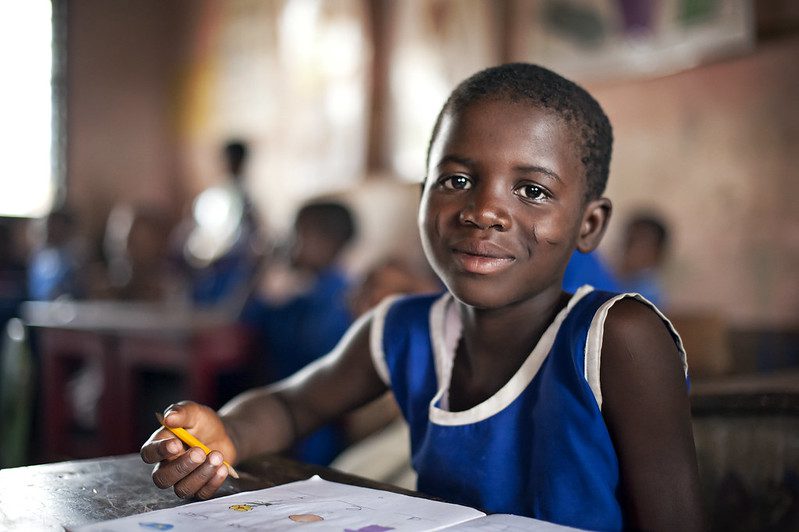
  3. Focus on Education: A better educated and trained country leads to more opportunities. The number of people in Ghana’s workforce without education dropped from 41 percent in 1991 to 21 percent in 2012. Almost 90 percent of children attend school, which is a big difference from other African countries. Only 64 percent of Nigerian children attend school. Ghana spends about 8 percent of its budget on education, which is more than the United Nation’s 6 percent benchmark. For reference, the U.K. spends a little more than 6 percent on education. Ghana’s progress in education began with the U.N.’s millennium development goals that the U.N. set in 2000, and it developed at such a fast rate because it pushed for education.

Ghana’s poverty rate slashed in half thanks to education development, diversification and fast economic growth. The economy is still strong despite its 2015 recession. The economically diverse and natural resource-rich Ghana has made tremendous progress in poverty reduction and is projected to continue reducing its poverty rate in the future.

– Lucas Schmidt
Photo: Flickr

November 24, 2019
https://borgenproject.org/wp-content/uploads/borgen-project-logo.svg 0 0 Lynsey Alexander https://borgenproject.org/wp-content/uploads/borgen-project-logo.svg Lynsey Alexander2019-11-24 01:30:182024-05-27 23:58:48Reducing Ghana’s Poverty Rate: 3 Keys to Success
Global Poverty, Poverty Reduction, Sustainable Development Goals, United Nations

The United Nations and Global Poverty Reduction

United Nations and Global Poverty Reduction
Since its establishment in 1945, the United Nations has had the responsibility of maintaining peace and stability across the globe. This governmental body is at the center of global disputes, such as the ongoing conflicts in Syria and Brexit. It can also exercise diplomatic abilities when it comes to enforcing economic sanctions against some of the world’s less democratic actors. The U.N. has fashioned a multitude of agencies and programs with the sole intention of bringing billions out of poverty and on the path to more sustainable and secure lives.

As a Nobel Prize-winning organization, the United Nations became the world’s first far-reaching diplomatic body. With the powers outlined in its charter, the United Nations is in a unique position to confront many of the world’s 21st-century woes. From global security to health emergencies, the U.N. has the ability to assist in a plethora of international issues.

Beyond Global Conflict

While vital in resolving global conflict, the United Nations and global poverty reduction are not solely peace-keeping endeavors. On December 22, 1992, through resolution 47/196, the U.N. reaffirmed its commitment to global poverty reduction and declared Oct. 17 the International Day for the Eradication of Poverty. According to its website, “On that day, over 100,000 people gathered at the Trocadéro in Paris, where the Universal Declaration of Human Rights was signed in 1948, to honor the victims of extreme poverty, violence and hunger.”

While there is much optimism that one can find in the fight to end global poverty, such as the reduction of the global poverty rate by more than half since 2000., the U.N. is aware that to combat poverty, there is a need for global strategies, outreach and funds.

The Division for Social Policy and Development

The United Nations has developed programs within the organization with the primary functions of establishing the goals and parameters that will hopefully lead society down a path of complete poverty eradication. For example, the Division for Social Policy and Development (DSPD) acts as the primary arbitrator of programs that directly assist participating nations with policy initiatives that will put them on the road to being more secure, free and developed. It does this by improving standards of living and quality of life for billions of people through health and education outreach, economic development and an impassioned commitment to promoting security and harmonious societies.

The 2030 Agenda for Sustainable Development

As a part of its commitment to poverty elimination and overall sustainability, the U.N. unveiled an ambitious plan. In September 2015, the U.N. began the 2030 Agenda for Sustainable Development. This daring strategy tackles issues that people universally share and provides a valuable road map to reaching their outlined goals. It includes 17 sustainable development goals (SDGs), as well as 169 global targets that the world intends to meet by 2030. This plan is different from past attempts because of its creative approaches and sheer scale. The United Nations and global poverty reduction efforts include goals to not only tackle the climate crisis but also boost renewable energies, ensure sustainable water and build resilient infrastructures.

As ambitious as this plan may seem, the United Nations sees no reason why it is not achievable. The size of the plan is equitable to the scale of the problem. Of the world’s population, 10 percent of the world or 700 million people still live in extreme poverty. Further, those in extreme poverty are living on $1.90 a day.

The United Nations is aware that while economic prosperity is vital to providing better circumstances, other factors play indirect roles. For example, the U.N. sees the current climate crisis as a clear impediment to achieving its development goals.

Impact of Climate Change

A U.N. report makes it starkly clear that the impacts of climate change and inequality are only exacerbating the already immense issues of hunger and could potentially undermine its goal of ending poverty by 2030. It also notes that the pace of poverty reduction began to slow down in 2018. This will dampen the U.N.’s ability to reach the SDGs and hinder resilience toward deprivation, political unrest and natural disasters.

While the United Nations is confident that it will meet its goals, it will undoubtedly meet new challenges. This was evident when The Borgen Project spoke to Aliyya Noor, a Communications Associate at the United Nations’ Food and Agriculture Representative Office in Islamabad, Pakistan. For Noor, the path out of extreme poverty in Pakistan comes from within the global community through foreign aid.

When The Borgen Project questioned Noor about what the most pressing reason to donate to foreign aid is, she responded, “to eliminate global poverty, the disparity between immense wealth and extreme poverty is increasing day by day.” Noor believes the United Nations’ all-encompassing approach has the best chance of dealing with the multitude of issues the world faces today. “We can, and should, have more than one ball in the air at a time. Many of these problems support each other, so if we tackle one, we’ll have a good chance against the others.”

The United Nations’ Future Work

The United Nations and global poverty reduction efforts are not perfect, and some critics have even argued its ineffectiveness. However, it has made great strides in many areas of poverty reduction and global development. If the decline in overall global woes is any indication, the U.N.’s leadership in these areas appears to be working. The benefits extend to everyone, not just the nations and organizations involved.

When the Borgen Project asked Noor if she felt optimistic about the progress, she responded, “We could be doing more, of course. But, when you see the impact our people and programs can have on lives, you can’t help but feel optimistic.”

 – Connor Dobson
Photo: Wikimedia Commons
November 22, 2019
https://borgenproject.org/wp-content/uploads/borgen-project-logo.svg 0 0 Jennifer Philipp https://borgenproject.org/wp-content/uploads/borgen-project-logo.svg Jennifer Philipp2019-11-22 14:30:232024-05-29 23:13:46The United Nations and Global Poverty Reduction
Advocacy, Global Health, Global Health, Global Poverty, Poverty, Poverty Reduction

3 Young Advocates Who are Changing the World

young advocates

Today, some of the most innovative, forward-thinking change-makers happen to be under the age of 18. Keep reading to learn more about these three top young advocates who are doing their part to address global issues from poverty to gender equality and education.

3 Young Advocates Who are Changing the World

  1. Zuriel Oduwole
    Since the age of 10, Zuriel Oduwole has been using her voice to spread awareness about the importance of educating young girls in developing countries. Now 17 years old, Oduwole has made a difference in girls’ education and gender issues in Africa by meeting with and interviewing important political figures like presidents, prime ministers and first ladies. To date, Oduwole has spoken in 14 countries to address the importance of educating young girls in developing countries, including Ethiopia, South Africa, Ghana, Tanzania and Nigeria. “They need an education so they can have good jobs when they get older,” Oduwole said in a 2013 interview with Forbes. “Especially the girl child. I am really hoping that with the interviews I do with presidents, they would see that an African girl child like me is doing things that girls in their countries can do also.”
  2. Yash Gupta
    After breaking his glasses as a high school freshman, Yash Gupta realized how much seeing affects education. He did some research and found out that millions of children do not have access to prescription lenses that would help them to excel in their studies. Gupta then founded Sight Learning, a nonprofit organization that collects and distributes eyeglasses to children in Mexico, Honduras, Haiti and India.

  3. Amika George
    At the age of 18, Amika George led a protest outside of former U.K. Prime Minister Theresa May’s home to convince policymakers to end “period poverty.” Period poverty is the unavailability of feminine sanitary products for girls who cannot afford them. Girls who can’t afford these products are often left to use rags or wads of tissue, which not only raises health concerns but also keeps girls from their education. In order to combat this issue, George created a petition with the goal for schools to provide feminine products to girls who receive a free or reduced lunch. As of now, George has mobilized over 200,000 signatures and helped catapult the conversation of period poverty at the political level in the U.K.

These three world-changing children prove that age does not matter when it comes to making a difference in the world.

– Juliette Lopez
Photo: Flickr

November 21, 2019
https://borgenproject.org/wp-content/uploads/borgen-project-logo.svg 0 0 Lynsey Alexander https://borgenproject.org/wp-content/uploads/borgen-project-logo.svg Lynsey Alexander2019-11-21 07:30:192024-05-29 23:13:173 Young Advocates Who are Changing the World
Global Poverty, NGOs, Poverty, Poverty Reduction

3 Nonprofits Helping Syrian Refugees

Nonprofits Helping Syrian Refugees

The Syrian civil war has been ongoing since 2011, making the Syrian refugee population the world’s largest group forcibly displaced from their country. At the end of 2018, there were 13 million refugees from Syria, accounting for more than half of the country’s total population. The vast majority of Syrian refugees in Lebanon (70 percent) and Jordan (90 percent) are living below the poverty line. Fortunately, a number of groups are stepping in to deliver humanitarian aid to Syrian refugees. Keep reading to learn more about these three nonprofits helping Syrian refugees.

3 Nonprofits Helping Syrian Refugees

  1. Sunrise USA – Founded in 2011, Sunrise USA is a nonprofit organization focused on providing humanitarian assistance for Syrians in need whether they still live in the country or not. The group is focused on sustainable development in areas including education and health care.
    • Health Care – With help from donations, Sunrise USA built a full-time clinic in the Tayba camp in Syria, as well as a clinic in Istanbul and a polyclinic in Rihanli, Turkey. The organization has also established 22 trauma care facilities in Syria.
    • Education – As of 2018, around 5.8 million children and youth in Syria were in need of education assistance. About 2.1 million of them were out of school completely. Sunrise USA has built four schools and provided books and supplies to students and families around refugee camps. In 2015, Sunrise USA was a lead sponsor in the creation of the Al-Salam School which had 1,200 students.
    • Care for Orphans – The number of Syrian orphans, both in Syria and neighboring countries, has increased to more than 1 million since 2011. Through Sunrise USA’s orphan sponsorship, hundreds of orphans have been provided with food, clothing, education and medicine.
  2. Doctors Without Borders (DWB) – Officially founded in 1971, the organization’s core belief is that “all people have the right to medical care regardless of gender, race, religion, creed, or political affiliation, and that the needs of these people outweigh respect for national boundaries.” Here’s a look at DWB’s efforts to help Syrian refugees:
    • Jordan – In 2017, Jordan closed off the border connecting the country to Syria and in 2018 canceled all subsidized health care for Syrian refugees. Doctors Without Borders has three clinics in Irbid, Jordan that focus on non-communicable diseases, which are the leading causes of death in the region. In 2018, the organization provided 69,000 outpatient consultations, 11,900 individual mental health consultations and 2,690 assisted births.
    • Lebanon – Shatila refugee camp in South Beirut is home to Palestinians, Syrians and Lebanese people living in poor and overcrowded conditions with minimal services. Doctors Without Borders has set up both a primary health care center and a women’s center inside the camp in 2013. The organization also launched a vaccination campaign around the camp, opened a mental health support branch in a clinic in Fneideq, offer family planning and mental health care services in the Burj-al-Barajneh refugee camp, and operate a care program in Ein-al-Hilweh refugee camp for patients with mobility issues.
  3. Concern Worldwide US – Founded in 1968, Concern Worldwide works in the world’s poorest countries to provide emergency response, education, water and sanitation, as well as help communities develop resilience to higher impacting climates. The organization works to help Syrian refugees in a few ways:
    • Lebanon – Concern Worldwide is not only focused on creating “collection centers,”–which are multi-family shelters–but also on improving water, sanitation and hygiene conditions in the highly concentrated refugee areas of the country. The organization has provided assistance for 56,000 refugees and is also helping hundreds of children get access to education.
    • Syria – Since 2014, Concern Worldwide has worked in Syria to tackle waterborne diseases by installing generators and chlorinated water sources and also providing hygiene supplies. The organization also provides basic necessities to Syrians by distributing food baskets and for families with access to markets, food vouchers.

– Jordan Miller
Photo: Flickr

November 14, 2019
https://borgenproject.org/wp-content/uploads/borgen-project-logo.svg 0 0 Lynsey Alexander https://borgenproject.org/wp-content/uploads/borgen-project-logo.svg Lynsey Alexander2019-11-14 10:53:092024-05-27 09:22:473 Nonprofits Helping Syrian Refugees
Global Poverty, Poverty, Poverty Reduction

Japanese Organizations Combating Poverty Globally

Japanese Organizations Combating Poverty
Just like other highly developed nations, Japan actively pursues international affairs. People tend to think of America as a country that aids in poverty reduction before Japan, with famous American humanitarian groups like the Red Cross or Salvation Army in mind. Japan has charities of its own, though; a handful of them focus on eliminating poverty in various locations. Here is a list of Japanese organizations combating poverty on a global scale, expanding the visions of a better future from Japan to the rest of the globe.

The Nippon Foundation

One Japanese organization is the Nippon Foundation, which participates in several areas of activity, including how to enrich communities and bring them closer together. The Nippon Foundation describes itself as a social innovation hub, but it is also a nonprofit organization providing grants to fund research. The Establishment of Model Learning Deaf School in the Philippines receives around $161,000 in grants. Scholarships, fellowships and supporting projects in social issues are also part of the Foundation’s scope. Projects of the Nippon Foundation branch out into multiple fields; it provides resources to directly address poverty itself and its reach goes to a diverse number of countries.

One focus of the organization is child poverty, as it attempts to bring awareness to the issue. Important research in economics helps display the burden children have when they try to attend schools. More specifically, the project targeted the fact that a difference in education produces a difference in income, and a higher income leads to more taxes and social security premiums, reducing the government’s fiscal load. By comparing scenarios, the organization proved that a higher number of well-paying jobs yields significantly more premiums.

The Foundation set up an initiative in Africa to teach agricultural farmers how to increase their production, wishing to teach farmers how to process and preserve crops rather than only provide resources. It aimed to create a value chain or framework for sustainable agriculture to help farmers establish a market for their crops.

In Myanmar, the Foundation supported the building of schools and treatment for leprosy. From the 1960s until the present day, the cases of leprosy per 10,000 have reduced from 250 to 10. The Nippon Foundation began building schools and similar infrastructure during Myanmar’s period of military rule, where the country did not connect with the rest of the world. The government directly requested the organization to establish schools, eventually creating a link with the local communities it was helping.

Oxfam Japan

Oxfam believes that poverty is an injustice in a rich world and that every person should live with dignity. Comprised of a confederation of smaller organizations, Oxfam Japan also places heavy emphasis on community and global interactivity. Poor people, Oxfam believes, should possess a voice in the decisions that affect them and enjoy an improved livelihood in the process.

The organization’s actions include emergency responses that provide immediate relief to natural disasters and conflict as well as long term development. The organization places a significant effort on assisting those impacted by the Syrian crisis. The organization provided water tank installations, vouchers and cash assistance for foods and sanitation goods. It also distributed essential items like blankets during winter.

Apart from long and short-term program work and relief, Oxfam Japan practices advocacy. Lobbying often influences the powerful and the organization is using its years of experience and research to address the issues revolving around poverty. Oxfam then amplifies this advocacy work with campaigning, which raises the voices of the people, invigorating the general public. Topics of their campaigns include debt relief, basic education and humanitarian response.

Japan considers raising awareness of disadvantaged citizens important. The fact that Japan belongs to the Group of Eight (G8), or the eight most industrialized countries in the world, means that it can accomplish substantial influence when it addresses poverty. Oxfam shares its experiences helping around the world and in Japan to pique interest in global affairs. Campaigning to Japanese officials about global poverty helps prioritize this issue on the international agenda.

Japan’s Emergency Nonprofit Organization (JEN)

A third Japanese organization combating poverty is JEN or Japan Emergency Nonprofit Organization. Responding to disasters across the globe, JEN meets the current needs of its recipients with emergency relief and reconstruction assistance.

JEN enlists projects in different countries. One example is when the organization sent emergency relief goods to Haiti after its 2010 earthquake. Later, the organization sent support to repair water and sanitation; it taught citizens how to lead self-reliant lives after the quake upheaved the normal facilities they had grown used to.

The organization carried out a similar action plan after an earthquake in Indonesia in 2009. It delivered emergency supplies to the people in the mountainous areas of the affected Indonesian coast first due to the little attention that area received. It also implemented workshops to teach how to lessen the effects of natural disasters. After also realizing the government provided food and water but not housing repair, JEN provided toolkits to make reconstruction possible. These projects align with the mission statement of the organization that includes addressing the specific needs in a situation and focusing on the people most left out.

Community participation is also invaluable to JEN’s goal. A section on the organization’s website seeks out volunteers and invites participation in its events and lectures. JEN welcomes corporate and foundation supporters, suggesting ways smaller groups can support them, such as mobilizing a workforce.

JEN tries to retain strong engagement by providing a news page with periodic updates, lists of meet-ups, lectures and even wine and fishing events. These are all to spread awareness of the countries that require attention.

These Japanese organizations combating poverty are still up and running today. Each of their efforts has helped reduce the impact of disaster within the countries they have aided and allowed the countries to adapt quickly.

– Daniel Bertetti
Photo: Flickr

November 9, 2019
https://borgenproject.org/wp-content/uploads/borgen-project-logo.svg 0 0 Lynsey Alexander https://borgenproject.org/wp-content/uploads/borgen-project-logo.svg Lynsey Alexander2019-11-09 07:30:102024-05-29 23:13:26Japanese Organizations Combating Poverty Globally
Children, Global Poverty, Health, Poverty, Poverty Reduction

How Poverty Affects Breastfeeding in Zimbabwe

Breastfeeding in Zimbabwe
Zimbabwe is an African country located in the southern region of the continent. It has beautiful landscapes and wildlife that attract many people every year, but the country is still intensely poverty-stricken. In fact, it is one of the poorest nations in the world with a whopping 70 percent of the entire nation living under the poverty line.Many of the downsides that come with poverty are present in the country, but one downside that people often do not consider is how poverty affects breastfeeding in Zimbabwe. While people often see breastfeeding as a natural process that even the poorest populations do, breastfeeding is limited in Zimbabwe. About 66.8 percent of Zimbabwean women exclusively breastfed their newborns between the first six months of life with only 32 percent starting breastfeeding within the first day of life. In a country of malnourished people and food scarcity, this article will explore why women do not frequently breastfeed in Zimbabwe.

The Reason Women Do Not Breastfeed in Zimbabwe

One can attribute the lack of exclusive breastfeeding in Zimbabwe to a set of issues that include low education, low income and traditional practices as well as the country having a patriarchal society. Women said what they were only comfortable exclusively breastfeeding for the first three months of their child’s life and this directly relates to the fact that there is intense pressure from in-laws to include different foods in their babies’ diets which stems from long uninformed traditions. With little to no support from the male partner, mothers can find it difficult to resist this pressure.

In combination with these factors, there is also the simple fact that many Zimbabwean women suffer extreme malnourishment. Some reports also stated that many mothers who did not engage in exclusive breastfeeding for at least the first three months of life were simply unable to produce enough milk to fully nourish their babies.

The Effect On Zimbabwean Babies

Zimbabwe has an infant mortality rate of 50 deaths per 1,000 births. For perspective, the infant mortality rate in the United States is five deaths per 1,000 births. Reports determined that 10 percent of all mortality in children aged 5 years was because of non-exclusive breastfeeding at the beginning of life, which is quite significant.

In conjunction with this high infant mortality rate, there is also chronic malnutrition and stunting. Approximately 27 percent of children under the age of 5 in Zimbabwe suffer from chronic malnutrition. Stunting also occurs in Zimbabwean children but varies by region from 19 percent to 31 percent.

There is a correlation between education and breastfeeding in Zimbabwe as well. People have observed a connection between education and breastfeeding not only in the patterns of the mother but also in how it affects her children.

Solutions

Some are making efforts to bring more awareness and education to the people of Zimbabwe. One of these efforts is the initiation of World Breastfeeding Week which representatives from WHO, UNICEF and the Ministry of Health and Child Care launched due to concerns about the low exclusive breastfeeding rates. Only 48 percent of babies below the age of 6 months received exclusive breastfeeding at the time of this event which is significantly lower than the 66.8 percent in 2019.

The improved statistics show that efforts to combat the misinformation and societal pressures among Zimbabwean women to improve rates of exclusive breastfeeding are working. While poverty negatively affects breastfeeding in Zimbabwe, others are slowly combating it.

– Samira Darwich
Photo: Pixabay

November 8, 2019
https://borgenproject.org/wp-content/uploads/borgen-project-logo.svg 0 0 Lynsey Alexander https://borgenproject.org/wp-content/uploads/borgen-project-logo.svg Lynsey Alexander2019-11-08 01:30:352024-05-29 23:10:12How Poverty Affects Breastfeeding in Zimbabwe
Child Labor, Global Poverty, Poverty Reduction

Eritrea’s Efforts Toward Safer Child Labor Laws

safer child labor laws
Eritrea is a country in Africa founded in 1993. It is a fairly new country but has already faced many problems regarding poverty and its impact on the people who call Eritrea home. The poverty rate is roughly 50 percent of its 4.475 million inhabitants. Even before primary school, children often must start working due to the unfortunate circumstances that poverty created. A 2008 study showed that legislation already existed for safer child labor laws, but a 2016 study revealed Eritrea’s government offered very little implementation of these laws. With countless amounts of children in Eritrea’s workforce, the problem is less the actual laws in place, but the enforcement of these laws. Fortunately, Eritrea recently made big steps in furthering legislation for a safer workforce in 2019. Here is an overview of Eritrea’s progression toward safer child labor laws.

Eritrea’s Initial Legislative State

In 2008, the Bureau of International Labor Affairs conducted a study painting a clear picture of the state of child labor in Eritrea. Children in rural Eritrea often work labor-intensive jobs like working in fields, carrying water or collecting wood. Children in urban Eritrea can work as vendors selling cigarettes, gum or newspapers. At this time, there are some child labor laws in place to increase protection and safety. There is a minimum work age of 14. Children aged 14-18 have a daily work limit of 7 hours a day and they can only work between 6 a.m. and 6 p.m. Children under 18 cannot work in hazardous environments. These laws seemed like a positive start for Eritrean children.

The True Picture

In 2016, shocking evidence revealed the scope of the child labor issue in Eritrea. The U.N. released a full-detailed inquiry that determined Eritrea’s government was responsible for not only encouraging child labor, but participating in extrajudicial killings, tortures and sexual slavery. The Eritrean army, the National Security Agency, the president and the police force were all huge factors in worsening child labor conditions. This investigation did not change any legislation and was a major step back in Eritrea’s governmental support toward safer child labor laws.

Recent Progress

On June 3rd, 2019, Eritrea’s government ratified eight important conventions formed by the International Labor Organization (ILO). The ratifications exemplify huge progress for the country because it shows signs that there will be better enforcement of safer child labor laws from now on. ILO’s conventions include prohibition and elimination of the worst forms of child labor. Eritrea’s goal is to eliminate forced labor and end all forms of child labor by 2025. With the government’s agreement to these eight ratifications, that goal is actually within reach. The future lives of millions of children who live in Eritrea will soon change for the better.

The progression of Eritrea’s government toward safer child labor laws from 2008-2019 has been a struggle. While Eritrea’s government initially appeared to show interest in creating a safer working environment for its children, further research proved how little it really enforced legislation. This year witnessed exceptional progress, lighting the way for a brighter future in safer child labor laws.

– Kat Fries
Photo: Pixabay

November 7, 2019
https://borgenproject.org/wp-content/uploads/borgen-project-logo.svg 0 0 Lynsey Alexander https://borgenproject.org/wp-content/uploads/borgen-project-logo.svg Lynsey Alexander2019-11-07 23:12:542020-01-18 14:02:39Eritrea’s Efforts Toward Safer Child Labor Laws
Developing Countries, Global Poverty, Poverty Reduction, United Nations, Water Sanitation

7 Facts About Poverty in Yemen

Facts About Poverty in Yemen
Yemen demonstrates extremely poor standards of life expectancy, education and overall living. Yemen’s ongoing political unrest has been a major cause of the country’s poverty. Regardless of the cause, poverty in Yemen is frightening. Here are seven facts about poverty in Yemen.

7 Facts About Poverty in Yemen

  1. Poor Country: Even prior to its political instability, Yemen was already the poorest country in the region spanning the Middle East to North Africa. It exhibits the lowest rank on the Human Development Index (HDI) among Arab states. Yemen also ranks 178 out of 189 countries on the HDI.
  2. Hunger and Malnutrition: The U.N. estimates that approximately 80% of Yemenis are vulnerable to hunger. About 14.3 million are in need of medical assistance to combat malnutrition along with other issues. Starvation, cholera, measles and dengue fever are some of the main culprits. Roughly 2 million children in Yemen are in immediate need of medical help because of acute malnutrition.
  3. Infant Mortality Rate: Poverty in Yemen contributes to its remarkably high infant mortality rate of 55.4 deaths under age 5 per 1,000 births. In comparison, the United States has a healthier infant mortality rate of 5.8 deaths per 1,000 births. Malnutrition contributes in large part to this statistic.
  4. Water: Almost 18 million Yemeni citizens simply have no access to clean water. UNICEF reports that only around 30% of the population uses piped drinking water services. Contaminated water results in many infant deaths. UNICEF does its best to keep this issue to a minimum in Yemen. It maintains the operational water supply systems in Yemen. It also monitors and disinfects the water supply in urban areas and provides WASH (water, sanitation and hygiene) humanitarian aid to displaced Yemeni citizens.
  5. Humanitarian Crisis: Consistent waves in currency depreciation continue to chip away at Yemen’s economy. As a result, inflation threatens and terrorizes the economy and its consumers. It also exacerbates this humanitarian crisis. The Yemeni rial, the official currency of Yemen, lost 75% of its value in the past four years. With a GDP of around $27 billion, Yemen must rely on humanitarian aid.
  6. Education: As poverty in Yemen continues to worsen, about 2 million children remain out of school. Unfortunately, this is due to a lack of teachers and schooling facilities. Without an educated population, Yemen will continue its impoverished conditions. Thankfully, UNICEF secured approximately $70 million for cash incentives for teachers in Yemen. In its efforts, UNICEF also provided access to education for more than 200,000 Yemeni children through the reconstruction of 18 schools and 218 school latrines.
  7. The Economy: Such a blow to the economy devastated Yemeni citizens on an individual level as well. The World Bank reports that more than 40% of households lost their main source of income, placing people under the poverty line. The country is struggling to lift its people out of impoverished conditions. However, the World Bank has several large-scale emergency grants dedicated to Yemen during its crisis. These grants will work with health and nutrition as well as electricity and agriculture.

Looking Ahead

Poverty in Yemen stems from a range of unfortunate events, primarily its state of political instability under Abdrabbuh Mansur Hadi. Such instability affects sanitation, infrastructure, economy and medical assistance. These seven facts about poverty in Yemen demonstrate areas of weakness where humanitarian aid can effectively assist. Organizations like UNICEF and the U.N. are already doing their part in the pursuit of aiding and providing for not only Yemen but many countries in similar situations. With UNICEF and the U.N.’s help, Yemen has a better chance of sustaining itself.

– Colin Crawford
Photo: Flickr

October 31, 2019
https://borgenproject.org/wp-content/uploads/borgen-project-logo.svg 0 0 Jennifer Philipp https://borgenproject.org/wp-content/uploads/borgen-project-logo.svg Jennifer Philipp2019-10-31 07:30:562024-05-29 23:13:317 Facts About Poverty in Yemen
Developing Countries, Development, Global Poverty, Poverty, Poverty Reduction

10 Facts about Poverty in Montenegro

Facts About Poverty in Montenegro

Montenegro has been an independent state since 2006. It is located in Southeastern Europe on the Balkan Peninsula. It is known for its magnificent coastline, limestone peaks and glacial lakes. However, the people of Montenegro face many challenges, including a national poverty rate of 22.6% in 2019. Below are 10 facts about poverty in Montenegro.

  1. Education: Most children in Montenegro attend primary school. In 2022, the enrollment rate of primary school-aged children was 101%. However, according to a World Bank press release, the quality of this education is not up to par. On average, students only get 8.6 years of quality education. Fortunately, recent action has occurred, resulting in reforms to the education policy that are in accord with the European Union (EU) legislation. The country is also working on programs to keep students from leaving school early. Educating the youth of Montenegro will improve their chances of having healthy and productive lives. It also boosts the economy and decreases poverty rates.
  2. Poverty in Urban and Rural Areas: Poverty has historically concentrated in the Northern, rural areas of Montenegro. The rural poverty rate was 11.3% in 2010. This was almost three times the urban rate of 4% that year. This is consistent with the global trend of development as many aspects of economic modernization only affect urban areas. In Montenegro, the rural population relies primarily on agricultural subsistence in the form of family farms. However, as urban development has spiked, young people have begun moving to the cities and suburbs. This has left the rural population to a generally older demographic, rendering the family farm model unsustainable.
  3. Gender Equality: While levels of education are relatively consistent across genders, the number of men in political positions largely outweighs the number of women who occupy only 24.7% of seats in parliament as of 2021. Men also tend to have higher incomes. 
  4. Tourism: The tourism industry accounts for about 25% of Montenegro’s gross domestic product (GDP). It currently brings in more than three times Montenegro’s population annually. Projections have determined that these numbers will increase as many new luxury tourism complexes are emerging along the coast. They will operate in conjunction with nearby boating and yachting facilities. This means that tourism, which currently generates approximately 7% of total employment, may provide 21.5% of jobs in Montenegro by 2028.
  5. Green Home: The future of the tourist industry in Montenegro relies on the natural health and beauty of the country. An organization called Green Home commits to addressing Montenegro’s existing ecological problems. It will use public advocacy to deal with issues like air and water pollution. Green Home has carried out many successful projects in Montenegro, including school recycling, strengthening hydropower regulations and the South East Europe Sustainable Energy Policy. Green Home has also contributed directly to the tourism industry with its support of local communities around Sasko Lake to implement tourist practices. Green Home’s projects allow tourism to flourish and, therefore, keep thousands of Montenegrins employed.
  6. Market Economy: Montenegro is transitioning to a market economy. So far, 90% of all companies and 100% of banking, telecommunications and oil companies have undergone privatization. Montenegro’s low corporate tax rate facilitated this process and encouraged foreign investors. Montenegro’s foreign investments per capita are now one of the highest in Europe, making it competitive on the international stage.
  7. The EU: Montenegro is a lead candidate for integration into the European Union. Projections have determined that it will be a member by 2025. This would solidify its trade relationships with other European countries and stimulate natural resource trade and production. This could lead to an increase in industry and create more jobs. Additionally, the EU’s rural development policy would help Montenegro lift its rural population out of poverty.
  8. Unemployment: Montenegro’s unemployment rate was 14.4% as of 2023. One of the main reasons that the rate is so high is that more than 16% of those living in Montenegro are unemployed. Some say it is a result of the high levels of education since most jobs in Montenegro are more blue-collar and often offered to foreign migrants. Regardless, unless unemployment decreases dramatically, especially for its youths, in the next few years, this could be a major challenge to Montenegro’s economic future.
  9. Welfare: State-sanctioned social welfare provides money and social work to those who struggle. However, there is not enough to go around. Only 44% of people under the poverty line receive welfare money. Additional help, such as child psychological services, is reportedly hard to come by. The United Nations (U.N.) has been working with the government in Montenegro to change this by providing funding through the #ENDViolence campaign. The campaign includes initiatives such as strengthening social work services and helping parents support their children through a variety of methods.
  10. NGO 4 Life: NGO 4 Life is a nonprofit organization working to help former drug addicts reintegrate into society in Montenegro. In 2012, the organization worked with Parliament to reverse a law that said people convicted of drug crimes had to go to prison. Through reforms, drug addicts were able to obtain rehabilitation in certain circumstances. The organization continues to launch projects to help recovering people with an addiction with the overarching goal of decreasing the unemployment rate in Montenegro.

These 10 facts about poverty in Montenegro show that the country’s future promises hope. In 2018, the World Bank Country Manager in Montenegro, Emanuel Salinas, stated, “We believe that the Government of Montenegro has understood that the prosperity of the country relies on equipping people with the skills and knowledge that are needed in a rapidly changing world.” He admits that this is no easy task but remains confident. Hopefully, the efforts of the government, along with those of various organizations mentioned above, will result in a significant change in the lives of Montenegrins.

– Madeline Esther Lyons
Photo: Flickr
Updated: May 27, 2024

October 31, 2019
https://borgenproject.org/wp-content/uploads/borgen-project-logo.svg 0 0 Jennifer Philipp https://borgenproject.org/wp-content/uploads/borgen-project-logo.svg Jennifer Philipp2019-10-31 01:30:192024-05-27 12:23:1010 Facts about Poverty in Montenegro
Global Poverty, Poverty, Poverty Reduction

3 Examples of Countries Recovering from War Today

Countries Recovering from War

Civil war often erupts in countries that suffer from perpetual poverty. At the same time, war only serves to intensify poor living conditions in regions that are already vulnerable. In countries ravaged by war, people are displaced, infrastructure is destroyed and often entire industries are disrupted, destroying the resources that a country needs to keep its people alive. This devastation often persists even after a war is over. However, several formerly war-torn countries are making significant strides when it comes to post-war reconstruction and sustainable development. Here are three examples of countries recovering from war today.

3 Examples of Countries Recovering from War Today

  1. Yadizi Farmers are Recultivating Former ISIS Territory
    When the Islamic State in Syria and the Levant (ISIS) swept through the Sinjar region of northern Iraq in 2014, they displaced millions of farmers who relied on that land to make their living. ISIS persecuted the local Yadizi people for their religious beliefs and tried to destroy their farms in order to prevent them from ever being able to live in Sinjar again. In 2015, the allied Kurdish forces retook Sinjar, but the devastation of the land and the constant threat of land mines has since caused many Yadizi farmers to fear returning to their homeland.However, the Iraqi government has begun funding post-war recovery efforts in order to allow the Yadizi people to take back their land. A Yadizi woman named Nadia Murad, winner of the 2016 Nobel Peace Prize, has started a project called Nadia’s Initiative. A group called the Mines Advisory Group (MAG) has also begun to clear landmines from the land of the displaced farmers. Although progress has been slow, partly due to limited governmental support in recent years and heavy regulations on the transportation of fertilizer, the region is slowly but surely recovering.
  2. The Central African Republic is Working on Protecting its Forests
    After years of political instability and a series of coups, as of 2016, the Central African Republic has a democratically-elected president for the first time in its history. Although the election of President Touadera signaled a step in the right direction toward peacebuilding, there are many areas that still need to be addressed.One particular problem for the Central African Republic is the widespread practice of illegal logging. The country’s forests are one of its biggest resources and wood is its top export, but corrupt public officials have allowed a massive trade in illegal lumber to arise, threatening the sustainability of the forests and undermining recovery efforts. Forest managers attempt to stop the problem but are often threatened by public officials who profit from the illegal lumber trade. However, many in the Central African Republic are working on changing the status quo. In 2016, the country renewed an accord with the European Union that incentivizes the country to reform forestry laws and crack down on illegal logging in exchange for favorable trade agreements. This renewal of the country’s greatest natural resource will help post-war recovery by strengthening its income from trade, building relationships overseas and giving resources for the reconstruction of damaged buildings.
  3. South Sudan is Using Mobile Money to Reignite the Economy
    The country of South Sudan is in the middle of recovering from a civil war that lasted five years and killed about 400,000 people. Part of the devastation wreaked by this war was the collapse of the South Sudanese economy, as cell towers were destroyed, trust in financial institutions was eroded and corruption began to overtake the country’s banks. According to AP News, “Around 80 percent of money in South Sudan is not kept in banks” primarly because most residents are rural and live too far from the major cities where the banks are located. Of course, there are other barriers as well, including the fact that only 16 percent of the population has a government ID (which means more expensive withdrawals and no money transfers) and concerns about the stability of the country’s banking system.As a part of the country’s post-war recovery, the South Sudanese government is working with mobile carriers to create a system called mobile money, in which people can bank from their phones instead of relying on the country’s physical banks and ATMs. This system allows people to easily participate in the Sudanese economy and since studies have shown that having access to services such as banks helps economic growth, the mobile money boom will be invaluable to South Sudan’s post-war recovery. The government is also working on setting up biometric identification for all citizens to use in banking, and on restoring damaged mobile infrastructure in order to make services like mobile money available anywhere.

– Kelton Holsen
Photo: Flickr

October 27, 2019
https://borgenproject.org/wp-content/uploads/borgen-project-logo.svg 0 0 Kim Thelwell https://borgenproject.org/wp-content/uploads/borgen-project-logo.svg Kim Thelwell2019-10-27 05:31:292020-01-18 14:39:093 Examples of Countries Recovering from War Today
Page 31 of 63«‹2930313233›»

Get Smarter

  • Global Poverty 101
  • Global Poverty… The Good News
  • Global Poverty & U.S. Jobs
  • Global Poverty and National Security
  • Innovative Solutions to Poverty
  • Global Poverty & Aid FAQ’s
Search Search

Take Action

  • Call Congress
  • Email Congress
  • Donate
  • 30 Ways to Help
  • Volunteer Ops
  • Internships
  • Courses & Certificates
  • The Podcast
Borgen Project

“The Borgen Project is an incredible nonprofit organization that is addressing poverty and hunger and working towards ending them.”

-The Huffington Post

Inside The Borgen Project

  • Contact
  • About
  • Financials
  • President
  • Board of Directors
  • Board of Advisors

International Links

  • UK Email Parliament
  • UK Donate
  • Canada Email Parliament

Get Smarter

  • Global Poverty 101
  • Global Poverty… The Good News
  • Global Poverty & U.S. Jobs
  • Global Poverty and National Security
  • Innovative Solutions to Poverty
  • Global Poverty & Aid FAQ’s

Ways to Help

  • Call Congress
  • Email Congress
  • Donate
  • 30 Ways to Help
  • Volunteer Ops
  • Internships
  • Courses & Certificates
  • The Podcast
Scroll to top Scroll to top Scroll to top