• Link to X
  • Link to Facebook
  • Link to Instagram
  • Link to TikTok
  • Link to Youtube
  • About
    • About Us
      • President
      • Board of Directors
      • Board of Advisors
      • Financials
      • Our Methodology
      • Success Tracker
      • Contact
  • Act Now
    • 30 Ways to Help
      • Email Congress
      • Call Congress
      • Volunteer
      • Courses & Certificates
      • Be a Donor
    • Internships
      • In-Office Internships
      • Remote Internships
    • Legislation
      • Politics 101
  • The Blog
  • The Podcast
  • Magazine
  • Donate
  • Click to open the search input field Click to open the search input field Search
  • Menu Menu

Archive for category: Hunger

Children, Global Poverty, Hunger

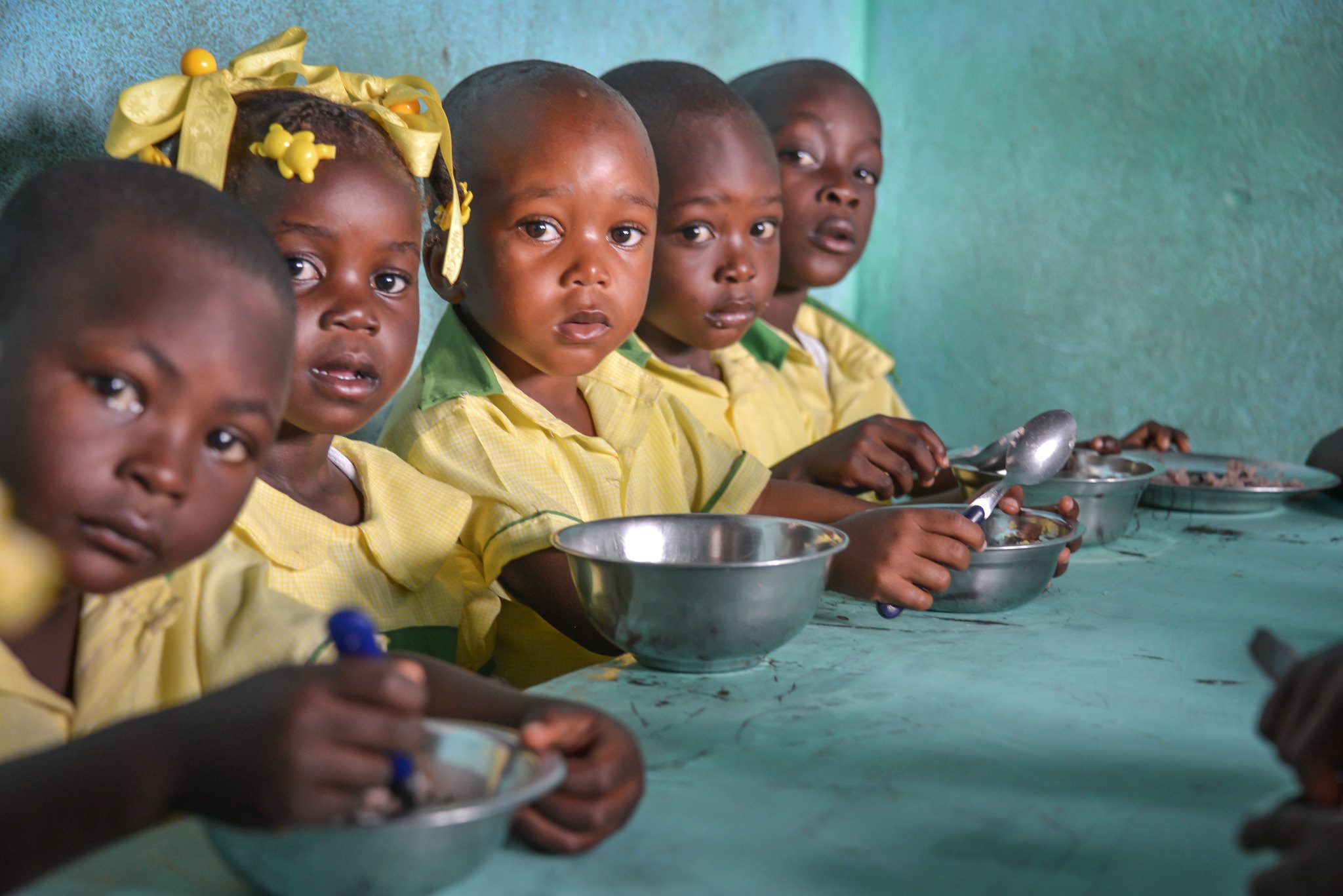
Children’s Hunger Fund Provides Meals to Families


Located on the junction of the Interstate 5 and Highway 14 is Children’s Hunger Fund (CHF), which nestles between the yellow, brownish foothills that lead to Santa Clarita. The drive to CHF ends in an industrial, office-complex space along northern Balboa Boulevard, in what people know as Sylmar, which is about 30 miles northwest of downtown Los Angeles.

Yet the heart and work of this organization belie its rather nondescript location. CHF is a Christian nonprofit with the mission of delivering hope to suffering children by equipping local churches for gospel-centered mercy ministry. Per its name, Children’s Hunger Fund most tangibly fulfills its mission through the delivery of meals to families in need and equipping local churches in an international network in order to build relationships and support communities for those families.

The Numbers

CHF operates in at least 24 mercy-network countries. There are seven countries in North and Central America, two countries in South America, seven countries in Africa, four in Eastern Europe and four in Asia. Since its founding in 1991, CHF served approximately 1,055 churches. In 2017 alone, the nonprofit delivered approximately 44.1 million meals across 503 international churches and 271 domestic churches in the organization’s network.

The Volunteers

At the nucleus of CHF’s worldwide impact is its volunteers who put in over 70,000 hours and packed over 90,000 Food Paks in 2017. Each food packs can provide up to 48 meals worth of food. Besides packing boxes of food, volunteers help with a variety of projects, such as packing bags of beans, macaroni and lentils in a packing facility at Children’s Hunger Fund’s headquarters. They also sort through gift-in-kind (GIK) products from Costco to give to local churches.

Volunteers, led by Children’s Hunger Fund staff, come in for two-hour-long shifts between Wednesday and Saturday, whether they come on their own or with their church, school or business. Volunteers can serve in a variety of ways, especially if they do not live near CHF headquarters in California or Texas.

For example, around 100 high school and college students in Johnson City, New York met at their local K&K The Old Tea House for bubble tea, music, board games and socializing. Organizers of the event sold wristbands and donated proceeds to Children’s Hunger Fund.

In August 2019, volunteers from Zion Lutheran Church in Texas organized a project to package approximately 3,000 boxes providing around 144,000 meals. Children’s Hunger Fund achieved that calculation from the fact that $0.25 translates to one donated meal.

The International Mission

With over $80 million in donations and gifts-in-kind, Children’s Hunger Fund generates and distributes Food Paks that start a relationship. The Food Paks specifically offer churches an open door to pray, serve and minister to these families and invite them into the network of support and hope. The hope is that these Food Paks can start the process of providing for the material, social and spiritual needs of those in poverty and hunger.

Education through the Poverty Encounter

Beyond its work and mission, CHF’s most recent development is the Poverty Encounter, which provides visitors with an interactive encounter with poverty around the globe. The 90-minute tour takes visitors through four different countries including Guatemala, Haiti, Nepal and Romania. In each room, visitors receive experiential education on four different aspects of poverty. Learning about hunger in Guatemala, visitors follow the life of a young boy living in a landfill. To explore disaster in Haiti, children share stories in the wreckage of the earthquake in 2010. The injustice in Nepal shows through children slaving away in brickyards. Finally, visitors witness hope in Romania, where children must live in the sewer systems of cities. The tour ends with giving visitors the opportunity to volunteer, packaging beans or macaroni in CHF’s packaging facility.

CHF’s international work, its army of volunteers, partnerships with corporations and ventures into poverty education all speak to its overarching mission to FACE poverty. FACE stands for feed, aid, connect and equip where it feeds families in need; aids those families with hygienic, educational or other material supplies; connects those families to a local church and support network and equips churches to meet these families needs.

Children’s Hunger Fund is always looking for volunteers. These efforts show that sometimes it only takes 25 cents to make an impact. Anyone can join the fight against poverty and hunger.

– Luke Kwong
Photo: Flickr

August 24, 2019
https://borgenproject.org/wp-content/uploads/borgen-project-logo.svg 0 0 Jennifer Philipp https://borgenproject.org/wp-content/uploads/borgen-project-logo.svg Jennifer Philipp2019-08-24 15:10:542024-05-29 23:12:38Children’s Hunger Fund Provides Meals to Families
Food Aid, Global Poverty, Hunger, USAID

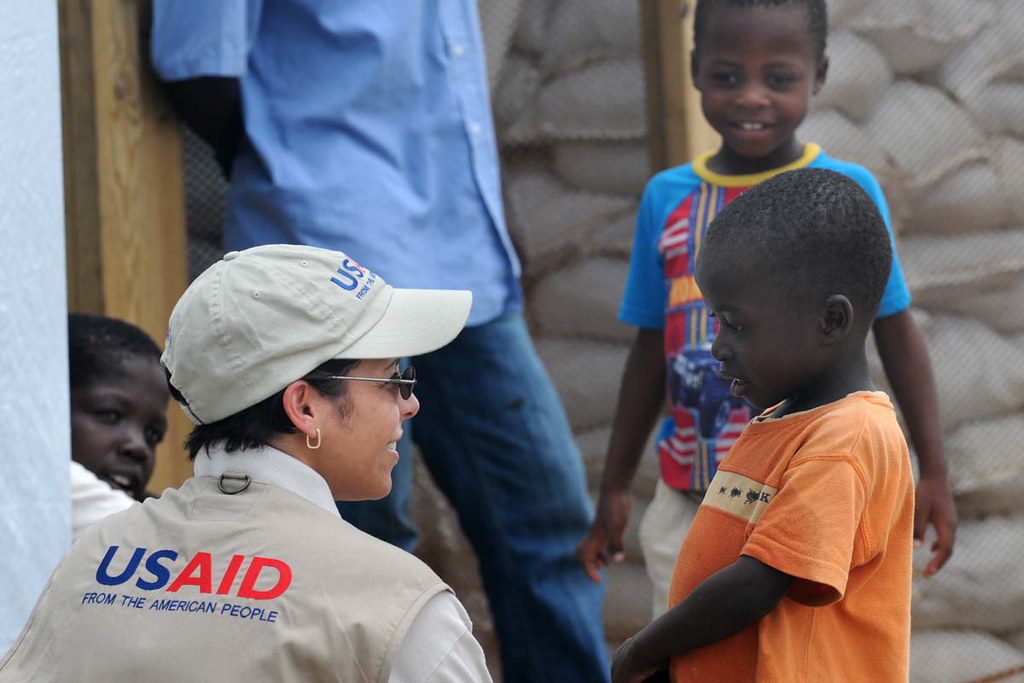
Five Facts About the 2018 USAID Initiatives

2018 USAID Initiatives
The 2018 USAID initiatives included many successful programs to combat global poverty. Certainly, USAID plays a fundamental role in addressing the needs of the developing world through programs that rebuild infrastructure, increase agricultural diversity and reduce crime rates. Here are five facts about USAID’s accomplishments in 2018.

Five Facts About USAID’s 2018 Accomplishments

  1. Food For Peace – In 2018, the USAID Office of Food For Peace provided assistance to 76 million people in 59 countries. It accomplished this through cash transfers, food vouchers, cooperation with regional and local institutions and other services. Food For Peace donated 254,275 metric tonnes of development food assistance. Additionally, the initiative donated 2,244,815 metric tonnes of emergency food assistance. Food For Peace spent $350 million on development programs designed to directly combat poverty. Furthermore, Food For Peace implemented initiatives related to the improvement of agricultural practices and child nutrition in Guatemala.
  2. AIDS Relief – The United States President’s Emergency Plan for AIDS Relief (PEPFAR) saw great progress in 2018. With the support of the U.S. government, PEPFAR’s work even placed 13 countries with high rates of HIV on the path to controlling their epidemics by 2020. In 2018, the organization expanded vital AIDS treatment to reach 14 million people. Just over six million children orphaned or affected by AIDS received support from PEPFAR. Furthermore, 250,000 health workers received training and were able to go to the countries that needed their help the most.
  3. Access to Assistive Technology – In July 2018, USAID instituted ATscale: A Global Partnership for Assistive Technology. USAID intended ATscale to increase global access to assistive technology like hearing aids and wheelchairs. ATscale’s goal is to provide assistive technology to 500 million people by 2030 through partnerships with the U.N., the WHO and others.
  4. Central America – Another fact is that several 2018 USAID initiatives focused on Central America. Currently, USAID investments are a source of funding for a restructuring of El Salvador’s tax system. Another USAID program provides job training to young adults in Guatemala. USAID cooperates with the State Department to provide community programming that reduces crime rates.
  5. Aid Transparency – In June 2018, USAID introduced its 2018 Aid Transparency Index. This index, run independently of USAID, will make aid data visible to the public. No other development agency has undertaken a measure like this. Consequently, by making data about its spending available, USAID will be more likely to receive increased support for its initiatives, especially ambitious ones such as the Sustainable Development Goals.

Overall, in 2018, USAID involvement was a positive force for the citizens of many countries throughout the world. The U.S. International Affairs Budget funded countless 2018 USAID initiatives that served a multitude of purposes. For example, treating AIDS in Africa or assisting farmers in Central America. Although the projects that USAID funds are diverse, they share a common purpose: to create a more peaceful world. To encourage continued congressional support of USAID, U.S. voters can contact their representatives here.

-Emelie Fippin
Photo: Flickr

August 21, 2019
https://borgenproject.org/wp-content/uploads/borgen-project-logo.svg 0 0 Kim Thelwell https://borgenproject.org/wp-content/uploads/borgen-project-logo.svg Kim Thelwell2019-08-21 01:30:002024-05-29 23:00:50Five Facts About the 2018 USAID Initiatives
Global Poverty, Hunger

Top 9 Facts About Hunger in Kiribati

Facts About Hunger in Kiribati
Kiribati is a small island country located in the South Pacific between Hawaii and Australia. Thirty-three islands make up the nation, but people only inhabit 20 today. After receiving its independence in 1979, Kiribati began to focus on becoming a self-sufficient nation. However, with a growing population, heavy dependence on imports and reliance on income from overseas, the issue of hunger continues to grow. Here are the top nine facts about hunger in Kiribati.

Top 9 Facts About Hunger in Kiribati

  1. After an economic crisis in 2006, nearly 22% of Kiribati’s population was living in poverty. Though most of Kiribati’s people may not be going hungry, the lack of sufficient nutrition can affect a child’s development and growth, and the children could face a variety of health issues in the future. Of the 22%, 5% were living in extreme poverty. Simultaneously, the report conducted by Kiribati’s Department of Foreign Affairs and Trade considered 44% of the population vulnerable.
  2. Children are not the only ones at risk of hunger, as adults also face this issue. Without sufficient nutrition, adults risk underperforming while carrying out laborious tasks. With many fisheries throughout Kiribati and a lack of variety in food, hunger threatens to disrupt Kiribati’s top export market.
  3. According to Dr. Aurelie Delisle, an environmental social scientist, the villages “are restricted to fish, rice and taro.” However, on some islands, the diet is changing. In place of the traditional fish, leafy greens and root diet, islanders are turning to imported packaged foods. According to William Verity, these areas now face “some of the world’s worst rates of obesity and diabetes.”
  4. In 2012, the U.N. defined Kiribati as a Least Developed Country (LDC). Though Kiribati has met two of the three thresholds of criteria to graduate from LDC, its graduation has been postponed and another decision is expected to be handed down this year. One of the goals the Committee for Development Policy (CPD) has for LDC is to ensure food security.
  5. Nearly 50% of Kiribati’s population live on the outer islands of the Gilbert Group. According to the World Bank, the rising prices of importing food greatly affect Kiribati’s Outer Islands. Many families “spend 50% of their budget on food” since the country imports most of its food. Following previous efforts in Kiribati, the World Bank has financed a $20 million support plan for the Outer Islands to continue mounting protections against climate change’s impacts on agriculture and fresh water availability. 
  6. From 2003 to 2018, the World Bank implemented the Kiribati Adaptation Program. This initiative improved the resilience of Islanders to protect against the impact of climate change on freshwater and buildings. It ensured safe drinking water and more efficient use of existing water collection systems.
  7. Much of Kiribati’s population is now dependent on imported foods. However, lack of access to imported goods, either by poverty or interruptions in the supply chain, means that residents must rely on agriculture. However, climate change has threatened the consistency of agriculture and made it difficult for common crops like copra and coconuts to grow.
  8. The Food and Agriculture Organization of the U.N. (FAO) is focusing its efforts on livestock and agriculture projects to enhance Kiribati’s food security. Furthermore, they train farmers with the information and techniques to produce nutritious, climate-change resistant foods to provide for the island nation’s population while retaining soil quality and water conservation. 
  9. From 2014 to 2023, the International Fund for Agricultural Development took action through the Outer Island Food and Water Project (OIFWP). Focusing on the four outer islands of Abebama, Beru, North Tabiteuea and Nonouti, the OIFWP increased food availability through gardening and livestock, minimized the Islanders’ dependence on imported foods, increased income for poor families and reduced sickness due to unclean water. Around 25% of Kiribati participated in the project, which installed a total of 278 water systems throughout the islands.

The fear of flooding is always on the Kiribati people’s minds. In an early phase of the Kiribati Adaptation Program, participants installed systems that collect rainwater. According to the government water technician on the island of North Tarawa, there are around 50 water pumps. Ruteta, an islander who feared that children were becoming ill from the water, is “grateful because life is much simpler having rainwater.” This project ensures that Islanders have 24-hour access to fresh water.

These top nine facts about hunger in Kiribati demonstrate that hunger greatly impacts the Kiribati people’s well-being and persists even today. However, through humanitarian efforts and grants, Kiribati’s battle with hunger is one step closer to victory.

– Emily Beaver and Cole Zickwolff
Photo: Flickr
Updated: November 8, 2024

August 15, 2019
https://borgenproject.org/wp-content/uploads/borgen-project-logo.svg 0 0 Kim Thelwell https://borgenproject.org/wp-content/uploads/borgen-project-logo.svg Kim Thelwell2019-08-15 15:15:512024-11-08 11:48:26Top 9 Facts About Hunger in Kiribati
Global Poverty, Hunger, Technology

Five Apps That Help Fight Hunger

Apps That Help Fight HungerHunger is a crisis facing many countries and communities around the world, with about 821 million people experiencing moderate to severe food insecurity. According to the United Nations, the biggest risk to worldwide health is hunger and malnutrition. Several programs already exist to help fight this issue such as food banks, food stamps, shelters and agencies like World Bank and the International Fund for Agriculture Development. However, there is an up and coming way for anyone to be able to provide assistance—smartphone apps. These five apps that help fight hunger offer various ways to give help with little more than the tap of a finger.

Five Apps That Help Fight Hunger

  1. Share the Meal – The U.N. World Food Programme created Share the Meal. The WFP helps 80 million people with food assistance and is the world’s largest humanitarian agency fighting against hunger. Download the app, donate $0.50 or more and feed a child for the day. The WFP then receives the funds, provides the meal and will even show in the app where the meal will go.
  2. Feedie – Feedie is an app that partners with the Lunchbox Fund to provide a meal to underserved children around the world. Over 12 million meals have been given through the app as well as through donations. Download the app, find a participating restaurant, take and share a picture of the meal and the restaurant will make a donation that equals the cost of one meal.
  3. OLIO – OLIO is a food-sharing app based in the UK that allows people and local businesses to post food items nearing their best-by or sell-by date for other people to pick up. To date, over 1 million people have joined the app and 1.8 million portions of food have been shared. To post items, download the app, add a picture and description of the item, list when and where it can be picked up and wait for someone to claim it. To request items, scroll through the local listings, request what is needed and arrange to pick up through a private message.
  4. Chowberry – Chowberry is an online app, similar to OLIO, based in Nigeria that allows consumers and organizations to find food products listed by retailers that are nearing their sell-by date. Chowberry works with orphanages and faith-based organizations, as well as everyday customers. Sign up for the website and scroll through several participating stores and listed items to find needed items.
  5. WeFarm – WeFarm is a farmer-to-farmer digital network that allows farmers to connect to other farmers in various parts of the world, without the use of the internet. More than 1 million farmers have been helped using WeFarm and over 40 thousand questions and answers are sent in each day. Farmers can text their local WeFarm number a question they have, and other connected farmers can respond with their answers and suggestions.

Hunger is an ongoing issue that millions of people face every day. These five apps that help fight hunger offer several different solutions to both those in need and those that are able to help. From donating a few cents, to listing discounted products, to connecting farmers around the world and more, helping those dealing with hunger can be a quick and easy process requiring nothing more than a cellphone.

– Jessica Winarski
Photo: Flickr

July 26, 2019
https://borgenproject.org/wp-content/uploads/borgen-project-logo.svg 0 0 Kim Thelwell https://borgenproject.org/wp-content/uploads/borgen-project-logo.svg Kim Thelwell2019-07-26 15:38:392024-06-06 00:26:19Five Apps That Help Fight Hunger
Charity, Global Poverty, Hunger

Top 10 Facts About Queen Elizabeth II

Top 10 Facts About Queen Elizabeth II
Princess Elizabeth of York never had the intention to become Queen, but she is now Queen Elizabeth II, the reigning monarch of the United Kingdom of Great Britain and Northern Ireland, and its neighboring kingdoms and territories. In addition, she is the head of the Commonwealth of Nations. Her reign has lasted more 60 years, giving her the title of the longest-ruling monarch in British history. Just this past April 2019, the Queen celebrated her 93rd birthday and continues to make history till this day. Written below are the top 10 facts about Queen Elizabeth II that show a glimpse into her life.

Top 10 Facts About Queen Elizabeth II

  1. Born Princess Elizabeth of York and third in line to ascend the throne, Queen Elizabeth II never imagined assuming the responsibilities and obligations of sovereignty, up until February 6, 1952, when Elizabeth’s father, King George VI, died of lung cancer. The unexpected turn of events started in December 1936 when the Queen’s father became King after his brother King Edward VIII abdicated his title for love. Consequently, the Queen became heir presumptive. Her father did not declare her heir apparent due to the possibility of a male heir. On June 2, 1953, Queen Elizabeth II had her coronation in Westminster Abbey.
  2. Queen Elizabeth II along with other members of the Royal Family have an extensive background in philanthropy. Presently, more than 3,000 organizations around the globe state a member of the Royal Family as their patron or president, with Queen Elizabeth II serving as patron for 510 of those British charities alone. The charities range from large organizations like the British Red Cross to smaller organizations like Reedham Children’s Trust and the regiments of the Armed Forces. Royal patronages, visits and involvement with charities help bring much-needed awareness and publicity for important social causes. The Queen’s benefaction holds the most significance and is the most sought after.
  3. In 2012, the Queen assisted charities she patrons raise a total of £1,4 billion, according to Charities Aid Foundation’s research Charities Aid Foundations. This fact solidifies her as one of the world’s leading charity supporters. In 2015, after news broke out regarding the devasting earthquake that struck Nepal, Her Majesty donated her personal money to the Disasters Emergency Committee’s request to help and support the victims of this catastrophe. The country of Nepal holds a special place in the Queen’s heart because it houses The Royal Gurkha Rifles, an organization of troops run by Prince Charles, its Colonial in Chief. The Royal Gurkha Rifles fight for the United Kingdom but were not born in the country.
  4. The Queen’s Commonwealth Trust is an organization that Queen Elizabeth II is a patron of and Prince Harry is the president. It is an organization that works with 53 Commonwealth countries to enact positive social change initiated by impactful youth. The organization’s mission statement reflects on its efforts in discovering and funding individuals who attain bright ideas that solve local problems in education, health, the environment and sport. The Queen’s Commonwealth Trust supports those who have started their own nonprofit organizations, along with those who oversee projects that help others. Currently, The Queen’s Commonwealth Trust and CAMA have partnered to help reduce poverty and inequality among young girls in Africa by helping them receive education and giving them leadership positions within their communities.
  5. Another point on the list of top 10 facts about Queen Elizabeth II is that the Queen’s Commonwealth Trust has partnered with Ankit Kawatra’s Feeding India, which is one of the world’s leading youth-run volunteer organizations set to eradicate world hunger. The partnership aims to combat hunger in India with 8,5000 people working together to gather excess food from events, restaurants and hotels in more than 50 cities and deliver it to undernourished people, reaching more than 15,000 individuals every day.
  6. The Association of Commonwealth Universities (ACU) is one of the world’s most prestigious and oldest international university networks to date and has for the last 33 years been honored with Her Royal Majesty’s patronage. In fact, she was the first patron of the organization. The Queen has helped the ACU offer Commonwealth scholarships to over 35,000 students throughout the years, which help them make the trip to the United Kingdom or other Commonwealth countries. That is, however, until now; when the Queen has graciously passed down her title to her granddaughter-in-law, The Duchess of Sussex, Meghan Markle, along with a few other duties. As the new patron, the Duchess of Sussex has already announced two ACU gender grants that will help fund new learning projects meant to empower female university employees and promote gender equality.
  7. The Queen embraces strides towards modernizing her personal image along with that of the monarchy. For a period of time every summer, Her Majesty welcomes the public to stay in the State Rooms at Buckingham Palace, the official London residence of the sovereigns since 1837 and also today’s administrative headquarters of the monarch, while she is away and is the first monarch to do so. Queen Elizabeth’s II garden parties, hosted multiple times per summer at Buckingham Palace and once at the Palace of Holyroodhouse in Edinburgh, also help in the Queen’s plan to meet a cross-section of British society and thank them for their good deeds. This charitable event, with approximately 8,000 people, allows the Queen to become familiar with Britain’s everyday citizens instead of the usual diplomats at the Palace.
  8. Throughout her Majesty’s reign, digital communication platforms have made many advancements. In 1953, the Queen’s coronation was the first to broadcast live from Westminster Abbey. In 1997, the Royal Family started their own website and later created their own Twitter account (@BritishMonarchy) in 2014. The Queen’s very first tweet was during her visit to the London Science Museum in 2014, and in keeping with tradition, the page shared the Queen’s very first Instagram post (@theroyalfamily) at her most recent visit to the Science Museum in 2019. She posted an archive picture addressed to her great-great-grandfather, Prince Albert, and written by Charles Babbage, the world’s first accredited computer pioneer.
  9. Over the course of her reign, Queen Elizabeth II witnessed 13 prime ministers enter into power. The first prime minister she worked with was Winston Churchill. The Queen has worked with about a quarter of the United States’ presidents throughout history as well.
  10. On February 6, 2017, Queen Elizabeth II celebrated her Sapphire Jubilee or 65th year on the throne. She is the only monarch to ever celebrate a Sapphire Jubilee, surpassing her great-great-grandmother, Queen Victoria, in September of 2015. Queen Victoria was the previous longest-reigning monarch at 63 years. There were royal gun salutes administered at Green Park and the Tower of London, along with eight new commemorative coins issued by The Royal Mint in honor of the Queen’s reign.

These top 10 facts about Queen Elizabeth II only reinforce the fact that Her Majesty is one of the world’s most commemorated public figures in history. There are three generations of heirs lined up for the monarch after her reign including her son, Charles, Prince of Wales; her grandson, William, Duke of Cambridge; and her great-grandson, George, Prince of Cambridge. The legacy of the Royals will continue to create history for years to come due to Queen Elizabeth’s II influential reign over Britain.

– Jillian Rose
Photo: Flickr

July 16, 2019
https://borgenproject.org/wp-content/uploads/borgen-project-logo.svg 0 0 Kim Thelwell https://borgenproject.org/wp-content/uploads/borgen-project-logo.svg Kim Thelwell2019-07-16 08:15:172024-05-29 23:00:39Top 10 Facts About Queen Elizabeth II
Food Security, Global Poverty, Hunger

10 Facts About Hunger in Angola

10 Facts About Hunger in Angola

Located in Southern Africa at the border of the South Atlantic Ocean, Angola is a country that, despite its extensive oil and diamond reserves, struggles with severe poverty and hunger. Angola‘s violent 27-year civil war came to an end in 2002, and since then the government has been hard at work with multiple NGOs and citizen-led efforts to improve the nation’s economy and access the land’s remarkable agricultural potential. In doing so, the human development of Angola has been continuing at a consistent and assured pace. Here are 10 facts about hunger in Angola.

10 Facts About Hunger in Angola

  1. With a score of 29.5 on the 2018 Global Hunger Index, Angola ranks 95 out of 119 countries, placing it in the serious level of risk category. This means the state of Angola has an inadequate food supply and a high rate of child mortality and undernutrition. While this rating may appear bleak, hunger in Angola has decreased dramatically since the year 2000, when the country received a hunger score of 65.6.
  2. The Food and Agriculture Organization of the United Nations (FAO) has shifted in focus from emergency assistance towards long-term agricultural development and policy creation. This includes the Poverty Reduction Strategy, a policy framework dedicated to consolidating peace through the improvement of living conditions for vulnerable people. This shift is evidence of the country’s improvement in addressing the hunger of its inhabitants. Now that the organization may focus on engendering an environment with policy creation and education, Angola can have a future of economic health and food security.
  3. Along with the Poverty Reduction Strategy, the FAO is currently working to provide technical support, food security, agricultural productivity and farming education. The organization is also applying a Disaster Risk Reduction and Management Plan to minimize the effects of climatic shock and climate change on the state’s many rural communities by increasing the government capacity to implement disaster risk reduction and management, facilitate the coordination of stakeholders to implement reduction and management and educate farmers and workers on the use of technologies and practices on reduction and management.
  4. The symptoms of hunger in Angola have been on a downward trend in the recent decade, with the rates of child mortality, child wasting, child stunting and undernourishment all decreasing steadily. For child stunting, the percentage of children under five with stunted growth has decreased from 55 percent in 1995 to 30 percent in 2017. The many agricultural and political efforts in Angola to create profitable farms for rural communities and progressive policy creation emphasizing poverty reduction and food security have caused this decline.
  5. While the availability and use of basic sanitation services have been increasing at a constant rate, the percentage of the population with access to safe drinking water has remained stagnant at around 49 percent. Access to clean water is one of the most important conditions for achieving hunger relief due to its necessity in healthy nutrition and impact on health, disease prevention and cleanliness.
  6. In partnership with AGRINATURA, a group of European research organizations and universities that have been in operation for 30 years, the FAO has been creating multiple objectives to aid the issue of hunger. These include seeds cooperatives to commercialize seeds from 200 smallholder farmers; rice development, which aims to prepare and commercialize rice production; and rural entrepreneurship, which intends to provide business opportunities to agricultural entrepreneurs in Angola.
  7. The World Food Programme has been working with Angola to aid the hunger of more than 70,000 refugees, many of whom are from the Democratic Republic of the Congo. It provides full-ration food assistance and specialized nutritious foods for young children, pregnant women and breastfeeding mothers. It also offers air transportation to and from remote areas of the country.
  8. AGRINATURA has also been working with Angolan farmers to tap the potential of agricultural coffee production. Angola was once a prominent coffee producer until the Angolan civil war. Since then, coffee production decreased dramatically. Increased production of the cash crop will aid the country’s economy and, as a result, help reduce the poverty and hunger of the Angolan people.
  9. Though Angola has remarkable potential for agricultural development, the country’s agricultural GDP is only 10 percent of the national GDP. The government of Angola is currently prioritizing its agricultural sector with financial investments so that it can make use of the untapped potential and help Angolan citizens and refugees.
  10. Ending the 10 facts about hunger in Angola is The Food, Agricultural and Natural Resources Policy Analysis Network, an organization seeking the creation of longterm food, agricultural and natural resources policies. It is currently working in Angola with the United Nations, Angola’s government and private sector to promote poverty-reductionist agricultural policy, increase food security and promote sustainable agricultural development.

While Angola currently ranks in the bottom quarter of countries on the Global Hunger Index, these 10 facts about hunger in Angola and the country’s downward trend in poverty and hunger is incredibly assuring. With the continued work by the government, NGO’s and citizen-led efforts to create poverty-reductionist policy, move agricultural development forward and increase food security, hunger in Angola should continue to decline, and the nation should continue its path into becoming prosperous and secure.

– Jordan AbuAljazer
Photo: Flickr

July 12, 2019
https://borgenproject.org/wp-content/uploads/borgen-project-logo.svg 0 0 Kim Thelwell https://borgenproject.org/wp-content/uploads/borgen-project-logo.svg Kim Thelwell2019-07-12 07:47:522024-05-29 23:10:3910 Facts About Hunger in Angola
Aid, Global Poverty, Hunger, Philanthropy, United Nations

High Tide, High Hopes: Flooding in Afghanistan

Flooding in AfghanistanAfter suffering through an extreme drought for months, Afghanistan now faces a new crisis: severe flash floods. As many as 112,000 people have been affected by the flooding in Afghanistan and entire homes or villages have been swept away. In light of both droughts and conflict, the U.N. has estimated that 6.3 million people will need humanitarian assistance in Afghanistan in 2019. The country has faced extreme adversity and is in desperate need of crucial and life-saving aid.

Drought and Flooding

The extreme drought the country has been facing has made it more difficult for the soil to absorb water, which makes flooding more likely. The El Niño weather phenomenon is also largely responsible for the extreme amounts of rainfall experienced by Afghanistan. Some forecasters have predicted that due to this chaotic weather pattern, rainfall could increase by 40 to 50 percent through May. These chaotic changes in weather have had disastrous effects on Afghanistan and its neighbors. Although the rain has stopped, many in Afghanistan fear that even worse flooding is yet to come. The region is often hit by flash floods due to its rocky terrain, but many claim this is the worst flooding the country has seen in years.

Humanitarian Aid

The International Federation of the Red Cross requested an emergency appeal of 7 million Swiss francs, which they mean to use to support up to 650,000 people affected by the flooding in Afghanistan who need immediate relief. The IFRC wants to use this money to support the Afghan Red Crescent Society, in providing shelter, health care, water and sanitation to those affected by both extreme drought and flooding. Recently, USAID with support of the Department of Defense airlifted over 200 metric tons of relief items regions in Afghanistan. The U.S. also announced that they would be providing an additional $61 million in aid relief funds to provide food assistance, hygiene and safe water.

World Disaster Report

Every year the IFRC conducts a World Disaster Report in order to provide more insight into the causes and effects of disaster situations. The IFRC, in partnership with ARC, launched a campaign last year to research natural disasters in Afghanistan. The report’s findings found that not enough money was being invested in risk prevention and a majority of financial aid was being spent after disasters rather than before. It concluded that building resilience and preparedness within communities before disaster strikes is one of the most important factors in reducing the effects of natural disasters.

Extreme drought and severe flooding in Afghanistan have left its people in a state of emergency. The flooding has also begun to hit Afghanistan’s neighbors, Iran and Pakistan, and is causing the same kind of destruction and displacement. Thousands have been displaced and even more are in need of immediate humanitarian assistance. Both U.N. organizations and IFRC are providing crucial aid to combat the aftermath of the flooding in Afghanistan.

– Olivia Halliburton
Photo: Flickr

July 2, 2019
https://borgenproject.org/wp-content/uploads/borgen-project-logo.svg 0 0 Kim Thelwell https://borgenproject.org/wp-content/uploads/borgen-project-logo.svg Kim Thelwell2019-07-02 07:30:102024-05-29 22:59:30High Tide, High Hopes: Flooding in Afghanistan
Global Poverty, Hunger

Four Ways to Donate by Saving Money

Donate by SavingThere are countless efforts around the globe working to improve living conditions for those in extreme poverty. While per capita, Americans are the biggest charitable givers on Earth, charitable contributions can be increased. By cutting back on everyday living expenses, it is possible to donate by saving money.

Alternatives to Buying Bottled Water

Drinking water is a healthy habit, but bottled water is costly and creates single-use plastic waste.

One way to donate by saving is buying a reusable water bottle. For instance, the reusable Dopper bottle donates 5 percent of every purchase to the Dopper Foundation, an organization working to improve water resources in Nepal.

Upon saving money on single-use bottles, the amount saved can be diverted to a charitable cause. The average American spends around $266 on disposable water bottles, which can add up to over $17,000 in a lifetime. Those savings could be donated to support the work of organizations like Water is Life which pledges to provide clean drinking water to a billion people by 2020.

Water is Life helps communities around the world gain access to clean water through many means, including filters and wells. After Hurricane Maria devastated Puerto Rico, the organization sent filtration straws and portable filtration systems to the hardest-hit parts of the island. Currently, it is working on installing 40 solar-and-wind-powered water filtrations stations in the northwest part of the country. The stations are capable of providing 20,000 liters of drinking water a day.

Credit Card Fee Avoidance

A recent survey of 200 U.S. credit cards found that credit cards average 4.35 fees per card. Furthermore, every card in the survey charged at least one fee.

No-fee cash-back cards are available. Card issuers will also offer a cost break to customers with a long series of on-time payments by lowering their interest rates, waiving the very occasional late fee, or both.

Trading in a big-annual-fee card, asking for late waivers and lowering interest rates can save cardholders $100 – 200 per year. The amount saved is almost enough to fund a grant to a Kenyan or Ugandan entrepreneur through Village Enterprise, which can transform the lives of a family living in poverty.

Since its founding in 1987, Village Enterprise has trained more than 154,000 owners who have gone on to create 39,000 businesses. One such success story is Angela Adeke, a Ugandan woman who was denied the opportunity to attend school due to her family’s extreme poverty. After her own children were denied entry to school because they could not afford uniforms, Adeke took action. With the help of a $150 grant, she invested in fabric and sewing machines for her tailoring business. Adeke sewed her own children’s uniforms and made uniforms for more than 4,000 Ugandan children. She now trains disenfranchised young women to become tailors.

Household Maintenance

The average family spends $6,649 on home maintenance. From major repairs to even the price of lawn mowing, it all adds up. A recent survey from Homeadvisor shows that 72 percent of new home buyers are learning how to do their own repairs. Video tutorials are now available online for most projects, enabling families to save on expenses.

The savings can be donated to a charity like Heifer International, an organization that helps families help themselves. The organization has been active in 25 countries, helping more than 32 million families to overcome poverty and hunger. In Nepal, projects targeting women have contributed to improved gender equality. Nine out of 10 of the families in Nepal interviewed say they had increased their income as a result of Heifer International projects, and it is possible to donate by saving on expenses as manageable household maintenance.

Trimming the Food Bill

Most Americans spend nearly half of their monthly food budget on eating out. By preparing more meals at home and packing a lunch more often, these funds can be diverted to donations. A conservative estimate is that preparing one meal per week instead of eating out will save more than $800 per year. These savings can fight worldwide hunger when diverted to an organization like The Hunger Project (THP).

The Hunger Project works to end hunger through strategies that are sustainable, grassroots and women-centered. Mozambican citizen Moises Fenias Malhaule is an example of a THP success story: Malhaule joined THP education and microfinance programs, and in ten years, he has expanded his farm and paid for his children’s education. Malhaule has also taken many courses in development and construction and shared his knowledge with his community. Donations to organizations like this not only help individuals but often have ripple effects, making entire villages more resilient and self-sufficient.

Organizations like Water is Life, Village Enterprise, Heifer International and The Hunger Project are making a considerable impact in global poverty reduction, but their work relies on financial contributions.  While finding the extra money to donate can be challenging, with a few lifestyle tweaks, it is entirely possible to donate by saving money.

– Francesca Singer 
Photo: U.S. Air Force

June 25, 2019
https://borgenproject.org/wp-content/uploads/borgen-project-logo.svg 0 0 Kim Thelwell https://borgenproject.org/wp-content/uploads/borgen-project-logo.svg Kim Thelwell2019-06-25 12:23:162024-05-29 23:00:45Four Ways to Donate by Saving Money
Food Security, Global Poverty, Hunger

10 Facts About Hunger in Albania

10 Facts About Hunger in AlbaniaAlbania is a country nestled in the southeast of Europe. Its coast is located on the Adriatic and Ionian seas, while it shares land borders with Montenegro, Kosovo, Macedonia and Greece. The Democratic Albanian Republic came to power after the dissolution of the former Albanian Socialist Republic in 1991. The Albanian government has made it a central goal to eliminate hunger. Here are the top 10 facts about hunger in Albania.

10 Facts About Hunger in Albania

  1. According to the 2017 census, Albania‘s population comprises 2.8 million people, 15% of whom are living below the poverty line and have about 1 euro a day for personal expenses. Some families spend up to 80% of their budget on food.
  2. According to the 2022 Global Nutrition Report, “no progress has been made towards achieving the target of reducing anemia among women of reproductive age, with 24.8% of women aged 15 to 49 years now affected.”
  3. The 2023 Global Hunger Index (GHI) ranked Albania 30th out of 125 qualifying countries. Its score of 6.1 represents a 30.6% decline since 2015 and puts Albania at a low hunger level. 
  4. Child stunting rates have dropped dramatically in Albania, from 32% in 2000 to 11.3% in 2023. Additionally, GHI considers just 4.1% of the Albanian population undernourished.
  5. As of 2017-2018,  about 36% of the adult population in Albania was overweight, with an additional 21% classified as obese. An interesting phenomenon surrounding obesity in Tirana, the capital of Albania, is that it is disproportionately high in the middle-aged, with rates of 28.3% in people ages  36-45, and 32.7% in those ages 46-55. One can partially explain this by the fact that in Middle Eastern cultures, people consider obesity a sign of wealth and beauty.
  6. Gender inequality also contributes to hunger in Albania. Though Albanian women traditionally take on the well-being of their families, they have far fewer resources or opportunities than men with which to do this. The Food and Agriculture Organization of the United Nations (FAO) stated that “Gender equality is key to eliminating poverty and hunger.” The FAO’s policy on gender equality has been used as a resource in the creation of the Country Programming Framework, a signed plan between the FAO and the Albanian government in 2015 to further hunger and poverty reduction and end gender inequality.
  7. Around 22% of Albania’s geography consists of arable land for farming. However, because of small farms and limited mechanization, the agricultural sector of Albania remains largely underdeveloped. Agriculture contributes to nearly 20% of the Albanian GDP and employs over 40% of the population.  
  8. A central goal of the Albanian government is the continued financial support and development of both independent farmers as well as private investment in the private agriculture sector. In 2019, the Albanian Ministry of Agriculture set up a fund of 5 million euros to aid farmers in the country. In 2023, subsidies were provided for fuel, fishing vessel infrastructure, agricultural markets, organic farms, livestock and beekeeping, with the livestock sectors receiving 60% of the allocated monies. The first two days saw almost 18,000 applications for funds.
  9. The government of Albania is not the only entity investing in the agricultural sector, though. In May 2024, the U.N.’s FAO initiated a One Country One Priority Product program in northern Albania’s Tropoja region to address the country’s chestnut sector. The focus is on strengthening local communities and supporting economic growth in the country’s rural and mountainous regions. 
  10. Albania’s ties to European markets have been strengthened with its increasing integration into the European Union, with 71.5% of Albanian agricultural exports to EU markets and 62.4% percent of Albanian imports coming from the EU.  In 2022, Albania began membership negotiations with the 27-nation EU, and in October 2023, it was one of six Western Balkan countries offered a growth plan by the EU in exchange for deep reforms. Economic and political reforms will lead to investments, grants, and loans. 

Since the ousting of the communist party in 1992, Albania has had an uphill battle against poverty and hunger. However, the years since then have seen the country make great strides in technological advancement and economic growth, both of which help it stay competitive in the European market and combat its hunger problem. There is still much for Albania to do, yet all indications from the Albanian government, EU and the global community, as well as these 10 facts about hunger in Albania, point to continued progress for this European nation.

– Staff Reports

Photo: Flickr
Updated: June 01, 2024

June 18, 2019
https://borgenproject.org/wp-content/uploads/borgen-project-logo.svg 0 0 Kim Thelwell https://borgenproject.org/wp-content/uploads/borgen-project-logo.svg Kim Thelwell2019-06-18 09:15:262024-07-17 06:39:2410 Facts About Hunger in Albania
Foreign Policy, Global Poverty, Hunger, Water

Podcasts for Perspective: Raising Global Inequality Awareness 

Podcasts for Perspective: Three Shows Raising Global Inequality Awareness Since podcasting began to take off, this audio medium has really carved out a significant space for itself in American media with its on-demand, radio-like content. According to Edison Research’s 2018 podcast statistic report, 26 percent of Americans (73 million people) listen to podcasts on a monthly basis. Podcasts are easily available online or through any smart device and target virtually every interest and topic, including global inequality awareness.

Whether someone is new to podcasts or a regular listener, they are a great way to learn new things, expand people’s interests and gain perspectives on different topics. Below, are three suggestions for globally-minded podcasts. Though each of these podcasts has a different focus, they all contribute to raising awareness for global inequality issues relating to poverty.

Hacking Hunger

Produced by World Food Program U.S.A., Hacking Hunger shares stories about hunger from around the globe. Hacking Hunger connects listeners to the voices of aid workers and families involved with the World Food Program. By highlighting direct experiences, this podcast helps listeners imagine the realities of hunger from refugee camps to conflict zones.

Rarely longer than 30 minutes, Hacking Hunger offers concise, yet poignant stories from the frontlines of countries combatting hunger. According to the M.J. Altman, editorial director at World Food Program U.S.A., Hacking Hunger is most successful when it moves and motivates its listeners. By bringing attention to hunger issues worldwide, Hacking Hunger both raises awareness about and generates support for hunger relief funds.

Circle of Blue Podcasts

Circle of Blue is a non-profit, resource advocacy group that focuses on sanitation and water. Circle of Blue’s podcast covers water issues in depth by looking at how water relates to energy production, food, health and environmental topics. Though Circle of Blue has several programs (among them H2O Hotspots and What’s Up with Water), they are combined under “Circle of Blue WaterNews” on various podcast provider platforms.

With news-like quality and tone, Circle of Blue updates listeners on water issues worldwide. This podcast combines case-specific stories with connections to larger trends over time. Circle of Blue is a good podcast for listeners who want to explore how access to water contributes to inequality worldwide. Keep an eye out especially for the H2O Hotspot episodes, which feature in-depth stories on areas in danger of water-related conflicts.

Global Dispatches

From the team of the U.N. Dispatch, Global Dispatches covers foreign policy issues and world affairs. The show highlights policy-makers, aid workers, development experts and global affairs leaders through in-depth interviews. The varying content promotes global inequality awareness in many fields. For example, recent topics have included the link between poverty and vaccines, political conflict in Haiti and “energy poverty” in developing countries.

Despite the diverse content, the editor of the U.N. Dispatch blog, Mark Leon Goldberg, hosts the podcast and gives it a consistent voice between episodes. Global Dispatches contextualizes the central topic of each episode very well, making it easy to understand without prior knowledge. Episodes are generally fewer than 45 minutes long and updated frequently. This podcast is ideal for listeners who want to keep up-to-date with a diverse range of foreign policy issues.

Podcasts are a great way to stay informed when it seems like there are not enough hours in the day because they can be listened to on a walk or in the car. Listening to these podcasts (and others like it) can help people stay updated on different aspects of global issues and poverty as well as increase their global inequality awareness.

– Morgan Harden
Photo: Flickr
June 8, 2019
https://borgenproject.org/wp-content/uploads/borgen-project-logo.svg 0 0 Kim Thelwell https://borgenproject.org/wp-content/uploads/borgen-project-logo.svg Kim Thelwell2019-06-08 01:30:592019-06-10 06:57:23Podcasts for Perspective: Raising Global Inequality Awareness 
Page 36 of 71«‹3435363738›»

Get Smarter

  • Global Poverty 101
  • Global Poverty… The Good News
  • Global Poverty & U.S. Jobs
  • Global Poverty and National Security
  • Innovative Solutions to Poverty
  • Global Poverty & Aid FAQ’s
Search Search

Take Action

  • Call Congress
  • Email Congress
  • Donate
  • 30 Ways to Help
  • Volunteer Ops
  • Internships
  • Courses & Certificates
  • The Podcast
Borgen Project

“The Borgen Project is an incredible nonprofit organization that is addressing poverty and hunger and working towards ending them.”

-The Huffington Post

Inside The Borgen Project

  • Contact
  • About
  • Financials
  • President
  • Board of Directors
  • Board of Advisors

International Links

  • UK Email Parliament
  • UK Donate
  • Canada Email Parliament

Get Smarter

  • Global Poverty 101
  • Global Poverty… The Good News
  • Global Poverty & U.S. Jobs
  • Global Poverty and National Security
  • Innovative Solutions to Poverty
  • Global Poverty & Aid FAQ’s

Ways to Help

  • Call Congress
  • Email Congress
  • Donate
  • 30 Ways to Help
  • Volunteer Ops
  • Internships
  • Courses & Certificates
  • The Podcast
Scroll to top Scroll to top Scroll to top