• Link to X
  • Link to Facebook
  • Link to Instagram
  • Link to TikTok
  • Link to Youtube
  • About
    • About Us
      • President
      • Board of Directors
      • Board of Advisors
      • Financials
      • Our Methodology
      • Success Tracker
      • Contact
  • Act Now
    • 30 Ways to Help
      • Email Congress
      • Call Congress
      • Volunteer
      • Courses & Certificates
      • Be a Donor
    • Internships
      • In-Office Internships
      • Remote Internships
    • Legislation
      • Politics 101
  • The Blog
  • The Podcast
  • Magazine
  • Donate
  • Click to open the search input field Click to open the search input field Search
  • Menu Menu

Archive for category: Humanitarian Aid

Aid, Global Poverty, Humanitarian Aid

The Varying Success of China’s Humanitarian Aid to Suriname

humanitarian aid to Suriname
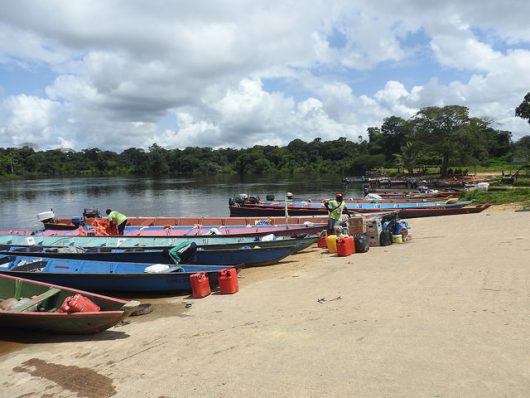
Suriname, officially the Republic of Suriname, is a small country on the northeastern coast of South America. Originally a Dutch colony, Suriname gained independence in 1975. Though Suriname is not a widely prosperous country, its economy has recently endured a variety of difficulties.


The Netherlands

In 2016, Suriname’s Gross Domestic Product (GDP) was more than $3.6 billion, the unemployment rate was slightly less than 10 percent and the poverty rate was 47 percent.

Despite gaining its independence, the Kingdom of the Netherlands was Suriname’s heaviest financial donor, sending years worth of humanitarian aid to Suriname. In 2012, the Netherlands suspended all aid to Suriname — approximately 26 million — two years after the election of President Desi Bouterse.


The European Commission

The European Commision has also approved emergency funding for Suriname over the years, especially in the case of natural disasters. Suriname is prone to severe flooding, which can wipe out homes and businesses, and increase unemployment and poverty. Usually, this aid is geared toward the population’s health, hygiene and sanitation, food and water.


People’s Republic of China

However, shortly after the Kingdom of the Netherlands completely pulled their funding to Suriname, the People’s Republic of China (PRC) increased its humanitarian aid to the country.

Since the immigration boom to Suriname in the 1990s, China has slowly been giving humanitarian relief to the South American country; in 2011, the Chinese government gifted Suriname with a new Foreign Ministry headquarters.

Also in 2012, China gave Suriname a grant of over 4 million to further the cooperation between both countries; however, it is unclear where this money is going. Since 2009, the Chinese embassy stated that development projects in Surinam — such as help with low-income housing, transportation, seaports and network television — are underway, despite any major initiatives.


Investment and Infrastructure

Within the last 10 years, China has set up various companies, businesses, shops, casinos and restaurants throughout Suriname. While this has vastly helped decrease unemployment, the poverty rate is still high, with nearly half the country living below the poverty line. In exchange for the land, China continues to give Suriname grants, buildings and advancements for the military.


Health-Related Aid

But not all of China’s aid is geared toward infrastructure and employment. In 2016, China provided Suriname with $1 million in humanitarian aid specifically geared toward Zika-related assistance. This included medical supplies and funding for medication and hospitalization for those affected. Zika virus is an infection most commonly found in Central and South America and can be fatal.

Suriname still has a long way to go before it is a completely stable country. The poverty rate still needs to lower significantly and the GDP must increase to be considered a prosperous economy.

Despite these much needed improvements, Suriname has already started distributing humanitarian aid itself. In September 2017, Suriname sent humanitarian aid to Cuba to help with relief efforts after hurricane Irma.

Though the success of humanitarian aid to Suriname is slow, the funds thus far have laid a solid groundwork. The Surinamese now have the tools they need to become a prosperous and independent country.

– Courtney Wallace

Photo: Flickr

February 14, 2018
https://borgenproject.org/wp-content/uploads/borgen-project-logo.svg 0 0 Borgen Project https://borgenproject.org/wp-content/uploads/borgen-project-logo.svg Borgen Project2018-02-14 01:30:192024-05-29 22:29:39The Varying Success of China’s Humanitarian Aid to Suriname
Education, Global Poverty, Humanitarian Aid, Inequality

The Hidden Reality of Poverty in Japan

poverty in Japan

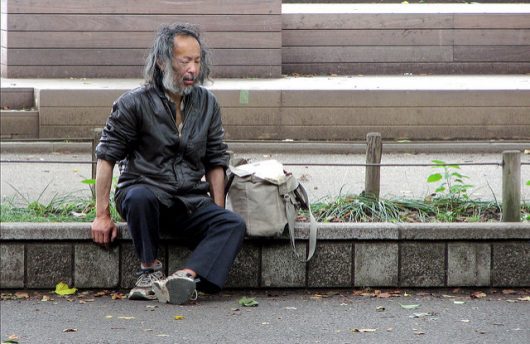
As the nation with the third largest economy in the world, it is easy to assume that poverty in Japan does not exist. However, one in six Japanese people is living in relative poverty. Many believe this is due to incomes dropping and the number of single-mother households increasing, which often consists of low-paying and sporadic employment. In 2014, child poverty rates in Japan hit a record high. Poverty within the country needs to be addressed, even if it’s less extreme than in other areas.


Children’s Cafeterias

In early 2017, the number of children living in poverty in Japan was estimated to be around 3.5 million. With such numbers rising, a children’s cafeteria named Kawaguchi was created in Tokyo as a place for children to socialize and have what is often times their only proper meal of the day. Kawaguchi survives strictly on cash donations from local businesses, and the food is donated by farmers and some participating families. There are around 50 children who eat there monthly, and about a third of them come from struggling single-parent households.

Like Kawaguchi, hundreds of similar cafeterias have been created throughout Japan to help with poverty issues. Although a law was passed in 2013 in regards to child poverty, sources say programs helping these children lack funding and support.

A proven difficulty in Japan is taking the poverty issue seriously, and the realities of poverty are often hidden for fear of being seen as disadvantaged. With social expectations in Japan, families often make extreme efforts to get their children everything they need to participate in expensive school activities and ensure they look well dressed. In doing this, the families often have to cut down on food.


Finding Children in Need

In addition to cafeterias for children, Japanese nonprofits have created interest-free loans for students who need extra help. An organization called The Nippon Foundation opened a facility where up to 20 children at an elementary age can go between 2 p.m. and 9 p.m. to relax, study and have a hot meal. The foundation plans to expand to allow 100 children by 2020.

Because poverty in Japan proves to be somewhat of a taboo, The Nippon Foundation understands that people may not ask for help, even when they desperately need it. So, the foundation focuses a lot of its efforts on outreach and finding children who need this kind of help.

With Japan being such a successful and economically advanced nation, poverty within its boundaries is often overlooked and misunderstood. Because of this, it is essential to understand that aid projects need to be put in place, just like in other struggling countries. Japan is a prime example that poverty can exist in wealthy countries. Assistance programs like children cafeterias and nonprofits not only help alleviate poverty in Japan, but they also spread the message that more needs to be done to help these people, especially children, who are living in poverty.

– McCall Robison

Photo: Flickr

February 11, 2018
https://borgenproject.org/wp-content/uploads/borgen-project-logo.svg 0 0 Borgen Project https://borgenproject.org/wp-content/uploads/borgen-project-logo.svg Borgen Project2018-02-11 19:30:222024-12-13 17:58:36The Hidden Reality of Poverty in Japan
Aid, Global Poverty, Humanitarian Aid

Addressing the Success of Humanitarian Aid to Timor-Leste

humanitarian aid to Timor-Leste

Timor-Leste, also known as East Timor and officially known as The Democratic Republic of Timor-Leste, is a sovereign state made up of a small cluster of islands in maritime Southeast Asia. After gaining independence from Portugal in 1975, Timor-Leste struggled through a quarter of a century under occupation, mass conflict and United Nations transition before finally being granted full independence in 2002.

As a result of the struggle Timor-Leste faced while gaining independence, the country was left with little infrastructure, an unstable economy and widespread poverty. Due to the country’s high instability, Timor-Leste is one of the most malnourished countries in the world. This results in a lack of food security, lack of hygiene and sanitation and an increase in poverty.

Despite receiving an abundance of humanitarian and transition relief since gaining its independence in 2002, Timor-Leste is still considered one of the poorest and least developed countries in the world. However, in the past five years, there has been a resurgence in the success of humanitarian aid to Timor-Leste. The main donor to Timor-Leste is the nation of Australia.

In 2014, the Humanitarian Aid Relief Trust (HART) began sending regular humanitarian aid to Timor-Leste. HART is a small aid organization originally founded by the United Kingdom but has since branched out into Australia and the United States. The aid organization focuses on working with communities in conflict zones, post-war zones or areas were people are exploited for cultural or political reasons.

On World Food Day 2014, HART released a detailed briefing on malnutrition and its consequences in Timor-Leste, such as high infant and child mortality rates. Shortly after releasing this briefing, HART worked with its partner, HAIM Health, to create programs and teaching centers to better educate the Timorese on proper nutrition. Programs focus on understanding nutrition, a balanced diet, preparing and cooking food and healthy sanitation practices. HAIM Health also follows up with the families enrolled in its education programs and has an 80 percent success rate of children gaining or sustaining weight.

Humanitarian aid to Timor-Leste does not stop with HART and HAIM Health. The Department of Foreign Affairs and Trade (DFAT) of the Australian government signed the East Timor Strategic Planning Agreement for Development in 2011, which establishes a shared vision of economic stability and growth between Australia and Timor-Leste. Since the signing of this agreement, Timor-Leste has seen many improvements in its development and further success toward a stable economy. In 2017-18 alone, Australia is expected to give approximately $96 million in humanitarian aid to Timor-Leste.

Thanks to Australia’s humanitarian aid to Timor-Leste, the Timorese have already seen positive results, including more than 40,000 people being provided the education and skill set needed to join the growing workforce. Also, over 21 thousand people now have access to clean water and hygiene programs and over 90 percent of primary schools now have a new and innovative curriculum, geared toward giving the students the skills they need to succeed.

Despite these improvements from humanitarian aid to Timor-Leste, the country still has a lot of room for improvement. The poverty rate in 2014 was 41.8 percent, which is still very high. With this groundwork laid, the Timorese will be able to build a brighter and more stable future.

– Courtney Wallace

Photo: Flickr

February 11, 2018
https://borgenproject.org/wp-content/uploads/borgen-project-logo.svg 0 0 Borgen Project https://borgenproject.org/wp-content/uploads/borgen-project-logo.svg Borgen Project2018-02-11 01:30:492019-12-09 06:16:40Addressing the Success of Humanitarian Aid to Timor-Leste
Aid, Global Poverty, Humanitarian Aid

Addressing the Success of Humanitarian Aid to Equatorial Guinea

humanitarian aid to Equatorial GuineaLocated in Central Africa, Equatorial Guinea is a small country that consists of the islands of Bioko and a mainland region where its largest city, Bata, resides. It has a population of about 1.2 million. Per capita, it is the richest country in Africa, with a GDP that ranks forty-third in the world when adjusted for purchasing power parity.

However, this massive wealth is distributed unevenly, and while it may be one of the region’s most powerful oil producers, very few benefit from the oil riches. Its authoritarian government has a streak of terrible human rights abuses, such as human trafficking. Furthermore, because less than half of the population has access to clean drinking water, it often appears as if no significant changes are coming about from humanitarian aid to Equatorial Guinea.

However, this does not mean that there are no groups undertaking vast projects with hopes of improving the country. For example, in 2016 the African Development Bank Group approved a grant of $3.04 million to strengthen the economic connections of Central African countries. This project allowed the creation of a bridge over the Ntem river which will link Cameroon and Equatorial Guinea. By reducing transport costs and times, it positively improves the economic ability and is a successful example of humanitarian aid to Equatorial Guinea.

Economic projects are a significant form of success in humanitarian aid to Equatorial Guinea. For example, in 2009 the African Development Bank Group signed a loan and grant agreement in the country worth up to $70 million. $40 million was used to finance a program to train young workers in middle and senior management in different regions.

With another $15 million, Equatorial Guinea supported the development of healthcare, which particularly benefited pregnant women and children under five years of age. By increasing productivity in all sectors, Equatorial Guinea hopes to improve economic growth which will hopefully improve human development and stability.

In 2006, another program, the Social Needs Fund, focused on addressing infrastructure for the poor. While resources may exist to alleviate poverty, there were few mechanisms to implement these resources. Funded by USAID, it assisted the government to improve social planning and investments, specifically for programs in the Ministry of Health, Education and Women’s Affairs. By focusing on different ministries, USAID was able to examine expenditures and monitor budgets to create more effective programs in each sector.

With continued efforts and foreign support, Equatorial Guinea continues to improve gradually. Development projects have helped push economic growth and have created a more stable and equal society in which the poor can navigate with greater ability.

– Nick McGuire

Photo: Flickr

February 9, 2018
https://borgenproject.org/wp-content/uploads/borgen-project-logo.svg 0 0 Borgen Project https://borgenproject.org/wp-content/uploads/borgen-project-logo.svg Borgen Project2018-02-09 01:30:362019-12-16 08:27:53Addressing the Success of Humanitarian Aid to Equatorial Guinea
Aid, Global Poverty, Humanitarian Aid

The Successes of Humanitarian Aid to Montenegro

Humanitarian aid to Montenegro
Humanitarian aid to Montenegro has been extremely helpful to the country’s growth, thanks in part to assistance from the United States Embassy in Montenegro and organizations such as the United Nations Development Programme. The country of Montenegro continues to grow and progress in positive ways with the help of the United States Embassy, as well as organizations such as the United Nations Development Program (UNDP).


The Role of the U.S. Embassy

The United States Embassy in Montenegro has been essential in giving humanitarian aid to Montenegro in the following ways:

  • The U.S. Embassy opened the Education U.S.A. Center which offers support to all those who would like to study in the U.S. Currently more than 120 Montenegrin students are studying at U.S. universities.
  • Since 2006, the U.S. Embassy supported almost 130 projects worth nearly $1.9 million to strengthen democracy and respect for human rights and to strengthen civil society in Montenegro.
  • Over the past 10 years, almost 400 Montenegrins experienced U.S. culture through one of the nation’s professional or educational exchange programs.
  • More than 50 American companies operate in Montenegro. The U.S. interest in doing business in Montenegro is constantly on the rise, especially after Montenegro’s invitation to join the NATO Alliance.
  • The top six U.S. investors have invested over $300 million in Montenegro since its independence. An additional $300 million of investment is in the pipeline from U.S. companies operating in the tourism, telecommunications and energy sectors.

The UNDP has also provided, and continue to provide, crucial humanitarian aid to Montenegro that helps the country in their economy and in the betterment of the overall livelihood of the Montenegro people.


The United Nations Development Program

The UNDP has a few different humanitarian aid projects in Montenegro that have been a great benefit to the country. One of their projects supports anti-discrimination and gender equality policies. The purpose of the project is to contribute to the protection, promotion and enforcement of human rights and equal opportunities in Montenegro. So far, the project has empowered female members of parliamentary political parties through the advancement of their knowledge and skills in the areas of gender equality and women’s political activism. The effort has also provided trainings that “aim to enhance political engagement of women.”


Sustainability

Another UNDP project in Montenegro is geared towards strengthening sustainability of protected areas. That project’s purpose is to develop institutional capacities to design, plan and manage a more representative system of protected areas. The project has already accomplished a few of its goals such as designing an environmental information system for the Environmental Protection Agency of Montenegro, helping improve legal framework for functioning of National Parks by supporting amendments to the Law on National Parks and supporting the establishment of educational programmes in protected area management and rural development, with emphases on financial planning and management of protected areas.


The World Bank

The World Bank also deserves a worthy mention in its provision of humanitarian aid to Montenegro. Last year, the organization approved a $14 million loan to Montenegro for the country’s Revenue Administration Reform Project. The objective of that project is to improve the effectiveness of operational functions of Montenegro’s Tax Administration and to reduce the compliance costs for corporate taxpayers.

With the continued assistance from the U.S. Embassy as well as the UNDP and the World Bank, Montenegro will continue to positively progress.

– Kennisha L. Crawford

Photo: Flickr

February 8, 2018
https://borgenproject.org/wp-content/uploads/borgen-project-logo.svg 0 0 Borgen Project https://borgenproject.org/wp-content/uploads/borgen-project-logo.svg Borgen Project2018-02-08 01:30:402024-05-29 22:39:10The Successes of Humanitarian Aid to Montenegro
Aid, Global Poverty, Humanitarian Aid

The Success of Humanitarian Aid to Cote d’Ivoire

humanitarian aid to Cote d'IvoireCote d’Ivoire is known to be one of the more prosperous West African countries; its cocoa production and strong ties to France allow for widespread export and trade. However, as with many African nations, Cote d’Ivoire is also known for its recent political upheaval.

In the early 2000s, a military coup took place which resulted in Laurent Gbagbo obtaining office, instigating a civil war between government supporters and dissidents in the region. With this civil war beginning, Cote d’Ivoire’s import/export business faltered, and with the economic and political unrest in the region, the success of humanitarian aid to Cote d’Ivoire has yet to fully be understood.

In terms of positive outcomes, the most obvious success of humanitarian aid to Cote d’Ivoire is the recent completion of the United Nations’ peacekeeping mission in the region. On June 30, 2017, the U.N. successfully removed peacekeeping forces from Cote d’Ivoire. According to a brief which took place on February 8, 2017, the U.N. considered the peacekeeping efforts an overwhelming success.

Included in the list of positive impacts the U.N. made in the region are revised legislative elections, a re-drafted constitution that improves the quality of life for women and children and a dramatic decrease in the amount of human rights violations taking place in the area. The U.N.’s peacekeeping efforts have truly worked to stabilize the country.

Another source of success in humanitarian aid to Cote d’Ivoire is the growth of nonprofit work in the region. In 2014 and 2015 Ebola broke out in West Africa. With the effects of political unrest still plaguing the country, aid and access to medical care and Ebola preventatives were hindered. The European Commission has addressed this issue by allocating more than €119 million to Cote d’Ivoire to aid in the recovery process after the disease swept the nation.

Similarly, the rate of maternal mortality in Cote d’Ivoire is a cause for concern. According to the EC, there are several humanitarian projects working within the country, such as a hospital in the Tonkpi region offering more overarching services for new mothers and their children, including infant vaccinations, postpartum follow-ups and continued infant medical care, in an attempt to lower mortality rates.

The Partnership for Transition program through the EC has helped collect medical supplies to distribute to hospitals and clinics in Cote d’Ivoire. From 2012 to 2014, more than 26 cargo planes full of medical supplies flew to Cote d’Ivoire. In each plane were cesarean section kits, anesthesia kits and basic pharmaceutical supplies. These were distributed between 17 different regional clinics and have helped maintain the goal of free and accessible healthcare that the government desired.

The successes of humanitarian aid to Cote d’Ivoire that have been mentioned here do not even scratch the surface. Nonprofit organizations are helping to build food security, agricultural sustainability and civil services, and others within the nation are working to maintain a healthy and functioning government. While this aid will most likely remain necessary for the foreseeable future, Cote d’Ivoire has grown much more stable with the help of international humanitarian aid in both the social and the political arenas.

– Molly Atchison

Photo: Flickr

February 7, 2018
https://borgenproject.org/wp-content/uploads/borgen-project-logo.svg 0 0 Borgen Project https://borgenproject.org/wp-content/uploads/borgen-project-logo.svg Borgen Project2018-02-07 07:30:552024-05-27 23:59:18The Success of Humanitarian Aid to Cote d’Ivoire
Aid, Global Poverty, Humanitarian Aid

The Success of Humanitarian Aid to Angola

https://borgenproject.org/poverty-angola-causes-updates-statistics/humanitarian aid to AngolaAngola is in southern Africa, bordered by Namibia, the Democratic Republic of the Congo and Zambia. As of today, Angola continues to suffer from the repercussions of a civil war that lasted more than three decades. The local economy and the infrastructure are inadequate and unstable, and the majority of people residing in Angola live in poverty, with difficulty sustaining their livelihoods. Their difficulties also include malnutrition, illiteracy, high infant mortality rates and a lack of healthcare and quality education. This is why it is essential to ensure the success of humanitarian aid to Angola.

People in Need (PiN) is an organization that has been supporting Angola for more than 10 years. PiN is a Czech nonprofit and non-governmental group that provides humanitarian assistance through long-term development projects as well as educational and human rights programs. Their mission to help Angola began with setting up aid in Bié, which was one of the provinces most affected by the war and destitution.

In the early stages of PiN’s humanitarian aid to Angola, they focused on restoring and improving elementary education, while also working on developing agricultural markets in more rural areas to help crop production and economic development. The most important goal for PiN is to enable the people of Angola to provide for themselves and take control of their livelihoods.

In September 2017, PiN began working in Huambo and Huíla. The focus in these provinces was to address health issues involving mothers and children, water access, nutrition and sanitation. In doing all of this, PiN has helped upwards of 875,000 people living in Angola. This includes helping 37,000 children escape malnutrition, building 14 schools and four centers for education, developing over 10,000 toilets and providing training and tools for more than 3,000 farmers. They are able to do this so efficiently because PiN involves the communities in all of their projects and also works with local authorities in Angola.

Not only does PiN help with long-term aid, they also work with Angola in emergency situations. A specific example includes providing sanitation, hygiene and drinking water for citizens in the north, where over 33,000 people are seeking refuge from ongoing violence in the bordering country of Congo.

One of the most important goals that PiN has had is to help local children gain access to a quality education. In addition to building new schools, PiN also focuses on giving the staff at the schools specialized training, which more than 1,850 teachers have participated in. Also, 25,000 teaching materials were distributed in order to better help the teachers give the children a quality education. And because a large portion of the adult population is illiterate, PiN also focuses on assisting that part of the population to reduce illiteracy. By implementing these tactics, PiN has taught around 450,000 children and 1,2000 illiterate adults to read, write and do basic mathematics.

This is just one example of successful humanitarian aid to Angola. Assistance like this is essential for nations like Angola to survive such harsh living conditions. PiN has helped thousands of children and adults have a better quality of life through better sanitation, education, agriculture and infrastructure. It is aid like this that allows people to thrive in difficult places.

– McCall Robison

Photo: Flickr

February 6, 2018
https://borgenproject.org/wp-content/uploads/borgen-project-logo.svg 0 0 Borgen Project https://borgenproject.org/wp-content/uploads/borgen-project-logo.svg Borgen Project2018-02-06 01:30:102019-11-08 01:58:24The Success of Humanitarian Aid to Angola
Aid, Global Poverty, Humanitarian Aid

Better Disaster Preparedness: Humanitarian Aid to the Solomon Islands

humanitarian aid to the solomon islandsConsisting of hundreds of small islands and home to roughly 600,000 people, the Solomon Islands face an array of climate-related and social issues that have caught the world’s attention. Countries and organizations are currently sending humanitarian aid to the Solomon Islands to transform the island chain into a safer place to live.

As islands in the South Pacific Ocean, the Solomon Islands are constantly threatened by some of the worst that weather and climate change have to offer: cyclones, tsunamis, earthquakes and extensive flooding. In response to this, organizations like the Asian Development Bank have worked to create disaster-resilient infrastructure, including structures and roadways. Its Sustainable Transport Infrastructure Improvement Program aims to improve transport infrastructure and maintain roadways so that they will be fully accessible year-round.

A vital piece of creating consistently accessible roadways in the Solomon Islands is ensuring that all roads are climate-resilient, which is the goal by 2030, according to the Asian Development Bank. By improving transport conditions, the Asian Development Bank hopes to boost the local agriculture industry and reveal new economic opportunities for those living in rural areas.

Natural disasters in the Solomon Islands can have devastating effects. With its ranking of sixth on the World Risk Report’s disaster exposure rating, reducing these effects should be a top priority. Without the implementation of communication technologies to warn civilians of imminent threats, disasters can cause an exponentially higher level of destruction and death than what could have been avoided.

According to ABC International Development, the Solomon Islands Media Assistance Scheme (SOLMAS) was a project that worked to implement a stronger communications program. Funded by the Australian government, SOLMAS helped the Solomon Islands Broadcasting Corporation upgrade its transmission infrastructure to expand the broadcasting audience. By increasing the audience and reaching out to rural areas, disaster awareness and preparedness have improved drastically.

Also reaching out to citizens in rural areas is the World Bank, which implemented the Rural Development Program (RDP). According to the World Bank, less than 20 percent of people in rural areas have access to electricity, falling to below 5 percent in the outer islands. Sanitation also presents an alarming statistic, with only 15 percent having access to flush toilets. Beginning in 2008, RDP supplies grants to in-need communities. More than 300 projects have been completed, positively impacting about 50 percent of the rural population, or 225,000 people. Projects providing humanitarian aid to the Solomon Islands have spanned water access, electricity and education to road maintenance. As of 2013, the rural area’s access to clean water doubled and more than 50 percent of farmers changed their agricultural practices following advice from the project.

Despite the lack of adequate infrastructure, rural areas are not the only region to receive humanitarian aid to the Solomon Islands. According to the United Nations Human Settlements Program, open public spaces are a rare commodity in urban areas with overcrowded cities. UNHabitat is currently working to improve conditions in the capital city of Honiara by developing a sustainable plan to maintain public spaces. The project, Participatory Slum Upgrading Program, cost about $100,000.

Humanitarian aid to the Solomon Islands has been proven to improve living conditions in the islands and is essential to creating sustainable infrastructure. By upgrading sanitation, access to water and transport infrastructure, economic opportunities will continue to open.

– Austin Stoltzfus

Photo: Wikimedia Commons

February 5, 2018
https://borgenproject.org/wp-content/uploads/borgen-project-logo.svg 0 0 Borgen Project https://borgenproject.org/wp-content/uploads/borgen-project-logo.svg Borgen Project2018-02-05 07:30:482024-05-29 22:39:07Better Disaster Preparedness: Humanitarian Aid to the Solomon Islands
Aid, Global Poverty, Humanitarian Aid

Success of Humanitarian Aid to Tuvalu Slowly Brings Sustainability

Humanitarian Aid to Tuvalu

Tuvalu is an independent island country consisting of nine islands in the South Pacific. As one of the smallest countries in the world, Tuvalu’s economy is constrained. This is also affected by the country’s remoteness.

Despite Tuvalu remaining fiscally resilient, the poverty rate is still high. The small economy does not allow room to grow and the country has few exports, meaning that Tuvalu relies almost entirely on foreign aid. As of 2015, about 89.2 percent of the Growth National Income (GNI) was in foreign humanitarian aid to Tuvalu.

Tuvalu’s primary donor and partner in humanitarian aid is New Zealand. Official visits between Tuvalu and New Zealand began in 2010 and New Zealand created an official partnership in 2015 in order to bring humanitarian aid to Tuvalu. However, New Zealand has been helping fund Tuvalu since the 1980s. In 1987, New Zealand, Australia and the United Kingdom created the Tuvalu Trust Fund, an international fund dedicated to benefitting Tuvalu. The goal of the fund is to help Tuvalu reach financial autonomy.

New Zealand has continued to support and send humanitarian aid to Tuvalu, especially after Tuvalu joined the United Nations in 2000. The New Zealand Ministry of Foreign Affairs and Trade introduced and started implementing the New Zealand Aid Programme 2015-2019 in Tuvalu in early 2015. The program’s goal is to increase economic growth and create a sustainable economy, reduce poverty and increase Tuvalu’s resilience to natural disasters. Through the implementation of this program, New Zealand and Tuvalu have signed a Joint Commitment for Development.

The majority of the program’s funding goes toward activities and initiatives in Tuvalu. As of 2017, New Zealand’s Ministry of Foreign Affairs and Trade has spent $9 million in humanitarian aid to Tuvalu. Though the program is still new, improvements in Tuvalu have already begun. The Tuvalu Trust Fund has successfully adopted a new investment strategy which has resulted in economic growth. This has strengthened economic governance, returning just under $9 million to the government.

Furthermore, Tuvalu has seen a strengthening of resilience against natural disasters, specifically in Tuvalu’s capital Funafuti. The program has also funded the fixing of the Tagako Breach, a thin strip of land on the island of Funafuti. This has improved Tuvalu’s stability during cyclones and storms.

Though New Zealand has already helped create some stability and relief in Tuvalu, it is still working to make a more sustainable and prosperous economy in the country. The Ministry of Foreign Affairs and Trade, through the New Zealand Aid Program, offers scholarships to Tuvaluan scholars. The applications open in early 2018 and studying will begin in early 2019. The goal of these scholarships is to help young Tuvaluans get an education they can use to improve the development of their country.

New Zealand will also fund and implement the Tuvalu Borrow Pits Rehabilitation Project in 2018. Based mainly in Funafuti, the aim of the project is to improve the living standards, sanitation services and access to clean water. The project will fill up 10 borrow pits on the Funafuti Atoll. The project has already been approved.

The humanitarian aid to Tuvalu from New Zealand seems small but has already started making a difference. New Zealand has laid the groundwork for Tuvalu to continue to improve for years to come.

– Courtney Wallace

Photo: Flickr

February 4, 2018
https://borgenproject.org/wp-content/uploads/borgen-project-logo.svg 0 0 Borgen Project https://borgenproject.org/wp-content/uploads/borgen-project-logo.svg Borgen Project2018-02-04 01:30:592024-05-29 22:39:07Success of Humanitarian Aid to Tuvalu Slowly Brings Sustainability
Aid, Global Poverty, Humanitarian Aid

The Success of Humanitarian Aid to the Marshall Islands

humanitarian aid to the marshall islands

Like most of the islands in the Pacific, the Marshall Islands have a history of natural disasters and their susceptibility is increasing due to climate change. These have ranged from floods and cyclones to tsunamis and earthquakes, and all of them have caused destruction in the nation. The United States has been fairly diligent about sending humanitarian aid to the Marshall Islands for relief from a number of natural disasters and for the prevention of future destruction.

The Marshall Islands were a U.S. territory until 1986 when it gained independence. However, the nation is under a Compact of Free Association, which ensures that the United States provides economic assistance and other benefits to the Marshall Islands. Some of this funding does provide for disaster response programs, but humanitarian aid to the country is not limited to this.

Humanitarian aid to the Marshall Islands from the U.S. has been fairly consistent over time, and a number of government agencies run programs and provide assistance to the nation. There have been many programs funded by U.S. agencies that have been quite successful. In 2013, the United States sent $5.1 million in drought assistance to the Marshall Islands after President Obama declared the drought a disaster, opening the way for emergency funding. This is an example of the U.S. providing disaster relief to the nation, but it also does a fair amount in the way of disaster prevention and response.

The United States funded the Climate Adaptation, Disaster Risk Reduction and Education program in the Marshall Islands. This program educated 500 children and 5,000 community members on effective disaster response and evacuation. The U.S. also provided humanitarian aid to the Marshall Islands for the development of the Pre-Propositioning Emergency Relief Commodities project. This project facilitated the placement of emergency relief supplies in a number of locations throughout the country. Both these projects helped to improve response times and disaster preparedness in the Marshall Islands.

As climate change worsens, so does the amount of aid the Marshall Islands and the other Pacific islands will need. Disaster response needs to be continually improved, and even then, no one can predict every catastrophe. The United States has done a lot to provide humanitarian aid to the Marshall Islands and this trend will likely continue, as it has many benefits for the U.S.

– Liyanga de Silva

Photo: Wikimedia Commons

February 3, 2018
https://borgenproject.org/wp-content/uploads/borgen-project-logo.svg 0 0 Borgen Project https://borgenproject.org/wp-content/uploads/borgen-project-logo.svg Borgen Project2018-02-03 07:30:542024-05-29 22:39:06The Success of Humanitarian Aid to the Marshall Islands
Page 24 of 34«‹2223242526›»

Get Smarter

  • Global Poverty 101
  • Global Poverty… The Good News
  • Global Poverty & U.S. Jobs
  • Global Poverty and National Security
  • Innovative Solutions to Poverty
  • Global Poverty & Aid FAQ’s
Search Search

Take Action

  • Call Congress
  • Email Congress
  • Donate
  • 30 Ways to Help
  • Volunteer Ops
  • Internships
  • Courses & Certificates
  • The Podcast
Borgen Project

“The Borgen Project is an incredible nonprofit organization that is addressing poverty and hunger and working towards ending them.”

-The Huffington Post

Inside The Borgen Project

  • Contact
  • About
  • Financials
  • President
  • Board of Directors
  • Board of Advisors

International Links

  • UK Email Parliament
  • UK Donate
  • Canada Email Parliament

Get Smarter

  • Global Poverty 101
  • Global Poverty… The Good News
  • Global Poverty & U.S. Jobs
  • Global Poverty and National Security
  • Innovative Solutions to Poverty
  • Global Poverty & Aid FAQ’s

Ways to Help

  • Call Congress
  • Email Congress
  • Donate
  • 30 Ways to Help
  • Volunteer Ops
  • Internships
  • Courses & Certificates
  • The Podcast
Scroll to top Scroll to top Scroll to top