• Link to X
  • Link to Facebook
  • Link to Instagram
  • Link to TikTok
  • Link to Youtube
  • About
    • About Us
      • President
      • Board of Directors
      • Board of Advisors
      • Financials
      • Our Methodology
      • Success Tracker
      • Contact
  • Act Now
    • 30 Ways to Help
      • Email Congress
      • Call Congress
      • Volunteer
      • Courses & Certificates
      • Be a Donor
    • Internships
      • In-Office Internships
      • Remote Internships
    • Legislation
      • Politics 101
  • The Blog
  • The Podcast
  • Magazine
  • Donate
  • Click to open the search input field Click to open the search input field Search
  • Menu Menu

Archive for category: Government

Children, Global Poverty, Government, Women & Children

How to Help People in Lithuania by Addressing Alcoholism

 Lithuania

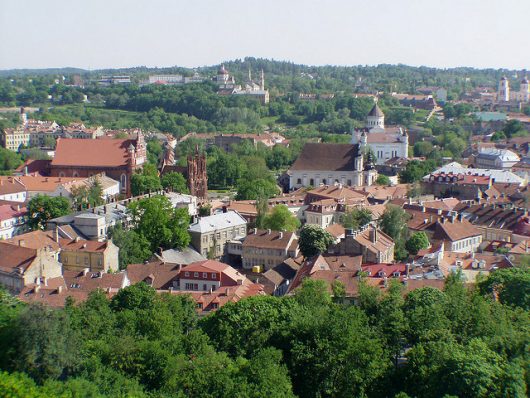
Alcoholism in Lithuania and many of its eastern European neighbors is a major concern. The Lithuanian government and various organizations, including SOS Children Villages Lithuania, are stepping in to determine how to help people in Lithuania and how to protect those that are most vulnerable to the effects of alcohol abuse.

In June of this year, the Lithuanian government announced that it will implement new, highly prohibitive alcohol laws in 2018. This announcement was made after the World Health Organization published a report that named Lithuania as the heaviest drinking country in the world in 2016.

Though this is Lithuania’s first year to top the list, its severe drinking problems are hardly new, and the details of this decades-long problem are shocking:

  • In 2013, UNICEF’s Innocenti Report Card 11 found that 27 percent of children between the age of 11 and 15 had been drunk at least twice. This was the highest measured rate in Europe that year.
  • In 2014, nearly one-quarter of women in the country engaged in binge drinking, more than women in any other country.
  • In 2014, it was found that nearly 10 percent of Lithuania’s population suffered from an alcohol use disorder, among the highest out of all nations reviewed.

Why is alcohol abuse so rampant in Lithuania and other eastern European countries? Analysts offer myriad reasons that vary depending on the particular country in question, but some of the most frequently cited answers relate to high unemployment rates, the societal legacy of Soviet control, poor mental health care and a lack of information and public policy regarding alcohol.

One source reported that currently, eight of the nations with the highest levels of consumption do not have public policy initiatives that address the effects of alcohol consumption on the general public. This lack of public information exacerbates the danger of this situation to women and children. Alcohol use among women in Lithuania and other eastern European countries has been increasing steadily, and women in these countries may not be aware of the dangers of drinking during pregnancy. Experts therefore assert that an essential tenet of answering the question of how to help people in Lithuania is simply to make them more aware of the health effects of drinking.

The effects of alcoholism in Lithuania extend to children. Research shows that children whose parents have an alcohol problem suffer an increased likelihood of several violent and troubling scenarios, are six times more likely to suffer domestic violence and three times more likely to have suicidal thoughts. Furthermore, in June 2016, 20,000 Lithuanian children were found to be living in conditions of “social risk”, which the Lithuanian government defines as a household situation in which the parents have problems concerning alcohol abuse, poverty,or domestic violence. A significant number of these children were removed from their parents’ care and placed in institutional alternatives.

The question of how to help people in Lithuania is as complex and multivariable as its catalysts. The Lithuanian government’s upcoming prohibitive measures indicate policymakers’ dedication to engendering large-scale societal change, but it will take time for Lithuanians to wholly shift their attitudes and habits of alcohol dependency and abuse. In the meantime, there are tens of thousands of Lithuanian children and millions more across eastern Europe that currently live in endangered situations or institutional care due to parental abuse of alcohol.

Recognizing the need for increased child protection and better solutions, the organization SOS Children Villages Lithuania has developed an EEA grants funded project entitled “Sustained Transition from Institutional Care to Family-Based and Community-Based Alternatives”. The goal of this project is to determine the best environment and means of caring for children that have been removed from dangerous situations through comparative studies. SOS Children Villages Lithuania is dedicated to advocating for and stepping in to protect children in Lithuania as the country works to lessen its rates of alcoholism.

– Savannah Bequeaith

Photo: Flickr

October 15, 2017
https://borgenproject.org/wp-content/uploads/borgen-project-logo.svg 0 0 Kim Thelwell https://borgenproject.org/wp-content/uploads/borgen-project-logo.svg Kim Thelwell2017-10-15 01:30:192020-02-13 19:55:11How to Help People in Lithuania by Addressing Alcoholism
Education, Global Poverty, Government

New Program for Free High School in Ghana Looks Promising

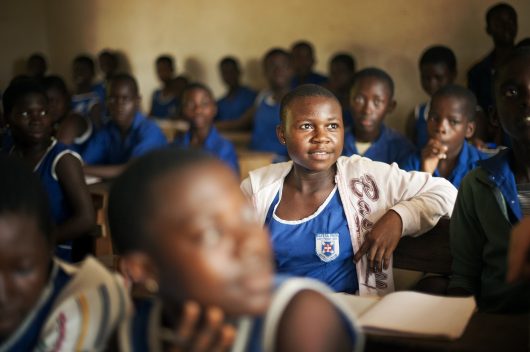
Free High School in GhanaIn February 2017, the president of Ghana, Nana Akufo-Addo, stated that the government will begin to fund the cost of public Senior High Schools (SHS) for everyone who qualifies beginning in September. According to The Herald, President Akufo-Addo stated, “By free SHS, we mean that, in addition to tuition which is already free, there will be no admission fees, no library fees, no science centre fees, no computer laboratory fees, no examination fees, no utility fees; there will be free textbooks, free boarding and free meals and day students will get a meal at school for free.”
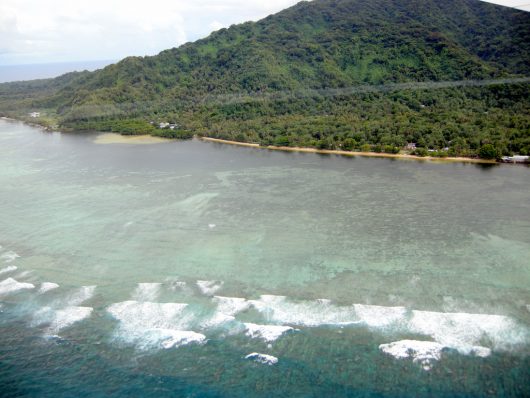
President Akufo-Addo has followed through on this promise. The equivalent of over $90 million has been set aside by the government with the goal of aiding 424,092 students for the 2017-2018 school year. While the program for free high school in Ghana is for incoming freshman only, it is already a great improvement, as in 2014, only 37 percent of students were enrolled in secondary education.

President Akufo-Addo has been quoted recognizing the importance of education both in general and in terms of developing countries. VOA News reports Akufo-Addo saying that the, “economy for over a century has been depending largely on the production and export of raw materials. This cannot and will not create prosperity for the masses of Ghanaians.”

Though there have been concerns expressed about if free SHS is a sustainable program, if the system will be overburdened or if it will harm the private schooling sector, the worries are thus far unfounded. The beneficiaries of this maiden program will be under the policies of the program until their third year, which gives time for the policies to be further developed and corrected.

The private schooling sector was not affected when free primary school was initiated over a decade ago. In fact, they remain among top performing schools in the nation. Therefore, the same result is more than likely to be expected with the beginning of free high school in Ghana.

As for if the school system will be overburdened with congestion of students and a subsequent drop in the quality of education, the prime minister of education is not concerned. VOA News quotes Minister Matthew Opoku Prempeh claiming, “the government based its calculations on data from headmasters and on the total number of students who passed the entrance exam…We should be able to place everybody.”

With a new and still improving focus on education, the future of Ghana from both an economic standpoint and a more holistic level has room for growth more than ever before.

– Gabriella Paez

Photo: Flickr

October 14, 2017
https://borgenproject.org/wp-content/uploads/borgen-project-logo.svg 0 0 Kim Thelwell https://borgenproject.org/wp-content/uploads/borgen-project-logo.svg Kim Thelwell2017-10-14 07:30:192020-02-13 20:10:01New Program for Free High School in Ghana Looks Promising
Global Poverty, Government

Lessons in the Causes of Poverty in Guyana

Lessons in the Causes of Poverty in GuyanaIn this age of development, many small countries look toward a future of economic growth and a higher quality of life. With the level of cooperation among states increasing (e.g., the Sustainable Development Goals), the possibility of eradicating extreme poverty grows more and more realistic. However, the number of smaller states is also increasing. Smaller states are often the most vulnerable to poverty and slow growth, and Guyana is no exception. The causes of poverty in Guyana are complex, but taking the time to learn about them can assist in creating solutions for the future.
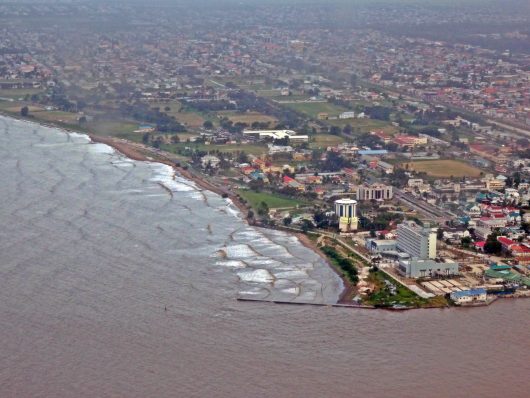
Guyana is a country in South America, north of Brazil and east of Venezuela. A small nation, Guyana’s population only stands at 773,300 people, but over 50 percent of citizens currently live abroad. The nation formerly belonged to the British but won its independence in 1962. As a result, Guyana is the only English-speaking country in South America and has many ethnic differences among its people.

Like any country with limited resources, the available resources have to provide for more people than they were intended to. Combined with weak infrastructure, the situation results in weak education and healthcare providers. This has resulted in what is known as a “brain drain,” where the most educated people leave the country for better opportunities. Although these are a few of the causes of poverty in Guyana, they are just the tip of the iceberg.

Economic Causes
The economic causes of poverty in Guyana revolve around the country’s lack of resources. The country depends on agriculture and extraction of resources. Because it can only export food products, especially sugar, and some natural resources, it imports most of its goods. The country has a GDP of $3 billion, but the country is heavily in debt to other countries. Poor policies toward business and excessive spending have also contributed to Guyana’s 35 percent poverty rate. However, Guyana’s GDP does show a small positive increase.

Social Causes
One of the after-effects of British colonial rule in Guyana is the presence of many racial groups brought to the country during colonialism. Demographically, Guyana is comprised of primarily East Indians at 40 percent, black people at 30 percent, people of mixed race at about 20 percent and the other 10 percent made up of indigenous peoples and other races. African slaves were first brought to the country to work sugar plantations; after abolishing slavery, Indian indentured workers were brought to the country to work in the plantations. Because of this, ethnic tensions exist between the two large groups. The tensions contribute to the fractured political state in Guyana.

Political Causes
Politics can illustrate economic grievances in the country, as well as tensions in the country between different groups. The government of Guyana has had problems in the past with corruption, as well as issues with one party controlling most of the power. Many citizens vote along ethnic lines, but with the elections of 2015, there has been a small shift towards unity. In 2015, Guyana elected David Granger, a member of a multi-ethnic party, president. The new administration looked toward stopping the corruption in government that contributed to the current state of the economy.

The causes of poverty in Guyana, like any country, are complex and deep-rooted. Understanding and looking for solutions to poverty in Guyana can help lead to solutions for the rest of the world. With the political shifts in Guyana, it has the opportunity for economic growth and increases in its quality of life and the well-being of its citizens. The developments in this country have the potential to help the entire world in the fight against poverty.

– Selasi Amoani

Photo: Flickr

October 6, 2017
https://borgenproject.org/wp-content/uploads/borgen-project-logo.svg 0 0 Borgen Project https://borgenproject.org/wp-content/uploads/borgen-project-logo.svg Borgen Project2017-10-06 07:30:272024-05-25 00:14:15Lessons in the Causes of Poverty in Guyana
Global Poverty, Government

How to Help People in Latvia

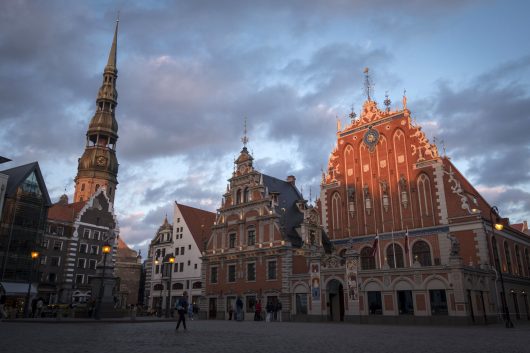
How to Help People in LatviaOne of the smaller Baltic states, Latvia gained its independence from the Soviet Union in 1991, and ever since has been shifting to catch up to the rest of the economies in the EU. Although Latvia is one of the fastest growing economies in the EU, nearly one in three Latvians is at risk of severe poverty and nearly one in five suffer severe material deprivation. Additionally, the GDP per capita of Latvia is only $13,700 – in contrast, the United States’ GDP per capita for 2016 was over $52,000. Considering the close strategic ties between the U.S. and Latvia, this all begs the question of how to help people in Latvia who suffer from poverty.

With the aim of helping Latvia develop as a nation and stamp down its poverty rate, here are some ways to get involved and help the people of Latvia:

  1. In 2014, the U.S. provided Latvia with $67 million worth of assistance through an assortment of military programs run in the country. Writing to members of Congress in favor of continued support for Latvia can allow them to focus their attention and finances on their own economy.
  2. Similarly, the U.S. and Latvia are members of many of the same economic groups – such as the World Trade Organization, the World Bank and NATO. Urging your representatives in Congress to support these groups provides Latvia with access to the resources and assistance provided by them.
  3. Latvia is currently in the process of becoming a member of the Organization for Economic Cooperation and Development (OECD) – an international group that seeks to assist nations in improving their economies and the livelihoods of their citizens. Getting involved with the OECD and supporting their initiatives is a tangible way of helping make an impact in the lives of Latvians.
  4. Investing in and purchasing the goods and services of Latvian-based companies puts money directly into the Latvian economy, which is largely based on industries such as transport and telecommunications. For example, choose to fly Air Baltic next time you take a trip to Europe.
  5. Volunteer your time or donate to the American Latvian Association, which has been providing aid to Latvia since 1989.

Ultimately, the choice of how to help people in Latvia most effectively lies in the hands of the Latvian government, but urging U.S. representatives to consider ways to assist Latvia as well as volunteering your own time and money can assist the poor in Latvia in making life a little bit better for themselves.

– Erik Halberg
Photo: Flickr

October 6, 2017
https://borgenproject.org/wp-content/uploads/borgen-project-logo.svg 0 0 Borgen Project https://borgenproject.org/wp-content/uploads/borgen-project-logo.svg Borgen Project2017-10-06 01:30:062020-07-22 08:18:27How to Help People in Latvia
Foreign Aid, Global Poverty, Government

Corruption: Kryptonite to Foreign Aid

Foreign Aid

Foreign aid is a topic that stirs controversy, with each side maintaining significant weight in their argument.

“You know the excuses: We can’t afford foreign aid anymore, or we’re wasting money pouring it into these poor countries, or we can’t buy friends—other countries just take the money and dislike us for giving it. Well, all these excuses are just that, excuses—and they’re dead wrong,” Ronald Reagan said in 1987.

The United States’ stance on foreign aid changes with each administration. The phrase, “you are damned if you do, you are damned if you don’t” comes to mind.

Foreign aid has been categorized as “soft power” since the late 1980s. “Soft power” is the ability of a country to persuade others to do what it wants without force or coercion. Joseph Nye coined the phrase, arguing that security relies on winning people as much as winning wars.

Since the 1980s, soft power has become central in U.S. foreign policy practices. Is foreign aid a tool in the soft power toolbox?

Nye believes aid is purchasing power, not soft power. Despite the nuances of whether aid is categorized as purchasing power or soft power, foreign aid is important for the United States to achieve interests abroad.

According to Phil Vernon, “currency of soft power is values, institutions, culture and policy, then soft power is exercised by the choices you make and the actions you take, not by what you say.” If this is true, aid should be accompanied by anti-corruption monitoring organizations, tools of economic sustainability and keys of independence. The goal is not to have a country depending on the United States, but to provide the tools for a state to become independent.

If the United States does not ensure and monitor the aid given, corruption will prevent the money from reaching the population in need. Monitoring programs are even more vital than aid itself. Corruption is the kryptonite to foreign aid.

According to the National Bureau of Economic Research, the more corrupt the government is, the more aid the state receives. There is no evidence that an increase in foreign aid reduces corruption.

Currently, corruption is not being punished. This lack of acknowledgment is only encouraging governments to abuse international funds. If corruption is reflected in next year’s funding, people will suffer. If the population suffers on the government’s behalf, this is motivation for the population to vote in order to correct the situation. Thus, reducing corruption will be imminent.

Despite the controversies and arguments surrounding international aid, it is important to remember that giving aid to corrupt governments is not giving aid to the people. Corrupt governments must be punished in some way in order to reduce international corruption. Corruption is the kryptonite to U.S. foreign policy success. U.S. interests must be maintained, and aid is a tool in the toolbox for doing just that.

– Danielle Preskitt

Photo: Flickr

October 2, 2017
https://borgenproject.org/wp-content/uploads/borgen-project-logo.svg 0 0 Kim Thelwell https://borgenproject.org/wp-content/uploads/borgen-project-logo.svg Kim Thelwell2017-10-02 07:30:162024-05-28 00:00:25Corruption: Kryptonite to Foreign Aid
Global Poverty, Government

HIV Foreign Aid Cuts Are Projected to Cause Humanitarian Crisis

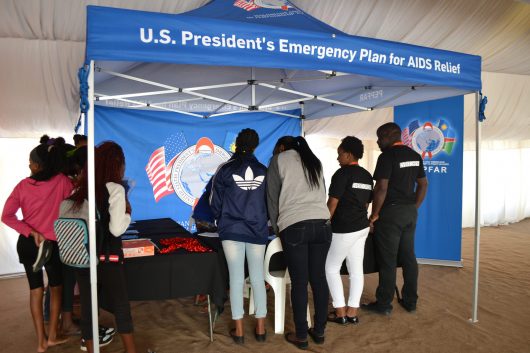
Trump's HIV Foreign Aid CutsIn May 2017, President Donald Trump unveiled his “skinny budget” plan that would be implemented in the upcoming fiscal year. President Trump’s plan is particularly worrisome for foreign countries that are plagued by HIV, as the plan cuts $1 billion from the President’s Emergency Plan for AIDS Relief (PEPAR) program.
It has been estimated that President Trump’s HIV foreign aid cuts would result in nine million life years lost in South Africa and Ivory Coast, which are two countries that have a predominant problem with the spread of HIV. Specifically, according to humanitarian writer Sebastien Malo, “South Africa has the highest prevalence of HIV worldwide, with 19 percent of its adult population carrying the virus in 2015.”

The U.S. Department of State reported that HIV-infected patients who currently receive antiretroviral therapy funded by U.S. foreign aid would not stop getting treatments. On the other hand, however, it is estimated that 1.8 million people would die from HIV in South Africa and Ivory Coast within 10 years due to President Trump’s HIV foreign aid cuts.

According to the Kaiser Family Foundation, if the Trump administration continues to cut funding for HIV-related programs and research, HIV could transform into a pandemic and affect the world. Jacqueline Alemany, White House reporter, indicated that the foreign aid cuts are due to the Trump administration’s partiality toward defense and military spending.

Thus, a small reduction of $1 billion from the current $6 billion PEPFAR program would potentially cause catastrophic effects around the world. Furthermore, adding to South Africa’s estimated seven million HIV-infected people, Ivory Coast is home to approximately 460,000 HIV-infected people. All in all, as Malo questions, “would the relatively small savings realized by currently proposed budget reductions be worth these large humanitarian costs?”

Now, the U.S. government is left to determine whether or not the budget cuts are worth the potential humanitarian crisis caused by an enormous loss of life and the spread of HIV.

– Emily Santora

Photo: Flickr

September 30, 2017
https://borgenproject.org/wp-content/uploads/borgen-project-logo.svg 0 0 Kim Thelwell https://borgenproject.org/wp-content/uploads/borgen-project-logo.svg Kim Thelwell2017-09-30 07:30:302020-07-17 08:39:38HIV Foreign Aid Cuts Are Projected to Cause Humanitarian Crisis
Global Poverty, Government

Agriculture and Freedom Keys to Poverty in Eritrea

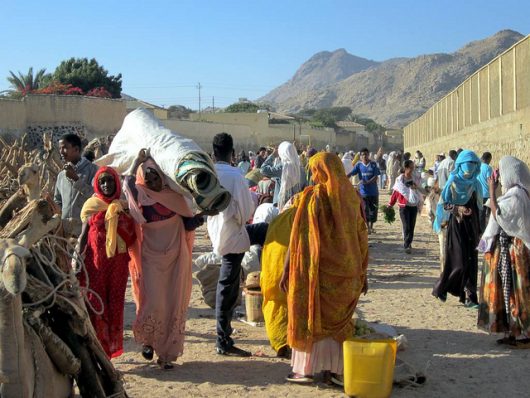
Poverty in EritreaEritrea is a country in the Horn of Africa, bordered by Sudan in the west, Ethiopia in the south and Dijibouti in the southeast. The country gained independence from Ethiopia in 1993 and has been led solely by unelected president Isaias Afwerki since 1991.

Eritrea has isolated itself from other countries and become one of the poorest in Africa. The most recent data on poverty, from 2004, showed that poverty in Eritrea affects more than 50 percent of the population. Between 1990 and 2001, 44 percent of children under the age of five were underweight and nearly two-thirds of Eritrean families experienced food insecurity.

Conflict with both Ethiopia and Djibouti has consumed Eritrea for more than three decades. The threat of war with Ethiopia has led to a large amount of defense spending that leaves very little room for economic development. Additionally, 18 months of military service is mandatory for men and often takes them away from making a livelihood for their families.

According to the World Bank, two-thirds of employment in Eritrea is accounted for by rain-fed agriculture. Around 65 percent of the population lives in rural areas and 80 percent depends on the agriculture to survive. In 2011, the worst drought in 50 years hit the Horn of Africa and devastated the agriculture and increased poverty in Eritrea.

While humanitarian groups tried to help during the drought, there was only limited data and communication from the Eritrean government. “[The Eritrean people] most likely are suffering the very same food shortages that we’re seeing throughout the region [and] are being left to starve because there is not access,” U.N. ambassador Susan Rice told the BBC. “There’s a clear-cut denial of access by the government of Eritrea of food and other humanitarian support for its people.”

A constitution was developed in 1997 but has not been put in place and other countries are unwilling to have diplomatic relations. The regime has shut down the independent press, limited civil rights and allegedly denied basic human rights to its people.

The government has placed restrictions on religion, speech, expression and association. According to the Human Rights Watch, there were 474,296 asylum-seekers in 2015 — this is 12 percent of the population attempting to escape poverty in Eritrea.

Many families and children traveling alone have begun the dangerous journey across the ocean to Europe. Many European countries have attempted to accept Eritrean refugees, while countries such as Israel have refused to take any. Refugees who make an unwilling return to Eritrea are met with imprisonment and sometimes torture.

While times have been tough in Eritrea for a long time, awareness of the issue maintains important. The Human Rights Council for Eritrea was created in May 2016 and has condemned the deplorable human rights violations and totalitarian practices. Reports like this are what can help reduce poverty in Eritrea and lead to a more democratic system.

Economic growth and food security have been a part of Eritrea’s political agenda since its independence in 1993, despite various setbacks. The government continues to work on eradicating poverty by improving the export markets for livestock and produce, increasing the productivity of the agriculture process and receiving investments from the private sector.

Additionally, when poverty problems arise, Eritreans hold a strong sense of community. If the government solutions fail or are set back, wealthier people often loan livestock and money to poorer relatives and neighbors to keep them afloat.

– Madeline Boeding

Photo: Flickr

September 27, 2017
https://borgenproject.org/wp-content/uploads/borgen-project-logo.svg 0 0 Borgen Project https://borgenproject.org/wp-content/uploads/borgen-project-logo.svg Borgen Project2017-09-27 01:30:082024-05-27 23:53:26Agriculture and Freedom Keys to Poverty in Eritrea
Global Poverty, Government, Politics

How to Become a Politician

How to Become a PoliticianPoliticians are vital to a successful country, state or municipality. Their main task is to represent the beliefs and needs of their constituents at the various levels. They create laws and carry their people through good times and bad times, and they often hold large amounts of power.

Politicians must represent the political, financial, administrative, economic, educational and other interests of their constituents. Most politicians strive to get elected to office in order to participate in creating legislation that supports those interests and eventually move their way up tot the state or national level.

But how does one actually become a politician? The following are important steps to answer the question of how to become a politician:


Step 1: Learn the Essentials

There are a few critical characteristics and steps to achieve before even considering the logistics of how to become a politician. First, one must understand politics. As simple as it sounds, the political landscape is vast and ever-changing, and it requires a certain finesse to navigate. Developing strong communication skills is another important necessity.

In order to convince constituents of one’s trustworthiness and effectively communicate their interests, one must be an exemplary and effective communicator. Finally, politics is not for the faint-hearted. There are significant risks involved with running for office, including risks to financial security and permanent reputation. Also, politicians often receive harsh criticism, so potential politicians have to have thick skin.

Step 2: Raise Money

Assuming that an individual possesses the aforementioned qualities, he or she needs to secure finances as quickly as possible. Money is arguably the best predictor for the outcome of an election. In fact, even the very best candidate will fail miserably without proper funding.

Running for office is a job in itself and often requires that the candidate take time off his or her work, which may cost his or her a year or more’s worth of salary. Money is especially critical for those seeking to serve at the state or national level.

Step 3: Gain Experience

When considering how to become a politician, a good way for complete beginners to enter into the political world is to volunteer or work at another politician’s office who is in their chosen party. This experience will expose the future politician to the job and allow him or her to build connections and work experience. As time goes on, he or she may even be promoted and considered by the party for a nomination. After that, the most important task is to connect with and advocate for one’s constituents.

These are important steps, but certainly not the only ones one must consider when wondering how to become a politician. The profession is complex, demanding, and requires a great deal of responsibility, yet can be incredibly rewarding.

– Lauren Mcbride

Photo: Flickr

September 26, 2017
https://borgenproject.org/wp-content/uploads/borgen-project-logo.svg 0 0 Kim Thelwell https://borgenproject.org/wp-content/uploads/borgen-project-logo.svg Kim Thelwell2017-09-26 01:30:122020-07-16 10:30:22How to Become a Politician
Education, Global Poverty, Government

Comoros Poverty Rate

Comoros Poverty RateLocated between the eastern coast of Africa and Madagascar with a population of over 800,000 people is the Comoros. The country is comprised of three islands, Ngazidja, Mwali and Ndzouani. According to The World Bank, about 45 percent of the total population falls below the poverty line. Inadequate healthcare, poor education and a rising population are the main contributing factors to the Comoros poverty rate.

Healthcare
The results of a 2014 World Health Organization report show that over half of all deaths in the Comoros are due to maternal, perinatal and nutritional conditions. The country severely lacks access to quality communal healthcare. With less than 5 percent of the budget dedicated to healthcare, operational facilities remain scarce. Fortunately, the country has seen progress in reducing the incidence of malaria. Spraying campaigns and the distribution of insecticide-treated nets across the three islands have greatly aided in its decline. The country has also seen noteworthy advancement in the under-five mortality rate and maternal mortality ratio.

Education
High repetition, increased dropout rates and poor learning outcomes remain problematic factors for the Comoros. High levels of illiteracy and dependency on foreign aid hinder economic development. However, according to The Global Partnership for Education, the Comoros has stepped up their access to quality education. The UNICEF Annual Report for 2016 shows the number of schools providing preschool education reaching almost 50 percent. Children are gradually starting to benefit from valuable education through the expansion of social, cognitive, motor and emotional skills.

Population
At a glance, the Comoros appears to be a very lightly populated country. But when compared to other regions, the Comoros ranks 25th in population density in the world. This ranking is predicted to increase, leading to more population pressure. The rising population has already led to widespread poverty in the form of limited land, lack of resources and unemployment. As a result, at least 150,000 people live abroad. Citizens are moving to countries like France in search of more space and essentially, a better life.

The Comoros poverty rate has started to improve thanks to a reformed poverty reduction strategy. In 2014, the country created a new growth policy that aims to strengthen the economy. Government, quality of life and resilience are all a major focus. The World Bank has also partnered with the Comoros in hopes of endorsing shared growth and increasing employment. Statistics verify that development for the region is slow, but eliminating poverty is a main priority.

– Emilee Wessel

Photo: Flickr

September 22, 2017
https://borgenproject.org/wp-content/uploads/borgen-project-logo.svg 0 0 Kim Thelwell https://borgenproject.org/wp-content/uploads/borgen-project-logo.svg Kim Thelwell2017-09-22 01:30:302024-05-29 22:26:40Comoros Poverty Rate
Education, Government, USAID

Five USAID Programs That Improve Lives

USAID Programs

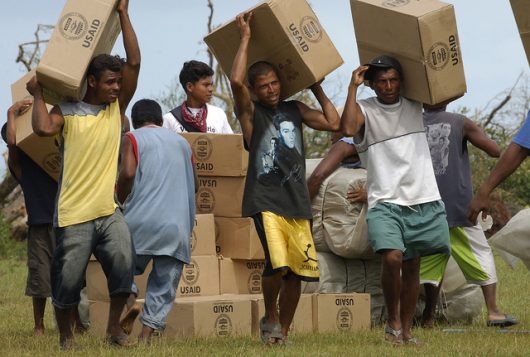
United States Agency of International Development (USAID) is a U.S. government agency that provides assistance to over 100 foreign countries to better human rights, poverty, global health and much more. USAID has been around for over 50 years, implementing different programs to help countries in need. Here are five USAID programs that have been implemented to improve lives around the globe.

1. All Children Reading

All Children Reading is a USAID program that is aimed at improving the quality of education for primary grade students. Through this program, students gain access to better materials and quality teaching. At the same time, teachers are taught how to better maximize their classroom time, as well as understand the importance of early learning.

Thus far, USAID has had success in Kenya, Malawi and the Philippines through these reading programs that have been implemented. For example, USAID worked with the Kenyan government to create the national Tusome initiative. This initiative has reached over 1.1 million students and helped teach them invaluable basic reading skills.

2. Neglected Tropical Diseases Program

The Neglected Tropical Diseases (NTD) program is one that focuses on developing cures for tropical diseases as well as providing access to these cures. USAID has partnered with many organizations and government agencies to be able to provide the necessary resources to help eradicate these diseases.

Five diseases that the NTD program focuses on are lymphatic filariasis, trachoma, onchocerciasis, schistosomiasis and soil-transmitted helminths. These diseases tend to affect the poor and marginalized populations; therefore, by making safe and cost-effective medication available, it can lead to better control of these tropical diseases.

3. Food for Peace

The Food for Peace (FFP) Act, as it was later known, was originally signed into law by President Eisenhower in 1954. Because of this, over three billion hungry people have been helped in the 60 years that the Food for Peace program has been operating.

The FFP works hard to predict and react to hunger issues overseas. It has developed many emergency programs that have helped to save lives and support early recovery in times of disaster. The FFP also implements development activities to help reduce food insecurity in vulnerable populations.

4. American Schools and Hospitals Abroad

USAID’s Office of American Schools and Hospitals Abroad (ASHA) provides assistance to schools and hospitals in other countries to serve as study centers for western medical ideas and practices. Through the ASHA program, USAID has provided assistance to over 300 institutions in 80 countries around the world.

Through this program, USAID is able to directly contribute to U.S. foreign diplomacy. USAID is able to provide opportunities to access quality education in parts of the world where it may not have been available before.

5. Child Survival and Health Grants Program

The Child Survival and Health Grants Program (CSHGP) is one that has helped reduce mother, child and infant mortality in about 24 countries around the world thus far. USAID, along with its 20 partners, focuses on high priority countries to provide funding in order to reduce these high numbers of mortalities.

Through community-oriented approaches, USAID also works with non-government organizations and ministries of health to solve the challenges that come with reducing mother, child and infant mortality rates. Many of these solutions are made specifically for local contexts; however, major concepts can be taken and implemented on a larger scale around the globe.

While USAID has implemented many other programs that help with global health, reducing poverty and increasing access to education, these five USAID programs have had a significantly large impact on the world. USAID continues to fight for those without a voice and develop new solutions to help those in need.

– Rebekah Covey
Photo: Flickr

September 21, 2017
https://borgenproject.org/wp-content/uploads/borgen-project-logo.svg 0 0 Kim Thelwell https://borgenproject.org/wp-content/uploads/borgen-project-logo.svg Kim Thelwell2017-09-21 01:30:202024-12-13 17:58:28Five USAID Programs That Improve Lives
Page 15 of 24«‹1314151617›»

Get Smarter

  • Global Poverty 101
  • Global Poverty… The Good News
  • Global Poverty & U.S. Jobs
  • Global Poverty and National Security
  • Innovative Solutions to Poverty
  • Global Poverty & Aid FAQ’s
Search Search

Take Action

  • Call Congress
  • Email Congress
  • Donate
  • 30 Ways to Help
  • Volunteer Ops
  • Internships
  • Courses & Certificates
  • The Podcast
Borgen Project

“The Borgen Project is an incredible nonprofit organization that is addressing poverty and hunger and working towards ending them.”

-The Huffington Post

Inside The Borgen Project

  • Contact
  • About
  • Financials
  • President
  • Board of Directors
  • Board of Advisors

International Links

  • UK Email Parliament
  • UK Donate
  • Canada Email Parliament

Get Smarter

  • Global Poverty 101
  • Global Poverty… The Good News
  • Global Poverty & U.S. Jobs
  • Global Poverty and National Security
  • Innovative Solutions to Poverty
  • Global Poverty & Aid FAQ’s

Ways to Help

  • Call Congress
  • Email Congress
  • Donate
  • 30 Ways to Help
  • Volunteer Ops
  • Internships
  • Courses & Certificates
  • The Podcast
Scroll to top Scroll to top Scroll to top