• Link to X
  • Link to Facebook
  • Link to Instagram
  • Link to TikTok
  • Link to Youtube
  • About
    • About Us
      • President
      • Board of Directors
      • Board of Advisors
      • Financials
      • Our Methodology
      • Success Tracker
      • Contact
  • Act Now
    • 30 Ways to Help
      • Email Congress
      • Call Congress
      • Volunteer
      • Courses & Certificates
      • Be a Donor
    • Internships
      • In-Office Internships
      • Remote Internships
    • Legislation
      • Politics 101
  • The Blog
  • The Podcast
  • Magazine
  • Donate
  • Click to open the search input field Click to open the search input field Search
  • Menu Menu

Archive for category: Government

Education, Global Poverty, Government, Sustainable Development Goals

A Look at Education in Guyana

Read more
October 27, 2017
https://borgenproject.org/wp-content/uploads/borgen-project-logo.svg 0 0 Kim Thelwell https://borgenproject.org/wp-content/uploads/borgen-project-logo.svg Kim Thelwell2017-10-27 07:30:402025-11-13 16:17:48A Look at Education in Guyana
Global Poverty, Government, Politics and Political Attention

What is a Parliamentary Democracy?

Parliamentary Democracy Government
There are several types of democracies, and here we will explain what a parliamentary democracy is by comparing it to a presidential democracy, which we have in the United States.

In short, a parliamentary democracy is a system of government in which citizens elect representatives to a legislative parliament to make the necessary laws and decisions for the country. This parliament directly represents the people.

In a presidential democracy, the leader is called a President, and he or she is elected by citizens to lead a branch of government separate from the legislative branch. If you remember back to government class, you will remember that the United States has three branches of the government: the executive, the judicial, and the legislative. The President leads the executive branch of government.


Role of Parliamentary Democracy


In a parliamentary democracy, you have a Prime Minister, who is first elected as a member of parliament, then elected Prime Minister by the other members of the parliamentary legislature. However, the Prime Minister remains a part of the legislature. The legislative branch makes the laws, and thus the Prime Minister has a hand in law-making decisions. The Prime Minister works directly with other people in the legislature to write and pass these laws.

In our presidential democracy, we still have a legislature, but we also have a president. He is separate from the legislature, so although he works with them, it is not as direct as if he were a Prime Minister. The laws that the legislature wants to pass must first go through the president; he can sign them into being or he can veto them. The President can go to the legislative branch and suggest laws, but they ultimately write them for his approval.

Furthermore, in parliamentary systems, the legislature has the right to dismiss a Prime Minister at any time if they feel that he or she is not doing the job as well as expected. This is called a “motion of no confidence,” and is not as much of a drawn out process. In the US, impeachment is an extensive, formal process in which an official is accused of doing something illegal.

Some countries with a parliamentary system are constitutional monarchies, which still have a king and queen. A few examples of these are the United Kingdom, Sweden, and Japan.

It is important to remember that both of these systems of government are democracies. Ultimately, the citizens who vote have the voice.

– Alycia Rock

Sources: Wise Geek, Scholastic, How Stuff Works
Photo: Joint Council for the Welfare of Immigrants


parliamentary democracy government

October 27, 2017
https://borgenproject.org/wp-content/uploads/borgen-project-logo.svg 0 0 Borgen Project https://borgenproject.org/wp-content/uploads/borgen-project-logo.svg Borgen Project2017-10-27 04:00:102020-01-10 12:32:02What is a Parliamentary Democracy?
Education, Global Poverty, Government

Education in Brunei

Brunei Darussalam, known as Brunei, is a tiny Southeast Asian Islamic sultanate. It is located on the South China Sea along the northern coast of the island of Borneo, bordering Malaysia. Brunei became a British protectorate in 1888 and achieved independence in 1984. A high-income country with a small population (491,900), half of its GDP ($35.26 billion) is based on petroleum exports. 

A majority of the population is employed by the government, which provides education, health care and most other living expenses for its citizens.

Education Overview

Brunei’s education system is free to citizens, including university abroad, but not compulsory. This includes textbooks, transportation, food and hostels. Education comprises one year pre-primary, six years primary and six years middle and secondary school. This is followed by either pre-university or vocational education. Tertiary education is available from institutes, technical colleges, training centers and the senior education center, the University of Brunei Darussalam. The alternative tertiary education is overseas education paid for by the government. 

Wawasan Brunei 2035

Wawasan Brunei 2035, launched in 2008, outlines Brunei’s aspirations to ensure that by 2035 its people are well-educated, highly skilled and accomplished; enjoy a high quality of life; and that the nation possesses a dynamic and sustainable economy.

The desired educational outcomes (Goal #1) are a first-class education (high-quality teachers, schools and accomplishments), equal educational opportunities (high participation) and human resource development (post-secondary education and life-long learning).

SPN21, the National Education System for the 21st Century, approved in 2007, is the platform of the Ministry of Education to achieve the educational objectives of Wawasan Brunei 2035. Its three main pillars are education structure, curriculum and assessment and technical education. 

Education Challenges

Brunei and SDG 4. The United Nations’ 2030 Agenda for Sustainable Development sets out 17 Sustainable Development Goals to be achieved by 2030. SDG 4 is Quality Education, to ensure inclusive and equitable quality education and promote lifelong learning opportunities for all. Progress on the SDGs is measured by the U.N.’s Sustainable Development Solutions Network and reported in the annual Sustainable Development Report (SDR).

Despite the vision outlined for 2025 and the plan outlined in Brunei’s SPN21, the 2025 SDR assessment of Brunei’s progress on SDG 4 was that “challenges remain,” with its score stagnating or increasing at less than 50% of the required rate. The country is seen as on track or remaining for three indicators: literacy (98%), net primary enrollment rate and lower secondary completion rate, although the secondary completion rate is stagnating. The significant challenge is in the participation rate in pre-primary organized learning, which is seeing a downward trend. 

Lack of Appropriate Job Opportunities. Although the government has reported significant progress attained by Wawasan Brunei 2035 regarding education, public sentiment reflects concerns about a decline in education standards and a disconnect between job opportunities and higher education. 

Economic Diversification.

Brunei’s economy has been highly dependent on oil and gas, and this may be part of the employment problem, especially since it has been suggested that the country’s oil and gas reserves would last only until 2035. The Ministry of Finance and Economy reports that this dependency has, however, been declining since Wawasan Brunei 2035 was initiated, with the oil and gas sector’s contribution to the GDP in the second quarter of 2024 reduced to 50.3%. New policies and initiatives have focused on economic diversification with the development of agriculture, fisheries, tourism and financial services being promoted. This will, perhaps, bring higher education and employment opportunities into better alignment. 

Ministry of Education Strategic Plan 2023-2027

The Ministry of Education’s most recent strategic plan reflects Wawasan Brunei 2035 and SPN21. Its key success measures are primary level achievement, secondary level achievement, renowned higher education institutions, post-secondary level enrollment, employable graduates, employer satisfaction and sustainability.

The plan notes a major strategy “to provide multiple pathways in increasing access into higher education” along with “schemes… to ensure there is opportunity to enrol [sic] into higher education in the private sector.” In 2022, 388 programs were provided across multiple fields and levels. The 2022 enrollment rates across Brunei’s five priority sectors were: services 59.78%, downstream oil and gas 19.27%, information and communication technology 16.03%, tourism 2.69% and food 2.23%.

Education and Environmental Stewardship

Brunei Darussalam has, therefore, prioritized education and the role this sector plays in the long-term future of the country. A recent innovation is the link created between education and sustainability. In line with the country’s commitment to a climate-resilient and sustainable future, Brunei’s Greening Education Plan 2025-2035 provides a comprehensive national framework where all levels of the country’s education system will include “eco-conscious” principles. Attention is given to curriculum, policy, infrastructure, procurement and data management. The plan’s six primary objectives are to:

  1. Inspire long-term behavioral change
  2. Reduce resource consumption and environmental impact
  3. Promote environmental literacy
  4. Support green skills and career pathways
  5. Foster community and national collaboration
  6. Institutionalize sustainability in educational systems

– Paula Gibson

Photo: Flickr

October 26, 2017
https://borgenproject.org/wp-content/uploads/borgen-project-logo.svg 0 0 Kim Thelwell https://borgenproject.org/wp-content/uploads/borgen-project-logo.svg Kim Thelwell2017-10-26 01:30:512026-04-20 06:47:08Education in Brunei
Education, Government

Education in Spain Requires Immediate Improvements

  • Education in Spain

Education in Spain is a broad and extended topic. Although the federal form of government in the country resides in Madrid, and is lead by the prime minister Mariano Rajoy, the country is divided within 17 autonomous regions that have smaller forms of government within each one. This leads to some schools in Spain teaching Spanish in the particular dialect from each region, such as in Catalonia, the Basque country, Galicia and more.

The Spanish schooling system is divided within three categories: public schools, private schools and state-funded private schools. Regardless of public schools being completely funded by the state, thus free of charge for the students who attend such schools, class materials, books and sometimes uniforms still need to be paid with citizens’ own money.

Sunken within the 2008 economic crisis, the European country of Spain has just now started to recover its economy and generate interest, breaking the loop that has positioned the country at the second highest unemployment rate within the European Union, Greece taking the first place. The sector that has been most affected by the economic crisis of the past several years has been public education in Spain. This issue has been a notoriously increasing one since the economic crisis started, due to extreme budget cuts on the public schooling system within the European country.

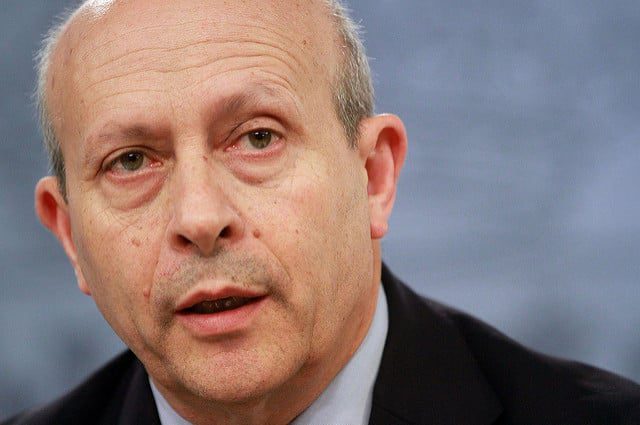
Prime minister Mariano Rajoy declared José Ignacio Wert as the minister for education in the year of 2011, and from then to 2015, when Wert was substituted by Iñigo Méndez de Vigo, education was greatly affected. From the year 2012 to 2013, public schools’ teaching systems declined when sharp cuts forced the government to leave up to 25,000 teachers unemployed. Public universities’ tuition fees increased by 66 percent, taking Spanish citizens out on the street to protest the dreadful management that increased the numbers of people who could not afford education for their families.

The main consequence regarding these issues has been the increase of school dropouts, which stood at an alarming rate of 25 percent in 2014, the highest school dropout rate in the European Union. However, there is good news. Even with high levels of poverty, education in Spain was ranked as having the 12th lowest inequality gap for students of all the countries in Europe.

Spanish residents fight for a better schooling system and education in Spain everyday. The lack of teachers, economic resources and the increase of students per class have lead to a series of educational strikes in order to make the Spanish government understand and respond to the gravity of the issue.

– Paula Gibson

Photo: Flickr

October 26, 2017
https://borgenproject.org/wp-content/uploads/borgen-project-logo.svg 0 0 Kim Thelwell https://borgenproject.org/wp-content/uploads/borgen-project-logo.svg Kim Thelwell2017-10-26 01:30:042020-01-10 12:42:21Education in Spain Requires Immediate Improvements
Aid, Extreme Poverty, Global Poverty, Government

5 Things the US Needs to Know About Extreme Poverty

Extreme PovertyNot all poverty is created equal. Poverty in a developed country is not the same as poverty in a developing nation. Here are 5 things the U.S. needs to know about extreme poverty.

  1. People who live in extreme poverty are deprived of basic human needs such as access to food, clean water and shelter. To be classified as a person living in extreme poverty, one must be living on or below $1.90 a day.
  2. Extreme poverty in a developing nation is different from poverty in a developed nation. The U.S. is a developed nation. In the U.S., government benefits keep millions of Americans out of poverty. These programs mostly tend to target women, children and the elderly, the nation’s (and the world’s) most vulnerable populations. Due to programs such as Social Security, unemployment benefits and food stamps, these people are shielded from the harsh realities of extreme poverty.
  3. Unfortunately, government benefits tend not to exist in developing countries to aid their poor. In addition, due to fear of corruption, the world’s poorest do not receive as much foreign aid as their better-off peers. Low-income countries remain in poverty due to being too poor to be trusted with funds. An effect of this is that the most defenseless population in the world, children, suffers the consequences. The World Health Organization estimates that about 16,000 children under the age of five die each day from preventable causes associated with extreme poverty. The causes of death are lack of access to clean water, lack of access to healthcare, malaria, newborn infections, poor nutrition and diarrhea. Death from these ails is unfathomable in developed countries.
  4. An estimated 766,010,000 people live in extreme poverty today. This is double the size of the U.S.’s population
  5. The number of people in extreme poverty is declining. In 1990, there were 1.1 billion people living in extreme poverty. Today the number is 766 million. This is an amazing feat that can be attributed to a combination of factors such as trade between developed nations and developing nations, foreign aid that reinvigorated economies, increased education, improved infrastructures and investment in basic health.

As with most things in life, poverty cannot be viewed through a single lens. It is a complex social issue, but gains over the past few decades have shown that it is a solvable issue. With continued foreign aid and trade, the world can get that much closer to realizing the goal of eradicating extreme poverty by 2030.

– Jeanine Thomas

Photo: Flickr

October 20, 2017
https://borgenproject.org/wp-content/uploads/borgen-project-logo.svg 0 0 Kim Thelwell https://borgenproject.org/wp-content/uploads/borgen-project-logo.svg Kim Thelwell2017-10-20 07:30:412024-05-29 22:27:405 Things the US Needs to Know About Extreme Poverty
Government, Human Rights

Accountability for Human Rights Violations

How US Sanctions Can Effect Accountability for Human Rights Violations Abroad
Sergei Magnitsky was a Russian lawyer who was imprisoned in Moscow. He was convicted of aiding tax evasion in 2008 and died in custody in 2009. Surprisingly, though, his legal troubles did not end there. In a trial in 2013, a Russian court further convicted Magnitsky of tax fraud–four years after his death.

Magnitsky’s death was more than just an untimely demise of a 39-year-old lawyer. While he is said to have died of acute heart failure and toxic shock caused by untreated pancreatitis, Magnitsky had been severely beaten while imprisoned. In fact, his colleagues even insisted that the convictions against him were falsified in order to obstruct Magnitsky’s own accusations of massive tax fraud by Russian officials.

An investigation into the lawyer’s death was opened in November 2009, only to be dropped in March 2013 with the conclusion that Magnitsky had been legally arrested and detained, as well as denying claims that he had been tortured and had been denied access to medical attention.

The United States passed a law in 2012 in Magnitsky’s name that imposed sanctions against Russian officials who were thought to be responsible for serious human rights violations. The law froze any U.S. assets held by these officials and went so far as to ban them from entering the United States.

In 2016, Congress took an important step in addressing global accountability for human rights violations by expanding the earlier Magnitsky law to the Global Magnitsky Act. The new act allows the executive branch of the United States government to impose visa bans and targeted sanctions on individuals responsible for human rights violations or corruption, as well as those officials who abetted or were complacent with such violations.

The Global Magnitsky Act acts as a deterrent, warning foreign officials that unlawful violence could result in serious repercussions from the United States government. Additionally, the act offers incentives to foreign governments for improving mechanisms to increase accountability for human rights violations. By working with the U.S. on human rights violations and corruption investigations, leaders from other countries can voice their contempt for human rights abuses in their own countries.

The effectiveness of these sanctions can be seen in Russia’s response to their imposition. As a result of the global embarrassment inflicted on the country following the enactment of the law, the act has become a fixation for Russian President Vladimir Putin.

The act continues to endorse accountability for human rights violations in various cases around the world on the recommendations of senators as well as a group of human rights organizations, including Human Rights Watch.

– Richa Biplane

Photo: Flickr

October 20, 2017
https://borgenproject.org/wp-content/uploads/borgen-project-logo.svg 0 0 Borgen Project https://borgenproject.org/wp-content/uploads/borgen-project-logo.svg Borgen Project2017-10-20 07:30:302020-04-04 08:41:23Accountability for Human Rights Violations
Government

The Promising Goals of the South African Development Plan

Examining the South African Development Plan
The South African Development Plan (NDP) was created by the National Planning Commission (NPC), a South African group responsible for detailing a long-term vision and strategy for the country. The NPC includes 24 part-time members, along with a chairperson and deputy chairperson appointed by the President, based on their experiences and skills. The Commission is chaired by the Deputy President of the Republic of South Africa, Cyril Ramaphosa.

The South African government adopted the National Development Plan as the foundation for a projected financial and socio-economic advancement strategy for the nation in December 2012.

The NPC built the NDP on six pillars:

  1. The mobilization of all South Africans
  2. Active participation of citizens in their community
  3. Development and inclusion of the economy
  4. The construction of essential human, physical and institutional abilities
  5. Creating a competent state, concerned with its own development
  6. Promoting effective leadership for the community

The central issues addressed in the South African National Development Plan address the country’s economic growth and the ability of that growth strategy to deliver a socioeconomic transformation for the country by 2030. The NPC aims to build consensus on the key obstacles to achieving objectives and what is necessary to overcome these obstacles. Implementing a shared long-term strategic framework within which more detailed planning can take place to advance the long-term goals set out in the NDP is a major goal. Furthermore, the plan hopes to create a basis for making choices about how best to use limited resources.

The purpose of the plan is to outline and achieve a decent standard of living for all citizens through the eradication of poverty and inequality. The components of a “decent standard of living,” as identified in the NDP, are: housing, water, electricity and sanitation; safe and dependable public transport; quality education and skills development; safety and security; quality healthcare; social protection; employment; recreation and leisure; a clean environment; and adequate nutrition.

If implemented successfully, the South African Development Plan will enable the country to reach an employment near 90%, no poverty and an annual economic growth rate of 5.4% by 2030.

– Heather Hopkins
Photo: Flickr

October 17, 2017
https://borgenproject.org/wp-content/uploads/borgen-project-logo.svg 0 0 Borgen Project https://borgenproject.org/wp-content/uploads/borgen-project-logo.svg Borgen Project2017-10-17 07:30:472020-06-25 16:01:22The Promising Goals of the South African Development Plan
Global Poverty, Government

Kuwait’s Stateless Population

Kuwait's Stateless Population

Growing up, Mona Kareem was not a victim of childhood torment because of her nationality—but, rather, her absence of nationality. She is a member of Kuwait‘s stateless population. From an extremely young age, Kareem knew she did not quite belong. Her fellow students, and even her teachers in Kuwaiti’s free, public schools seemed to treat her more as an apparition than an individual.

One could imagine why Kareem accepted an academic scholarship in 2011 to study in the United States at SUNY Binghamton. Though this decision came with a measure of arduous ambiguity concerning how and when she may see her family again—the act of leaving her ‘home’ country of Kuwait did not weigh heavily of Kareem, given that this ‘home’ refuses to recognize her existence. She is just one of many that fall under Kuwait’s stateless population.

According to the CIA World Factbook, Kuwait is an extremely wealthy country with little measurable poverty. Bordering the Persian Gulf, lodged between Iraq and Saudi Arabia, this tiny country—slightly smaller than the state of New Jersey—holds more than 6 percent of the globe’s crude oil reserves. This asset accounts for more than 50 percent of its GDP, and 92 percent of its export revenue.

Sitting on such an expansive source of wealth allows Kuwait to take care of its citizens. Earlier this year, Business Insider placed Kuwait sixth on their ranking of richest countries based on GDP per capita. With a population of just above 4 million, the country brings in the equivalent of an annual $71,263 per person.

Each resident has access to free healthcare, education up to (and including) the university level, and monetary allowances from the government for major life occasions. If a Kuwaiti was to be married, for example, they would receive $19,000 American dollars for their doing so—half acting as an interest free loan, and the other half as a complimentary gift toward their future.

In 2004, Oprah Winfrey interviewed Princess Zain Al Sabah on her nationally-viewed show, confirming the extravagant lifestyle embraced by her and the majority of her ‘friends.’ She went on to explain that this lifestyle is accessible not only to royalty, but the ‘common,’ everyday citizens of Kuwait.

However, the contention with Kuwaiti’s government does not lay with the Kuwaiti common, nor the royal ‘friends’—but those that perhaps aren’t recognized as ‘friends’ at all. Unfortunately, there is a large proportion of individuals living in Kuwait that do not qualify for the benefits the Princess emphasized. In fact, they do not qualify as citizens; according to the Kuwaiti government, they do not exist. This is Kuwait’s stateless population.

Kareem and her family are known to the Kuwaiti people as ‘Bedoons,’ translating to mean ‘without’ in Arabic. They are descendants of Bedouin tribes, nomadic groups who have raised cattle and tended to crop across the Middle East and Arabian peninsula for centuries.

Traditionally, the Bedouin tribes have led self-sufficient lives, migrating at the turn of the season and rejecting modernity. Of course, tradition changes with the time, and descendants of this nomadic lifestyle have begun to seek more than perpetual exodus to fulfill their lives.

In the late 1950’s, before declaring sovereignty 1961, Kuwait’s government declared that all citizens must formally register before the country is recognized. To qualify for nationality one must meet the following requirements: one must have had settled in Kuwait prior to 1920 and maintained residence in the region; one must be a person in or outside Kuwait whose father is a Kuwaiti national; or one that can prove to have been born in Kuwait, even if their parents are unknown.

At the time of registry, however, a large proportion of Kuwaiti inhabitants lived in rural regions, lacking both the necessary paperwork and literary skills necessary to understand the weighty context of this request. Consequently, around 300,000 Kuwaiti people, including the ancestors of Kareem, did not become citizens.

Today, this would equate to one-third of the native population living in Kuwait. Those that had forgone the process of citizenship were left ‘without’ nationality. Thus, the majority of descendants remain without nationality—otherwise known as Kuwaiti’s ‘Bedoons.’

For several years post-independence, Kuwait’s stateless population continued to live unchallenged by their lack of nationality. Most kept to their tribal traditions, living outside of urban areas and seeking government assistance only on rare, emergency occasions. If public education was sought for a child, the Kuwaiti government allowed schooling for the Bidoon—despite their statelessness.

It was only after heightened tensions in the Middle-East in the late eighties that xenophobia began to emerge as a weapon against the Bidoon people. After a large portion of Kuwait’s people fled during the Iraqi invasion in 1991, only about half of the Bedoons were allowed re-entry.

Of course, Kuwait’s stateless population returned to a different world. Suspicions of Iraqi alignment ran rampant throughout the nation. Consequently, the Bidoon’s lack of formal nationality often receiving the brunt of this hostility.

To this day, over 100,000 Bedoons live without recognition in the only country they have ever called home. Most dwell in rural areas, exposed to unsuitable living conditions. Regardless of their ability to trace back their native roots, they are repeatedly denied citizenship and are unable to qualify for basic government subsidies on healthcare, education and housing/food allowances. On top of this, there still exists an equal number of stateless individuals in neighboring countries, perceived as refugees and denied access to their home altogether.

In a nation that can afford not only to meet the needs of their citizens, but encourage wealthy and prosperous lives—it is unfortunate that such a great number of its native people are living in a way that threatens their basic security.

In order for the world to understand the demographic of the Kuwaiti people and the true ‘wealth’ of this small nation, the government must first open its doors to Kuwait’s stateless population.

– Briana Fernald

Photo: Flickr

October 17, 2017
https://borgenproject.org/wp-content/uploads/borgen-project-logo.svg 0 0 Kim Thelwell https://borgenproject.org/wp-content/uploads/borgen-project-logo.svg Kim Thelwell2017-10-17 07:30:292024-05-29 22:27:17Kuwait’s Stateless Population
Global Poverty, Government

Poverty in the Federated States of Micronesia

Poverty in the Federated States of MicronesiaThe Federated States of Micronesia is a beautiful country with an interesting setup. The nation is composed of four island states with their own constitutions and legislatures. While this allows the four islands to maintain their own traditions and relative independence, it does make it difficult to coordinate the four states on national policy and reforms. Due to this, the states struggle to come to a consensus on issues and have not developed as well as they could have, leading to a reliance on development assistance and international aid. Unfortunately, the lack of development in Micronesia has also led to poverty concerns, with 41.2 percent of the population living below the national poverty line, which is one of the highest percentages of islands in the Pacific.

Although the nation has a promising economic outlook – the Asian Development Bank predicts that the economy will grow 2.5 percent between 2017 and 2018, following 3 percent growth in 2016 – poverty in the Federated States of Micronesia is still a concern. This is due to underdevelopment and the nation’s struggle for cohesion between the four states. These issues can be mitigated by new devotion to development. The local and national governments may have a limited capacity now, but there are ways to bring them together, namely by sharing industries. If the four islands have one or two main sources of industry or resources that they produce, then they will have something in common to negotiate about. Stable industries also help develop nations, so this solution would have multiple benefits.

Unfortunately, industry is limited in Micronesia, requiring the nation to rely on aid from the United States and international banking organizations such as the Asian Development Bank. The nation has few natural resources to export, and the fishing industry has become limited. One opportunity that has been taken in recent years is the development of water bottling plants. While this is not a long-term solution, plants such as these could be beneficial to the Micronesian people, who need access to jobs that are not reliant on the government.

Another concern that could lead to poverty in the Federated States of Micronesia is the threat of overfishing. As Pacific islands, there is a wealth of fishing opportunities, but overfishing has led to one of the only dependable resources suddenly becoming scarce. Without fishing, many citizens of Micronesia will lose a food source as well as job opportunities. Since fish are not as available, the fisheries will have to hire fewer workers, which is one of the causes of higher unemployment. In order to solve the issue of overfishing, the government of Micronesia needs to craft a policy that limits the amount each individual can fish per week, with strict fines for overfishing, and eventually even legal penalties. This would not only provide the incentive for citizens to behave in a more ecologically friendly way, but it would also help alleviate the overfishing issue, ultimately helping to decrease poverty in the Federated States of Micronesia.

Ultimately, the deciding factor in Micronesia’s fight against poverty lies in the government’s hands. Having four distinct states with separate constitutions makes it difficult to bring the states together for meaningful change. In order to provide cohesion, Micronesia needs to establish a more centralized federal government with one constitution, allowing the states to have their own laws and history, but not their own country. This would encourage more international cooperation and help aid packages reach people in need, as well as bring the people of Micronesia together.

– Rachael Blandau

Photo: Flickr

October 16, 2017
https://borgenproject.org/wp-content/uploads/borgen-project-logo.svg 0 0 Borgen Project https://borgenproject.org/wp-content/uploads/borgen-project-logo.svg Borgen Project2017-10-16 01:30:592024-05-28 00:16:18Poverty in the Federated States of Micronesia
Global Poverty, Government, Refugees, United Nations

Ethereum Blockchain in Jordan Is Changing Aid

Ethereum Blockchain in Jordan Is Changing How the United Nations Delivers Aid
Distributing aid within areas of conflict, especially those ruled by unstable authoritarian governments, has proven to be a struggle for organizations like the United Nations. These efforts are often plagued by a myriad of issues, such as the distribution of funds to individuals by relief agencies. The Ethereum blockchain in Jordan is shifting the paradigm.

Blockchain technologies, cryptocurrencies and digital banking, however, have the potential to alleviate many of these complications. On May 31, 2017, the United Nation’s World Food Programme (WFP) completed the first successful large-scale trial of the Ethereum blockchain in Jordan to distribute humanitarian aid to Syria.

In order to fully understand the tangible effects that blockchain technology has on the lives of these individuals, it is first necessary to establish a basic background of what exactly this new platform is and what it can do.

Ethereum essentially lends itself to decentralized data recording, meaning that no single person or entity owns the final ledger. Instead, everyone who participates in the network becomes part of the record keeping process.

Blockchain, the technology behind the infamous cryptocurrency Bitcoin as well as Ethereum, has many other applications past transferring money between parties. Like Bitcoin, Ethereum acts as a distributed public blockchain network. However, while Bitcoin’s main application involves peer-to-peer exchange of payments, Ethereum blockchain focuses on both cryptocurrency, called Ether, as well as deploying decentralized applications. These applications generally contain smart contracts: computer codes that facilitate the exchange of money, content, property or anything else of value.

Ethereum offers an unprecedented capacity to carry out nonspecific applications, meaning that instead of just offering peer-to-peer transfer of digital currencies, Ethereum enables the development of potentially thousands of different applications on a single platform. Additionally, hacking and fraudulent activities are virtually impossible on a decentralized network like Ethereum.

Ethereum has many widespread applications, one of which includes legal identification. With current estimates suggesting that there are 1.1 billion people around the world with no official documentation, many of whom are refugees, aid organizations struggle to provide health, financial and educational services without proper identification.

While smartphones or Internet-capable devices are an obvious access point for the identification platform, the project implemented by the WFP was built under the assumption that its beneficiaries might not have access to such luxuries. Instead, the WFP made it possible for thousands of Syrian refugees to pay with a scan of their eyes using the Ethereum blockchain in Jordan.

In this month-long trial, instead of administering funds directly to the recipients, the WFP issued unspecified amounts of cryptocurrency-based vouchers to thousands of Syrian refugees. The U.N. allocated money to the merchants of participating stores where the coupons could be redeemed, effectively cutting out the banking middlemen in the aid distribution processes. Iris recognition devices verified the identities of the refugees at the supermarket in the Azraq camp in Jordan and deducted what they spent from the total sum the WFP provided.

By the end of May 2017, the Ethereum blockchain in Jordan was successfully used to record and authenticate transfers to about 10,000 individuals. WFP consultant Alexandra Alden helped oversee the implementation of this project and stated, “All funds received by the refugees from WFP were specifically used to purchase food items such as olive oil, pasta, and lentils.”


The Future of Ethereum Blockchain in Jordan and Beyond


In terms of future expansion, the WFP intends to include upwards of 100,000 individuals in Jordan in the program as early as August 2017, with hopes of serving the entire Jordanian refugee population by the end of 2018. If this expansion proves successful, the agency will look to expand beyond Jordan to other countries in need of aid.

Additionally, companies including Accenture and Microsoft have been working to design a more comprehensive digital ID network for the U.N. using blockchain technology.

Instead of just receiving food from local merchants, this identification network will provide undocumented refugees with unique identifiers called “stamps” that authenticate services received at camps or through other agencies, such as vaccinations. This system of record keeping will be tested in the near future.

While blockchain technology has the potential to serve the rest of society in various capacities, Ethereum offers those individuals who have been forced to renounce their identities over and over again the possibility of retaining important parts of who they are.

– Richa Bijlani

Photo: Flickr

October 15, 2017
https://borgenproject.org/wp-content/uploads/borgen-project-logo.svg 0 0 Kim Thelwell https://borgenproject.org/wp-content/uploads/borgen-project-logo.svg Kim Thelwell2017-10-15 07:30:162024-06-04 01:08:25Ethereum Blockchain in Jordan Is Changing Aid
Page 14 of 24«‹1213141516›»

Get Smarter

  • Global Poverty 101
  • Global Poverty… The Good News
  • Global Poverty & U.S. Jobs
  • Global Poverty and National Security
  • Innovative Solutions to Poverty
  • Global Poverty & Aid FAQ’s
Search Search

Take Action

  • Call Congress
  • Email Congress
  • Donate
  • 30 Ways to Help
  • Volunteer Ops
  • Internships
  • Courses & Certificates
  • The Podcast
Borgen Project

“The Borgen Project is an incredible nonprofit organization that is addressing poverty and hunger and working towards ending them.”

-The Huffington Post

Inside The Borgen Project

  • Contact
  • About
  • Financials
  • President
  • Board of Directors
  • Board of Advisors

International Links

  • UK Email Parliament
  • UK Donate
  • Canada Email Parliament

Get Smarter

  • Global Poverty 101
  • Global Poverty… The Good News
  • Global Poverty & U.S. Jobs
  • Global Poverty and National Security
  • Innovative Solutions to Poverty
  • Global Poverty & Aid FAQ’s

Ways to Help

  • Call Congress
  • Email Congress
  • Donate
  • 30 Ways to Help
  • Volunteer Ops
  • Internships
  • Courses & Certificates
  • The Podcast
Scroll to top Scroll to top Scroll to top