• Link to X
  • Link to Facebook
  • Link to Instagram
  • Link to TikTok
  • Link to Youtube
  • About
    • About Us
      • President
      • Board of Directors
      • Board of Advisors
      • Financials
      • Our Methodology
      • Success Tracker
      • Contact
  • Act Now
    • 30 Ways to Help
      • Email Congress
      • Call Congress
      • Volunteer
      • Courses & Certificates
      • Be a Donor
    • Internships
      • In-Office Internships
      • Remote Internships
    • Legislation
      • Politics 101
  • The Blog
  • The Podcast
  • Magazine
  • Donate
  • Click to open the search input field Click to open the search input field Search
  • Menu Menu

Archive for category: Government

Economy, Government

Malaysian Government Stifles Poverty

Malaysian GovernmentMalaysia is currently on the rise as far as its economy. The country is now considered an upper-middle income economy that has become a leading exporter of electronic appliances, electronic parts and components, palm oil and natural gas.

Malaysia has been successful in eradicating most poverty in the country with less than 1 percent of households living in extreme poverty. The states of Penang, Selangor, Malacca and the federal territories showed marked improvements in 2012 with no extreme poverty in these regions.

“This is proof that the Federal Government’s initiatives to eradicate poverty have succeeded and been of benefit to the rakyat regardless of differences in political ideology,” Malaysia’s economic planning minister Tan Sri Nor Mohamed Yakcop said.

The Malaysian government has done an admirable job of exceeding the Millennium Development Goals which were introduced in 1990. Malaysia succeeded in halving the number of people living on less than a dollar a day much before the 2015 expectant date.

“This is a result of rapid economic development and the effectiveness of poverty eradication programs carried out by the government,” Yakcop said.

According to the Malaysian government, fewer than 110,000 people were living in poverty and that the poverty statistics had nearly been halved within the span of three years. According to this information, the overall poverty rate in Malaysia dropped to 1.7 percent in 2012 which is a significant change compared to the 3.8% in 2009.

The fall in poverty rates was felt in both urban and rural areas. In urban areas, the number of impoverished people fell to just 1 percent in 2012 compared to 1.7 percent in 2009. In rural areas, the numbers were staggering. Poverty rates dropped from 8.4 percent in 2009 to 3.4 percent in 2012.

The focus of the Malaysian government has shifted toward the well-being of “the bottom 40” or poorest 40 percent of the population. Between From 2014 the average household of “the bottom 40” grew at 11.9 percent a year compared to 7.9 percent from 2009 for the total population.

Income inequality still remains a major issue in Malaysia compared to other East Asian countries but the disparity is gradually declining. According to its Gini coefficient, a measurement of income inequality where 0 and 1 indicates perfect inequality, Malaysia scored around 0.49, one of the highest in the region.

Though Malaysia still has some significant work to do as long as income equality, state programs have been put in place to alleviate much of the disparity. With the help of its own government, Malaysia stands as a significant example of a success in the region.

– Drew Hazzard

Photo: Flickr

September 6, 2017
https://borgenproject.org/wp-content/uploads/borgen-project-logo.svg 0 0 Kim Thelwell https://borgenproject.org/wp-content/uploads/borgen-project-logo.svg Kim Thelwell2017-09-06 01:30:222020-07-02 11:18:08Malaysian Government Stifles Poverty
Global Poverty, Government

Poverty Rate in Eritrea Forces Migrant Crisis

Eritrea Poverty RateAn Eritrean man named Binyan left behind his family and hiked 19 hours to the Ethiopian border. He would have to brave a dangerous journey that involved crossing the Mediterranean on overfilled boats and avoiding human traffickers. He did all of this just to get out of Eritrea. The poverty rate in Eritrea and harsh military conscriptions are forcing young people to leave the country.

Currently, Eritreans are the third-largest group of people that are coming across the Mediterranean to Europe. The U.N. estimates that nine percent of the country has evacuated in recent years. Eritreans, however, also account for the majority of the 3,000 people who have drowned in the Mediterranean on the journey. However, the situation looks even more worrying. Policy toward Eritrean refugees is shifting. The U.K. has cut the number Eritrean refugees’ applications being accepted from 77 percent to 29 percent.

There are not many figures on the poverty rate in Eritrea. The government has repeatedly denied the U.N. and independent human rights groups access to the country. However, by GDP per capita, Eritrea is the ninth-poorest country in the world. Joblessness and lack of opportunities are prevalent. Many Eritrean youths are fleeing the country precisely because they are unable to obtain work. The government halts most imports, has stopped the World Food Programme’s free distributions to roughly a million people and has refused a $100 million development loan from the World Bank.

Many factors contribute to the current rates of poverty in Eritrea. For example, the government’s harsh military conscription pays only two dollars per day, keeps young men out of work and can be extended indefinitely. Teenagers are inducted at the Sawa military base where they get four months of training and then take an exam that determines whether they are put into active service or allowed to go back to their education. The men are forced into awful conditions; they are not even given blankets and eat low-quality food. One former conscript spoke of being forced to lie in a 131-degree sun for hours.

However, there is some hope for the country. President Isaias Afwerki has been conducting a self-reliance program, with some good results. Education and healthcare are free, the HIV rate is down to less than one percent, measles and polio have been virtually eradicated and child mortality rates have decreased by two-thirds since 1995. According to the U.N., Eritrea scores higher on health than its neighbors Ethiopia and Kenya.

However, this is not enough. The country desperately needs U.N. examination and aid. If the country would open its borders to imports and aid, especially economic aid, the poverty rate in Eritrea would drop dramatically and the country would no longer see a large portion of the population fleeing its borders.

– Bruce Edwin Ayres Truax

September 1, 2017
https://borgenproject.org/wp-content/uploads/borgen-project-logo.svg 0 0 Borgen Project https://borgenproject.org/wp-content/uploads/borgen-project-logo.svg Borgen Project2017-09-01 07:30:422020-06-25 10:41:01Poverty Rate in Eritrea Forces Migrant Crisis
Government, Politics, Politics and Political Attention

How to Become a Politician: 4 Crucial Steps to Success

How to Become a PoliticianAre you looking into how to become a politician? Living the life of a politician can be a very stressful and demanding job. However, the profession can also be very rewarding and eye opening.

To anyone who is interested in becoming a politician- whether local or federal government- be ready for some tough days and long nights in the office. Before you are guaranteed the coveted seat of a politician, though, it takes a bit of preparation. Here are a few tips on how to become a politician.


Becoming a Politician


1. Become Educated: Although it is not required that certain politicians hold a college degree – one in 20 members of Congress doesn’t – it is a good idea to get as much schooling as possible.

Not only will constituents like to see a degree on a candidate’s resume, but the things learned in school can actually be helpful for planning a legislative and governmental future. The other aspect of “becoming educated” is studying up on legislature, government policies and voter patterns.

Politics takes a dedicated person willing to devote their whole being to their campaign. Learning the ropes of government is a bit more involved than merely knowing how to recite the Pledge of Allegiance.


2. Acquire Funding: Running for a position in politics is also a money game. Printing campaign posters, hosting charitable events, paying your campaign staff and a laundry list of other costs add up to a hefty bill just to run for a position, let alone hold one.

It is also important to have a steady job before running for office. This allows you to then have some money in the bank and establish resources or even potential voters. U.S. news stated that, “Running for office is a job in itself that no one will pay you for.”

Having friends and business connections is another important part of running for office. Connections with prominent people will allow your campaign to rise in popularity.

Be cautious of how much you spend on your campaign – you want to be able to survive afterward if you don’t end up winning.


3. Be Friendly: When they step in the polling booth, most voters do not actually know exactly which candidate stands for what issues. However, they will remember a candidate’s behavior and whether or not he or she was rude during an interview.

Cordiality and humbleness are a couple of key characteristics that attract voters. Making connections with voters so that they remember you and what you stand for could be the deciding factor between you and a competent running mate.


4. Don’t Let Your Feelings Get Hurt: Politics can be a harsh field that few thrive in. There will be hard times throughout your campaign, but knowing that you could help the lives of thousands of people is a great reward to the hardships you endure as a hopeful politician.

These may sound like some harsh pieces of advice on how to become a politician, but it is only because the politician’s role is a very important one in the United States. These people make, enforce and interpret the laws.

No matter the obstacles, if becoming a politician is your life’s goal then do not let these words, or others, deter you from becoming the next President of the United States (or a Superintendent of Schools, if that is what you so desire). Instead, use them as warnings to avoid road blocks on your journey to political change.

– Sydney Missigman

Photo: Flickr

August 29, 2017
https://borgenproject.org/wp-content/uploads/borgen-project-logo.svg 0 0 Borgen Project https://borgenproject.org/wp-content/uploads/borgen-project-logo.svg Borgen Project2017-08-29 01:30:382020-06-25 09:38:50How to Become a Politician: 4 Crucial Steps to Success
Government, Human Rights

Human Rights in Swaziland

Human Rights in SwazilandSwaziland is a landlocked country located in Southern Africa, and has been ruled by the absolute monarch, King Mswati III, since 1986. The current state of human rights in Swaziland is lamentable. Although the Constitution of the Kingdom of Swaziland Act – which guarantees basic human rights – took effect in 2005, numerous incidents of human rights violations have been reported, including repression of political dissent and banning of political parties.

In 2016, specific cases of infringement of human rights in Swaziland included restrictions on freedom of assembly. The police took advantage of the Urban Act, which requires protesters to report any plans of a public protest two weeks prior to the event, and cracked down on it by attacking protesters. For example, in February the Swazi police arrested two leaders of the Swaziland National Association of Teachers (SNAT), Mcolisi Ngcamphalala and Mbongwa Dlamini, who were participating in protests.

On September 22, 2016, the Human Rights Watch released a statement that criticized the Swazi government for not implementing the recommendations it accepted during its last Universal Periodic Review (URP) in 2011. These recommendations – which were aimed at ensuring progress in human rights reform in the country – comprised: elimination of all restrictions on fundamental civil and political rights, allowing political freedom through fair and transparent democratic elections and decriminalization of same-sex relations. Despite the apparent absence of democracy in Swaziland, the king has recently carried out a deceptive campaign to convince his citizens that their country is a democratic kingdom.

The future of human rights in Swaziland is unclear. However, the recent performance by the country’s High Court is notable. In September 2016, the court declared the Suppression of Terrorism Act, which had been used by the government to ban opposition to King Mswati’s rule, as unconstitutional. If similar political decisions are made in the future, it would mean more progress for human rights in Swaziland.

– Minh Joo Yi

Photo: Google

August 27, 2017
https://borgenproject.org/wp-content/uploads/borgen-project-logo.svg 0 0 Borgen Project https://borgenproject.org/wp-content/uploads/borgen-project-logo.svg Borgen Project2017-08-27 01:30:322024-05-28 00:16:09Human Rights in Swaziland
Government, Politics

Understanding How to Run for Office in the United States

How to Run for Office
If you feel like you want to make more of an impact in the political sphere outside of advocacy and voting, you may want to consider running for office. There are around 520,000 elective offices in the United States, meaning that more than one out of every thousand people in the U.S. are an elected official.

All citizens of the U.S. have the right to run for political office. If eligible, any average citizen can play a role in the government. However, not many Americans are taking advantage of this right. In 2012, about a third of the candidates running for a state legislative positions ran unopposed.

Many people do not run because they are not sure how to do so. To begin, you can use Run For Office’s website to search for public positions available near you. After you find the right fit, the next step is to run a campaign.

Here are some tips on how to run for office in the United States:

  1. Do plenty of research beforehand. Find out the requirements for the office such as age and residency. Understand how long the term is and what time commitment is required. Find out how much money is generally spent on successful campaigns. Once you understand the position and you feel comfortable that you can fulfill the requirements, you can begin planning your campaign.
  2. Running a campaign is a great deal of work, so you will need a good team behind you. Decide whether you want to be volunteer-based or whether you can hire professional help. Unless you plan on paying for everything, you’ll need to rely on others for fundraising as well. Start with family and friends and build a database of donors and supporters.
  3. In order to make your campaign official, you will need to file for office. You can figure out what the requirements are by filing a seat through your town clerk or Secretary of State. Make a comprehensive list of all the paperwork that needs to be completed, as well as all the deadlines so you stay on track. Look into the financing laws as well.
  4. Decide what you are running for – pick three issues your campaign is going to focus on and what you would want to work towards if you become elected. Then look at your own background and skill set and see how they will assist you in accomplishing your goals. Issue a profile for your campaign, then create an identifiable branding and message that will help people remember you and your views.
  5. Once you feel prepared, announce your intention to run. Preferably, do so with much press. Then you can begin to actively campaign. Go door to door. Print lawn signs. Keep up-to-date social media accounts. Go to events and get your name out there. Prepare a short 30-second appeal and a three-minute speech regarding your campaign and why you are running. Do what you can to publicize yourself and gain support.

Even if you have never held a political position, once you know how to run for office you have the power to do so. If you want to see changes made, if you want to do more for those who don’t have a voice, don’t stand around waiting – run for office.

– Hannah Kaiser

Photo: Unsplash

August 26, 2017
https://borgenproject.org/wp-content/uploads/borgen-project-logo.svg 0 0 Kim Thelwell https://borgenproject.org/wp-content/uploads/borgen-project-logo.svg Kim Thelwell2017-08-26 01:30:042020-06-24 10:37:51Understanding How to Run for Office in the United States
Global Poverty, Government

Leading Causes of Poverty in Macedonia

Given its position among continental Europe’s poorest countries, it is unsurprising that poverty in Macedonia remains a persistent, pervasive issue. In a July 10 meeting, seven Central European member states called on the E.U. to accelerate the accession process of Balkan countries to the body, citing security concerns. The prospect of E.U. membership has been a main driver of reform in the region since the end of the Balkan wars, with Serbia and Montenegro currently in accession talks and Albania and Macedonia recognized as candidate countries. As the western Balkans look toward European Union membership, Macedonia must further pursue measures to eliminate poverty within its borders by addressing the following causes:

Unemployment
Despite significant economic growth over the past ten years, the rate of unemployment in Macedonia remains high, sitting between 25 and 31 percent until it fell to 23.7 percent in 2016. Though employment is growing, labor force participation has declined, and those who are unemployed remain that way for extended periods of time. Of the unemployed population, 81 percent of people have been so for the long term. In addition, labor force participation is declining, particularly among the younger population. The World Bank reports that this decrease has been occurring gradually since 2012.

Rising real wages, growth in unskilled labor markets and increasing relevance of education programs had a notable impact on decreasing poverty in 2016. Poverty in Macedonia has declined from 34.3 percent in 2013 to 30.7 percent at the end of last year. As the 2016 programs continue to grow, the rate is expected to continue to fall.

Government corruption 
While corruption is an internationally recognized vulnerability of the countries in the western Balkans, citizens of Macedonia have placed it among the most important issues facing their country, ranking it just below unemployment and poverty. Exposure varies significantly across regions, but, on average, 10.8 percent of Macedonians aged 18 to 64 have been directly involved in corruption or exposed through a member of their household. Such high prevalence is concerning, but what is more important is that nearly a third of bribes are offered by citizens without solicitation from public officials. Bribes requested by officials, directly or indirectly, account for about 50 percent of all those paid.

The fact that citizens are willingly devoting what is often a significant portion of their resources to corruption indicates a fundamental lack of faith in the government’s operating ability. The United Nations Office on Drugs and Crime reports that 50 percent of citizens who participate in bribery intend to hasten procedure, 12 percent do so to ensure an outcome, 11 percent pay to receive preferential treatment and 12 percent pay bribes that lack a specific purpose. Improving the functions of Macedonia’s institutions will ultimately work to eliminate corruption, as the population begins to trust their bureaucratic services. However, corruption within the government remains a pervasive issue and must be addressed before such reforms can occur.

Political tensions
Macedonia has faced a tumultuous quarter-century since the breakup of Yugoslavia, leaving the state prone to internal political conflict which has led to instability and poverty in Macedonia. Macedonia’s democracy lacks healthy political-party competition, which has forced its government to often act as a clientelistic service rather than a presiding body. There has also been a resurgence of nationalism in Macedonia, prompting many international media outlets to declare a new ethnic crisis in the spring of 2017. While this so-called crisis ultimately culminated in unrest similar to many other periods in Macedonia, tensions along ethnic lines persist and are regularly exploited by the international community.

Macedonia’s ongoing efforts to bolster its labor force through developing opportunities for job-relevant education demonstrate that the state has recognized the importance of cultivating its human capital as a method for raising its international status as a trade partner and regional player. As the future of Europe moves toward the center of the world stage, the transparency of the Macedonian government and the country’s internal tensions will be under ever-increasing scrutiny, which will likely push Macedonia to seek improvement in both of these areas. While there is still progress to be made toward eliminating poverty in Macedonia, it is clear that the state has recognized the areas where it can improve, and, as pressures to join the E.U. continue to mount, Macedonia will only have further incentive to work toward this goal.

– Alena Zafonte

Photo: Flickr

August 24, 2017
https://borgenproject.org/wp-content/uploads/borgen-project-logo.svg 0 0 Borgen Project https://borgenproject.org/wp-content/uploads/borgen-project-logo.svg Borgen Project2017-08-24 07:30:262024-05-28 00:15:45Leading Causes of Poverty in Macedonia
Global Poverty, Government

The Swaziland Poverty Rate

The Swaziland Poverty Rate

Despite its classification as a lower-middle-income nation, approximately 59% of the Kingdom of Swaziland’s population still lives below the poverty line. The Swaziland poverty rate is attributed to multiple factors. These factors include stalled economic growth, severe drought, unequal distribution of wealth, high unemployment and a high rate of HIV/AIDS.

The Cause of Swaziland’s Poverty Rate

The Kingdom of Swaziland was one of the Southern African countries most affected by the droughts that occurred in the region during the 2014-2015 and 2015-2016 planting seasons. With more than 70% of Swazis relying on subsistence farming for their livelihoods, the drought caused a significant decline in the country’s agricultural sector. It resulted in the death of 64,000 cattle, increased food prices and caused more than 300,000 people to face acute food shortages. The drought also affected the country’s economic growth, with agriculture contracting by 2.5% and inflation rising to 5% in 2023.

Another factor contributing to Eswatini’s high poverty rate is unemployment, which increased from 23% in 2016 to more than 33% in 2021. During the same period, labor force participation among the nation’s working-age population declined from 50.6% to 45.9%, leaving many individuals unable to secure steady incomes. This situation exacerbates economic instability and limits access to essential resources and opportunities for upward mobility.

The Swazi Government’s Efforts

To combat the high poverty rate in Swaziland, the Swazi government has undertaken various initiatives to promote indigenous Swazi entrepreneurship and decrease youth unemployment rates. These include the National Development Plan (2019-2022), which aims to promote economic growth, job creation and poverty reduction through infrastructure development, agriculture and tourism.

At the same time, the Ministry of Agriculture Strategic Plan (2018-2023) aims to improve agricultural productivity and increase farmers’ income. Additionally, the government has introduced Social Protection Programs, including cash transfers, food assistance and other support for vulnerable populations.

Nongovernmental Organizations Working in Swaziland

Several organizations are also working in Swaziland to help impoverished people. In 2023, the World Food Programme (WFP) collaborated with the Swazi government to improve the food consumption of vulnerable households by providing 54,600 children with nutritious meals and 54,800 people with cash transfers. WFP also provides safety nets for more than 90,000 impoverished people in Eswatini.

Furthermore, another initiative combating Eswatini’s high poverty and unemployment rate is the Eswatini Youth Empowerment Programme (EYEP), a collaboration between the government, private sector, tertiary institutions and civil organizations. This initiative, funded by the United Nations Development Programme (UNDP), supports Eswatini’s working-age population, particularly young graduates, in gaining work experience, skills and job opportunities.

The Thirst Project is another organization working to alleviate the burdens that poverty places on vulnerable Swazis. Its goal is to end the global water crisis by providing sustainable sources of clean water to communities in developing countries. In Eswatini, the nonprofit has built hundreds of water, sanitation and hygiene projects, providing tens of thousands of citizens access to safe, clean water.

With the efforts of the Swazi government, supplemented by aid from humanitarian organizations, the WFP believes that those affected by the Swaziland poverty rate may soon lead healthier, more secure lives.

– Amanda Lauren Quinn

Photo: Flickr
Updated: May 27, 2024

August 22, 2017
https://borgenproject.org/wp-content/uploads/borgen-project-logo.svg 0 0 Borgen Project https://borgenproject.org/wp-content/uploads/borgen-project-logo.svg Borgen Project2017-08-22 01:30:242024-06-11 00:12:47The Swaziland Poverty Rate
Global Poverty, Government, Refugees

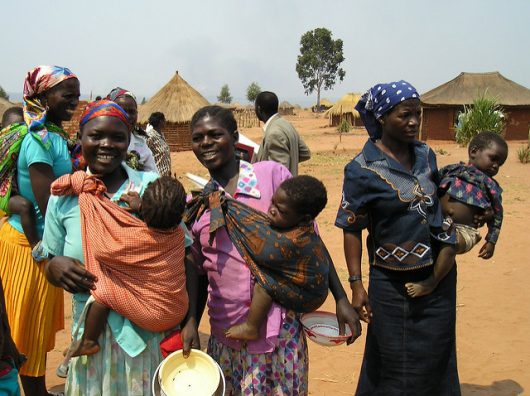
Uganda’s Refugee Policy a “Shining Example”

Uganda's refugee policyUganda’s refugee policy currently attempts to admit on average 2,000 refugees per day. Looking to spark the Comprehensive Refugee Response Framework (CRRF), outlined in an annex to the New York Declaration, Uganda is appealing for funding to support its development-oriented refugee response strategy.

Although Uganda and the U.N. appealed for $2 billion at a fundraising summit in Entebbe, donor governments only pledged $352 million. Although Uganda is becoming the key to the CRRF, after further pledges made weeks after, the total remains just $637 million.

As a response to the influx of South Sudanese refugees in Uganda, the government desires enough aid to fund the response to these refugees and a long-term sustainable response to this issue.

“Uganda is a shining example when it comes to hosting refugees,” says Norwegian Refugee Council regional director for the Horn of Africa. With the 2006 Refugees Act and the 2010 Refugees Regulations, Uganda is granting refugees the right to work and freedom of movement, as well as giving them ownership of land. These are all highlighted as key components of the CRRF.

Despite this, the massive influx of South Sudanese refugees is bringing Uganda to its breaking point. With Uganda’s pivotal role in fostering new developmental refugee response strategies, donors have finally begun to fund its cause at the required level. The World Bank has allocated $2 billion in grants and loans over the next three years to fund future socioeconomic development.

Uganda’s refugee policy is amongst the most progressive in the world. Its developmental focus is in two key areas: inclusive and effective governance and sustainable and inclusive economic development.

Its goal is to ensure that the government’s development operations align with the government’s refugee response. With Uganda’s refugee policy, it presents a strategy that all developing nations should follow.

– Tucker Hallowell
Photo: Flickr

August 21, 2017
https://borgenproject.org/wp-content/uploads/borgen-project-logo.svg 0 0 Kim Thelwell https://borgenproject.org/wp-content/uploads/borgen-project-logo.svg Kim Thelwell2017-08-21 07:30:172020-06-18 09:18:55Uganda’s Refugee Policy a “Shining Example”
Government, Human Rights

Human Rights in Norway

Human Rights in Norway

Norway is a small Scandinavian country with a population of approximately 4.9 million. It is a parliamentary democracy and constitutional monarchy, and a range of political parties operate freely there.

Recent reports on human rights in Norway show it is one of the best countries for political, civil and individual rights except a few minor, worrying trends in immigration and the rights of religious minorities. “Norway has ranked first on the UN Development Program’s Human Development Index for 12 of the last 15 years, and it consistently tops international comparisons in such areas as democracy, civil and political rights, and freedom of expression and the press.”

Below is a breakdown of characteristic details of human rights in Norway in the past couple of years.

Political pluralism: Norway’s Constitution promotes political pluralism and guarantees it in practice. All political parties from a range of ideological backgrounds participate freely in elections. The country’s political freedom is such that the indigenous Sami population, “the only group in Scandinavia recognized as an indigenous people by international conventions,” has its own legislature, the Sameting, which works to protect the language and political, cultural and economic rights of the group.

Press freedom: Freedom of the press is constitutionally guaranteed and protected in public life. The government subsidizes the majority of newspapers, although private and partisan, in an effort to promote political pluralism and democracy. Citizens’ digital rights are respected. Internet access is free and unimpeded. There is respect for academic freedom, and private discussions are free and vibrant.

The freedom of belief: The freedom of religion is constitutionally guaranteed and respected in practice. Norway is a secular country where the church and the state were separated by a 2012 constitutional amendment. All religious beliefs enjoy freedom, but lately, there is seemingly a rise in anti-Semitic and anti-Muslim violence and harassment.

In 2015, a new special police unit in Oslo – founded to strengthen efforts against hate crimes – reviewed 143 crimes, roughly double the number reviewed in 2014. “In June of this year, Norway became the first Nordic country to propose a ban on the burqa -full face and body covering- in kindergartens, schools and universities.”

Although according to the Huffington Post “very very few” of three percent of Norway’s Muslim population, or roughly 150,000 individuals, wear a niqab – the veil that covers the face, showing only the eyes – it still is a matter of civilian liberty and has to be dealt with accordingly. In August 2015, the U.N. Committee on the Elimination of Racial Discrimination criticized the country for lack of a comprehensive approach to halt these crimes, as it scars the overall picture of human rights in Norway.

Associational/organizational rights: The Norwegian constitution guarantees the rights to assembly and protest. In 2015, following a terrorist attack on a synagogue, hundreds of Norwegians made a “ring of peace” around an Oslo Synagogue to show solidarity with the Jewish community. The right to assembly and strike is guaranteed to labor organizations/unions and workers except for senior civil servants and the military.

Immigration: Like many other European countries, Norway has seen a surge in the immigration in recent years as it has increased fivefold since the 1970s. “In 2015, Norway received asylum applications from 31,000 people, primarily from Syria, Iraq, and Afghanistan; this was a significant increase from the 11,000 applications received in 2014.” The country is witnessing the rise of anti-immigration right-wing politics. Consequently, the controversial practice of refoulment, which the international law forbids, continued in 2015, affecting more than 1,000 people.

Prisoners’ rights: Norway is known globally for its radical humaneness toward prisoners. The incarceration rate is among the lowest in the world at 75 persons per 100,000. In the U.S., it is 10 times higher. There is no death penalty nor lifetime imprisonment, and the maximum sentence for most crimes is 21 years. Norway’s recidivism rate of 20 percent is one of the lowest in the world. However, the country’s capacity has not been sufficient with more than 1,000 prisoners waiting to serve their sentences in recent years.

Individual rights: Norway is also one of the best countries for personal autonomy. Citizens from the European Union do not need a permit to work in Norway. The Gender Equality Act provides equal rights for both men and women. Conscription in armed forces is gender-neutral according to a law that took effect in 2015. In 2013, women won 40 percent of seats in parliament. A gender-neutral marriage act passed in 2009 granted Norwegian same-sex couples identical rights as opposite-sex couples, including in adoption and assisted pregnancies.

Given its credible record in the past, it is very likely that the strong presence of NGOs and civil society networks with the cooperation of government, will strengthen efforts to redress discriminatory practices because they are a threat to pluralism and the positive image of human rights in Norway.

– Aslam Kakar

Photo: Flickr

August 17, 2017
https://borgenproject.org/wp-content/uploads/borgen-project-logo.svg 0 0 Borgen Project https://borgenproject.org/wp-content/uploads/borgen-project-logo.svg Borgen Project2017-08-17 07:30:502024-05-28 00:15:50Human Rights in Norway
Global Poverty, Government

Austerity Among Causes of Poverty in Greece

Causes of Poverty in GreeceIs there poverty in Greece? Yes. Among the countries riding the rising EU economy, Greece finds itself adrift with high unemployment and rampant poverty.

Since the 2008 financial crisis, several countries including Greece, Ireland, Cyprus and Portugal have relied on the EU and the International Monetary Fund (IMF) for bailouts. All are rebounding except for Greece, which is now on its third bailout and has yet to see a decrease in its 14 percent poverty rate.

Many Greeks say the bailouts are not enough. With the highest unemployment rate in the EU at 23 percent and youth unemployment at nearly 48 percent, many Greeks believe that the causes of poverty in Greece include the bailouts themselves.

The EU and IMF have been cautious issuing the Mediterranean nation new bailouts, requiring the Greek government to enact several austerity measures. These measures have ranged from increasing taxes and cutting pensions to scaling back all government spending.

Austerity and Poverty in Greece

Many believe that these austerity measures are the causes of poverty in Greece. Increased taxes and pension cuts leave citizens with less disposable income, and in Greece’s case, nearly no disposable income. Being a largely service-oriented economy, consumer spending is the most important economic driver.

As spending falls, businesses tighten the belt and hire fewer or lay off workers. The first to suffer are young and inexperienced Greeks. Due to the inability of the Greece’s youth to find employment, many families subsist on parents’ or grandparents’ pensions, which are to be cut this year as part of the new round of austerity measures.

Many young Greeks have left the nest to head to the cities, where incomes are higher, and poverty is less prevalent. Greece’s rural population has experienced a contraction as a result, and food assistance lines in the city have grown.

There is some good news on Greece’s horizon. As part of a program to incorporate Syrian refugees into mainstream Greek society, the EU is planning on giving Greece 209 million euros. The money will help refugees with rent and living expenses and the new cash infusion could help move the economy forward, only time will tell.

The Greek government has also decided to issue bonds on the market. Finding a buyer for Greece’s risky debt will prove challenging, but if done, will prove to the EU that the economy is turning a corner.

The causes of poverty in Greece are many and systemic. After the global financial crisis of 2008 and the following austerity measures, Greece has had it rough in the last decade, but many can see a light at the end of the tunnel.

– Thomas Anania

Photo: Flickr

August 14, 2017
https://borgenproject.org/wp-content/uploads/borgen-project-logo.svg 0 0 Borgen Project https://borgenproject.org/wp-content/uploads/borgen-project-logo.svg Borgen Project2017-08-14 07:30:372020-06-11 08:48:02Austerity Among Causes of Poverty in Greece
Page 17 of 24«‹1516171819›»

Get Smarter

  • Global Poverty 101
  • Global Poverty… The Good News
  • Global Poverty & U.S. Jobs
  • Global Poverty and National Security
  • Innovative Solutions to Poverty
  • Global Poverty & Aid FAQ’s
Search Search

Take Action

  • Call Congress
  • Email Congress
  • Donate
  • 30 Ways to Help
  • Volunteer Ops
  • Internships
  • Courses & Certificates
  • The Podcast
Borgen Project

“The Borgen Project is an incredible nonprofit organization that is addressing poverty and hunger and working towards ending them.”

-The Huffington Post

Inside The Borgen Project

  • Contact
  • About
  • Financials
  • President
  • Board of Directors
  • Board of Advisors

International Links

  • UK Email Parliament
  • UK Donate
  • Canada Email Parliament

Get Smarter

  • Global Poverty 101
  • Global Poverty… The Good News
  • Global Poverty & U.S. Jobs
  • Global Poverty and National Security
  • Innovative Solutions to Poverty
  • Global Poverty & Aid FAQ’s

Ways to Help

  • Call Congress
  • Email Congress
  • Donate
  • 30 Ways to Help
  • Volunteer Ops
  • Internships
  • Courses & Certificates
  • The Podcast
Scroll to top Scroll to top Scroll to top