• Link to X
  • Link to Facebook
  • Link to Instagram
  • Link to TikTok
  • Link to Youtube
  • About
    • About Us
      • President
      • Board of Directors
      • Board of Advisors
      • Financials
      • Our Methodology
      • Success Tracker
      • Contact
  • Act Now
    • 30 Ways to Help
      • Email Congress
      • Call Congress
      • Volunteer
      • Courses & Certificates
      • Be a Donor
    • Internships
      • In-Office Internships
      • Remote Internships
    • Legislation
      • Politics 101
  • The Blog
  • The Podcast
  • Magazine
  • Donate
  • Click to open the search input field Click to open the search input field Search
  • Menu Menu

Archive for category: Government

Government, Politics

8 Current Dictators as of 2018

current dictators
The definition of “dictator” can be subjective and interpreted differently in different contexts. Definitions can range from “a person with unlimited governmental power” to “a ruler who has complete power in a country obtained by force and uses it unfairly or cruelly.”

However, it is evident that dictator-led countries are generally associated with severe poverty, repression and human rights abuses among the general population. Countries suffering under the rule of a dictatorship often experience rising mental illness rates, decreased health and life expectancy, famine, poor education and other problems.

Although the number of dictatorships have been decreasing, there are several dictators still in power today. This list details eight of the world’s current dictators and the poverty rates associated with each country.

Current Dictators

  1. Kim Jong-un
    Kim Jong-un is North Korea’s current dictator and the third generation Kim to rule the country, following the death of his father Kim Jong-il in 2011. As Supreme Leader (many dictators do not call themselves dictators), he follows the political regimen of the Workers’ Party of Korea and has heavily focused on the country’s nuclear weapons program over the wellbeing of North Korean citizens. Forty percent of the nation, which is about 24 million people, lives below the poverty line.
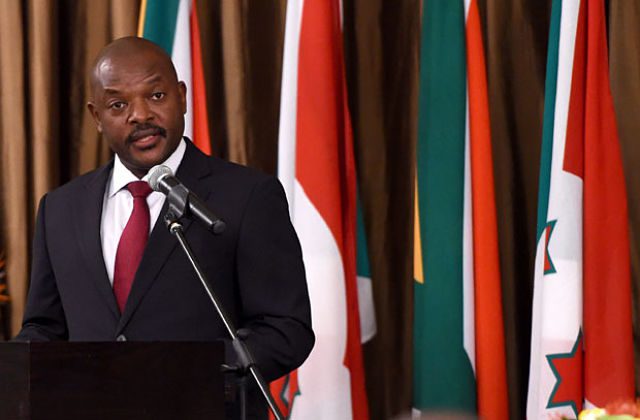
  2. Pierre Nkurunziza
    One of the most violent dictatorships has occurred in Burundi under the rule of Pierre Nkurunziza, a former rebel turned president. Nkurunziza, who has been in power since 2005 and was re-elected for a third term in 2015, has changed the country’s constitution to allow unlimited presidential terms. In May 2018, Burundi is headed for a constitutional referendum, which would extend Nkurunziza’s rule to 2034.Throughout Nkurunziza’s dictatorial regime, he has been known for purging ethnic Tutsi army officers, suppressing opposition and media and ordering murderous brutality committed against protesters of his extended rule. Additionally, Burundi has some of the highest rates of malnutrition among children under five anywhere in the world, seven million reported malaria cases in 2017 and a 64.6 percent poverty rate overall.
  3. Nicolás Maduro
    Following Venezuelan president Hugo Chávez’s death, socialist Nicolás Maduro came to power in 2013. Maduro has continued “chavismo,” the corrupt ideology of Chávez, which has destroyed the economy of Venezuela, causing drastic inflation, food and medicine shortages, high unemployment and economic reliance on oil. Venezuela’s poverty rate has spiked to 82 percent.
  4. Bashar Al-Assad
    Syria’s dictator, Bashar al-Assad, has been in power since his father, President Hafez Assad, died in 2000. The Syrian people were hopeful that he would bring about the economic and political reforms that Syrians had been calling for, but it never happened and Syrian’s economy has plummeted due to a civil war that broke out in 2011.Bashar al-Assad is responsible for hundreds of thousands of civilian deaths since the Arab Spring, and more than 82 percent of Syrians are living below the poverty line.
  5. Idriss Déby
    Idriss Déby came to power in a military coup and has been ruling Chad since 1990. Déby has accelerated a bloody proxy war between Chad and Sudan throughout the 2000s and has been known to suppress opposition and the press. Chad has a 46.7 percent poverty rate, despite a surplus of oil, uranium and gold.
  6. Paul Kagame
    Since coming to power as president of Rwanda in 2000, Kagame has actually reduced poverty. He has introduced free basic education, boosted trade and lowered maternal and child mortality by more than 50 percent.However, Kagame’s rule still comes with great restrictions on freedoms and widespread oppression, particularly regarding the government-appointed media and their efforts to shut down independent newspapers and radio stations. Rwanda’s poverty rate is currently at 39.1 percent.
  7. Recep Tayyip Erdoğan
    Erdoğan was the prime minister of Turkey from 2003-2014 until he became president in 2014. Erdoğan has suppressed opposition by closing universities and firing civil servants, and has urged the citizens of Turkey to conceive more children, while child and adolescent malnutrition, extreme lack of healthcare and inflation due to monthly increases in food prices have been greater concerns. Turkey’s poverty rate is at 21.9 percent.
  8. Teodoro Obiang Nguema Mbasogo
    In Equatorial Guinea, President Teodoro Obiang Nguema Mbasogo has been ruling an authoritarian government since 1979. Freedom of association and assembly are harshly restricted under Mbasogo’s violent and oppressive rule, and essential healthcare and primary education improvements have been ignored. Mbasogo profits from billions of dollars of oil exports, but 76.8 percent of Equatorial Guinea’s population lives in poverty.

Although dictatorships are not as common now as they were in the past, the regimes of the world’s current dictators are still brutal, tyrannical, violent and repressive. The world’s most oppressed countries suffer under the autocratic rule of these current dictators, and there is still much progress to be made.

– Natalie Shaw

Photo: Flickr

March 21, 2018
https://borgenproject.org/wp-content/uploads/borgen-project-logo.svg 0 0 Borgen Project https://borgenproject.org/wp-content/uploads/borgen-project-logo.svg Borgen Project2018-03-21 01:30:542024-05-29 22:39:558 Current Dictators as of 2018
Global Poverty, Government, Politics

Understanding the Basics: What is a Parliamentary System?

What is a Parliamentary System
Many in the United States may be aware that most Europe governments use a parliamentary system, but the question most are probably thinking is: what is a parliamentary system? More importantly, how is it different from the system used by the United States? Here are the answers to these questions and more.

Basics of a Parliamentary System

In terms of the U.S. system, a country’s parliament would serve as both its legislative and executive branches. The most important thing to know about parliamentary systems is that the political parties hold the power and not individuals. When citizens vote, their ballots list party names and when a party wins, seat allotment is assigned to party members based on seniority (in most cases).

When a party wins the majority of seats, it then selects a leader to serve as the executive called a Prime Minister or, in some cases, a Chancellor. This person will most likely already be the party leader and they then select their cabinet which sets the government’s agenda. If one party does not win the majority of seats in the parliament, then it must form a coalition with other parties to form a majority.

This process may take time, but it will eventually allow for the smoother passage of legislation.

One House or Two?

Many parliaments are bicameral, meaning it has two houses, while others may be unicameral, having only one house. In bicameral systems, there is a lower and an upper house, but most legislating actually takes place in the lower house.

The greatest difference between the two is the number of veto points or places where legislation can be halted within the legislative process. Unicameral systems have fewer veto points than bicameral systems making it easier and faster to pass legislation but also easier to overturn. Many parliamentary systems therefore adopt the bicameral system for stability.

Parliamentary vs. Presidential

In a parliamentary system, the executive is the Prime Minister while in a presidential system, the President is the executive. There are many differences between these two positions, but most notably, the Prime Minister and his/her cabinet arises from the legislature, while Presidents are directly elected by the people.

At first glance, many would then prefer a President because citizens choose him/her directly, yet many still prefer Prime Ministers.

First of all, they are beholden to their party, so their decisions are far more predictable than a President’s and voters know exactly what values they are voting for. This applies for all members of the legislature as well, not just the Prime Minister.

Parliamentary systems also entail the possibility for a vote of “no confidence” by the legislature which can remove a Prime Minister from power at any point if they lose the vote. Presidents, however, have fixed terms and cannot so easily be removed.

Success Rate

Citizens in the United States are very fond of the presidential system, yet in reality the success rate for parliamentary systems is far greater. The system has been a part of some European countries for centuries, but that doesn’t mean it’s perfect. When deciding which system to adopt, new countries must consider what is best for its country, and that may or may not be a parliamentary system.

– Megan Burtis

Photo: Flickr

February 18, 2018
https://borgenproject.org/wp-content/uploads/borgen-project-logo.svg 0 0 Borgen Project https://borgenproject.org/wp-content/uploads/borgen-project-logo.svg Borgen Project2018-02-18 01:30:162019-12-16 13:36:57Understanding the Basics: What is a Parliamentary System?
Foreign Policy, Global Poverty, Government

The AGOA and MCA Modernization Act Passes in the House

AGOA and MCA Modernization ActOn Jan. 17, 2018, the House of Representatives passed H.R. 3445, the AGOA and MCA Modernization Act. The legislation adds on to the original African Growth and Opportunity Act, or AGOA, which was passed into law on May 18, 2000, by the 106th Congress.

As an extension of AGOA, the AGOA and MCA Modernization Act encourages plans to promote trade and cooperation while also providing aid to countries that are AGOA eligible. The region of focus of the legislation is sub-Saharan Africa, with the goal being to build private sector growth. Under the bill, the President will be directed to create a website with information about AGOA along with encouraging embassies in chosen countries to promote export opportunities to the United States.

In addition, the​ ​bill​ ​would​ ​give​ ​the​ ​Millennial Challenge Corporation (MCC)​ ​the​ ​authority​ ​to​ ​develop​ ​a​ ​second​ ​concurrent​ ​compact​ ​with countries,​ ​provided​ ​the​ ​compact​ ​focuses​ ​on​ ​regional​ ​economic​ ​development.​ The​ ​ability​ ​to​ ​enter​ ​into​ ​a​ ​second​ ​compact​ ​will​ ​be​ ​limited​ ​to​ ​countries​ ​that​ ​demonstrate​ ​progress toward​ ​meeting​ ​the​ ​objectives​ ​of​ ​the​ ​first​ ​compact​ ​and​ ​capacity​ ​to​ ​handle​ ​an​ ​additional​ ​compact.

The MCC was created in 2004 by the Bush administration, with the aim to reduce poverty through economic growth. The MCC has committed more than $10 billion in 58 projects in 25 countries. Around 70 percent of this investment has gone into infrastructure projects like highways and ports and an increasing percentage is being invested in energy.

On the House floor prior to the vote, House Foreign Affairs Committee Chairman Rep. Ed Royce (R-CA-39) said that the AGOA and MCA Modernization Act “seeks to facilitate trade and private sector-led growth in poor but relatively well-governed countries, particularly in Africa, so they can grow their own way out of poverty.”

“Through AGOA, goods produced in eligible African countries enter the U.S. on a duty-free basis. To be eligible, countries must be committed to the rule of law, eliminating barriers to U.S. trade and investment, combating corruption and supporting counterterrorism activities. So AGOA advances U.S. interests on many levels.”

Trade being a driver of economic development and increased civilian participation in politics is one of the main arguments for passing the AGOA and MCA Modernization Act. Economists and experts agree that the legislation does not just benefit sub-Saharan Africa, but also the United States, as it helps create jobs and benefits consumers and companies through free-market principles.

Rep. Karen Bass (D-CA-37) was enthusiastic about the passage of the AGOA and MCA Modernization Act by a unanimous vote. Bass is a ranking member of the House Africa Subcommittee. She is an avid supporter of the legislation and said the policy would foster economic development, as well as strengthen the United States as an international leader and boost the domestic job market and economy.

The bill was introduced to the House by Rep. Royce. At the time the bill was initially introduced, Rep. Royce along with fellow representatives Bass, Eliot Engel (D-NY) and Chris Smith (R-NJ), stated that steering developing countries toward trade and away from aid helps African countries and women. Africa’s consumer spending nearing $1 trillion was what prompted the four to push for the passing of the AGOA and MCA Modernization Act.

The AGOA and MCA Modernization Act still needs to be approved by the Senate. The bill has been introduced by Sens. Ben Cardin (D-MD), Johnny Isakson (R-GA) and Chris Coons (D-DE) as S.832. Sen. Coons stated that it is vital that Congress does all it can do to promote economic growth in developing countries and expand American business access to foreign markets. He is excited that the act will encourage trade with sub-Saharan Africa.

The recent passing of the AGOA and MCA Modernization Act in the House may give the legislation the momentum it needs to soon be accepted in the Senate. Visit The Borgen Project Action Center to contact your representative about this critical legislation.

– Blake Chambers

Photo: Wikimedia Commons

January 19, 2018
https://borgenproject.org/wp-content/uploads/borgen-project-logo.svg 0 0 Borgen Project https://borgenproject.org/wp-content/uploads/borgen-project-logo.svg Borgen Project2018-01-19 07:30:522019-12-26 17:08:30The AGOA and MCA Modernization Act Passes in the House
Global Poverty, Government

What is a Senator?

What is a Senator?
Since 1787, the U.S. Senate has existed to bring representation to individual states and a minority opinion to the United States of America. Senators are an integral part of the news cycle. They are a voice for the electorate. They are composers of history. But what is a senator?

America is a country of democracy and relative stability in spite of bipartisanship. Surrounded by a world in which many are starving and living in poverty, however, it is important to look at the basics. Doing so gives Americans the ability to make a difference to those less fortunate. This is made possible by having a population of 323 million speak through elected representatives.

Qualifications of a U.S. Senator

The qualifications of a U.S. senator are simple. A senator must be at least 30 years old, must have been a U.S. citizen for nine years and must be a resident of the state which he or she is elected to represent. Their terms last for six years and there is no limit to the number of terms, as long as it is the will of the population in the senator’s state. Each state has two elected senators, who exist to bring individual voice and to be a part of the vital checks-and-balances system. This goes some of the way to answering the question ‘what is a senator?’.

Responsibilities of a Senator

The most important job of a U.S. senator is to be the voice of his or her constituents. As the accountable party to the state, a U.S. senator is responsible for voting on legislation that is to the benefit of the state as a whole. It also means that senators are responsible for taking phone calls, reading letters and meeting with his or her constituents.

In addition to their responsibility to the state, senators also serve on committees. Committees exist to examine major sectors of American life, including energy, health and the U.S. budget. It is a Senator’s responsibility to meet with lobbyists and determine amendments to existing legislation through the committee on which they serve.

U.S. senators also introduce and vote on legislation. Once a bill is introduced, it must be examined by the Senate. If it passes muster, the bill will then go to the House of Representatives (or vice versa). If the bill passes both houses of Congress, it will then go to the President of the United States to become a law.

What is a Senator?

So, what is a senator? A senator is someone that individuals elect to ensure that the country is going in a direction in which they want it to go. A senator is a voice for the state; an elected official responsible for ensuring the protection of human rights.

Unfortunately, much of the world does not have that same representation. The U.S has the power to create change and it starts with individual voices.

It is essential to exercise the right to vote and voice opinions through elected officials. Once senators are in office, citizens can write letters, email or call them to hold them accountable. They can make sure they are carrying out the state’s interest as well as using their position for good in the world.

– Eric Paulsen

Photo: Flickr

January 15, 2018
https://borgenproject.org/wp-content/uploads/borgen-project-logo.svg 0 0 Borgen Project https://borgenproject.org/wp-content/uploads/borgen-project-logo.svg Borgen Project2018-01-15 07:30:432019-12-16 13:24:52What is a Senator?
Global Poverty, Government, Politics

The US Top 10 Oldest Presidents to Take Office


The average age of the 45 U.S. presidents throughout history is 54 years and 11 months. Below are the top 10 oldest presidents to take office in United States history.

Gerald Ford – 61 years old

  • Ford took the oath of office in August of 1974 in the aftermath of the Watergate scandal. Notable accomplishments of his administration include: cutting inflation almost by half, decreasing unemployment, and 4 million people acquiring jobs since the recession.
  • Ford pardoned former President Richard Nixon for his crimes committed during his presidency. This act stunned the country, and his approval ratings dropped.

John Adams – 61 years, 4 months old

  • The first Vice President and second president of the United States, John Adams’s greatest contribution to U.S history was his rallying of Americans for independence. He pressed delegates at the Second Continental Congress (1776) to declare war against Britain.
  • Other of this president’s major roles in the founding of the United States include bringing a peaceful end to the Quasi-War: Adams sent a peace delegation to France and the signing of the Convention of 1800 is considered a major foreign policy accomplishment of Adams’s presidency.

Andrew Jackson – 61 years,11 months old

  • Displacement and deaths of Native Americans cloud Andrew Jackson’s presidency. Americans grew greedy for land in the 19th century, and Jackson took a systematic approach to removing Native Americans with several treaties as president.
  • The Trail of Tears was a result of various “Indian removal processes.” Some tribes wanted to stay and fight, others agreed to the treaties; however, Jackson ignored laws and the government and forced Native Americans out of their land through violence or bribery.

Dwight D. Eisenhower – 62 years old

  • Eisenhower served two terms as president, and during his presidency, he managed the tensions of the Cold War, strengthened Social Security and signed the Federal-Aid Highway Act of 1956.
  • Though he was successful in accomplishing many things, Eisenhower wavered in protecting the civil rights of African Americans and desegregating schools.

Zachary Taylor – 64 months, 3 months old

  • With military experience and success in expanding the U.S. by taking land from Mexico in the Mexican-American War, Zachary Taylor was regarded as a hero and became president in 1849.
  • His administration faced numerous problems, particularly in the expansion of slavery in new western territories and financial scandals. Taylor became the second president to die while in office and was succeeded by Millard Fillmore.

George H.W Bush – 64 years, 7 months old

  • As the 41st president of the United States, Bush brought back traditional American values as the world dramatically changed. During his presidency, he faced Saddam Hussein’s invasion of Kuwait and threat to invade Saudi Arabia. At home, he was unable to combat the increasing discontent of a failing economy, inner city violence increase and the high deficit spending.

James Buchanan – 65 years old

  • As the 15th president of the United States, Buchanan experienced the continuous conflict between Native Americans and the U.S. His presidency also witnessed the Panic of 1857 as a result of poor trade. The Dred Scott decision where an African American slave sued for his freedom occurred, which unfortunately was refused.

William H. Harrison – 68 years old

  • Out of the top 10 oldest presidents to hold office, William Henry Harrison served only one month before dying of pneumonia. Prior to becoming president, Harrison was a prominent figure in the fight against Native Americans, particularly in the Battle of Tippecanoe (1811). He won the presidential campaign against unpopular Martin Van Buren.

Ronald Reagan – 69 years old

  • Previously the oldest president to hold office in the United States, Ronald Reagan became one of the most revered figures in political history.
  • Ronald Reagan’s presidency was marked by several scandals – one, in particular, was the Iran-Contra Affair. The U.S. sold weapons to the Islamic Republic of Iran as part of an unsuccessful attempt at releasing six U.S. hostages.

 Donald Trump – 70 years old

  • The oldest president to date
  • In an unprecedented political campaign, Republican nominee Donald Trump won the presidential election in 2016. He was outspoken and unfiltered, and his controversial political remarks mark his presidency.
  • With an ongoing administration, Trump’s executive actions include:
    • Advancing the Dakota Access Pipeline and XL Pipeline
    • Increasing border security and promoting the development of the wall
    • Reversing the travel ban, suspending and banning travel from six countries

Youth is often associated with fresh ideas and renewed energy, but these top 10 oldest presidents have brought in their own decisive and controversial ideas. Top 10 source via : top10binary.com binary options trading.

– Jennifer Serrato

Photo: Flickr

January 12, 2018
https://borgenproject.org/wp-content/uploads/borgen-project-logo.svg 0 0 Borgen Project https://borgenproject.org/wp-content/uploads/borgen-project-logo.svg Borgen Project2018-01-12 05:55:522019-12-06 13:00:29The US Top 10 Oldest Presidents to Take Office
Foreign Aid, Foreign Policy, Global Poverty, Government

How All Former U.S. Presidents Fight Global Poverty

How All Former U.S. Presidents Fight Global PovertyAll five living former presidents met in Texas on October 22, 2017, the first gathering of all past U.S. leaders since 2013. Their mission was to raise funds for hurricane victims in Florida, Texas, the U.S. Virgin Islands and Puerto Rico. The event, titled “Deep from the Heart: One America Appeal,” accumulated $31 million towards helping those in need. The former U.S. presidents fight global poverty because they consider the issue too vital to ignore even in retirement.

Here’s how former presidents Jimmy Carter, George H.W. Bush, Bill Clinton, George W. Bush and Barack Obama helped foreign nations since leaving office.

Jimmy Carter

Even at age 93, Jimmy Carter works alongside other volunteers outdoors to build houses with Habitat for Humanity. Both Carter and his wife Rosalynn have traveled around the world to raise awareness towards the benefits of affordable housing. Their work encompasses 14 countries and 4,000 built homes.

George Herbert Walker Bush

Both George H.W. Bush and Bill Clinton fought a vicious campaign against each other for the presidency in 1992. But all wounds were mended by 2005, when the two former presidents visited Asia to raise money in the wake of a deadly tsunami. The two men also raised more than $100 million to support the victims of Hurricane Katrina.

On the subject of losing the re-election to a member of an opposing party, H.W. Bush commented, “You just can’t go through life with a great deal of bitterness in your heart over something that happened 15 years ago.”

Bill Clinton

In addition to the funds raised after Hurricane Katrina, Clinton established the Clinton Global Initiative (CGI) in 2005. The CGI gathered Nobel laureates, leading CEOs, philanthropists and more than 200 former heads of state to create Commitments to Action for those in need.

Previous Commitments to Action include an amount of refugees taken in by a country, an installation of solar arrays for a country and advice from major corporations to a country. CGI has aided 180 nations since its genesis.

George W. Bush

October wasn’t the first time the world saw George W. Bush and former U.S. presidents fight global poverty together. Both Bush and Clinton raised funds to provide for Haiti in the wake of the 2010 earthquake.

Bush continued his philanthropy even after his two terms saw the achievement of the U.N.’s Millennium Development Goals years ahead of schedule.

Barack Obama

Not even a year after leaving office, Barack Obama advocated for the world to address climate change, poverty and disease. “People wildly overestimate what we spend on foreign aid,” he said, “…It’s a good investment to make countries work.” Obama joined philanthropists Bill and Melinda Gates, Leymah Gbowee and Canadian Prime Minister Justin Trudeau to urge nations in uniting to combat global poverty.

Seeing all former U.S. presidents fight global poverty reveals the tenacity within each leader. All five men, however, believe that saving the world is a global effort.

– Nick Edinger

Photo: Flickr

November 7, 2017
https://borgenproject.org/wp-content/uploads/borgen-project-logo.svg 0 0 Kim Thelwell https://borgenproject.org/wp-content/uploads/borgen-project-logo.svg Kim Thelwell2017-11-07 01:30:012019-12-27 15:15:05How All Former U.S. Presidents Fight Global Poverty
Global Poverty, Government, Water Quality

Improving Water Quality in Tonga

Water Quality in Tonga

Situated in the Pacific Islands, Tonga is among one of several countries in the region to experience water scarcity and quality issues. An island chain of more than 170, Tonga is limited in access to freshwater resources, much of which is sourced directly from groundwater. In addition to groundwater and springs, Tongans collect water from surface resources, which on most islands is extremely difficult to come by. A few different issues are the culprit for scarcity, and subsequently, water quality in Tonga.

One of the primary concerns is the overuse and exploitation of water on larger islands. Tongatapu, one of the most densely populated islands in Tonga, accounts for 69 percent of the total population. Its water consumption rates are continually on the rise.

In addition to poor water use practice, Tonga also experiences poor management with wastewater. All of the wastewater is managed individually rather than through a unified system. The wastewater then becomes the burden of the community: with little to no help from the government, issues with quality and sanitation are unavoidable.

Tonga also lacks water management infrastructure. Water resource use and sanitation center data is currently not nationally exchanged through an organized sharing system, making it difficult to regulate and monitor.

Because there are limited resources to ameliorate these issues, supervision of water quality in Tonga has been taken over by its residents with some supplemental assistance from the Tongan government and the World Health Organization.

In an effort to provide risk assessment and management for villages experiencing poor water conditions, the government has administered a Water Safety Plan. This plan is designed to pay specific attention to the causes of contamination of water supplies. It also considers which measures must be taken to reduce these risks and make improvements to existing water systems.

Communities are urged to take part in these action plans to learn more about their individual water resource systems and identify with the ecosystem that supports them.

In 2009, 10 villages were set up to take part in the Water Safety Plans, and eight more have been added since. The World Health Organization is working to provide training support for the Tongan government to implement the plan further.

Water quality in Tonga is also being tackled by using methods of public outreach and education. The Tonga Trust developed the Water Sanitation and Hygiene (WASH) program in 2008, which works toward changing behaviors of residents and visitors to be more mindful of water use and hygienic practice.

Expected outcomes are for villages to identify their Water Safety Plans, increase the frequency of WASH’s message through media outlets, create posters and manuals in the local language promoting sanitation, establish WASH committees throughout the islands and increase stakeholder involvement.

– Casey Hess

Photo: Flickr

November 6, 2017
https://borgenproject.org/wp-content/uploads/borgen-project-logo.svg 0 0 Kim Thelwell https://borgenproject.org/wp-content/uploads/borgen-project-logo.svg Kim Thelwell2017-11-06 01:30:312024-05-29 22:27:18Improving Water Quality in Tonga
Global Poverty, Government, Water Quality

Why Water Quality in Serbia is Set to Improve

Water Quality in Serbia

Serbia is a small nation in Eastern Europe with a population of just over seven million, this is not including the population of the disputed Kosovo region. Since Serbia is a landlocked nation with no coastline, water pollution from industrial waste sites has a significantly negative impact on the country’s primary river, the Danube, and its primary tributary, the Sava, both of which serve as the largest and most important sources of drinking water for the nation.

Despite being a relatively well-developed European nation, what is the water quality in Serbia like?

According to the International Commission for the Protection of the Danube River (ICPDR), Serbia actually depends on sources outside of its own national territory for water resources. This is particularly worrisome as most small communities in Serbia, with less than 2000 people, frequently lack wastewater management infrastructure and, because a number of existing facilities within Serbia are non-operational.
Additionally, assigning someone to monitor and secure good water quality in Serbia has become an issue in recent years.

The department of the United Nations responsible for assessing a country’s sanitation and drinking water situation (GLAAS) has stated that while the surveillance systems and institutions required to inspect water quality have been implemented in both urban and rural areas, specific plans to sustain and improve these systems and issues surrounding water system ownership are the main impediments to improving sanitation and water quality in Serbia.

So what can be done to protect water quality in Serbia, particularly in rural areas?

The Serbian government has already taken steps in recent years to ensure that the country’s inhabitants are not put at risk of illness through water consumption. In 2013, Serbia ratified the “Protocol on Water and Health to the 1992 Convention on the Protection and Use of Transboundary Watercourses and International Lakes” and will preside over it until 2019. This international legal agreement not only ensures sustainable water development and the eradication of water-borne diseases in Europe but is also supported by Serbia’s State Secretary at Health Ministry, Meho Mahmutović, who says that “we need to work together to achieve better environmental conditions in order to protect the health.”.

Despite being a rural level issue, the solution to the issue of water quality in Serbia will ultimately depend on government activity. By clearly defining political jurisdiction over the surveillance of drinking water sources and upholding the Protocol ratified by the Serbian government in 2013, communities outside of the country’s larger cities can live free from the risk of water-borne illnesses.

– Brad Tait

Photo: Pixabay

November 6, 2017
https://borgenproject.org/wp-content/uploads/borgen-project-logo.svg 0 0 Kim Thelwell https://borgenproject.org/wp-content/uploads/borgen-project-logo.svg Kim Thelwell2017-11-06 01:30:242024-05-29 22:29:03Why Water Quality in Serbia is Set to Improve
Children, Education, Global Poverty, Government

Teachers Key to Improving Education in Samoa

Samoa is an island nation in the central Pacific Ocean. It is said to be the “Cradle of Polynesia” because it is believed that the island of Savai’i is Hawaiki, the Polynesian homeland.

Samoa became independent from New Zealand in 1962, which brought over 100 years of foreign dominance to an end. Internationally, Samoa is thought of as a tropical paradise where the inhabitants are welcoming of tourists, but there are still problems on the small island nation, one of which is education.

The major challenges for education in Samoa include the quality of education and access to early childhood education, according to a 2015 report filed by the government of Samoa. Early childhood education helps get children ready for primary school, but most teachers do not have the skills to fully prepare them. Another concern for early childhood education in Samoa is children’s performance in basic education. A number of children do not gain basic literacy and numeracy skills, which are important for them to further their education.

The quality of teaching poses a problem for early childhood education in Samoa as well. There are some challenges when it comes to qualifications and certifications, but the main problem is the competence of teachers and principals. Many early childhood education teachers are untrained.

Primary and secondary education in Samoa also has problems. Various schools do not achieve the minimum standards for the quality of learning in the classroom. Many primary school teachers do not have the proper training and support, and teachers seldom have the skills to identify and teach special needs students. Teachers often have a lack of commitment to the profession as well. For many teachers in Samoa, teaching is not their career of choice, and they often leave when the opportunity comes up. This makes keeping good teachers a challenge in both the primary and secondary levels. To improve the quality education in Samoa, high quality teachers must be retained.

Despite this, the graduation rate among high school seniors continues to be above 90 percent, according to the Samoa Observer. Between 2011 and 2014, the graduation rate was 98 percent, but it fell to 96 percent in the 2014-2015 academic year. The CIA reported that the literacy rate among adults was 99 percent, but the country ranks 48th in education spending.

Although education in Samoa has made significant progress, it still faces problems with quality. In order to improve on this, they must they must prepare children for further schooling in their early life. Public awareness of the importance of early childhood education must be raised as well.

For primary and secondary education, marketing for teachers must be more aggressive in order to attract teachers and keep them committed to the profession. Teachers should be encouraged to find creative ways to deliver a lesson in order to keep students engaged.

– Fernando Vazquez

Photo: Flickr

November 2, 2017
https://borgenproject.org/wp-content/uploads/borgen-project-logo.svg 0 0 Kim Thelwell https://borgenproject.org/wp-content/uploads/borgen-project-logo.svg Kim Thelwell2017-11-02 07:30:132024-05-28 00:03:13Teachers Key to Improving Education in Samoa
Education, Global Poverty, Government

Education in Vatican City: A Library for the World

Education in Vatican CityLocated in the heart of Rome, Italy, Vatican City is the smallest independent nation-state in the world. Its borders surround an area of just under 110 acres, and a majority of the nation’s citizens are members of the clergy of the Roman Catholic Church. There are roughly 800 people living in Vatican City, and because of the religious practices of the Roman Catholic clergy, there is no annual birth rate. There is no primary education in Vatican City; however, the governing body runs over 15 institutions of higher education. Most of these schools are located outside of the walls of the Vatican, the Ethiopian College being the only exception. Operating within Vatican City, the Ethiopian College guides young African men towards priesthood. One of the largest Vatican-run schools in Rome is Gregorian University, a school which boasts 16 popes and over 19 canonized saints as graduates. Gregorian University was founded in 1551, and the university offers religious educations in topics like canon law and theology.

One cannot discuss education in Vatican City without mentioning the library. The Vatican Library represents one of the largest existing sources of information on the development of the Western world. In 1548, Pope Paul III became the first Cardinal Librarian of the Vatican Library, and it has since served as a tool in the education of thousands of patrons. The American Friends of the Vatican Library was started in 1981, and since then they have raised money and awareness for the treasure trove of information that is the Vatican Library. The American Friends of the Vatican Library is based in Orchard Lake, Michigan, and funds projects like restorations and repairs of the Vatican Library.

Vatican City is by no means a conventional country; however, it is undeniable that education is and has always been something highly regarded by the Vatican City government. Poverty and poor education go hand and hand, and the Roman Catholic Church operating in Vatican City has provided the tools for the education of millions of people since its conception.

– Tyler Troped

Photo: Flickr

October 28, 2017
https://borgenproject.org/wp-content/uploads/borgen-project-logo.svg 0 0 Kim Thelwell https://borgenproject.org/wp-content/uploads/borgen-project-logo.svg Kim Thelwell2017-10-28 07:30:362024-05-29 22:27:49Education in Vatican City: A Library for the World
Page 13 of 24«‹1112131415›»

Get Smarter

  • Global Poverty 101
  • Global Poverty… The Good News
  • Global Poverty & U.S. Jobs
  • Global Poverty and National Security
  • Innovative Solutions to Poverty
  • Global Poverty & Aid FAQ’s
Search Search

Take Action

  • Call Congress
  • Email Congress
  • Donate
  • 30 Ways to Help
  • Volunteer Ops
  • Internships
  • Courses & Certificates
  • The Podcast
Borgen Project

“The Borgen Project is an incredible nonprofit organization that is addressing poverty and hunger and working towards ending them.”

-The Huffington Post

Inside The Borgen Project

  • Contact
  • About
  • Financials
  • President
  • Board of Directors
  • Board of Advisors

International Links

  • UK Email Parliament
  • UK Donate
  • Canada Email Parliament

Get Smarter

  • Global Poverty 101
  • Global Poverty… The Good News
  • Global Poverty & U.S. Jobs
  • Global Poverty and National Security
  • Innovative Solutions to Poverty
  • Global Poverty & Aid FAQ’s

Ways to Help

  • Call Congress
  • Email Congress
  • Donate
  • 30 Ways to Help
  • Volunteer Ops
  • Internships
  • Courses & Certificates
  • The Podcast
Scroll to top Scroll to top Scroll to top