 The Northern Triangle, consisting of Guatemala, El Salvador and Honduras, is home to some of the highest levels of political and economic instability in the world. The nations of the Triangle (Or NTCA, Northern Triangle of Central America) are characterized by high rates of poverty and gang violence. Subsequently, this is exacerbated by rampant corruption, from local to national levels. This instability, along with the hazards of living in a poverty-stricken region, has led to an increase in the outflow of migrants from the Northern Triangle into the United States.
Nevertheless, things are getting better. With the Northern Triangle having received more international attention in recent years and immigration issues leading American political discourse, the underlying problems of the region are coming to light. Some U.S. and United Nations’ programs are successfully circumventing government channels to provide aid directly. However, other initiatives are attacking the problem of corruption at its source. Fighting corruption in the Northern Triangle requires a longterm method addressing the economic insolvency of these countries. Here are five ways the world is fighting corruption in the Northern Triangle.
5 Ways the World Is Fighting Corruption in the Northern Triangle
- Guatemala and the CICIG
Guatemala hosts one of the most effective and successful anti-corruption NGOs in the region. The U.N.-backed International Commission Against Impunity (known as CICIG, per its Spanish initials) was implemented in the early 2000s to address the rampant corruption sprouting up in the wake of Guatemala’s civil war. The commissioner, Iván Velásquez, is a distinguished veteran of Colombia’s criminal justice system, where he worked to expose links between paramilitary groups and public officials—an identical background to the types of corrupt practices that burden Guatemala’s public sector. - Identifying Criminal Ties to Government Officials in the NTCA
In a list released in early May 2019, the U.S. Department of State has named over 50 senior government officials in the NTCA as guilty of corruption. This list includes officials in the orbit of all three countries’ presidents, some of whom are direct relatives. Representative Norma Torres (D-CA) noted that the release of the list was a step in the right direction, forward progress for the Trump administration recognizing the severity of corruption in the Northern Triangle. While many of the anti-corruption bodies operating in the NTCA need international backing to be as effective as possible, the State Department’s list indicates the U.S. has not completely voided its assumed role as stabilizer in the Western Hemisphere. - Slow but Steady Progress in El Salvador
Like the rest of the NTCA, El Salvador ranks low in global measures of corruption and impunity for government officials. However, the country’s most recent attorney general, Douglas Melendez, made it his mission to attack the systemic and embedded corruption permeating the government. While he was recently forced out of office by the national legislature, Melendez successfully prosecuted three former presidents and his own predecessor as attorney general. His failure to secure reappointment reflects both El Salvador’s closed-door (and thus inherently political) process of selecting an attorney general, and a backlash of the country’s political elite against his progress fighting corruption. - Experts Discuss Corruption and Human Rights in the NTCA
In May 2019, a panel of experts led by the nonprofit, Inter-American Dialogue, discussed the current initiatives fighting corruption in the Northern Triangle, and how they could benefit from expanding their focus to include human rights. Guatemala’s CICIG was brought up, as was the Mission to Support the Fight against Corruption and Impunity in Honduras (MACCIH). A major point of emphasis was the commonalities across all three countries, specifically the way in which corrupt kleptocratic networks are indirectly committing human rights violation by embezzling money earmarked for public services. The discussion lauded the work of CICIG and MACCIH in Guatemala and Honduras, respectively, and emphasized the need for a similar external agency in El Salvador. - MACCIH Brings its Twelfth Major Case to Court in Honduras
The Mission to Support the Fight Against Corruption and Impunity in Honduras (MACCIH) has been operating since April 2016, presumably inspired by the success of CICIG in Guatemala. Unlike CICIG, which is a U.N.-backed Commission, MACCIH is organized by the Organization of American States, an international charter that was created in the late 1800s. Through the OAS, MACCIH can share investigation data with other member states, which is particularly effective when investigating transnational organization—namely, drug cartels. In May 2019, MACCIH brought forward its twelfth integrated case, this time addressing a federal-level scheme to launder millions in cartel money.
Fighting corruption in the Northern Triangle is not linear. Pushback from political and business elites has been a significant problem both for MACCIH in Honduras and for El Salvador’s nascent anti-impunity work. This is to be expected of any anticorruption initiative, however, as it deals with the removal of power and resources from officials that abuse them. Flagging programs within the member states of the Northern Triangle only emphasize the need for robust foreign support, which the U.S. continues to provide.
– Rob Sprankle
Photo: Flickr

Afghanistan is currently one of the poorest countries in the world with nearly 40 percent of the Afghan population living in poverty. Afghanistan is also one of the most politically corrupt countries in the world. In 2018, The anti-corruption organization Transparency International ranked Afghanistan an index score of 16/100 for its high levels of corruption. Over the past several decades, political corruption in Afghanistan has destabilized the country and contributed to its poverty problem.
USAID has always believed that political corruption and poverty are an interlinked problem because political corruption has a tendency to aggravate the symptoms of poverty in countries with struggling economic growth and political transition. Conversely, the social and economic inequalities that are found in impoverished countries are known to create systemic corruption.
The Scope of Contemporary Corruption in Afghanistan
The destabilizing effects of political corruption on Afghanistan cannot be underestimated. According to Special Inspector General for Afghanistan Reconstruction (SIGAR), a U.S. government agency tasked with the reconstruction of Afghanistan, corruption has been a major obstacle in the political, economic and cultural reconstruction of Afghanistan. The Asia Foundation has identified more than 70 forms of corruption currently within Afghanistan that cross a wide range of institutions, including international aid and public administration.
Two of the most common forms of corruption in Afghanistan are nepotism and bribery. Many of the basic public services provided by the government are only obtainable through the payment of bribes, which has caused severe distress to Afghan citizens. Afghanistan’s economic growth has been severely damaged by the reliance on bribes to pay for public services. Nepotism and patronage have made it difficult for honest people without connections to rise within the political system and have given impunity to corrupt officials.
Afghan Awareness and Perceptions of Corruption
Unfortunately, many Afghans believe certain forms of corruption are inevitable and, in certain cases, a legitimate form of political life. When surveyed in 2012, at least 30 percent believed that most forms of bribery were acceptable. This type of attitude towards political corruption can make efforts to reduce or eradicate corruption more difficult.
Nevertheless, the Afghan people have not been completely culturally ingrained with political corruption, and there are many who still criticize corruption in Afghanistan. Most Afghans have consistently stated in several polls that corruption is a serious problem that their country is facing. A study from the Asia Foundation has shown that most Afghans believe that political corruption was more severe during and after Karzai then it had been under several past regimes.
Anti-Corruption Efforts
In 2014, President Ashraf Ghani was elected into executive office in Afghanistan. He has shown a remarkable commitment to developing and implementing strategies to decrease corruption and stabilize the country. Following his election in 2014, his first course of action was to not only dismiss several corrupt heads and directors of certain departments but also charge them with corruption, marking a major change from his predecessor Karzai.
In 2017, Afghanistan’s National Strategy for Combating Corruption (Anti-Corruption Strategy) was adopted by Afghanistan’s High Council and was developed under the supervision of President Ghani. The Strategy consists of 6 pillars outlining the course of action to be taken against corruption. This strategy was based on a comprehensive analysis of the causes and drivers of corruption and provides realistic goals that make it relatively easy to implement. Some of the pillars are designed to address nepotism (pillar 3) and money tracking (pillar 5).
The Ghani administration introduced new legislation in 2017 and 2018 to reduce and prevent corruption. The laws have been limited to a certain extent due to extenuating circumstances; however, they have had a certain level of success. The most notable success in the prosecution of corruption with this new legislation has been the adoption of a new Penal Code. This new Penal Code was the first to incorporate financial and corruption laws into its criminal provisions, making it a major achievement for the Afghanistan legal system.
Corruption Is Declining
While corruption is still pervasive in Afghanistan, these efforts have demonstrated some progress. Within the Transparency International Index, Afghanistan’s CPI score has steadily grown from 11 in 2015 to 16 in 2018, which is one of the largest increases any country has experienced in this amount of time. The introduction of new legislation and the adoption of the Anti-Corruption Strategy can provide a solid foundation to stabilize Afghanistan and reform its political system from corruption.
The government, under Ghani, has already taken the first steps in decreasing the significant level of corruption in Afghanistan throughout the country by implementing these strategies and laws. While progress may be slow, it appears that under President Ghani, Afghanistan may be on its way to political stabilization, allowing it to provide better public services and alleviate poverty within the country.
– Randall Costa
Photo: Flickr
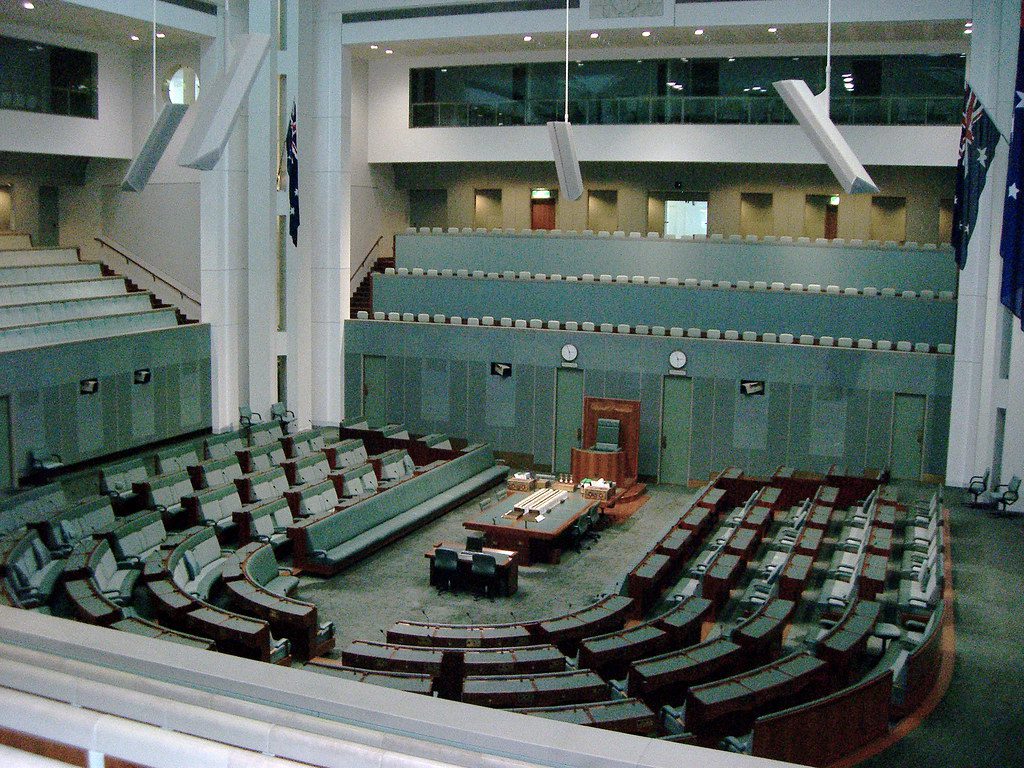
A nation’s type of government indicates how its executive, legislative and judicial levels are organized. There are various constitutional structures of national government throughout the world. The most popular models are the presidential system and the parliamentary system. Both systems are democracies, meaning that citizens have the power to make governmental decisions through their vote. It is critical for citizens to understand the differences between these two systems of government so that they understand the full potential of their votes, as well as their representation. To better understand the parliamentary system versus the presidential system, it’s important to examine how these systems operate within each branch of government.
The Executive Branch
Presidential systems have an executive branch that consists solely of the president. The president is an individual elected by citizens to be head of government and state for a maximum of two terms in office. The President is independent of the legislative branch. Some common responsibilities of the president are to:
- execute and enforce laws of Congress,
- sign the legislation into law,
- veto bills enacted by Congress and
- conduct diplomacy with foreign nations.
In contrast, parliamentary systems have a clear distinction between the head of government and head of state. In this system, the head of government and parliament is the Prime Minister. Rather than participating in a general election, Parliament elects the Prime Minister. Citizens elect the members of Parliament. Additionally, Parliament makes up the legislative branch of government.
The Prime Minister typically has no limit to the time they can stay in office. However, this means that they are dependent on the satisfaction of Parliament, which has the power to remove the Prime Minister from power. This can be accomplished through a no-confidence vote.
Meanwhile, within a parliamentary system, the head of state may be an elected president. But, the head of state is also commonly a hereditary monarch and acts as a figurehead for the nation.
The Legislative Branch
The legislative branch of the parliamentary system versus the presidential system may either be unicameral or bicameral. Unicameral contains one house, whereas two houses make up a bicameral system. A bicameral legislative system consists of a lower house and upper house. The lower house is where most law-making occurs. Many governments opt for a two-house legislative branch to avoid the concentration of power in one body and ensure the federal government is held accountable.
In presidential systems, the legislative branch will write law for a president to ultimately approve. Though the president may suggest laws, it is ultimately the legislative branch that will write them. In contrast, a Prime Minister will write laws along with the legislature and pass them.
The Judicial Branch
Judicial systems across parliamentary system versus the presidential system have a similar structure. Their structures are similar in that they both strive to create a separation of powers between the judiciary branch and other branches of government. However, the exact structure of these systems varies widely across various countries.
Is One Better Than The Other?
Both forms of government are organized in such a way that they both have various strengths. Due to the vote of no-confidence, it is easy to end the term of a Prime Minister within a parliamentary system. Meanwhile, it is much harder to impeach a president. However, Prime Ministers are dependent on the legislature. In contrast, presidents are completely independent of their legislative branches. They are able to make decisions that they believe are best in the nation’s interest without the influence of outside parties.
Despite all the differences between the parliamentary system versus the presidential system, it is ultimately the members of a nation who hold power. By voting, citizens can express their voice and effect change in their respective countries, no matter their system of government.
– Shreya Gaddipati
Photo: Flickr
 The First Amendment gives Americans a handful of freedoms, one of the most important being the freedom of speech. But, with freedom of speech comes a more nuanced and focused right- the right to “petition the Government for a redress of grievances.” In simpler terms, this grants Americans the right to make a complaint to or seek help from their government without fear of repercussion. People often wonder whether calling Congress makes a difference. It has been shown that there is a difference between emailing and calling your representative. It is helpful to understand why it is so important to call Congress.
Why It Is So Important To Call Congress
For starters, calls speak much louder than emails do. It is much more personable to place a phone call as the person must take the time and effort in their busy day to do so. Furthermore, one is more likely to get a response that is not automated, so the call will not get lost in the masses as an email could.
When constituents call their Senators and urge them to co-sponsor a bill or vote in favor of a specific proposal, that request gets tallied. When there are enough tallies to get the attention of the Senator, it is not uncommon for them to vote in the way their constituents had pleaded. If the call is in favor of a more intense partisan issue, there may be a lower success rate for the constituents, but still, their voice is heard and their request is noted.
If enough people call about a similar issue, that has the power to halt the office and bring that issue to the top of an agenda. Demands in such high volumes are impossible to ignore and force a Senator to address them. The power to change the agenda in a congressional office is among the many reasons why it is so important to call Congress.
The Problem with Calling Congress
There is, of course, one major flaw in this system. While there is no cap on the number of emails that can be received at any given time, the same can not be said about phone calls. Even if a congressional staff fielded calls for an entire business day with no breaks and with all-hands-on-deck, they could still only take around 4,000 calls. Because there are so many more constituents than available phone lines, many people can get sent to voicemail. These voicemails are, however, listened to, and if a request for a vote is made over the line, the extra effort and desire to be heard is noted by the staffers and their plea still goes towards the tallies.
With so much on the plates of the leaders in Washington, it can become challenging to remain personable and in touch with the individual needs and desires of constituents. When people call their leaders, it bridges the them-and-us gap. It allows for congressmen and women to connect with their constituents and hear their stories; in turn, it allows them to better advocate for and represent these people and empathize with their concerns. Sharing a personal story and emotionally moving the staffer can have a huge impact, even if it is just one person.
Placing a phone call is somewhat of a lost art, but it still holds so much power. It is a form of communication that simply cannot be ignored, and thus, is far more likely to hold ground and achieve the desired result. While, yes, it is easy to send an email, it takes bravery and effort to place a phone call and explain to the people representing you how it is you would like to be represented. This is the power of a phone call, and it explains why it is so important to call Congress.
– Charlotte M. Kriftcher
Photo: Flickr
 As the current government shutdown stretches into day 21, the effects are starting to show. But, the effects of the current shutdown aren’t just being felt at home. The cuts to funding for the State Department and the U.S. Agency for International Development (USAID) have been felt around the world. Here is the cost of the government shutdown on foreign aid.
Who is Affected By the Shutdown?
The partial shutdown began on December 22 when Congress and the President were unable to come to an agreement on funding for Trump’s border wall. Since then, it has affected multiple federal departments including Agriculture, Homeland Security, Interior, State and USAID. More than 800,000 federal employees have been furloughed or forced to work without pay, and the effects have been far-reaching. National parks have been shut down, airline travel has been strained and immigration courts have been backlogged.
USAID, which was created by President Kennedy in the 1960s, began as a way to lead international development and humanitarian services. Due to the cuts from the shutdown, about half of the agency’s employees have been furloughed, making it hard for the agency to continue operations. Previously funded projects and NGOs will continue to operate, but no new funding will be started or given. Furthermore, interaction and oversight from the department have steeply declined, decreasing the effectiveness of all programs.
Foreign Affairs
U.S. foreign development and affairs are not the only areas being impacted. The State Department has been affected by the shutdown as well. The State Department represents the government in foreign affairs, and many of its 75,000 employees work overseas. Since funding to the State Department has been cut off, most of those employees are not working or are working for no pay, meaning that all foreign relations are “running on fumes.” This is a problem because, without proper funding, the department cannot continue to do the tasks assigned to it, like alleviating tensions in the middle east.
In terms of the world’s poor, the loss of activity at both the USAID and the State Department will have a huge impact. Without any new funding or programs that help struggling nations with water and sanitation, health, education and climate change, the Agency for International Development will not be able to continue its work of providing humanitarian assistance to struggling nations.
The current shutdown, which is tied for the longest shutdown in history, has no end in sight. The continued lack of funding for USAID and the State Department means that the cost of the government shutdown on foreign aid will be huge. Since USAID works in more than 100 countries, the cost of the government shutdown will be felt by millions around the world. Without a fully functioning State Department to conduct diplomacy abroad, the situation will only get worse.
– Peter Zimmerman
Photo: Pixabay

Access to safe water, sanitation and hygiene is a core necessity for human survival that a large portion of the world, especially developing countries, still struggle to meet.
In Nigeria, UNICEF reported that close to 70 million people, out of the total population of 171 million, lacked access to clean water, while 110 million lacked access to sanitation in 2013. The impact of this shortage is dire as 124,000 children under the age of five die because of diarrhea that is mainly caused by unsafe water, bad sanitation and bad hygiene. Moreover, it decreases school enrollment and disproportionately affects girls who bare the responsibility of carrying water. Finding the solution for Nigeria’s water quality is, therefore, a pressing issue that requires all responsible parties to participate.
Obstacles In Meeting Water Quality Standards
Gbenga Ashiru, the producer of Question Time, a Nigerian news program that profiles the activities and accountability portfolio of office holders, discussed the reasons behind Africa’s largest economy reaching a peak in a shortage of potable water. He dissected what he states is the “mystery” behind the Nigerian government’s, led by the Minister of Water Resources, inability to meet water demands. Ashiru highlighted the extreme water shortage and listed the shocking statistics of potable water and sanitation coverage at 7 percent and 29 percent, respectively.
Four months ago, the Nigerian government launched the Nigerian Standard for Drinking Water Quality to revitalize the access to safe drinking water throughout the nation to achieve goal number six of the Sustainable Development Goals. At the launching ceremony, Suleiman Adamu, the Minister of Water Resources, asserted that finding the solution for Nigeria’s water quality issue is the current focus of President Muhammadu Buhari’s administration.
Nigeria’s Water Act
According to UNICEF, Nigeria has indeed taken the steps to improve this pertinent issue through the development of various policies and strategies. However, a deterioration in water quality and access portrayed by a 25 percent drop of pipe borne water supply since 1990, reveals the difficulty of translating the solution to Nigeria’s water quality issues into action.
Nigeria’s Water Act states that the Federal government of Nigeria funds 30 percent, local government funds 10 percent, while state government covers 60 percent of the funding of water projects along with the full responsibility of operation. Suleiman Adamu, in his interview with Ashiru, argues that the Water Act is neither feasible nor effective policy in meeting water and sanitation demands and calls for an amendment of this legislation as well as the gradual privatization of this sector.
Fostering Synergy and Collaboration
Suleiman Adamu holds the state government responsible for not meeting their end of the bargain. He explains that even in cases where the federal government went beyond the 30 percent of the funding and invested in water treatment facilities, the states failed to carry out the operations. He argues that this happens due to state government officials neglecting pressing water demands that require long periods of gestation and focus on short-term projects to show results during re-election. Therefore, the solution for Nigeria’s water quality issues lies in finding the amendment of this policy that has created obstacles for the synergy in the federal, regional and local governments.
Since water projects are a primary responsibility of state government, bringing progress at a national scale requires synergy in state and federal government. The Minister explains that the federal government will work on achieving this collaboration through advocacy and offering supervision rather than simply giving funding without aligned priorities.
–Bilen Kassie
Photo: Flickr

It’s all too true that in most developing or vulnerable countries, local or national governments are tyrannical and corrupt. These governments have a propensity to abuse power, favor the rich and ignore the oppressed. However, by improving governance in the developing world, there is hope that unethical practices will be removed and replaced with unprejudiced laws that will fairly benefit everyone.
Problems Surrounding Corrupt Government
Numerous problems surrounding nefarious practices in underdeveloped countries stem from a lack of morality, discriminatory systems and misuse of power. The World Bank reports that in vulnerable countries, a disparate sharing of authority is a common problem that causes countries to stay in a state of impoverishment rather than move toward more progressive procedures that would allow for quicker growth and sustainability.
Unfortunately, it’s easier for the already-powerful leaders to resist change rather than consider the development of new policies for improving governance to benefit the whole society, regardless of economic class.
Additionally, there are many other factors that contribute to shady practices in the governments of developing countries. One of these practices is patrimonialism, which is defined in the Encyclopedia Britannica as a “political organization in which authority is based primarily on the personal power exercised by a ruler, either directly or indirectly.” This means that too much power can easily be granted to one person or group of persons (oligarchy), rather than having different governmental branches to limit what can and cannot be done.
What Steps Can be Taken Towards Improving Governance?
In a patrimonialistic society, the land or state is “owned” by a leader, granting that person the freedom to do as he, she, or they please. This power structure contributes to the cycle of poverty — wealthy land is distributed to the other wealthy people, allowing those choice few to access the best schools, homes and healthcare; on the other hand, the slums are given to the lower class, eliminating chances to thrive in a fair economy. Ultimately, this system halts economic growth for all the citizens.
The OECD Observer gives two good examples of a patrimonialistic society; the first being Morocco, where admittance to bureaucracy protects access to economic benefits, and the next being in the Philippines, where political sovereignty can be bought and sold.
Citizen-Based Elections
A great way to combat corruption, poverty and improve economic growth is by initializing citizen-based elections. According to USAID, more than half of the world’s populace live under only partly free governments, which limits their civil liberties, causing the inability to freely engage in politics. In democratic elections, the people are granted a voice in choosing who they wish to run their government.
USAID easily lays out the course for democratic elections. The steps include freedom of speech, association and assembly; elections as an essential tool to bolster political openings and cooperation; assembling advocates and describing different political platforms to the public and encouraging political debate.
Education
Another step toward improving governance is creating equal educational opportunities for all people. A large problem in the political sphere of third-world countries is the lack of education that causes many citizens who live in poverty to not fully understand politics; in turn they lack the skills to actively participate in events such as elections or assemblies.
Not only will education improve political understandings, but it will create jobs and give students the skills needed to be seen as valuable by future employers, improving economic growth and sustainability. With higher education comes higher knowledge and realization, skills that permit citizens to see and understand what areas in their countries need change.
Public Policy and Building Democracy
One of the best ways to promote better government is through improving public policy and actively working on building a democracy. In the developing world, the people and citizens are often ignored, and their opinions are thought to be arbitrary and unimportant to those high on the political spectrum.
However, in a democratic society, the people get to vote in elections for issues such as industrial projects and new laws. To help aid in understanding public policy and democracy, The World Bank created the Governance Global Practice, which aims to initiate trust between the government and the people.
Despite all of the concerns facing governments in third-world countries, these nation-states are not hopeless. Many countries work towards improving governance and government practices. In fact, organizations such as The World Bank, USAID and the United Nations provide hope for those searching for a better quality of life, and thereby foster countries to work towards a brighter future.
– Rebecca Lee
Photo: Flickr

Aristotle was the first to define three principal types of government systems in the fourth century B.C. These consisted of monarchy, aristocracy and polity. Since then, many more have been formulated, but the main themes and ideas have remained. Today, the five most common government systems include democracy, republic, monarchy, communism and dictatorship. This list details what to know about each.
Five Types of Government Systems
- Democracy
A democracy can be defined as a government system with supreme power placed in the hands of the people. It can be traced back to as early as the fifth century B.C. In fact, the word democracy is Greek for “people power”. While most use the United States as an example of a democratic government system, the United States actually has what is called a representative democracy. The difference lies in the method of civilian participation. In a direct democracy, every citizen is given an equal say in the government. In a representative democracy, citizens elect representatives who make the law. The difference is significant when put into action. Other examples of democratic states include Aruba, Bulgaria, Canada, Costa Rica and the Dominican Republic. - Republic
In a republic government system, the power also rests with the people, as they are in charge of electing or choosing the country’s leader, instead of the leader being appointed or inheriting power. Broadly defined, a republic is a government system without a monarch. A republic may be governed by a group of nobles, as long as there is not a single monarch. Some examples of countries with a republic government system include Argentina, Bolivia, Czech Republic and France. - Monarchy
In a monarchy, state power is held by a single family that inherits rule from one generation to the next. In a monarchy, an individual from the royal family holds the position of power until they die. Today, the majority of monarchy governments have transitioned to constitutional monarchies, where the monarch is head of state but only performs ceremonial roles and does not have state power. Only a few countries still have systems where the monarch retains control; these include Brunei, Oman, Saudi Arabia and Swaziland. - Communism
A communist government system is usually based on a particular ideology of communism taught by Karl Marx or Vladimir Lenin. A single party or group of people usually runs communist states. In some cases, citizens of a communist state are given certain jobs or life duties in an effort to obtain collective citizenship for the state. Examples of communist states include China, Cuba and Vietnam. - Dictatorship
In a dictatorship, a single person, a dictator, has absolute power over the state. It is not necessarily ruled by a theology or belief. It is an authoritarian form of government where one person is in charge of enforcing and enacting the law. Aspects often include military organizational backing, unfair elections (if any) and various human rights violations. A dictator does not usually inherit their power like a monarch does; they either seize control of the state by force or through (usually unfair) elections. Dictators are not held accountable for their actions and thus are free to do as they please, including limiting citizens’ rights. Burundi, Chad, Equatorial Guinea and North Korea are contemporary examples of countries run by a dictator.
While these types of government systems all vary, they have at least one similarity: the allocation of power. Whether it be the allocation of power to a single person, a group of people, or evenly distributed to everyone, power is the shared theme of all types of government systems.
– Haley Hine
Photo: Flickr

There has been a battle over national governance in Libya ever since the dismantling of the Muammar Gaddafi authoritarian regime in the 2011 Arab Spring. A majority of Libyans are hopeful for a unified democratic governance in Libya; unfortunately, the Fragile State Index has listed Libya in the top 25 most fragile states in the world.
Political History in Libya
Dr. Federica Saini Fasanotti, a fellow at the Brookings Institution, described that “Libya has never been (truly) unified.” In a conversation on October 6, 2017 at the Center for Strategic and International Studies (CSIS) headquarters, Dr. Fasanotti described the historical significance of conflicts and changes of power in relation to rule of law in Libya.
Throughout the history of Libya, the state had many different rulers, contributing to the divided government. Up until 1911, the country was an autonomous territory under the rule of the Ottoman Empire. After 1911, Libya was controlled by the Italians in the western world’s quest for colonies. Then, in 1951, the Allied powers of World War II granted Libya independence, and the state created a federal constitution and monarchy; in 1969, Muammar Gaddafi led a coup d’état of the monarch.
Local, Regional and Strategic Issues
Dr. Fasanotti described the three fundamental issues to democratic governance in Libya. The local issue is the many internal divisions caused by the history of political upheavals and usage of tactics like Gaddafi’s ‘divide and rule’ concept — a tactic where different ethnicities and tribes are pitted against one another. The regional issue is the absence of current leadership to direct the country on the path of democratic governance. The strategic issue is the presence of terrorism, troublesome migration patterns and economic beneficial resources.
Alice Hunt Friend, a Senior Fellow with the International Security Program at the CSIS, stated,“It is very hard to take these complex, contingent situations and hundreds of years of history and translate it into prescriptive policies.”
Civil Society Formation by USAID
The United States Agency for International Development (USAID) supports the project of Libya Elections and Governance Support Program to create effective practices for sub-national governance. The duration of the program is from October 2012 to September 2019.
The goal of creating municipal governments in Libya has served as an attempt to fill the national governance void. In the southern desert city of Sabha, the USAID assisted in the formation of a community center to provide the citizens the opportunity to engage in the decision-making process.
Uniting Communities
The community center attempts to create partnerships between people of different ethnicities and tribes to form ideas out of mutual interest. The additional partnership between local leaders and citizens assists in creating transparency and credibility with the government.
To have local municipalities work together to create a stable national government — like the community center in Sabha — is the goal of the civil society formation by the USAID; local authorities’ soft power has extremely high value.
Democratic governance in Libya has a formulation in municipalities and initiatives at the local level that once implemented, can reach national proportions.
– Andrea Quade
Photo: Flickr
