• Link to X
  • Link to Facebook
  • Link to Instagram
  • Link to TikTok
  • Link to Youtube
  • About
    • About Us
      • President
      • Board of Directors
      • Board of Advisors
      • Financials
      • Our Methodology
      • Success Tracker
      • Contact
  • Act Now
    • 30 Ways to Help
      • Email Congress
      • Call Congress
      • Volunteer
      • Courses & Certificates
      • Be a Donor
    • Internships
      • In-Office Internships
      • Remote Internships
    • Legislation
      • Politics 101
  • The Blog
  • The Podcast
  • Magazine
  • Donate
  • Click to open the search input field Click to open the search input field Search
  • Menu Menu

Archive for category: Global Poverty

Key articles and information on global poverty.

Global Poverty

Bill Clinton Stresses Need for Healthcare Infrastructure

Bill-Clinton-Healthcare-Infrastructurejpg
This week, President Bill Clinton stressed the need for greater investment in healthcare infrastructure throughout the developing world following the Ebola outbreak.

It will be an uphill battle, requiring the combined effort of governments and healthcare organizations.

According to the United Nations Press Centre, Mr. Clinton said he has been repeatedly asked to help build healthcare capability in the developing world.

Investment in healthcare infrastructure is sustainable and effective, the former president said in a keynote address. “They have to have health systems or we’ll be back here four or five years from now – not in these countries but in some other countries,” he said. “It is the most economically sensible thing to do.”

Mr. Clinton was addressing the United Nations Economic and Social Council, where healthcare officials were gathered to discuss the importance of healthcare partnerships around the world.

His comments were echoed by UN Deputy Secretary-General Jan Eliasson, who stated, “One thing is clear: No single entity – no single nation or organization, can solve the problems alone.”

The Ebola outbreak reveals serious shortcomings in healthcare infrastructure in West Africa. Qualified personnel and satisfactory facilities are in short supply; at the height of the epidemic, the disease almost brought systems in Liberia and Sierra Leone to the breaking point.

Shortages in personnel are also severe. According to the BBC and Afri-Dev.Info, Liberia has a population of 4.2 million, but has only 51 doctors. Sierra Leone, with a population of 6 million, has 136 doctors.

Problems are worsened by a lack of adequate facilities: hospitals, treatment centers and clinics. Funding is a constant concern.

Infrastructure can be further strained by civil unrest caused by epidemics. In Monrovia, the capital of Liberia, one man set fire to the Ministry of Health in protest. Al Jazeera reported the man to be allegedly angry over the ministry’s handling of Ebola after he lost a family member to the disease.

With so few resources, an epidemic like Ebola can have a rippling effect on an already fragile system. Doctors may refuse or be unable to treat patients who suffer from diseases with symptoms similar to Ebola.

This leaves a gap which is currently filled by outside emergency relief. Dozens of organizations can be found in areas affected by Ebola. Global health and aid agencies working tirelessly to contain the disease have saved countless lives.

But emergency relief, even when effective, should not mask structural concerns in healthcare systems.

– Kevin McLaughlin

Sources: Al Jazeera, BBC United Nations
Photo: Washington Times


June 5, 2015
https://borgenproject.org/wp-content/uploads/borgen-project-logo.svg 0 0 Borgen Project https://borgenproject.org/wp-content/uploads/borgen-project-logo.svg Borgen Project2015-06-05 10:06:092024-06-11 02:48:05Bill Clinton Stresses Need for Healthcare Infrastructure
Global Poverty

Myanmar Launches Vaccination Campaign

vaccination_campaign
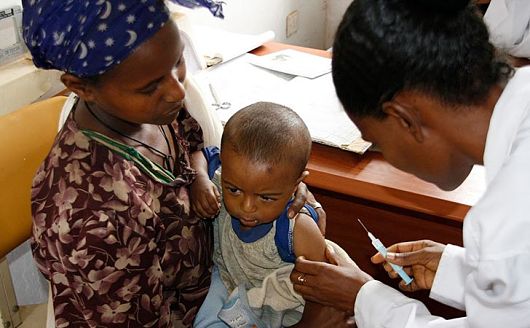
In January 2015, the Myanmar government launched the first stage of the largest national campaign to eradicate and control Measles and Rubella by the year 2020.

The second stage took place in February 2015. Initially, these beginning stages were concentrated on Measles, but from May 2015 onward, the national campaign will offer the Measles and Rubella vaccine jointly.

The campaign is supported by the WHO, GAVI, American Red Cross, the U.N. Foundation, the U.S. Centers for Disease Control and Prevention and UNICEF. The goal is to reach 94 percent of the population through vaccination teams of 12,000 health care professionals. The aim is to reach 17 million children between nine months and 15 years in 65,000 villages and 45,000 schools.

Myanmar has remained committed to vaccinating its population against fatal and debilitating diseases. In 2013, a polio immunization campaign was launched and 370,00 children under five years were vaccinated using the oral drops method. In early 2014, Myanmar, along with many other states in Southeast Asia, was declared polio-free.

Health care is reported to be expensive, of a poor quality and has difficulty in providing attentive care toward patients in Myanmar.

This vaccination campaign is also incredibly important because the population has been neglected in terms of health care due to the ongoing conflict and political issues. There are 587,000 internally displaced persons. There are 800,000 living in the western state, Rakhine state, who are stateless and 140,000 who have fled from their homes. Nevertheless, this campaign is attempting to reach those living in Rakhine state, which has been in an increasingly violent conflict-ridden state since 2012 as there are numerous clashes between Muslims and Buddhists. The vaccination campaign aims to reach populations in this region at a higher rate to match the national level.

While there are political hurdles to achieving an overall better health care system, the coordination of efforts between the state, local and international bodies in regard to vaccination is successful. This vaccination campaign is a major stride for Myanmar investing in the betterment of its people.

– Courteney Leinonen

Sources: Global Polio Eradication Initiative, Reliefweb, WHO, BBC, Salon
Photo: Measles & Rubella Initiative

June 4, 2015
https://borgenproject.org/wp-content/uploads/borgen-project-logo.svg 0 0 Borgen Project https://borgenproject.org/wp-content/uploads/borgen-project-logo.svg Borgen Project2015-06-04 08:00:322020-07-17 20:42:15Myanmar Launches Vaccination Campaign
Global Poverty

Poverty in Sudan

Poverty in Sudan
Poverty in Sudan is widespread and varies according to region, with ducxisting conflicts as well as economic and social inequalities contributing to the large number of impoverished people. Inequality in education and limited access to health care, clean water, sanitation, resources and income has also impacted poverty in the country, especially in North Sudan.

Although Sudan still ranks among the poorest countries in the world, it has also seen great economic progress. Since 1990, Sudan’s extreme poverty rate declined from 85 percent to 46 percent and continues to be on the decline today, according to the results from the Millennium Development Goals.

The reality, however, is that one out of two people living in Sudan is impacted by poverty; meaning, he or she does not have the means to buy food or the ability to properly care for him or herself. Results from the MDGs reveal that an estimated 15 million people all over Sudan are considered poor.


Causes of Poverty in Sudan


Currently in North Sudan, an estimated 44.8 percent of the population lives beneath poverty lines, with poverty rates higher in rural areas (55 percent) than in urban areas (28 percent). High unemployment rates (17 percent) as well as low employment opportunities contribute to the economic disparity found in many regions of Sudan.

Additionally, the expanding population along with climate change have affected the agricultural sector, which in turn impacts food security and the livelihoods of people living in Sudan. For rural populations, unreliable rainfall, low productivity and small landholdings are major contributors to poverty in the area. These factors have also impacted malnutrition and children who are underweight. One third or 32 percent of children who are under the age of five is underweight as a result of chronic malnutrition.

Areas that are considered to be most vulnerable to poverty are regions that have been affected by isolation. A large majority of settlements in Sudan exist far away from main urban cities and have limited access to social services. Additionally, isolated territories are harder to track in terms of poverty and progress. The amount of people living in poverty in isolated regions is not completely known and is difficult to estimate as well.

However, what is known, is that there is a substantial amount of people living in those territories that suffer from hunger and disease. The poorest areas that are largely impacted by isolation include Southern Sudan, Southern Darfur, White Nile and Blue Nile.

Although there are many factors contributing to poverty in Sudan, internal conflicts are further fueling the volatile state of the region. Sudan has had over 20 years of internal conflict that cost an estimated 1.5 million people their lives and devastated the population as a whole. The civil conflict emerged from social and political inequalities and a neglect of the rural regions. Unfair distribution of land and land reforms, as well as misguided resources for urban and rural developments, have caused conflicts in the country. Despite signing a peace treaty a few years ago, the country is still suffering from the devastation the conflict caused to its citizens.

However, overall, poverty in Sudan has been on the mend as reforms and aid targeted through the MDGs have helped improve poverty rates in the region.

– Nada Sewidan

Sources: World Bank 1, World Bank 2, UNDP, Rural Poverty Portal
Photo: Penn State

June 3, 2015
https://borgenproject.org/wp-content/uploads/borgen-project-logo.svg 0 0 Borgen Project https://borgenproject.org/wp-content/uploads/borgen-project-logo.svg Borgen Project2015-06-03 08:00:112024-06-11 02:37:58Poverty in Sudan
Global Poverty

Organ Trafficking and the Poor

organ_trafficking
The organ trade is the trade of human organs; in particular, the heart, liver and kidneys, all of which are the most commonly used organs for transplants. Selling organs is illegal in almost every country; yet, organ trafficking is thriving in the global market and occurs all over the world. The continuing demand for organs fuels the need for more supply, and people in need of organ transplants are taking advantage of the poor who are selling their organs.

Organ brokers interested in trafficking organs find communities where individuals have little to no opportunity to escape from poverty. They strategically approach individuals that appear relatively healthy who are willing to sell their kidneys, lungs or livers for money. Despite the risk of infection, a lack of qualified medical staff executing the organ extraction and a lack of follow-up treatment, poverty-stricken individuals sell their organs for as little as $60. Often, there are waiting lists of sellers willing and ready to sell their organs.

For those living in extreme poverty, economic opportunities are scarce and they are at the mercy of several disadvantages, such as little to no access to health care, education and other important services. The poorest individuals in communities are often marginalized from society and have little to no representation or voice. These factors make it even harder to escape poverty.

Organ trafficking statistics indicate that organ trafficking is on the rise globally, in tandem with the number of transplant surgeries.

In the United States, 4,000 people who need kidney transplants die each year. As of 2013, 121,272 Americans waited for an organ. It is estimated that 28,954 people received an organ and 14,257 others donated organs. Based upon these factors, unless some of these donors had given up two or more organs, half of the recipients must have obtained their organs illegally. Low rates of donation present limited options other than the black market. Research indicates that people who go overseas for organ transplants have an increased risk of injury, organ failure and death.

Over 114,000 organ transplants are done annually in over 100 countries. Due to the economic exploitation of global poverty, organ trafficking continues to exist. Nations must work together to find an end to organ trafficking.

– Erika Wright

Sources: Global Issues, PBS, UN.Gift
Photo: Flickr

June 3, 2015
https://borgenproject.org/wp-content/uploads/borgen-project-logo.svg 0 0 Borgen Project https://borgenproject.org/wp-content/uploads/borgen-project-logo.svg Borgen Project2015-06-03 04:00:562024-06-05 02:51:43Organ Trafficking and the Poor
Global Poverty

The Fight for Vaccination

vaccination
In some of the most rural areas of the world, people suffer from preventable diseases due to exposer to unsanitary drinking water and poor living conditions. While organizations continue the fight to bring clean water and food to these areas, it is also important that rural populations have access to vaccinations to help them combat these diseases. According to UNICEF, immunizations have the potential to save up to three million children yearly. However, there has been a decline in the progress of maintaining the spread of vaccinations.

The World Health Organization (WHO) is working to improve the distribution of immunizations in developing countries. According to the WHO, all of the 194 member states belonging to the WHO endorsed the Global Vaccine Action Plan (GVAP) in 2012. Moreover, member states have set goals to eliminate six diseases by the end of 2015. Although there continues to be a gap with one in five children missing vaccines, WHO hopes to see a world free of preventable diseases by 2020.

The goal to spread vaccination around the world by 2020 is also known as the Decade of Vaccines– implemented in 2011 and already eliciting substantial progress. The Gates Foundation has invested in vaccines and immunizations to help achieve the goals of the Decade of Vaccines. The Foundation understands the restrictions that keep vaccinations from people in rural areas, especially since some vaccines need refrigeration which is lacking in these places.  The Gates Foundation  continues to “support the innovation needed to develop new vaccines and new delivery technologies and approaches.”

The Center of Disease Control (CDC) also continues to take action against vaccine-preventable diseases, disability and death. It is important “to protect the health of Americans and global citizens by preventing disease, disability, and death through immunization,” says the CDC, as stated in their Global Immunization Strategic Framework for 2011-2015. Organizations like these provide hope that the world will some day be free of preventable diseases. Although there are many places that continue to be hard to reach, the fight to vaccinate the world by 2020 continues in full force.

– Kimberly Quitzon

Sources: UNICEF, WHO, The Gates Foundation, CDC
Photo: Flickr

June 2, 2015
https://borgenproject.org/wp-content/uploads/borgen-project-logo.svg 0 0 Borgen Project https://borgenproject.org/wp-content/uploads/borgen-project-logo.svg Borgen Project2015-06-02 04:00:432024-12-13 17:51:24The Fight for Vaccination
Global Poverty, Malnourishment

Malnutrition in Guinea

guinea
The small west-African nation of Guinea has one of the lowest life expectancies in the world – just 39 for men and 42 for women. Political instability, ethnic violence and natural disasters all contribute to about 28 percent of the Guinean population’s status as food insecure, according to a 2012 study by the World Food Programme (WFP).

One of the nations affected by the deadly Ebola crisis of late last year, the Center for Disease Control reports that nearly 2,500 Guineans died as a result of the disease.

However, there is a quieter killer claiming countless more lives than were lost in the Ebola epidemic: malnutrition. A supremely young nation wherein 2 of 5 residents are below the age of 15, an estimated 212,569 Guinean children died last year as a result of malnutrition, the WFP found.

UNICEF found that 16 percent of children under the age of 5 were malnourished in 2012, the same year a cholera outbreak seized the Guinean community, infecting 2,000 and killing an estimated 82.

Malnutrition and disease are closely linked, with the U.N.’s Standing Committee on Nutrition asserting malnutrition to be the largest contributor to disease and disability worldwide.

Both HIV and tuberculosis continue to be the leading public health concerns in the region, and given their interconnectivity with malnutrition, especially in the case that the mother is infected and risks transmitting the disease to their children, the U.N. targets this population specifically through specialized parameters included in their Guinea nutrition programme.

The WHO believes malnutrition to be responsible for one-third of of all child deaths, however, it is rarely listed as a cause of death in itself. Inadequate nutrition can weaken the immune system to the point where it’s unable to fight of disease. Consequently, malnutrition plays a role in countless preventable deaths across the globe.

This is why the WFP in 2014 provided 2,400 people with AIDS and TB treatment, while also establishing 141 nutrition centers across country, where Guineans can receive specialized fortified foods called Supercereals, with sugar and enriched vegetable oil.

– Amanda Burke

Sources: WFP 1, CDC, WFP 2, Action Against Hunger, Reliefweb
Photo: Flickr

June 1, 2015
https://borgenproject.org/wp-content/uploads/borgen-project-logo.svg 0 0 Borgen Project https://borgenproject.org/wp-content/uploads/borgen-project-logo.svg Borgen Project2015-06-01 16:00:162024-05-27 09:24:01Malnutrition in Guinea
Global Poverty

Maternal Mortality in Sierra Leone

maternal_mortality
Sierra Leone, a small country on the West African coast, gained independence from Britain in 1961. Ranked as the least developed country in the world in 2007, poverty and maternal mortality are some of the main problems that Sierra Leone faces today.

As of 2010, Sierra Leone had a maternal mortality rate (MMR) of 857 per 100,000 live births, making it one of the most dangerous countries in the world for women to give birth. This high maternal mortality rate was mainly due to hemorrhages, a cause of 26 percent of maternal deaths in sub-Saharan Africa. Since Sierra Leone only collects annually one-forth of the blood it needs for transfusions, hemorrhages are a major danger during childbirth. Other contributors to the high MMR are obstructed labor, anemia and toxemia during pregnancy.

Approximately 73 percent of births in Sierra Leone occur in rural areas, where access to health care during pregnancy is normally limited and maternal healthcare does not have as many beneficial outcomes compared to healthcare in urban areas. Many women who need cesarean sections do not receive them, due to the fact that even if a birth attendant is present, many birth attendants are actually aides who do not have the qualifications to perform a cesarean section or to do other tasks that are necessary to help the mothers survive.

Maternal mortality is also prevalent because of a lack of sanitation. Traditional practices also play a cause, since many communities choose home-births instead of modern health care facilities.

Another cause of maternal mortality in Sierra Leone is the high rate of adolescent marriages. Forty-four percent of girls in Sierra Leone marry before they reach the age of 18. Adolescents are more likely to suffer during pregnancy and childbirth, as their bodies are normally not developed enough to carry a baby and deliver safely.

Contraceptive use is also not widespread in Sierra Leone, contributing to Sierra Leone’s high MMR. Only about 7 percent of women use contraceptives, leading to a high fertility rate of 5 children per woman. This contributes to more children and more pregnancy related complications.

In 2010, in order to reduce the MMR and the high rate of children’s deaths in Sierra Leone—almost one-third of children died before they reached their fifth birthday as of 2007—the government of Sierra Leone implemented a policy that would provide free healthcare for pregnant and lactating women and for children under the age of five. This policy led to increased amounts of antenatal care visits immediately after it was introduced, but antenatal care visits decreased once again a few months later, and the policy was not as impactful as hoped.

Therefore, despite the 2010 healthcare act, Sierra Leone is still facing high rates of maternal mortality and a high rate of deaths among children under 5. However, there is hope. Thanks to a now thriving mining industry and a GDP that is growing, Sierra Leone’s economy is looking up. Hopefully, these economic benefits can be invested in the healthcare industry and can help contribute to the supplies and care that pregnant women and their children need.

– Ashrita Rau

Sources: The Borgen Project 1, The Borgen Project 2, Amnesty International, UNFPA, WHO 1, WHO 2, The Guardian, ICRW
Photo: Flickr

June 1, 2015
https://borgenproject.org/wp-content/uploads/borgen-project-logo.svg 0 0 Borgen Project https://borgenproject.org/wp-content/uploads/borgen-project-logo.svg Borgen Project2015-06-01 12:00:432024-12-13 17:51:24Maternal Mortality in Sierra Leone
Global Poverty

Internet.org and the Global Internet Dream

Internet.org-Facebook
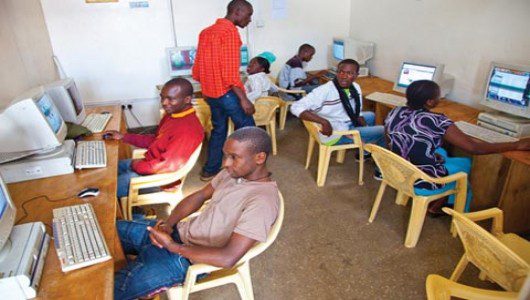
The promise of the Internet to promote gender equality, health and education in the developing world can be seen as the global internet dream. For the two-thirds of the planet lacking internet access, making this dream a reality is a major challenge moving forward.

Facebook’s internet.org platform has been seen as having the potential to better promote this dream. And though the problem certainly has the potential to greatly improve conditions of connectivity worldwide, a lack of attention to net neutrality and privacy separates that potential from progress and puts users of the platform in danger.

A letter posted to Facebook on May 18 by advocacy group Access Now, and signed by a variety of organizations, criticized the issues and the groups demands.

On issues of net neutrality, the platform has been criticized for the practice of zero-rating, defined in the letter as “the practice by service providers of offering their customers a specific set of services or applications that are free to use without a data plan, or that do not count against existing data caps.”

Zero-rating is an inherent aspect of internet.org’s model. Under this model, certain sites are free after being reviewed by guidelines. Other sites face potentially being routed through internet.org’s proxy server. The server also strips sites of content which violates data use guidelines, which ranges from videos greater than one MB in size to pervasive modern design features such as Javascript.

Along with assisting the platform in zero-rating content creators, the proxy server makes the surveillance and censorship of the platform easier. In an article titled, “Internet.org is Not Neutral, Not Secure, and Not the Internet,” the Electronic Frontier Foundation points out that HTTPS encryption on sites which run through the proxy server is only possible on the Android version of the service. Though this certainly provides protection to some users, the majority of those that could benefit from using internet.org have basic feature phones, on which Android software is not usable. The May 4 update to the program also prohibits TLS and SSL encryption, according to the letter posted by Access Now.

As a result, oppressive governments will be able to pressure Facebook to provide information about individual users, block web pages and even block users. This lack of security assigns a responsibility to Facebook which endangers users, the letter alleges.

Facebook responded to these concerns in an article titled, “Internet.org: Myths and Facts,” though the response has been seen as inadequate by critics of the platform, with issues of encryption and net neutrality remaining key points of criticism.

The promise of the global internet dream is Facebook’s vision in the creation of internet.org. And though the service currently has the potential to make that dream a reality, greater steps must be taken by all parties involved for the two-thirds of the population for whom that dream matters most.

– Andrew Michaels

Sources: Facebook, Access Now Electronic Frontier Foundation, Internet.Org,, Hindustan Times, SiliconBeat
Photo: TNW News

June 1, 2015
https://borgenproject.org/wp-content/uploads/borgen-project-logo.svg 0 0 Borgen Project https://borgenproject.org/wp-content/uploads/borgen-project-logo.svg Borgen Project2015-06-01 08:00:262024-12-13 17:51:24Internet.org and the Global Internet Dream
Global Poverty

Brothels Bred from the Broke

brothels
In many parts of the world, including the United States, brothels exist. They have astounding symmetry in areas with high rates of  poverty and gender inequality. Workers receive little to no pay. Often former victims of human trafficking and prostitution become brothel owners. Women make up the majority of owners. The end of the road for women and children who have been trafficked for commercial sex purposes is usually a club or brothel.
​
Sadly, what many do not realize is that the women found in brothels are often not forced, but only do so as a result of economic desperation. However, some of the younger victims are held captive, sold by their families or born into the brothel.

Born into the Brothel refers to children of brothel workers, whose other female family members have been brothel workers. These children grow up living in the brothel. Recruitment for brothels is often easy due to the extreme poverty and vast need for economic resources. Essentially, brothels target low income areas as a primary source for recruitment.

Brothels generally avoid areas with a high concentration of NGOs and law enforcement. Therefore, rural areas absent of NGOs are now being targeted by brothels. In these areas, there is a lack of law enforcement involvement and organizations to empower women. The recruitment efforts are based on the use of economic exploitation.

Recruitment is often done by elderly women who are either former brothel workers or came from impoverished communities. Now, having obtained their own brothels, they exploit their own past experience of economic need. These women send older prostitutes back to their own villages or villages known to be poor to recruit new staff for their establishment.

Recruiters have direct and personal knowledge of an area, and know exactly which families to target. They are aware of who is struggling the most, which families have too many daughters and which families have had the death of a parent or a marital breakdown.

According to reports from UNICEF of the women that end up in brothels in Asian countries such as Nepal, 86 percent did not know that they were going to become apart of the sex market when they left home. Furthermore, of those victims, 82 percent were promised jobs that did not include working at a brothel in prostitution. Families that covet advanced earnings due to economic need, willingly send their daughters. In regions such as Southeast Asia, husbands are permitted to sell their wives to brothels legally. Rural areas have become breeding grounds for girls who become forced into the sex industry. The supply is continuous due to the cycle of poverty in these regions.

– Erika Wright

Sources: Hist-Chron, UNICEF
Photo: Flickr

June 1, 2015
https://borgenproject.org/wp-content/uploads/borgen-project-logo.svg 0 0 Borgen Project https://borgenproject.org/wp-content/uploads/borgen-project-logo.svg Borgen Project2015-06-01 04:00:352024-05-27 09:23:58Brothels Bred from the Broke
Global Poverty

4 Global Poverty Facts to Share

Global-Poverty-Facts
Most people are aware of the existence of poverty on the global level. Many frequently receive flyers in the mail or run into something on the Internet asking to donate to the cause. However, many people are unaware of how concentrated and gendered poverty is and exactly how much money it would take to tackle worldwide poverty. Here are four facts on global poverty to help expand your understanding.

1. Sixty-five Percent of the World’s Hungry Are Located in Seven Countries

Most of the hungry people in the world can be found in India, China, the Democratic Republic of the Congo, Ethiopia, Pakistan, Indonesia and Bangladesh. Because of the concentration of these people, those born in these countries are at a greater risk of living in deplorable conditions. The poor economic opportunities and limited availability of education in these countries perpetuates the cycle of poverty; thus, expanding and continuing hunger, malnutrition and vulnerability to natural disasters.

2. Global Poverty has a Different Affect on Women

Sixty percent of the hungry people in the world are women. Like men, poverty forces impoverished women to be at risk of starvation, malnutrition and poor health. However, unlike men, poverty makes it harder for women to have access to education and contraceptives. Because of the lack of gender equality in many of these countries, poverty disproportionately affects women. Women have even less access to education than men and they often times do not have the opportunity to utilize contraceptives because of the lack of availability and the cost. The minimal access to contraceptives puts women at a greater risk of dying during childbirth. The lack of gender equality also makes it harder for women to utilize education to exit the cycle of poverty.

3. Global Poverty Can End with the Help of 100 People

Often times, poverty seems like a hard giant to tackle because of the seemingly massive price tag. However, if one hundred of the world’s richest people contributed some of their net worth, poverty could be eliminated “four-times over.” This option is not particularly favorable among many because it seems to put unwanted pressure on people who seem to have no obligation to help those they have not met. However, there is another alternative that would alleviate pressure on the world’s wealthiest people.

4. $30 Billion per year From the U.S. Government Would Eradicate Global Hunger

One of the biggest resources is a national government. Many have estimated that $30 billion a year could end global poverty. This may seem like a lot of money to the casual onlooker, but when taking into consideration that $530 billion was committed to the U.S. military in the 2010 national budget, it is a doable amount. Through the reallocation of money into the foreign aid budget, the U.S. could be the biggest contributor to eliminating global poverty.

– Erin Logan

Sources: U.N. Millennium Project, Poverties.org, The Hunger Project, The Borgen Project, Oxfam, FAO, UNDP
Photo: Huffington Post

May 31, 2015
https://borgenproject.org/wp-content/uploads/borgen-project-logo.svg 0 0 Borgen Project https://borgenproject.org/wp-content/uploads/borgen-project-logo.svg Borgen Project2015-05-31 16:00:442024-05-27 09:24:004 Global Poverty Facts to Share
Page 1940 of 2162«‹19381939194019411942›»

Get Smarter

  • Global Poverty 101
  • Global Poverty… The Good News
  • Global Poverty & U.S. Jobs
  • Global Poverty and National Security
  • Innovative Solutions to Poverty
  • Global Poverty & Aid FAQ’s
Search Search

Take Action

  • Call Congress
  • Email Congress
  • Donate
  • 30 Ways to Help
  • Volunteer Ops
  • Internships
  • Courses & Certificates
  • The Podcast
Borgen Project

“The Borgen Project is an incredible nonprofit organization that is addressing poverty and hunger and working towards ending them.”

-The Huffington Post

Inside The Borgen Project

  • Contact
  • About
  • Financials
  • President
  • Board of Directors
  • Board of Advisors

International Links

  • UK Email Parliament
  • UK Donate
  • Canada Email Parliament

Get Smarter

  • Global Poverty 101
  • Global Poverty… The Good News
  • Global Poverty & U.S. Jobs
  • Global Poverty and National Security
  • Innovative Solutions to Poverty
  • Global Poverty & Aid FAQ’s

Ways to Help

  • Call Congress
  • Email Congress
  • Donate
  • 30 Ways to Help
  • Volunteer Ops
  • Internships
  • Courses & Certificates
  • The Podcast
Scroll to top Scroll to top Scroll to top