• Link to X
  • Link to Facebook
  • Link to Instagram
  • Link to TikTok
  • Link to Youtube
  • About
    • About Us
      • President
      • Board of Directors
      • Board of Advisors
      • Financials
      • Our Methodology
      • Success Tracker
      • Contact
  • Act Now
    • 30 Ways to Help
      • Email Congress
      • Call Congress
      • Volunteer
      • Courses & Certificates
      • Be a Donor
    • Internships
      • In-Office Internships
      • Remote Internships
    • Legislation
      • Politics 101
  • The Blog
  • The Podcast
  • Magazine
  • Donate
  • Click to open the search input field Click to open the search input field Search
  • Menu Menu

Archive for category: Global Poverty

Key articles and information on global poverty.

Global Poverty

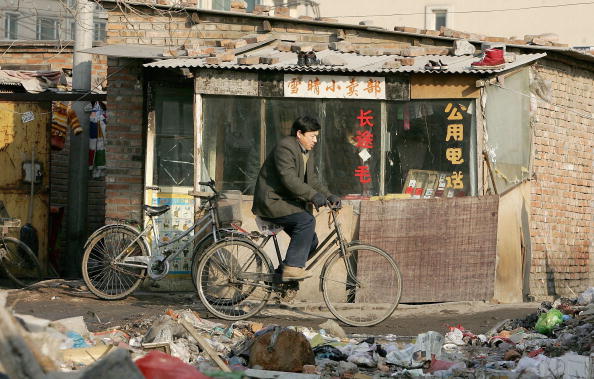
Poverty in Tianjin, China

Poverty_in_Tianjin_China
Located in northern China, Tianjin is one of four cities controlled directly by the Chinese central government. Tianjin has a population exceeding 10 million and is one of the larger Chinese cities.

Tianjin is at the moment known to be one of the best places to be in China. The level of income is around $10,000, on par with Shanghai and Beijing. Tianjin was one of the fastest growing cities by GDP in 2013. With a growth rate of 12.5% in 2013, it was experiencing a growth spurt. Things are looking up in Tianjin. Or is there another side to the seemingly perfect picture?

Cities such as Tianjin and Beijing serve as examples of the high wealth inequality in the nation. Although Beijing and Tianjin are doing well, with numbers that show good signs ahead, the agricultural surroundings paint a very different picture.

Poverty in Tianjin does exists. The outskirts of Tianjin are filled with agricultural workers whose incomes and levels of poverty are high. Although the poverty cannot be compared with other regions of the world, there is still poverty relative to the rest of the country’s average income. This wealth gap is indicative of many of the Chinese government’s preoccupations in recent history.

Tianjin’s numbers may look nice on paper, but the surrounding poverty can be understood when looking at the housing market in Tianjin. Huge amounts of investment are being poured into Tianjin to form a new financial district that is supposed to look like Manhattan – only bigger and better. The problem begins with the lack of people. The newly built infrastructure and buildings are barely touched and are mostly unused. In fact, the lack of demand is so bad that the developers have begun selling new buildings at a loss simply to leave the market entirely.

The lack of demand in the real estate market in Tianjin is perhaps related to the poverty seen right outside the city limits. The high levels of wealth inequality and the growing poverty issues outside of Tianjin’s immediate area are beginning to drag down the seemingly picture perfect economic state of Tianjin.

Suddenly the incredible growth figures look less believable. Though Tianjin has a strategic location by the ocean and is given direct attention from the central government, the city cannot escape the simple economic truths that exist in reality. Once this house of card begins to fall, the situation of poverty in and around Tianjin will become much less easy to overlook.

— Martin Yim

Sources: Tianjin Municipal People’s Government, BBC China.org.cn The Economist Marketplace
Photo: Flickr

June 15, 2015
https://borgenproject.org/wp-content/uploads/borgen-project-logo.svg 0 0 Borgen Project https://borgenproject.org/wp-content/uploads/borgen-project-logo.svg Borgen Project2015-06-15 08:12:512020-07-15 23:48:38Poverty in Tianjin, China
Children, Disease, Global Health, Global Poverty

Children in Yemen at Risk for Epidemic

Children-in-Yemen-at-risk-for-Epidemic
With the outbreak of conflict in Yemen, health centers have to shut down. Forces continue to attack hospitals and health care centers. There are medical shortages as the conflict hinders the delivery of medical supplies. As a result, children cannot receive the crucial vaccines and treatments they need to fight communicable diseases.

Vaccines save 2.5 million children worldwide from preventable diseases. Without basic vaccines, about 1.5 million children die. There are already cases of Measles reported in Yemen. Doctors are worried about reports of other diseases like Polio. If children in Yemen continue to not receive the vaccines, then these two diseases could continue to spread.

Parents are hesitant to take their children to health care centers to get the vaccines because the centers continue to be targets for attack, and because just getting there is dangerous. That leaves the health workers going into the field to vaccinate children. This can make it difficult to properly track how much of the child population has been vaccinated.

Another often overlooked aspect of vaccinating children is the protection of the vaccines themselves. Doctors have to make sure that vaccine centers maintain a supply of the vaccines needed. However, the conflict can make it difficult for WHO officials to deliver the medical supplies to the vaccine centers. Fuel shortages also cause problems, as there needs to be enough to ensure that the vaccines have the proper cold chain needed.

Issues like this can limit the number of children that can be reached and vaccinated. If supplies cannot be replenished or maintained, then it becomes difficult to keep children safe from diseases.

Contributing to the issue is food insecurity. Before the civil war, Yemen was already importing most of its food. Now, with conflict preventing food from being delivered, Yemen is struggling to feed its people. Without the nutrients to stay healthy and prevent malnutrition, the children’s immune systems are at a higher risk for contracting diseases.

Diseases could spread rapidly, as children in Yemen do not have access to enough food and clean water, people live in close proximity in refuge areas, and there is limited health access. The WHO workers try to combat the spread with consistent monitoring of medical supplies and going out and finding those who need the vaccines.

– Katherine Hewitt

Sources: Bill & Melinda Gates Foundation, UN News Centre, World Health Organization,
Photo: Twitter

June 15, 2015
https://borgenproject.org/wp-content/uploads/borgen-project-logo.svg 0 0 Borgen Project https://borgenproject.org/wp-content/uploads/borgen-project-logo.svg Borgen Project2015-06-15 08:11:152024-06-11 02:48:06Children in Yemen at Risk for Epidemic
Charity, Global Poverty

What are Charitable Contributions?

what-are-Charitable-Contributions

We all know that giving to charity is both personally satisfying, in that it allows us to give to the causes we support, as well as financially satisfying, when we fill out our taxes and collect on deductions.

And that’s great, but what is a charitable contribution?

According to the IRS, “a charitable contribution is a donation or gift to, or for the use of, a qualified organization. It is voluntary and is made without getting, or expecting to get, anything of equal value.”

The IRS states that “qualified organizations include nonprofit groups that are religious, charitable, educational, scientific, or literary in purpose, or that work to prevent cruelty to children or animals.” Qualified organizations have 501(c)3 status. Whether or not an individual organization is qualified can be found using the IRS Exempt Organizations Select Check tool.

Charitable contributions are not tax deductible for certain organizations. For instance, donations to sports clubs and chambers of commerce are not deductible. Neither are donations to political candidates or labor unions.

Though many people think of charitable contributions as simply consisting of cash, contributions are far from limited to money. Items such as clothing, jewelry and cars are tax deductible to varying degrees when donated. It is important to note that not all noncash contributions are accepted as tax deductible. For instance, service costs cannot be deducted, and blood donated to a blood bank or blood drive cannot be donated for monetary value.

Volunteer work is not deductible. However, costs directly resulting from volunteer work are deductible. For instance, the cost of gasoline used while travelling to and from volunteer work can be deducted.

There is a variety of paperwork which must be filled out in the process of claiming a deduction from a charitable donation. This paperwork depends on the size and nature of the donation. For example, to receive a deduction on any donation of $250 or more, cash or noncash, a receipt is required. Any noncash donation worth $500 or more means filling out IRS form 8383.

The most important thing about charitable contributions, however, won’t be found in tax codes or deductions. It will be found in the satisfying reward of giving time, money, possessions and effort to fight for a cause that you believe in. That’s something to which no monetary value can be assigned.

– Andrew Michaels

Sources: TurboTax Blog, IRS, IRS,
Photo: Business 2 Community

June 15, 2015
https://borgenproject.org/wp-content/uploads/borgen-project-logo.svg 0 0 Borgen Project https://borgenproject.org/wp-content/uploads/borgen-project-logo.svg Borgen Project2015-06-15 08:09:222024-12-13 17:51:28What are Charitable Contributions?
Global Poverty

Ureport Continues to Gather Vital Information on Uganda’s Poor

Ureport-gathers-information-on-Uganda's-poor
Aid organizations, such as UNICEF and others, know the role technology has in poverty alleviation, and the mobile app, Ureport, is helping to link them to developing Ugandan communities. Ureport obtains data and statistics on Uganda to determine current needs and public opinion on aid issues. With the help of Ureport information, development groups have been working to respond more effectively to crises within developing countries by identifying specific regions that must be met with aid.

Using SMS notifications, Ureport asks its members to respond to poll questions so that UNICEF may be informed of communities with specific needs to be addressed. With almost 300,000 users, Ureport is able to send critical notifications to its aid partners on everyday situations of poverty and hunger. Its most recent poll question asked whether those who use wells, boreholes or community taps were able to access water on a given day. The results showed that just over half were able to access water while more than a third could not. The remainder of participants did not answer. Upon answering questions, users are also asked to name their respective communities, so that Ureport knows where to aid efforts must be targeted.

Ureport also poses questions about areas of conflict, starvation, disaster and which group communities expect to respond to these crises. From the data gathered, aid groups are not only able to recognize specific areas to assist, but they can also judge the general sentiment in Uganda towards topics such as expectations for aid.

One of Ureport’s successes involved its gathering of information on the 2013 spread of Banana Bacterial Wilt, or BBW, throughout Uganda. As a country that relies heavily on its banana crop, Uganda faced a major threat to the livelihoods of its people and farmers. BBW has the potential to cause complete crop loss for farmers, and in the past, certain farms have shown staggering crop failure of 90 percent. Ureport’s initial poll asked users whether they knew any farmers whose crops had been infected with BBW, then all users were sent quick facts on the state of the infection, and additional information on how to stop the spread of BBW was provided to those who requested it.

Ureport also receives information and breaks it down into easily understood visuals, such as a color-coded map featured on their website showing which areas of Uganda are threatened by various crises. On the map, the two largest issues are currently education, and health and nutrition. The site and the app work to promote awareness of the most severe situations throughout Uganda while also helping to ‘shorten’ the distance between us and poverty-stricken people who may sometimes live in more remote areas of the world.

Joining Ureport is about as easy as answering one of their survey questions. All users need to do is text “JOIN” to 8500 and they will then become a “U-reporter” for free. Not only are users helping to empower their community by being more vocal advocates for aid, but they are also providing valuable data on everyday situations in their region so that they may be more effectively addressed.

– Amy Russo

Sources: The World Bank, Ureport, The World Bank,
Photo: Uganda, East Africa

June 15, 2015
https://borgenproject.org/wp-content/uploads/borgen-project-logo.svg 0 0 Borgen Project https://borgenproject.org/wp-content/uploads/borgen-project-logo.svg Borgen Project2015-06-15 08:05:252024-05-27 09:24:14Ureport Continues to Gather Vital Information on Uganda’s Poor
Global Poverty

Poverty in Abidjan, Côte d’Ivoire

poverty in abidjanUntil the 1990s, Côte d’Ivoire was West Africa’s most stable and prosperous country. Its capital, Abidjan, offered opportunity to domestic migrants and refuge to immigrants from Côte d’Ivoire’s war-torn neighbors. But even before Côte d’Ivoire descended into chaos in 1999, the Ivorian capital saw poverty spike as the economy began to falter. In the turbulent years since 1999, Abidjan has seen its poor population placed under ever greater economic pressure. With more than a third of Abidjan’s population living in slums, the situation for Abidjan’s poor remains dire even as calm is restored in Côte d’Ivoire.

After gaining its independence from France in 1960, Côte d’Ivoire quickly stood out as a paragon of good governance. With its economy boosted by cocoa and coffee exports, the country retained strong relations with the West (particularly the U.S.) and never flirted with socialism. Côte d’Ivoire’s capital, Abidjan, became the focal point of the country’s export-oriented economy and thus attracted migrants from around the country: its population tripled between 1965 and 1975. The city also attracted refugees who fled poverty and war in Côte d’Ivoire’s neighbors, with foreigners comprising about 20 percent of the Ivorian population in 1999. Abidjan’s residents made remarkably good livelihoods, with poverty rates in the city below 5 percent until the early 1990s.

This rosy scene began to deteriorate in 1986 when the economy entered a protracted recession. Economic conditions slid further in the 1990s as cocoa and coffee prices fell. By 2000, GNP per capita had fallen a third from its 1980 level. With the national economy in a tailspin, poverty in Abidjan and the nation spiked. According to MIT sources, the poor formed 20 percent of Abidjan’s population in 1995, up from under 5 percent two years prior. Abidjan’s poor suffered disproportionately in the late 1990s from cuts to foreign aid in response to government mismanagement. More recently, the poor have borne the brunt of the intermittent civil conflict that has engulfed the country since 1999. By the time national reconciliation efforts began bearing fruit in 2008, many Abidjan residents considered two daily meals a rare luxury, and school fees proved wholly unaffordable for many families.

As in many commercial hubs of developing nations, the poor of Abidjan live largely in slums. According to recent estimates, more than one-third of Abidjan’s population resides in slums, up from 13.8 percent in 1988. The slum population is just as cosmopolitan as the city as a whole, if not more so: as of 1994, only 40 percent of slum dwellers were born in Côte d’Ivoire – most slum dwellers were born in nearby West African states. But Abidjan’s slums offer none of the promise that these immigrants and domestic migrants alike sought. According to Ivorian government surveys, more than two-thirds of slum households reside in the slums for lack of means to live elsewhere.

Recent civil calm in Côte d’Ivoire should offer solace to the poor of Abidjan – at long last, their country is on the mend. But only time will tell if Côte d’Ivoire will ever regain its reputation as a beacon of prosperity in the world’s poorest region.

– Leo Zucker

Sources: Bureau National d’Etudes Techniques et de
Development,
MIT IRIN News Global Edge-Michigan State University Abidjan US Embassy BBC BBC Skyscraper Cit
Photo: Needpix

June 14, 2015
https://borgenproject.org/wp-content/uploads/borgen-project-logo.svg 0 0 Borgen Project https://borgenproject.org/wp-content/uploads/borgen-project-logo.svg Borgen Project2015-06-14 16:36:212024-12-13 17:51:26Poverty in Abidjan, Côte d’Ivoire
Global Poverty

Poverty in Essen, Germany: A Growing Dilemma

poverty in essenLast year Essen, Germany became famous for paying its homeless in cigarettes and alcohol. According to an article by NBC, the highly controversial program was intended as a way to get the homeless off the street. While this action was highly sensationalized, the coverage of this program failed to highlight the center of the issue: the rising poverty in Essen and Germany as a whole.

The World Socialist Web Site (WSWS) highlights that “at the end of August, while 14.7 percent of the population were poor in Germany’s 15 largest cities in 2005, by 2012 the rate had risen to 15.2 percent.”

The gap between rich and poor has been widening from gap, to gulf, to chasm since the 1980s, and Germany is no exception.

This rise in wealth inequality is particularly concrete in Essen, Germany. In Essen, the wealth gap is conveniently shown through geography. According to the article by WSWS, the northern parts of Essen are becoming poorer while the southern regions are becoming richer. Specifically, the site says that in the Southern part of the city, the number of millionaires is growing.

When looking at the travel site Rough Guides, the South is described as the place to go for food and sightseeing, while the “gritty north” in contrast, “preserves reminders of the city’s industrial greatness.” This indicates, perhaps, that development is exclusive to the southern region of the city.

In addition to the geographic economic segregation, Essen has one of the highest unemployment rates in Germany. According to Zeit Online, in February of 2015, the unemployment rate in Essen was 12.5 percent. At the same time, the average unemployment rate in Germany was 6.9 percent.

Essen is located in the Ruhr region of Germany, a region that, overall, is facing heightened poverty. Businesses in the Ruhr, such as the Steel Plant, are closing, while the German government is simultaneously cutting social welfare programs. Cutting these programs inevitably leads to the unemployment of the people who previously worked in this sector.

Why is the German government cutting programs essential to so many citizens’ survival?

Perhaps the government is trying to redistribute wealth, but the wealth is not going in the direction it needs to go. In the coming year, Germany needs to bring back the programs it has cut and find a new solution to many of its cities’ growing debts. While paying the homeless in cigarettes and alcohol to clean the streets may clean the streets of the homeless, it is not a solution to poverty. Rather than cutting programs that aid its people, Germany needs to recreate programs that bring jobs. Job creation equals wealth creation, which becomes a contribution to local city and national economies. Finally, Essen needs to stop spending its money on cigarettes and alcohol, and, instead, put it towards lasting change to the lives of its homeless.

– Clare Holtzman

Sources: NBC, Rough Guides, WSWS, Zeit Onlin
Photo: Needpix

June 14, 2015
https://borgenproject.org/wp-content/uploads/borgen-project-logo.svg 0 0 Borgen Project https://borgenproject.org/wp-content/uploads/borgen-project-logo.svg Borgen Project2015-06-14 15:31:192024-05-27 09:24:13Poverty in Essen, Germany: A Growing Dilemma
Global Poverty

The 50-Day War: One Year Later in Gaza

One-Year-After-Gaza
July 8 marks one year since Israel launched an offensive against the Islamist group Hamas in the Gaza Strip. The resulting 50 days of conflict left 2,200 Palestinians and 73 Israelis dead.

The fighting particularly devastated civilian areas. Israeli airstrikes in Gaza reduced 18,000 homes to rubble and left hundreds of thousands in need of emergency assistance.

Now, almost a year later, life in the Gaza Strip has improved little, if at all. Over 100,000 people are still displaced. On May 21, the World Bank released a statement addressing the current situation in Gaza, which it termed, “unsustainable.”

Since Hamas took control of Gaza in 2007, the Egyptian and Israeli governments have sealed their borders with Gaza in an attempt to stop the transfer of weapons to extremist groups. However, these blockades have also severely limited the Gazan people’s access to recovery supplies.

Both the blockades and the 2014 war have shrunk Gaza’s economy by close to half a billion dollars. The World Bank reports that Gaza has been “reduced to a fraction of its estimated potential.”

With the economy essentially cut off from the outside world, the well-educated population of Gaza has nowhere to turn for jobs. Gaza now has the highest unemployment rate in the world, with an overwhelming 43 percent of residents out of work. At the end of 2014, youth unemployment surpassed 60%.

About 1.8 million Gazans are restricted to a region smaller in area than the city of Washington D.C. They cannot leave without permits, and many supplies cannot pass through the blockade.

One Gazan woman lost her five-month-old grandson to exposure in the winter following the conflict. As of Feburary, she lived in the remains of a house destroyed by the war, where she feared for herself and the rest of her family. “This house isn’t adequate. We’re scared it’s going to collapse on us,” she explained in an interview with Vice News.

After last summer’s conflict, the international community pledged $3.5 billion for recovery efforts in the Strip. A year later, little more than a quarter of that money has been dispersed.

The remaining $2.5 billion are desperately needed. Nearly 40% of Gaza’s citizens live below the poverty line. Neighborhoods still lay in ruins, and an overwhelming majority of the population lacks access to electricity and clean water. Nickolay Mladenov, UN Special Coordinator for the Middle East Peace Process, recently noted, “No human being who visits can remain untouched by the terrible devastation that one sees here in Gaza.”

The World Bank report calls for an easing of the blockade to allow reconstruction materials to reach residents. It also says that the Palestinian Authority must strengthen its leadership to rebuild a Gazan economy that is “on the verge of collapse.”

– Caitlin Harrison

Sources: The Guardian, The World Bank BBC Vice News UN News Centre
Photo: Daily Mail


June 14, 2015
https://borgenproject.org/wp-content/uploads/borgen-project-logo.svg 0 0 Borgen Project https://borgenproject.org/wp-content/uploads/borgen-project-logo.svg Borgen Project2015-06-14 10:01:272024-06-11 02:48:06The 50-Day War: One Year Later in Gaza
Economy, Global Poverty

Poverty in Chengdu, China

poverty_in_changdu_china
The meteoric rise of the Chinese economy has captured worldwide attention in recent years. But in the city of Chengdu, further progress is threatened by poverty and corruption.

Located in southwest China, Chengdu serves as the capital of Sichuan province. It’s an important city in the region with rapid economic growth, but poverty in Chengdu still exists.

Hundreds of Fortune 500 companies have set up local branches and the city hosts a booming technology industry. It also hosts the world’s largest building, the New Century Global Center, a megaproject which was completed in 2014. A symbol of the region’s economic progress, the hulking structure has enough space to fit 20 Sydney Opera Houses.

Like many newly prosperous cities, however, Chengdu struggles with problems associated with migrant labor and corruption.

According to SOS Children’s Villages, an NGO dedicated to protecting the rights of children, migrant workers are struggling in Chengdu. The economic growth of the city attracts many workers from the surrounding countryside. When these workers fail to find jobs, their families find themselves in trouble. They have little access to essential services because, as migrants, their rights are limited. Economic prospects are dim and many children are forced onto the streets to find work.

Corruption is another concern for residents. Chengdu made world news in 2012 when a government official, Wang Lijun, fled to the American embassy in Chengdu amid a major corruption scandal.

Construction of the enormous Global Center was also mired in controversy, leading to the arrests of dozens of local officials. Deng Hong, a billionaire behind its construction, is under investigation by the Chinese government for corruption.

After nearly 40 years of aggressive market reforms, China’s economy is now the fastest growing on earth and roughly 500 million people have been lifted out of poverty. There is no doubt that Chengdu, like many Chinese cities, has benefitted from the nation’s skyrocketing economic prospects. The breathtaking pace of China’s economic growth is well-known.

In 2014, China surpassed the United States in purchasing power parity, a measure which examines national GDP relative to the cost of living. In absolute terms, the Chinese economy is likely to overcome its American counterpart in the coming decades.

For this growth to be sustainable, however, China must contend with urban poverty and local corruption.

– Kevin Mclaughlin

Sources: SOS Children’s Villages, The TelegraphWorld Bank

June 14, 2015
https://borgenproject.org/wp-content/uploads/borgen-project-logo.svg 0 0 Borgen Project https://borgenproject.org/wp-content/uploads/borgen-project-logo.svg Borgen Project2015-06-14 09:53:512024-12-13 17:51:24Poverty in Chengdu, China
Global Poverty

Are Natural Disasters Increasing?

are natural disasters increasing frequency strength hazards
Are natural disasters increasing? Yes. Natural disasters are unpreventable occurrences that take place, ranging from mild to absolutely destructive. In recent years, it may seem as if these storms have increased from prior decades.


Natural Disasters: An Upward Trend


According to recent studies, it is true: the number of natural and geophysical disasters taking place each year is noticeably skyrocketing.

Geophysical disasters include earthquakes, volcanoes, dry rock-falls, landslides and avalanches. Climatic disasters are classified as floods, storms, tropical cyclones, local storms, heat/cold waves, droughts and wildfires.

In 1970, the average of natural disasters that were reported was 78; in 2004, this number jumped to 348. According to AccuWeather, since 1990, natural disasters have affected 217 million people every single year.

From 1980 to 2009 there was an 80 percent increase in the growth of climate-related disasters. Between 2001 and 2010, more than $1.2 trillion was lost to the increased rates of natural disasters. This was a dramatic rise, which between 1981 and 1990 had been roughly $528 billion.

With storms such as Typhoon Yolanda/Haiyan, Hurricane Katrina, Hurricane Irene, as well as the tsunamis and earthquakes that plagued Japan, a trend is apparent. But what is the cause of the horrific increase in disasters?

Scientists have concluded that the surges in climatic disasters is due to both man-made and natural elements. Contrary to popular belief, the sole cause of the increase is not attributed to global warming.

However, global warming has been increasing the temperatures of the Earth’s oceans and atmosphere. This contributes to the severity of the various types of storm rates rising – as the metaphysical makeup alters, so does the intensity.

Urbanization in regions that are prone to flooding has steadily increased the likelihood that more flash floods and coastal floods will take place. These floods result in mudslides and various injuries that add to the climbing statistics.

But how are humans helping to create typhoons, hurricanes, and earthquakes?

Human Contributions to Natural Disasters


A swell in population plays a large part in natural disasters. Some scientists theorize that natural disasters are not just necessarily increasing, but our methods of tracking them are improving.

With the ability to keep record of these disasters, scientists notice them more frequently than in the past. Limited means of keeping track of the natural disasters meant that the average could not be compared to previous accounts.

Through increasing population, more injuries or deaths occur, even with minor storms. Generally, tropical vacation areas are hot spots for climate tragedies. With hundreds to thousands of individuals clustered in one region, storms can wipe out more surface area in a shorter period of time.

Corresponding with the World Bank’s “Natural Disaster Hotspots: A Global Risk Analysis” reports show that over 160 countries hold more than one-fourth of their populations in regions of high mortality risks from one or more natural disasters.

Although natural disasters themselves have increased, the positive side is that deaths from these catastrophes have declined significantly. The advancement of technology has allowed for the predictions of climate-related disasters to better protect those in harm’s way.

– Samaria Garrett

Sources: Live Science, AccuWeather, Washington Post
Photo: Izi Smile

June 14, 2015
https://borgenproject.org/wp-content/uploads/borgen-project-logo.svg 0 0 Borgen Project https://borgenproject.org/wp-content/uploads/borgen-project-logo.svg Borgen Project2015-06-14 01:39:182024-06-04 03:01:12Are Natural Disasters Increasing?
Global Poverty, Health, Politics and Political Attention

5 Republican Views on World Poverty and Global Health

5_Republican_Views_on_World_Poverty_and_Global_Health
When voting for your congressional leaders, it is important to know where they stand on certain issues. By knowing their stance, voters are able to make informed decisions when they flock to the polls. Being aware of both Democratic and Republican views also provides a certain amount of accountability to the politicians.

Often times when politicians campaign, they include a lot on their platforms that will get them elected. However, if constituents continually call, email and write their politicians about issues that concern them, they ensure a certain amount of accountability to those who got them elected.

Here are five quotes from Republican political leaders that highlight their views on world poverty and global health.


“We face very real and immediate challenges with malaria, air pollution, and HIV/AIDS today. For me, the health effects of climate change are inextricably intertwined with poverty. What we do today to provide clean water, clean energy, and public health infrastructure in the developing world will reduce poverty, combat the health problems that many face today, and will lessen any potential future health effects that may come about because of climate change.”

-Michael B Enzi, Senator of Wyoming


“An important part of protecting Americans here at home involves strengthening our relationships around the globe. America has an interest in helping raise people out of poverty around the globe, so that developing nations can become trade partners with us and mutually realize the benefits of economic freedom and commerce.”

-Terri Lynn Land of Michigan


“Issues like global health and reducing poverty in developing nations have an impact on Americans right here at home. The most recent example is the spread of the Ebola virus. We should be providing humanitarian aid to assist with disease treatment and prevention strategies in nations suffering from the Ebola outbreak. By doing so, we can improve our ability to control and treat diseases in a way that helps stabilize populations there while also protecting our citizens here in the United States. Also, by helping to enable developing nations and communities in Africa to engage in global and regional trade, the United States gains potential new partners to explore mutual economic growth interests with, meaning more jobs for West Virginia families.”

Shelly Moore Capito, Senator of West Virginia


“America’s leadership around the world is rooted by the generosity of our people, the strength of our economy, and the power of our ideas. We have the greatest workforce in the world. We have the most stable institutions. We have the best innovators and free-market economy. We have a Constitution that ensures liberty and justice for all. These are the many reasons millions around the world look to the United States of America for a greater level of hope, freedom, and economic prosperity in their own countries. As the next Senator from Georgia, I will promote economic growth and free trade because the best way for a nation to lift itself out of poverty is to partner with the United States in the free enterprise system.”

-David Perdue, Senator of Georgia


“Extreme poverty and preventable disease are issues that transcend our nation’s borders and must be addressed. I believe the United States must work to reduce global poverty while providing the resources to create growth and opportunity. As Iowa’s next U.S. Senator, I will work to ensure that our great nation has the capacity to provide aid and assistance in international health issues and crises.”

-Joni Ernst, Senator of Iowa


— Erin Logan

Sources: One, U.S. Senate Committee on Health, Education, Labor & Pensions
Photo: Flickr

June 13, 2015
https://borgenproject.org/wp-content/uploads/borgen-project-logo.svg 0 0 Borgen Project https://borgenproject.org/wp-content/uploads/borgen-project-logo.svg Borgen Project2015-06-13 18:53:372020-07-17 00:43:415 Republican Views on World Poverty and Global Health
Page 1938 of 2162«‹19361937193819391940›»

Get Smarter

  • Global Poverty 101
  • Global Poverty… The Good News
  • Global Poverty & U.S. Jobs
  • Global Poverty and National Security
  • Innovative Solutions to Poverty
  • Global Poverty & Aid FAQ’s
Search Search

Take Action

  • Call Congress
  • Email Congress
  • Donate
  • 30 Ways to Help
  • Volunteer Ops
  • Internships
  • Courses & Certificates
  • The Podcast
Borgen Project

“The Borgen Project is an incredible nonprofit organization that is addressing poverty and hunger and working towards ending them.”

-The Huffington Post

Inside The Borgen Project

  • Contact
  • About
  • Financials
  • President
  • Board of Directors
  • Board of Advisors

International Links

  • UK Email Parliament
  • UK Donate
  • Canada Email Parliament

Get Smarter

  • Global Poverty 101
  • Global Poverty… The Good News
  • Global Poverty & U.S. Jobs
  • Global Poverty and National Security
  • Innovative Solutions to Poverty
  • Global Poverty & Aid FAQ’s

Ways to Help

  • Call Congress
  • Email Congress
  • Donate
  • 30 Ways to Help
  • Volunteer Ops
  • Internships
  • Courses & Certificates
  • The Podcast
Scroll to top Scroll to top Scroll to top