• Link to X
  • Link to Facebook
  • Link to Instagram
  • Link to TikTok
  • Link to Youtube
  • About
    • About Us
      • President
      • Board of Directors
      • Board of Advisors
      • Financials
      • Our Methodology
      • Success Tracker
      • Contact
  • Act Now
    • 30 Ways to Help
      • Email Congress
      • Call Congress
      • Volunteer
      • Courses & Certificates
      • Be a Donor
    • Internships
      • In-Office Internships
      • Remote Internships
    • Legislation
      • Politics 101
  • The Blog
  • The Podcast
  • Magazine
  • Donate
  • Click to open the search input field Click to open the search input field Search
  • Menu Menu

Archive for category: Global Poverty

Key articles and information on global poverty.

Aid, Global Poverty, Philanthropy

10 Jewelry Companies that Help Reduce Global Poverty

reduce_global_poverty

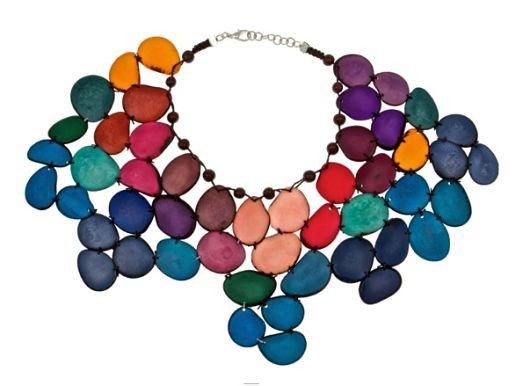
Today, many socially conscious companies work to reduce global poverty. They help the poor either by donating directly to charities or by providing jobs and fair wages for those in need. Many of these organizations make jewelry. Here are 10 companies that sell jewelry products in order to help the global poor:

1. Article 22 — Article 22 sells jewelry made by bombs, plane parts or other materials leftover from the Vietnam War. Their first collection, Peacebomb, uses Vietnam War Era bombs and is crafted by Laotian Artisans. Article 22 helps the poor by providing jobs to Laotian Artisans who may have been ignored or forgotten. Also, each Peacebomb item funds the demining of land that is littered by bombs.

2. 31 Bits — The 31 Bits mission statement is “using fashion and design to empower people to rise above poverty.” They work with women in Uganda who earn an income from the jewelry they create. The women also receive counseling, finance training, health education and business mentorships. Each purchase from 31 Bits funds their work in Uganda.

3. Half United — The purchase of any Half United product gives seven meals to children in need in the United States, Fiji, Cambodia and Madagascar.

4. Indego Africa — Indego Africa works with women in Rwanda in order to help them flourish as independent businesswomen. They partner with female artisans and sell their products in their shop. One hundred percent of their profits go toward job skills training programs for their artisans in business management, technology, entrepreneurship and English and Kinyarwanda literacy.

5. Kurandza — Kurandza works with HIV positive women in Mozambique. Many of these women do not have the money necessary for transportation to the hospital and are therefore not able to obtain the medicine that they need. Kurandza works with these women, and the proceeds from the skirts and jewelry that they make go toward transportation to the hospital and other household items, such as schoolbooks for their children.

6. Purpose — Purpose is a fashion jewelry brand launched by International Sanctuary. International Sanctuary was an organization found in 2007 that works to help those who escaped sex trafficking, in both Mumbai, India and Orange County, California. Survivors are placed in mentoring programs and given an education, medical and dental care, scholarships and microloans. In 2014, International Sanctuary founded Purpose as a way to give survivors employment, financial stability and a brighter future.

7. The Starfish Project — The Starfish Project was founded in 2006 in order to help exploited women in China. It works to give them alternative employment and holistic care services and provides them with counseling, vocational training, language acquisition, family education grants, healthcare access and housing in a women’s shelter. The Starfish Project wants to raise awareness about violence against women and its goal is to restore hope for each woman that enters its doors.

8. The Purple Buddha Project — Like Article-22, the Purple Buddha Project works to help demining. As they say, more tons of bombs were dropped on Cambodia than on Germany and Japan combined during World War II. The Purple Buddha Project uses remains of weapons in Cambodia in order to make jewelry, providing jobs to Cambodian artisans. The purchase of each piece goes toward the demining of land in Cambodia or Laos. Many of the Purple Buddha Project bracelets contain positive messages.

9. Mujus — Mujus works to give back to Peru. They pair fair wages and provide health insurance to Mujus artisans in Peru in order to help provide social change to communities around Lima. (Mujus also works with the ALS association in the United States, and has a special collection designed to help raise money for those with Lou Gehrig’s disease).

10. Colorful Minds — While Colorful Minds does not sell specific jewelry pieces, they do sell jewelry boxes and pouches (which you can use to keep all the jewelry you purchased while helping the global poor). Colorful Minds works with vocational centers in India that serve those living with disabilities. They market the products that are made at the vocational centers in order to help those with disabilities to integrate into society, increase self-esteem and motivate them to use their creativity. They also execute a grant program that provides necessary items, such as prosthetics or supplies, to vocational centers.

– Ashrita Rau

Sources: Article 22, Busy Mommy, 31 Bits, Half United, Indego Africa, Kurandza, Purpose Jewelry, Starfish Project, The Purple Buddha Project, Mujus, Colorful Minds
Photo: The Big Piece of Cake


July 31, 2015
https://borgenproject.org/wp-content/uploads/borgen-project-logo.svg 0 0 Borgen Project https://borgenproject.org/wp-content/uploads/borgen-project-logo.svg Borgen Project2015-07-31 07:35:452024-12-13 17:52:0710 Jewelry Companies that Help Reduce Global Poverty
Global Poverty, Water

Eliodomestico: Solar Powered Water Purifier

Eliodomestico
Established in 2000, one of the Millennium Development Goals was to increase the availability of clean drinking water. More specifically, the United Nations aimed to reduce the number of people without access to safe drinking water in half. In 2010, this goal was met. In fact, it was the first Millennium Development Goal to be met.

Despite these advancements, over 750 million people lack access to clean drinking water even today. That’s almost two and a half times the population of the United States without safe water. That’s about 1 in 9 people in total.

This is what Italian designer Gabriele Diamanti wanted to change with the Eliodomestico, a solar powered ceramic water purifier. The Eliodomestico boils water to separate the unwanted elements from the clean drinking water.

Diamanti wanted to make something simple and inexpensive, using materials found in the area so that a local craftsman could put it together. In the end, Diamanti built the Eliodomestico to work like “an upside-down coffee percolator”.

The Elliodomestico is made of terracotta, anodized zinc and recycled plastic. It consists of two ceramic containers, one atop the other. Salt water is poured into the top container, which then gets heated by the sun and converted to steam. The increase in pressure forces the steam to travel through a tube to the lower container where it re-condenses. The clean drinking water gathers at the bottom of the lower container.

The Eliodomestico collects about 5 liters of clean drinking water per day, and it only costs $50 with no operating costs. In addition, the bottom container can be easily removed and transported on the head of the user, a common practice in developing countries.

Because the Eliodomestico doesn’t use electricity or filters, it is easier to maintain and more efficient than other solar water purifiers. Most solar powered water filters use a solar panel, which increases the cost and the style-factor, but not the efficiency. The Eliodomestico is efficient, cheap and easy to use and maintain, making it a simple solution to a wide spread problem.

– Hannah Resnick

Sources: Gabriele Diamanti, Giz Mag, Global Citizen, Inhabit, UN Millennium Project, Water.org
Photo: Gabriele Diamanti

July 31, 2015
https://borgenproject.org/wp-content/uploads/borgen-project-logo.svg 0 0 Borgen Project https://borgenproject.org/wp-content/uploads/borgen-project-logo.svg Borgen Project2015-07-31 01:39:272024-12-13 17:52:15Eliodomestico: Solar Powered Water Purifier
Global Poverty, Technology

Allversity: The e-Learning Program for Developing Nations

Allversity
The connection between education and poverty is a well-established one: a lack of resources often leads to deprivation of proper education, and the lack of education further fuels this cycle of poverty. Education does not only form the foundation for a healthier, safer society, but also invariably stimulates the economy by providing more jobs. Education is therefore one of the most potent tools we have today to fight global poverty.

Despite the efforts by the international communities, many regions of the world continue to lag behind in the educational arena. In many developing countries, education is inaccessible to the masses; there is a gap in basic literacy due to socioeconomic or gender status. According to UNESCO’s Education for All Global Monitoring Report that tracks the educational goals of the world, fifty-seven million children worldwide are not receiving an education. The report extrapolates the results to conclude that the world is still far from realizing the goal of universal primary education.

The facts and figures only serve to confirm the unfortunate state of education globally. Many startup companies in the western world have been attempting over the last decade to come up with innovative, technology-based solutions to the issue of illiteracy. In late 2013, a Berlin-based group of technology entrepreneurs introduced their efforts at a solution in the form of Allversity.

Allversity is a non-profit e-learning platform, which links students in the developing world with teachers and community learning centers. According to 2013 UNESCO (United Nations Educational, Scientific and Cultural Organization) report, the world needs as many as 1.6 million additional teachers to ensure universal primary education. The lack of teachers is a major factor in the gap between global educational goals and current situation. The provision of online tutoring is a creative answer to this problem

The program offers a wide variety of subject matters, from prenatal care, to first aid and basic computer skills. The learning community also offers the education of basic entrepreneurial and technology skills. Allversity also has courses for more traditional school-taught subjects, such as math, science and history. The course list is dynamic: new courses and subjects are added as per teachers’ and students’ show of interest or requirement.

The materials of the course are in English at the moment, which makes it difficult for many to benefit from the learning interface. However, plans are already under way to offer translated materials in languages such as Swahili and Arabic to effectively reach more people.

Another problem the initiative faces is the lacking internet accessibility in many remote areas of the world. Many prospective students also might not have access to a computer or electronic device, necessary for Allversity. As internet connectivity increases worldwide, however, the program will undoubtedly become more readily usable.

Moreover, there are already efforts by the program’s developers to design smartphone applications that can be used offline once downloaded. It is estimated that around 40 per cent of the African population will own a smartphone by by 2017. The mobile version of Allversity will thereby increase the enrollment of students manifold.

The program faces a few challenges down the road regarding its objectives of global education, but this remains a laudable effort in the journey towards universal education.

– Atifah Safi

Sources: Venture Village, Allversity, UNESCO
Photo: Online Universities

July 31, 2015
https://borgenproject.org/wp-content/uploads/borgen-project-logo.svg 0 0 Borgen Project https://borgenproject.org/wp-content/uploads/borgen-project-logo.svg Borgen Project2015-07-31 01:30:512020-07-06 13:05:25Allversity: The e-Learning Program for Developing Nations
Global Poverty, Refugees and Displaced Persons, United Nations

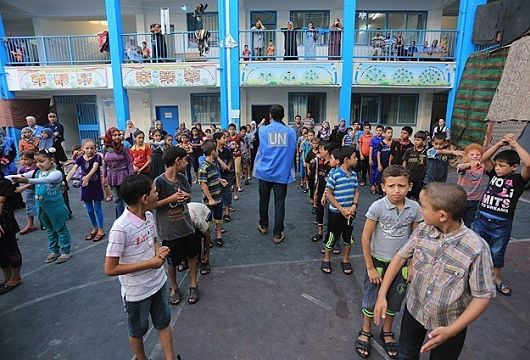
UN Funding Crisis Could Lead to Massive School Year Delay

funding_crisis
The United Nations is in the midst of its most severe funding crisis to date and the amount of people affected by it is continuing to rise.

The UN Relief and Works Agency for Palestine Refugees in the Near East (UNRWA) is one of the UN agencies most heavily affected by a lack of funding. After a recent emergency meeting conducted by its Advisory Commission, the UNRWA said that “drastic measures” would have to be taken if the current deficit of $101 million couldn’t be funded before the upcoming school year.

If the deficit is not met, the academic year could be delayed for over half a million students in the middle east across nearly 700 schools. The UN stresses, however, that there is still enough funding available to provide “immunizations for children, primary health care, relief and sanitation and some emergency programmes” through the end of 2015.

The UN has also stated that from September and on it can’t ensure the stability of those resources.

“Education lies at the very heart of the identity and dignity of Palestine refugees and of what UNRWA stands for,” says a UNRWA press release concerning the issue. “Our schools also provide a measure of stability in a very unstable region. Possible delays in opening the school year would also have grave implications for host governments.”

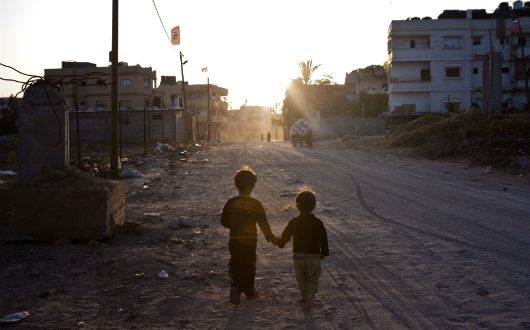
These budget cuts also have a serious effect on Palestinian refugees currently living in the Gaza Strip. Children who attend school in the region received $20 cash vouchers until very recently, when that service stopped entirely along with free meals provided at schools.

Coupled with additional UNRWA assistance is often what families depend on. Continuing to cut these services could have severely life-altering consequences.

“Our conditions worsen every day,” Bilal Mekdad, a Gaza Strip refugee, told the Anadolu Agency. “We fear the day we will find ourselves in the street.”

– Alexander Jones

Sources: Anadolu Agency, UN 1, UN 2
Photo: Anadolu Agency

July 31, 2015
https://borgenproject.org/wp-content/uploads/borgen-project-logo.svg 0 0 Borgen Project https://borgenproject.org/wp-content/uploads/borgen-project-logo.svg Borgen Project2015-07-31 01:30:482024-12-13 17:52:15UN Funding Crisis Could Lead to Massive School Year Delay
Activism, Education, Global Poverty

8 Colombian NonProfit Organizations

non-profit_organizations_in_colombia
From building housing for people living in vulnerable conditions to the promotion of education, Colombian organizations work on humanitarian causes in the country.

Poverty, education, health and living are the main areas that many nonprofit organizations in Colombia work on in order to contribute to the betterment of the Colombian community.

According to the Departamento Administrativo Nacional de Estadística (DANE), 784,000 people in Colombia prevailed out of poverty in 2014. In the same year, extreme poverty also experienced a decrease of 407,000 people.

These results represent a reduction in the poverty rate of Colombia, making them the lowest results in the past 13 years.

Nonprofit organizations form a part that contributes to the betterment of the Colombian society. Here are 8 Colombian nonprofit organizations that are making a difference:

Federación Nacional de Cafeteros de Colombia

Considered one of the biggest rural nonprofit organizations in the world, the Federación Nacional de Cafeteros de Colombia works for the betterment of the Colombian coffee farmers.

Representing more than 563,000 families, the Federación Nacional de Cafeteros de Colombia works to improve the life quality of Colombian coffee producers by optimizing production costs and maximizing the coffee quality.

Fundación Antonio Restrepo Barco

Responding to the issues of a country that has different social conditions and tending to social problems are some of the activities that members of the Fundación Antonio Restrepo Barco do.

The foundation believes that the families living in crisis areas are more afflicted by social issues and problems. Fundación Antonio Restrepo Barco forwards projects related to the protection of children rights, education, health and social and regional development of attention to vulnerable communities.

Fundación Juan Felipe Gómez Escobar

This foundation, also known as “La Juanfe,” works to bring a better life to the children and young people from Cartagena, Colombia. They do this by providing health care, and by bringing psychological and affective care.
The entity works with various partners that are national and international businesses, and public and private agencies.

Asociación Metrópoli Colombia

This association works for the creation of spaces where people living under vulnerable conditions could experience personal growth, the transformation of their surroundings, and equal opportunities through education and culture.

Through the program “Espacios de encuentro para la construcción de la vida y la paz,” Metrópoli Colombia proffers the availability of spaces that provide access to education, wellness, arts and culture as a means of improving the life quality of children and young people.

Corporación Día de la Niñez

This is a nonprofit organization that promotes the importance that childhood has in the development and progress of the community and families, especially in communities that live under poverty and/or violence.

They have as a mission to promote children games in the familiar and communitarian aspects.

Fundación OCMAES

This is a nonprofit foundation that works to promote people’s talent. Fundación OCMAES foments the education among young Colombians that have an academic potential, but do not have the economical facilities to afford professional programs or continue with their studies.

Through the “Programa de Apoyo Universitario,” the foundation gives scholarships to young Colombians with academic potential.

Fundación SERVIVIENDA

This organization improves the life quality of the communities living in vulnerable conditions by the construction of houses for these Colombian communities.

The foundation is compromised with integral development and brings security, identity and the sense of social belonging.

Fundación Terpel

They work to bring quality education to Colombian children. The entity implements programs that develop competitions in leadership, mathematics and language for children and young people living under vulnerable conditions.

– Diana Fernanda Leon

Sources: DANE, Federación Nacional de Cafeteros de Colombia, Fundación Antonio Restrepo Barco, Fundación Juan Felipe Gómez Escobar, Metrópoli Colombia, Corporación Día de la Niñez, Fundación Ocmaes, Fundación Servivienda, Fundación Terpel,
Photo: Fundación Juan Felipe Gómez Escobar

July 31, 2015
https://borgenproject.org/wp-content/uploads/borgen-project-logo.svg 0 0 Borgen Project https://borgenproject.org/wp-content/uploads/borgen-project-logo.svg Borgen Project2015-07-31 01:30:162024-12-13 17:52:168 Colombian NonProfit Organizations
Development, Global Poverty

6 Chocolate Brands Creating Social Change

chocolate_brands
Words like eco, organic, healthy, tasty, and sweet can be found in one single product: chocolate.

If the word “chocolate” is not sufficient enough, the other good part is that many of these organic chocolate products are also fair trade chocolate bars that are creating a social change and an environmental impact.

Besides being socially and environmentally good, there are some brands of chocolate who also donate to different humanitarian and environmental causes.

Here are six chocolate brands that are creating social change:

1. Madécasse

This is a social enterprise that makes chocolate products and vanilla in Madagascar. According to their website, Madécasse measures their success by the quality of the product and the social impact they make in Africa.

The enterprise started by empowering cocoa farmers in Madagascar, and by providing training and higher wages. The brand also creates an environmental impact by protecting around 70,000 cocoa trees, that are part of the habitat of over 65 species of flora and fauna, through cocoa farming.

Some of the chocolate bars that Madécasse sells are Salted Almond, Sea Salt & Nibs, Toasted Coconut, among others.

2. Alter Eco

According to the Alter Eco website, the brand is reliably delicious, socially fair, and environmentally responsible. They work directly with farmers that grow cacao, sugar, rice, and quinoa through fair trade and organic practices. Alter Eco assists these farmers by improving their food quality and their life quality.

Some of the areas that Alter Eco works on are fair trade relationships, development of programs, and the empowerment of women. The brand’s products have compostable packaging and are organically grown.

Despite of not being a brand that only sells cocoa products, Alter Eco counts with a variety of chocolates and truffles. Some of the chocolate bars and truffles available are Dark Brown Butter, Dark Quinoa, Dark Mint, Dark Velvet, Salted Caramel Truffles, Sea Salt Truffles, among others.

3. Divine Chocolate

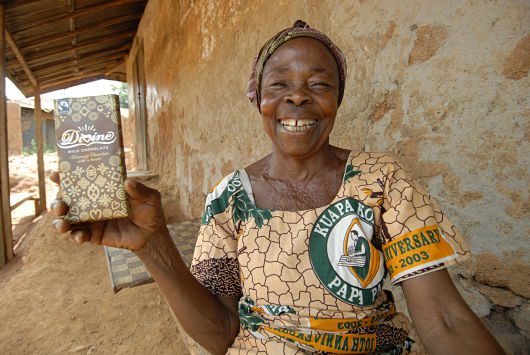
Divine Chocolate is an entity co-owned by 85,000 farmers in Ghana. From Kuapa Kokoo, these farmers produce fair trade chocolate through the premium quality cocoa that Kuapa’s has.

The brand also works for women’s empowerment by providing opportunities to women in cocoa farming. Furthermore, Divine Chocolate improves access to information for cocoa farmers through funds that support the Kuapa’s radio program.

Some of the chocolate products that Divine Chocolate offers are 38 percent Milk Chocolate with Toffee and Sea Salt, Dark Chocolate with Hazelnut Truffle, Dark Chocolate with Whole Almonds, and 70 percent Dark Chocolate with Mango & Coconut.

4. Equal Exchange

Through fair trade, Equal Exchange counts with different natural food products offered to consumers. They work with small-scale farmers and their co-ops from different countries around the world, such as India, Ecuador, Peru, El Salvador, Uganda, Chile, among others.

Some of the products that the brand offers are coffee, organic tea, organic bananas, fair foods, and chocolate & cocoa. The brand sells organic chocolate bars, chocolate mints, candy bars, cocoa, and chocolate chips.

Some of the chocolate options available for purchase are Organic Very Dark Chocolate, Organic Panama Extra Dark Chocolate, Organic Mint Chocolate with Delicate Crunch, Organic Baking Cocoa, Organic Spicy Hot Cocoa, Organic Semi-Sweet Chocolate Chips, among others.

5. SHAMAN Organic Chocolates

This brand of chocolate was created in order to support the Huichol Indian population from central Mexico. SHAMAN Organic Chocolates’ goal is to create good and ethical chocolate while they help this Indian population from Mexico.

The brand’s chocolate is a 100 percent organic, GMO free, it is fair trade chocolate, and 100 percent of the profits are donated to charity that supports three Huichol villages in Mexico.

6. Endangered Species Chocolate

Endangered Species Chocolate promotes global change by donating 10 percent of their profit to their partner organizations that support different humanitarian and environmental causes.

The causes that the brand’s partners support are the conservation of species, habitat conservation, and humanitarian efforts.

The brand pays for premium ingredients for their chocolate in order to make sure that cocoa farmers are being supported and helped, and species are being protected.

The products that Endangered Species Chocolate offers are Natural Cocoa Spread, Natural Hazelnut with Cocoa Spread, Natural Almond with Cocoa Spread, 60 percent Dark Chocolate with Lemon Poppy Seed, 60 percent Dark Chocolate with Blackberry Sage, 60 percent Dark Chocolate with Cinnamon, Cayenne & Cherries, Dark Chocolate with 88 percent Cocoa, and Dark Chocolate.

With many brands offering fair trade organic chocolate products, helping the environment, people and donating to charity can be a way to support many humanitarian and environmental causes, and contribute to the social change that these chocolate brands are creating.

– Diana Fernanda Leon

Sources: Madecasse 1, Madecasse 2, Madecasse 3, Alter Eco Foods 1, Alter Eco Foods 2, Alter Eco Foods 3, Alter Eco Foods 4, Alter Eco Foods 5, Divine Chocolate 1, Divine Chocolate 2, Endangered Species Chocolate, Shaman Organic Chocolates, Equal Exchange
Photo: Dubaruba

July 31, 2015
https://borgenproject.org/wp-content/uploads/borgen-project-logo.svg 0 0 Borgen Project https://borgenproject.org/wp-content/uploads/borgen-project-logo.svg Borgen Project2015-07-31 01:30:062024-12-13 17:52:176 Chocolate Brands Creating Social Change
Global Poverty, Technology

Top Mobile Apps Made in Africa

Mobile_AppsMobile apps have been taking the smartphone industry by storm. While many individuals use mobile apps in their free time to play games, check the weather or follow a sports team, Africans have learned to take full advantage of the knowledge available at their fingertips.

Not only do Africans use their smartphones to make calls, send text messages and browse the Internet, but they also use their devices to access mobile money services and locate healthcare facilities.

This list compiles the most popular mobile apps in Africa that are available on either Android or iOS devices.

1. Find-A-Med
This location-based mobile application allows its users to find the closest healthcare facility. The app also provides a place where its users can store their basic healthcare information in case of an emergency. Find-A-Med is available on both Android and Apple devices.

2. PesaCalc
PesaCalc is a free Android app that allows users to streamline access to mobile money services in Kenya. This app is compatible with all three of Kenya’s mobile money services. In addition, the app allows users to prepare the correct amount of cash to send, including fees, to both registered and unregistered users.

3. SnapnSave
SnapnSave is a shopping app that gives its users cash back on their everyday grocery purchases. The app was recently launched in Cape Town, South Africa, and its developers are hoping that it will influence their consumers to make smarter purchases.

4. Wumdrop
Wumdrop is a South African-made app that allows for the delivery or picking up of packages. The user is able to request a courier, track them on a map and receive notification of the pending delivery.

5. Slimtrader
This app was founded in 2009 and is popular in Uganda, Kenya, Nigeria and South Africa. Slimtrader allows its users to perform e-commerce transactions, such as buying or paying for goods and services. In other terms, the app allows its users to effectively shop by text messages. However, it is only available on Android devices.

6. M-Farm
Launched in 2012, M-Farm is primarily aimed at Kenyan farmers in order to keep them informed of crop prices and other farming-related matters. The app runs on an SMS-based service and is now available to users in five major towns in Kenya. This app is only available on Android devices.

7. Voicemap
Voicemap allows its users to explore places such as Cape Town with the help of its walking tour setting. These audio walking tours are available in voices belonging to expert correspondents, veteran broadcasters and passionate locals. This app is available on both Android and Apple devices.

8. Kids First Aid
The Kids First Aid app gives parents and teachers access to emergency first aid information when they need it. Ideally, this app will be able to give information to parents when they are travelling in a place where they do not speak the local language or when help is not readily available. This app is available only on Apple devices.

9. Suba
Suba is a location-based group photo album that creates a group photo stream. Once the stream is created, users can add pictures and send invites to others. Suba is available on both Android and Apple devices.

10. Safari Tales
Safari Tales was developed in order to eliminate the shortage of books in Kenya. The app is interactive and available in multiple languages. Safari Tales offers African stories that may not be easily found in countries that lack educational books for children. This app is available on Android devices.

– Kerri Szulak

Sources: IT News Africa, Voices of Africa
Photo: Flickr

July 31, 2015
https://borgenproject.org/wp-content/uploads/borgen-project-logo.svg 0 0 Borgen Project https://borgenproject.org/wp-content/uploads/borgen-project-logo.svg Borgen Project2015-07-31 01:30:052020-07-06 13:53:40Top Mobile Apps Made in Africa
Global Poverty, Health

Taken From the Streets: The Disappearing Homeless of Japan

disappearing_homeless
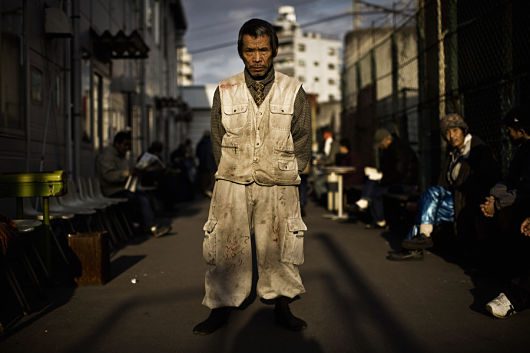
A resident of Osaka recently informed me that the homeless in Japan’s Nishinari district are disappearing.

In some contexts this could be positive, for they could be disappearing due to lowering poverty rates or a growth in the number of available shelters. But as it turns out, the Osaka homeless are disappearing to a nuclear plant.

In 2011, an earthquake caused a nuclear accident in Fukushima. Apparently, the disaster was so destructive that the cleanup process was too difficult to regulate adequately. Therefore, when the government tasked Tokyo Electric Power Company (TEPCO) with cleaning up the disaster, TEPCO called on outside subcontractors. These subcontractors had difficulty recruiting a large enough workforce willing to work on such a dangerous, health threatening job. As a result, these subcontractors asked Japan’s notorious gangs to come to their rescue.

The Yakuza are well known for exploiting the homeless such as through putting up, “vulnerable individuals in shoddy, inadequate apartments to scam the welfare system, taking the lion’s share of any benefits from the state they may receive under threat of violence,” says the Japan Visitor Blog. In this circumstance, the gangs pulled on their affinity for exploiting the country’s poor by recruiting them to work in cleaning the Fukushima plant.

The homeless population in Japan, the Nishinari district Osaka in particular, is vulnerable to this sort of exploitation due to their desire to work. The Nishinari district was once a place where men would come to find jobs as day laborers. These jobs now barely exist, though men – especially older men – still live in these areas in hopes that they may one day find some sort of opportunity.

Japan’s Disposable Workers quoted a man in the Nishinari district saying that, “I really want to work but I’m mentally prepared that I will never get another job for the rest of my life.” So when the Yakuza come around offering any sort of job, it is hard for the Japanese homeless to refuse. Especially when there is some threat of violence if they did turn down these “opportunities.”

Beyond the innate exploitation involved in targeting a vulnerable population for such dangerous work, the homeless were not even well compensated. Often the Yakuza took some of these workers wages for themselves. In addition, Russia Today stated that, “many of the cleanup workers, who exposed themselves to large doses of radiation without even knowing it, were given no insurance for health risks, no radiation meters even.”

Reuters’ report on the homeless working for Fukushima discusses the occurrence of workers having such a significant amount of money deducted from their paychecks by companies that they were left with only US$10 at the end of their work. The deductions were for food and accommodations through the company. So sometimes the workers put themselves into a severe health risk for essentially no pay.

I heard that the homeless are likely still disappearing, though there is little to no coverage on the recruitment of workers in the past two years.

It is possible that the homeless are being treated with more respect, or perhaps the effect of growing media censorship in Japan is preventing further news about the exploitation of Japan’s homeless from being released.

– Clare Holtzman

Sources: The Asahi Shimbun, Japan’s Disposable Workers, The Japan Times 1, The Japan Times 2,  Japan Visitor Blog, Reuters, Russia Today, World Nuclear Association
Photo: Japan’s Disposable Workers

July 31, 2015
https://borgenproject.org/wp-content/uploads/borgen-project-logo.svg 0 0 Borgen Project https://borgenproject.org/wp-content/uploads/borgen-project-logo.svg Borgen Project2015-07-31 01:26:242024-05-27 09:26:27Taken From the Streets: The Disappearing Homeless of Japan
Global Poverty

NBA Africa Game to Raise Funds for South African Nonprofits

NBA_Africa_Game
The National Basketball Association will soon be holding its first ever game in Africa, with proceeds from the historic event going to support local charities.

The NBA Africa Game will take place in Johannesburg, South Africa. It will feature a face-off between Team Africa, captained by South Sudan native and Miami Heat star Luol Deng, and Team World, led by Chris Paul of the Los Angeles Clippers.

Proceeds from the already sold-out event will go to the local Boys and Girls Clubs of South Africa, SOS Children’s Villages Association of South Africa and the Nelson Mandela Foundation. Official partners of the game include Econet Global Limited, Ford Motor Company of Southern Africa, NIKE Inc. and others.

First and second-generation African players will represent Team Africa in the game, honoring the NBA’s history of recruiting players from Africa as well as their commitment to giving back to the struggling continent. The nonprofit NBA Cares has helped create 58 homes or community centers in Africa and has raised over $250 million for charities.

The exhibition-style game will be played August 1 at Ellis Park Arena in Johannesburg and will “impact young people throughout the continent, both on the court and in the community,” according to NBA Vice President and Managing Director-Africa, Amadou Gallo Fall.

– Gina Lehner

Sources: Biz Community, NBA
Photo: Wikipedia

July 31, 2015
https://borgenproject.org/wp-content/uploads/borgen-project-logo.svg 0 0 Borgen Project https://borgenproject.org/wp-content/uploads/borgen-project-logo.svg Borgen Project2015-07-31 01:22:022024-05-27 09:26:28NBA Africa Game to Raise Funds for South African Nonprofits
Foreign Aid, Global Poverty, USAID

The Consequences of Cutting Aid to Palestine

Palestine
When it comes to the polarizing issue of the $400 million of foreign aid the United States is giving to Palestine, Senator Lindsey Graham (R-S.C.) says, “There’s a new game in town.”

On January 7, Senator Rand Paul (R-KY) introduced a new bill in the wake of Palestine’s application and recent acceptance to the International Criminal Court. Rand, Graham and their proponents argue that this action is in direct conflict with the one of United States’ three stipulations regarding aid to the West Bank, which is that the Palestinians will never seek to persecute Israel at the Hague.

Graham believes this bill presents a change in the dynamic between USAID, Palestine and Israel. Formerly, Israel fought against cutting assistance to Palestine and viewed international aid as an investment in national security and a movement toward the elusive “two state solution.” Rand and Graham now believe that it is time for the tide to turn in favor of a more aggressive statement.

“I cannot tell you the number of times the Israelis have engaged me to try to stop an emotional reaction by the Congress to terminate aid,” Graham said to Foreign Policy. “[But now] I’m going to lead the charge to make sure the Palestinians feel this.”

This aggressive approach is lauded as a defense of Israel, one of the United States’ closest allies. Yet research has shown that making the people of Palestine “feel” the loss of roughly $400 million could have the opposite effect, putting the civilians of the West Bank at a greater risk than ever before.

Primary defenders of the “cut aid” camp argue that aid to Palestine is akin to bankrolling the terrorist group Hamas. When they look at that $400 million, they see missiles pointed directly at Israel’s iron dome. What they do not see is the 515,000 Palestinian civilians who have been raised from poverty by the affordable water programs, infrastructural efforts and humanitarianism that flow from this aid.

According to an investigation done by the Government Accountability Office (GAO), USAID to Palestine has been carefully vetted and primarily channeled through in-kind efforts to change lives on the ground. In 2011, they found that the majority of aid was focused on the building of five hospitals, six clinics, the upgrade of 23 schools and the revamping of over 20 small- and medium-sized water systems. It was used to computerize hospitals in the main city of Mendabollah and provide 127,000 people with access to potable water.

“These aids are very helpful for us,” said Dr. Niha Sawaheh, head of the ER at the Palestinian Medical Center (a USAID project hospital) in Ramallah. “When they stop, they will affect us.”

What happens when the aid stops is not a theoretical question to Sawaheh. It is a recent memory. When the United States froze half of their allocated funds to Palestine in 2011, the hospital saw sharp declines in efficiency and diagnostic potential. After those cutbacks, the new, computerized CT system sat unused in Ramallah’s largest hospital, yet there was no discernible decline in Hamas-initiated bombings of Jerusalem.

Ghassan Khatib, a spokesman for the Palestinian government, commented that “by such a decision, [Congress is] punishing the Palestinian public in education, and in health, in a way that is very, very difficult to understand.”

Research has shown that declines in public education, health and accessibility to necessities such as clean water have little effect on ethnically charged violence like that between the Israelis and Palestinians.

In their famous 2010 paper, Professors Christopher Blattman and Edward Miguel of the University of California Berkeley argue that “greed” or the desire to improve one’s living conditions by targeting another regime is a much more powerful incentive to violence than is “grievance” or deep-rooted primordialism. “At present,” they write, “the economic motivators for conflict are better theorized than psychological or sociological factors.”

Removing the programs that allow Palestinian civilians to live above the margin — where they do not have to live on Hamas’ assurance that the downfall of Israel will put water in their wells and computers in their hospitals — will not, as some argue, quench Hamas’ thirst for terror. Rather, it would push those who in better times would not raise arms to Israel to resort to those same desperate measures. From this perspective, it is likely that Israel (America’s ally) would be the one to feel the effects of the $400 million cuts, not the terrorist groups hell-bent on Israeli destruction.

As this bill and others like it move through Congress, there is no doubt heated debate over “our duty to Israel” and the “message we send to Hamas” will circulate. Yet from a national security standpoint, the answer is simple: $400 million can buy lasting infrastructural development, something that in 30 years will drive off more missiles than even the iron dome.

– Emma Betuel

Sources: Berkley, NPR, Foreign Policy, Huffigton Post, Al-Monitor, GAO, FAS, Reuters
Photo: Caritas

July 31, 2015
https://borgenproject.org/wp-content/uploads/borgen-project-logo.svg 0 0 Borgen Project https://borgenproject.org/wp-content/uploads/borgen-project-logo.svg Borgen Project2015-07-31 01:18:472020-07-06 13:57:16The Consequences of Cutting Aid to Palestine
Page 1901 of 2178«‹18991900190119021903›»

Get Smarter

  • Global Poverty 101
  • Global Poverty… The Good News
  • Global Poverty & U.S. Jobs
  • Global Poverty and National Security
  • Innovative Solutions to Poverty
  • Global Poverty & Aid FAQ’s
Search Search

Take Action

  • Call Congress
  • Email Congress
  • Donate
  • 30 Ways to Help
  • Volunteer Ops
  • Internships
  • Courses & Certificates
  • The Podcast
Borgen Project

“The Borgen Project is an incredible nonprofit organization that is addressing poverty and hunger and working towards ending them.”

-The Huffington Post

Inside The Borgen Project

  • Contact
  • About
  • Financials
  • President
  • Board of Directors
  • Board of Advisors

International Links

  • UK Email Parliament
  • UK Donate
  • Canada Email Parliament

Get Smarter

  • Global Poverty 101
  • Global Poverty… The Good News
  • Global Poverty & U.S. Jobs
  • Global Poverty and National Security
  • Innovative Solutions to Poverty
  • Global Poverty & Aid FAQ’s

Ways to Help

  • Call Congress
  • Email Congress
  • Donate
  • 30 Ways to Help
  • Volunteer Ops
  • Internships
  • Courses & Certificates
  • The Podcast
Scroll to top Scroll to top Scroll to top