The Consequences of Cutting Aid to Palestine
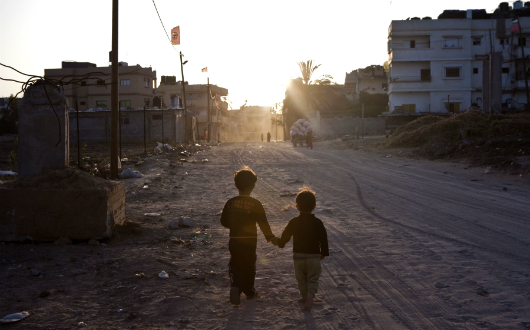
When it comes to the polarizing issue of the $400 million of foreign aid the United States is giving to Palestine, Senator Lindsey Graham (R-S.C.) says, “There’s a new game in town.”
On January 7, Senator Rand Paul (R-KY) introduced a new bill in the wake of Palestine’s application and recent acceptance to the International Criminal Court. Rand, Graham and their proponents argue that this action is in direct conflict with the one of United States’ three stipulations regarding aid to the West Bank, which is that the Palestinians will never seek to persecute Israel at the Hague.
Graham believes this bill presents a change in the dynamic between USAID, Palestine and Israel. Formerly, Israel fought against cutting assistance to Palestine and viewed international aid as an investment in national security and a movement toward the elusive “two state solution.” Rand and Graham now believe that it is time for the tide to turn in favor of a more aggressive statement.
“I cannot tell you the number of times the Israelis have engaged me to try to stop an emotional reaction by the Congress to terminate aid,” Graham said to Foreign Policy. “[But now] I’m going to lead the charge to make sure the Palestinians feel this.”
This aggressive approach is lauded as a defense of Israel, one of the United States’ closest allies. Yet research has shown that making the people of Palestine “feel” the loss of roughly $400 million could have the opposite effect, putting the civilians of the West Bank at a greater risk than ever before.
Primary defenders of the “cut aid” camp argue that aid to Palestine is akin to bankrolling the terrorist group Hamas. When they look at that $400 million, they see missiles pointed directly at Israel’s iron dome. What they do not see is the 515,000 Palestinian civilians who have been raised from poverty by the affordable water programs, infrastructural efforts and humanitarianism that flow from this aid.
According to an investigation done by the Government Accountability Office (GAO), USAID to Palestine has been carefully vetted and primarily channeled through in-kind efforts to change lives on the ground. In 2011, they found that the majority of aid was focused on the building of five hospitals, six clinics, the upgrade of 23 schools and the revamping of over 20 small- and medium-sized water systems. It was used to computerize hospitals in the main city of Mendabollah and provide 127,000 people with access to potable water.
“These aids are very helpful for us,” said Dr. Niha Sawaheh, head of the ER at the Palestinian Medical Center (a USAID project hospital) in Ramallah. “When they stop, they will affect us.”
What happens when the aid stops is not a theoretical question to Sawaheh. It is a recent memory. When the United States froze half of their allocated funds to Palestine in 2011, the hospital saw sharp declines in efficiency and diagnostic potential. After those cutbacks, the new, computerized CT system sat unused in Ramallah’s largest hospital, yet there was no discernible decline in Hamas-initiated bombings of Jerusalem.
Ghassan Khatib, a spokesman for the Palestinian government, commented that “by such a decision, [Congress is] punishing the Palestinian public in education, and in health, in a way that is very, very difficult to understand.”
Research has shown that declines in public education, health and accessibility to necessities such as clean water have little effect on ethnically charged violence like that between the Israelis and Palestinians.
In their famous 2010 paper, Professors Christopher Blattman and Edward Miguel of the University of California Berkeley argue that “greed” or the desire to improve one’s living conditions by targeting another regime is a much more powerful incentive to violence than is “grievance” or deep-rooted primordialism. “At present,” they write, “the economic motivators for conflict are better theorized than psychological or sociological factors.”
Removing the programs that allow Palestinian civilians to live above the margin — where they do not have to live on Hamas’ assurance that the downfall of Israel will put water in their wells and computers in their hospitals — will not, as some argue, quench Hamas’ thirst for terror. Rather, it would push those who in better times would not raise arms to Israel to resort to those same desperate measures. From this perspective, it is likely that Israel (America’s ally) would be the one to feel the effects of the $400 million cuts, not the terrorist groups hell-bent on Israeli destruction.
As this bill and others like it move through Congress, there is no doubt heated debate over “our duty to Israel” and the “message we send to Hamas” will circulate. Yet from a national security standpoint, the answer is simple: $400 million can buy lasting infrastructural development, something that in 30 years will drive off more missiles than even the iron dome.
– Emma Betuel
Sources: Berkley, NPR, Foreign Policy, Huffigton Post, Al-Monitor, GAO, FAS, Reuters
Photo: Caritas
