• Link to X
  • Link to Facebook
  • Link to Instagram
  • Link to TikTok
  • Link to Youtube
  • About
    • About Us
      • President
      • Board of Directors
      • Board of Advisors
      • Financials
      • Our Methodology
      • Success Tracker
      • Contact
  • Act Now
    • 30 Ways to Help
      • Email Congress
      • Call Congress
      • Volunteer
      • Courses & Certificates
      • Be a Donor
    • Internships
      • In-Office Internships
      • Remote Internships
    • Legislation
      • Politics 101
  • The Blog
  • The Podcast
  • Magazine
  • Donate
  • Click to open the search input field Click to open the search input field Search
  • Menu Menu

Archive for category: Global Poverty

Key articles and information on global poverty.

Global Poverty

Pope Francis to Davos Leadership: Fight Inequality

Fight Inequality

Every year, the World Economic Forum (WEF) gathers the global business, political and academic elite in Davos, Switzerland to tackle the planet’s toughest issues. This year, Pope Francis was once again invited to address the group and his message was clear: fight inequality.

A cardinal from the Vatican read the Pope’s letter to forum members on Jan. 22. It began by thanking the WEF for their invitation but quickly addressed global poverty and inequality: “The financialization and technologization of national and global economies have produced far-reaching changes in the field of labor. Diminished opportunities for useful and dignified employment, combined with a reduction in social security, are causing a disturbing rise in inequality and poverty in different countries.”

The recently published Oxfam report, “An Economy For the 1%,” corroborates the Pope’s views. Increasingly fewer people control more of the world’s wealth. From 1988 to 2011, for example, 46 percent of the global increase in income went to the wealthiest 10 percent of the world’s population.

Pope Francis’s address emphasized that caring for the poor means more than empathizing with their plight. “Weeping for other people’s pain does not only mean sharing in their sufferings, but also and above all realizing that our own actions are a cause of injustice and inequality.” He called on business leaders to create an inclusive future and warned about the “Fourth Industrial Revolution” that is hindering progress to fight inequality.

The “Fourth Industrial Revolution” refers to the coming age of robotics and artificial intelligence in everyday life. On its website, the WEF explains that while this revolution will raise global income levels, it may exacerbate inequality. The Pope wishes that this transformation of society “does not lead to the destruction of the human person – to be replaced by a soulless machine – or to the transformation of our planet into an empty garden for the enjoyment of a chosen few.”

Along with this warning, Pope Francis stressed that the age of robotics also presents an opportunity. With vastly increased productivity, humans will have more resources available for “our common home.” He emphasized that business is “a noble vocation” with the ability to improve others’ lives by providing them with a living wage and meaningful work.

His message is that, besides increasing profit and productivity, business leaders must not forget their duty to create jobs. Through the creation of jobs that pay a living wage, the economic elite lift people out of poverty and provide stability for the many living precarious lives. In the drive for modernization, Pope Francis tells leaders, “Do not forget the poor!”

Since becoming Pope, he has uniquely focused on ending inequality. In his 2016 address to Davos, he urged the global elite to work with that goal in mind. The most powerful people on earth, after all, are the most powerful agents for change.

As for what he recommends, Pope Francis’ words speak for themselves. From his 2014 apostolic exhortation: “Growth in justice requires more than economic growth: it requires decisions, programs, mechanisms and processes specifically geared to a better distribution of income, the creation of sources of employment and an integral promotion of the poor which goes beyond a simple welfare mentality.” Careful planning and action are needed to fight inequality.

– Dennis Sawyers

Sources: Reuters, Rome Reports, Oxfam International, The Holy See (Vatican), World Economic Forum
Photo: Merco Press
February 15, 2016
https://borgenproject.org/wp-content/uploads/borgen-project-logo.svg 0 0 Borgen Project https://borgenproject.org/wp-content/uploads/borgen-project-logo.svg Borgen Project2016-02-15 01:30:372024-12-13 18:05:40Pope Francis to Davos Leadership: Fight Inequality
Development, Global Poverty, Women, Women & Children, Women and Female Empowerment

5 Ways Addressing Women’s Rights Reduces Poverty

Addressing Women's Rights
Since the 1970s, women have had a key role in addressing women’s rights in terms of ending global poverty.

There are several reasons for this phenomenon, whether laws in certain countries stimulating this repression or customs in a society. Laws protecting women often remain unimplemented at the national and local levels.

The U.N. Commission for Africa states that women, in particular, suffer from inequality, both socially and economically. It is important to recognize women’s rights implications for the declination of global poverty.

1. It Increases Education Enrollment

Young girls are among the largest of demographics not receiving an education. It is a known fact that women with equal rights become more educated. These women are more likely to participate in the job field. Education results in gaining the skills necessary to obtain work and consequently gain financial resources to rise above the poverty line.

2. It Increases Enrollment in the Job Sector

As women acquire education and skills, they may gain the aspirations of entrepreneurship. The right to education for women also creates future options for labor. Furthermore, as women become educated, their role is expanded beyond child-rearing. Women are then able to obtain a presence in the working field.

3. Women Are More Likely to Participate in Decision Making

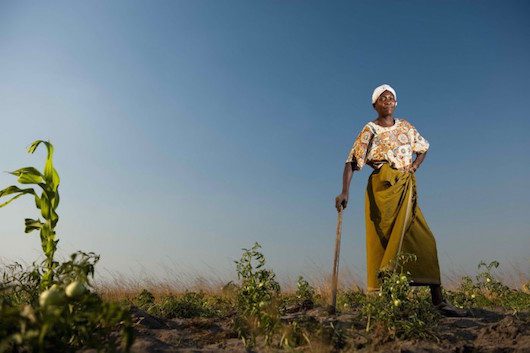
Women with legal rights are more likely to own land and therefore to access finance. The U.N. claims that rural women with the right of control over their land increase social and political status. Addressing women’s rights in controlling land boosts bargaining power domestically and empowers their public voice.

4. It Diminishes Dependence

Many women who are impoverished are widows, single-headed households or those who did not have an income to begin with. Addressing women’s rights to education and ownership enables them to earn a living regardless of challenging situations. When women have rights to land ownership and to education, it ensures their ability to provide for their families’ daily needs. Land ownership also decreases the prospects of women being evicted and subsequently sliding into poverty.

5. It Reduces Unpaid Work

Many women spend a lot of time doing household work such as caring for children. Additionally, many women spend a great portion of their day preparing meals and gathering water, during which they resort to paying for childcare. Greater equality in the household would allow women the opportunity to spend time carrying out paid work.

The U.N. states that with access to resources such as financial credit, technical assistance, training and land ownership, the feminization of poverty will diminish.

– Mayra Vega

Sources: U.N.E.C.A., UNDP 1, UNDP 2, UNDP 3, UNDP 4, U.N. 1, Sachs, Jeffrey, U.N. 2
Photo: Africa Agribusiness

February 15, 2016
https://borgenproject.org/wp-content/uploads/borgen-project-logo.svg 0 0 Borgen Project https://borgenproject.org/wp-content/uploads/borgen-project-logo.svg Borgen Project2016-02-15 01:30:062024-12-13 17:54:105 Ways Addressing Women’s Rights Reduces Poverty
Development, Global Poverty

Corporate Social Responsibility Investment

Corporate Social ResponsibilityCommunity Capital Management, Inc. (CCM) is one of the top fixed income impact investing managers in the United States that prides itself on corporate social responsibility.

CCM reported that the company’s CRA Qualified Investment Fund Institutional Shares (CRANX) ranked among the top one percent of all performers out of 309 government funds during 2015.

According to PR Newswire, CRANX saw about two percent returns in 2015, exceeding the average return for its category. Out of 301 funds, investment research group Morningstar rated the share class with four stars for its $1.8 billion asset portfolio across its three share classes.

“We are equally proud of the Fund’s bespoke impact portfolio and community impact performance, having invested $512 million in 2015 and $5.8 billion since inception in bonds financing economic and environmentally sustainable initiatives,” said CCM chief investment strategist David Sand.

CCM offers shareholders the ability to customize their investments to align with social or environmental missions, in addition to participating in open-ended bond funds that provide liquidity as a part of their corporate social responsibility.

Funds like CRANX offer investors the chance to facilitate change through impact investing – making investments that bring about a social or environmental change as well as a financial return.

CCM’s impact investments have brought great change to areas within the United States. For example, $283 million helped to fund job creation and small business development, $354 million was invested for environmental sustainability and neighborhood revitalization, $33 million helped to create affordable health facilities and 320,000 affordable rental housing units were created.

Canyon Crossing is one of these complexes that offers 180 rental properties to low-income residents of Salt Lake County in Utah. The construction of these buildings, along with the state’s other efforts over the last 10 years, has resulted in a rapid reduction of homelessness throughout the state, according to the Department of Workforce Services (DWS).

According to the African Development Report of 2011, the private investment sector is the driving force behind economic growth and poverty reduction in Africa. The report finds that 80 percent of Africa’s production, two-thirds of total investments and 75 percent of total credit to the economy comes from private sector investments.

Barron’s reports that the popularity of impact investing has grown in the last 10 years and current trends indicate an increase in international impact investing. A survey conducted by Fidelity Investments found that a quarter of respondents plan to invest their impact portfolios overseas.

“Impact investing has the potential to channel significant amounts of private capital to solutions to the world’s most intransigent challenges. Last year was a banner year for impact investing and set the stage for 2016 to be a year of tremendous growth and progress,” said Global Impact Investing Network CEO, Amit Bouri.

– Kelsey Lay

Sources: African Development Bank Group, Community Capital Management, Inc., Department of Workforce Services, Forbes 1, Forbes 2, PR Newswire
Photo: Huffington Post

February 14, 2016
https://borgenproject.org/wp-content/uploads/borgen-project-logo.svg 0 0 Borgen Project https://borgenproject.org/wp-content/uploads/borgen-project-logo.svg Borgen Project2016-02-14 01:30:532024-12-13 18:05:40Corporate Social Responsibility Investment
Children, Global Poverty

Helping Save Street Children in Guatemala

Guatemala Street ChildrenIt is estimated that there are between 1,500 and 5,000 street children in Guatemala City, Guatemala. Approximately 65 percent of these children are between the ages of 10 and 17 — and around 30 percent are girls.

Street children are those for whom the street has become their real home — a situation in which there is no protection, supervision or direction from responsible adults. Consequently, most of these children live and sleep on the street, with some taking refuge in parks or under stairs.

Children living on the streets migrate from rural areas of Guatemala or from Honduras or El Salvador. This migration is caused by the extreme poverty in Guatemala, which is both widespread and severe. According to the World Bank, “approximately 75 percent of the population is estimated to live below the poverty line, which is defined as an income that is insufficient to purchase a basic basket of goods and services.”

The main sources of income for these children are usually activities such as robbery, begging and prostitution. Specialist Irving Epstein indicated that “many children inhale the fumes of shoe glue or paint thinner, often their only avenue to escape hunger, pain and hopelessness.”

Due to the lack of access to any educational institution, these children are more likely to choose violent pathways and tend to join street gangs. In 2005, approximately 10,000 Guatemalan children were members of street gangs.

Unfortunately, joining these street gangs comes at a price. According to Epstein, “violence between street gangs is common and is often used as an excuse by the national police and private security guards to harass and beat street children.”

Additionally, condom use is irregular and the pregnancy rate among the girls is high. This is unfortunate for many reasons, but largely because these girls hardly have what they need to take care of themselves and do not have the capacity to raise a child.

The social panorama in which street children find themselves living reflects the widespread poverty and severe inequality existing in Guatemala. Yet the plight of street children is hardly uncommon amongst developing countries.

However, several governmental and nongovernmental organizations have become active in Guatemala City since 2003. With his wife, former president Alvaro Arzu opened a center that provides both traditional humanitarian aid, such as food, shelter and clothing, and long-term sustainable aid, such as health services and education, to the homeless.

Casa Alianza is another agency working in Guatemala City that has provided several services for street children. It promotes residential and outreach programs, legal aid, drug rehabilitation and other vital services.

Children living in the streets of Guatemala are the most vulnerable to major social issues. Nonetheless, these initiatives are fighting to ensure a better life for these children, and hopefully in the coming years, Guatemala may see fewer children living alone and in destitution.

– Isabella Rölz

Sources: World Bank, Google Books
Photo: Hansen Photo

February 14, 2016
https://borgenproject.org/wp-content/uploads/borgen-project-logo.svg 0 0 Borgen Project https://borgenproject.org/wp-content/uploads/borgen-project-logo.svg Borgen Project2016-02-14 01:30:222020-06-23 07:45:48Helping Save Street Children in Guatemala
Children, Education, Global Poverty, Government

Expanding Preschool Access for Poor Children

Preschool Access
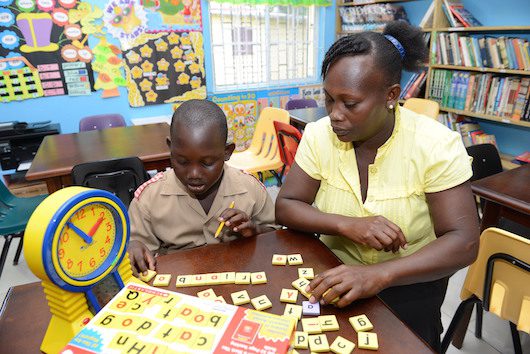
Attending preschool can drastically improve the intellectual capacity of children. Research has demonstrated positive effects on learning and development in both the short and the long run.

A recent study from Northwestern University suggested that children from lower income families tend to perform significantly worse in the first years of elementary school. This is due to the fact that they usually did not have the opportunity to attend preschool.

Policy expert Whitmore Schanzenbach suggested that “by the time they reach kindergarten, disadvantaged children already show an achievement gap relative to their higher-income peers.”

Schanzenbach emphasized that “the poverty gap in school readiness appears to be growing as income inequality widens.”

Teachers at elementary schools have reported that children from less privileged families have more difficulty paying attention and exhibit more behavioral problems given no kind of education prior to elementary school.

This is because the state and the government usually do not focus their attention on expanding preschool access to children from marginalized sectors. They have concentrated mainly on improving education for children over five years of age.

According to Schanzenbach, a common proposal to bridge this gap is to make formal preschool accessible to poor children under the age of five. Given many ways to expand these educational programs, specialists at Northwestern designed a program that is cost-effective.

In their proposal, a well-developed framework would introduce the highest quality curriculum and nurturing assistance that would ultimately help these young children prepare themselves for further education.

It is important to emphasize that this is a project designed to be introduced in developing countries and rural sectors, where preschool access needs to be attainable.

Schanzenbach concluded that “the expansion of early education programs along these lines will lead to improved educational outcomes for disadvantaged children.” She added a list of other benefits which included lower crime rates, reduced teenage pregnancy and a decreased reliance on the social safety net.

Read Schanzenbach’s full study here.

– Isabella Rölz

Sources: Brookings, U.S. Department of Education, NYTimes
Photo: U.S. News

February 13, 2016
https://borgenproject.org/wp-content/uploads/borgen-project-logo.svg 0 0 Borgen Project https://borgenproject.org/wp-content/uploads/borgen-project-logo.svg Borgen Project2016-02-13 01:30:542024-12-13 18:05:41Expanding Preschool Access for Poor Children
Global Poverty, Malnourishment

One Stop Shop Improves Health Care in Lesotho

Healthcare in LesothoUNICEF and the German Agency for International Cooperation (GIZ) have announced that they will launch four pilot health centers in 2016. As a result, thousands of rural residents may be able to receive basic health care in Lesotho.

The health centers, called One Stop Shops, are an effort to bring HIV, malnutrition, blood pressure screenings, immunizations and infant checkups to the most remote areas of the country. Community members in mountain regions are currently unable to get these services without traveling to district capitals, which is a severe hardship that often deters them from seeking help at all.

“Without easy access to these service providers, they won’t go after these services,” said district council secretary for Maseru, Mamajara Lehloenya. “One wouldn’t take the initiative to go test your high blood pressure (hypertension) unless you are very sick.”

This is a serious problem in a country facing a number of national health burdens. The most recent reports from the World Health Organization indicate that the hypertension prevalence rate is more than 30 percent. HIV affects over 23 percent of the population. At the same time, Lesotho is experiencing an under-five mortality rate of 100/1000 children.

To remedy this lack of accessible health care in Lesotho, which is taking away lives, UNICEF and GIZ are bringing services to the most accessible level of government: community councils.

After the pilot phase is over, agencies hope that One Stop Shop will be a “reliable information hub” where community members can learn what services they can receive near home and how to receive them. One Stop Shop also aims to strengthen the referral network for more technical services offered in the capitals.

Social workers will also be included in the initiative in order to assist residents with government documents, including birth certificates and identification cards, as these are often necessary to receive help outside of local communities.

Empowering rural citizens of Lesotho to take charge of their health is critical to sustainably improving human and economic development in the country.

“By linking them to services that build their human capital – like health and education – a safety net of public assistance programs can help the poor rise out of long-term poverty,” said UNICEF Social Protection Consultant Betina Ramirez.

The efforts will complement those of the United Nations Development Program (UNDP), which has been working to build capacity in the country, especially in the agricultural sector. UNDP urges that, together, improving health and food security will be critical if Lesotho is to get back on track with the Millennium Development Goals.

– Ron Minard

Sources: UNDP, UNICEF, WHO
Photo: Flickr

February 13, 2016
https://borgenproject.org/wp-content/uploads/borgen-project-logo.svg 0 0 Borgen Project https://borgenproject.org/wp-content/uploads/borgen-project-logo.svg Borgen Project2016-02-13 01:30:172024-05-27 09:28:51One Stop Shop Improves Health Care in Lesotho
Global Poverty, Nonprofit Organizations and NGOs

10 Ways to Help the World’s Poor

Ways to Help the World's Poor

Ways to Help the World’s Poor

Do you want to know some easy ways to help the world’s poor? Well, here are 10 simple ways to help the world’s poor, which can often be done without even having to leave your home!


1. Donate

One of the quickest and most obvious ways to help the world’s poor is to donate to charity. Click here to donate to The Borgen Project.


2. Call Congress

This way to help the world’s poor is surprisingly simple. Every person in the United States has 3 representatives in Congress (2 Senators and 1 Representative in the House). By calling these 3 peoples’ offices each week, individuals can show the Congressmen the issues that they care about. Calling your Congressmen is a simple process. Generally, an intern will answer the phone, or you can leave a message after hours.

The message you need to say is simple: “My name is ___, I live in ___, and I want to raise the funding for helping the world’s poor,” or something similar. As few as 7 people calling in can make a Congressman change his mind on a bill: Congressmen want those they are serving in the U.S. to be happy so if you let them know what you want, they are more likely to listen. Go here for more detailed instructions.


3. Inform Yourself

This is one of the simplest ways to help the world’s poor, and also it helps you to do the other things more effectively. Basically, all you need to do is stay informed on the issues. Pay attention to what is happening in Congress and read up on current poverty-related events. It may surprise you to find out that poverty has made some great strides in the past few years. Indeed, in the past 20 years, the world’s undernourished has decreased by 50%. Life expectancy has also increased by 1/3.

(Browse The Borgen Project to find out more interesting facts about poverty).


4. Build Buzz/Raise Awareness

Now that you’ve done your research, you can use your new information as tools to build buzz or to raise the awareness of those around you. If you care about the world’s poor, you can be sure that other people do too, but may just be unaware of how they can help. You can share info on different poverty-fighting organizations with your colleagues, family, and friends (see 1. Donate for ideas). You can also call into radio shows, write to editors, speak locally about the cause, send ideas to the media, or anything else that may bring the idea of helping the world’s poor to the forefront of people’s vision and thoughts.


5. Social Media

Recently, social media has become one of the most fantastical ways a person can help the world’s poor (among other ventures). This is perhaps the easiest way to help, as well. Many Congressional leaders (your members of Congress) have Facebook pages, Twitters, or websites. All you need to do is either post on their pages to bring up the idea of helping the world’s poor, or post on your own about the various issues. Also, you can easily follow many different organizations, including The Borgen Project, and retweet them or post about them on Facebook or other websites. Overall, your voice will be heard. (The Social Media of Congress can be found here and here). (Also, follow us on Twitter!)


6. Get Political

Although you can call Congress or post on their Facebook pages, there are other ways to help the world’s poor and to “get political.” If you are willing, you can always arrange a meeting with Congressional staffers to tell them what issues (like reducing global poverty) you are interested in. You can also mobilize those around you; just one person calling into Congress will make a difference, but if multiple people in an area call Congress about the same issue and around the same time, there will be a bigger effect. Finally, you can “bird dog” Congress, which means to go to where a legislator is speaking, and ask them publicly about poverty (For example, “What are you doing to help poverty?” or “Will you support helping reduce global poverty?”, etc).


7. Fundraising

Another one of the ways to help the world’s poor is fundraising. Contact people about various organizations to donate to, or use sites like Crowd Rise to start a campaign. You can also run marathons or accomplish other feats as a way to raise money, as long as you ask people to be your sponsor. You can also ask for donations to different charities rather than receiving gifts for your birthdays, weddings, or other events.


8. Be a Consumer with a Cause

One of the surprising ways to help the world’s poor is simply by being a consumer, or something who buys things. This can be done by buying products from websites that donate a portion of their proceeds to charity, or from nonprofit organizations that sell shirts or other merchandise to help the cause. The Borgen Project even has a Visa Card that has no annual fee, and some unique card designs. Basically, when possible, buy from places that will help the cause.


9. Arrange Events

One of the harder ways to help the world’s poor is arranging events. Of course, this does not need to be too difficult: you could host parties (or movie/TV show marathons with your friends!) and have a $5 (suggested donation) to get in. This can be done by living your life as normal, but adding in charity donation so that everyone can get involved. On the other hand, you can also host poverty-based events or parties with the pure purpose of raising awareness on poverty and discussing its issues. Finally, you can have a “non-event” event, where instead of going out that night, everyone donates a certain amount and stays in.


10. Volunteer

Finally, one of the most difficult (but, arguably, most rewarding) ways to help the world’s poor is through volunteering. This can encompass many different things: volunteer for a political campaign, volunteer for a nonprofit organization, volunteer for a movement to fight poverty or grab an internship. Personally, I am an intern writing for The Borgen Project; I do not get paid, but it helps get the message out to the world. Overall, you can find volunteer opportunities online (for example, through Idealist), but there are also local opportunities that may be available if you ask around.

To see even more easy ways to help the world’s poor, look here.

– Corina Balsamo

Source: The Borgen Project
Photo: Flickr

February 12, 2016
https://borgenproject.org/wp-content/uploads/borgen-project-logo.svg 0 0 Borgen Project https://borgenproject.org/wp-content/uploads/borgen-project-logo.svg Borgen Project2016-02-12 12:25:512024-05-24 23:41:3610 Ways to Help the World’s Poor
Aid, Aid Effectiveness & Reform, Global Poverty

Using Data Literacy to Improve Development in Sudan

Data Literacy
The World Bank has launched a data literacy program to improve evidence-based policymaking and development outcomes in Sudan.

Funded by UKAid, experts from the World Bank will work over the next eight months to bridge the gap between data producers and data consumers. The program will bring together statisticians, who produce oftentimes complex development indicators, and journalists, academics and government officials, who use this data to inform policymaking.

“This initiative is timely,” said World Bank Country Representative to Sudan, Xavier Furtado. “In addition to better quality data, the World Bank hopes that the Evidence Base Program will contribute to greater transparency and accountability in how public policy is debated and decisions are made.”

Sudan faces a complex set of development issues requiring sound policy.

The most recent data from the World Health Organization indicates that the under-five mortality rate is 77 per 1000 children, the maternal mortality rate is 360 per 100,000 live births and the number of deaths due to tuberculosis is just over 25 per 100,000 citizens. The most recent data from The World Bank indicates that 46.5 percent of the population in Sudan is living in poverty.

But WHO notes that its figures haven’t been updated since 2013 and Sudan didn’t begin to measure these statistics until between 1990 and 2000. The World Bank also notes that its figures have not been updated since 2009. On the World Bank’s 0-100 scale of level of statistical capacity, Sudan sits just above 51, compared to the average for all sub-Saharan African countries of 70.

Finding solutions to the challenges facing Sudan will require targeted, efficient development programs and leaders cannot hope to make progress without first filling its data literacy and acquisition gaps.

The United Nations Development Program (UNDP) has also been working toward this objective. Since 2006, UNDP has hosted workshops designed to train government representatives on how to understand, analyze and utilize development data – hoping to foster better aid policy.

“We understand that changes will not happen overnight,” Furtado said. But by building capacity to collect, analyze and manage reliable data at national and provincial levels through its new program, the World Bank hopes to ingrain data use into the development culture of the fragile state. In turn, they estimate that better programs and more inclusive economic growth will occur.

– Ron Minard

Sources: UNDP, WHO, World Bank 1, World Bank 2
Photo: USAID

February 12, 2016
https://borgenproject.org/wp-content/uploads/borgen-project-logo.svg 0 0 Borgen Project https://borgenproject.org/wp-content/uploads/borgen-project-logo.svg Borgen Project2016-02-12 01:30:462024-05-27 09:28:51Using Data Literacy to Improve Development in Sudan
Global Poverty, Humanitarian Aid

Using a Solidarity Levy to Fund Disaster Relief

Solidarity Levy
The United Nations is urging countries to adopt a solidarity levy in order to help victims of war and natural disasters.

The recommendation comes with the news that $40 billion per year is now needed to help vulnerable populations. Climate change and prolonged regional armed conflicts have resulted in a $15 billion shortage in relief funding, the organization says.

“The stakes are sky high,” said U.N. Secretary-General, Ban Ki-moon. “More than 125 million people need humanitarian assistance worldwide. The financial burden is five times greater than a decade ago. Humanitarian action is now the U.N.’s costliest activity.”

In response, a U.N. panel on humanitarian financing has released recommendations on solutions to tackle the widening funding gap. In its report “Too Important to Fail,” the panel highlights, among others, two strategies: adopting a solidarity levy to broaden the humanitarian resource base and reducing the need for humanitarian intervention altogether.

A “solidarity levy,” the panel suggests, is a promising solution to the revenue shortage because it corrects an over-reliance on humanitarian donations. The levy is a tax voluntarily adopted by countries and applied to airline tickets, sporting tickets and other transactions.

The idea has been successful in the past. One such levy on airline tickets raised over $1.7 billion for UNITAID’s fight against HIV and malaria between 2006 and 2011.

The panel wants more countries to adopt this model to generate more predictable and reliable streams of income for humanitarian work. “The simple act of catching a plane turns passengers into contributors to the cause of saving lives—it is responsible travel on an enormous scale,” the report said.

However, one of the most meaningful ways to reduce the cost of humanitarian aid is to build resilience to conflict and disaster, the panel noted. Over 93 percent of people who live in extreme poverty also live in fragile countries.

The U.N. panel recommends using scarce development dollars in the most vulnerable countries first in order to build adequate infrastructure and emergency services. It also supports the existing recommendation to allocate more funds to the U.N. Peacebuilding Fund, which is used to foster political dialogue and strengthen national institutions. Taking these steps, the U.N. suggests, will mitigate the costliest emergency interventions.

In the meantime, more funding is needed to address current issues. With the World Humanitarian Summit set to take place in Istanbul in May of this year, the panel is hopeful that its report will encourage conversations about adopting a solidarity levy and the future of humanitarian financing.

– Ron Minard

Sources: IB Times, UN 1, UN 2, World Humanitarian Summit

February 12, 2016
https://borgenproject.org/wp-content/uploads/borgen-project-logo.svg 0 0 Borgen Project https://borgenproject.org/wp-content/uploads/borgen-project-logo.svg Borgen Project2016-02-12 01:30:012024-06-11 02:48:17Using a Solidarity Levy to Fund Disaster Relief
Global Poverty

50 Partners Invest in Viber Chat App in Africa

Viber Chat AppLast week, social media company Viber announced that it would be bringing the Viber chat app to areas of Africa and the Middle East with the help of 50 investors in the African market.

The availability of the app will allow for easier interactions between organizations and individuals, facilitating local conversation via a global platform.

Facebook reports that 100 million Africans have accessed its website since 2014, with over 80 percent of users on the mobile version. Viber’s utilization of the mobile platform could help users in untapped parts of Africa, particularly in the southern areas of the continent, gain access.

According to news outlet IT News Africa, the beta version of the Viber app was released in November of 2014, allowing individual users to have real-time conversations within the application.

“The Middle East and Africa are important markets for Viber, and we are pleased to welcome local influencers and brands to our Public Chats platform. We are sure they will enjoy chatting, commenting and debating live on this active social channel whilst sharing tips, news, and local content to our constantly connected mobile audience across the region,” said Viber CMO, Mark Hardy.

Viber is similar to other social media platforms such as Twitter, where users can follow specific chats and publicly and privately share multimedia, including texts, photos, audio, video, web links and geolocation.

Much like Facebook, Viber users can invite friends to follow specific Public Chats and use the search option to find friends, with whom chats can be accessed via customized URLs.

The social research organization, Joseph Rowntree Foundation (JRF), has found that having a mixed friendship network can reduce a person’s poverty levels by a third when compared to those outside of mixed networks.

This finding supports the idea that social isolation is both a cause and consequence of living in poverty. Developing technologies like Viber that allow social interaction on a local level can directly improve the social health of a community.

JRF also reports that the likelihood of being poor can also be reduced by having friends who are employed and live outside of one’s neighborhood. By bringing Viber’s Public Chat to more regions of Africa, individuals might have more of an ability to build these kinds of relationships.

In addition to social health, Viber’s trending conversations can be used to address pressing issues such as AIDs awareness and local government.

“Through the use of Viber Public Chats, I hope to bring together a group of people who have experiences to share with a young audience and discuss HIV knowledge, stigma and prevention and ultimately call on people to get tested,” said Cindy Pivacic, HIV awareness creator and Viber investment partner.

Another partner, AllAfrica.com, hopes to facilitate African conversation about current affairs and national events throughout the region.

– Kelsey Lay

Sources: Facebook, IT News Africa, Joseph Rowntree Foundation, Viber
Photo: ITECH News Online

February 11, 2016
https://borgenproject.org/wp-content/uploads/borgen-project-logo.svg 0 0 Borgen Project https://borgenproject.org/wp-content/uploads/borgen-project-logo.svg Borgen Project2016-02-11 01:30:202024-12-13 18:05:3950 Partners Invest in Viber Chat App in Africa
Page 1825 of 2179«‹18231824182518261827›»

Get Smarter

  • Global Poverty 101
  • Global Poverty… The Good News
  • Global Poverty & U.S. Jobs
  • Global Poverty and National Security
  • Innovative Solutions to Poverty
  • Global Poverty & Aid FAQ’s
Search Search

Take Action

  • Call Congress
  • Email Congress
  • Donate
  • 30 Ways to Help
  • Volunteer Ops
  • Internships
  • Courses & Certificates
  • The Podcast
Borgen Project

“The Borgen Project is an incredible nonprofit organization that is addressing poverty and hunger and working towards ending them.”

-The Huffington Post

Inside The Borgen Project

  • Contact
  • About
  • Financials
  • President
  • Board of Directors
  • Board of Advisors

International Links

  • UK Email Parliament
  • UK Donate
  • Canada Email Parliament

Get Smarter

  • Global Poverty 101
  • Global Poverty… The Good News
  • Global Poverty & U.S. Jobs
  • Global Poverty and National Security
  • Innovative Solutions to Poverty
  • Global Poverty & Aid FAQ’s

Ways to Help

  • Call Congress
  • Email Congress
  • Donate
  • 30 Ways to Help
  • Volunteer Ops
  • Internships
  • Courses & Certificates
  • The Podcast
Scroll to top Scroll to top Scroll to top